

Helix Operator Pleads Guilty to Charges of Laundering $300M in Bitcoin

Helix Bitcoin Laundering

An Ohio man has pleaded guilty to the charges of running a $300 million money-laundering scheme via Bitcoin. The man in question is Larry Dean Harmon, who helped several crypto users, including drug traffickers hide their transactions through a mixer service called Helix.

Ohio Man Running $300M Bitcoin Laundering Scheme Pleads Guilty

Harmon, who maintained a residence in Belize while laundering funds, agreed to the charges against him through a videoconference call on Wednesday. Subsequently, the federal court of Washington D.C. asked him to forfeit more than 4,400 Bitcoins (worth over $200 million at current price) in his custody. 

The US Treasury Department bureau Finacial Crimes Enforcement Network (FinCEN) has already levied a hefty fine of $60 million on Harmon in October. This figure would rise further upon his final sentencing, which could also lead to a jail time of up to 20 years.

According to a CNBC report, Harmon operated a Bitcoin mixer — Helix — from the year 2014 to 2017 and partnered with several Darknet markets such as AlphaBay, Evolution, and Cloud 9 to provide Bitcoin money-laundering services. The Darknet or the dark web refers to encrypted online content that cannot be indexed by conventional search engines.

The report further explains that Helix charged its customers a fee and sent Bitcoin to recipients in a way that was untraceable. Prosecutors say that the service moved more than 350,000 Bitcoins, estimated to be worth over $300 million at the time.

In his admission, Harmon accepted that he conspired with Darknet vendors and other marketplaces to offer Bitcoin money laundering options. He also stated that he was aware of AlphaBay and Evolution’s involvement in selling illegal drugs and other questionable goods and services, like hacking. 

Harmon’s Case is a First for Cryptocurrency Mixers

Ari Redbord, a former assistant U.S. attorney for the District of Columbia and a former senior adviser at the Treasury Department, pointed out that Harmon’s case was a first for cryptocurrency mixers. He suggested it shows American law enforcement’s willingness to go after platforms thriving on the Darknet, as it continues to leverage the transparency of blockchain technology.

Elsewhere, James Lee, chief of the IRS Criminal Investigation Division, underscored the seriousness of the case.

“The Darknet is driven in part by the criminal marketplaces which peddle their nefarious goods and services,” Lee stated. “Harmon profited by facilitating the back-channel support of these marketplaces and helped criminals launder money they received via illicit activities.”
BitMEX CEO Calls Out Bitcoin Critics Over Double Standards

BitMEX CEO Bitcoin

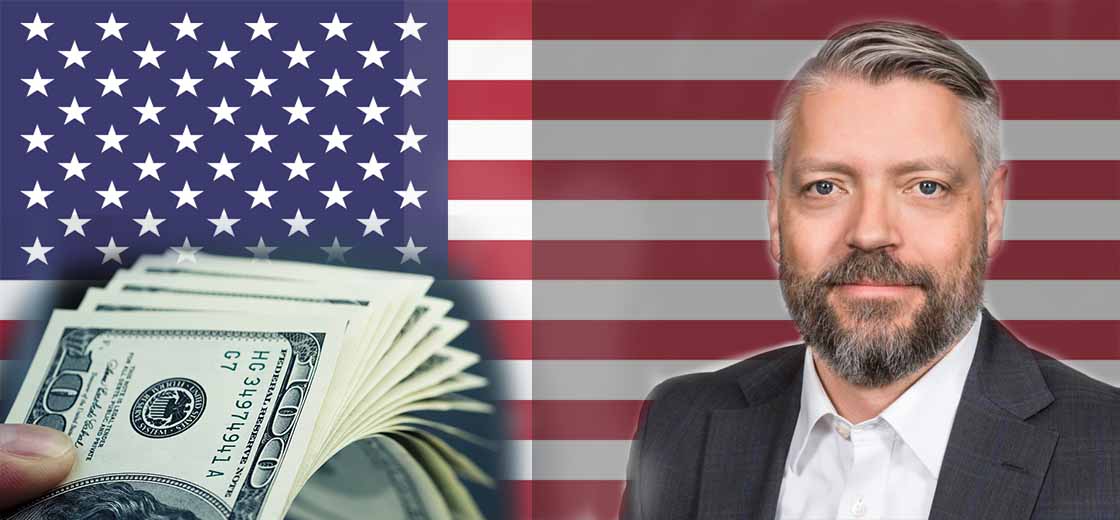
Bitcoin has had an eventful year so far, with issues of volatility, energy consumption, and regulation dominating the discussion surrounding it. With the spike in ransomware attacks, the debate on the viability of the world’s largest cryptocurrency has heated further. In addition, it faces immense pressure from lawmakers who feel an urgent sense of cracking down on its trade and adoption. The consensus is that Bitcoin is too unstable or even dangerous for mainstream use. But BitMEX CEO Alexander Höptner disagrees with this line of thought and feels there is a need for education on cryptos. In a recent interview, Höptner called out the double standards of Bitcoin critics as he reiterated his belief in the digital asset.

BitMEX CEO Alexander Höptner Questions The Hypocrisy Around Bitcoin

Höptner addressed a range of subjects related to Bitcoin in a recent interview. However, what stood out most was his sharp dismissal of hackneyed criticism of the primary cryptocurrency.

Speaking on the bias associated with Bitcoin’s use in criminal activities, Höptner said: “Even when the topic of bitcoin and crime came up at the beginning, nobody was interested in the fact that terrorism was previously financed with the US dollar.” 

He added, “Nobody said let’s get rid of the dollar. As soon as it’s the bitcoin, oh god, that’s used to finance terrorism.” 

During the interview, Höptner also talked about the correlation between sustainability and growth. He pointed out that while Bitcoin has been targeted for its energy needs, the currency cannot be squarely blamed for the issue. Instead, he feels that sustainability is a development issue and noted, “The energy discussion has long proven, I believe, that bitcoin is not the greatest energy guzzler. When you introduce a substituting industry or technology, the balance is negative as long as what it is replacing is still there.” 

Dollar Continues to Lead Assets Used for Money laundering

While it’s true that Bitcoin has been the technology of choice for many cybercriminals in recent times, it’s not the only asset used in the illicit transfer of funds around the world. As a matter of fact, the US dollar continues to be the leader among world currencies and assets when it comes to money laundering.

Data from the UN reveals that nearly 5% of the world’s GDP is annually diverted to money laundering. This figure is equivalent to roughly $4 trillion. The finding corroborates Höptner’s assertion that Bitcoin is far from being the only asset that perpetuates criminal activities.

Nic Carter, a partner at crypto fund Castle Island Ventures, shares Höptner’s belief and posits that the connection between illegal acts and Bitcoin is odd at best. He says: “All of the data that we have seen indicates that in absolute and relative terms, the dollar is used for illicit purposes, far more than bitcoin. So the crime angle is a pretty curious one. I mean, we didn’t ban dollars because Pablo Escobar had heaps of dollars in his basement.”