

US Congressman Seeks Info on Efforts to Combat Crypto Fraud, Scams

crypto fraud

Since last year, over half a million people have lost nearly $1 billion to cryptocurrency fraud and criminality. This statistic has caused a US House of Representatives committee to look into the operations of significant exchanges, including Coinbase, FTX, and Kraken. On Tuesday, Rep. Raja Krishnamoorthi, the chair of a committee overseeing economic and consumer affairs, issued letters to five crypto exchanges and four federal agencies, demanding details on the systems they have in place to combat fraud and scams.

Five Crypto Exchanges Get Inquiries

US Congressman Krishnamoorthi sent letters to the US Treasury, Securities and Exchange Commission (SEC), Commodity Futures Trading Commission (CFTC), Federal Trade Commission, Finance.US, Coinbase, FTX, Kraken, and KuCoin.

The letters request responses from the federal authorities and cryptocurrency exchanges by September 12 with details of what they are doing to protect customers. According to the committee, these responses might help create new laws. The letters specifically demand that the exchanges submit records demonstrating attempts to address cryptocurrency fraud and scams going back as far as January 1, 2009.

It highlights debates on “whether to implement more rigorous policies” and attempts to “detect, investigate, and remove or flag possibly fraudulent digital assets or accounts.”

FBI Warns Against Crypto Fraud

The Federal Bureau of Investigation (FBI) recently warned about the rising incidents of fraudsters preying on cryptocurrency investors’ enthusiasm. According to data from Immunefi, breaches against decentralized finance (DeFi) protocols cost over $1.2 billion in the first quarter, an increase of over eight times over the same period last year.

Democrats expressly asked cryptocurrency miners for information in July. Sen. Elizabeth Warren and US Rep. Rashida Tlaib were two of six legislators that demanded miners report their emissions and energy use after coming to “disturbing” conclusions about the environmental impact of crypto mining.
US Congressman Proposes Legislation to Regulate Digital Asset Market

US Congressman Digital Asset

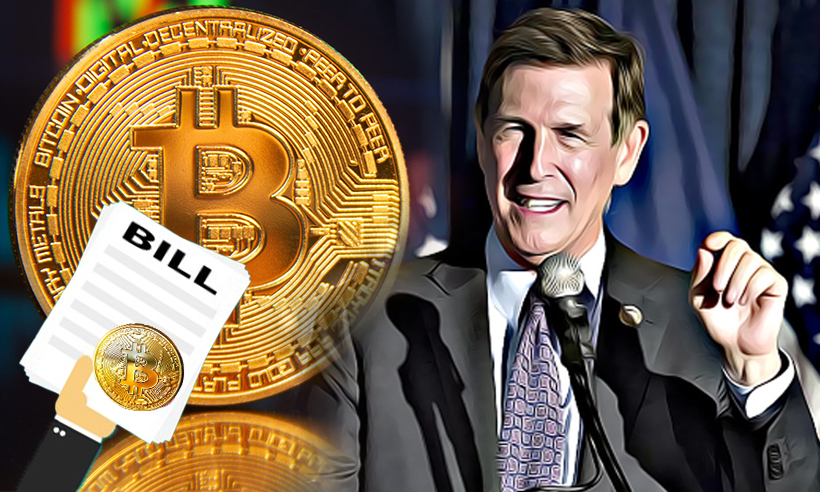
US Congressman Don Meyer has introduced sweeping legislation to regulate the digital asset market on Wednesday. The bill titled the “Digital Asset Market Structure and Investor Protection Act”, seeks to enhance consumer protection while fostering innovation in the crypto industry. If approved, the new legal framework would grant CFTC the power to regulate crypto-assets and enable the Treasury Department to prohibit certain fiat-based stablecoins.

US Congressman Introduces Bill to Regulate Digital Assets

According to Beyer, digital assets hold great promise for the future, however, the market’s current structure and lack of regulatory oversight make them risky for investors. “Digital asset holders have been subjected to rampant fraud, theft, and market manipulation for years,” he said.

He added that his proposal would kickstart the “long overdue process” of updating the existing laws to provide “basic protection” to cryptocurrency owners and investors.

Beyer estimates that there are 11,000 cryptocurrencies with a combined market cap of over $1.5 trillion and that 20-46 million average Americans currently possess Bitcoin or another digital asset. He points out that many of these regular investors have been targeted by fraudulent schemes, trading platform hacks, manipulation, and theft. 

To address these pain points, Beyer suggests that digital asset securities should be monitored by the Securities and Exchange Commission (SEC),  and the tokens should be governed by Commodity Futures Trading Commission (CFTC). Furthermore, he wants the Federal Reserve to have “explicit authority” to issue the digital dollar and to clarify that dollar-pegged stable currencies are not legal tender in the US. The legislation also lists several other measures that prevent the use of crypto-assets in money laundering and other illegal activities.

The Necessity for Regulation in Crypto Market

Beyer isn’t the first legislator to demand regulation of the crypto industry. Many lawmakers have pointed fingers at crypto’s role in the recent uptick in ransomware attacks and the use of digital assets in facilitating illicit acts. The Colonial Pipeline incident is still fresh in the memories of many regulators. Beyer’s legislation also took note of the attack that cut oil supply to a part of the country for several days.

“In May 2021, the Colonial Pipeline, which provides gasoline to much of the eastern United States, had its computer system hacked and was forced to pay a $4.4 million ransom in Bitcoin, which is the preferred currency for ransomware attacks,” the legislation reads.

Democratic senator Elizabeth Warren has also voiced her support for crypto regulation on several occasions. Just two days ago, she told the CNBC network that legislators shouldn’t wait for smaller investors and traders to be wiped out before taking action.

Clearly, regulation is the need of the hour. However, the extent and robustness of any proposed framework could change the course of the market for better or for worse.