W3F Says DOT Token of Polkadot Blockchain Is Software, Not Security

W3F DOT

The organization guiding Polkadot’s research and development efforts and financing initiatives for the blockchain, Web3 Foundation (W3F) has claimed that the US Securities and Exchange Commission shouldn’t classify the DOT token as a security subject to its legislative jurisdiction.

W3F Statement About DOT

Daniel Schoenberger, chief legal officer of the Web3 Foundation (W3F) Team, stated in a blog article on November 4 that DOT, Polkadot’s native token, had “morphed” and was now “software” instead of a security. Following conversations started in November 2019, Schoenberger stated that the assertion was compatible with the opinions it had expressed with the SEC.

Schoenberger added that although the SEC’s perspective was probably that the shortly delivered token would constitute a security, at least at the point of distribution, the Polkadot concept had not considered that the blockchain’s native token would be a security.

Collaboration with FinHub

According to the CLO, the Web3 Foundation often engaged with FinHub, the SEC’s fintech division, as part of chair Gary Gensler’s ongoing invitation to cryptocurrency companies to come in and speak. The team created a workable concept of how token morphing may be performed for DOT based on the SEC’s fears and American federal securities regulations, said Schoenberger.

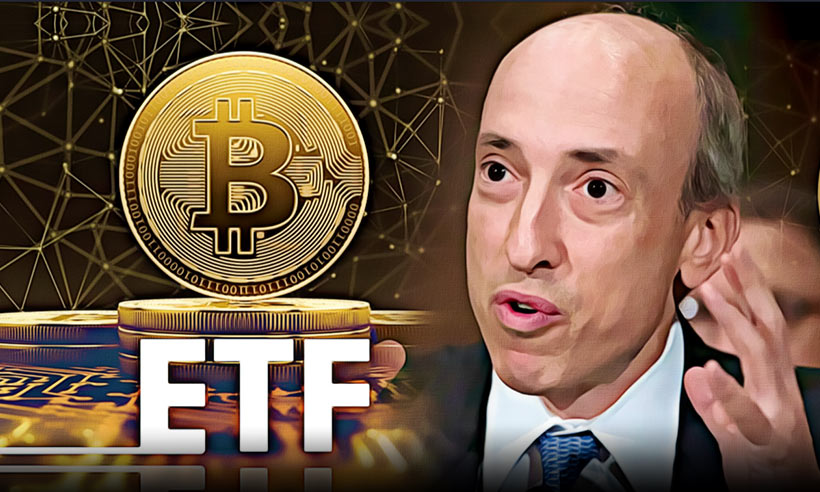
SEC Chairman: What to Expect From The SEC on US Crypto Regulation

SEC Chief

Gary Gensler, the chairman of the US Securities and Exchange Commission (SEC), has described what may be anticipated from the securities watchdog regarding crypto legislation. He said,

“We also have significant congressional authorities to use our exempt authorities to personalize investor protection.”

Chairman of SEC Highlights Work on Crypto Regulation

In an interview with Yahoo Finance Live on Thursday, SEC Chairman Gary Gensler explained what may be anticipated from his organization regarding American cryptocurrency legislation.

The public would gain currently from investor protection around these many service providers, such as the exchanges, lending platforms, and broker-dealers, Gensler retorted. The head of the SEC elaborated:

“So, we at the SEC are working in each of those fields – exchanges, lending, and broker-dealers – and talking to industry participants about how to come into compliance or modify some of that compliance.”

SEC Chairman’s ‘One Rule Book’ Suggestion

In May, the SEC chair suggested that crypto coins be governed by “one rule book.” He said he was collaborating with his CFTC counterparts on a memorandum of understanding at the time. He noted that it would be a formal agreement to guarantee that trading in digital assets has sufficient safeguards and transparency.

Gensler warned that many cryptocurrency tokens would fail in the wake of the failure of the cryptocurrencies Terra (LUNA) and TerraUSD (UST). After cryptocurrency lender Celsius Network froze withdrawals, he warned investors about “too good to be true” crypto items. Currently, Celsius is being investigated by the SEC for its choice to freeze accounts. Last week, the cryptocurrency company requested bankruptcy protection. The securities regulator is also looking into UST and Terraform Labs, owned by Do Kwon.

Gary Gensler Explains Why The SEC Approved a Bitcoin Futures ETF

SEC Bitcoin futures ETF

SEC Chairman Gary Gensler has explained why the Securities and Exchange Commission (SEC) chose to approve a Bitcoin futures exchange-traded fund (ETF) for trading on the New York Stock Exchange (NYSE). 

Meanwhile, the Commission has not approved the creation of a spot Bitcoin ETF. 

Why DId the SEC Approve Bitcoin Futures ETF?

As the first future-based Bitcoin exchange-traded fund (ETF) in the United States debuted on the New York Stock Exchange (NYSE), the chairman of the United Staṭēs Securities and Exchange Commission (SEC) explained why the regulator approved a Bitcoin futures ETF but not a spot Bitcoin ETF. 

SEC Chairman Gary Gensler underlined Tuesday in an interview with CNBC that his organization “should be technology-neutral, but not policy neutral.” He continued, saying,

What we’re trying to do is ensure to the best we can within our authorities to bring projects into the investor protection perimeter.

“Bitcoin futures have been overseen by our sibling agency, the Commodity Futures Trading Commission [CFTC], which I was once honored and proud to serve there and that’s been four years,” the SEC chief continued.

One of the applications  “went effective with regard to those products over at the Chicago Mercantile Exchange [CME] that our sibling agency oversees,” he added.

In response to the query why the SEC approved a Bitcoin futures exchange-traded fund (ETF), but not a spot Bitcoin ETF, Gensler said he will not comment on any individual application or initiative. 

The SEC’s chairman, on the other hand, clarified:

What you have here is a product that’s been overseen for four years by a U.S. federal regulator, the CFTC, and that’s being wrapped inside of something that’s within our jurisdiction called the Investment Company Act of 1940. So, we have some ability to bring it inside of investor protection.

Is Future ETFs A Better Investment Option?

While noting that bitcoin is “still a very speculative asset class,” the SEC chairman continued, “our sister agency is supervising this for four years and then it brings it within an 80-year-old law here at the SEC.”

The ProShares Bitcoin Strategy ETF, symbol BITO debuted on the New York Stock Exchange (NYSE)  

“The fund seeks to provide capital appreciation primarily through managed exposure to Bitcoin futures contracts, its website details, adding that it “does not invest directly in Bitcoin.”

Analysts Believe that Valkyrie Will Introduce a Bitcoin Futures ETF this Week

Valkyrie Bitcoin Futures ETF

Following the debut of ProShares’ Bitcoin Strategy ETF later today, analysts anticipate that Valkyrie will introduce futures-based Bitcoin ETF trading this week.

This Week, Valkyrie Might Launch A Bitcoin Futures ETF

After being authorized for listing on the Nasdaq market last week, Valkyrie’s Bitcoin (BTC) futures-based ETF is “expected” to launch in the next days, according to Bloomberg analyst Eric Balchunas on Oct. 19.

If confirmed, Valkyrie’s fund would be just the second Bitcoin ETF to start in the United States, following ProShares’ futures-based ETF, which is set to begin trading on the New York Stock Exchange under the symbol $BITO on Oct. 19.

According to fellow Bloomberg analyst James Seyffart, Valkyrie’s Bitcoin Strategy ETF ($BTF) will launch on the same day as ProShares’ offering. 

Balchunas, on the other hand, tweeted earlier today that Varlkyrie’s fund will “likely” open on Oct. 20 or Oct. 21 and that ProShares will have the “market to itself” for the time being.

Balchunas also mentioned that Valkyrie has changed its ticker symbol in its application from BTFD to BTF.

Invesco Withdraws From The Contest To Develop A Bitcoin ETF Based On Futures Contracts

Despite the optimistic atmosphere surrounding the Securities and Exchange Commission’s (SEC) approval of the United States’ first Bitcoin ETF, Invesco stated on Oct. 18 that it has withdrawn its application for a futures-based ETF.

While observers expected that Invesco’s futures ETF would be approved by the SEC this week, the business said on Oct. 18 that it has withdrawn its application, adding that it intends to work on creating a spot Bitcoin ETF in conjunction with crypto broker-dealer Galaxy Digital. According to Invesco,

“We have determined not to pursue the launch of a Bitcoin futures ETF in the immediate near-term; however we will continue to work in partnership with Galaxy Digital to offer investors a full shelf of products with exposure to this transformative asset class, including pursuing a physically-backed, digital asset ETF.”

However, on Anthony Pompliano’s “Best Business Show” on October 19, Seyffart and Balchunas claimed that the approval of a spot BTC-backed ETF is unlikely to happen anytime soon.

SEC chairman Gary Gensler, according to Balchunas, is much more “comfortable” with Bitcoin futures-based ETFs since they provide better consumer safeguards than spot-backed funds.

US Securities and Exchange Commission (SEC) Approves the ProShares Bitcoin Strategy ETF

SEC ProShares Bitcoin ETF

The US Securities and Exchange Commission (SEC) has accepted ProShares’ approval to the first Bitcoin ETF. ProShares is a specialist exchange-traded product (ETPs) provider based in the United States.

The ProShares Bitcoin Strategy ETF is Approved By the Securities and Exchange Commission (SEC)

According to the updated prospectus submitted on the 15th of October, the approval’s effective date is set for the 18th of October, bringing the first Bitcoin ETF formally sanctioned by the SEC one step closer to reality. 

The ETF offered by ProShares is linked to Bitcoin futures contracts, but not to actual Bitcoin prices. The clearance marks a turning point in the crypto and blockchain industries.

The Commission, which has either mostly delayed or disregarded the deluge of applications for a Bitcoin ETF that began in a wave over four years ago, appears to have eased its iron hold on crypto and the regulatory constraints that come with it.

What Does ETF Mean?

Exchange-traded funds or ETFs are financial instruments that follow the price of assets, commodities, and stocks. In this case of Bitcoin, it will be treated similarly to a regular asset.  

ETFs can be purchased, sold, or exchanged during regular market hours, and they can be integrated as a proportion of other financial products, such as retirement funds, insurance, or even traditional savings plans.

While the ProShares Bitcoin ETF is not directly linked to actual Bitcoin values as they move through various vectors of market volatility, it has a better chance of approval by the SEC because it is a futures-backed ETF.

“A rise in Bitcoin prices may not result in a similar increase in the value of fundholding positions in Bitcoin futures contracts. This is in part because funds that trade commodity futures contracts may not have direct exposure to the contracts’ underlying assets. Futures contract prices can vary by delivery months and differ from the underlying commodity’s spot price. Futures contracts also expire periodically, resulting in fluctuations of portfolio exposure as expiring futures positions are typically rolled into new contracts,” the SEC stated in an Investor Bulletin it shared, hinting to the approval of the ProShares ETF before its official announcement.

https://twitter.com/SEC_Investor_Ed/status/1448710749921087488

At the time of publication, companies on the ETF clearance queue included Mike Novogratz’s Galaxy Digital and Cathie Wood’s ARK Invest.

The SEC has approved two more Bitcoin Futures ETFs, including the now-NASDAQ-certified Valkyrie ETF, as well as offers from Invesco and VanEck, among others, on its approval queue.

Sen. Warren Implements Law to Investigate the Role of Crypto in Ransomware

Sen. Warren investigate ransomware

In a continuing attempt to remove an unlawful financial activity, legislation of Sen.Warren will investigate to give a ‘clear picture’ of ransomware assaults.

In a new development, Senator Elizabeth Warren and Representative Deborah Ross sponsored the Ransom Disclosure Act which requires victims of a ransomware attack to submit information regarding ransom payments to the Department of Homeland Security (DHS). 

Sen. Warren & Rep. Ross Investigate the Role of Crypto in Ransomware

The law, which was filed on Tuesday, aims to collect vital data on fiat and cryptocurrency transfers to safeguard investors from criminality.

In a continuing attempt to remove an unlawful financial activity, Warren’s legislation seeks to give a ‘clear picture’ of ransomware assaults. 

“My bill with Congresswoman Ross would set disclosure requirements when ransoms are paid and allow us to learn how much money cybercriminals are siphoning from American entities to finance criminal enterprises — and help us go after them.”

In addition, the law would also provide funding for study into the relationship between cryptocurrencies and their participation in ransomware attacks.

The Secretary of Homeland Security will oversee this project. The study’s findings will be used to generate recommendations for strengthening the country’s cybersecurity. 

SEC Urges Congress to “Clarify The Status Of Digital Assets..”

Rep. Ross implied that US investors are not yet compelled to record ransomware payments, which she believes is critical to combating ransomware assaults. 

She went on to say that the new legislation “would impose crucial reporting requirements, such as the amount of ransom requested and paid, as well as the sort of money utilized.”

One of the bill’s provisions is that victims in the United States reveal ransom payments within 48 hours using a website established up by the DHS.

Meanwhile, the Securities and Exchange Commission has issued a report urging Congress to “clarify the status of digital assets to make apparent when it is a security,” as federal officials continue to offer measures to regulate the crypto market.

Furthermore, Representative Patrick McHenry proposed a change to the Securities Act of 1933 that would allow projects to issue cryptocurrency tokens without registering with regulators for up to three years.

The SEC Investigation Report Mentions the Uniswap Token

SEC investigation Uniswap

The Securities and Exchange Commission (SEC) of the United States is allegedly looking into the investigation report that mentions Uniswap Labs, the developer of the largest decentralized exchange, Uniswap.

Investigation Report Of SEC Mentions Uniswap

According to a story published Friday morning by the Wall Street Journal, DeFi behemoth Uniswap Labs is looking into the investigation report that mentions Uniswap token and will face an inquiry from the US Securities and Exchange Commission.

According to unnamed sources, SEC attorneys are interested in learning how investors utilize Uniswap and how the exchange is marketed.

As a result, a Uniswap Labs spokesperson informed the Wall Street Journal:

“Uniswap is dedicated to adhering to the rules and regulations that govern our sector, as well as providing regulators with information that will assist them with any inquiry.”

UNI Drops More Than 6% As A Result Of The News

UNI, the exchange’s governance token, has dropped more than 6% in response to the announcement. 

However, the inquiry against Uniswap Labs appears to be in its early stages, and no official charges of misconduct appear to have been made.

Since taking office as chairman of the Securities and Exchange Commission in April, Gary Gensler has repeatedly expressed his worries about the lack of oversight in decentralized finance.

Previously, Gensler expressed concern about the alarming trend of “gamification” in investing, citing applications like Robinhood as fuelling the “meme stock” problem earlier this year. 

Because investigators are allegedly interested in how Uniswap is promoted, Gensler may be addressing the matter via the lens of gamification.

Earlier this week, Gensler reaffirmed his position on DeFi protocols, claiming that many seemingly decentralized platforms had “a good bit of centralization,” mentioning governance structures, pricing models, and incentive systems as examples.

The SEC is becoming more active in regulating the crypto sector.

The SEC has sued BitConnect creator Satish Kumbhani in a new legal filing this week, after developments in the regulator’s ongoing action against Ripple.

In the face of growing regulatory scrutiny, Uniswap Labs has not been inactive. The exchange delisted over 100 coins in July, raising concerns about the platform’s decentralization. 

Many of the delisted tokens were synthetic assets or tokenized equities, which are products that might be classed as securities by the SEC.

Since the introduction of V1 in November 2018, Uniswap has expanded at a rapid pace. 

The system enabled over $53 billion in trade volume in August, with users holding $5.2 billion in assets to provide liquidity.

Biden Administration to Name Rostin Behnman As New CFTC Lead

Biden Rostin Behnman CFTC

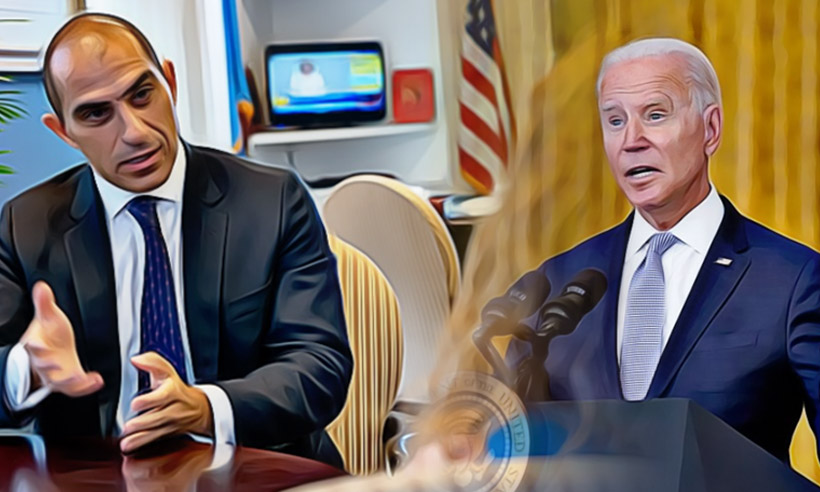
President Joe Biden intends to appoint Rostin Behnman as the new chair of the US Commodity Futures Trading Commission (CFTC), which is responsible for monitoring the derivatives market, including cryptocurrencies. 

The White House recently picked Behman on a permanent basis, a Bloomberg report revealed, while citing sources who said an official announcement is still weeks away. 

Rostin Behnman Selected as New CFTC Lead by Joe Biden

With Behnman’s appointment, the CFTC is expected to shift its focus to carbon emissions of derivatives. Behnman made waves last year when he sponsored an industry report that asked the American government to collect payments from businesses for their greenhouse gas emissions. Crypto-assets have also been on regulators’ radar for excessive energy consumption and it remains to be seen if Behnman would apply the same logic to the industry.

It is also anticipated that Behnman could lead a crackdown on derivatives trading, which is seen as a popular income source for Wall Street investors. 

As for digital assets, the CFTC claims that it has jurisdiction over virtual currencies like Bitcoin and CME Group Inc. — a global derivatives marketplace that lists futures contracts tied to the flagship crypto. But these claims have been challenged by SEC chair Gary Gensler, who like his predecessor Jay Clayton views all cryptocurrencies as securities.

Behnman was nominated to CFTC in 2017 under the Trump administration. Before that he worked as an aide to Senate Agriculture Committee Chair Debbie Stabenow. He was also a practicing lawyer in New York City and worked at the New Jersey Office of the Attorney General at one point.

The Bitter Fight for the Future of Digital Assets Regulation

The CFTC is currently engaged in a bitter fight with the SEC for control over digital assets regulations. Their conflict stems from differing classifications of cryptocurrencies. The CFTC firmly believes Bitcoin and other assets of its ilk are commodities and therefore subject to its jurisdiction. Meanwhile, the SEC argues that all initial coin offerings should be considered as securities, which need regulation to protect investor interests. 

Earlier this month, CFTC commissioner Brian Quintenz tweeted that SEC has no authority on pure commodities, including crypto assets. Also, not long ago, Republican lawmaker Patrick McHenry stated that SEC’s demand for extended regulation of digital assets is just a “blatant power grab.”

Intel Reveals Minor Stake in Publicly Traded Crypto Exchange Coinbase

Intel Coinbase Stake

The world’s largest semiconductor chip manufacturer Intel revealed on Friday that it holds a minor stake in American cryptocurrency exchange Coinbase Inc.

Intel Holds Shares Worth Less Than $1 Million in Crypto Exchange Coinbase

According to a filing with the US Securities and Exchange Commission (SEC), Intel owns 3,014 shares of Coinbase’s class A common stock. These holdings are equivalent to $788,191 at COIN’s current market price.

Several major players from technology and finance have shown interest in Coinbase — which became a publicly traded company in April and saw its valuation rise to $112 billion on the first day of listing. 

In a recent quarterly earnings report, Coinbase disclosed that it had formed partnerships with Tesla CEO Elon Musk and his company SpaceX, PNC Bank, Third Point LLC, and star stock picker Cathie Wood’s Ark Investment. The exchange also highlighted that it had 9,000 institutional investors and 10 of the top 100 largest hedge funds were its clients:

“Institutions are choosing Coinbase for the deep pools of liquidity we offer, our sophisticated algorithmic order execution, as well as the trust that comes with being a public company.”

Intel’s Participation in Blockchain Ventures

As a tech pioneer, Intel has its hands in various blockchain-related projects. Two years ago, it released a commercial blockchain package based on the Hyperledger ecosystem, using its own hardware. The package provided a foundation for building applications while leveraging Intel’s hardware such as Xeon processors and Ethernet adapters.

In 2018, the chip giant won a patent connected to energy-efficient cryptocurrency mining. Interestingly, at one point Intel was manufacturing chips for a mining operation helmed by 21 Inc, which was later rebranded Earn.com and ultimately acquired by Coinbase.

Last year, the company teamed up with IBM to develop a blockchain-based security feature called Fabric Private Chaincode targeted at privacy-focused platforms. The technology was designed to increase trust in high-stake operations such as auctioning of wireless spectrum. 

Bitcoin Bulls are Aiming for $50,000 Ahead of Friday’s BTC Options Expiry

Bitcoin bulls Options expiry

On Friday, Aug. 13, a total of $675 million in Bitcoin (BTC) options expiry, and the bulls now are aiming for $50,000 following a 20% weekly rise to $46,743.

Bitcoin (BTC) Bulls Are Aiming For $50,000 Ahead of BTC Options Expiry

Deposits to derivatives exchanges have reached their lowest levels since May 11, while businesses with 10,000 to 100,000 BTC have added almost $12 billion to their holdings, indicating a favorable shift in institutional investor sentiment.

Meanwhile, Bitcoin acceptance is increasing as Venmo, a PayPal-owned payments business has increased its support by enabling credit cards to convert their cash back incentives into four cryptocurrencies.

Investors may be reacting to a new wave of indirect exposure exchange-traded fund (ETF) filings with the US Securities and Exchange Commission. 

On August 10, asset manager VanEck made the most recent request.

BitMEX’s $100 Million Settlement And Prospects For An ETF Boost Optimistic Wagers

On August 3, the United States Securities and Exchange Commission head Gary Gensler suggested that if specified improvements were made to the instrument, the SEC might be more receptive to approving a BTC ETF application.

BitMEX also agreed to settle a dispute with the US Commodity Futures Trading Commission and the Financial Crimes Enforcement Network this week. 

BitMEX will pay up to $100 million in civil monetary penalties as part of the settlement “for illegally operating a cryptocurrency trading platform and anti-money laundering breaches.”

This optimistic newsflow fueled some bullish wagers for Friday’s options expiry, but some traders got too enthusiastic.

The sum is comparable to the previous week’s $625 million options expiry, which had a 1.78 call-to-put ratio at the time. 

This week, neutral-to-bullish call options are dominating, while defensive put options are trading below the current $46,500 price level.

If Bitcoin maintains over $46,000 at 8:00 a.m. ET on Aug. 13, all 5,278 BTC put option contracts will become worthless.

On the other side, just 5,335 BTC call (purchase) options will be exercised, amounting to $245 million.

Investors became too enthusiastic, purchasing $48,000 and higher bullish options, reducing the $435 million value of these call options.

Bears Hope For A Bitcoin Price Of Less Than $44,000

Bulls may utilize their substantial advantage to drive the price higher since hitting $48,000 would raise the options expiration notional by $80 million. 

In this situation, the bulls’ advantage would increase to $325 million, indicating even greater market domination. The only way out for the bears is for the contract to expire below $44,000.

If this happens on Friday, the bulls’ lead will be reduced to a pitiful $80 million.

Although it is too early to call the race, the incentives for lowering the Bitcoin price by 5% to $46,500 do not appear to be worth the effort.