
For years now, online gamblers have been able to wager their hard-earned cash through a number of highly secure and convenient eWallets.
Virtually all iGaming platforms now accept this type of electronic payment too, with the notion of an online PayPal casino now fully established in the consumer mainstream.
At the same time, we’ve also seen a stark rise in the number of so-called “crypto casinos” of late. Now, more than 30,000 keen gamblers are using cryptocurrencies to play at Blockchain casinos each week, while more than 4,000 people wager digital currencies at more mainstream platforms across the globe.
In this article, we’ll ask whether you can use standard eWallets to transfer crypto assets, while appraising the rise of specialist cryptocurrency wallets in the marketplace. Let’s get into it!
Does PayPal and Similar eWallets Accept Crypto Payments?
Let’s start with the good news; as established eWallets like PayPal (which remains the market leader) have recently evolved to support the transfer of native crypto assets between the site and similar wallets (or exchanges).
This has certainly boosted the relevance and appeal of the PayPal platform, affording them the flexibility to move some crypto assets both within the eWallet’s online infrastructure and out into a significant number of compatible resources.
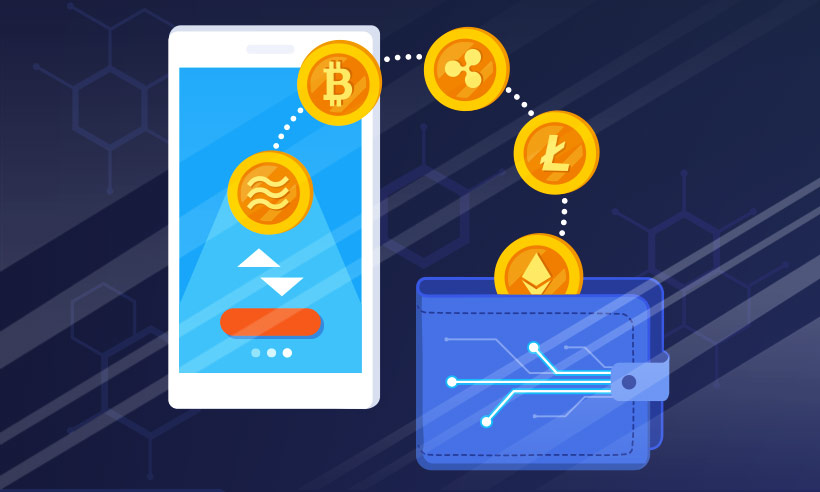
While it should be noted that PayPal only currently offers transfer facilities to a limited range of crypto assets (namely Bitcoin, Ethereum, Bitcoin Cash and Litecoin), it’s an important development in that it allows customers to interact more freely with the broadly crypto ecosystem.
This represents another step in the evolution of cryptocurrency as it moves into the consumer mainstream, while making it considerably easier for certain cryptocurrency holders to gamble and wager online.
What’s more, PayPal has blazed a trail for others to follow in more recent times. More specifically, Skrill has created a facility through which users can convert fiat currencies into selected crypto assets when using their account, simply by sending the capital directly to a registered crypto wallet or address.
At the same time, Neteller users can create and access a cryptocurrency balance through their account.
For such users who have an available cryptocurrency balance, it’s now possible to send selected crypto tokens to other Neteller members simply by using their email address or mobile number.
Currently, Neteller doesn’t allow you to transfer crypto assets to users or platforms outside of the eWallet’s infrastructure, although it’s likely to follow PayPal’s example by integrating this feature at some point in the future.
Using a Dedicated Crypto Wallet When Gambling – The Key Considerations
PayPal has more than 426 million users and merchants across the globe, while more than 19 billion transactions were completed during 2021 alone.
Given that this platform and similar eWallets now support the transfer of certain native crypto tokens with similar wallets and exchanges, it’s fair to surmise that PayPal has also unlocked secure and anonymous online gambling for a much larger worldwide audience.
More specifically, casual crypto users who like to wager nominal amounts online can now trade through their PayPal balance (which is more widely accepted by casino platforms) without compromising on the benefit of crypto gambling.
Additionally, you can withdraw winnings directly and immediately into PayPal before ensuring that they’re transferred into a crypto wallet of your choice.
Of course, you’ll still need to use a dedicated crypto wallet to generate, receive and store tokens, whether you deal primarily in Bitcoin or use a second-generation asset like Ethereum.
This will need to be opened and accessed alongside your PayPal or Skrill account, with two primary types of crypto wallet currently available to users:
- #1. Cold Wallet Storage: Also referred to as ‘hardware’ wallets, this type of resource is corporeal in nature and tends to resemble a memory stick or similar device. Cold wallets are not connected to the Internet and provide an additional layer of security, making them ideal for users who hold large amounts of cryptocurrency or wager a significant number of tokens but on an infrequent basis.
- #2. Hot Wallet Storage: Embodied by online wallets such as ‘Blockchain’ and ‘MyEtherWallet’, hot storage wallets are constantly connected to the Internet and ideal for frequent Internet users and online gamblers. However, constant connectivity means that hot wallets aren’t as secure as cold or hardware alternatives, so you should only use them to hold relatively small amounts of money and a minimal gambling bankroll.
Clearly, you can tailor your choice of wallet to suit the nature and volume of your wagering activity, while also maintaining an active eWallet account that offers far better access to online gambling sites.