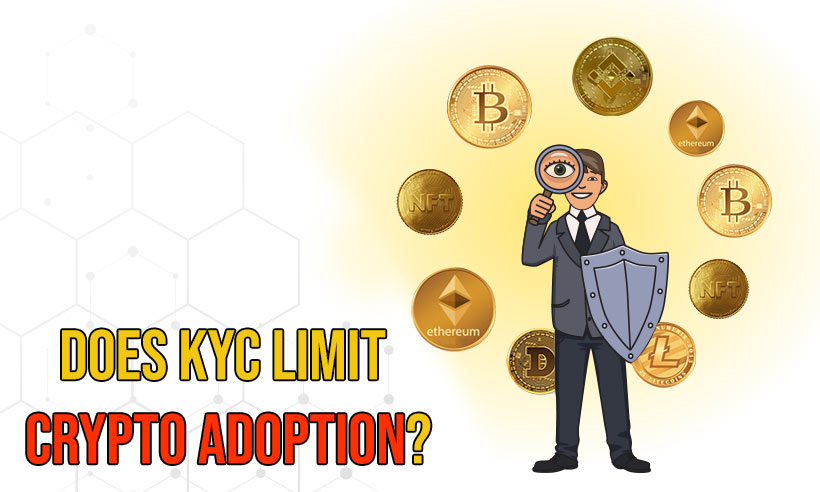
How Does KYC Limit Cryptocurrency Mass Adoption?

Cryptocurrency Mass Adoption

Chainalysis estimates that the global adoption rate of digital currencies rose by 880% in 2021. Undoubtedly, millions of users are eager to understand and invest in this vast industry. The massive attention is, however, attracting multiple regulatory interventions which compel the use of KYC procedures. Without a clear framework, such policies end up affecting the digital asset economy. The following article, therefore, hopes to give an insight into how KYC may limit cryptocurrency mass adoption.

What is KYC?

Know Your Customer, commonly known as KYC, refers to processes that analyze a user’s identity. This procedure allows financial institutions and digital asset platforms to examine a customer’s background as they extend their services. Generally, users have to submit their personal data to access a crypto platform’s services. KYC serves as a safety mechanism that eliminates bad actors from committing any financial crime. Such crimes may include activities like money laundering, illegal trafficking, terrorist financing, and many more.

How KYC Limits Cryptocurrency Mass Adoption

KYC may affect the acceptance rate of digital currencies in the following ways:

1. Impersonation 

A number of crypto-based projects may ask for private user-data to access their products. Once this information falls into the wrong hands, cases of impersonation may begin to spread. By definition, impersonation involves the act of stealing a user’s data to perform fraudulent activities. Hence, attackers can use an individual’s identity to obtain funds from illegal sources or undertake money laundering. Impersonation could create a bad track record for innocent users who are profit-oriented. Thus, such a barrier can suppress the mainstream adoption of virtual currencies.

2. Constant Regulatory Scrutiny

Failure to adopt KYC could attract significant regulatory intervention, thereby limiting cryptocurrency mass adoption. In most cases, government bodies might enforce heavy penalties on crypto-based platforms. The act of penalizing inhibits the growth of upcoming projects in the crypto industry.

3. KYC Bypasses Crypto Privacy

Transacting in the virtual asset space eliminates the need to use personal data. At the very least, users will only require an address and a digital wallet to perform a trade. Transaction details are then stored in a blockchain network without revealing the transacting parties. Therefore, the concept gives cryptocurrencies an anonymous layout that conserves the principles of crypto privacy. Introducing KYC bypasses this privacy since platforms will request personal information to render their services, thereby, limiting cryptocurrency mass adoption.

4. Security Concerns

Implementing KYC could raise security concerns which could lead to financial losses. The process might compromise a user’s holdings particularly when they are operating with an online platform. Thus, cybercriminals can leverage KYC details and illegally obtain the users’ funds.

5. KYC Bars Decentralization

In the crypto sphere, decentralization represents a structure that operates without any central supervision. Multiple decentralized computers are responsible for verifying every transaction in a blockchain network. This structure ensures that the decision-making process remains in the hands of the community. More importantly, transactions get verified faster than in centralized banks. Enforcing KYC limits the idea of decentralization because platforms will have to follow the regulators’ requirements.

KYC Conflicts in the Crypto Space

The pressure to implement KYC is becoming more apparent in various crypto platforms. These demands come from different regulatory bodies which advise crypto exchanges to collect private information. Examples of such platforms include:

Binance

In 2021, Binance was under the watchful eye of regulators situated across different countries. The exchange sought to strengthen its verification requirements as a means of minimizing lawful scrutiny. At the moment, Binance’s KYC requires users to submit their government IDs and pass through a facial verification process.

This procedure allows customers to access basic services like crypto trading, withdrawals, and deposits. The new guideline also requires existing users to comply with the verification process. Hence, users who fail to complete the procedure will have limited access to Binance’s services. Ideally, an incomplete KYC only gives access to withdrawals, redemptions, and order cancellations. The move by Binance was a necessary step that would aid in reducing the friction between them and national regulators.

BitMex

BitMex is yet another exchange that made adjustments to its KYC requirements. Before, customers would only provide their email addresses and create a password to trade with the platform. Later on, BitMex began to request additional information like a user’s trading experience and location. Introducing this mechanism enables BitMex to explore more opportunities as it complies with the governing bodies.

Conclusion

KYC procedures oppose several principles that cryptocurrencies uphold. In essence, the digital asset economy embraces features like decentralization, privacy, and security. Requesting personal data from users deviates the original idea that virtual currencies carry. As a result, investors may become susceptible to identity theft and other cyber-related activities. KYC could also limit innovation since platforms will have to follow every set guideline. In some cases, these platforms incur hefty penalties for failing to adhere to the regulatory institutions. As such, constant regulatory pressure to instill KYC not only hinders innovation but also cripples cryptocurrency mass adoption.


Four Reasons Why Governments Should Hold BTC in Their National Reserves

Governments BTC National Reserves

Bitcoin (BTC) has grown so quickly in the last few years that it is now the most well-known cryptocurrency. As recently as November 2021, its value reached an all-time high as people found out how useful it is in the real world. Bitcoin is mostly used as an alternative way to pay for things, but it is also a good way to save money because it is more resistant to inflation. In some sections, it is felt that Bitcoin’s continued upswing and widespread use around the world could see it replace the U.S. dollar as the world’s reserve currency in the long run. Such views have become increasingly popular lately and many believe that it’s high time governments across the world started holding BTC in their national reserves.

How did the Dollar Become the World’s Reserve Currency?

78 years ago, 730 delegates from 44 countries met in Bretton Woods, New Hampshire, to chart a post-war financial order for the world. The deliberations laid the foundation for the global financial system we have today. They led to the founding of the International Monetary Fund (IMF), the International Bank for Reconstruction and Development, and the U.S. dollar as the global reserve currency.

The U.S. dollar remains the dominant reserve asset. Most countries keep a monetary reserve consisting of the dollar, precious metals, and other highly liquid assets to meet their financial obligations. These reserves are meant to regulate a country’s money supply and manage liquidity for transactions in the global market. However, the United States has been accused of using the dollar’s disproportionate influence in global trade to perpetuate neo-imperialism and neo-colonialism. And with the rise of other competing financial and geopolitical powers such as Russia and China, there has been an increase in calls to curb “America’s exorbitant privilege” by replacing the U.S. dollar as the world’s reserve currency. This is where we feel Bitcoin comes in and governments should seriously start considering holding BTC in their national reserves.

Should Governments Hold BTC in National Reserves?

In 2021, El Salvador made bitcoin legal tender, showing that the cryptocurrency may be on track to compete with the world’s most important reserve currencies if more countries start using it. But can BTC be a good asset for governments to hold in their national reserves, to either complement the dollar or replace it? Below, we give a few reasons why we think more governments should consider adding BTC to their national reserves:

  • Trust

Apart from the U.S. dollar, the IMF has also approved other reserve currencies such as the euro, the British pound, the Japanese yen, and the Chinese yuan. But the issue of trust still plagues all these currencies. Countries such as the United States and China have been known to mismanage their currencies by printing excess money or engaging in pointless currency wars.

Such actions often have a detrimental effect on other countries’ national reserves. But with BTC as a reserve currency, a government can better protect itself from the economic shenanigans of more powerful nations.

  • Shedding Undue American Influence

Many countries in Central and South America rely largely or exclusively on the dollar. For instance, more than a fifth of El Salvador’s GDP comes from remittances from the United States. This means that such countries often find themselves operating within the U.S. Federal Reserve’s scope of influence. Any changes in the United States’ fiscal policy tend to have an effect, good or bad, on the economies of these countries. This makes it harder for these countries to exercise their sovereignty.

But if these governments were to adopt the “Bitcoin Standard,” legalize BTC, and incorporate it into their national reserves, they would certainly free themselves and their economies from the undue influence of American policymaking.

  • Combating Inflation

Fiat currencies are inflationary in nature. Governments can always print more of them. For example, countries like Argentina, Venezuela, and Zimbabwe have been hit by hyperinflation because their governments have printed money without thinking. But unlike fiat, BTC has a finite supply capped at 21 million units. This in-built scarcity means that, over time, the cryptocurrency has the potential to be extremely valuable.

So, putting BTC in a country’s national reserve could not only protect it from inflation caused by the excessive printing of fiat currencies like the dollar or the yuan, but it could also make the country richer in the long run if the value of BTC goes up over time as expected.

  • Protect the Economy from the Effects of Currency Manipulation

The global currency market has been affected by currency manipulation on multiple occasions. Several countries regularly and intentionally devalue their currencies in relation to other currencies to reduce the cost of exports and gain an advantage over competing nations. Since Bitcoin is decentralized and can’t be manipulated in any way, a country with BTC reserves could protect its economy from the bad effects of currency manipulation.

Final Thoughts

BTC has many of the attributes required to function as a reserve currency- it is portable, indestructible, divisible, recognizable, homogenous, valuable, and has utility. However, most governments are still wary about cryptocurrencies as they fear they could enable citizens to circumvent capital controls and destabilize existing financial infrastructure systems. However, if they are to deal with the issues of currency manipulation, inflation, and undue American influence, it’s high time that governments start adding BTC to their national reserves.

Here Are The Top 5 DeFi Tokens of the Week

Top 5 DeFi Tokens

The Total value locked (TVL) in DeFi protocols is currently 72 billion dollars worth of assets. At the peak of the bull run, TVL was around 230 billion dollars. DeFi protocols have worked frictionless and smooth during the previous quarter’s downtrend. So, if you have been thinking of investing in DeFi tokens, here is a list of the top 5 DeFi tokens of the week. These protocols are performing well during this bear market also.

Top 5 DeFi Tokens of the Week

1. ThorChain

Based on Tendermint and Cosmos SDK, ThorChain is a decentralized cross-chain liquidity system. It merely decides how to move assets in response to user activities; it does not peg or wrap items. As a leaderless vault manager, THORChain makes sure that each step of the process is byzantine-fault tolerant.

The main goal of THORChain is to provide cross-chain liquidity while preventing centralization and capture. Only the assets stored in THORChain’s vaults are secured, and the security of those assets is backed by financial assurances. The THORChain ecosystem is powered by the token RUNE, which also offers the financial incentives needed to keep the network safe. The four crucial roles for RUNE are:

  • Liquidity (as a settlement asset)
  • Security (as a Sybil-resistant mechanism, and a means for driving economic behavior)
  • Governance (signaling priority on-chain)
  • Incentives (paying out rewards, charging fees, subsidizing gas)

RUNE is used for network transaction fees. Both a fixed network price and a dynamic slip-based fee are applied to all swaps.

2. Uniswap

On the Ethereum blockchain, cryptocurrencies can be exchanged using the Uniswap protocol. In order to promote censorship resistance, security, and self-custody, the protocol is built as a collection of persistent, non-upgradable smart contracts. It is also intended to operate without the use of any trusted intermediaries who might arbitrarily impose access restrictions.

The Uniswap protocol currently exists in three versions. Both V1 and V2 are open source and GPL-licensed. Concentrated liquidity—liquidity that is distributed within a specific price range—is the key concept of Uniswap v3. In previous iterations, liquidity was dispersed uniformly between 0 and infinity throughout the price curve.

The Uniswap community treasury, the Uniswap protocol governance, and the protocol fee switch are all controlled by the ERC-20 token UNI on the Ethereum network (0.05 percent of the fee would be collected by UNI token holders if activated).

3. Aave

Users can engage in Aave, a decentralized non-custodial liquidity system, as depositors or borrowers. Borrowers have the option of borrowing in an overcollateralized (perpetually) or undercollateralized (one-block liquidity) method, while depositors offer liquidity to the market in exchange for passive income. The amount you can borrow up to depends on the value you have deposited and the liquidity that is readily available. For instance, if there isn’t enough liquidity or if your health prevents it, you can’t borrow an asset.

Transacting with the protocol necessitates fees for using the Ethereum Blockchain, which is based on the network’s health and the intricacy of the transactions. Gas expenses have been reduced for all necessary functions with Aave V3. Across the board, gas prices have decreased by about 20–25%.

4. Synthetix

Built on Ethereum and Optimistic (a layer two scaling solution built on Ethereum), Synthetix is a DeFi platform for issuing synthetic assets. The Synthetix Network Token (SNX), which when locked in the contract authorizes the generation of synthetic assets, serves as security for these virtual assets (Synths).

Users can make conversions between Synths directly through the smart contract using this pooled collateral architecture, doing away with the requirement for counterparties. The liquidity and slippage problems that DEXs have are resolved by this approach. Currently, Synthetix supports fictitious fiat money, long and short cryptocurrency positions, and commodities.

On top of the Synthetix architecture, numerous protocols have developed. Kwenta, which provides spot exchanges and perpetual futures, Lyra, which provides options trading, Curve, which provides cross-asset swaps, and dHEDGE, which enables investors to pool their funds and provides a decentralized hedge fund service.

Owners of SNX are encouraged to stake their tokens because integrators pay them a proportionate share of the fees made from activity on Synthetix (Kwenta, Lyra, Curve, dHEDGE, and many others). The value of the SNX token is derived from the privilege to participate in the network and capture fees made from Synth exchanges. Having SNX is not necessary in order to trade on the Synthetix network.

5. Lido DAO

A group called Lido DAO creates liquid staking services for Ethereum. Lido enables users to gain staking benefits without maintaining staking infrastructure or locking assets. Users can stake ether in Lido smart contracts and obtain tokenized staked ether in the form of stETH.

The tokens are subsequently staked by the DAO-controlled smart contracts with the DAO’s chosen node operators. The DAO is in charge of the money that users deposit; node operators never have access to the money directly.

The stETH token can be transferred at any moment and is not subject to the restrictions associated with a lack of liquidity, unlike staked ether. The entire amount of staked ether will be multiplied by rewards and deducted from any slashing fines to determine the balance of the stETH token.

The project’s native token is LDO. Various use cases of the LDO token are:

  • Governance: Users can vote on ideas to determine important factors including fee structures, node operators, and oracle assignments.
  • Value Accrual: The DAO, a slashing insurance fund, and node operators each receive 10% of the earnings from staking. The Lido DAO gains value by obtaining 5% of all real-time staking payouts.
  • Liquidity Incentive: In exchange for LDO rewards, users can lend liquidity to the liquid-staking tokens.

Conclusion

So, these were the top 5 DeFi tokens of this week. These protocols are leaders in their service category of DeFi. However, these protocols need to make some changes in tokenomics to better serve the token holders. Also, token holders need to participate actively in governance. If these protocols will keep on innovating, it will not be easy to replace them. Network effects and strong development teams are the reason for the success of these protocols.

Economic Impact of Legalizing Bitcoin

Economic Impact of Legalizing Bitcoin

Bitcoin, the world’s first cryptocurrency, has grown to lead the digital currency economy with a market capitalization value of approximately $1.03 trillion in May 2022. With the rise of bitcoin use, El Salvador became the first country to legalize bitcoin as a legal tender. El Salvador’s choice created a domino effect with many other countries considering the move. However, in order to do so, it is vital that the administrations understand the economic impact of legalizing Bitcoin. Thus, we should explore the economic results of identifying bitcoin as a legal tender in a country.

Promote Financial Independence

Bitcoin legalization is an effective way of providing an alternative currency for use in a given country. As with most countries contemplating the move, a potential economic impact of legalizing Bitcoin would be the direct solution to the use of weak or foreign currencies. Bitcoin, being decentralized in nature, is beyond the control of the country in question. Thus, while using such currencies, countries are limited with regard to monetary policy and decision-making.

As evident in the case of El Salvador, the country’s reliance on the US dollar created limited financial control for the country’s financial sector. However, with the use of bitcoin, the country became better positioned to determine its financial position and adjust it accordingly. This change has enabled the country to create and enforce policies that will shape its financial future rather than relying on outside influences.

Foreign Investment

In the wake of crypto acceptance into the economy, bitcoin has become the staple of digital finance. The uptake of cryptos has seen the tech-savvy and young population being the driving force behind the digital currency surge. Over the last few years, cryptos such as bitcoin have become tightly interwoven with innovation and investments. Despite cryptos being touted as independent of traditional financial institutions, this is not the case in the current markets. This correlation has seen many new upstarts capitalize on crypto use to raise capital from global investors.

As indicated by current reports, the correlation between cryptos and the Nasdaq stands at an all-time high. This correlation is largely due to the fact that over the last few years, many upstarts have gravitated towards crypto use. These companies have used crypto during their funding stages. Thus, in a country where crypto is legal, such investments would increase. The increase is partially due to many governments’ strong-armed approach to bitcoin. Therefore, another economic impact of legalizing Bitcoin would be the international investments that will flow into the country via ventures looking to set up under a conducive crypto economy.

Development of an International Economy

Cryptocurrencies are typically decentralized and unlimited by geographical location. The nature of cryptos allows users to transact across borders in a safe and timely manner from anywhere in the world. As a result, these features allow users to experience extensive freedom in exercising financial options. The legalization of bitcoin as a tender may thus work to promote international trade and money transfer.

For many countries, remittances make up a significant part of the economy. With the legalization of bitcoin, these funds can be quickly and securely transferred at low fees. This move may work to ease remittance from abroad and promote the growth of the local economy as evident in El Salvador. The ease of fund transfer may also encourage international trade with businesses unlocking the global feature of cryptos to expand.

Market Instability

As with all things, the use of cryptos has both advantages and disadvantages. Amongst the many characteristics of cryptos, their volatile nature is the biggest Achilles-heel they possess. This trait makes prices of tokens such as bitcoin fluctuate unpredictably. Additionally, the issue of cryptos has left many gray areas with regard to policy and regulation. These gaps will in turn work to create even more uncertainty for the market in question.

With the price of bitcoin being controlled by ownership and trading on exchanges, the weakness of cryptos affects normal markets. The fluctuation of bitcoin prices as currently evident has made itself a bane to the development of the country’s market. The lack of adequate policies and regulatory frameworks at the local and international levels breeds even more uncertainty. These combined aspects work to negate the growth of the economy and may even cause it to regress. Therefore, market instability could be the most adverse economic impact of legalizing Bitcoin.

Author’s Take

Bitcoin has become one of the world’s greatest advancements since the turn of the century. The use of cryptos has revolutionized digital finance. Identifying bitcoin as a legal tender in El Salvador has led to some economic implications. These implications are mostly positive for poor and struggling countries with limited control over their economies. However, while seemingly beneficial for struggling economies, the move’s real outcomes remain to be seen. Given that the legalization is still in its early stages, only time will tell if the implications are positive in the long term.

Uncommon Factors That Drive a Cryptocurrency’s Price

Factors Cryptocurrency's Price

Cryptocurrencies offer a unique and secure way to conduct transactions online, without the need for a third party. However, not all cryptocurrencies are created equal. That’s because different cryptocurrencies have different strengths and weaknesses. As a volatile asset, cryptos have been associated with increased risk to users. One of the most important factors that determine a cryptocurrency’s price is its supply and demand. In this article, we’ll explore some of the uncommon factors that drive the price of a cryptocurrency.

Internal Factors

Hash rates

Hash rates are figures used to map the computation power available on a given blockchain network via mining. They are the indicators used to assess the health of a given blockchain network. A hash rate is an integral facet of cryptos and the blockchain system that serves as the backbone of any cryptocurrency. Hashing enables the blockchain network to run and validate data stored on the distributed ledgers of the crypto. Thus, while being an integral part of the network, hashing is often regarded as a maintenance aspect of blockchain networks. The networks’ hash rate is subject to fluctuations that stabilize and have minimal effects in the long term.

However, this feature has in the recent past showcased its influence on the price of crypto. In the case of ethereum, the network’s hash rate decreased dramatically. This lowered the network’s computing power like never before leading to a backlog of transactions. As a result of the low hash rate, the network’s gas fees increased, heightening transaction costs. The domino effect continued with ethereum prices also taking a plunge in an incident like never before.

Rule Changes

In the world of cryptos, Decentralized Autonomous Organizations (DAOs) are an integral management option. The term refers to entities based on a given crypto community. The DAOs work to make decisions and enforce some rules on the blockchain network. The DAOs can also introduce rule changes to the network through an extensive process. In normal cases, rule changes made by DAOs rarely affect the operation of the network However, in some cases, the changes made to rules result in price fluctuations. Such rule changes are often infrequent but very impactful when they occur.

Political Factors

Restrictions

In this case, restrictions refer to outright bans such as those directed at cryptocurrencies and ICOs. Bans are typically rare events that showcase strong opposition to a given subject or sector. In rare incidents, some governments around the world have taken steps to completely ban cryptos. These governments completely restrict citizens from owning, trading, and mining cryptos within the country’s jurisdiction. As a result of their sudden and obtuse nature, bans lead to negative implications for the crypto economy, which makes them one of the most important factors driving a cryptocurrency’s price.

As was evident during China’s crackdown on crypto, the global crypto economy suffered great losses. The choice to ban cryptos erased a significant portion of the world’s crypto economy in an instant. This ban had long-term implications that negatively impacted crypto prices and the economy at large. This ban has remained a marquee event in the history of cryptos. The uncommon government action influenced crypto prices in ways that have remained significant and unparalleled to date.

Legalization

In the current world, crypto uptake has grown significantly. As more people use and invest in cryptocurrencies, cryptos have become more mainstream. With the combination of cryptos’ inherent features and the steady rise in use, bitcoin became legalized. This legalization process converted the crypto into a legal tender for use in countries as first seen in El Salvador. This move to legalize bitcoin served as a precedent for many others where the crypto remains a virtual asset.

Due to the legalization action, bitcoin prices have shifted to match the economic situation. As more users are added to the platform, price changes have also followed suit. Given that only one other country has legalized bitcoin, the likelihood of such a shift remains low. The turbulent economy has resulted in many countries waiting out to better understand the move’s economic implications.

Author’s Take

With the advent of bitcoin, many other cryptos followed suit to expand the revolution that is the digital economy. Cryptocurrencies have taken up a large share of the market with several common and uncommon factors determining a cryptocurrency’s price. Internal factors such as rule changes and political factors have collectively worked to alter crypto prices over the last few years. However, with the changing global economy, some of the effects of the influences may grow tenfold. Some political factors such as legalization and restrictions may increase, influencing crypto prices. Given the uncertainty surrounding the market, these changes may recur often and cause even bigger shifts in cryptocurrency prices across the market.

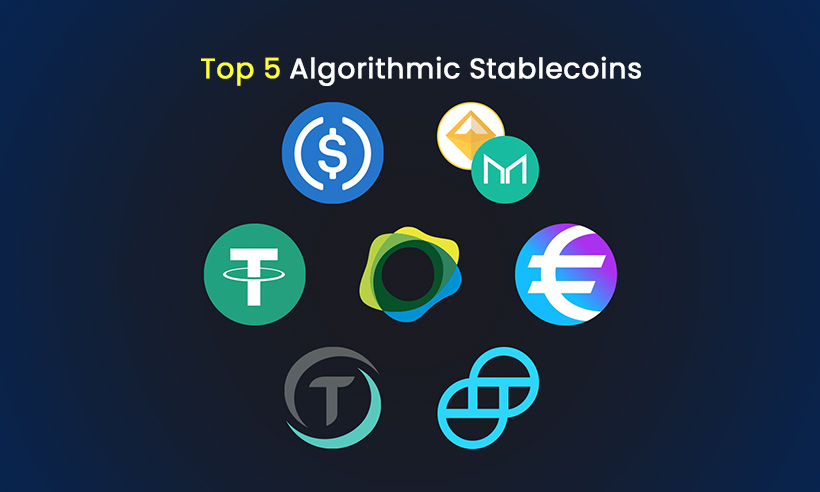
The Top Five Algorithmic Stablecoins Explained in Detail

Top Five Algorithmic Stablecoins

The key factor behind a stablecoin’s rising appeal in the cryptocurrency community is the practice of pegging it to an underlying asset. Stablecoins that use algorithms that don’t have any collateral or low collateral associated with them are called algorithmic stablecoins. The term “non-collateralized” stablecoins is used to describe them as a result. Algorithmic Stablecoins are designed to increase market price stability without the need for a central authority and are decentralized. This is frequently accomplished by pre-programming the supply to match the demand for the asset. If you’ve been planning to invest in algorithmic stablecoins, this guide on the top five algorithmic stablecoins could come in handy for you. So. let’s take a look at the top 5 algorithmic stablecoins in the market.

1. FRAX

The first stablecoin protocol using a fractional algorithm is Frax. It is one of the best algorithmic stablecoins. Frax is now implemented on Ethereum and 12 other chains and is open-source, permissionless, and on-chain. The aim of the Frax protocol is to replace digital assets with a fixed supply, like BTC, with a highly scalable, decentralized, algorithmic currency. Two stablecoins, FRAX and FPI, are part of the Frax ecosystem (pegged to the Consumer Price Index). To provide a new scalable, trustless, stable on-chain currency, Frax is the first stablecoin protocol to implement design ideas from completely collateralized (such as Maker Protocol) and fully algorithmic stablecoins. Since FRAX is tied 1:1 to USD, it aims to maintain a value of 1 FRAX = 1 USD$.

A stablecoin named FRAX and a governance token called FXS are implemented under the Frax protocol. FRAX can be backed by collateral and an algorithm- thanks to the two token scheme (burning and redeeming of FXS). When FXS and collateral are deposited into the Frax protocol contract, FRAX is created. The amount of collateral that must be placed to mint 1 FRAX is determined by the collateralization ratio. The ratio between collateral and the algorithm that makes the $1 FRAX value is determined by the Frax collateralization ratio.

Neutrino USD

In 2019, the Neutrino protocol was used to generate the algorithmic USD-pegged stablecoin known as Neutrino USD (USDN). The WAVES coin serves as USDN’s collateral. Smart contracts control all aspects of USDN operations, including issuance, staking, and reward payments. Given that WAVES backs every USDN token, arbitration bots can offset any deviations from the 1:1 peg.

Like other stablecoins, USDN enables cryptocurrency users to conduct transactions or exchange money between different applications (including exchanges) in a stable currency as opposed to historically volatile crypto-assets (such as WAVES or BTC). By securing WAVES in the contracts of the Neutrino Protocol, users can produce USDN. The opposite result would occur if USDN were sent back to Neutrino (i.e., destroy USDN to unlock the WAVES supply). The Ethereum ERC-20 blockchain supports the USDN assets that have been Waves-ported to the Ethereum network. The Waves blockchain’s smart contract locks the exchange gateway.

USDD

The TRON DAO Reserve has released the cryptocurrency USDD, which has steady pricing and a range of applications. The USDD’s stability, security, and value as a legitimate settlement currency are all enhanced by the assured over-collateralization using a variety of popular cryptocurrencies. USDD took a few weeks to come in a list of top five algorithmic stablecoins.

By allowing USDD to be used for electronic payments, the USDD protocol is dedicated to satisfying consumer demand for robust digital currency. To do this, a robust, decentralized, and tamper-proof USDD-USD system will be established by pegging the USDD protocol to the USD, the most extensively used fiat currency in the world. The protocol manages how currencies work and close the gap between digital assets and real-world uses. Whether a stablecoin protocol has enough asset value to support it determines its level of security.

The TRON DAO Reserve has added high-liquidity digital assets, including BTC, USDT, and TRX, for over-collateralization in the protocol based on the TRX burning mechanism provided by the USDD protocol. Given that the present minimum collateral ratio is set at 130 percent, the total amount of collateralized assets will always be much greater than the total value of USDD in circulation. The ratio will be able to dynamically change to preserve stability based on changing reserve asset values and market conditions, thanks to the responsive monetary policy instruments. For complete transparency, all collateral assets are kept in open on-chain accounts and posted on the TRON DAO Reserve website.

MIM

The Magic Internet Money token is a stablecoin tied to the USD, which is backed by tokens that pay interest! MIM must continue to be tied to the USD since it is a stablecoin. To keep things simple, arbitrage is used as the mechanic. Users with debt in MIM might see that the currency is trading below 1 USD on some markets and opt to purchase some MIM at a bargain to pay off some of their debt. This MIM acquisition will result in a price increase compared to their volume.

Users who own components (legal collateral) may elect to establish a position and sell the MIM they borrowed to use it elsewhere after noticing that it is trading on the market above 1 USD. With their volume, this transaction will result in a price reduction. Users who own other cryptocurrencies, whether stablecoins or not, may notice that MIM is trading in two of the marketplaces at different prices and decide to buy MIM in one of the markets where the price is below 1 US dollar and sell the MIM in another market where the price is at 1 USD or higher.

The majority of Market to Market arbitrage is typically carried out by automated bots that continuously scan pools for opportunities to profit from these pricing disparities. Price pegs may be quickly corrected as a result, which is advantageous. If algorithmic stablecoins regulation comes into effect, these algorithmic stablecoins might need to change their approach.

Fei USD

The objective of the Fei Protocol is to create the decentralized, $1-pegged stablecoin FEI scalably. The FEI peg mechanism is simple on a high level. The Fei Protocol algorithmically controls a reserve of tokens (Protocol controlled value) to enable direct FEI redemption at $1. FEI can be created and redeemed for $1 in security. On secondary markets, arbitrageurs guarantee a tight peg. Depending on the state of the market, DAI, ETH, and LUSD are among the assets that can be created or redeemed.

Protocol Controlled Value, or PCV, is the name for the protocol reserves. With the following objectives, the PCV is used in a mix of liquid and illiquid strategies:

They are maintaining the peg giving FEI and Tribe DAO goods utility and liquidity maximizing yields in agriculture. Tribe benefits from protocol productivity while also acting as a governance tool.

Tribe guarantees reserve deficits, and if PCV ever falls below 100% collateralization, an on-chain recovery mechanism would issue a new TRIBE to repurchase FEI debt. When there is a surplus, the protocol uses FEI to purchase TRIBE back off the market at a portion of the excess.

Wrapping Up

So, here was a list of the top five algorithmic stabelcoins. Please remember that there are risks in algorithmic stablecoins. Do your research before using algorithmic stablecoins. This article is for educational purposes only and shouldn’t be misconstrued as investment advice.

Less Than a Dollar Cryptocurrencies to Diversify Your Portfolio in 2022

Less Than a Dollar Cryptocurrencies

Bitcoin’s last price below $1 was in February 2011. It’s almost impossible for this top cryptocurrency by price and market cap to reach that level again. As such, due to the coin’s current price, you may feel left out of the decade-long cryptocurrency’s huge returns  However, hundreds of other digital currencies are still below $1. Some investors like to buy low-priced cryptocurrencies as they believe they have the potential for rapid growth. In this article, we’ll look at 4 of the best cryptocurrencies currently available for under a dollar. Each project has its merits, and it’s up to you which better suits your investment strategy. So, here a 4 less than a dollar cryptocurrencies that you can consider investing in 2022.

Lucky Block

The overall best cryptocurrency under $1 to buy right now is the Lucky Block. This project is focused on creating a better lottery experience through the use of the Binance Smart Chain. It will be able to alter and improve the traditional draws. The goal of Lucky Block is to create a more transparent and fair lottery using blockchain technology. It eliminates the need for traditional methods of conducting these draws. It also allows people from all around the world to participate.

For those who are looking for the best less than a dollar cryptocurrencies to invest in, the Lucky Block is undoubtedly a good choice. Its creators have included various features that will allow you to earn a steady and long-term profit from its ownership. Lucky block’s creators claim that investors will get 10% of the total prize money. Another 10% will be used for marketing and growth, and the remaining 10% will be donated to charity. At the time of writing, the project’s market cap is around $111 million. The all-time high of Lucky Block was at $0.009. At the time of writing, the token is trading at around 0.001028.

Stellar

Stellar is a multi-currency payment network that uses blockchain technology to process transactions. It is also known as a blockchain protocol, and its various cryptocurrencies, such as Stellar Lumens, are used to process transactions. It has been gaining popularity in the cryptocurrency community due to its low fees and fast transaction speed. Currently, Stellar is in the 20s by market cap, and it has plenty of room for growth.

Stellar is a direct competitor to Bitcoin and aims to be more accessible to individuals. It also has a high developer engagement. Its inflation pool reward is 1% annually, which helps manage the value of assets. The Stellar token’s price has fluctuated between $0.15 and $0.60. The 2017 crypto bull run hit an all-time high of $0.79. Many believe it could hit another high of around $1.75 by 2025.

XRP

Through XRP’s consensus protocol, transactions can be approved by most of the network’s validators. It ensures that folks can conduct transactions quickly and at a low cost. As a result, it is one of the most energy-efficient cryptocurrencies. One of the most promising cryptocurrencies under $1, XRP is capable of replacing an outdated international money transfer system with a more modern one. Its banking connections are also encouraging, leading to a price hike if its legal standing improves.

During the bull run in 2017, this digital currency was one of the most popular less than a dollar cryptocurrencies. It then rose to an all-time high of around $3.40 in May 2021. However, since then, it has lost over 75% of its value. However, some experts believe it could hit a high of around $4 by 2025. Its relatively low price makes it an ideal entry point for investors.

Basic Attention Token

In May 2017, developers launched the Basic Attention Token. It’s a DeFi token that aims to address a specific need and provide a valuable service to the community. It is built on the Ethereum blockchain. The Basic Attention Token was created by the internet company Brave Software developers as part of their efforts to transform how the internet collects and treats data. At the time of writing, the Basic Attention Token’s market cap is almost $609.27 million. Its all-time high was almost $1.5 in November 2021. Since then, its price has dropped 57%.

Due to the low price of Basic Attention Token, it is considered a bargain at the moment. According to market experts, it could hit highs of around $3.30 by 2025. If you are still interested in this cryptocurrency, you could potentially make a 300% gain by investing now at $0.4.

Conclusion

One of the most critical factors investors should consider when assessing the potential of a coin is its market cap. Look for assets that are perceived to be undervalued compared to other companies in the same sector. For instance, if you are looking to invest in Fantom, you should consider its use cases as a competitor to that of Polygon. It’s essential to research a project before investing thoroughly. Find out what the project is about and compare its merits with other similar assets. Doing so will allow you to identify potential hidden gems and undervalued projects, thereby, helping you identify the most valuable less than a dollar cryptocurrencies that you can invest in.

Why Play-to-Earn Games Are a Perfect Match for India

play-to-earn games India

Gaming has evolved from a way to pass the time and amuse oneself to a way to reward gamers using blockchain-based technology like NFTs. Gamers were once thought of as people who waste their time playing video games rather than doing anything productive. However, that’s changed drastically over the last few years. Play-to-Earn video games allow users to earn real-world incentives. It embraces an open economy and compensates all players who contribute to the game. Gamers have the ability to “farm” digital assets like cryptocurrencies and NFTs to sell on the market. The worldwide gaming market could be valued at $268 billion by 2025. It’s reasonable to conclude that cryptocurrencies have penetrated this booming sector thanks to the benefits of blockchain technology. By letting developers recognize that they can build and transfer real value in the ecosystem, NFTs have played a crucial role in this expansion.

If you look at Axie Infinity’s past revenue and transaction volume, it’s plausible to conclude that P2E gaming models are a huge success even in developing countries, such as the Philippines, where a large chunk of its userbase is based. This begs the question, “Can this success of Play-to-Earn Games be replicated in India?” Yes. Why? There are several elements that make India an ideal market for P2E gaming.

The Scope of Play-to-Earn Games in India

Several lockdowns and restrictions enforced by the COVID-19 outbreak have changed the gaming business in India, a key market. India is thought to have a 30% internet penetration rate. Gaming is now a major economic driver. This industry could soon be providing tens of thousands of employment opportunities. In the coming years, gaming tech businesses will finalize their hiring strategies to grow.

India is the second-largest internet consumer in the world, with 560 million users. In India, mobile phone users make up 85% of the industry, PC users 11%, and tablet users 4%. According to the World Economic Forum, India’s gaming market has risen at a 15% annual rate due to the availability of cheap smartphones. Low data rates and 4G adoption have also helped. According to an AdTech research, about half of India’s mobile users started playing games during the outbreak. While the pandemic closed many doors, it improved the gaming market.

Gaming Giants in India are Betting on Blockchain

Gaming companies like JetSynthesis are exploring NFTs in games. Bengaluru’s Avisa Ventures is working with game creators to create two or three blockchain-based games. An NFT Gaming Guild and several investments have been made. The guild has also created a “Play to Earn” competition on Axie Infinity for Indian gamers to earn tokens to sell. NODWIN Gaming and RageFan partnered together to provide Chess NFTs during the Chess super League in October last year. RageFan, a Blockchain-based sports and entertainment marketplace, will offer CPL NFTs shortly.

A report by blockchain analytics firm DappRadar found that blockchain-based games account for 55% of daily Dapp traffic. According to industry analysts, these developments are a precursor to Web3 games. Web3 is expected to be propelled by decentralized infrastructure and machine-based data interpretation. Some crypto analysts expect that India will create more than 100 web3 unicorns by 2025.

Despite the overall optimism about the possibilities of NFT and blockchain-based gaming in India, many firms are hesitant to move forward due to the uncertainties surrounding cryptocurrency legislation. However, this might soon change since Indian officials recently imposed a tax slab on crypto trading, implying that future regulations are likely.

Closing Note

Given the current situation of the Indian gaming business and the willingness of Indian players, Play-to-Earn games are a promising opportunity for the Indian market. To capitalize on the rising interest in crypto and NFTs in India, non-fungible tokens (NFTs) are being used in games and esports, as well as the development of new blockchain-based games. As a result of the epidemic, eSports and NFT games have risen dramatically in India. India is seeing a rise in mobile gaming as a result of widespread smartphone use and inexpensive data costs. Due to Web3’s concept of monetizing your time and achievements, play-to-earn games in India are expected to grow dramatically over the next several years.


When Will the Current Crypto Bear Market Come to an End ?

Crypto Bear Market End

The main trigger of the 2021 bull run was the third Bitcoin halving event in May 2020. After two years of mass dump and bear market, the post-crypto bull cycle attracted a lot more attention internationally in 2021. However, the sentiments have now changed, and as per retail investors, the bear market or the crypto winter is here. Moreover, there are no definite indicators that can help in finding out when the crypto bear market will finally come to an end.

Every few years, the cryptocurrency and virtual asset sector enters an extended bear market. Bitcoin and Ethereum drop by double digits, while some other assets are completely wiped out. That is what we are again seeing in 2022. Assuming that the cryptocurrency sector will continue to be as cyclical as it has in the past, investors must wonder how long this crypto bear market will last.

Here’s a Glance at the Bear Markets Conditions

Over the past 3 months, with inflation spiking and recession issues spreading, Bitcoin has dropped from an excess of $48,000 to roughly $18,000. The current Bitcoin price is a long way off from the latest all-time high it hit in November 2021, when it went over $68,000. But even with the recent decline in price, Bitcoin is still more than twice as valuable as it was just a couple of years ago. For Bitcoin, these kinds of ups and downs are nothing new. A few top traders assume we’re in for another painful, extended period of low prices.

So, When Will This Crypto Bear Market End?

The crypto market is simply too unpredictable. We don’t know if prices have hit a bottom yet or if the cycle will continue as it has in the past. However, if you’re a long-term investor trying to make a small bet on this nascent sector, this could be your chance to accumulate your best position.

Importantly, when a crypto bear market comes to an end, it can result in a longer period of credible growth in terms of crypto prices, as seen in the case of the last crypto winter in 2020. In other words, even the most intense crypto winter in history came to an end in less than two years. Based on this trend, the ongoing bear market could be over earlier than the end of 2023, possibly a lot sooner.

Does Crypto Mining Pose Double Taxation Risks?

Crypto Mining Double Taxation

Increased crypto adoption has directly resulted in more demand for digital assets. Cryptocurrency mining has, in turn, been on the up over the years. Crypto legislation has been trying to catch up in light of its increased popularity and therein lies the issue. While crypto mining has been associated with tax evasion, is double taxation on crypto mining a possibility? Read on to find out.

Double Taxation and How It Occurs

Double taxation refers to a taxing principle where taxes are paid twice on the same income source. Its occurrence may be legal, and it does occur for some actors. A taxing authority may impose taxes twice during the same taxing period, on the same income source, for the same purpose, and within the same jurisdiction. Such an occurrence raises illegality concerns.

The Susceptibility of Crypto Mining to Double Taxation

Crypto mining may incur several possibilities of double taxation. They include the following.

1. Income Tax on Mining and Capital Tax

Crypto mining activities generate returns to the miner through mining rewards. In most jurisdictions, the rewards represent a taxable income and are subject to an income tax. Tax obligations don’t end there on paying the income tax as per the rates stated by the jurisdiction a miner is based in. The miner is obligated to pay a capital or wealth tax. It is especially applicable in instances where the mining process is done by a registered venture. Such a tax is levied on a venture’s assets, such as the mined coins. Individuals carrying out crypto mining activities would be exempted from paying a wealth tax in many countries. There is, however, a personal wealth tax in practice in some OECD nations.

2. Income Tax from Mining and Sales Tax from Transacting

Income tax from crypto mining is an obligation that every miner must do. The crypto receipts are expected to be spent at some point in time, either directly as payment for goods or when exchanged for fiat money. When such a transaction occurs, the crypto will attract a sales tax. The taxes on the sale of most goods and services come in the form of value-added tax (VAT), where some are exempt by the taxman. While VAT rates on cryptos are yet to be set, they are eligible to attract use tax at the exchange point. It presents another instance of crypto mining attracting double taxation.

3. Taxation at Corporate and Personal Levels

As has been observed in the first point, double taxation increases when a venture rather than a person does activities. When an incorporated crypto mining firm does the mining activities, double taxation in the form of corporate taxes and personal taxes becomes unavoidable. The first incidence is between the firm and its employees. The firm has to pay a corporate income tax on its financial receipts from mining activities. At the same time, its workers are obliged to pay an income tax on the salaries the corporation pays them.

The second is income taxes between the firm and its shareholders. One tax is paid on the corporate level as corporate income tax, while the second is by shareholders as income tax in dividends issued. The third is as capital taxes on the firm as well as shareholders. The corporate is obliged to pay the wealth or capital gains taxes on its mining receipts holdings. Similarly, the shareholders are required to pay capital gains taxes on their holdings from the corporation’s mining activities.

4. Taxation by Different Taxing Authorities in Different Jurisdictions

Cryptocurrencies differ from traditional fiat currency in the sense that they’re accepted internationally across many national borders. It is possible for one to have a mining outfit in one nation and transfer their mining receipts to another. Such a situation raises the risk of double taxation. Since crypto legislation is still being drafted, Double Taxation Treaties between nations don’t exist for the asset. Income and wealth taxes will be levied by both the country of residence and the country where it arises.

Take Away

Crypto mining activities come with risks of double taxation levies, both to individual miners and to mining outfits registered as corporations. However, the occurrence of double taxation is legal rather than illegal form. The nature of taxation is such that income taxes, sales taxes, and capital and wealth taxes will be charged on the same taxable income by the same authority. Instances of taxation at different levels also constitute double taxation. Corporate taxes and individual taxes on both employee incomes as well as shareholders’ holdings within the venture are common. However, the occurrences are not endemic to crypto mining alone and do occur in every other sector.

A Glance at the Significance of Launching Blockchain Nodes in Space

Launching Blockchain Nodes in Space

Since the inception of cryptocurrencies, security has been a major issue for the crypto community. There have been many attempts to ensure the security of cryptocurrencies and its users and taking blockchain nodes to space might be a game-changer. Launching blockchain nodes in space provides an untouchable data center in space with a higher level of security because the data center cannot be accessed on Earth.

Early this year, SpaceChain managed to successfully launch the mission of its blockchain-enabled payload into space onboard a SpaceX Falcon 9 rocket. The payload was incorporated with the space node created for Velas Network AG. It was installed onto a satellite that also managed the launch mission. It became a stepping stone for SpaceChain towards their goal of having a decentralized network of blockchain nodes. The nodes will operate from satellites in orbit while serving fintech and business applications.

What are Blockchain Nodes?

BlockchaiN, a distributed ledger technology (DLT), allows data to be stored globally on thousands of servers. It allows any network user to see all the entries that appear at any time, which makes it nearly impossible to gain control of the network. A blockchain node is the communication endpoint, which allows any user or application that wants to interact with the blockchain to do so through nodes.

Although nodes are also a point of communication redistribution, it’s important to note that every node on the blockchain network does not carry out the same functionality. A node maintains the transaction records of the blockchain, whereas others are not required to keep records. Other functionalities of blockchain nodes include: accepting or rejecting transactions, managing the transactions and their validity, storing the cryptographically linked blocks, and acting as a point of communication.

Pros of Launching Blockchain Nodes in Space

While including all these functions of nodes, blockchain nodes are revolutionizing the network by being set up in space. The milestone comes with many benefits for the entire blockchain community, such as the following.

1. Mitigation of Security Threats

Over the years, there has been a tough spot when it comes to blockchain and security threats. Many of these threats happen because blockchain nodes can be easily hacked while they remain in stagnant locations worldwide. What if that could change?

The launch and execution of multisig transactions in space projects requires everyone’s continuous efforts in ensuring blockchain networks are secure and immutable. It happens when a blockchain-based satellite network in space operates blockchain nodes. Having blockchain nodes in space makes it more difficult for third parties, like hackers, to disrupt communications through blockchain systems, which is better than less secure land-based networks.

2. Providing Location Data

Incorporating the use of blockchain nodes with satellites could provide location data. Integrating the use of mobile devices’ GPS systems could complement another layer of security. That’s because it would integrate location data that could prevent data falsification through secure timestamps. Anyone with a mobile phone can process data and transmit GPS signals. Putting that in mind, a huge chunk of low-power devices worldwide can receive data directly from satellites orbiting the Earth, eliminating middlemen who stand in between to facilitate communication with Satellite dishes.

4. Boosting Blockchain Worldwide Adoption

To complement the previous point, launching blockchain nodes in space could boost blockchain mass adoption. That’s because the data from blockchain nodes could reach anyone worldwide without a hassle. That means that within no time, blockchain could potentially grasp everyone.
5. Protection from Natural Disasters

Fourthly, it prevents blockchain nodes from natural calamities which tend to disrupt and destroy the system. In particular, some places where large portions of Bitcoin and other cryptocurrency miners are clustered in China experience large floods, which destroy mining equipment. It results in noticeable drops in cryptocurrency hash rates. Natural mishaps like flooding exemplify the vulnerability of centralized, land-based infrastructure. It also displays how space-based alternatives, like blockchain nodes in space, could provide a layer of extra security.

6. Cost Efficiency

Many earthly data centers take security very seriously, that’s why they carefully control access and employ several armed guards. Launching blockchain nodes in space can mitigate the costs of employing security and access can be more carefully controlled because they are out in space.

Conclusion

At the first glance, launching blockchain nodes in space is a concept that seems to put security first. However, it necessitates a comprehensive end-to-end cyber-security assessment to ensure appropriate security measures have been implemented. They are cost-efficient and promote the adoption of blockchain universally. However, more research has to be carried out to identify other benefits that blockchain nodes have on security.

The Projected Impact of FIFA World Cup Sponsorship by Crypto.com

FIFA Sponsorship Crypto.com

There are very few opportunities that can match the biggest event in the world’s most popular sport, football. Recent news on Crypto.com shows the firm has bagged the title of official sponsor of the 2022 FIFA world cup that will be hosted by Qatar. With a 4 billion strong fan base by 2020, what does the 2022 FIFA World Cup sponsorship mean for Crypto.com and the blockchain world? Read on.

What is to be Expected of the Deal?

Crypto.com’s official world cup sponsor status means the firm’s name will be a constant during the event. It will receive the most comprehensive package of global advertisement, marketing, and promotional rights for the Qatar 2022 games. The rights cover the FIFA world cup as well as the FIFA confederations cup, inclusive of the final competition itself.

Crypto.com is a crypto exchange platform that supports a wide range of crypto-related activities. They include crypto trade, investments, staking, wallet services, and many others. Its ads running on such a global stage means many other third-party crypto firms that are its clients will benefit a lot.

The Impact of FIFA Sponsorship Deal by Crypto.com

The FIFA sponsorship deal will have a profound impact on Crypto.com and the crypto community as a whole in the following ways.

1. Universal Acknowledgement of Cryptos

The first impact of crypto.com’s official FIFA sponsor status relates to crypto awareness. News about cryptos will have a larger footprint in mainstream media following the huge expected marketing during the event. More and more people will know about cryptocurrencies and the blockchain world. The knowledge will start from but certainly, go beyond just crypto.com. Crypto.com’s reviews, news, and other related articles will be the first to pop up all over. Its name may likely top cryptocurrency news charts for a while, thanks to the massive reach that World Cup events offer. Since the firm is an exchange platform, it’s a good conduit for other crypto projects getting to the limelight.

A good sneak peeks of what is to come is the crypto marketing blitz during the US Superbowl. Highlights of huge sports figures participating such as Lebron James pitching for crypto.com etched in the minds of sports enthusiasts. The 30-second Superbowl ads that can set back a firm $7 million got conversations on crypto going in the US, both good and bad. The world cup is a much larger event, the conversation that will be created should drive a universal acknowledgment of cryptos.

2. Increased Crypto Adoption

The most logical next step after a global sensitization on crypto is adoption. Many people have never bothered to invest in digital assets simply because they have no idea of what cryptos entail. Crypto.com’s position in the world cup marks the perfect window of change from that. As a major crypto exchange, the platform will drive a call to action around the globe in terms of investments. ICOs are bound to start receiving more investors, as more people learn of the returns on offer as news about cryptos becomes more common. Crypto adoption by people will get a heavy boost, with crypto.com itself getting the first attention.

3. Big Gains For Crypto.com and Play-to-Earn NFTs’ prices

Crypto.com’s coin price predictions point to massive gains in light of its adverts for the World Cup. It is quite likely that a reshuffling of the top crypto exchange platforms by market cap could soon be underway. The exchange is a key supporter of NFTs. Its enviable position as the Qatar 2022 FIFA world cup official sponsor is probably the best news play-to-earn NFT projects can ever wish for.

While the video gaming world has some 3.24 billion participants, play-to-earn games are having a hard time taking a big slice of the market. Sensitization has been the biggest problem, the right marketing platform always seems too far away. That’s until crypto.com’s FIFA sponsorship opportunity. The exchange platform is bound to be the driver of play-to-earn games adoption with its premiere marketing position at the world’s largest sporting event. A study has shown that around 56% of all people who learn about play-to-earn games prefer switching to it and earning from their passion. More participants of the gaming world will be reached by crypto.com’s ads than in any advertisement before.

4. Quicker Recovery from the Bear Market

There is a market-wide bearish sentiment lately plaguing assets such as cryptos and stocks. The primary causative action is the interest rate hikes by the FED, marking the biggest rise in 22 years. The expected increase in interest, as well as adoption as a result of FIFA 2022 sponsorship by crypto.com, should boost trade volumes. It may just be the reprive the crypto markets need to turn around the plunge in prices. As expected, crypto.com’s coin price predictions will be among the most attractive as the wave gradually sweeps through the blockchain world.

The reason behind such expectations lies in how cryptos are priced. Crypto coin values are primarily determined by the forces of demand and supply. The expected increase in demand should stimulate price increases with time, possibly setting up recovery to where they were before the plunge.

Author’s Note

The expected impact of the 2022 FIFA World Cup sponsorship by crypto.com will be profound. The nature of the company as a crypto exchange will make the impact more sector-wide rather than localized to the platform. A more universal acknowledgement of cryptos is the first expected impact. With a wider reach of people knowing about cryptos, its adoption is bound to increase in a big way. More adoption should spur a quicker recovery from bearish markets. But perhaps the biggest gainers besides crypto.com shall be play-to-earn NFT games. A global sports-induced marketing platform is their perfect global conquest launchpad.

6 Reasons Behind The Current Cryptocurrency Market Crash

Reasons Cryptocurrency Market Crash

For the past 60 days, the cryptocurrency market has experienced one of its most bearish periods since its inception, knocking off almost $1 trillion within the timeframe. The top two coins, Bitcoin and Ethereum have seen their value drop by more than 35% and 43% respectively in 2022.  At the moment, the total market capitalization is at $1.2 trillion, the lowest in 11 months. These crashes naturally come after reaching record highs due to pent-up demand and hype from institutional investors and celebrities. Elon Musk, a cryptocurrency advocate, consistently hyped up the prices of Bitcoin and Dogecoin last year before the market went red. However, with the market in a downward spiral, here are the top 6 reasons why we are seeing the current cryptocurrency market crash.

1. The Terra Tsunami

Last year, Terra Luna was an investor delight gaining over 17000% in value from a very low price of $0.65 in January 2021 to a record high price of $116 in April this year. If you invested a thousand dollars in Terra within the aforementioned timeframe, your investment will be worth a whopping $178,000! But that gain would have evaporated completely after a complex financial attack on the stablecoin, Terra (UST) (an attack which also resulted in the de-pegging of the coin from $1 down to less than 35¢ in a matter of days) led to the cryptocurrency’s capitulation a few weeks ago.

UST investors lost almost $45 billion within days. This sell-off in one coin eventually triggered a broad sell-off in the global crypto market, and investors started pulling out their money from crypto assets and parking their money in safer ones, like gold and government bonds. This is one of the biggest reasons behind the current cryptocurrency market crash.

2. Federal Interest Rate Hikes

Over the years, the cryptocurrency market has been in a parallel sequence with conventional stock markets due to increasing interest from institutional investors, which has sort of led to similar reactions during a slump. A recent hike in the interest rate by half a percentage point by the US Federal Reserves, the biggest hike in two decades, has led to a stock market slump due to investors’ pullback. This also affected the crypto market which lost over 10%, almost $200 billion, a few days after the hike.

3. Fear of Recession

There are mounting fears that a recession is around the corner as a result of rising inflation caused by major events across the globe. China’s economy, the world’s second-largest, is stalling due to the COVID 19 restriction and Russia’s invasion of Ukraine is still having a catastrophic effect on essential commodities like gas and food prices. This fear has been exacerbated by the increase in interest rate by the Federal Reserves as explained earlier.

Typically, this has created a liquidity squeeze which will naturally affect secondary assets like investment in cryptocurrencies, tech stocks (tech giants like Tesla, Meta, Amazon, Apple, Netflix, Zoom and others lost over a trillion dollars in market value after huge share dumps by investors some weeks back), etc as disposable funds will be directed to essential items.

4. Institutional Interest Waning Off

2021 was a big year for the cryptocurrency space, especially for Bitcoin. A lot of institutions like Electric car company, Tesla, business intelligence company, MicroStrategy and Central America country, El Salvador all jumped on the crypto buzz giving the market one of its most bullish periods. Even government regulators in the US accepted the first Bitcoin futures exchange-traded funds to trade, adding to the bullish trend.

But this year, interest in crypto assets has subdued as there have been continuous institutional crypto fund outflows in the last 6 weeks according to Coinshares, a digital asset management platform. Moreover, they appear to have increasing confidence in traditional assets with recovery from the Covid-19 pandemic in full swing and an end to global restrictions.

5. Tough Government Regulations

While a few countries like El Salvador and The Central African Republic have adopted the use of Bitcoin as a legal tender, others are looking to wave off the threat of cryptocurrencies by regulating (more like banning) them. These increasing attempts by government regulators to counter the threat posed by digital currency might have also been one of the major reasons behind the current cryptocurrency market crash, which eventually contributed to the plunge in cryptocurrency prices.

Regulators in countries like Nigeria and Kenya, where the adoption of crypto is high, have placed huge stumbling blocks in crypto transactions. China, last year, clamped down on all crypto mining and exchanges. India’s hostilities towards digital currency are well documented while the US is devising means to regulate the Stablecoin ecosystem. Other countries that have completely or partially banned the transaction of crypto include Egypt, Iran, Indonesia, Columbia, Bolivia, and a host of others.

6. Vulnerability of Cryptocurrency Exchanges

The fear of a crypto hack is the beginning of a crypto dump. No investor wants their hard-earned investment stolen by greedy cybercriminals. Unfortunately, past hacks of centralized crypto exchanges since 2012 would have created a sort of blocker for would-be investors looking to join the crypto frenzy. In the last year alone, hackers stole over $360 million worth of cryptocurrency from top exchanges. This year, hackers plunged into the vault of one of the most popular cryptocurrency exchanges in the world, Crypto.com, stealing a total of 4,836.26 ETH, 443.93 BTC, and approximately US$66,200 in other currencies.

Conclusion

So, here are the 6 major reasons behind the current cryptocurrency market crash, which has led to a decline in the value of most cryptocurrencies. Some analysts have predicted that it’s going to get worse before it gets better based on past crypto bear/bull runs. And like every of this run (4 in total since the inception of Bitcoin over a decade ago), an opportunity is created to buy during the dip in preparation for another boom which is likely going to take a long time to come.

How Do Peer-to-Peer Transactions Help in Cryptocurrency Adoption?

Peer-to-Peer Transactions Cryptocurrency Adoption

Peer-to-peer transactions are one of the factors that are playing a vital role in increasing cryptocurrency adoption. It is a mechanism that enables users to transfer cryptocurrencies to one another, without interference. Some of the roles it plays in cryptocurrency adoption include:

  • It builds trust between cryptocurrency investors at different levels
  • It reduces cost
  • It builds security
  • It ensures that data are not shared with government agencies
  • It promotes liberty to set prices
  • It gives room for a variety of choices

Trust Building Between Cryptocurrency Investors at Different Levels

Trust is one of the reasons why people with little knowledge of how cryptocurrency works discourage others from adopting it. Most people think that it is a scam. They do not know that transactions on cryptocurrencies are registered on the blockchain. This is unlike what is obtainable with networking groups where data are available on the platforms and can be wiped out. With peer-to-peer transactions, a user ensures that the transaction has been completed before the centralized exchange will release the fund, thereby, bolstering cryptocurrency adoption. Centralized exchanges act as escrow service providers to ensure transparency and trust. Through this, both old and new cryptocurrency investors trust the system.

It Reduces Cost

Peer-to-peer cryptocurrency transactions are cost-effective. Excluding the exchange charges for transfers or withdrawal as the case may be, a user buys and sells at almost the same amount. For example, assuming that a user wants to buy USDT with Indian Rupee on a centralized exchange peer-to-peer platform. At the time of writing, the user will be required to pay 77.95 INR for 1USDT. If the same user wants to sell the USDT to receive Indian Rupee, they will receive the same 79.52 INR for each USDT sold.

However, if this is done through local cryptocurrency exchanges, the user will have to buy at a higher price than they can sell at. Hence, peer-to-peer transactions promote cryptocurrency adoption by eliminating unnecessary charges.

It Builds Security

Most centralized cryptocurrency exchanges spend huge funds on the security of their system. The security of funds transferred from one end-user to the other is top-notch. This is because of the enabling of two-factor authentication before a transaction can be completed. This helps users send funds to one another without any fear of a security breach. This has a direct impact on the boost in cryptocurrency adoption around the world.

It Ensures That Data is not Shared with Government Agencies

Most individuals who are in cryptocurrency are retail and short-term investors. Their purpose is to use the volatility of the system to cash out profits once the market rises. With peer-to-peer transactions, this could be achieved without government interference. The decentralized nature of cryptocurrencies makes them not to be controlled by the government. The sale or purchase of funds through local exchanges makes the cryptocurrency investor to expose their data to the government.

This is because the government requires the local cryptocurrency exchanges to get licensed with them and also know their customers. The filing of the Know Your Customer (KYO) form, exposes the private details of an investor to the government. In peer-to-peer cryptocurrency transactions, this is not obtainable. Hence, traders find it more appealing to trade with local cryptocurrency exchanges.

It Promotes Setting of Prices by the User

This is what is obtainable with local cryptocurrency exchanges. Rarely are there two exchanges that give the same price for buying or selling cryptocurrencies. The same thing is applicable to peer-to-peer cryptocurrency transactions. A cryptocurrency holder can set their own price which might not be the same for all buyers and sellers. With this, the patient investor could have smaller gains, which could eventually accumulate to a big profit. In this way, peer-to-peer transactions help people earn steady passive income, thereby, increasing the rate of cryptocurrency adoption around the world.

It Gives Room for a Variety of Choices

Most local cryptocurrency exchanges are limited in the number of cryptocurrencies that they transact on. The lack of options has had a huge role to play in discouraging crypto adoption around the world. However, with peer-to-peer cryptocurrency transactions, this issue can be eliminated. This is because a user can decide which cryptocurrency they wish to sell in the peer-to-peer trading platform depending on market forces and execute them. There will be no need to convert to other assets to get cash.

Conclusion

The role of peer-to-peer transactions in cryptocurrency adoption can not be overemphasized. A case example was the heavy downtrend that was seen in the market when the Nigerian Central Bank said that no bank in the country should permit cryptocurrency transactions. The future of the market was restored after most top centralized exchanges started adopting and promoting peer-to-peer transactions.

Gold Tokenized NFTs: How Do They Differ from Gold Backed Stablecoins?

Gold Tokenized NFTs

The idea of tokenization refers to attaching the value of an asset in the physical world to a Non-fungible Token (NFT) within a digital ecosystem. Gold tokenized NFTs and stablecoins carry the corresponding value in underlying gold assets stored in a vault in the real world. However, there are fundamental differences between the two classes of crypto assets. The following are notable disparities:

The Creation of Gold Tokenized NFTs and Stablecoins

The main difference between the two crypto entities is how they become part of the blockchain. NFTs depend on the creative process of a creator who designs unique features of a project that includes either art, audio-visual content, or popular text. The owner mints NFT by converting the new project into digital form to make it equally valuable on an NFT marketplace such as OPenSea. The asset then changes hands from one owner’s wallet to another depending on how tradable it proves to be on the blockchain.

Stablecoins acquisition occurs through purchase over centralized or decentralized exchange (DEX) systems that support different coins. Gold-backed stablecoins such as Tether Gold (AUXT) have a hedge against unpredictable price shifts of normal cryptocurrencies. The hedge comes from the coins being gold derivatives whose blockchain market behavior simulates the physical asset’s price movements.

Liquidity Between Gold Backed Stablecoins and NFTs

The gold tokenized NFTs have a high liquidity level from their tokenization. The asset’s value implies that gold of equal value is available in a secure vault to back its value in the digital arena. At any moment of ownership, the owner can request the backing gold asset be availed upon which the NFT ceases to exist on the platform. The liquidity of NFTs allows the user to own the physical asset outside of the blockchain wallet by providing provenance of ownership.

On the other hand, gold-backed cryptocurrency presents difficult liquidity to track and implement upon request by the asset holder. The issuer holds the proof of liquidity of the coins; thus, it is almost impossible to track down. Many issuing firms do not have gold supplies to collateralize the entire stablecoin amount available fully. However, the only time when liquidity is necessary is when holders need compensation in gold of equal value if assets get lost.

Price Regulation Between Gold-Backed Stablecoins and NFTs

The gold tokenized NFTs have their market value tied to the gold standard exchanges. However, there are different blockchain elements that the owner leverages to prop up the price of their assets for better trading returns. The rarity rank and scarcity of a collateralized NFT asset within a valuable project increases its price by a reasonable margin. Therefore, the NFT’s market value will move with changing user perception, making its underlying physical asset value shift in a controlled manner.

Gold standard cryptocurrency prices depend on the stablecoin futures market values. The gold backing provides non-volatility under unstable markets. The issuer determines the initial coin value while the market movements define the futures value margins of the gold-backed crypto assets. The issuer decides how much value of gold should correspond to one coin, and you must buy or sell at the set rates.

Provenance Between Gold-Backed Stablecoins and NFTs

The NFT minting process involves allocating a unique digital certificate indicating the asset’s proof of ownership and originality. Tokenizing the asset to the gold standard ensures that it shares a unique serial number with the corresponding gold asset tied to its value. The verifiable transfer history of the NFT means that it is traceable to the creator. The provenance element allows creators to earn royalties for future asset resale, with its rarity rank determining the royalty percentages earned.

Stablecoins sold on crypto exchanges do not hold digital certificates that tie them to a unique owner on the blockchain. The coins bought are fungible and therefore, similar to the rest and do not present unique features that tell them apart from the rest. Therefore, the gold-backed stablecoins do not rely on a particular gold asset but instead on any corresponding value of gold assets.

Security Concerns for Gold-Backed NFTs vs Stablecoins

NFTs attract several security concerns that arise from copyright violations by creators who mint art or assets they do not own. The copyright holder can revoke the digital certificate indicating provenance and render the asset useless. The stablecoins encounter exposure to all blockchain security concerns, such as scams and price manipulation attempts.

Author’s Take

The non-fungible nature of NFTs makes them valuable assets that the owner can earn from depending on their demand on marketplaces like OpenSea. The creator sets the initial market value before other market conditions such as scarcity contribute to price readjustments. Stablecoins offered by exchanges such as CoinBase become part of the user’s wallet and undergo trades as derivatives using futures contracts. The two classes of assets depend on the gold standard to become non-volatile in a highly volatile cryptocurrency ecosystem.

The Idea of Law Enforcement in the Metaverse 

Law Enforcement Metaverse

The metaverse presents an immersive virtual world where human digital twins interact and mimic everyday social life. Augmented and virtual reality equipment create real-life sensations for the realization of normal stimuli and corresponding responses. However, like any social construct, the potential of experiencing metaverse crime exists, and there is a need to understand what measures need to be in place. First, let us understand why there is crime potential in the metaverse.

Metaverses Mimic Real World Human Experiences

Metaverse platforms such as Meta take user interaction from the webpages where written words, audio-visual and automated reactions define social experiences. They allow users to get first-hand experience by entering the spaces as avatars that see and engage with other users as people do in real life. The digital twins own property in the form of NFTs, which allow them to trade in decentralized autonomous organizations (DAOs).

The digital space with such social interactions carries the danger of exposure to criminal activity such as cyberbullying, assault, and theft. The metaverse crime rate can only reach the highest levels given the lack of defined policing measures that keep up with the evolving technology. The role of policing and law enforcement in the metaverse remains an open-ended question where potential policing objectives and outcomes include:

Company-based Monitoring Measures against Aggressive Behavior

The metaverse companies must establish regulations that will ensure the safety of their users in the established digital spaces. The migration from web 2.0 to web 3.0, which supports Metaverses, must not carry the toxicity into the new platforms which seek to improve social engagements. The companies providing such digital environments need to implement protocols that enable safe and inclusive spaces for everyone who wishes to join.

Former Disney CEO suggested the implementation of heavy monitoring ideals to help remove toxic internet behavior from the company’s metaverse. The plans must create a family-friendly environment where harassment and assault are intolerable vices punished by exclusion. The measures available on platforms such as Meta include unique safety features such as safety zones. The problem with such features is that they allow users to dictate who gets in their personal spaces without targeting aggressive persons.

Implementation of Data Protection Regulations 

The metaverse is a haven for data harvesting and identity theft. The users create their digital twins by submitting personal data and facial features to create avatars that resemble their physical appearance. The data relies on blockchain-based web 3.0 security provisions.

There is a need to set up regulations to ensure data security concerns do not become real threats to user privacy. The metaverse companies must involve state police in identifying malicious actors who violate cyber security regulations to bring them to the book. The rules must consider the anonymity of users on the blockchain to determine how bad entities become visible to law enforcement in the metaverse.

Protection of Users against Property Theft

The ownership of property by users holding non-fungible tokens (NFTs) means that criminals can access such assets and steal value in the metaverse. The actual transfer of value is beyond the digital world, but it can happen if hackers access the blockchain and alter the NFT’s digital certificate. Many tokenized NFTs exist today. Thus, the user can lose value in the real world due to property theft in the metaverse.

Challenges regarding intellectual property ownership are evident when NFT creators tokenize items belonging to other people in real life. Property theft prevention in the metaverse requires secondary NFT markets to catch copyright infringers who want to sell stolen value. Law enforcement can target metaverse marketplaces like OpenSea to identify users who wish to resell or exchange stolen NFTs to ensure that they face copyright infringement laws.

What is the Way Forward?

The application of the law in the metaverse is challenging since tracing the identity of criminals is tedious. The argument that harassment, assault, and theft in the virtual world equal real-life crime does not hold a lot of merit in a court. The approach to metaverse legal issues in India enables deliberation on measures that assure safety, privacy, and security. The measures must include a metaverse law course to teach details that improve metaverse experiences. The intention should be to allow user interaction in a protected setup enabling harmless social expressions.

Author’s Remarks

The metaverse law enforcement standoff is an exciting element to understand and tackle. Despite being a stumbling block to the innovative virtual world, the quick deliberations offer confidence in finding lasting solutions as soon as possible. Realizing a moral metaverse is impossible, but a swift response to remove harmful elements by law enforcement will make the metaverse experience much more comfortable.

What Makes Cryptocurrencies A Good Hedge Against Inflation

Cryptocurrencies Inflation

An inflation hedge is an asset or investment that maintains or increases its value over time while protecting against decreased purchasing power and its adverse effects. Inflation in fiat-based economies is imminent, hence, the need for buffers against the adverse effects of inflation. Store of value investments such as Gold, stocks, real estate, bonds, or precious metals has been considered tools and investments that have worked as hedges for a long time. Cryptocurrencies have currently been embraced by the U.S. Securities and Exchange Commission as investable assets. Store of value assets and good inflation hedges, known as hard assets, should be capable of holding purchasing power over time. Fundamental properties linked with hard assets are scarcity, accessibility, and durability.

Crypto As a Store-Of-Value

Utility and scarcity are critical prerequisites to value, both of which are inherent in cryptocurrencies. The utility is the purpose of these cryptocurrencies and the problem they seek to address or improve processes. Scarcity refers to the number of digital coins or tokens in circulation. Regarding utility, one can use bitcoin as a store of value, ether to implement a pre-programmed code through smart contracts, and litecoin for payment of goods and services. Use cases and increased adoption are growing, indicating an interest in replacing current systems.

Fiat currencies decrease in value over time due to money creation by central banks, but cryptos resist this devaluation because of their fixed supply. For instance, Bitcoin has a fixed supply of 21 million units. Cryptos derive their value from their use as mediums of exchange and stores of value. For an asset to be a store of value, it must have intrinsic value derived from a practical utility. The cryptos’ utility as stores of value is dependent on their utility as a medium of exchange. Cryptos will, therefore, have to be effective facilitators of transactions. Ubiquity will be necessary to increase their value; this is termed the network effect. The more acceptable the currency, the more flexible it facilitates transactions, stabilizing its value.

For cryptos to efficiently behave as a store of value, the market needs to be dominated by long-term investors who can withstand volatility and price drops and lend support and stability to the asset.

According to Goldman Sachs publishing research, common frameworks, metrics, and classifications used across market participants should be developed, deeming cryptos a “store of value” to compete with gold. Cryptocurrencies will then trade as inflation hedges other than risk assets.

Cryptocurrencies As an Inflation Hedge

Cryptos are gaining wider adoption, gradually trading more like stores of value owing to their limited supply. Bitcoin, for example, is deemed even scarcer than gold as its upper supply limit is fixed, whereas gold continues to be mined physically, thereby gradually increasing supply every year. According to the CEO and founder of Parallax Digital Robert Breedlove, BTC’s endgame is to one day become a risk-free asset and a safer store of value. Fidelity Digital Asset Manager stated that cryptos are unique in that some perform as a payment technology and as forms of money.

Looking into the query “Can Cryptocurrencies prevent inflation?”  Limited supply and decentralization are the two primary considerations as they bring scarcity and resilience power to cryptocurrencies, making them effective hedges against inflation.

Scarcity

Each coin’s nuanced approach as to what constitutes scarcity should be considered. The scarcity of a particular cryptocurrency such as bitcoin, ether, or litecoin may affect price action, especially when considering bitcoin’s halving event and the Ethereum protocol’s ‘ice age.’ All Cryptocurrencies are unique in their ways. However, there are outlined limitations to the supply of digital currency units in almost all cases. Bitcoin and Ether control supply differently. Ethereum’s reward structure has five units of ether created every 15 to 17 seconds. There is about 99 million ether in circulation with no finite supply since the use of the network itself causes ethers to be destroyed naturally.

Bitcoin’s supply (BTC) is algorithmically capped to 21 million coins. Like gold, it is scarce and has a low correlation to other assets. This supply cap raises the demand for the asset increasing its prices. Bitcoin’s pre-set limit means no excess supply, keeping inflation in check. The coin’s annual rate of mining dips by every four years. Bitcoin’s annual production is expected to be approximately half of gold’s and will continue dipping, making it scarcer than gold.

Decentralization

Decentralization eliminates control by a centralized authority.  The Bitcoin network is resistant to external attacks seeking to change its monetary policy. These attacks might jeopardize the sought-after scarcity of the digital coin. In terms of decentralization, no other currency compares to Bitcoin. Anyone can run a Bitcoin node to verify transaction history and relay transactions. Cryptocurrencies cannot be double-spent in cases of extensive decentralization. It’s because of high decentralization that Bitcoin prevents centralized control of info, while also distributing the process of decision making. Basically, all Bitcoin holders can participate in decision-making.

Wrapping Up

Limited supply and decentralization propel cryptocurrencies to unique positions as assets that can keep inflation at bay. However, if you’re planning to invest in crypto, make sure to form a good understanding of the market for maximum returns.

6 Uncommon Ways Crypto Investors can Benefit from a Bear Market

Crypto Investors Bear Market

Late last year, Bitcoin’s price reached its all-time high of $69,000, yielding huge profits for its investors. Consequently, the price of other altcoins shot up, including Ethereum and Solana. Fast forward to today, the market faces bear trends. The decline in the price of many cryptocurrencies has led to investors dumping their digital assets. Keeping the current global events in mind, including the Easter Europe war, crypto prices’ values have plunged. In turn, it has affected investors who anticipated an appreciation in their assets. However, crypto investors no longer need to rely on bear or bull market trends to gain profits. Crypto provides numerous other opportunities that traders can take advantage of and grow their digital assets. Even during a dip in a bearish market, growing your crypto wealth is possible.

There are various uncommon ways crypto investors can benefit from a bear market. They include the following:

1. Buying the Dip using Dollar Cost Averaging

It’s easy to be on the wrong side during a wildly volatile market trend in crypto trading. The phrase “Buying the Dip” implies purchasing a number of digital assets during a significant bearish trend. The strategy focuses on the long-term gains that are to be made if the crypto’s price returns to its previous high values. Using the dollar-cost averaging (DCA), investors can break up their reserve funds into smaller tranches and then make trades over time.

An example is breaking down your reserve funds of $1,000 into ten tranches of $100 or five of $200. Afterward, you use those funds to place trades. This eliminates the risk of you investing in a dipping trend without knowing whether the asset is bottomed out. It implies when an asset reaches its lowest value before reversing. As such, instead of using all your reserve funds at once, you can place small trades over periods of time, analyzing the prices of the asset.

2. Leverage Indicators to Find Perfect Entry Points

In case you are an experienced trader, the application of indicators in technical analysis can predict the price movements of assets across the market chart trends. Technical analysis involves the use of indicators and patterns in predicting prices. These indicators can be used in gauging when the digital asset reaches its bottom. However, no indicator is 100% accurate, but they often hint signals when to buy the dip.

A popular strategy is using the Relative Strength Index (RSI) indicator. It provides two specific signals that can be leveraged to predict tops or bottoms over specific periods. One includes the overbought that hints that an asset is overvalued and signals a fall in price soon. An oversold refers to when the indicator line goes beneath an asset’s channel, showing an undervalue and signaling a rise in price. When the RSI indicator line and the price line move in opposite directions, there is an RSI divergence. It indicates the start of a reversal.

3. Diversify Investment Across Different Digital Assets

It’s nearly impossible for crypto investors to predict the accurate bottom price of a bear market. Similarly, it’s also quite a stretch figuring out which of the 15,000+ crypto will recover at a faster rate. As such, crypto investors can take advantage of a bear market by employing DCA for various crypto assets. It reduces overall risk, especially when you reduce the trading sizes.

However, it’s not just a random selection of crypto to invest in. Conducting due diligence is key to securing successful results. Before investing, know the asset’s previous all-time high to give you an idea of its potential. Also, analyze its past performance using tools including TradingView, hinting at what is in store for its future. Another important consideration is the asset’s roadmap announcements that include rebranding, upgrades, partnerships, and such events. Keeping track of all these events gives you an idea of what to expect from the digital asset.

4. Don’t Panic Sell

It’s a tempting idea to just cut your losses during an aggressive bear market trend. Regardless, panic selling eliminates the chances of investors gaining profits when the price resurges. Also, selling during a dip goes against the basic rule of trading. Selling at a lesser price normally locks in your losses. Having a backup response as to why you got invested in an asset keeps you motivated in holding your tokens, keeping your vision on the long term. Spend time conducting thorough research and keep in mind that cryptocurrencies are highly volatile. Indeed they are goldmines, but like any other asset, digital currencies also have uptrends and downtrends.

5. Staking

Staking is another way of benefiting from a bear market. Staking involves locking your crypto away on a blockchain network for a specific time period in order to generate passive income. Staking uses Proof-of-Stake to validate transactions. Through staking, your device is kept connected and the more priority you have to validate transactions, the more you earn. Payout amounts are dependent on the platform.

6. Yield Farming

Through yield farming, investors can gain profits based on the amounts they staked and the asset’s popularity at a specific time. It simply implies that your tokens will be used as loans to other users and you acquire interests in return, in the form of the platform’s tokens. The major idea of this strategy is that when tokens are used for loans and lending, the value of the asset will increase. As such, the more the token is used, the higher the price value, and the more the profits gained by contributors.

Conclusion

In the crypto market, a bull market isn’t the only way to make profits. There are numerous ways crypto investors can also take advantage of the bear market and earn in the long run. However, trading in the crypto space requires resilience and patience. Also, research is an important attribute of a professional crypto investor. As such, proper analysis of the market assists you in making the most out of the crypto market, even during bear trends.

Rebirth of Terra: What Do We Know About Luna 2.0 So Far?

Terra Luna 2.0

On May 8th, 2022, two of the largest Blockchain-based assets, UST and LUNA, began to fall. UST, a stablecoin based on Terra, lost its peg to barely 30 cents in a few hours. A few weeks later, UST is considered a dead investment option, with the original Terra also losing its impact in the crypto markets. Due to the troubles, Do Kwon, the creator of the UST stablecoin, announced a revamp plan for the entire Terra network, the Luna 2.0 launch.

Here Comes Terra Luna 2.0

The birth of Luna 2.0 is one of the most searched crypto topics in the past few days. Terra 2.0 is a new blockchain created by Terraform Labs, LFG, and Do Kwon. On May 25th, 2022, The Terra community passed a vote for the rebirth of this blockchain network. Over 65% of the Terra community voted to approve Terra rebirth under that Terra 2.0 label. After the many plans of launching the second generation of the Terra network, Terra 2.0, on May 28th, the network began airdropping Luna 2.0.

Although many refer to this network as Terra 2.0, the network chose to change the original name. The original version of this chain is called Terra Classic, with tokens using symbols LUNC (former LUNA) and USTC (former UST). This new Blockchain introduces Luna 2.0(LUNA). At the moment, therefore, we know that the new chain will not be introducing the algorithmic stablecoin. So, what do we know about this token and the Terra network?

Airdrop Starting May 28th, 2022

Reports indicate that the network has been issuing some of the 1 billion Luna 2.0 tokens to holders of UST and LUNC. The network will issue around 35% of the new Luna tokens, with 10% going to UST holders before the crash and 25% to existing LUNC and UST holders. The amount of LUNA airdrop tokens you can receive depends on the type of token you held and the time you owned it. Accordingly, investors who had over 10k Luna tokens receive 30% at the start, and 70% is distributed in 2 years. The idea is to prevent a massive selloff that would drive prices down. Further reports indicate that 30% of the 1 billion new tokens will go to a new pool for LUNA investors.

Exchanges and Wallet Involved

Before its sudden death, Luna was one of the giant crypto networks within the blockchain space. It was listed in most crypto exchange networks out there. Due to the problems, many exchanges delisted Luna and UST. After Terra launched Luna 2.0, several exchanges began listing this new token, including Kraken, Kucoin, Huobi global, etc. The Binance exchange had not yet listed the token when writing this report, but they worked very hard with the Terra team.

Several South Korean crypto exchange platforms rejected Do Kwon’s calls to list Luna 2.0. Many of such exchanges don’t have confidence in this new project after the events connected to the original project. While other Korean exchanges might list Luna 2.0 in the future, the lack of confidence now could be appalling for the health of this new coin. Aside from exchanges, top crypto wallets are reconsidering whether to start supporting this token. Trust wallet, for instance, held a governance vote to decide if they could support the newly launched token.

LFG Still Under Investigation

While Do Kwon and LFG are behind this new project, regulatory authorities are still investigating the network. Reports indicate that the Seoul Metropolitan Police is already looking into the Terra network and is likely to freeze the LFG funds. The idea is to prevent them from withdrawing any monies from the project. Do Kwon is still criticized for the fall of UST, with many investors noting that he might have acted fraudulently. However, many others claim that even in the wake of the Luna 2.0 launch, Do Kwon remains cocky, claiming that the rebirth will be bigger than the original project.

LUNA Price Actions: Is It a Worthy Investment Choice?

After understanding what Terra and Luna 2.0 are all about, it’s nice to know if these assets are a worthy investment option. Mark Cuban, one of the billionaires who has been a vocal supporter of crypto, said he wouldn’t be investing in Luna 2.0. It appears that the billionaire, like many other investors, does not have any confidence in the token. When first released into the markets, the Luna 2.0 token traded at $0.3. It soared 1000x to trade at $30 sometime on May 28th. However, Luna lost three-quarters of its value in just hours and plunged even further to about $3.

When writing this report, this new token was trading at $2.05. In fact, in the 24 hours starting on late 19th June, LUNA soared by about 11% in price. There were massive uncertainties around BTC and the crypto market when writing this report. Hence, many experts noted that it might be impossible for the coin to retrace to its ATH. However, the coin will recover and gain even further in the long term. Some investors predict LUNA will likely be bigger than the original chain. Before the crash, Luna had a market cap of $30 billion. If LUNA manages to keep itself relevant in the markets and the community, it will be a good investment option. The removal of UST algorithmic stablecoin offers security.

Bitcoin: Why is it The Best Bet Against Inflation?

Bitcoin inflation

Inflation has begun to rise again. For the past few months, India’s annual inflation rate has been climbing, as has been the case in many other nations. As a result, more individuals are looking for measures to safeguard their assets against inflation, and cryptocurrencies like bitcoin appear to be a great hedge. It is argued that money printing by the central bank would lead to inflation or the devaluation of money over time. In comparison, Bitcoin has a set limit of 21 million coins that may ever be minted. Because of its limited supply, bitcoin is resistant to inflation. Let’s take a closer look.

Inflation – A Basic Overview

Simply put, inflation is the rising cost of goods and services. In other words, rising prices reduce people’s purchasing power. Therefore, formerly lower-priced goods and services now demand more fiat cash to be acquired. A chocolate bar that cost $10 two years ago now $20. The culprit is inflation. Inflation can be caused by a variety of macroeconomic and microeconomic variables. Most observers feel that persistent inflation occurs when the amount of fiat money in circulation increases in a way that does not correlate to the country’s economic progress.

To keep inflation under control, most countries have a national central bank. It regulates the supply of fiat money in circulation and establishes credit limits for the benefit of the national economy. However, these measures have failed time and again, and as such, necessitated the creation of an inflation hedge. In a perfect world, an inflation hedge should rise in value as fiat currency depreciates. Gold and real estate have traditionally been popular assets for inflation protection. During periods of inflation, these assets frequently retained or even increased in value. Investing in these sorts of assets helps protect your funds against the devaluation caused by inflation.

However, investors’ interest in gold has been steadily declining. It’s still a terrific long-term investment, but the returns aren’t as great as they previously were. Furthermore, moving and storing it is a bother. This is where Bitcoin steps in.

How Does Bitcoin Combat Inflation?

Bitcoin is a superior inflation hedge than gold or other traditional assets for three major reasons, which are as follows.

1. Bitcoin isn’t tied to any currency or economy.

Bitcoin isn’t tied to a currency or economic system, like gold. Neither corporations nor stakeholders control it. It’s a global asset class reflecting global demand. Rising inflation forces investors to take on greater risk to offset falling asset prices. A 3% dividend yield, for example, might be utilized to supplement retirement income. But if the inflation rate is 6%, it’s not good enough. Long-term S&P 500 returns are between 7% and 8% per year, marginally above the existing inflation rate. Bitcoin may be a better investment than equities since it bypasses many of the political and economic risks. Bitcoin and other cryptocurrencies are good for diversifying away from domestic sources.

2. Bitcoin is limited.

An algorithm caps Bitcoins (BTC) to 21 million. 19 million BTC exist in 2022. Within 12 years of Bitcoin’s existence, 90% of the cryptocurrency’s mineable supply is in circulation. Pre-set Bitcoin circulation limits ensure there is no surplus supply, which helps control inflation. In addition, the mining reward also halves every four years. Bitcoin’s yearly production rate is roughly half of gold’s and is likely to drop, making it more precious and difficult to obtain.

3. Bitcoin makes value preservation easy.

Bitcoin is durable, interchangeable, safe, and limited, like gold. Bitcoin, unlike gold, can be transported, transferred, and decentralized. Most of the world’s gold is held by sovereign governments, including the US, China, Germany, and others. Bitcoin can be stored and secured more easily than gold. Those who feel gold is a precious commodity may say the two are identical. However, Bitcoin’s underlying blockchain technology has real-world utility. As a currency, Bitcoin has limited practical utility in industrialized countries with stale fiat currencies. However, in economies prone to hyperinflation and political turmoil, Bitcoin is a superior means of exchange.

Closing Note

Investing in Bitcoin as an inflation hedge is a smart move, but you should monitor regulatory developments closely. The above factors further reinstate that it’s a better bet to invest in Bitcoin than gold, real estate, or other traditional assets. As a result of its limited supply and decentralization, Bitcoin has a unique position as an asset that can withstand inflation.

Top Global Universities with Blockchain and Cryptocurrency Departments

Universities blockchain cryptocurrency

Blockchain technology and cryptocurrency have been amongst the hottest topics in the technology space in recent times. This is due to the number of opportunities that they offer. According to LinkedIn studies, blockchain jobs have grown by over 98% in 2022. Cryptocurrency-related jobs have grown over 395% within the same time. Studies by Indeed.com show that cryptocurrency and blockchain jobs saw a rise of 118% between September 2020 and July 2021. This shows that there is a need to train the number the individuals that will be occupying those positions. This is one of the reasons why some top universities around the world started offering courses on blockchain technology and cryptocurrency. Therefore, some of the top global universities have put in place blockchain and cryptocurrency departments. Let’s take a look at some of these universities.

University of Oxford

The Oxford University was one of the first universities to have established blockchain and cryptocurrency departments to tap into the potential of this evolving technology. University of Oxford Blockchain Center was established in 2018. It is headed by renowned academician, Professor Bill Roscue. Prof. Bill’s blockchain research group has been able to provide the solution to challenges associated with threats encountered while using quantum computers in handling blockchain activities.

The research center was established to provide solutions to the needs of business executives in various disciplines that wish to integrate blockchain activities into their systems. The courses offered cover the business, legal, economic, and technology aspects of blockchain technology.

University of California, Berkeley

The University of California Berkeley Blockchain course was started in July 2018. The Team Lead is Rustie Lin. The initial sign-ups for the Blockchain certification were from individuals who have majors in Computer Science, Mathematics, Business, Economics, Philosophy, Law, and other STEM courses. The program also targets individuals who have an interest in crypto trading, blockchain development, research and cryptocurrency Analyst, consultant, and more. Since its start with about 70 students, numerous students had been trained since then. This has added to the number of trained workforce in the industry.

University College London

University College London is the first university in the United Kingdom to start courses on blockchain technology. It is among the first group of top universities around the world that saw the need of creating a Blockchain department. The University of London Centre for Blockchain Technology was established in 2015. It was created to provide solutions to the risk associated with Decentralized Ledger Technology (DLT).

For graduate students doing their Masters, the University College London offers courses on Emerging Digital Technologies and Financial Technologies. Its undergraduate courses are in the areas of cryptocurrency technology, blockchain technology, monetary system, and financial system. The department is coordinated by over 20 associates. The executive program of the University College London runs for 10 weeks.

Massachusetts Institute of Technology

Massachusetts Institute of Technology Blockchain Technology courses was started around 2018. It has Professor Gary Genslar as one of its coordinators. The program was targeted at business executives and individuals who want to gain knowledge of blockchain, how it works, how blockchain can be used in cryptography, and the creation of cryptocurrencies. Other areas of interest at MIT include democratic groups in cryptocurrency and blockchain technology and the use of blockchain for business innovation.

National University of Singapore

The National University of Singapore Blockchain Technology Department was started in 2017. It is presently led by an Adjunct Associate Professor, Neo Kok Beng. The research center offers courses for undergraduate and postgraduate certificates in blockchain technology. Students are taught through live sessions onsite, recorded video sessions, mentorship, and lecture notes. Participants are equipped with blockchain innovative business knowledge that could be applied in the real estate sector, fintech establishments, media platforms, logistics, finance, and other areas. The university offers courses in areas like blockchain, cryptocurrencies, cryptocurrencies development, use of blockchain on exchanges, coding, smart contracts, and lots more.

University of Zurich

The University of Zurich Center for Advanced Studies in Blockchain Technology started activities in 2017. It became a Competence Center for the training of students and experts in 2019 when it started admitting students. The Blockchain Center is coordinated by Academia from various departments in the University which include Informatics, Business, and Law. There are over 20 experienced researchers in the Universe of Zurich Center for Advanced Studies in Blockchain Technology. Some of them include Prof. Abraham Bernstein who is an expert in Informatics, Prof. Helmut Dietl who is an expert in Business Administration, and Prof. Thorsten Hens, an expert in Banking and Finance.

Teachings are done in English. The course structures are in the areas of blockchain technology, blockchain business and economics, and blockchain regulations and law. The University of Zurich is ranked in the first position in blockchain technology education in Europe and in the top four universities for blockchain technology and cryptocurrency in the world.

Wrapping Up

There are over 50 universities around the world that offer courses on blockchain technology and cryptocurrency. However, it is important for a scholar to understand the essence of why they wish to enroll. This will give them the ability to make proper decisions on the universities to attend.

Five Countries With Strict Crypto Ad Laws

crypto ad laws

Cryptocurrencies are highly volatile. Trading in these assets without a proper understanding of the market dynamics can be very risky. Advertisements promoting specific crypto products can prompt people to trade impulsively. This leads to losses. Some governments across the globe are planning a crackdown on such misleading crypto advertisements.

Virtual currencies are condemned because of their fluctuation, being used in shady transactions, and mass utilization of power generation in the mining period. They are however perceived as a thing of refuge throughout financial downpours. The cryptocurrency market is not regulated in many countries leaving investors vulnerable to fraud and scams. Countries where cryptocurrency is illegal include Bolivia, China, India, Iran and Egypt among others. Algeria has banned cryptocurrency recently following a financial law passed in 2018.

Misleading advertisements are risky to investors and can lead to losses. As Kathy Kraninger from crypto risk monitoring firm Solidus Labs pointed out to Forbes,

”Many of these ads are designed to create FOMO, and rightfully so, the crypto space is a very dynamic place with ample opportunity. However, it is important to remember that FOMO often contributes to fraud, since it pushes consumers and investors to make decisions quickly.”

This could be the reason behind countries like Singapore, the UK, and Spain taking measures to regulate crypto advertising space. Therefore, it’s no wonder that these countries are also amongst the ones that have strict crypto ad laws in place to curb misleading ads.

Countries Regulating Crypto Ad Space Through Tough Crypto Ad Laws-

The following countries have restricted advertisements strictly due to different reasons:

Turkey

Many people in Turkey turned to Bitcoin when the Turkish Lira fell in valuation. The introduction of restriction took place because the price level of Bitcoin reached its peak. The Central Bank harshly restricted the utilization of virtual transactions in mid-2021. President Recep Tayyip went further and issued an edict that added cryptocurrency transaction institutions to a list of businesses associated with anti-money illicit activity. Displaying crypto advertisements in Turkey is one of the highest criminal activities.

United Kingdom

Advertising Standards Authority (ASA) in the UK has had wrangles with cryptocurrency companies like crypto.com regarding misleading advertisements. This has prompted the UK government to look into introducing broader legislation. The Chancellor of the Exchequer, Rishi Sunak, has hinted at plans to bring crypto ads under UK’s Financial Conduct Authority together with other financial promotions. The UK government focuses on bringing crypto-asset promotions under financial promotion legislation. It believes that these regulations will support the crypto-asset market innovation. They want to implement the much-needed regulations in crypto investment advertising instead of banning crypto trading activities.

Spain

In Spain, crypto firms wishing to advertise their services and products have to follow new rules. Spain’s financial regulator, Comision Nacional del Mercado de Valores (CNMV) announced new rules for crypto investment ads. The rules were affected in February this year. The crypto advertisements are required to provide sufficient information on the risk of any crypto investment. The ad should also be balanced, clear, and fair. The CNMV has also to be informed 10 days before releasing an ad that targets at least 100,00 people. The regulators will supervise the ad activities. Influencers, celebrities, and third parties ad providers must follow all the stipulated rules.

The regulators also need the ads to contain a snippet informing the audience that crypto ads are not regulated. It should also have a warning that the money invested may be lost. All advertisements are also required to have links to extra information that could help new investors. These rules focus on crypto-assets advertisements. It is a step toward regulating the crypto industry in Spain.

Singapore

Singapore has taken the most stringent measure by banning crypto advertising in public areas and social media that targets the general public. The Singapore Monetary Authority released a new set of guidelines on the provision of Digital Payment Token Services to the public. The ban applies to crypto exchanges, banks, and financial institutions licensed to provide crypto services. These rules also ban payments of influencers or third parties promoting their services or crypto trading.

China

The cryptocurrency advertising policy in China has been restricted by the government. All through 2021, China increased its crackdown on digital assets including Bitcoin. The Chinese government has put harsh restrictions on processing and cryptocurrency exchange mechanisms in China and abroad. It has consistently notified the citizens to avoid the technology platform sector. The PBoC has prohibited cryptocurrency transfers in the nation.

The Final Word

In most parts of the world, cryptocurrency legal countries list 2022 comprises many nations. However, cryptocurrency regulations around the world have been levied. This is to safeguard the masses from losses that might lead to financial instability among the people. Experts have warned investors to avoid taking hasty decisions and exercise caution while investing in crypto. Some governments like the US have issued crypto regulations in 2022 to ensure the responsible development of digital assets. The need to regulate crypto ad through laws has increased after many people fall victim to scams due to advertisements. Investors should execute due diligence and make thoughtful decisions on how and when to engage with crypto markets.

Factors Responsible for the Recent Increase in Blockchain Activities in Dubai

Blockchain Activities Dubai

Dubai is becoming a cryptocurrency and blockchain hub in recent times. Not many would have imagined that the city would attract such a massive wave of crypto and blockchain activities in the last two years. According to Chainanalysis report of June 2021, Dubai is now the third-largest cryptocurrency hub in the Middle East, after Turkey and Lebanon, hosting a plethora of crypto and blockchain activities. However, this has been caused by some factors. Some of the factors include:

  • Increase in the number of cryptocurrency exchanges in the city
  • Increase in the number of investors
  • Steady blockchain roadmaps
  • Possibility of creation of Central Bank Digital Currency
  • Increase in the number of crypto start-ups
  • Increase in the number of cryptocurrency dinners and meetups
  • Zero tax on crypto earnings

Increase in the Number of Cryptocurrency Exchanges

LBank is one of the oldest cryptocurrency exchanges that has its headquarters in Dubai. It was founded in 2015 and is presently ranked on the 21st position in CoinMarketCap ranking of cryptocurrencies. It conducts over $1.792 billion transactions in the past 24 hours. Ever since then, other cryptocurrency exchanges like Binance, Bybit, FTX, Crypto.com, Kraken have also established regional headquarters in Dubai.

Binance in December 2021 signed a Memorandum of Understanding (MoU) with the Dubai World Trade Center Authority (DWTCA) to operate a virtual asset hub. By March 2022, the exchange received the license to operate in Dubai. Binance CEO Changpeng Zhao believes that Dubai is the Wall Street of Crypto. The likes of FTX, Kraken, and Crypto.com exchanges also gained licenses from the Dubai authority to operate Virtual asset trades.

Increase in the Number of Investors

The agreement signed by Dubai Airport Free Zone Authority with the Securities and Commodity Authority has opened the city to investors. This is due to the listing of Bitcoin Fund on the Dubai NASDAQ trading platform. This has given investors who wish to trade the largest Cryptocurrency Bitcoin on a legal platform with no restrictions to do so. A study by International Market Research firm, Toluna in 2021 shows that 78% of UAE residents want to increase their investment in crypto and that 25% of all investable assets in UAE are targeted at cryptocurrency projects. Also, the Global Financial Center Index (GFCI) in its report in July 2021, ranked Dubai as the eighth-most investment-prone location in the world. This is its best ranking that was enhanced by investment attracted from the blockchain industry.

Steady Blockchain Roadmaps

Ever since the UAE government launched the “Smart City Project” in 2013, the government had been consistent with the implementation of its blockchain roadmaps. It consist of three stages which are blockchain 1.0, 2.0, and 3.0, which have to do with different sectors. This was followed by the establishment of the Global Blockchain Committee in Dubai in 2016. This committee consists of 30 members. Then in 2018, it established a Blockchain Court in partnership with Binance exchange. Also, in 2020, the Dubai government and mainstream industries are working tirelessly to ensure that the City becomes the”Blockchain Development Capital of the World.” This led to the release of the Dubai Blockchain Strategy 2020.

Possibility of Creation of Central Bank Digital Currency

Irrespective of the position in some quarters that cryptocurrencies should be banned, the UAE government has shown its indifference by stating that it would launch its own Central Bank Digital Currency (CBDC) called Govcoins. This is in pursuit of its 2023 to 2026 strategy to ensure that the Central Bank of the United Arab Emirates (CBUAE) enters into the top 10 central banks in the world. KIKLABB free trade zone in Mina Rashid, Dubai is the first government entity in UAE that accepted cryptocurrencies for obtaining licences and visas in the Dubai Free Zone. In pursuit of this goal, blockchain activities are gearing up in Dubai since different sectors such as finance, tourism, education, and the government will need to adopt blockchain technology to attain the goal.

Increase in the Number of Blockchain Startups

According to Tracxn, there are about 120 blockchain startups in Dubai. This number is expected to rise to about 1000 by the end of the year 2022, according to a publication by Thenationnews. In another development, over 900 applications have been received by the Dubai CV VC agency on blockchain startups that want to receive licenses in Dubai. They are expected to invest at least $125,000 in the economy so as to help the UAE government in achieving its digital goals.

Increase in the Number of Meetups and Dinners

Some cryptocurrency exchanges and blockchain establishments are working to enhance the cryptocurrency history of Dubai by organizing crypto and blockchain get-togethers. For example, in a LinkedIn post, LBank noted that it organizes a crypto dinner once every two weeks so that different players in the industry could meet and discuss on how to enhance the sector.

Zero Tax on Crypto Earnings

Presently, some countries are making laws that would make crypto users, investors, and traders pay heavy taxes on their crypto earnings. This has endangered the growth of Cryptocurrency in those locations. However, Dubai has zero percent tax on personal income for legal residents. This has led to the migration of some cryptocurrency and blockchain companies to Dubai. India’s largest cryptocurrency exchange WazirX has plans to relocate due to the 30% tax on cryptocurrency earnings required for Indian cryptocurreny earners.

Conclusion

Blockchain has come to stay and Dubai has shown that it is highly committed to seeing many successes in the industry in the future. Its steady roadmap could attract more investors as there is a migration of both investors and blockchain and cryptocurrency organizations from regions of higher tax returns on crypto earnings to regions with low or no tax. Therefore, it’s no wonder that the number of blockchain activities in Dubai is on a steady rise.

Seven Reasons Why It’s Recommended to Hodl XRP

Hodl XRP

XRP is the native token of the technology giant company, Ripple. It was launched in June 2012. It is presently trading at $0.326. XRP has increased by 3.38% in the past 24 hours, which is a good rise amidst the current crypto market crash. Some of the reasons why is worth to hodl XRP are:

  • Increase in blockchain technology and cryptocurrency adoption.
  • Present return on investment
  • Relatively low volume in circulation
  • A possible rise in cryptocurrencies with banking products
  • Position of the community on CoinMarketCap
  • Possibility of a favorable judgement with its SEC lawsuit
  • Its price prediction data

Increase in Blockchain Technology and Cryptocurrency Adoption

The growth of the cryptocurrency market is worth watching. This rise is given demand for cryptocurrencies that has a tested history of resistance to zero decline. This is due to its longevity and lower volatility. Just like Bitcoin, Ethereum, and Litecoin with lower volatility, new investors in the industry are encouraged to start with them. XRP could be a good option due to its stand in reaching the unbanked and its very low transaction cost.

Present Return on Investment

Since the launch of XRP in June 2012 by the co-founders Chris Larsen and Jed McCaleb, it has had a return on investment of 5013% according to CoinMarketCap. Therefore, XRP initial holders will continue to gain. Also, investors that purchased XRP when it attained its current all-time low price of $0.002802 on July 7th, 2014, have received a 10617% return on investment. At the time of writing, this is worth $106.17 for each $1 investment.

Relatively Low Volume in Circulation

XRP is one of the top 8 cryptocurrencies, according to CoinMarketCap, with a low circulating volume. Its circulating volume is 48.343 billion XRP out of its 100 billion XRP maximum supply. It represents less than 48.4% of its maximum supply. This is comparatively lower than the top cryptocurrencies like Bitcoin and Binance Coin with over 90% of their maximum supply in circulation and Cardano with over 70% of its maximum supply in circulation. In a time of a bullish run, this low supply could favor the coins listed above.

A Possible Rise in the Demand for Cryptocurrencies with Banking Products

Irrespective of the position in some quarters that cryptocurrencies should be banned and that its volatility makes it similar to scams like ponzi schemes, there is still call for the creation of Central Bank Digital Currency’s (CBDC’s). This rise in countries that are to make favorable laws could lead to its adoption, thereby, giving a rise to the demand for cryptocurrencies with banking system. According to World Bank data, there are about 1.7 billion adults that are unbanked. With the present number of cryptocurrency users that is about 300 million, we can deduce that XRP might be in very high demand soon.

Position of the Community on CoinMarketCap

Another factor that could determine the future of a cryptocurrency is the sentiment in its Community. XRP Community on CoinMarketCap has been very robust and active. Many of the users believe that it is worth to hodl XRP. This attitude has made the coin to be on the watchlist by over 1.522 million users.

Possibility of a Favorable Judgement in the SEC Lawsuit

With the outlook of the present suit between the Security and Exchange Commission (SEC) on whether XRP is a security token could end up favorably. Some investors prior to now thought that the price of XRP would decline heavily due to the suit. However, XRP price has shown good growth during the time of a general market bullish run. The quest by the XRP team to see it resolved soon could surge the price of XRP for its long-term hodlers.

Its Price Prediction Data

Hodl XRP

Source: TradingView

From the chart above, we can deduce that XRP is in a very critical point that all investors should be watchful of before taking any decision, to avoid losses. We can see that the following could take place:

1) The price of XRP could decline further to around $0.210. From the previous history, we can see that the price rose above the $0.347 mark and even surged above the $0.679 price. If this happens, then the price of XRP has increased by over 250% within a short duration.

2) The present price decline could reverse if the bulls have their way. This could push the price of XRP to around $0.804 at the resistance level. This will represent close to a 280% increase.

Conclusion

Although the price of Ripple’s native token XRP has decreased heavily in recent years since it attained its all-time high price of $3.84, long-term hodlers will benefit from its rising demand. This is because of the circular movement of its price. XRP could enter its next phase of a strong bullish run soon when we consider the factors above coupled with the strong commitment by the team led by Ripple’s Chief Executive Officer (CEO) Brad Garlinghouse. Therefore, if you own it, then it is wise to hodl XRP.


Christine Lagarde is Wrong: Cryptocurrency is Here to Stay

Christine Lagarde Cryptocurrency

The impending influx of central bank-issued digital currencies (CBDCs) is becoming imminent. So, it should be no surprise that central banks sell their currencies in favor of more secure assets. In the past, Christine Lagarde, president of the European Central Bank, went so far as to declare that cryptocurrency has no value and is “worthless.” According to Lagarde, cryptocurrencies are not underlying assets like the upcoming digital euro. The concealed basis of worth causes the alarming scandal.

‘Worthless’ Innovation

Christine Lagarde recently stated that crypto is “worthless” and must be regulated. However, regardless of the absurdity of her attempt to control something of no value and her inability to comprehend the concept of subjective value, Christine said that no primary asset could serve as a security anchor for cryptocurrencies. According to media reports, Lagarde made the remarks during an interview with Dutch television. The president of the ECB expressed concern for those who are unaware of the risks of volatile digital currencies and will lose everything.

Lagarde’s remarks are not a surprise. She has repeatedly expressed her disapproval of cryptocurrencies, whose popularity has risen amid a prolonged period of low-interest rates worldwide. This has prompted investors to seek yield. The most recent cryptocurrency-related criticisms from the ECB are consistent with different concerns U.S. leaders express. This has also served as a difficult period for cryptocurrency investors.

Advocacy For New Crypto Regulations

Treasury Secretary John Yellen and former Federal Reserve Chair Janet Yellen have advocated for new federal regulations on cryptocurrencies. In addition, she made it known that we need a proper regulatory framework (stablecoins) to protect crypto from potential threats. These stablecoins correspond to a currency, such as a dollar. She stated this at a House committee hearing after the exchange rate of the Terra stablecoin, one of the largest of these coins, fell below $1, causing market chaos. Since its peak in November, Bitcoin has declined by approximately 55 percent. It fell by more than 20 percent during the second quarter alone. Ether also has subsequently decreased by sixty percent since its all-time high.

At least for the time being, according to Lindsey Bell, chief market strategist at Ally Financial, the cryptocurrency market has passed its first real test. This was the first real risk of an event that could have caused contagion. However, the cryptocurrency market has been able to stabilize in recent days. Recent price fluctuations of Bitcoin and Ethereum do not imply that conditions will soon improve or become less volatile for crypto investors. According to the crypto research firm Arcane Research data, the correlation between Bitcoin and the Nasdaq has recently reached an all-time high of 80 percent. Conversely, the correlation between Bitcoin and its counterpart, the S&P 500, is only marginally lower. As a result, cryptocurrencies must also face persistent calls for regulation. Increasing regulation is a “key characteristic in the crypto world” in which today’s winners may not be tomorrow’s winners.

Cryptocurrency is Here to Stay

Peer-to-peer transactions are increasingly facing criticism in the mainstream media. In addition, in the so-called public discourse, private crypto transactions may be viewed as illegal. If you believe this to be unrealistic or naive, consider that state-affiliated and central bank-affiliated financial institutions had for some time contemplated making non-custodial and unhosted cryptocurrency wallets illegal and establishing a global control of Bitcoin. Everyone desires to escape the insane printing of money and depreciation of its value. Cryptocurrency is the only way out. Moreover, most people would like to avoid being extorted for money to fund wars and paying for the extravagant lifestyles of people like Lagarde, who do not face repercussions.

Individual market participation is the only way to prevent this from occurring. The crypto market is open for trading in large quantities regardless of what hypocritical individuals in positions of illegitimate “authority” may claim. Even in a decentralized, unregulated, and stateless economy, there are numerous methods for preventing and defending against fraud, violence, and other harmful actions. Crypto is here to stay. So, anything an individual in the place of authority has to say against this doesn’t count.

Web 3.0 And The Potential it Holds for India

Web 3.0 India

Web 3.0 is the buzzword in the world of technology these days. With the future versions of our modern-day internet and all the opportunities of a new era that is expected to arrive, the Web3 frenzy has reached its peak. A more decentralized approach to network ownership is at the heart of Web3, the anticipated next step in the internet’s evolution. It is also expected to be more intuitive in terms of tracking usage patterns and tailoring the online experience to fit user needs.

Web 2.0 is still bearing fruit, and we are all benefiting from it. Meanwhile, Tim Berners-Lee believes that the Semantic Web will cause a fundamental upheaval across the world, including in India. Web 3.0 in India will have a significant impact on the efficiency and effectiveness of existing work processes. Thus, let us investigate if India is prepared to embrace the next internet revolution and progress beyond Web 2.0 in the near future and how it will benefit from this.

Web 3.0 and India

Web 3.0 would be a game-changer for India in every industry in the near future. Web 2.0 revolves around search engines, whereas Web 3.0 revolves around finding engines. India can alter its revenue return by utilizing the potential of the semantic web, which the entire world is looking forward to experiencing. People in India are concerned about Web 3.0 since the digital gap has been a persistent issue for a long time. There are also a number of problems in terms of technological, social, and cultural aspects when considering India on Web3.

India has a low domain penetration, which is calculated by dividing the number of domains held by a nation by the number of internet users. Domain penetration in India is approximately 0.6 percent, while it is 43 percent in the United States. However, in terms of the overall population rate, the United States is third after India. Nonetheless, India’s domain penetration is substantially lower than that of the United States. It is related to a variety of factors, including proper internet usage, per capita income, and many more.

Web 3.0 for Entrepreneurial Aspirations

In India, aspiring entrepreneurs are excited about exploiting Web 3.0 to capitalize on the potential prospects provided by the semantic web. Numerous venture capitalists are interested in spending millions of dollars in Indian enterprises that have begun to embrace, leverage, and invest in semantic web to promote India’s status as a leader in Web 3.0. This is all because they believe that India is well-positioned to gain from Web 3.0’s increased efficiency and revenue transparency. With the appropriate legislation and regulations in place, Web3 in India can improve people’s lives while also producing more employment and chances for a vibrant economy. The Indian government must enforce a well-planned agenda in order for India to be ready for the next digital revolution following Web 2.0.

India is regarded as having one of the world’s largest communities of start-ups, developers, and inventors. Despite being a developing country, India has one of the world’s fastest-growing internet consumer marketplaces. With the democratizing effects of digital technology, Web 3.0 in India has the ability to transform the country into an inclusive digital society.

Web 3.0 is equipped to recognize and address the numerous inefficiencies of Web 2.0 in an efficient and effective manner. Telangana, one of India’s state governments, has authorized Web 2.0 and Web 3.0 blockchain start-ups under the India Blockchain Accelerator Program. The major goal is to help early-stage Web 2.0 and Web 3.0 start-ups handle a variety of real-world difficulties. Investors believe that India is poised to lead the rest of the globe in the successful establishment of a blockchain and cryptocurrency ecosystem with Web 3.0 in India.

Conclusion

Web 3.0 has the potential to become one of the most significant technological advances of the coming decade. It will alter the ways in which we engage with one another, both online and in real life. By utilizing the capabilities offered by the semantic web, India has the potential to improve its revenue return significantly. This is something that people all across the globe are looking forward to. As everything plays out, it is evident that India is on track to become a big participant.

Seven Most Popular Cryptocurrency Hedge Funds

Popular Cryptocurrency Hedge Funds

A cryptocurrency hedge fund refers to a proactively supervised fund that pools capital for investment in cryptocurrencies. Complex portfolio-building strategies and composite risk management methods allow investors to invest without needing proficiency in finance and cryptocurrencies. Experienced managers run the crypto hedge funds, re-adjusting investments contingent on prevailing market conditions. These hedge funds employ complex investment strategies to yield financial returns that surpass the general market. Investor excitement and media attention cause the value of crypto to rise and fall. However, some funds have withstood the test of time and are worth exploring. Here are 7 most popular cryptocurrency hedge funds that you might consider investing in.

Pantera Capital

Pantera, founded in 2003 by Dan Morehead, a well-known Bitcoin bull, is one of the oldest digital asset investment firms, initially focused on traditional investments geared toward investing in macro trends before switching in 2013. Pantera has several high-profile institutional backers in the conventional space, including Benchmark, Fortress Investment Group, and Ribbit Capital. With the growth and potential of digital assets, Pantera switched focus towards blockchain and cryptocurrency.

Pantera requires a minimum investment of $100,000 to be eligible. It is, therefore, best suited for high net worth individuals or institutional investors. As of November 2021, Pantera Capital managed $6.4 billion in blockchain assets. The concept of crypto hedge funds is relatively new, with four out of five established between 2017 and 2020. Pantera Capital has been around since 2013, so it’s pretty old for a cryptocurrency hedge fund.

Coin Capital

Coin Capital is an Arizona-based hedge fund manager focussing on digital assets and cryptocurrencies such as bitcoin. It was founded in 2013 by Samuel Cahn and brothers Sigmund and Drew Sommer, having received seed capital from a family office. Coin Capital befits people with smaller wallets compared to Pantera Capital. This hedge fund invests in various crypto, blockchain startups, and single coin offerings, managing over 40 cryptos: Ethereum, Litecoin, Bitcoin, Ripple, and Dash. Coin Capital woos accredited investors under the scrutiny of the SEC and employs a straightforward buy-and hold-model for investors with a “long-term bullish stance” on the bitcoin price.

Bitcoin Reserve

Bitcoin Reserve operates a crypto hedge fund known as an arbitrage fund which trades across various crypto exchanges simultaneously, thus correcting market inefficiencies. Cryptocurrencies follow different prices across different crypto exchanges. An arbitrage fund aims to yield profits while minimizing risk by taking advantage of these price differentials by buying low on one exchange and selling high on another, using automated trading.

The fund, a subsidiary of a British Virgin Island-incorporated firm called Chesham Group Ltd, claims to have returned 765% in the 12 months ending April 2014, beating bitcoin’s price movement. Bitcoin Reserve is not an ideal fund for average investors. An investor requires more than $59,000 to gain entry making it better for institutional investors and high-net-worth individuals.

Polychain Capital

Polychain capital was Founded in 2016 by Olaf Carlson-Wee. It is probably the most significant digital asset fund globally, managing over $1 billion in assets. Polychain invests in digital currencies, and early-stage start-ups focused on blockchain technology and cryptocurrencies. With the ability to pull funds from respected venture capitalists in traditional finance, such as Sequoia Capital, Polychain has established itself as a prominent cryptocurrency fund. Polychain centers on troubled projects with solid fundamentals to get ahead of the market.

Digital Currency Group (DGC)

DGC is one of the most popular cryptocurrency hedge funds with over 130 investments in various projects. Barry Silbert founded it in 2015. The reach of DCG is massive, fronted by its subsidiary, Grayscale, which has an absolute duty to invest in digital currencies. As of 2019, Greyscale announced that it had accumulated an AUM of over $2.7 billion, surpassing its nearest rivals.

The majority of its client base are institutional investors, a positive indication of the increasing interest of institutional players in the cryptocurrency industry. Grayscale is the first-ever publicly traded bitcoin investment vehicle called the Bitcoin Investment Trust. DGC became famous after it acquired CoinDesk, one of the most significant global cryptocurrency, and blockchain-related media publications companies.

Blockchain Capital

Blockchain Capital seeks to help entrepreneurs build world-class companies and projects based on blockchain technology. The firm enables crypto-interested firms with funding, forming strategic partnerships, recruitment, and business strategies. Blockchain Capital is a venture capitalist that has financed 75+companies and projects since its conception. Conceived in 2013 by Bart Stephens, Bradford Stephens, and Brock Pierce, Blockchain Capital represents one of the oldest investment funds in cryptocurrency. Blockchain Capital is a multi-stage investor investing in publicly traded cryptocurrencies and has equity in early crypto and blockchain projects, financing over 80 companies since its inception.

Andreesen Horowitz (a16z)

Andreessen Horowitz is a Silicon Valley-based venture capital firm with over $10 billion in management across multiple funds that invest in various asset classes from seed to growth stages. A16z’s arrival into the cryptocurrency space was a massive deal in the industry. It is the first time an established investment institution has explicitly advanced into investing specifically in digital assets. Alternate to utilizing active trading methods, a16z employs a more fundamental long-term approach to its investments.

Author’s Thoughts

There are many popular cryptocurrency hedge funds to invest in, but it pays to keep in mind that hedge funds are high-risk as they seek fast short-term gains instead of long-term, slower growth. Although crypto hedge funds are expanding, developments are still in an early stage. A hedge fund is the best option for investors who are looking to invest in cryptocurrencies but have limited knowledge of the landscape. There are imminent risks, but should success strike, it will be well worth your investment.

The Merge- Ethereum Might Shift to Proof-of-Stake Mechanism Sooner Than We Think

Ethereum Proof-of-Stake

Ethereum will transition from a proof-of-work platform to a proof-of-stake platform. We expect this transition, known as “The Merge” in the industry, to occur very soon.

What is “The Merge”?

Ethereum functions similarly to Bitcoin because a decentralized network of computers competing to solve mathematical puzzles is responsible for mining transactions. In exchange for solving the puzzle, the reward is new ETH coins. However, the process by which computers determine which transactions should be added to a block, known as proof of work, is extremely energy-intensive. As a result, Ethereum will likely switch to a consensus algorithm that consumes significantly less energy, allowing the network to be 99 percent more energy efficient.

The term given to Ethereum’s new protocol is proof of stake. In proof of stake, transactions are validated by addresses that have staked — or pledged to a smart contract — a significant quantity of ETH. Those who staked more ETH receive a larger portion of the reward. Since the first blockchain launch in 2015, the Ethereum community has been working to transition to proof-of-stake. The Merge is one of a series of upgrades that will make Ethereum faster and less expensive to use. Ethereum’s downside is its long transaction times and high transaction fees. For example, during times of heavy congestion, simple $1 token exchanges on Uniswap can incur transaction fees of more than $50.

The Merge is not the solution to the problem of high gas fees. However, it will pave the way for improvements that could ultimately reduce it. Before the beginning of 2022, the designation given to these upgrades was Ethereum 2.0. This designation stopped in early 2022.

Hasn’t Ethereum Shifted to the Proof-of-Stake?

You must be aware that Ethereum has a proof-of-stake blockchain on which you can stake any amount of ETH. In December of 2020, the chain dubbed “Beacon Chain” was introduced. Since its launch, it has been a success. This particular chain has 330,000 validators and has wagered approximately 10.6 million ETH. However, the Beacon Chain has been neutered. It functions concurrently with the Ethereum blockchain, and even though developers are working on an updated version of Ethereum, it is impossible to modify it beyond the ETH stake.

The Merge will transform the mainnet version of Ethereum into Beacon Chain. After The Merge, there will be the elimination of the proof-of-work component of Ethereum, and mining will cease permanently. In the wake of The Merge, you will eventually be able to execute smart contracts on the Ethereum mainnet using proof-of-stake rather than proof of work. Furthermore, you will be able to withdraw the ETH you have invested in Ethereum 2.0. However, the Ethereum Foundation anticipates that the post-merge “cleanup” upgrade will occur “very soon” after The Merge.

When Will The Merge Take Place?

The Ethereum mainnet blockchain will merge with Beacon Chain a few months after in June 2022. Unfortunately, there has been a postponement of these upgrades numerous times with a possibility of another postponement.

Do You Have to Take Any Action?

Yes, most probably. The Merge makes no changes to Ethereum’s history. You can view all of the information about the Ethereum blockchain using block explorers such as Etherscan. If everything goes as planned, you won’t have to do anything; it’s just a back-end change. However, if you are an Ethereum miner, you will lose your job and will have to find a new mining location.

If you’re considering staking Ethereum to be a part of the Beacon Chain (or delegating Ethereum to a third party if you don’t have the 32 ETH required to run an Ethereum validator), it will be a relief for you to know that you can withdraw your ETH immediately following The Merge. However, staked ETH can be “withdrawn” from sites like Lido, which distribute tokens representing the staked Ethereum. Something important to note is that approximately 90% of the new Ethereum will be removed when The Merge occurs. Therefore, if many people invest in Ethereum at this time, it may result in less profit being made.

What Will Happen After The Merge?

Following The Merge, future network upgrades will incorporate “shard chains” to increase network speed and capacity. With these, the network will gain 64 new blockchains. Because these shard chains must be staked, the Merge is the first step. The Ethereum Foundation recently stated that shard chains are no longer a requirement because layer 2 scaling solutions such as Optimism and Arbitrum are now obsolete. Layer-2 scaling solutions allow ETH and ERC-20 tokens to be temporarily transferred to another blockchain that performs the computing work for less money and at a lower cost.

Shards may be able to work with layer-2 technology in the future. According to the Ethereum Foundation, members of the Ethereum community will require “multiple rounds of shard chains,” which can provide “endless scaling.”

Should You Change Your Investment Strategy?

There is no reason to act while things are still in progress. It may take some time to get everything in order, and additional factors such as expanding regulation may impact Ethereum and other cryptocurrencies during this time. Investing in Ethereum or any type of blockchain technology is investing in something in its infancy. You will need a considerable amount of time to predict how the technology will evolve. I do not believe there is anything Ethereum holders must do at this time.

The possibility of an upgrade and the escalating number of blockchain transactions indicate the future of this technology. With this in place, it is never too late to learn. This may give you an advantage or help you decide on investing in crypto. However, financial advisors caution against investing more than 5 percent of your cryptocurrency portfolio for any cryptocurrency investment. Regardless of how tempting it may be to ride the cryptocurrency wave, you should prioritize paying off debt and bolstering your emergency fund rather than investing in cryptocurrency. In addition, experts advise against investing more than you can afford to lose, as crypto is a volatile investment class.

If you are still willing to take risks under these conditions, Ethereum may be a suitable option. Experts have ranked Ethereum alongside Bitcoin as one of the most secure crypto investments, even before the Merge may bring prices closer to the high record it reached in late 2021.

What Does the Future Hold for Ethereum?

This Ethereum update will likely reduce the supply of new ETH, while the amount of ETH available for staking may increase interest in the Ethereum blockchain. The decline in supply is favorable for the majority of Ethereum investors. In the future, supply is likely to decrease, not increase. This will serve as a tremendous boost for Ethereum’s investment potential as a store of value and hedge against inflation.

Conclusion

Investors in DeFi are eager for the finalization of the merger. The current report indicates that at least $31 billion worth of ETH has been deposited into the brand-new Ethereum Consensus Model staking mechanism, which will validate new transactions when the light turns green. This is ample evidence to support Ethereum’s blockchain as it is maintaining its position as the world’s leading smart contract blockchain and becoming the next cryptocurrency market leader. Nonetheless, Ethereum’s developers have a great deal of work to complete before they can be released.

Analyzing the ROI of Long-Term Crypto Investors and Day Traders

ROI Crypto Investors

Cryptocurrencies are creating innovative investment opportunities for millions of users around the globe. At the time of writing, there are over 13,000 digital assets with a total market cap of $1.3T. Penetrating this market requires users to adopt long/short-term trading strategies. Long-term crypto investors (hodlers) represent users who take part in holding their digital coins. Essentially, hodlers believe that a certain cryptocurrency could become more valuable in the future. On the other hand, day traders work differently since they buy/sell cryptocurrencies daily. In that regard, the following article aims to highlight the ROI of both strategies to crypto investors.

ROI Definition

Return on Investment, commonly known as ROI, is a term that describes the profitability ratio of an asset. In the context of cryptocurrencies, ROI compares the purchasing cost of a digital currency with its returns. Users can determine the ROI of their investments once they adopt long/short-term trading strategies. Generally, a lower ROI means that profits are lower than the initial investment, while a higher ROI signifies rewarding the crypto investment.

The ROI of Day Traders

As mentioned above, day trading involves a day-to-day exercise of exchanging digital currencies. Here, investors mainly trade at different intervals. The short-term strategy can be profitable. An in-depth understanding of the market enables users to know when they can enter or exit a trade. Hence, investors may generate an average profit of 5-10% daily, depending on the short-term strategy. It requires constant market research and technical analysis to make the right trades. Such barriers encourage the growth of copy trading, which lets new investors reap profits by leveraging the positions of other experienced traders.

All things considered, copy trading can provide returns ranging from 5% to 50%.  In 2021, eToro investors attained an ROI of 30% from the platform’s copy trading option. This performance is indicative of the potential returns one can receive from day trading.

The Profitability of Long-term Investors

Long-term crypto investors perform less actions in the market because they primarily store their digital coins. Under this section, users may buy cryptocurrencies at a lower price and only sell them once their values grow. Price corrections are standard processes that frequently occur in the virtual currency economy. Being volatile assets, crypto investors are shifting their focus on long-term strategies such as hodling to minimize the risks of losses. Thus, long-term tactics can produce a compounded ROI depending on the asset in question.

In January 2022, close to 74% of BTC investors made profits by holding the asset. Investors were receiving massive returns on their investments despite the massive sell-offs taking place at the time. The same data also reveals that 18% of the hodlers were experiencing losses while 7% were on neutral ground. At press time, 56% of investors are currently making profits from holding BTCs, while 40% are in losses.

The ROI of long-term crypto investors also goes hand in hand with the investment period they select. Holding digital currencies for one year may produce smaller returns than a three-year holding plan. The acceptance rate of cryptocurrencies plays a crucial role in determining their future values. A lower acceptance will automatically produce minimal ROI for long-term crypto investors. The reverse is true because crypto projects with significant adoption rates have bigger chances of generating a higher ROI.

How Taxes Impact the ROI of Crypto Investors

The Internal Revenue Authority (IRS) classifies digital currencies as property, making cryptocurrency transactions taxable. However, buying crypto from exchanges and other avenues is not a taxable event. For that reason, long-term crypto investors do not attract any taxes even when the coin’s value increases. Long-term investors can only be taxed when they sell their holdings within a year after purchase. Consequently, users who sell their cryptocurrencies after a year are subject to paying long-term capital gains taxes. In most instances, short-term tax rates tend to be higher than long-term taxes. Long-term tax rates might range from 0% to 20%, while short-term taxes apply a minimum and maximum rate of 10% and 37% respectively.

Bottomline

Day traders and long-term investors are making significant moves in the digital asset economy. The investment period is a major factor that separates these two types of traders and how many gains they can gather within those timeframes. In day trading, investors are more active in the market and rely on several conditions to attain profits. On the flip side, long-term investors are less active as they mainly store and anticipate an asset’s growth. While both categories may offer lucrative rewards, a trader’s risk tolerance is necessary to navigate the volatile crypto market.

Why Cryptocurrencies Are a Bad Choice for Criminals and Money Launderers

Cryptocurrencies Criminals Money Launderers

Early on, blockchain was known for its alleged anonymity. It proved impossible to attack the Bitcoin network, even with the most advanced quantum supercomputers yet to be developed. SHA-256 hash encryption made money untraceable, incorruptible, and impenetrable. This notion of impregnable anonymity originated with bitcoin but quickly spread to other cryptocurrencies. This, in turn, stirred the notion that cryptocurrencies are a safe haven for illicit activities, criminals, money launderers, and all other bad actors. However, the truth concerning anonymity, like so many other aspects of crypto, is a little more complicated.

Pseudonymous Vs. Anonymous

An anonymous individual can function or communicate in ways that make them unidentifiable. A pseudonym user can be identified, but their identity is hidden. People can post anonymously in a website’s comments section without logging in. It’s anonymous. The Rock, whose real name is Dwyane Johnson, is an example of a pseudonym, as is any other professional who uses a stage name. Although many cryptocurrencies, like bitcoin (BTC), are more traceable than cash transactions, others, including Zcash (ZEC), Monero (XMR), Grin (GRIN), and Beam (BEAM), were designed with anonymity and privacy in mind. While many transactions take place anonymously and often aid unlawful conduct, privacy is a fundamental human right that governments provide to individuals and is a crucial component of greater freedom.

Anonymous transactions let people transfer significant quantities of money without being detected. Many individuals of the crypto community use pseudonyms on social platforms to safeguard their privacy or security, either as part of a movement toward self-sovereignty or as a way to keep their identity secret. Likewise, many people appreciate Bitcoin because pseudonymity is built into its protocol. When opening a bank account, you must supply proof that is neither anonymous nor pseudonymous. When you create a Bitcoin wallet, you generate an alphanumeric address that’s available on the blockchain. This address provides pseudonymity rather than anonymity since financial forensics can link it to your real identity.

Cryptocurrencies are Mostly Pseudonymous

Most cryptocurrencies are pseudonymous rather than anonymous. A wallet address doesn’t prove ownership; a private key does. This makes blockchain transactions incredibly traceable; evidence from the Bitcoin network has already been referenced in US courts. As far as blockchain is concerned, the old adage that “possession is law” holds true. Blockchain becomes a pseudonymous system rather than a completely anonymous one when the public address and private key are combined. This is one of the main reasons why Satoshi Nakamoto, the creator of bitcoin, has never been officially identified, as he has never moved or sold his coins.

Some blockchain implementations, on the other hand, go to great lengths to guarantee that their pseudonymity is as close to anonymity as practical. “Obfuscated ledgers” can make auditing a lot harder. These coins have a functional utility and please privacy zealots, but they’re also utilized for money laundering and criminality. However, these are only a limited few.

Aiding Anti-Money laundering Efforts

Regulators have criticized the crypto industry, saying anonymity aids illegal activity like money laundering. However, is that truly the case? Not at all. Since blockchain analytics tools make it simple for authorities to track down the whereabouts of target funds, utilizing cryptocurrencies to launder money is probably a bad idea. It’s not just a hypothesis; it’s been done. Binance, a leading cryptocurrency exchange, has aided law enforcement in their investigation of the Fancycat criminal ring.

If an address can be connected to a real-world identity, it isn’t anonymous. Addresses can be linked to real-world identities via KYC & AML procedures at exchanges and blockchain analysis platforms. Past headlines, such as the recovery of a significant portion of the $4.4 million ransom paid by Colonial Pipeline to a hacking group with ties to Russia, have raised doubts as to whether bitcoin is immune to government control and manipulation. What isn’t widely recognized is that appropriate law enforcement authorities can trace down bitcoin transactions if they put in the right effort. One of the worst things someone can do is try to launder money with bitcoin and other pseudo-anonymous cryptocurrencies. Governments, according to experts, may trace cryptocurrency transactions and help mitigate crime with the aid of blockchain specialists and by serving seizure orders issued by district courts.

Final Thoughts

Bitcoin and public ledger-based cryptocurrencies aren’t completely anonymous and are rather a risky option for criminals and money launderers. Cryptocurrency platforms are developing rapidly. If bad actors want to send and receive cryptocurrencies anonymously and keep their money in a non-public account, their choices are really limited. Moreover, some blockchain firms are already developing means for tracing even privacy-enhanced cryptocurrencies. To conclude, the allegations about cryptocurrencies fueling illicit activities are somewhat exaggerated.