Is The NFT Market Collapsing? What Does the Data Say?

Is-The-NFT-Market-Collapsing--What-Does-the-Data-Say.

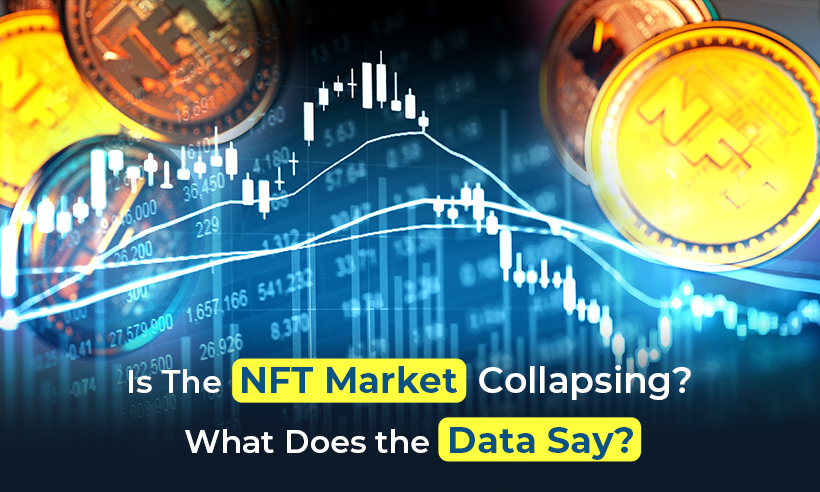
According to a report by market research firm Nonfungible, the NFT market as a whole is on the verge of collapse. This conclusion was a result of the 92% decline in NFT sales since September 2021. What’s going on? These three terms could describe the current state of the NFT industry’s press coverage. Apart from this, there are so many reports of the NFT market collapsing right now.

If you merely look at the last four weeks, it becomes evident how shocking these claims are. The NFT market is growing at a rate that is far greater than that of cryptocurrencies, according to this analysis. But now, things appear to have changed. This means that the total was 103.7 percent more than expected, which is remarkable. The past performance in 2022 shows how obvious this rise is when compared to Bitcoin as a cryptocurrency. Only 1.9 percent was affected.

Why is the NFT crypto bad? - Quora

What are NFTs?

“Non-Fungible Token” is the abbreviation for this technology. In the digital world of cryptocurrencies and blockchain networks, a token serves as proof of ownership. As such, in the cryptosphere, an NFT serves as a kind of title deed or authentication certificate.

The Metaverse’s virtual trade market relies heavily on ownership evidence like this. Because of the ease with which they may be copied or reproduced, digital products would be less appealing to sellers if they didn’t have this feature.

Inevitable Slumps in the NFT market

Is it any surprise that the NFT market can experience a downturn? All financial and asset prices are, after all, currently under some pressure from high inflation in Europe and the United States.

The after-effects of the coronavirus pandemic and the Russia-Ukraine conflict are fueling this more and more. However, we can see a different picture when looking at the NFT market data in comparison to the current reports

Despite Its Flaws, The NFT Market Is Thriving

A Wall Street Journal piece sparked the latest round of reporting. According to Nonfungible, the NFT market analysis platform, NFT sales have fallen by 92 percent since September 2021.

According to Nonfungible, the number of active wallets in the Ethereum NFT market has decreased by approximately 88 percent. These reports are both disturbing, but let’s see their starting position. There was a boom in NFT sales in September 2021, setting a new record.

NFT market analysis platform also reports that there have been a few other flaws as well. While there have been losses, the NFT market is currently showing great strength. The reports from OpenSea, the largest NFT marketplace, show this as well. Around 550 million euros have been sold in the past few days since May 1st.

Nonfungible’s NFT market analysis software has not taken into account all transaction numbers because of the varying trading figures. Whether the NFT market does well or not isn’t impacted by this.

NFT Growth Rate

Furthermore, the various NFT projects prove that the NFT market is thriving. If you look closely at the most popular NFT initiatives, growth rates of up to 81% have been observed.

The market as a whole has seen ranges from 39 percent to 49 percent in the arts and gaming sectors. Even with these numbers, a careful examination is all that is needed to categorize them appropriately. November 2021 saw a trading volume of $40 million for the P2E game Axie Infinity. It was the highest it had ever been.

Development of NFT Projects

Axie Infinity and the $40 million in US dollars that were invested in the project have been largely wiped out. Only $500,000 is left in the bank. Drops of 39% add up quickly when $39.5 billion disappears from a single game in a matter of months. As a result, the value stability of each NFT project is drastically diverse.

Some art and gaming projects have plummeted in value by as much as 41%, and some digital real estate has been affected. Especially when it comes to Decentraland or Sandbox, its worth can barely be evaluated accurately. As a result of this, there are a lot of uncertainties at the moment.

With all the critical analysis that has been carried out, we can see that the NFT market is collapsing already. In contrast, the NFT industry’s top 10 blue chips have increased by 81 percent in value since the beginning of 2022, making them the most valuable blue chips in the industry. There is absolutely no evidence of a collapse in this segment.

NFT’s Future Remains a Mystery

The recent development of the NFT market in the first few months of 2022 has shown that the market hasn’t collapsed yet. Although, it is obvious that there have only been minor losses in some sectors. In September 2021, the market was growing at a fast rate which indicates that the market was developing well at that time.

It’s hard to know if this will be the case in the long run in these unpredictable times. The market decline cannot be ruled out as the epidemic, conflict, and inflation persist. In addition, fresh advancements and ideas from artists and developers will also play a role in the development of the market.  However, the industry as a whole must ask why the NFT market is in such a state of degeneration.

It’s hard to imagine that the current state of the NFT market would entice many new investors or existing investors to increase their financial commitments. This is even more important because the analysis used to support the current reporting contains major flaws. For NFT investors, confidence in current values is essential because the market can be manipulated into a crisis by inaccurate reporting.

Conclusion

Compared to the rest of the crypto market, the NFT market is far more volatile. Values and pricing for collectibles ranging from art, sports, and general collectibles are governed by individual collectors’ preferences.

In the digital art and collectors market, collectors’ behavior is susceptible to change, just like in the real world. Nobody would suggest that the art market as a whole will collapse when the value of individual works of art declines. The NFT market is not different. Even if the market’s value will go through wild swings, investors will continue to make money and put money into the NFT market.
The Benefits of Digitalization on the Gaming Collectibles Market

Animoca Brands

A new category of digital treasures offered by Non-Fungible Token (NFT) has given game developers and crypto enthusiasts an intriguing new opportunity. There exist various misunderstandings between game developers and crypto enthusiasts when it comes to NFTs. 

They communicate in two different languages: crypto enthusiasts often talk of revolutionary technology and social change, while game makers usually just want to have fun. This article might help you bridge that gap. Today, we will learn how everyone can work together to bring innovation and entertainment both for the targeted audience.  

What is NFT?

The current NFT business is mostly driven by digital collectibles. Consider the non-fungible token to be a certificate, contract, or voucher that proves you own or have the rights to something specific, such as a work of art, a collectible, or perhaps admission to a concert or conference.

The fact that the token is “non-fungible” simply means that it is separate from other forms of proof-of-ownership. It cannot be quickly exchanged for something else, unlike old money or digital tokens.

When a collector purchases an NFT, he or she is essentially buying two things:

  • A digital collectible: such as a piece of digital art, a photo, trading card, sports highlight video clip, a piece of music, etc. It could be something incredibly unusual. 
  • A certificate of possession: The NFT itself is really where the value is. You’ll be left with a screenshot or a copy instead of the original. It is a one-of-a-kind piece of work you paid for if you don’t have it.

To summarize, Non-Fungible Tokens serve as digital evidence of ownership, making digital files truly ownable and hence collectible.

NFT Game Changer for Digital Collectibles 

We’ve grown accustomed to digital files being derived, shared, and reproduced endlessly with no clear indication that one of them is the “original.” Your digital asset copy is the same as mine, or the creator’s for that matter. Because of these issues, purchasing and accumulating art or other digital objects has become incredibly complex, making it extremely impossible to make a career as a digital artist or producer.

However, we will now be able to imitate some traits that were previously exclusive to actual objects, such as scarcity, proof of possession, and uniqueness, using NFTs. This allows creators to truly own and sell their digital work, resulting in the creation of a whole new market for original digital art as well as collectibles.

NFTs also allow creators to receive a portion of all future sales of their work. This comes at a high cost for creators, as the majority of sales have historically occurred on the secondary market, with none of the proceeds going to the artists themselves. We’re already seeing variation activity on secondary NFT marketplaces, which offer the added benefit of eliminating the need for middlemen to validate the work’s provenance and legality. Everyone can see all of the data because it is publicly available. All of this adds to the appeal of digital art and alternative creations for both artists and collectors. Digital assets have not only become ownable and collectible, but they’ve also become investible.

Enthusiasm for NFTs

Up to this time, the majority of the enthusiasm for NFTs has come from the digital art world; producers see it as the simplest method to form direct relationships with their collectors outside of the traditional gallery and market structure, which takes 80%–90% of their potential revenue. 

Collectors perceive it as the most straightforward approach to collecting works that are limited edition print or in scarcity, while also directly supporting their favorite artists. Others have seen potential in music and fashion, as well as other possessions such as domain names and real estate. Naturally, people wonder if NFTs will apply to games that have been minting virtual currency without using the blockchain for years.

Entering Digitalization on Gaming Collectible Market

NFTs and blockchain technology provide transparency and can help create a sustainable digital collectibles industry. NFTs are cryptographic tokens that signify unique or uncommon items. Combining NFTs with blockchain technology could be a game-changing technique for securing data on distributed ledgers. The beauty of NFT’s creative standards is that they encourage the development of interoperability. Battle chests fans and in-game quality traders can access an open market where they can trade many assets in one spot.

Professional classification and grading systems are stepping in to provide assessment services as the gaming collectible industry grows. While the presence of these intermediaries is beneficial, it just serves to push the gaming collectibles market further into the hands of high-profile auction houses. These middlemen have the potential to dominate the collectibles industry and profit from it. On peer-to-peer networks, blockchain technology smart contracts enable the trustless and safe trade of digital collectibles.

It will facilitate peer-to-peer trading among collectors, resulting in a decentralized, secure collectibles marketplace for all. Players can benefit from decentralized autonomous organizations (DAOs), which can free them from the egocentric goals of event organizers and management. Gamers will vote and affirm the administration of the play platform in a DAO, removing the needless capitalization in the sector and creating a thriving gaming environment.

The Benefit of Gaming Collectibles 

Below listed are some of the benefits of Gaming Collectibles –

Keeping a Record of Your Experiences

One advantage that all existing and new games have is that they can help you document your experiences. Imagine receiving a trophy for visiting a fascinating location, winning a game, or achieving a specific level. Long after you’ve put the game down, that memory can be etched into a virtual unit that becomes part of your everlasting collection. These types of recollections are more important than ever in a story-driven economy.

Improvement in Value Perception 

In games, players suspend their disbelief and pretend to have virtual objects, fueling a $100 billion industry. However, if they truly believe they own these items, they will be valued considerably more. Consider how this sense of ownership might change the way you view game worlds.

Funding in New Style

Currently, games are supported by crowdfunding, stock investors, or publisher financing. Marketing limited-edition items can be a better way to fund a game’s development than crowdsourcing, and it can happen much earlier in the game’s life cycle. In contrast to crowdfunding, this also provides trading and liquidity benefits. Players with assets can become even more ‘involved’ in the game’s success, and if you treat them properly, they’ll become big promoters. Indeed, one of the most significant costs of game production right now is the high cost of customer acquisition. 

eSports and Streamers Have New Opportunities

This is clear with NFTs that one among the ways that an object can accrue worth is to consider not purely what the item is, but also who controls it. A costume worn by a top-performing eSports player during a tournament finish would continue to tell that tale and would likely become a new income model for the eSports industry and game publishers alike. 

Streamers who demo a game, cover an event, or assist with a launch might be rewarded with items that are extra-valuable to their communities, which they can either pass on to their fans or sell for a profit. Indeed, constructing a decentralized streaming network on their blockchain appears to be a large part of the idea for Theta.

Limited Number of Gamers in the Game       

What if a game was designed where even the capacity to participate was restricted? One can conceive a game that has no unique features at this degree of rarity but also a limit on the number of people who will play the game at all. Instead certain games may prefer lower populations of players, than athletics to populate environments with as many people as possible.

Final Thoughts

The market for collectibles was estimated to be worth $412 billion in 2020, and it is expected to grow to $628 billion by 2031. Digital NFT Market Collectibles is the fastest expanding segment, with a CAGR of 14.2% over the forecast period. The NFT industry is booming, with certain product areas seeing as much as a 1,400 percent increase in a single quarter.

North America has the largest market share for collectibles, owing to Americans’ growing interest in collecting expensive items as well as the gaming sector. Furthermore, the changing lifestyles of people and their increased awareness of collectibles use as an investment or source of gaming would likely accelerate the growth of the Collectibles market throughout the forecast period.

5 Reasons Twitter NFT Profile Pictures Matter

Twitter NFTs

If you were disappointed that you couldn’t get enough praise for your pricey NFT (non-fungible token), then your prayers have been answered. You can now display your NFTs as profile photographs on the Twitter social network, which are viewable and verifiable across the internet. After testing, Twitter announced this last week. 

NFTs are in the limelight, with companies like Twitter attempting to capitalize on the expanding popularity of this type of digital art. These collectible works of art are expensive and popular. You’re not looking for a unique and precious JPG or GIF file, but you’re purchasing the right to brag about being the legal owner of that digital art. 

As a result, those expensive NFTs are employed as a standing image, potentially increasing the toxicity of social networks. That isn’t to suggest that NFT technology isn’t important or that it shouldn’t be part of the internet’s long-term future. NFTs would be useful in future metaverses where people could want to buy and trade-specific digital items while also proving their ownership and legitimacy.

How to Get Started?

  • You can mint (produce) NFTs or buy them online and clearly label them as Twitter profiles.
  • You’ll need to authenticate that you have an iPhone or iPad, as only iOS supports Twitter NFTs. However, it’s unclear whether this is due to security concerns or whether Twitter just chose to focus on iPhone users first. 
  • You’ll also need to be a Twitter Blue subscriber. This entails paying $2.99 per month to gain access to additional features, such as NFT support.

Finally, look for NFTs that come in the static image forms. It includes JPEG or PNG images Furthermore, to appear on Twitter, the NFTs must be created on the Ethereum blockchain. For security reasons, Twitter will ask you to link your account to your crypto wallet. That’s how you get access to your NFT collection. For the NFT feature, Twitter only supports a few crypto wallets. Argent, Coinbase pocketbook, Ledger Live, MetaMask, Rainbow, and Trust pocketbook are some of the names of the wallets.

Reasons To Go For Twitter NFT Profile Picture Service

Below listed are some of the reasons to go for Twitter NFT Profile Picture Service. 

The Gap Between NFT Supporters and Detractors is Widening

The well-documented hatred that many people (particularly gamers) have for NFTs isn’t going away anytime soon, and the way Twitter is displaying the verified NFTs is further adding to the animosity. Simply type “hexagon” into Twitter and you will find a slew of mockery. 

People are crying to get those old times back before this mainstream was changed and before Twitter recommended making an NFT. Some are requesting to create a script that autoblocks everyone with a hexagonal form profile image. Many Tweets liked the PFP’s hexagonal shape with a “kick me” sign.

Not everyone will like the hexagonal shape that surrounds the pfp. After becoming a Twitter Blue member, getting an NFT as a profile image may be slightly disappointing for many. It is a bit of a letdown. People do like the NFT and think the art is nice; however, they’re still not that crazy about it as their profile image. 

NFT Feature to Sell Twitter Blue Subscriptions

Upon the announcement last week, Twitter was flooded with criticism and rages. NFT owners felt that Twitter forcefully sold them something without even realizing their needs. In a three-hour debate, NFT enthusiasts expressed their displeasure with Twitter’s use of the NFT feature to sell Twitter Blue subscriptions. Capitalists can remind them that Twitter is a business with shareholders and a desire to generate revenue. However, this is something to keep an eye on, if even NFT aficionados abandon the certified NFT PFPs, the function will be a failure.

The Functionality Further Establishes Twitter as a Pro-Crypto Firm

Although it would be premature to label Twitter a Web3 company until it runs on a blockchain, the presence of NFT profile footage and crypto tipping raises a red flag. When Bitcoin maximalist Jack Dorsey left, some observers wondered if Twitter would abandon cryptocurrency. Instead, it dug deeper and crossed over to the other side of Bitcoin. Even still, the majority of Twitter stockholders will be disappointed. After rebranding to Meta and Block, Facebook and Square saw their stock prices plummet. The NFT implementation did not affect Twitter’s price, which dropped to 9%.

Twitter Handed OpenSea a Significant Advantage

OpenSea is the most important NFT market, having set a monthly record only halfway through the month. It has competed with challengers like SuperRare, Great Entree, Foundation, Zora, LooksRare, and Rarible. If you’re in one of those markets, you’ll be disappointed to learn about the Twitter function; it’s similar to Facebook adding an option for sharing your collection, but only for specific brands. 

The future of Twitter is based on bitcoin. The executive remarked that he wants to encourage artists to use decentralized apps to manage virtual items and money. He further stated that they are still in the early stages of development, but they wanted to start with something that will benefit the community.

Sketchy Ape Book Club Begins New and Distinctive NFT Art Collection

Sketchy Ape Book NFT

Sketchy Ape Book Club has left on its excursion in the NFT space due to the rapid adoption of unique digital art. They will even create the Club story by composing passages exclusive to NFT holders.

On Dec. 13, 2021; a popular news agency reported, “Sketchy Ape Book Club has launched its beginning in the NFT space owing to a prompt adoption of digital art.“

Sketchy Ape Book Club Announces Adopting NFT Art Collection

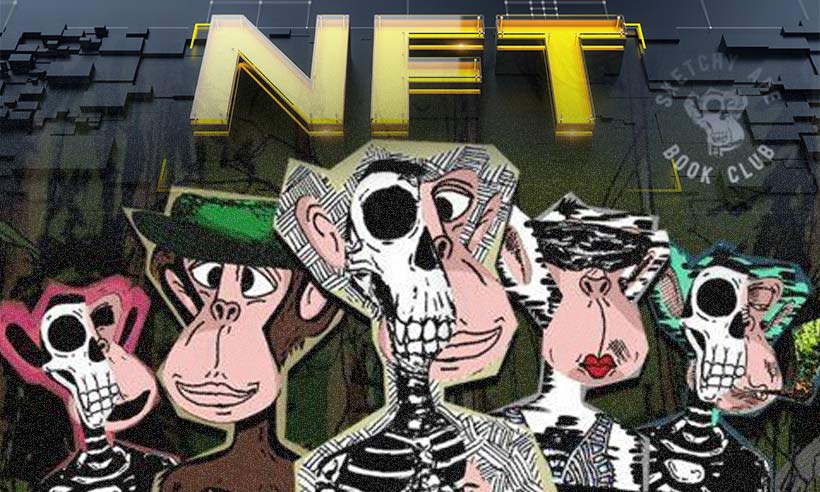
It is an NFT project which aims to provide a unique utility to its priceless investors. The Club has disclosed the launch of a new and unique NFT art collection. This collection will substitute holders who can create an NFT book club story. The non-fungible token is an unparalleled collection of 10,000 hand-drawn images inaugurated on the Ethereum Blockchain.

The Club claims, “Every single trait was hand-drawn, carefully crafted, followed by scanning into the computer. All these were done to generate an algorithm that can create unique art pieces.”

The NFT Collection signifies emanating the physical world with digital features. Each ape was hand-drawn in separate layers to build 10,000 unique and very special apes.

The project’s developers have not only revealed its beginning NFT art collection but also launched the world’s first collaborative NFT novel. The Club will now allow each owner to write a passage in the NFT novel & participate in its history.

Further Utility to the Collection 

The company will soon interpose further utility to the collection. This interposition will avail holders with a reason to value this collection for the coming 100 years at least. Sketchy Pages (SPS) is a unique ERC721 token that can be contended if someone owns three or more SABC NFTs. The Sketchy Pages are seen as a benefit for the NFT project; as they are dynamic and can hold a message. Page’s owner can now change the message at his/her convenience.