Italian Parliament Endorses 26% Crypto-Gains Tax in Budget for 2023

italy Crypto-Gains Tax

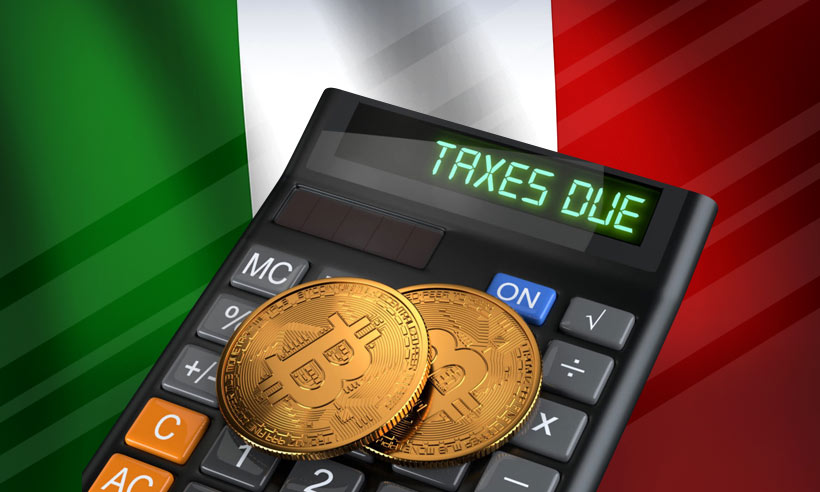
According to a new budget that was approved by the Italian Parliament on Thursday, crypto dealers in Italy would be liable to a 26% crypto-gains tax as of 2023.

Italian Parliament Approves 26% Crypto-Gains Tax

In order to help businesses and individuals dealing with the energy shortage, Italian Prime Minister Giorgia Meloni’s 2023 stimulative budget includes 21 billion euros ($22.3 billion) in tax reductions. The proposal was finalized in a rush before the end of the year.

The 387-page budget legitimizes crypto assets in Italy, where they are still mostly uncontrolled, by describing them as a digital representation of value or rights, which may be exchanged and held electronically, using the technology of distributed ledger or comparable technologies.

Alternate Income Tax for Investors

Prior to the adoption of the Markets in Crypto Assets (MiCA) law, which guarantees a licensing structure and necessary companies’ criteria for crypto-service operators in the 27-member bloc, Italy decided to impose a capital-gains tax on cryptocurrency.

If gains from cryptocurrency trading reach 2,000 euros per tax period, they are subject to a 26% rate. The new legislation also establishes an alternate income tax for investors, set at 14% of the value of the securities held as of January 1, 2023, rather than the cost at the point of acquisition, as an incentive for disclosing cryptocurrency earnings.
PayPal Extends Cryptocurrency Service to Luxembourg

PayPal Luxembourg

In what might be its first venture into the European Union, PayPal stated on Wednesday that it will extend its cryptocurrency business to Luxembourg in the following days.

PayPal Makes Entry Into Luxembourg

When the Markets in Crypto Assets (MiCA) rule takes effect, Luxembourg, which has PayPal’s EU headquarters, may act as a bridge for the other 26 nations in the union. Theoretically, this regulatory system should grant licenses to businesses established in any member state that allow them to provide services across the entire EU through a procedure known as passporting.

Binance And Coinbase to Follow the Same Path

In recent months, cryptocurrency exchanges Binance and Coinbase have followed this path. Recently, Italian registrations include Nexo and Gemini. The cryptocurrency service was first introduced in the U.S. in 2020. Furthermore, it was expanded to the U.K. last year before being introduced in Luxembourg. When it becomes accessible, users could purchase, keep, and trade bitcoin, Ethereum, litecoin, and bitcoin cash for as little as 1 euro ($1.05).

In response to two inquiries asking if this was the first time the cryptocurrency service had been made accessible in an EU nation, PayPal did not comment.

MiCA Text Approved By EU Council, Proposal Goes To Parliament

MiCA

Members of the European Council’s Markets in Crypto-Assets (MiCA) committee have sent the finalized framework for regulating digital assets in the European Union (EU) to the parliament for approval.

MiCA Proposal Statements

The MiCA document was accepted by the EU’s Permanent Representatives Committee and delivered to the head of the Economic and Monetary Affairs Committee of the European Parliament, based on a resource statement from October 5. The chair of the Permanent Representatives Committee, Edita Hrdá, stated that the cryptocurrency framework idea would be adopted should the European Parliament approve its stance at the first reading.

The MiCA proposal, initially presented to the European Commission in September 2020, proposes to establish a uniform regulatory regime for cryptocurrencies throughout EU member states. If the parliamentary committee approves the document, the policies might go into force in 2024. The next committee meeting will take place on October 10.

Effects of Proposal

The most recent version of the MiCA text stressed the importance of ensuring that the European Union’s financial services regulation is fit for the digital era and supports a coming generation economy that serves the people, specifically by facilitating the use of modern technology. The absence of an encompassing Union framework for crypto-assets can result in a lack of user confidence in such assets, which might severely impede the creation of a market in those assets.

Since the establishment of MiCA, policymakers in the EU Parliament, Commission, and Council have debated the consequences of unifying crypto legislation across their 27 member states, with progress hampered by arguments on Proof-of-Work mining and stablecoins.

Bitstamp Observes ‘Massive Crypto Interest’ From Institutional Clients

Bitstamp

Bitstamp CEO, Jean-Baptiste Graftieaux, claims that institutional clients are showing “massive crypto interest” in his trading platform. Based in Luxembourg, Bitstamp is a significant crypto exchange that allows trading between Bitcoin, fiat currency, and other cryptocurrencies. According to Graftieaux, many institutional organizations are eager to enter the cryptocurrency market for the first time.

Crypto Regulation And Institutional Interest

Jean-Baptiste Graftieaux discussed his thoughts on cryptocurrency regulation in a conversation with a press release on Monday.

In response to a question about “crypto winter,” he said that Bitstamp has a very active licensing journey throughout all the locations, with 10 in process internationally. His cryptocurrency exchange will expand its regulatory footprint over the upcoming quarters. We observe a strong tendency on the institutional side. He further elaborated,

“Many institutional companies are looking to make their first move into crypto – there is massive crypto interest from our institutional clients.”

MiCA By The European Commission

The European Commission launched the Markets in Crypto-Assets (MiCA) proposal in September 2020 to control the cryptocurrency market as part of its digital finance agenda. The European Central Bank (ECB) anticipates that MiCA will contribute to the establishment of a uniform legal framework for digital assets.

The Bitstamp CEO highlighted,

“Each jurisdiction has its own criteria. So with MiCA coming in 18 to 24 months, that will be a game-changer because there will be a level playing field.”

Graftieaux stated that there would be one nation where you may establish your operations as MiCA-compliant and then passport the services across the various European nations.

The Bitstamp CEO concluded that, according to them, they observe a healthy trend from a regulatory viewpoint and are working with regulators on an ongoing basis. He said,

“Most regions and countries are looking into regulating crypto. The key risk here is around ensuring regulations are smart and they foster a level playing field.”