
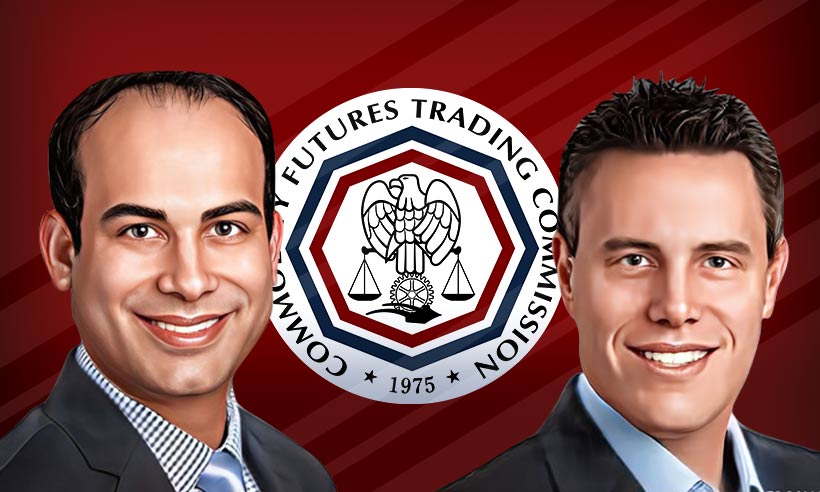
US Judge Directs CFTC to Serve Ooki DAO Creators with Lawsuit

Ooki DAO Creators Lawsuit

According to an order from a US federal judge, the two initial creators of the decentralized autonomous organization Ooki DAO must get notice of the Commodities Future Trading Commission’s (CFTC) lawsuit.

Ooki DAO Creators Served With Lawsuit

Tom Bean and Kyle Kistner, the creators of the decentralized trading platform bZeroX, which served as the forerunner to Ooki DAO, were served with legal papers on December 12 by District Judge William Orrick.

Separate accusations were brought against the owners of the decentralized autonomous organization Ooki tokens, served through a support chat box and a notification on an online forum. Bean and Kistner had already reached a settlement with the CFTC in September for unlawful commodities offer on bZeroX. Judge Orrick eventually learned that Bean and Kistner were also Ooki DAO token holders, so he changed his mind on how the CFTC should serve the complaint.

CFTC To Serve Few Token Holders

According to Judge Orrick’s analysis, the decentralized autonomous organization Ooki has genuine notice of the action. The CFTC shall serve a minimum of one identified Token Holder to provide the most effective notification that is reasonably practical.

The CFTC’s first strategy for bringing the case was met with opposition, and members of the cryptocurrency community filed amicus papers in favor of Ooki DAO, arguing the CFTC should track out Ooki DAO members and serve them with the complaint directly. On December 7, the CFTC and those organizations that submitted amicus briefs to the U.S. District Court for the Northern District of California attended a briefing to ask Judge Orrick to reassess permitting the CFTC to serve Ooki DAO through its assistance chat box.

CFTC to Order Bean and Kistner

According to Orrick, at the court, the CFTC said it understood that some of Ooki DAO’s Token Holders reside and do business in the US since the founding members of Ooki DAO’s precursor firm, bZeroX LLC, are Token Holders who live in the United States.

He ended by saying that the CFTC is now ordered to serve lawsuit to Bean and Kistner in their capacities as the decentralized autonomous organization Ooki Token Holders.
Paradigm Seeks CFTC to Serve Ooki DAO’s Members

Paradigm

The decentralized autonomous organization (DAO) venture capital fund Paradigm Operations has requested the federal court for approval to join two other organizations. It asserts that the Commodity Futures Trading Commission (CFTC) should directly serve DAO representatives instead of via a general website help platform.

On Monday, Paradigm submitted a motion seeking permission to join the Ooki DAO case, claiming that the CFTC’s position that every voting token holder engaged in the DAO’s governance process is responsible and could pose a danger to DAOs generally.

CFTC Filed Lawsuit Against Ooki DAO

Last month, the CFTC filed a lawsuit against Ooki DAO in the US District Court for the Northern District of California, claiming that the DAO had provided access to unlicensed leveraged and margin cryptocurrency trading products to Americans in violation of federal commodities regulations. The DAO has now geofenced users with U.S.-based IP addresses, but as of publication, it has not reacted in court to the CFTC.

The crypto community has voiced alarm over the CFTC’s investigation of the DAO, even if it hasn’t attempted to refute the claims that the DAO and its predecessor business, bZeroX, sold unregistered items to Americans. Lawyers are particularly worried that the CFTC has created a broad picture by making each owner of a voting token individually accountable and attempting to serve the whole DAO by putting the complaint on a forum and online portal.

Different Choices of People

According to Paradigm’s filing on Monday, the community of individuals making choices on the DAO is fluid, ever-changing, and distinct for each proposal on which they vote.

The submission in the proposed amicus brief noted that the Commission’s action appears intended to generate a default judgment. By acknowledging that it has not identified any specific token holders in the “Ooki DAO” while threatening to hold token holders jointly and individually accountable, the Commission has created a significant disincentive for anybody to appear and defend this case. And in fact, no defendant has yet arrived.