Top Cryptocurrency Trends of 2025: The Ultimate Investment Guide

Best Crypto Trends

Keeping pace with the cryptocurrency market requires staying abreast of changes within its ecosystem and understanding its structural and technological changes, not simply following Bitcoin prices alone. Investors and enthusiasts must maintain an awareness of new opportunities as soon as they arise to stay ahead of this fast-evolving sector.

As we progress into 2025, several key cryptocurrency trends are converging to change financial infrastructure and digital ownership. This comprehensive guide covers hot sectors, market signals, and security practices to help navigate through 2025 successfully.

Trend 1: Layer-2 Scaling Wars (Ethereum and Beyond).

Decentralized finance (DeFi) has long been constrained by issues of scalability – high transaction fees and slow speeds on primary networks like Ethereum. A solution has emerged with Layer-2 solutions; indeed their continued maturity may well be one of the key trends of cryptocurrency today.

L2 networks (like Arbitrum, Optimism and Polygon ) operate on top of main blockchains by processing transactions off-chain before settling them securely on the main chain – significantly decreasing costs and increasing throughput for mass adoption.

Proto-Danksharding (first introduced with Ethereum’s Dencun upgrade) makes L2 data cheaper to store, which in turn makes L2 transactions cheaper for the user.

Impact: Anticipate an upsurge in real-world applications–from decentralized social media to high-volume payment systems–that were previously inaccessible due to prohibitive fees. This scaling revolution will fuel future expansion.

Trend 2: Institutional Capital Investment Indication from Crypto Charts

2025 will see institutional adoption become the main driver of market sentiment, thanks to Bitcoin and Ethereum ETF approval in major global markets. This approval has transformed crypto assets from niche assets into an essential part of portfolios worldwide.

Examining crypto charts reveals an increasing correlation between digital assets and traditional finance (TradFi) indices. While volatility remains, market has displayed new signs of resilience as long-term holders have instead chosen to accumulate during pullbacks rather than sell panic.

Key Market Insight: Institutional entry has created a more stable capital base. Analysis of crypto charts now requires tracking global macroeconomic factors and ETF flows as much as technical analysis; an emerging trend is financial integration making Bitcoin part of multi-asset portfolios.

Trend 3: Secure Crypto Wallets of Tomorrow

As more people join the ecosystem, digital security and user friendliness have never been more essential. Crypto wallets have rapidly transformed from simple storage devices into comprehensive platforms for Web3 engagement that prioritize security while offering easy recovery processes.

Features Determining the Future of Crypto Wallets:

Seedless Recovery: Traditional 12- or 24-word seed phrases represent a single point of failure for cryptocurrency wallets, making asset recovery safer and simpler. New wallets utilizing Multi-Party Computation (MPC) cryptography to distribute private keys more safely are eliminating the need for single seed phrases, making asset recovery safer and intuitive.

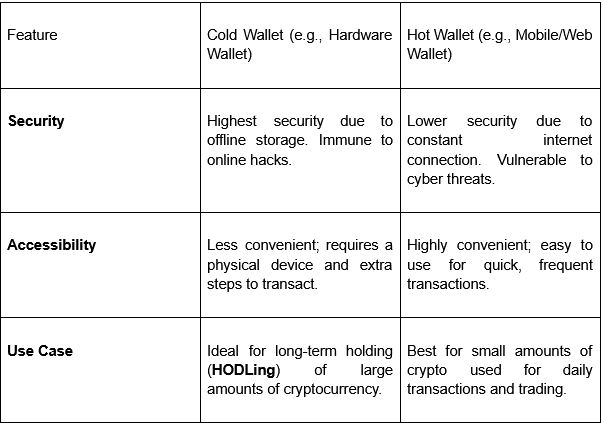
Enhance Security: For maximum cold storage protection, mandatory features include biometric authentication (Face ID/Fingerprint), multi-signature support and integration with hardware wallets for maximum protection.

Trend 4: Real-World Asset (RWA) Tokenization

Tokenization–the practice of creating digital tokens that represent ownership of tangible assets on a blockchain — is quickly moving beyond early trials and becoming a powerful cryptocurrency trend, providing direct access to Trillions locked away in traditional markets that lack liquidity.

Assets Under Management: By 2025, tokenization has made significant strides forward into real estate, private equity, commodities (such as tokenized gold ) and intellectual property assets.

Liquidity & Access: Tokenizing assets provides fractional ownership, making smaller investors more accessible, and opening new liquidity channels that bypass traditional banking intermediaries. Integrating tokenized assets into DeFi lending protocols opens up unprecedented financial opportunities.

Trend 5: Artificial Intelligence and Crypto Convergence

AI and blockchain combine to form powerful new use cases. Not only is artificial intelligence being leveraged to trade crypto, but decentralized AI networks offer transparency and auditable data as well.

Blockchain provides decentralized data that ensures AI model outputs are reliable and not subject to manipulation by one entity.

AI-Enhanced Wallets: The next generation of Crypto wallets will incorporate AI capabilities for risk analysis, personalized trading signals and to detect malicious smart contract interactions, providing users with additional protection.

Conclusion: Navigating Crypto Trends of This Month and Beyond

The cryptocurrency trends of 2025 reveal an environment of maturity, institutional acceptance and technological integration. From scaling solutions that make decentralized applications usable to tokenization of real assets which generates vast new capital – the cryptocurrency ecosystem is expanding its global financial influence.

Top Telegram Games 2025: The Ultimate Telegram Games List to Earn Crypto

Top Telegram Games

The growing popularity of in-app mini-games has changed the gaming world like few trends did in the past. Gaining coin mid streaming out. The Popular Telegram Games have changed the instant messaging apps to be Play-to-Earn(P2E) ecosystems. Tapping hundreds of millions of active players to skills to add simple addictive coin earning games out. This guide focuses on the Games and mechinal viral top hits games Playing to Out of the Maxims to U assessments Crypto Earn the games.

What Are Telegram Games Bots and Why Are They All the Rage?

These bots are short games that you access via a Telegram Games Bot. These bots are lightweight games that integrate mini apps that run directly as games in the Telegram messenger. They utilize Telegram’s Mini App platform which requires no additional downloads outside the base app.

The integration of cryptocurrency rewards firmly explains the rising popularity of top games in Telegram. They employ blockchain technology, particularly, The Open Network (TON) blockchain, to enable players to gain in-game money or “shares” that can be converted to cryptocurrency (HMSTR, NOT or TAPS) that can be earned via airdrops or Token Generation Events (TGE).

The main advantages of this model include:

The players engagement: A user can start playing instantly from any device, anytime that they can access Telegram.

Ease of use: Game mechanics are often “tap-to-earn” which entails simple repetitive clicks, making them easy for anyone to pick up.

Rewards: Unlike the traditional in-game awards, the future potential of airdrops gives a higher positive incentive.

Massive user engagement: The community-focused design of Telegram with built-in group chats and channels facilitates engagement and growth of the games.

The Best Play-to-Earn Apps on TON & Ultimate Telegram Game List

The Best Telegram Games are currently TON Blockchain projects. They are fast, easy, and enjoy community support and engagement. Below are the Telegram games list and recommended games.

The Strategy Tapper: Hamster Kombat

Competitors are not as advanced as Hamster Kombat, who has since Telegram Games Bots set the standard.

Your role as Mechanic: CEO of a digital crypto exchange spawned your hamster. Tap the digital hamster on screen to earn Hamster Coins. To win the game, money management on hamster exchanges is essential.

Earning Strategy: To succeed, purchase and upgrade cards of the business operational “mechanics” to pursue passive earning profit branches. This hourly profit becomes critical more so than total coins tapped.

Notable Features: massive planned airdrop of the HMSTR token to gamers, Daily Combo Challenges, Daily Cipher Missions, airdrop of millions of coins.

The First Tap-to-Earn Game: Notcoin

Notcoin is the first game to set the tap-to-earn standard and spawned a genre. As an achievement, Notcoin managed to exchange its in-game currency to NOT token, currently on exchanges like Binance.

Mechanics: Users earn by tapping a coin until their energy is depleted.

Earning Strategy: Focus on unlocking both the Energy Limit and the Multitap features first. Once you secure the Silver League tier, you will be able to unlock the Auto-Tap Bot, which will continue to earn currency for you while you are not playing.

Evolution: Notcoin was the first to integrate tapping for earning, and now it has transformed into an explore-to-earn model, giving users additional earning opportunities by interacting in the ecosystem and participating in the newly launched Web3 projects.

Top Telegram Tapping Games: TapSwap & YesCoins

Following Notcoin’s model, TapSwap and YesCoins now also feature large player bases and have excelled their offerings in simple, rewarding tap and swipe actions.

TapSwap: Features an extensive upgrade system and a city-building component called Tappy Town, where users construct and upgrade buildings to passively earn and gain higher ranks. Users earn a currency called Shares which will later be exchanged for TAPS tokens.

YesCoins: Offers a distinct, retro, pixel art design with swipe-to-earn gameplay alongside a mechanic that allows idle earning through a character to assist.

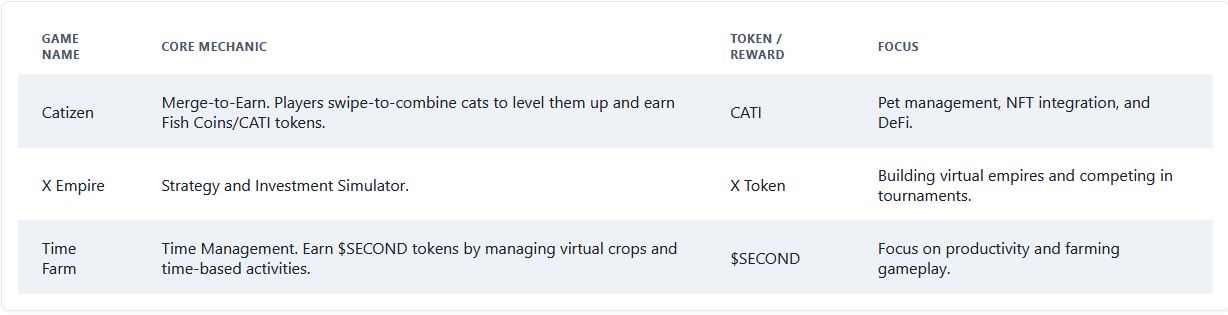
Catizen, X Empire, & Other Emerging Telegram Crypto Games

The ecosystem is constantly expanding with new concepts that go beyond simple tapping:

telegram games

Maximizing Earning Potential: Earning Without Investment in Telegram Games

The Most Notable Feature of Top Telegram Games Is Earning Cryptocurrency While Not Having to Pay Nothing to Get Started to Play Telegram Games at No Cost.

Methods to Use to Succeed with No Cost to Play

Most Useful to Earn

Passive Income Investments (Not Tapping): Tapping in the beginning is crucial, but for the longevity of your earnings in hamster Kombat and TapSwap, your passive Profit per Hour is What Determines Your Success.

The Largest Time Limited Rewards: Most Games Feature Large Time Limited Rewards, Like in Hamster Kombat the Daily Combo, That Gives Millions of Coins for Completing a Certain Set of Actions.

Boosters Should Be Used: Timed in Advance When You Have the Time to Play the Game Because Most Games Feature 3 Free Booster’s like Turbo Mode, and Full Energy, Daily.

Referrals Should Be Used: Share Your Referral Link to Earn Bonus Coins for You and the Person You Your Game Without Paying Searching You Earn Progress to Don’t Cost Significant.

Getting Started: How to Play Telegram Mini Games Safely

Graduating to your first P2E experience with Top Telegram Games is quick, but you should start with the right security measures in place.

Step-by-step:

Install Telegram: If you do not already use Telegram, sign up and install the most up to date version.

Find the Official Bot: Verify the bot’s username and search for the official Telegram Games Bot. Once you find the channel you should check for verification by tie notating that there are multiple announcements as well as millions of channel followers.

Start the Game: Once you find the correct channel, click the start button and make sure to press the joystick icon to enter the mini-game.

Connect a TON Wallet: After a while the game will instruct you to acquire a cryptocurrency wallet that works with TON, such as Tonkeeper. This is important to do early to make sure you receive your airdrop.

Focus on Upgrades: Tap a bunch, but make sure to invest your coins on upgrades that improve your passive hourly profit first.

Crucial Safety Tips: Never Share Your Seed Phrase: Don’t ever give out, keep, enter, or should I say the use, of your wallet’s 12/24-word recovery phrase. All game bots require nothing other than your wallet’s public address.

Impersonators Attempting to Scam Individuals, Ultimately Attempting to Produce Scam Channels Within Gaming Scenarios, Hence Reassure Yourself Gone Reputation Source Within Channel and Stayed Within Game.

Involvement Within This Game Along This Grind: Always Reminder Without Any Value On Investment, But Rewarded On Activity, So Till Participate Within Game Do Not Send Actual Cryptocurrency As P2E Games Are Always Free.

Conclusion: The Future of Top Telegram Games and the Web3 Ecosystem

There Are These Top Telegram Games, Which Are Top Games Within Telegram Along Side Their P2E Economy, They Are Breaking The New The Top Games Within Finance. P2E.

In Additional Factors That Are Very Simple, Within A Tap They Provide Mini Apps, They Provide Access To Millions. With The First To Participate, Notcoin, With The Future High Airdrop Expectations In The Future Games With Hamster Kombat Pair, TapSwap The Ecosystem In P2E. Within The Games, They Are Very Complex. So To Expect In P2E Within Telegram, With Games They Will Become DeFi More Integrated Within Games To Expect A Lot

3. Frequently Asked Questions (FAQ)

Q1. Which Telegram games offer the best crypto earning potential?

The best potential often lies with the largest, most established games that have confirmed airdrops, such as Hamster Kombat and TapSwap. Their immense user bases and strong ties to the TON ecosystem suggest significant future token utility and value.

Q2. Do I have to pay money to play Telegram games?

No. All the Top Telegram Games and the main crypto-earning titles operate on a free-to-play, tap-to-earn model. While some offer premium features or ways to speed up progress, you can enjoy and earn from these Telegram games free of charge.

Q3. What is a “Telegram Games Bot”?

A Telegram Games Bot is an automated account within Telegram that serves as the access point for the mini-game. When you interact with the bot (e.g., @hamster_kombat_bot), it launches the game’s interface directly within the messenger app.

Q4. How do I get my crypto from these games?

The crypto earnings are distributed via a Token Generation Event (TGE), also known as an airdrop. You must connect a compatible crypto wallet (like Tonkeeper) to the game. When the TGE happens, the project will calculate your accumulated in-game shares/coins and airdrop the equivalent tradable token directly to your connected wallet.

Q5. Are Telegram crypto games safe to play?

Yes, the major games on the Telegram games list are generally safe, but you must be vigilant. Only interact with official game bots, and never share your crypto wallet’s private keys or seed phrase with anyone or any bot. The security risk lies in connecting with scam/impersonator bots, not the official, well-known platforms.

How to Read Crypto Charts: The Complete Beginner’s Guide

Cryptocurrency technical analysis charts

The cryptocurrency market is very unstable. There are ways to handle this market that can be really beneficial. There are ways to learn how to handle and read the market’s data. Learning how to read the market’s data gives you great information you should know before making trades and gives great insight to the fundamentals to price movements.

Here, I hope to show you how to read the different elements of a data chart.

The First Step: Dedicate Yourself to Using Free Crypto Candlestick Charts Online

The most basic necessity for you to be able to read a trend line is for you to know what a candlestick is.

A candlestick is a segment of the chart that shows how the price of an asset has changed over a certain period of time. A candlestick has four main elements that define what has happened over that time period, and they are as follows:

Open: The asset price at the beginning of the time interval.

Close: The asset price at the end of the time interval.

High: The price for that asset during that time period.

Low: The asset price that is the least during that time period.

Looking at a specific candle gives us a little more detail besides just one single color. It gives us a primary meat color, called a Candle Body, plus some little extra tiny colors, called Wicks or Shadows. A candle gives us more information than just a single color.

So, some green and some red:  

– A green candle (or a white one) shows **a close above the open:** that means they close the candle at a price higher than when they opened the candle, and the price went up over time.

– A red candle (or a black one) shows **a close above the open:** that means they close the candle at a price lower than when they opened the candle, and the price went down over time.

These wicks, or tiny price movements, show all the prices that were reached. If there is a long wick, that means there were a lot of prices nearby that people decided not to accept, and they strongly rejected (or rejected very strongly) that price.

Deciding What Timeframe To Use:

For all the different styles of trading, different timeframes should be used, timeframes like 1D, 4H, 1H, 15m, and 5m, depending on what trading strategy to use.

**Swing Trading (mid term 4H, 1H)**: Focused on trending price movements over the course of a number of days or weeks, designed to carry over some shorter to mid term momentum to capitalize on.

**Long Term Investing (1D, 1W)**: Used to observe big, overarching long term price movements, to spot the general market movements, and to find the fundamental shifts in price movements.

**Day trading/Scalping (5m, 15m, 1m)**: Critical for traders spending the day capturing quick price movements in the range of a single day if they’re focused on getting quick profits.

***One of the most important things to do while trading is practice multi-timeframe analysis. An uptrend might show on a 15-minute chart, but a 4-hour chart will show the uptrend is just a momentary upward bounce during a larger downtrend.

How to Read Crypto Charts for Day Trading: Focus on Momentum

Day trading needs hyperfocus and a quick response, which is why the 5-minute and 15-minute timeframes are the bread and butter of the trade. Once you understand how to read crypto charts for day trading, you have to shift your focus from long-term value to short-term price movement and market sentiment.

Look for Volume Spikes: Volume is most important when validating a price change. If Bitcoin moves up 5% and there’s little to no volume, the price change is probably meaningless. If there’s a large move of 5% and a large spike in volume, the move is probably important.

Spot Candle Clarity: For day trading, candles are important. Traders usually look for one large-bodied candle, whether it’s green or red. If the green candle is stronger, the market is in a stronger uptrend. If there’s more red viscous selling, the market is in a downtrend. A lot of small candles usually means the market is consolidating, or just hesitating.

Identify Support/Resistance on Shorter Frames: For short-term trading, support and resistance levels can be determined by the high/low price within the most recent trading day or the most previous few hours’ candles. These levels strongly pull the price in one direction and are called magnet zones.

Pinpointing Important Levels: Support And Resistance

Support and Resistance (S/R) levels may very well be the most important concept in technical analysis. Support and Resistance (S/R) levels may very well be the most important concept in technical analysis. Understanding price levels in which buying or selling pressure will outlast the opposing pressure and cause the price to halt or reverse trend.

Support: represents a price level where there is enough buying pressure to keep the price level from going down any further. This is a price level where the demand is strong enough to act as a floor.

Resistance: represents a price level where there is enough selling pressure to keep the price from going up any further, acting as a ceiling

Support and Resistance (S/R) is not a precise price level, and is better visualized as a zone. When a resistance price level is broken with a significant increase in trading activity, it often becomes the new support price level (and the opposite).

Interpreting the Actions of the Market: Chart Patterns

Prices do not only move in the patterns of individual candlestick, but also in these predictable patterns which can signal the trend will either continue or reverse. Learning these patterns is key to advanced reading of a chart.

Pattern Name Type Signal Description
Head and Shoulders Reversal (Bearish) Strong downward move expected. Three peaks, with the middle one (the Head) being the highest, flanked by two lower peaks (the Shoulders). A break below the ‘Neckline’ (connecting the two troughs) confirms the pattern.
Double Top Reversal (Bearish) Failed attempt to break resistance. Two consecutive peaks at roughly the same resistance level, separated by a minor trough. Indicates selling pressure is dominant.
Double Bottom Reversal (Bullish) Failed attempt to break support. Two consecutive troughs at roughly the same support level, separated by a minor peak. Indicates buying pressure is dominant.
Ascending Triangle Continuation (Bullish) Buyers are pushing price higher. Flat resistance line but a rising support line, showing price consolidation before an expected breakout to the upside.

How to Validate Price Movement

Even though price action is the most important, technical indicators can give us verification of trends and momentum in the market in a quantifiable manner. They help us assess whether price action is moving in the same direction. Are the moves sustainable?

Relative Strength Index

  • An oscillator which measures the speed and change of price movements on a scale of 0 to 100.
  • Above 70 is considered overbought and may indicate the price is too high and a correction is imminent.
  • Below 30 is considered oversold and may indicate the price is too low and a reversal is due.

Moving Average Convergence Divergence (MACD)

The MACD is a momentum, trend-following indicator which shows the relationships in price over a chosen range.

A signal line crossing the MACD line is considered to be a change in momentum and can change the trend. Over the signal line is considered bullish, under the signal line is considered bearish. In addition, the bars on the histogram will grow in volume to indicate increases in momentum and will decrease in size to show losses in momentum. Lastly, Bollinger Bands consist of a middle line which is a simple moving average and two outer lines which are two standard deviations from the middle line. The space in which the lines are in shows how volatile the market is.


How to Read Crypto Charts: Predicting Price Movements

Squeeze: This describes scenario where the bands become narrow indicating low volatility and often signals a major price breakout and shift.

Profit Increase How to Read Crypto Charts: If an asset is in a visible uptrend, it’s common to see the price touch the upper band frequently. This is another confirmation of strong asset movement.

Conclusion: Practice is the Key to Mastering Crypto Charts

Learning how to read crypto charts is about developing a skill set. The crypto market is fast and while technical analysis gives some clues, it doesn’t predict the future.

Begin by focusing on one chart with two indicators (candlesticks, RSI, and MACD) and practicing in a demo account. Incorporate strong risk management by always placing stop-loss orders to save your money. With disciplined practice, the chaotic crypto chart will transform into an invaluable asset for your financial future.

Frequently Asked Questions (FAQ)

What is the best timeframe to read crypto charts?

There is no “best” timeframe; the appropriate timeframe depends entirely on your strategy. Day traders should focus on 5m, 15m, and 1H charts for quick entries and exits. Swing traders should use 4H and 1D charts to identify mid-term trends. Always check a higher timeframe (e.g., the 1D chart) before making a trade on a lower one to understand the overall market direction.

What is a “Doji” candle and what does it mean?

A Doji is a candlestick where the opening and closing prices are virtually equal, resulting in a tiny or non-existent body. It looks like a cross or a plus sign. A Doji signals indecision in the market. It often appears at potential turning points, suggesting that the existing trend (either up or down) might be running out of momentum.

How do I use the primary keyword “how to read crypto charts” for SEO?

You should use your primary keyword naturally in the title, the first paragraph, and at least 2-3 times in the body of the article. Crucially, use variations (like “reading crypto charts” or “guide to crypto charts”) to maintain readability while signaling semantic relevance to search engines.

How is a logarithmic scale different from a linear scale on crypto charts?

A linear scale displays the price change with an equal distance for every dollar move (e.g., the space between $10 and $20 is the same as the space between $100 and $110). A logarithmic scale (or “log”) displays the price change based on percentage movement. Because crypto assets like Bitcoin can increase exponentially (e.g., from $10 to $1,000, and then $10,000), a log scale is preferred by long-term analysts as it accurately reflects the proportional significance of price moves.

What is trading volume and why is it important when reading charts?

Trading volume is the total amount of a cryptocurrency that has been traded (bought and sold) during a specific timeframe. It’s important because it confirms the strength and conviction of a price move. High volume confirms the legitimacy of a trend or a breakout from a chart pattern. Low volume on a breakout, conversely, suggests it might be a false breakout or a trap.

This Comprehensive Guide on How to Trade Memecoins

how to trade memeecoins

Memecoins–cryptocurrencies created from internet jokes, viral trends and pop culture–are among the highest risk/reward crypto assets on the market. While lacking some of the practical applications found on platforms like Ethereum or Solana, tokens like Dogecoin, Shiba Inu and even some of Solana’s newer tokens have proven they possess enormous potential to experience explosive gains.

Learning how to trade memecoins successfully involves more than simply applying fundamental analysis; it requires mastery of technical timing, social sentiment analysis and effective risk management strategies. This guide presents essential steps and memecoin trading strategies tailored to 2025’s volatile markets.

Phase I: Prep Work–Setting Up Decentralized Exchange Trading

Memecoins tend to debut first on Decentralized Exchanges (DEXs), before spreading their wings onto major Centralized Exchanges (CEXs). Therefore, being prepared to trade on-chain is key to being successful with memecoins.

1. Selecting the Appropriate Blockchain and Wallet

The memecoin market can be divided up according to blockchain:

Ethereum (ETH): Home to more established tokens such as SHIB and PEPE with higher transaction fees (gas). You will require an EVM-compatible wallet such as MetaMask in order to access this cryptocurrency platform.

Solana (SOL): Solana is currently the recommended chain for viral memecoins (e.g. BONK and WIF). With fast transaction speeds and minimal fees required to trade rapidly at low costs. You will require a dedicated wallet like Phantom or Solflare when trading Solana memecoins.

2. Fund Your Trading Wallet

Once your trading wallet has been selected, fund it with either Ethereum (ETH) or SOL as gas/transaction fees cover, along with either USDC/USDT stablecoins or the base currency (ETH/SOL) used for trades.

3. Master Decentralized Exchanges (DEXs)

You should understand how to navigate DEXs such as Unswap for Ethereum or Raydium/Jupiter for Solana.

Slippage: Your slippage threshold should represent the maximum percentage change in price that you are willing to tolerate when trading new and volatile coins, so set this figure higher (5-10% or more) to ensure your trade goes through successfully.

Contract Address: As a safety step, always confirm the token’s contract address from a reliable source (such as Twitter of the project or crypto data sites ) before trading it. Scammers often create fake tokens with similar names.

Phase 2: Execution – Spotting and Trading the Hottest Tokens

Memecoin gains are driven by community enthusiasm and viral momentum. Successful trading requires diligence in monitoring trends early. Specialized tools may help.

1. Sentiment and Social Media Analysis

A memecoin’s lifecycle starts on social media platforms such as X (Twitter) and Telegram.

Follow KOLs: Keep tabs on key opinion leaders and influential wallets known to identify new product launches.

Monitor Community Activity: Look out for high levels of social engagement, organic enthusiasm, and rapidly expanding communities – but be wary of bots or coordinated shilling.

Meme Potential: The ideal coins have a clear, easily understood meme or narrative which resonates globally.

2. On-Chain Data Tracking Experienced traders use analytics tools (like Dexscreener or Birdeye ) to back up social hype with concrete information:

Liquidity Pool (LP): Always make sure the liquidity pool is locked; otherwise developers could quickly withdraw all funds in one “rug pull”.

Holder Distribution: When considering coins that involve one wallet (known as “whale wallet” or “dev wallet”) holding over 5–10% of supply, such as those offered by Whalecoins and Devcoins, be wary. Such concentration can pose a high risk of price manipulation via price management memecoins and management memecoins threats.

Volume: An indicator of genuine enthusiasm and momentum is rapidly rising trading volume.

3. Memecoin Trading Strategies for Entry

To avoid being bamboozled into buying tokens after they experience an enormous surge, consider these time and price techniques instead.

Launch Snipe: Acquiring fractions of seconds after coin launches (requiring bots and being extremely risky for beginners).

Accumulation Zone: Acquiring assets after their initial crash and subsequent dump, when their prices have stabilized and new holders can start quietly amassing assets ahead of another pump-and-dump cycle.

Support/Resistance Flip: Purchasing when an old resistance level retest is successfully flipped into support level.

Phase 3: Risk Managing Memecoins and Exit Strategy

One of the key aspects of how to trade memecoins is knowing when and how to sell. Without an exit strategy in place, profits quickly turn into losses.

1) Allocate Small, Speculative Capital

When allocating small speculative capital, always remember the primary rule: only invest capital you are prepared to lose completely. Treat memecoin trading as pure speculation and allocate a small proportion (1%-5%) of your overall crypto portfolio towards memecoin trading.

2. Set Up Stop Losses on CEXs (Centralized Exchanges) or Mental Stop-Losses on DEXs

Centralized Exchanges (CEXs): Make sure that if the price of an asset drops below a predetermined point, an automatic stop loss order should be placed to sell your position immediately thereby limiting losses and protecting against possible overexposure to losses.

3. Grayscale Exit Strategy (Taking Profits) Instead of waiting until an all-time high (ATH), implement a phased selling plan:


1x or 2x: Withdraw your initial capital immediately. As soon as your principal is protected, the rest of the trade becomes risk-free. 3x to 5x: Close out a portion (e.g. 25%) of your remaining position.

10x or higher: Sell another chunk and allow a small “moonbag” to ride the pump, protecting your overall profits. With this strategy you are more likely to capture gains while avoiding FOMO or greed, both emotional traps that often plague memecoin investors.

The Risks: Why Most Memecoins Fail

Trading hot tokens carries high rewards but comes with significant risks:

Extreme Volatility: Prices can suddenly decline by as much as 80% within minutes, sending shockwaves through markets worldwide.

Rug Pulls: Developers have been draining away liquidity pools, rendering tokens worthless.

Honey Pots: Smart contracts that permit purchasing but prohibit selling.

Memecoin Value Is Unreal: Memecoin value often derives solely from social sentiment analysis; there is no technology or real-world use case to support its existence.
By employing dedicated memecoin trading strategies and adhering to effective risk management protocols, your chances of successfully navigating this high-stakes environment increase considerably.

Conclusion: Navigating the Memecoin Market of 2025

2025 memecoin trading has never been more complex, particularly with the rise of Solana memecoin trading and automated tools. Success at memecoin trading depends on meticulous preparation, quick decision-making based on on-chain and social data analysis, disciplined profit-taking practices, and most of all treating tokens like lottery tickets — fun but risky investments with an eye towards protecting capital reserves.

Frequently Asked Questions (FAQ)

Q1: What is the most common mistake when trading memecoins? A: The most common mistake is failing to take profits and falling victim to the Fear of Missing Out (FOMO), leading traders to buy at the peak and sell during the inevitable crash. Setting a clear exit strategy is crucial.

Q2: Should I use a Centralized Exchange (CEX) or a Decentralized Exchange (DEX)? A:

  • DEX (e.g., Raydium, Uniswap): Necessary for getting into a coin immediately after launch (trading hottest tokens), as they list first here. Higher risk/reward.
  • CEX (e.g., Kraken, Binance): Better for established memecoins (like DOGE, SHIB) due to higher liquidity, lower fixed fees, and easier risk management via automated stop-loss orders.

Q3: How do I spot a potential “rug pull?” A: Check for two major red flags: 1) The liquidity pool (LP) is unlocked or not publicly verifiable; 2) A small number of private wallets (the developers/insiders) hold an overly large, centralized percentage of the total token supply.

Q4: What is slippage and why is it high for memecoins? A: Slippage is the difference between the expected price and the actual execution price. It is set high for memecoins because they have low liquidity and extreme volatility, meaning your trade could drastically move the price, requiring a higher tolerance for execution.

Q5: Which is the best Solana wallet for memecoin trading? A: Phantom Wallet is generally considered the best Solana wallet due to its intuitive interface, seamless integration with major Solana DEXs (Jupiter, Raydium), and built-in swapping functionality, making Solana memecoin trading fast and efficient.

Delta Exchange: Lowest Fee Crypto Options Trading Platform

Delta Exchange

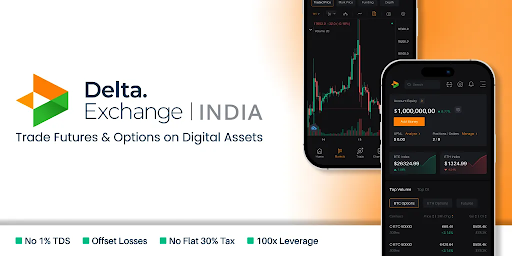
Over the last few years, after the 2019 pandemic, India has seen a sharp rise in interest in crypto derivatives. Traders are now exploring new ways to maximise returns through structured products like crypto options trading.

For many, the ability to trade BTC options and other altcoins and hedge positions has opened fresh opportunities that go beyond simple spot trading. But for traders, one factor continues to play a big role in how profitable those opportunities turn out – fees.

Top crypto exchange offering lower fees for crypto options trading

If you’re a regular trader, high fees can impact your gains. So, how do you find the best crypto exchange that charges lower fees? This is where Delta Exchange stands out and is built for accessibility, efficiency, and affordability.

In this post, we’ll explore how Delta makes crypto options trading cost-effective for everyone.

Why Trading Fees Matter For Traders

Every percentage point counts when you’re trading crypto derivatives. If you’re active in crypto options trading, even a small difference in fees can eat into your profits over time.

For example, say you trade BTC options daily – a fee difference of just 0.05% might look minor, but across dozens of trades in a month, it could mean hundreds of dollars slipping away. Many traders face this problem on a typical crypto exchange, where hidden charges and wide spreads often cut into gains without you realising it.

That’s why low, transparent fees matter so much in crypto options trading. With platforms like the Delta Exchange app, you can trade smarter and keep more of what you earn, rather than losing it to the trading costs.

What are Crypto Options Trading Fees on Delta Exchange

Delta keeps its fee structure simple and transparent, making crypto options trading affordable for both new and experienced users.

Crypto options trading on Delta Exchange 

Here’s how it works:

    • Trading fee: 0.015% for both maker and taker orders.
  • Lot sizes:
    • BTC options: 1 lot = 0.001 BTC
    • ETH options: 1 lot = 0.01 ETH
  • Minimum liquidation fees:
    • BTC: 20% of premium or 0.05% of notional size
    • ETH: 20% of premium or 0.10% of notional size
  • Other charges:
    • 18% GST on trading fees
    • Settlement fee applies to open contracts at settlement
    • Liquidation fee based on notional size
    • 0% deposit and withdrawal fees

With the Delta Exchange app, you can trade BTC options and other crypto derivatives without worrying about hidden costs that might be common on many crypto exchanges.

How Lower Fees Benefit Crypto Options Traders

Lower fees in crypto options trading can benefit you in many ways:

Options Trading

  • Higher returns: With smaller cuts going to fees, both retail and professional traders keep more profits from every trade on Delta Exchange.
  • Room to experiment: You can test advanced crypto options trading strategies without worrying that high costs will wipe out small wins.
  • Better for high-volume trades: Active traders and institutions trading BTC or ETH options save significantly when fees stay low.
  • User-first approach: The Delta Exchange app keeps things simple with transparent pricing, making it easier to trade on a crypto exchange where you know exactly what you’re paying.

final thoughts delta

Why Delta Exchange is the Right Platform for Crypto Options

If you’re into crypto options trading, Delta Exchange offers a safe, regulated platform for all levels of traders. It also stands out due to its features, like:

  • INR-supported trading: You can trade directly in INR without worrying about constant currency conversions.
  • Demo trading account for practice: Try out crypto options trading strategies in a safe demo mode before trading with real money on the line.
  • Payoff charts for clarity: You get a clear view of potential profit and loss before you finalise a trade.
  • Small lot sizes with low fees: Trade BTC or ETH options in smaller lots for easier risk management. On Delta, BTC contracts start at ₹5000, and ETH contracts are available at ₹2500 – easier to get started.
  • Multiple products under one roof: Delta Exchange allows you to trade crypto options, futures, and trackers – all in one place at affordable prices.

Final Thoughts

Every one of you – as a trader – knows that fees can make a quiet dent in profits, especially if you’re trading crypto options. Choosing a crypto exchange that keeps costs low gives you more room to focus on strategies that matter.

Delta Exchange is unique in this matter. With its transparent pricing, small lot sizes, and a simple way to trade BTC and ETH options through the Delta Exchange app. For anyone curious about building consistency in their trading journey, lower fees are a huge perk that shapes long-term outcomes.

Download the Delta Exchange app to start crypto derivatives trading 

For more details, connect with the Delta Exchange community on X.

Disclaimer: Crypto trading involves high market volatility and carries risk. Please do your own research and consult professionals before making crypto investment-related decisions.

The Ultimate Guide to the Best Anonymous Crypto Exchanges

Crypto Exchanges Client Data

In the world of cryptocurrency, privacy is paramount. As regulatory scrutiny increases globally, many traders are actively seeking platforms that allow them to trade without the obligatory submission of personal data. This guide dives deep into the landscape of the best anonymous crypto exchanges, highlighting the features, risks, and different types of platforms that prioritize your privacy.

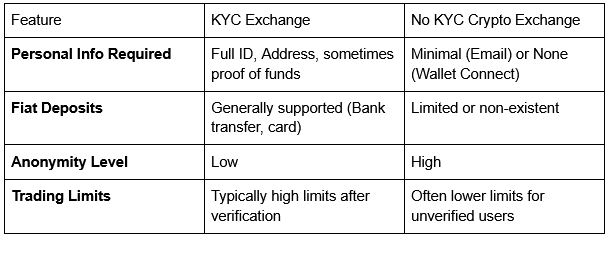
Understanding the Need for a No KYC Crypto Exchange

KYC (Know Your Customer) and AML (Anti-Money Laundering) regulations are standard practice in traditional finance and on most major centralized cryptocurrency exchanges. These checks require users to submit government-issued IDs, proof of address, and sometimes even facial recognition data.

While KYC aims to prevent illicit activities, it contradicts the core, decentralized ethos of many crypto enthusiasts who value financial privacy. A no KYC crypto exchange offers an alternative, allowing users to trade with minimal or no personal information, often requiring just an email or simply a connected crypto wallet.

no kyc crypto exchange

Centralized vs. Decentralized: Anonymous Trading Platforms Explained

When searching for the best anonymous crypto exchanges, you’ll primarily encounter two distinct models: centralized exchanges (CEXs) with a no-KYC tier, and truly decentralized exchanges (DEXs).

Anonymous Centralized Exchanges (CEXs)

These platforms operate under a central company but offer an unverified tier with basic functionality. They often allow users to deposit, trade, and withdraw crypto up to a certain daily limit without completing KYC.

  • Pros: Usually have high liquidity, a familiar user interface, and sometimes better support for a wider range of tokens.
  • Cons: Users often have limited withdrawal caps, and the exchange still holds the ultimate control (custody) over your funds. Furthermore, the platform could be forced to impose full KYC at any time due to regulatory changes.

Decentralized Exchanges (DEXs)

DEXs are the purest form of anonymous trading platforms. They facilitate peer-to-peer (P2P) trading directly on the blockchain using smart contracts, eliminating the need for a central intermediary or a sign-up process.

  • Pros: Complete anonymity, non-custodial (you control your private keys), and censorship-resistant.
  • Cons: Can be less user-friendly, may have lower liquidity for niche pairs, and require users to manage their own wallet and gas fees.

Top Tier 1: Truly Non-Custodial Crypto Exchange Options

The ultimate in privacy and security is a non-custodial crypto exchange—a DEX—where you never give up control of your private keys.

Uniswap, PancakeSwap, and Other AMM DEXs

These are Automated Market Maker (AMM) platforms where trading is executed against a pool of assets provided by other users (liquidity providers) rather than through a traditional order book.

  • How it works: You simply connect your personal crypto wallet (e.g., MetaMask, Trust Wallet) and swap tokens. No sign-up, no email, and definitely no ID is required.
  • Best For: Swapping tokens on the Ethereum (Uniswap), Binance Smart Chain (PancakeSwap), or other DeFi-focused networks.

Bisq and Hodl Hodl (P2P Exchanges)

These platforms focus on Peer-to-Peer (P2P) trading, connecting buyers and sellers directly.

  • How it works: Trades are secured by an escrow system, and users settle the payment method (like bank transfer, cash, or other means) privately and directly.
  • Best For: Direct P2P buying and selling of Bitcoin and other major cryptocurrencies without any central authority involvement.

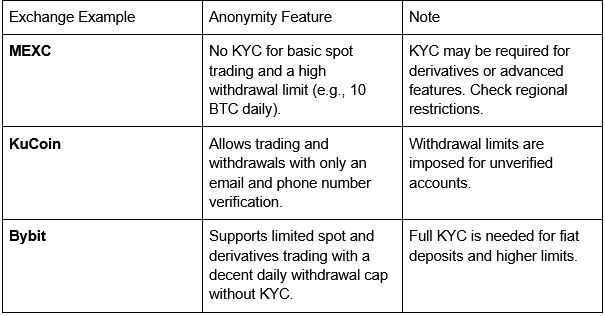
Top Tier 2: Centralized Anonymous Crypto Trading with Limited KYC

Some large CEXs offer a tiered service that allows for anonymous trading up to a specific threshold. These can be a good middle ground, offering better liquidity and more advanced trading tools than a pure DEX.

Anonymous Crypto Trading

Security and Risk Management for Privacy-Focused Crypto Trading

While the pursuit of privacy is valid, anonymous trading comes with specific responsibilities and risks:

1. Self-Custody is Crucial

If you choose a DEX (non-custodial), you are fully responsible for your private keys. Loss of keys means permanent loss of funds. Use a hardware wallet to secure your assets.

2. Regulatory Risk

Governments are increasingly scrutinizing no-KYC platforms. A centralized exchange that currently offers an anonymous tier may be forced to implement mandatory KYC, potentially freezing the funds of unverified users.

3. Smart Contract Risk

DEXs operate using smart contracts. If the underlying code has a bug or vulnerability, a hack could result in the loss of funds, with no customer support to recover them.

4. Tax Obligations

Anonymity on an exchange does not exempt you from tax laws. You are still legally obligated to report your crypto gains and losses according to the laws of your jurisdiction.

Conclusion: Choosing Your Best Anonymous Crypto Exchange

The best anonymous crypto exchange for you depends entirely on your priorities.

  • If absolute privacy and decentralization are your primary goals, a non-custodial crypto exchange like Uniswap or a P2P platform like Bisq is the superior choice.
  • If you value higher liquidity and a more traditional trading interface while still seeking limited anonymity, a CEX with a high-limit no KYC crypto exchange option, such as MEXC or KuCoin, might be your preferred route.

Always conduct your own thorough research (DYOR), prioritize security, and ensure you understand the legal and tax implications in your region before engaging in any form of anonymous crypto trading.

FAQ

Q1: Is it legal to use a no KYC crypto exchange?

A: The legality depends heavily on your location. While using a no-KYC exchange is generally legal in many jurisdictions, it can be a regulatory gray area. It is your responsibility to comply with local laws, including tax reporting.

Q2: What is a non-custodial crypto exchange?

A: A non-custodial exchange (like a DEX) is one where you, and only you, hold the private keys to your crypto assets. The exchange only facilitates the trade and never controls your funds. This is the gold standard for security and anonymity.

Q3: Do I still have to pay taxes if I use an anonymous crypto exchange?

A: Yes. Anonymity on a trading platform does not remove your obligation to report capital gains or losses to your tax authority. You must keep your own detailed records of all trades.

Q4: Which is safer: a DEX or an anonymous CEX?

A: A DEX is safer in terms of custody, as you control your keys, but it carries a higher risk of smart contract exploits or user error. An anonymous CEX has better security infrastructure but carries custodial risk (funds can be hacked or frozen by the company).

OKX Review 2025: Fees, Security & Trading Features Explored

OKX Manchester City

The cryptocurrency landscape continues its rapid evolution, making the choice of a trading platform more critical than ever. As we navigate the complexities of decentralized finance and global regulation, an in-depth OKX review 2025 is essential for both seasoned traders and new investors. OKX, a heavyweight in the crypto exchange arena, has positioned itself not just as a trading platform but as a comprehensive gateway to the Web3 ecosystem. This article provides a detailed analysis of the platform’s performance, features, security, and standing in the competitive 2025 market.

OKX Trading Fees and Structure 2025

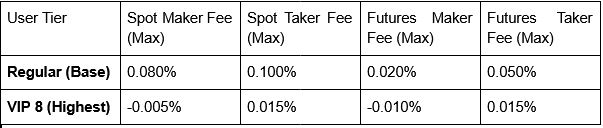
One of the most competitive aspects of the OKX review 2025 is the exchange’s fee structure. OKX employs a tiered maker-taker model which heavily favors high-volume and VIP traders but still offers attractive rates for regular users compared to many competitors.

kucoin trading


  • Maker Fees: By providing liquidity (placing limit orders), high-volume VIP users can even earn a negative maker fee, meaning they are paid to trade.
  • Taker Fees: These are the fees charged when an order is executed immediately against an existing order on the book. OKX’s taker fees remain among the lowest for perpetual and futures trading.
  • Deposits & Withdrawals: Cryptocurrency deposits are typically free. Withdrawal fees are dynamic and based on the prevailing blockchain network congestion. Fiat withdrawals, depending on the method (e.g., bank transfer), may incur external processing fees.

In short, for active traders, the fee structure highlighted in the OKX review 2025 offers a substantial cost advantage, making it a compelling choice for frequent market participation.

OKX Security Features and Regulation

Security and regulatory compliance have become paramount in 2025, especially following high-profile industry events. OKX has responded by doubling down on transparency and protective measures.

Proof of Reserves (PoR) and Cold Storage

OKX is a leader in user fund transparency, consistently publishing its Proof of Reserves (PoR). This cryptographic audit allows users to verify that the exchange holds 100% of the funds backing their deposits. Furthermore, a substantial majority of user assets (often over 95%) are held in cold storage, multi-signature wallets that are offline and thus immune to typical cyberattacks.

Regulatory Landscape

Historically, OKX has navigated a complex global regulatory environment. However, in 2025, the exchange has made significant strides in compliance, acquiring licenses and official registrations in several key jurisdictions. This move towards formal regulation across Europe and parts of Asia underscores a commitment to operating within a legitimate global framework, which is a major positive factor in the overall OKX review 2025. Users should, however, always confirm local jurisdictional restrictions, as the platform is often unavailable to residents of certain countries like the United States.

User-Side Security

Standard security protocols are robust, including mandatory Two-Factor Authentication (2FA), anti-phishing codes, and withdrawal address whitelisting.

OKX Features for Beginners and Pro Traders

OKX’s platform is designed to serve a vast spectrum of users, from first-time Bitcoin buyers to high-frequency derivatives traders.

Tools for Advanced Trading

Pro traders will find a comprehensive suite of advanced products, including:

  • Futures and Perpetual Swaps: Highly liquid markets with leverage up to 100x.
  • Options Trading: Catering to sophisticated risk management and hedging strategies.
  • Margin Trading: Allowing users to trade with borrowed funds to amplify positions.
  • API Trading: For institutional and algorithmic trading strategies.

Tools for Beginners

Beginners are supported with an intuitive “Lite” interface and a dedicated “Learn” section offering tutorials and market analysis. Crucially, the platform offers a demo trading account where new users can practice with virtual funds before committing real capital.

How to Use OKX Trading Bots and Copy Trading

The automation features of OKX are a major draw in the OKX review 2025, bridging the gap between passive investing and active trading.

Trading Bots

OKX offers over 10 types of automated trading bots, allowing users to execute strategies 24/7 without constant manual oversight. Popular bots include:

  • Spot Grid: Buys low and sells high within a predetermined price range.
  • Futures Grid: Extends the grid strategy to leveraged contracts.
  • Recurring Buy: A dollar-cost averaging (DCA) strategy on autopilot.

Copy Trading

For novices, Copy Trading is a powerful feature that allows them to automatically mirror the trades of high-performing, verified professional traders on the platform. This provides a way to participate in active trading strategies while leveraging the expertise of top performers, all for a small performance fee.

OKX Web3 Wallet and Ecosystem

OKX is strategically positioning itself as a Web3 hub, integrating decentralized functionality directly into the exchange environment.

The non-custodial OKX Web3 Wallet is a multi-chain wallet that exists within the OKX application but gives users full control over their private keys. This integration provides seamless access to the wider decentralized web:

  • DeFi: Interacting with decentralized protocols for lending, borrowing, and yield farming.
  • NFT Marketplace: Discovering, buying, and selling Non-Fungible Tokens (NFTs) across various blockchains.
  • DApp Exploration: Connecting to a wide array of decentralized applications.

This focus on blending centralized exchange services with decentralized utility is a clear differentiator for OKX in 2025.

OKX vs Binance vs Bybit 2025: Competitor Comparison

No OKX review 2025 is complete without a look at the competition. The global crypto exchange market remains highly concentrated, with Binance and Bybit as OKX’s primary rivals.

  • Binance: Remains the market leader in sheer trading volume and number of altcoins. However, it often faces more intense regulatory scrutiny in various global regions.
  • Bybit: Known for its strong focus on derivatives and advanced trading tools, Bybit offers a very similar, trader-centric experience to OKX, often with a slightly more intuitive user interface for futures trading.

OKX’s competitive edge in 2025 lies in its lower fee structure for high-volume traders, its industry-leading Proof-of-Reserves transparency, and its tightly integrated Web3 ecosystem, which positions it well for the next phase of crypto adoption.

Conclusion: Final Verdict on OKX in 2025

The OKX review 2025 reveals a powerhouse exchange that has effectively balanced institutional-grade security with an accessible, feature-rich user experience. Its ultra-competitive fees, robust commitment to Proof-of-Reserves, and comprehensive suite of trading tools—including advanced bots and copy trading—make it a top-tier choice. The platform’s seamless integration of a Web3 wallet for DeFi and NFTs ensures it’s future-proofed for the decentralized evolution.

While regulatory restrictions in certain jurisdictions remain a drawback, for the international crypto user looking for low-cost, high-utility, and transparent trading, OKX is undoubtedly one of the best exchanges available in 2025.

Frequently Asked Questions (FAQ)

Q1: Is OKX safe to use in 2025?

A: Yes, OKX is considered a safe, top-tier exchange in 2025. It prioritizes security with over 95% of user assets in cold storage and regularly publishes audited Proof-of-Reserves (PoR), allowing users to verify fund backing.

Q2: Are OKX fees lower than Binance or Bybit in 2025?

A: For most regular users, OKX’s spot and futures fees are highly competitive, often slightly lower than major rivals. For very high-volume traders (VIP tiers), OKX offers some of the lowest, even negative maker fees, in the industry.

Q3: Can US residents trade on OKX?

A: No, due to regulatory restrictions, the main OKX platform is generally not available to residents of the United States. Users should always confirm if the exchange is regulated in their specific jurisdiction.

Q4: What is the OKX Web3 Wallet?

A: The OKX Web3 Wallet is a non-custodial wallet integrated within the exchange platform, giving users full control over their private keys. It allows seamless interaction with the broader decentralized ecosystem, including DeFi, NFTs, and DApps, without transferring assets off the OKX application.

Q5: Does OKX offer copy trading?

A: Yes, OKX offers a popular copy trading feature, allowing less experienced users to automatically mirror the real-time trades of verified, successful professional traders on the platform.

KuCoin Review 2025: Is It Still the Best Exchange for Altcoins and Advanced Traders?

New York Lawsuit KuCoin

Introduction: The Evolution of KuCoin in 2025

KuCoin has long held a reputation as the “People’s Exchange,” a platform celebrated for its vast selection of cryptocurrencies and advanced trading tools. As the crypto landscape evolves in 2025, stricter regulatory environments and heightened security expectations mean that even industry veterans must adapt. This comprehensive KuCoin review 2025 dives deep into the platform’s current offerings, from its competitive fee structure and innovative features to its updated security and global compliance standing, to determine if it remains a top-tier choice for both new and experienced crypto enthusiasts.

KuCoin Trading Fees and Cost Analysis in 2025

A significant draw for high-volume traders is KuCoin’s transparent and highly competitive fee structure. In 2025, KuCoin trading fees continue to be among the lowest in the industry, starting at 0.1% for spot trading.

  • Maker/Taker Model: Fees are based on a tiered system that rewards higher trading volumes and greater holdings of the exchange’s native token, KCS (KuCoin Shares).
  • KCS Discounts: A core benefit remains the ability to pay trading fees using KCS for an automatic 20% discount, lowering the effective base fee to just 0.08%.
  • Futures and Margin Fees: Derivatives trading fees are also highly competitive, making the platform a favorite for futures traders.

The exchange also offers multiple channels for fiat on-ramps. While crypto deposits are free, users must be mindful of fiat deposit options and any third-party fees associated with credit/debit card purchases or bank transfers.

KuCoin Security Features and KYC Requirements

Security is paramount in 2025, and KuCoin has continuously invested in protecting user assets. The platform utilizes standard best practices:

  • Cold Storage: The vast majority of user funds are held offline in cold storage to mitigate risks from online threats.
  • Multi-Factor Authentication (2FA): Mandatory 2FA, anti-phishing codes, and trading passwords provide strong user-level account protection.
  • Proof of Reserves (PoR): KuCoin actively publishes Proof of Reserves reports to ensure transparent, verifiable backing of user funds.

A major shift in recent years has been the introduction of mandatory KYC requirements. While KuCoin historically permitted some services without verification, stricter global anti-money laundering (AML) regulations now mandate identity verification (KYC) for full access to all trading services, higher withdrawal limits, and fiat-related features.

Regulatory Status and Global Compliance in 2025

In 2025, the regulatory spotlight is brighter than ever. KuCoin operates with a strong focus on compliance, demonstrated by achieving international security standards like SOC 2 Type II and ISO 27001.

However, its commitment to global compliance is balanced with a history of facing regulatory challenges in specific jurisdictions, most notably the United States, which has led to service restrictions for US users. Traders should always verify the local regulatory status of KuCoin in their specific region before creating an account.

Advanced Trading and Passive Income Features

KuCoin’s advanced toolkit is a key differentiator. The platform is often the first to list emerging altcoins, offering traders access to a diverse ecosystem of over 700 coins.

KuCoin Trading Bots and Futures Trading

KuCoin is renowned for its free, integrated automation tools.

  • KuCoin Trading Bots: The platform offers several easy-to-use bots, including Spot Grid, Futures Grid, DCA (Dollar-Cost Averaging), and Smart Rebalance. These allow traders to automate strategies 24/7 without constantly monitoring the market.
  • Futures Trading: With perpetual contracts and high leverage options, the futures trading section is robust, featuring a separate fee structure and advanced order types.

Passive Income with KuCoin Earn and KCS Utility

Beyond active trading, KuCoin provides numerous avenues to earn passive income.

  • KuCoin Earn: This hub offers staking, flexible savings, and lending products, allowing users to generate yield on idle assets.
  • KCS Loyalty Program: Holders of KCS can benefit from the KCS Loyalty Program, which offers tiered rewards like increased staking yields, trading fee discounts, and KuCard cashback. Furthermore, KCS holders are eligible for a daily bonus distributed from 50% of the exchange’s daily trading fee revenue—a unique benefit that solidifies its utility.

User Experience, Mobile App, and Customer Support

The KuCoin mobile app for iOS and Android offers full functionality, allowing users to trade, manage bots, and access staking products on the go. While the platform’s interface is feature-rich, its density can be overwhelming for absolute beginners compared to simpler, beginner-focused exchanges.

Customer support is available 24/7. However, like many large global exchanges, response times can vary, particularly during periods of high market volatility.

Conclusion: Is KuCoin the Right Choice in 2025?

The KuCoin review 2025 finds the exchange to be an exceptional platform, particularly for advanced traders and altcoin enthusiasts. Its expansive list of supported cryptocurrencies, rock-bottom KuCoin trading fees, and robust suite of automation tools like the KuCoin trading bots are compelling reasons to choose it.

While new KYC requirements and ongoing regulatory compliance efforts signal a more mature, secure platform, potential users should be aware of regional restrictions. For traders seeking maximum crypto diversity, low costs, and innovative trading options, KuCoin stands as a powerful and indispensable exchange in the competitive 2025 market.

Binance Review 2025: Is It the Best Crypto Exchange for Fees, Features, and Security?

Binance Poland

The choice of a cryptocurrency exchange is one of the most critical decisions a crypto investor makes. Since its inception, Binance has dominated the global crypto landscape. However, the market in 2025 is vastly different from a few years ago, characterized by increased regulatory scrutiny, evolving security standards, and fierce competition from decentralized platforms.

This comprehensive Binance review 2025 analyzes the platform’s core services, regulatory standing, security protocols, and overall value proposition, helping you determine if it remains the best cryptocurrency exchange for your needs.

Binance vs. Binance.US: A Necessary Distinction

A crucial starting point for any Binance review 2025 is the distinction between the global platform (Binance) and its separate, regulated entity for U.S. residents (Binance.US).

  • Binance (Global): Offers an unparalleled range of services, including futures, options, a vast number of trading pairs (400+), and a comprehensive ecosystem (Launchpad, DeFi products). It is registered and compliant in numerous global jurisdictions.
  • Binance.US: Operates strictly under U.S. financial regulations. As a result, it offers a more limited selection of cryptocurrencies (around 160+), no margin or futures trading, and a different fee structure in some cases. U.S. traders must use this entity.

This review primarily focuses on the overall services and security standards shared across the brand, but users should confirm product availability for their specific region.

Competitive Trading Fees and BNB Discounts

One of Binance’s enduring advantages is its highly competitive Binance trading fees.

The exchange operates on a tiered, maker-taker fee model that starts at a low base rate, typically around 0.1% for spot trades. This rate is already among the lowest in the industry. The fee structure is designed to reward high-volume traders, with rates dropping significantly as monthly trading volume increases.

The key to minimizing your trading cost on the platform is leveraging the native Binance Coin (BNB). By opting to pay trading fees with BNB, users receive an additional discount, making Binance a profoundly cost-effective solution for active traders and institutions.

Unrivaled Security Features and Regulatory Compliance

In a post-2022 world, security and compliance are non-negotiable. The Binance security features have continuously been upgraded to meet evolving industry and regulatory demands.

  • Secure Asset Fund for Users (SAFU): Binance maintains a $1 billion insurance fund to protect users in case of a major security breach or platform failure. This acts as a substantial safety net, assuring users that their funds are protected.
  • Cold Storage: The vast majority of user funds are held in geographically distributed cold storage wallets (offline), minimizing the risk from online attacks.
  • Two-Factor Authentication (2FA) and Biometric Login: Mandatory and standard security protocols are in place, including support for modern security measures like passkeys and biometric access.
  • Regulatory Focus: Since 2023, Binance has made a substantial shift toward global regulatory compliance. In 2025, the exchange holds over 21 global regulatory licenses and registrations, with an emphasis on adhering to strict Know Your Customer (KYC) and Anti-Money Laundering (AML) standards across all jurisdictions.

Passive Income via Binance Earn and Staking

Binance has evolved beyond a pure trading platform into a comprehensive financial services hub, largely due to its Binance Earn services and staking products.

  • Simple Earn: This feature allows users to earn passive income on their crypto holdings through flexible and locked savings products. It is ideal for beginners, offering competitive stablecoin lending rates and daily payouts on major assets like Bitcoin, Ethereum, and stablecoins.
  • ETH Staking: Binance simplifies the complex process of staking Ethereum by handling the technical requirements, allowing users to stake any amount of ETH and earn rewards.
  • Launchpad & Launchpool: These platforms give users exclusive early access to stake BNB or other crypto to farm new tokens before they are listed on the main exchange, offering a high-yield opportunity.
  • Liquidity Farming: Allows users to provide liquidity to token pairs and earn a yield from trading fees, offering a centralized bridge to complex DeFi strategies.

Conclusion: Is Binance Still the Best Crypto Exchange in 2025?

In 2025, the answer is a resounding yes for most global users. Binance retains its title as the world’s most comprehensive and dominant crypto exchange. Its unparalleled liquidity, massive selection of trading pairs, low Binance trading fees, and robust passive income options make it the ideal choice for active traders and serious investors.

While U.S. users must navigate the more restricted Binance.US platform, the core brand commitment to top-tier security and a growing focus on global regulatory compliance reassures users worldwide. For anyone seeking an all-in-one platform for trading, investing, and earning, the extensive features and scale of Binance are simply unmatched.

FAQs

Q1: How do I get the lowest Binance trading fees?

A1: The lowest fees are achieved by combining two factors: reaching a higher trading volume tier (VIP level) and, most importantly, choosing to pay your trading fees with the native Binance Coin (BNB). Paying with BNB immediately grants a significant discount, typically 25% on the base spot trading rate.

Q2: Is my money safe with Binance’s SAFU fund?

A2: Yes. The Secure Asset Fund for Users (SAFU) is a $1 billion insurance fund maintained by Binance to protect a portion of user assets in the event of a catastrophic security breach. While no exchange can guarantee 100% security, the SAFU fund is a substantial commitment that demonstrates the exchange’s dedication to protecting its users’ funds.

Q3: What is the main difference between Binance and Binance.US for a trader?

A3: The main difference is product range and liquidity. The global Binance platform offers a much wider selection of crypto assets and advanced trading products like futures and leveraged tokens, resulting in far deeper liquidity. Binance.US adheres strictly to U.S. regulatory requirements, leading to fewer tradable assets and the exclusion of high-risk products like margin and futures trading.

Q4: Can I earn passive income on my crypto without trading?

A4: Absolutely. The Binance Earn services are designed exactly for this. Products like Simple Earn (Flexible and Locked) and ETH Staking allow you to deposit your holdings and earn interest or rewards without actively trading. This is one of the biggest draws of the platform for long-term holders.

From Code to Crypto Wins: A Developer’s Journey with Fairspin

fairspin

In crypto, proof is currency and promises mean little. That’s why Stan, a 32-year-old software developer and long-time blockchain enthusiast, approached online gaming with caution. Casinos, in his mind, were built on chance, not code. Yet when he discovered Fairspin casino, curiosity took over. What began as an experiment to test transparency and tokenization turned into a year-long journey where missions, rewards, and blockchain mechanics reshaped how Stan played and valued the game itself.

Fairspin Casino – Where Crypto Meets Gaming

Q: Stan, let’s start from the basics. Who are you outside of gaming?
A:
I work as a software developer. My days revolve around code and solving technical puzzles. Crypto has been part of my life for years, mostly as an investment and research area. I’m not someone who jumps into things lightly, so when it comes to gambling, I look at it more as structured entertainment than mindless spins.

Q: How did you first hear about Fairspin and what made you sign up?
A:
A colleague mentioned Fairspin about a year ago. What intrigued me wasn’t the “casino” part but the blockchain integration. I’d seen many platforms claim fairness, but Fairspin had actual on-chain proof. That was different. I decided to give it a try because transparency was something I could verify myself.

Q: What was your very first impression when you landed on the platform?
A:
What stood out right away was that the casino didn’t feel like a black box. I’m used to platforms where you just have to trust the numbers you see on the screen. At Fairspin, every bet and game result is recorded on an immutable digital ledger that can be easily checked. My first try was just a $20 bet that doubled to $40, and the way it was confirmed on the spot wasn’t about the cash – it gave me the proof I needed and made me trust the platform.

Wins, Losses, and Staying Grounded

Q: Do you remember your very first win at Fairspin?
A:
Yes, it was modest – maybe not the jackpot story people expect. Just $20. But that small win mattered more than any big payout, because it proved the system worked exactly as promised. I saw the transaction, confirmed it on the blockchain, and that trust gave me more confidence to keep playing.

Q: Losses happen too. How did you handle your first losing session?
A:
Honestly, that was the point where I knew discipline mattered. I don’t chase losses. I track my bankroll carefully and stick to a budget. Losing sessions are part of the game. At one point, I lost around $100. However, I saw 10% pop back as rakeback, plus there were tokens from missions waiting.

That kind of flipped my mindset. Even when you don’t hit a win, you are still moving forward. And that’s the whole idea of the 10-level loyalty system: every bet counts, unlocking bigger cashback, higher staking limits, and perks that keep the experience rewarding beyond the outcome of a single game.

Token Trail: Missions and Rewards

Q: Which missions stood out to you the most?
 A: I’m more interested in missions where the outcome depends on what I do, not on pure chance. For example, reaching a required total in bets or completing a set number of deposits over time – those are goals I can plan for. Once, the goal was 1,000 USDT in a week. I managed it in four days and unlocked my reward tokens, which felt less like gambling and more like achieving a milestone. That sense of progress is what keeps me coming back.

Q: How do you personally use Fairspin’s TFS tokens?
A:
As someone familiar with crypto, I quickly realized the real value of TFS tokens. They may look like a “soft currency,” but in practice they work as a versatile asset I can use across the platform. That flexibility made the whole system click for me.

Part of my tokens goes into staking. Fairspin offers three plans: for 8 hours, 1 day, and 3 days – so it is not like the tokens are locked forever. I can check results fast.

Sometimes I’ve staked around 5,000 TFS for just a couple of days, and it felt like passive income running in the background. What makes it even better is that it’s risk-free – the deposit always comes back – and I like knowing I’m literally sharing the casino’s profits.

The rest of my tokens I spend in the Fairspin Store. That’s the fun part: I’ve mostly used them for free spins and bonus funds, but once swapped for something tangible – a smartwatch. Putting it on my wrist was surreal – it felt like the tokens had crossed a line into real life.

Trust, Finance, and Advice for Others

Q: Transparency is a big buzzword. How important is it for you personally?
A:
Very. I don’t trust marketing slogans, just verifiable data. The fact that I can check everything via Trueplay Explorer myself means I don’t need to rely on someone’s word. It’s rare in this industry.

Q: Do you follow bankroll management rules?
A:
I set limits before I start and stick to them. For me, it’s about keeping play under control – once the budget is set, I don’t go past it. That way, Fairspin casino stays enjoyable without becoming stressful.

Q: What advice would you give to newcomers at Fairspin?
A:
Don’t think of it as a “get rich quick” place. See it as a platform where transparency and tokenization give you more control than anywhere else. Use missions to stay engaged, manage your bankroll wisely, and explore how Fairspin’s TFS tokens work. If you do that, you’ll see there’s a lot more fun here than just chasing wins.

Final Thoughts

Q: If someone asked you, “Why Fairspin?”, what would your answer be?
A:
Because the platform combines gaming with tech in a way that makes sense. The blockchain side means I can see what’s happening. And then there’s the token ecosystem on top of it: staking, missions, the Fairspin Store, even loyalty levels. It’s not just one-off wins – the platform keeps rewarding you in different ways. That’s why I say: your first $20 bet could become more than just a win – it could be the start of your crypto story.

Use Cases of Stablecoins in Payments and Transfers

Waller Stablecoins CBDC

The primary driver of stablecoin adoption is their effectiveness in payments and money transfers, where they offer significant advantages over traditional systems.

Cross-Border Payments and Remittances

One of the most compelling use cases of stablecoins is in international transactions. Traditional cross-border payments often involve multiple intermediaries, high fees, and slow settlement times that can take days. Stablecoins bypass this legacy infrastructure. They enable individuals and businesses to send value globally in a matter of minutes or even seconds, with significantly lower fees. For migrant workers sending money home, these digital remittances offer a cheaper and faster alternative to services like Western Union or MoneyGram.

E-commerce and Retail Payments

For merchants and consumers, stablecoins offer a reliable medium of exchange for online shopping and retail. They provide a frictionless payment experience, eliminating the high fees and chargeback risks associated with credit cards. As more businesses, from tech startups to e-commerce giants like Shopify, integrate crypto payment gateways, paying with a stablecoin becomes as simple as scanning a QR code. This is particularly beneficial for global merchants who can accept a stable currency from customers worldwide without worrying about volatile exchange rates.

Business-to-Business (B2B) Payments

The efficiency of stablecoins is also revolutionizing B2B payments. Companies can use stablecoins to pay international suppliers or manage payroll for a global remote workforce. The near-instant settlement and low transaction costs help businesses streamline their operations and improve cash flow. This allows for a new level of efficiency in corporate treasury management and international trade.

Use Cases of Stablecoins in Finance

Beyond payments, stablecoins are the backbone of the rapidly expanding decentralized finance (DeFi) ecosystem and are gaining traction in institutional finance.

DeFi and Crypto Lending Platforms

Stablecoins are the lifeblood of DeFi. They provide a stable medium for crypto lending platforms, allowing users to earn a yield on their assets without exposure to volatility. They also facilitate collateralized crypto loans and are a key component of decentralized exchanges (DEXs) and liquidity pools. By providing a stable anchor, they enable complex financial protocols to function reliably on the blockchain.

Institutional and Treasury Management

In 2025, major financial institutions and corporations are increasingly using stablecoins for their treasury operations. They serve as a form of tokenized cash management, allowing companies to hold and move value on-chain 24/7 without being subject to the limitations of traditional banking hours. This provides a high degree of operational efficiency and opens up opportunities for new financial products and services.

The Future and Regulatory Landscape

The future of stablecoins in payments and transfers looks promising, but it’s intertwined with regulatory developments. The increasing adoption has caught the attention of governments and central banks worldwide. As a result, many jurisdictions are developing specific frameworks for stablecoin regulation. This includes defining reserve requirements, ensuring consumer protection, and implementing measures to combat illicit activities. While regulation may introduce some friction, it is seen by many in the industry as a necessary step for gaining institutional trust and driving mainstream adoption.

FAQs

Q1: How are stablecoins more stable than Bitcoin?

A1: Unlike Bitcoin, which has a floating market price determined solely by supply and demand, stablecoins are designed to maintain a constant value. The most popular ones are fiat-backed, meaning each stablecoin in circulation is supported by an equivalent amount of fiat currency (like the US dollar) held in a reserve. This backing gives them their price stability.

Q2: Are stablecoins legal for payments everywhere?

A2: The legality and acceptance of stablecoins vary by country. In some regions, they are fully embraced and regulated, while in others, their use is restricted or in a legal gray area. As of 2025, regulatory frameworks are rapidly evolving, so it’s essential to check the local regulations of your jurisdiction.

Q3: Can anyone use a stablecoin for international payments?

A3: Yes. One of the main benefits is their accessibility. All you need is a crypto wallet and an internet connection. This makes them particularly useful for the unbanked or underbanked, who may not have access to traditional banking services but can still participate in the global financial system.

A Beginner’s Guide to Borrowing Against Crypto: Step-by-Step to Your First Loan

crypto-backed loans

Borrowing against cryptocurrency lets digital asset holders unlock cash or stablecoins without selling their tokens—an attractive option in today’s fast-moving market. Crypto-backed loans are designed for beginners seeking quick access to liquidity while retaining upside in their coins. This guide takes users through the step-by-step process, using platforms like Bitget, and explains risks, repayment strategies, and tips for safe borrowing.

What Is a Crypto-Backed Loan?

A crypto-backed loan is a financial arrangement where the borrower deposits cryptocurrency as collateral and receives another asset—typically fiat or stablecoins—in exchange. The lender holds the crypto until the loan and interest are repaid. If prices fall sharply, a margin call may require you to add more collateral or risk liquidation.

Step-by-Step: Your First Crypto Loan

1. Choose Your Platform

Platforms such as Bitget and Ledn offer beginner-friendly onboarding and robust security measures for crypto loans. Select a platform with transparent terms, solid reputation, and diverse collateral options.

2. Set Up and Verify Account

Register for an account and complete KYC requirements. This step helps the platform comply with regulations and protect user accounts from fraud or misuse.

3. Deposit Collateral

Transfer the cryptocurrency (such as Bitcoin or Ethereum) to the platform’s designated wallet. Each platform provides precise instructions for deposits, so follow closely to avoid errors.

4. Select Loan Terms

Platforms offer varied loan products, including fixed or flexible interest rates, repayment terms, and loan-to-value (LTV) ratios. Review these terms carefully to ensure they fit your needs.

5. Apply & Await Approval

Fill out the loan application and agree to the terms. Your collateral and profile will be reviewed promptly. Once approved, loan funds are credited—often within minutes.

6. Monitor & Manage Your Loan

Use platform tools to track interest, payments, and LTV status. If crypto values drop, maintain enough collateral or respond to margin calls to avoid liquidation.

7. Repay and Redeem Collateral

Repay loan principal and interest according to the schedule. Upon full repayment, the platform releases your collateral back to you.

Why Borrow Against Crypto?

  • Access liquidity without selling digital assets

  • Potential tax deferral compared to direct asset sales
  • Flexibility in repayment terms and currencies

  • Diverse use cases such as emergency cash, trading, or leveraging investments

Key Risks and Considerations

  • Volatility risk: Sudden drops in collateral value may trigger forced liquidation.
  • Platform risk: Choose reputable, insured, and regulated lenders.
  • Fee awareness: Understand interest, origination, and repayment fees upfront.
  • Responsible borrowing: Borrow less than your collateral’s value and have a backup plan for repayment.

Pro Tips for First-Time Borrowers

  • Start small and increase loan size only after gaining experience.
  • Use fixed-rate loans for predictable budgeting.
  • Study each platform’s loan-to-value (LTV) ratios; higher LTV means greater risk.
  • Platforms like Bitget offer educational resources; check out their academy for in-depth market lessons.

FAQs

Q1: Which cryptocurrencies can be used as collateral?

A1: Leading platforms support major cryptos including Bitcoin and Ethereum, with some offering stablecoin options.

Q2: What happens if collateral drops in value?

A2: You could face margin calls or liquidation; always monitor collateral levels and respond quickly.

Q3: Is my crypto locked during the loan?

A3: Yes, your assets are held as collateral until the loan is repaid.

Q4: Can I repay early or adjust my loan?

A4: Some platforms, like Bitget, allow early repayment and flexible rates—always review terms before applying.

Litecoin News; LTC Crypto Holders Buy Based Eggman Presale, What is Litecoin and Based Eggman Presale?

lts based eggman

The crypto market in 2025 is buzzing with both legacy coins and new presale opportunities. Litecoin (LTC), one of the longest-running altcoins, is staging a technical recovery. At the same time, Based Eggman ($GGs) is gaining traction in presale markets, attracting even seasoned LTC investors. For those new to the space, understanding both Litecoin (LTC) and Based Eggman ($GGs) is key to spotting the next growth stories.

Based Eggman banner


What is Based Eggman ($GGs)?

In contrast to Litecoin’s legacy, Based Eggman ($GGs) is a fresh presale project that blends meme culture with real-world use. Currently priced at $0.006389 per token, with a capped supply of 389 million, Based Eggman ($GGs) is positioning itself as a cultural hub built on Base Layer-2. The token powers an ecosystem of streaming platforms, retro-inspired games, and DeFi solutions like ScrambleSwap. For investors, $GGs isn’t just another meme coin — it’s a functional asset tied to entertainment, trading, and community interaction.

What is Litecoin (LTC)?

Launched in 2011, Litecoin (LTC) is one of the oldest cryptocurrencies, designed as a faster, lighter version of Bitcoin. It offers quicker block times and lower transaction fees, making it a reliable network for peer-to-peer payments. In early September 2025, Litecoin (LTC) rebounded from $108 to hold above $111, showing resilience after a muted August. Analysts highlight technical patterns like a falling wedge and a broad triangle that could send LTC toward $130 or even above $400 if momentum builds. While some ultra-bullish forecasts point to multi-thousand-dollar targets, the more realistic range remains moderate, emphasizing steady growth over hype.

Based Eggman banner


Why LTC Holders Are Buying Into $GGs Presale

Many Litecoin (LTC) holders have been in the market for years and understand the difference between legacy coins and new presales. While LTC offers stability and liquidity, the percentage gains from presales like Based Eggman ($GGs) are far more attractive in the short term. By buying $GGs early, LTC investors are securing positions before exchange listings and broader adoption. This dual strategy combines Litecoin’s steady value with Based Eggman’s exponential growth potential.

Comparing Strengths: LTC and $GGs

Litecoin (LTC) thrives on proven fundamentals and ongoing institutional interest, such as KuCoin’s KuMining cloud mining service. Based Eggman ($GGs), on the other hand, thrives on cultural virality and integrated utilities that resonate with gamers and streamers. For investors, the combination offers balance: LTC for long-term reliability, Based Eggman ($GGs) for short-term explosive returns.

Based Eggman banner


Conclusion: Two Generations of Crypto, One Strategy

Litecoin (LTC) remains one of the most trusted legacy coins, with a strong technical outlook and established infrastructure. Based Eggman ($GGs) represents the next generation of meme-driven tokens, offering presale entry into a functional ecosystem. Together, they highlight the dual pathways investors can take in 2025: steady resilience from Litecoin (LTC) and fresh upside from Based Eggman ($GGs).

More details can be found on their official channels:

Website: https://basedeggman.com/

X (Twitter): https://x.com/Based_Eggman

Telegram: https://t.me/basedeggman

Will XRP Hit $1000? Ripple XRP and Based Eggman Presale the Most Anticipated Cryptos to Explode, Ripple XRP Price

based eggman Xrp

Ripple (XRP) has long been viewed as one of the most promising altcoins for institutional adoption, and speculation continues over whether it could one day reach $1000. With whales accumulating nearly $1 billion worth of Ripple (XRP) and ETF applications pending before the SEC, optimism has returned. However, analysts caution that XRP’s large supply and regulatory history make such price targets extremely ambitious. In contrast, Based Eggman ($GGs) is dominating attention during its presale, emerging as the most anticipated crypto to explode in 2025.

Based Eggman banner


Based Eggman ($GGs) Presale Gains Viral Momentum

While Ripple (XRP) traders debate long-term price predictions, Based Eggman ($GGs) is seizing the spotlight with a viral presale. The project fuses meme coin culture with scarcity-driven tokenomics and gamified staking, creating a perfect storm for community adoption. Social media buzz has already elevated $GGs into one of the most hyped names in crypto this year. Unlike XRP, which relies on institutions and ETF approvals, $GGs thrives on retail-driven momentum, giving it a more immediate path to exponential growth.

Why $GGs Stands Out as the Better Bet

Investors are increasingly viewing Based Eggman ($GGs) as a better near-term bet than Ripple (XRP). XRP may eventually climb higher if ETFs attract billions in inflows, but that is a multi-year process with uncertain outcomes. In contrast, $GGs offers presale entry at the lowest valuations, ensuring early adopters capture maximum upside. Analysts compare the current $GGs phase to Shiba Inu’s early days, when small investments multiplied into fortunes. This combination of humor, community energy, and practical features like streaming integrations positions Based Eggman ($GGs) as a standout opportunity.

Based Eggman banner

Anticipated Explosions: XRP Stability vs. $GGs Hype

Both Ripple (XRP) and Based Eggman ($GGs) are anticipated cryptos, but for different reasons. XRP is stable, institutionally recognized, and has a mission tied to global payments. $GGs, on the other hand, is designed to explode through meme culture virality, presale scarcity, and fast-moving retail adoption. Together, they represent a balance between safety and moonshot potential, but the real excitement right now is clearly with Based Eggman ($GGs).

Conclusion: $GGs Takes Center Stage

Ripple (XRP) may still inspire speculation about $1000 targets, but Based Eggman ($GGs) is the presale making waves now. For investors looking for the most anticipated crypto to explode in 2025, the clear frontrunner is Based Eggman ($GGs), offering exponential upside while Ripple (XRP) continues its slower institutional journey.

More details can be found on their official channels:

Website: https://basedeggman.com/

X (Twitter): https://x.com/Based_Eggman

Telegram: https://t.me/basedeggman

Understanding the Core: DeFi vs CeFi

Defi vs Cefi

CeFi crypto loans are offered by centralized entities that act as intermediaries, similar to traditional financial institutions. Platforms like Binance and Coinbase manage the entire process, including matching lenders and borrowers, handling collateral, and setting interest rates. This model requires you to trust the platform to manage your funds and remain solvent. In exchange, you get a simple user interface, customer support, and, on some platforms, a degree of regulatory oversight that may feel familiar.

In contrast, decentralized finance (DeFi) loans operate on public blockchains using smart contracts lending. Protocols like Aave and Compound are automated and permissionless, meaning anyone can use them without an intermediary. Your assets are locked in a transparent, on-chain smart contract, and the rules of the loan are executed by code. This model is trustless because you don’t need to trust a company, only the code itself.

Security and Risk: Which Is Safer?

The security of DeFi vs CeFi platforms is a primary concern for all investors.

  • CeFi Security: CeFi crypto loans are susceptible to what’s known as counterparty risk. The 2022 market downturn exposed vulnerabilities in this model, as several centralized lenders went bankrupt, and users lost their funds. While many platforms have since implemented more robust practices like proof-of-reserves, you still rely on the platform’s solvency and operational security.
  • DeFi Security: DeFi is not immune to risk. Its main vulnerabilities are smart contract bugs and hacks. A flaw in a smart contract can lead to the loss of all funds locked within it. However, the transparent and open-source nature of most protocols allows for community audits and bug bounties, which can mitigate these risks. For advanced users, features like flash loans in DeFi and sophisticated crypto finance protocols also introduce a level of complexity that can be a security risk if not fully understood.

Ultimately, CeFi security is dependent on human management and institutional safeguards, while DeFi security relies on the integrity of its code.

Flexibility and User Experience

Flexibility and ease of use are major differentiators.

  • CeFi Flexibility: For a beginner, a CeFi crypto loan is generally more flexible and user-friendly. You get dedicated customer support, a simple interface, and streamlined processes for borrowing against Bitcoin and other assets. Many platforms also offer a crypto-backed line of credit that is easier to manage than a decentralized loan.
  • DeFi Flexibility: DeFi platforms offer unparalleled financial flexibility, especially for those comfortable with the technology. Since they’re permissionless, anyone can access decentralized finance (DeFi) loans regardless of location or credit history. This allows for a wide range of products and services, from earning yield from crypto lending to engaging in margin trading with crypto. However, this flexibility comes at the cost of a steeper learning curve and a lack of human support.

Regulatory Compliance and Future Outlook

In 2025, regulatory compliance for crypto loans is a major factor driving the evolution of both models. Regulators are increasingly scrutinizing CeFi crypto lending platforms, demanding clearer disclosures and stronger capital requirements. This increased oversight can provide a sense of security for traditional investors. DeFi, by its nature, is more resistant to regulation, as there is no central entity to enforce rules upon. This can be a double-edged sword, offering censorship resistance but also creating a less-regulated environment. As a result, the market share of DeFi lending over CeFi has grown in 2025, largely driven by its transparency and lack of censorship.

The Verdict: Which Is Right for You?

The choice between DeFi vs CeFi comes down to your priorities.

  • Choose CeFi if you value simplicity, customer support, and a degree of regulatory oversight. It’s the best option for beginners who are just starting to explore digital asset lending.
  • Choose DeFi if you prioritize self-custody, transparency, and a high degree of control over your assets. While it comes with a higher learning curve and risks like crypto loan liquidation and smart contract bugs, it offers a truly decentralized financial experience.

There is no one-size-fits-all answer, and the landscape is constantly changing. The most successful approach for many is to use both, leveraging CeFi for its convenience and DeFi for its unique financial tools.

FAQs

Q1: What is a collateralized crypto loan?

A1: A collateralized crypto loan is a loan where you use your crypto holdings as collateral to borrow a stablecoin or fiat currency. This is the foundation of most crypto borrowing and digital asset lending, and the loan-to-value (LTV) ratio is typically over 100% to protect the lender from market volatility.

Q2: What is a flash loan in DeFi?

A2: A flash loan in DeFi is a type of uncollateralized loan that allows users to borrow and repay a very large sum of money within the same blockchain transaction. These are primarily used by developers and advanced traders for arbitrage opportunities and have specific technical requirements.

Q3: Is my crypto at risk of liquidation with a loan?

A3: Yes. With both CeFi crypto loans and decentralized finance (DeFi) loans, your collateral is at risk of being liquidated if the value of your assets falls below a certain threshold. This event, known as crypto loan liquidation, is a key risk of the collateralized loan model. To avoid it, you must monitor your loan’s health and add more collateral if needed.

Q4: How do crypto lending platforms generate yield?

A4: The yield from crypto lending is generated from the interest payments made by borrowers. Lenders provide their assets to a pool on a platform, and those assets are then lent out to borrowers at a higher interest rate. The interest earned is then distributed to the lenders, minus any platform fees.

Crypto Borrowing Explained: Unlocking Liquidity Without Selling Your Holdings

Crypto loans

In the fast-paced world of cryptocurrency, investors often face a dilemma: how to access the value of their digital assets without triggering a taxable event by selling them. The answer lies in crypto borrowing, a powerful financial tool that allows you to unlock liquidity by using your cryptocurrency as collateral for a loan. This guide explains how crypto borrowing works, the different types of platforms available in 2025, and the key risks and rewards involved. Whether you’re a beginner looking for a flexible financial solution or a seasoned trader seeking to manage your portfolio, understanding this concept is essential.

What is a Collateralized Crypto Loan?

A collateralized crypto loan is a form of secured loan where you, the borrower, pledge your digital assets as collateral to receive a loan in either a stablecoin (like USDC) or a traditional fiat currency (like USD). The loan is typically over-collateralized, meaning the value of your pledged crypto is greater than the value of the loan you receive. This practice protects the lender from the extreme volatility of the crypto market. The ratio of the loan amount to the collateral value is known as the Loan-to-Value (LTV) ratio. For example, a 50% LTV on $10,000 worth of Bitcoin would allow you to borrow $5,000.

Centralized Finance (CeFi) vs. Decentralized Finance (DeFi) Loans

The crypto lending landscape is broadly divided into two main categories: Centralized Finance (CeFi) and Decentralized Finance (DeFi) loans. Understanding the difference is crucial for a borrower.

  • CeFi Crypto Loans: These loans are managed by a centralized company, similar to a traditional bank. Platforms like Coinbase and Nexo act as intermediaries, matching lenders and borrowers. With a CeFi loan, the platform takes custody of your collateral. This offers a user-friendly experience, dedicated customer support, and often simpler terms, but it means you must trust a third party with your funds.
  • Decentralized Finance (DeFi) Loans: These loans are facilitated by smart contracts lending on a blockchain, eliminating the need for a central intermediary. Protocols like Aave and Compound use code to automate the lending process. You interact directly with the smart contract, and your collateral is locked in a public, transparent pool. DeFi offers permissionless access and higher transparency, but it comes with a steeper learning curve and smart contract risk.

Borrowing Against Bitcoin and Other Digital Assets

While you can’t stake Bitcoin directly due to its Proof-of-Work consensus, you can use it as collateral for a crypto-backed line of credit. This is a popular option for borrowing against Bitcoin without selling, allowing you to get cash for expenses while retaining ownership of your most valuable asset. Many platforms also accept a wide range of other digital assets as collateral, from major altcoins like Ethereum to popular stablecoins. The specific collateral options and LTV ratios vary widely among platforms.

Understanding Crypto Loan Liquidation

The primary risk of crypto borrowing is crypto loan liquidation. Due to market volatility, the value of your collateral can drop. If your LTV ratio exceeds a predetermined liquidation threshold, the smart contract (in DeFi) or the platform (in CeFi) will automatically sell a portion of your collateral to repay the loan and cover fees. This prevents the loan from becoming under-collateralized but can result in a significant loss for you. To avoid this, you can proactively add more collateral to your loan or repay a portion of it to maintain a healthy LTV ratio. This is a key aspect of managing risk with these loans.

Flash Loans in DeFi and Other Advanced Concepts

Flash loans in DeFi are an advanced type of unsecured loan that has no collateral requirement. The catch? The loan must be borrowed and repaid within the same blockchain transaction. While not for typical users, these loans are a critical tool for developers and traders who use them for arbitrage, liquidations, and other complex strategies that require large amounts of capital for a very short period.

Another popular use case for crypto borrowing is margin trading with crypto. Traders borrow funds to open a larger position on an exchange, amplifying their potential profits (and losses). This is a highly risky strategy that requires a deep understanding of market dynamics and leverage.

Yield from Crypto Lending: The Other Side of the Coin

The ability to borrow crypto is made possible by those who are willing to lend it. Lenders deposit their digital assets into crypto lending platforms and earn a yield from crypto lending in the form of interest. The interest rates are determined by market supply and demand. This allows crypto holders to generate passive income on their assets, which is often a more attractive option than simply letting them sit idle in a wallet.

Regulatory Compliance for Crypto Loans

The regulatory landscape for crypto lending is rapidly evolving. In 2025, major financial bodies like the EBA and ESMA are closely monitoring the sector, particularly regarding consumer protection and market stability. This has led to increased scrutiny of CeFi platforms, with a focus on clear disclosures, risk management, and capital requirements. While DeFi protocols, by their nature, are harder to regulate, the industry as a whole is moving toward greater transparency and responsible practices to ensure long-term sustainability.

FAQs

Q1: How does a crypto loan affect my credit score?

A1: Crypto borrowing does not affect your traditional credit score. These loans are collateralized by your digital assets, so there’s no need for a credit check. The platform’s risk is mitigated by the collateral, not your financial history.

Q2: Are there any hidden fees with crypto loans?

2: Most platforms are transparent about their fees, which typically include an origination fee, interest on the loan, and potential liquidation fees if your collateral’s value drops too low. Always read the terms carefully and use a crypto borrowing calculator to estimate your total costs.

Q3: Can I borrow against my altcoins?

3: Yes, many platforms offer digital asset lending against a wide variety of cryptocurrencies. While Bitcoin and Ethereum are the most common collateral options, you can often use other major altcoins, and some protocols even support stablecoins for lending and borrowing.

Q4: Can I use the borrowed funds to buy more crypto?

4: Yes. A common crypto borrowing strategy is to borrow a stablecoin like USDC to buy more crypto, effectively creating a leveraged position. This is a high-risk, high-reward strategy and is a form of margin trading with crypto. It’s crucial to understand the risks of liquidation before attempting this.

Solana and $GGs Top 2 Cryptos to Buy; Solana Holders Dive into Based Eggman Top Crypto Presale on Base

based eggman Solana

The world of cryptocurrency presales is evolving quickly, with new token presales driving interest across gaming, culture, and decentralized finance. Many investors are exploring these opportunities to secure early positions.

Solana continues to remain a key blockchain with its speed and scalability, while Based Eggman ($GGs) is emerging as one of the best crypto presales to buy right now. Together, they highlight the balance between established networks and fresh presale crypto tokens that attract both gamers and traders.

In this space, understanding presale cryptocurrency projects like $GGs is essential for anyone tracking the top crypto presales in 2025.

Based Eggman banner


Based Eggman ($GGs): Gaming Meets Web3 Culture

Based Eggman ($GGs) is gaining recognition as a presale crypto that blends memes with Web3 infrastructure. Built on Base, Coinbase’s Layer 2 network, it integrates gaming, streaming, and trading into one connected ecosystem. This approach sets it apart from many crypto coins on presale today.

The project is designed as a cultural hub where every game played, meme shared, and $GGs earned contribute to community activity. Unlike other presale crypto tokens that focus only on speculation, $GGs links digital culture with tangible engagement. Its ecosystem already expands beyond Base to include connections with Solana, BSC, and Ethereum.

This combination of entertainment, on-chain functionality, and community-driven activity makes Based Eggman ($GGs) one of the most notable entries in the current crypto presale list.

Solana: A Blockchain Powerhouse in 2025

Solana remains one of the most important crypto presale projects’ host networks, offering unmatched scalability and speed. Known for its ability to handle thousands of transactions per second at low cost, Solana provides an efficient environment for both developers and traders.

At present, Solana trades around $198, showing a slight 1.9% decline over the past week.

Despite this dip, its market capitalization holds strong at $109.69 billion. Its long-term role is reinforced by its appeal as one of the top blockchains for decentralized applications.

Low fees and an active DeFi pipeline keep Solana relevant, even when compared to newer presale cryptocurrency options. It remains a foundation in discussions about top presale crypto projects while continuing to support a diverse ecosystem of developers and creators.

Based Eggman banner

Based Eggman ($GGs): A Meme Token With Utility

$GGs is the native token of the Based Eggman ecosystem, designed to go beyond typical meme coin status. It acts as liquidity for the platform, a payment option for gaming, and a tool for minting and gas fees.

In gaming culture, “GGs” is shorthand for “Good Games,” symbolizing recognition and fair play. This cultural tie gives the token a familiar identity among gamers while expanding its use in Web3.

The presale data shows the early traction: over 974,823 $GGs tokens have been sold, raising 6,228 USDT in Stage One. With a presale price of $0.006389, Based Eggman demonstrates a structured tokenomics model that encourages both gamers and traders to join.

By positioning itself at the center of crypto gaming on Base, Based Eggman brings both humor and utility together. This dual role strengthens its place in the growing conversation around new crypto presales and highlights why it belongs on the radar of those reviewing cryptocurrency presales in 2025.

More Information on Based Eggman Presale Here:  

Website: https://basedeggman.com/

X (Twitter): https://x.com/Based_Eggman

Telegram: https://t.me/basedeggman

AI’s Impact on Crypto Trading & Analytics: Revolutionizing Markets in 2025

ai's impact on crypto trading

Artificial Intelligence (AI) is rapidly redefining the world of cryptocurrency trading and analytics, presenting unprecedented opportunities and challenges for traders, investors, and exchange platforms. The synergy between AI and crypto tech is evolving, powering everything from real-time market analysis to automated trading bots that execute precision trades without human bias.

Transformational Benefits of AI in Crypto

AI trading automation platforms deploy automated trading bots to analyze vast volumes of digital asset data, enabling high-frequency trading, predictive analytics, and effective blockchain trading strategies. Many platforms such as Gotobots allow users to select bots tailored for specific trading goals, from arbitrage to sentiment analysis-driven trades.

  • Automated trading bots analyze vast volumes of market data, execute orders in milliseconds—outpacing human reactions, reducing slippage, and fueling algorithmic trading volumes upwards of $94 trillion globally in 2023.
  • Improved market analysis: Machine learning models sift through historic price, order book, and sentiment data to forecast trends that elude manual analysis.
  • Efficient risk management: AI assesses portfolio volatility, automates asset rebalancing, and enhances execution algorithms for reduced risk exposure.
  • Increased security: AI-powered cryptocurrencies exchanges leverage machine learning for advanced fraud detection, rapid KYC/AML compliance, and real-time monitoring of anomalous transactions.
  • Personalization: Custom trading strategies and liquidity bots adjust to user preferences and market conditions, allowing tailored participation for both institutions and retail investors.

How AI Powers Analytics and Trading

Market Analysis and Prediction

AI-powered systems—using deep learning and neural networks—identify non-linear linkages between assets (e.g., how Bitcoin moves affect altcoins), scan news and social media sentiment, and generate actionable price predictions.

Automated Execution and High-Frequency Trading

AI enables trading bots to work around the clock, adapting strategies via reinforcement learning to optimize quotes and seize arbitrage opportunities—often within fractions of a second.

Security and Compliance

AI automates KYC/AML verification, continuously scans for fraudulent activities, and swiftly detects and neutralizes cyber threats—creating safer trading environments for institutional and retail users.

Exchange and Portfolio Optimization

From DEX (decentralized exchanges) to margin trading platforms, AI enhances routing algorithms for faster trades, maintains tighter bid-ask spreads, and automates portfolio rebalancing to mitigate crypto market volatility.

Challenges and Risks

Despite its promise, AI in crypto trading faces significant hurdles:

  • Over-reliance and transparency: Traders risk excessive dependence on AI systems, which can behave as ‘black boxes’ with unpredictable decision paths.
  • Data quality & bias: Poor or manipulated data sources may train AI models to make erroneous predictions, requiring robust cleaning and validation layers.
  • Regulatory and ethical complexities: The fast-evolving landscape demands strict compliance and raises concerns about algorithmic bias, fairness, and accountability.

The Evolving Future

AI’s continuous learning and optimization promise smarter, more liquid, and more transparent crypto markets. Innovations like reinforcement learning agents, sentiment-aware trading models, and personalized liquidity bots are expected to drive efficiency, boost institutional adoption, and open fresh avenues for decentralized finance.

FAQs

Q1: How does AI improve crypto trading efficiency?
A1: AI automates trading strategies, processes large data sets rapidly, and executes trades faster than manual methods, ensuring optimum timing and reduced losses.

Q2: Can AI-powered exchanges increase security?
A2: Yes. AI detects fraud, analyzes behavioral patterns, and responds to cybersecurity threats in real time, making exchanges safer.

Q3: What risks are associated with AI in crypto?
A3: Risks include over-reliance, transparency issues, algorithmic bias, and the need for high-quality training data to avoid inaccuracies and unexpected trades.

Q4: Are AI trading bots suitable for beginners?
A4: Many bots offer user-friendly interfaces and automation. However, understanding their limitations and risks is crucial for effective use.

Q5: How does AI affect institutional investors in crypto?
A5: AI streamlines KYC/AML compliance, improves market analysis, and delivers tailored strategies, making crypto markets more accessible to institutions.

Q6: What’s the future of AI in crypto analytics?

A6: AI is expected to bring dynamic risk management, real-time sentiment analysis, personalized trading, and continual market adaptation, revolutionizing digital asset strategies.

Q7: What is Gotobots?
A7: Gotobots is a trading automation platform offering various AI-powered trading bots tailored to different crypto trading strategies and risk management needs.

Q8: How can institutions leverage AI in crypto?
A8: Institutions use AI-powered analytics and trading bots—like Gotobots—for scalable market analysis, automated compliance, and efficient high-frequency trading.

Institutional Bitcoin ETFs: A New Era of Access for Investment Professionals

Bitcoin ETF

Institutional Bitcoin ETFs represent a transformative development in the cryptocurrency investment landscape, offering regulated, accessible, and efficient exposure to Bitcoin for asset managers, family offices, and institutional investors. As more traditional financial institutions adopt these investment vehicles, Bitcoin ETFs are shaping the future of digital asset portfolios.

What Are Institutional Bitcoin ETFs?

Institutional Bitcoin Exchange-Traded Funds (ETFs) are regulated funds traded on public stock exchanges that provide exposure to the price movements of Bitcoin without requiring direct ownership or management of cryptocurrency wallets. Unlike futures-based ETFs, many institutional Bitcoin ETFs directly hold the underlying Bitcoin, ensuring investors benefit from the asset’s spot price performance.

The Rise of Institutional Adoption

Since the U.S. Securities and Exchange Commission’s approval of spot Bitcoin ETFs in early 2024, institutional participation has surged. BlackRock’s iShares Bitcoin Trust (IBIT), Fidelity’s Wise Origin Bitcoin Fund, and similar products have quickly amassed billions in assets under management. Investment advisers, hedge funds, and family offices find these ETFs easier and safer to incorporate into portfolios, aligning with compliance and operational mandates.

Institutions appreciate the reduction in custody risks and operational complexities associated with direct Bitcoin ownership. Additionally, regulated ETFs provide audit transparency and adhere to investor protections, making them attractive to conservative and compliance-driven investors. The acceptance of Bitcoin ETFs signals broader mainstream adoption of digital assets across global financial markets.

Key Benefits of Institutional Bitcoin ETFs

  • Simplified Access: Investors can buy and sell shares through familiar brokerage accounts without managing private keys or wallets.
  • Regulated Environment: ETFs operate under rigorous oversight, offering transparency and fraud protection.
  • Custody Security: Bitcoin holdings are stored in institutional-grade cold storage managed by reputable custodians.
  • Portfolio Diversification: Bitcoin ETFs offer inflation-hedging benefits and exposure to an emerging asset class with growth potential.
  • Improved Liquidity: High trading volumes and tight spreads facilitate easier entry and exit for large positions.

Impact on Bitcoin Market Dynamics

Institutional Bitcoin ETFs influence Bitcoin’s price discovery and on-chain activity. By facilitating large-scale inflows and outflows, ETFs contribute significantly to blockchain transactions and market liquidity. Arbitration strategies between ETFs and spot Bitcoin markets enhance efficient price alignment. These ETFs symbolize the convergence of traditional financial markets and blockchain technology, promoting a more mature and institutionalized Bitcoin ecosystem.

Trends Shaping the Future of Institutional Bitcoin ETFs

  • Regulatory Clarity: Continued development of standardized ETF frameworks around the world will broaden market participation.
  • Technological Innovation: Advances in custody solutions, smart contracts, and decentralized finance integrations will improve ETF efficiency.
  • Product Diversification: New structures offering tailored risk-return profiles will emerge, catering to varying institutional needs.
  • Sustainable Bitcoin Investing: Increased interest in ESG-compliant Bitcoin ETFs addresses growing institutional demand for responsible investment options.

How to Invest in Institutional Bitcoin ETFs

Investors can acquire shares in Bitcoin ETFs through traditional brokers or retirement accounts, just like stocks or bonds. Due diligence on ETF expense ratios, custody practices, and fund managers’ credibility is essential in selecting the optimal product aligned with investment goals.

FAQs

Q1: What is an Institutional Bitcoin ETF?
A1: It is a regulated fund traded on stock exchanges that offers institutional investors exposure to Bitcoin’s price without direct ownership or custody of the cryptocurrency.

Q2: How do Institutional Bitcoin ETFs differ from regular Bitcoin ETFs?
A2: Institutional Bitcoin ETFs are designed with features addressing the scale, compliance, and operational needs of large investors, often including enhanced custody solutions and regulatory adherence.

Q3: Are Institutional Bitcoin ETFs safe investments?
A3: Yes, they incorporate institutional-grade security protocols, regulatory oversight, and transparent auditing, reducing risks compared to direct Bitcoin holdings.

Q4: How do Bitcoin ETFs impact Bitcoin’s price?
A4: ETFs contribute to price discovery and liquidity by enabling large institutional inflows and outflows, bridging traditional markets with cryptocurrency exchanges.

Q5: Can retail investors buy Institutional Bitcoin ETFs?
A5: Generally, yes. While designed for institutional investors, many Bitcoin ETFs are accessible to retail investors via brokerage accounts.

How to Buy Bitcoin with PayPal in 2025: A Complete Guide

how to buy bitcoin with paypal

Since 2020, PayPal has evolved from a simple payment processor to a major player in the cryptocurrency space. The question, “how to buy Bitcoin with PayPal,” has never been more relevant or straightforward. This updated 2025 guide provides a complete overview of the process, from using PayPal’s native crypto service to leveraging third-party exchanges. Whether you’re a beginner or a seasoned investor, we’ll cover the simplest, safest, and most efficient ways to acquire BTC using your PayPal account.

Method 1: Buying Bitcoin Directly on PayPal

In a major shift from a few years ago, PayPal now offers a direct cryptocurrency buying, selling, and holding service. This is by far the easiest way for new users to get started.

Step-by-Step Guide:

  1. Log in to Your PayPal Account: Ensure your account is verified and has a linked bank account or debit card.
  2. Navigate to the Crypto Section: On your PayPal dashboard, you’ll find a dedicated “Crypto” or “Finances” section.
  3. Choose Bitcoin: Select Bitcoin (BTC) from the list of supported cryptocurrencies.
  4. Enter Your Amount: Input the amount of Bitcoin you wish to buy. PayPal allows you to start with as little as $1. You can also set up recurring buys for dollar-cost averaging.
  5. Review and Buy: Confirm your payment method (PayPal balance, bank account, or debit card) and complete the transaction.

Pros & Cons of Using PayPal Directly:

  • Pros: It’s incredibly simple, fast, and uses a platform you already trust. It’s ideal for buying crypto with PayPal instantly without the hassle of opening a new exchange account.
  • Cons: You cannot send your Bitcoin to an external wallet, as PayPal holds your keys. This means you don’t have full control of your private keys and are limited in how you can use Bitcoin.

Method 2: Using a Third-Party Crypto Exchange with PayPal

For those who want more control and the ability to send their Bitcoin to an external wallet, using a third-party crypto exchange is the best option. Several major platforms now accept PayPal as a payment method through a partnership with payment gateways.

Step-by-Step Guide:

  1. Choose a Reputable Exchange: Select one of the best platforms to buy Bitcoin with PayPal that offers this payment option. Popular choices in 2025 include MoonPay and BitPay, which are integrated with various crypto exchanges and wallets.
  2. Create and Verify an Account: Sign up for an account on the chosen platform and complete the required identity verification (KYC) process.
  3. Initiate a Purchase: Navigate to the “Buy Crypto” section and select Bitcoin.
  4. Select PayPal as Payment Method: When prompted for a payment method, choose PayPal. You will be redirected to PayPal’s website to log in and authorize the transaction.
  5. Provide a Wallet Address: This is a key difference from PayPal’s native service. You will need to provide a Bitcoin wallet address where you want to receive your coins.
  6. Confirm and Receive: Once the transaction is confirmed, the Bitcoin will be sent directly to your specified wallet.

Best Platforms to Use in 2025:

  • MoonPay: Widely integrated across many wallets and exchanges, MoonPay makes buying Bitcoin with PayPal through crypto exchange seamless.
  • BitPay: A veteran in the crypto payments space, BitPay’s app and services allow for straightforward Bitcoin purchases with PayPal.
  • eToro: A trading platform that has long supported PayPal as a funding method for trading cryptocurrencies.

Crypto vs. PayPal: Key Differences

While PayPal now offers crypto services, it’s crucial to understand the fundamental difference. When you buy Bitcoin on PayPal, you are essentially buying a beneficial interest in the crypto, with PayPal acting as the custodian. This is similar to a brokerage holding a stock for you.

When you buy crypto with PayPal on a third-party exchange and send it to your private wallet, you own the asset outright. This is known as non-custodial ownership, and it gives you true control over your funds.

For beginners, PayPal’s native service is an easy entry point. For those who want to be true crypto owners, the third-party exchange method is the way to go.

FAQs

Q1: What are the fees for buying Bitcoin on PayPal?

A1: PayPal charges a fee for buying and selling cryptocurrency, which includes a spread or margin on the exchange rate. These fees are tiered, with higher transaction amounts having a lower fee percentage. Always check the final transaction details before confirming your purchase to see the exact fee.

Q2: Is my crypto safe on PayPal?

A2: Your crypto on PayPal is subject to PayPal’s security measures. While PayPal is a highly secure platform, it is a custodial service, meaning they hold your private keys. The crypto you buy there is not in your direct control. For maximum security, it is always recommended to use a hardware wallet and a non-custodial service.

Q3: Can I send my Bitcoin from PayPal to an external wallet?

A3: Yes, in 2025, PayPal supports the transfer of crypto between PayPal accounts and to and from other supported wallets and exchanges. This feature was rolled out to eligible users after 2020. However, always check the current terms and conditions, as there may be geographical or other restrictions.

Q4: Can I use a credit card to buy Bitcoin with PayPal?

A4: No, PayPal’s own cryptocurrency service does not allow the use of a credit card to buy crypto. You can only use your PayPal balance, a linked debit card, or a bank account. Some third-party exchanges may allow a credit card to be linked to your PayPal account, but this can incur higher fees and may be treated as a cash advance by your card issuer.

Crypto Margin Trading in 2025: A Guide to Platforms, Strategies, and Safety

list of the best crypto margin

Crypto margin trading has evolved from a high-risk, fringe activity to a mainstream financial tool for a growing number of traders. In 2025, with institutional adoption and clearer regulatory frameworks emerging, understanding this powerful but complex trading method is more critical than ever. This comprehensive guide will explain what crypto margin trading is, explore effective strategies, and highlight the best crypto margin trading exchanges available today.

What is Crypto Margin Trading?


what is margin trading


Margin trading is the practice of using borrowed funds from a third party (an exchange or another trader) to trade a financial asset. In the crypto world, this allows you to open positions much larger than your initial capital. The amount you put up is called the margin, and the borrowed funds are the leverage.

For example, with 10x leverage, a trader can open a $10,000 position with just $1,000 of their own money. This amplifies both potential profits and losses. While it offers a powerful way to magnify gains in a volatile market, it also introduces the risk of liquidation, where the exchange automatically closes your position if the market moves against you to prevent you from losing more than your initial margin.

Best Crypto Margin Trading Exchanges (2025)

Choosing the right platform is critical for success in margin trading. The best crypto margin trading exchanges in 2025 are those that offer a combination of high liquidity, robust security, a wide range of trading pairs, and powerful tools.

Binance

Binance, Best crypto margin trading platform

Binance remains the undisputed leader in volume and liquidity. It offers a huge selection of trading pairs and high leverage, making it a go-to for experienced traders. Its sheer size provides a reliable trading environment.

ByBit

Bybit

A strong competitor known for its user-friendly interface and a focus on derivatives. Bybit has gained a reputation for its reliability and excellent customer support, making it a top choice for both new and advanced traders.

Kraken


kraken

A long-standing and highly trusted exchange, Kraken is an excellent choice for those prioritizing security and regulatory compliance. While it may not offer the highest leverage, its stability and reputation make it a safe haven for traders.

OKX

OKX Tradingview

A popular platform offering a vast range of products, including derivatives, options, and a wide selection of cryptocurrencies. OKX is known for its advanced trading tools and competitive fees.

Bitget

A rising star in the derivatives space, Bitget has gained popularity with its copy trading feature, which allows users to automatically follow the trading strategies of top performers.

A Look at Crypto Margin Trading Strategy

A successful crypto margin trading strategy isn’t just about using high leverage; it’s about disciplined risk management and a clear plan. .

  1. Risk Management: This is the most important element. Always use stop-loss orders to automatically close a position if the price moves against you. Never risk more than a small percentage of your total trading capital on a single trade.
  2. Isolated vs. Cross Margin: Most platforms offer two types of margin. Isolated margin dedicates a specific amount of capital to a single position, limiting your potential loss to that amount. Cross margin uses your entire account balance as collateral, which can help prevent liquidation but also puts your entire portfolio at risk.
  3. Technical Analysis: Use technical indicators like the Relative Strength Index (RSI), Moving Average Convergence Divergence (MACD), and Moving Averages (MA) to inform your decisions. A good strategy often involves combining these tools to confirm a trend or signal a reversal.
  4. Start Small: For those just starting out, it’s essential to begin with small position sizes and low leverage. This allows you to get a feel for the market and the platform without risking significant capital.

Is Crypto Margin Trading Safe?

The question of whether crypto margin trading is safe is a matter of perspective and risk tolerance. While it has the potential for amplified gains, it also carries the risk of magnified losses and liquidation. Unlike spot trading where you only lose your initial investment, a margin trade can lead to the loss of your entire collateral in a matter of minutes. In 2025, regulatory bodies are increasingly scrutinizing leveraged products, and some jurisdictions have placed restrictions on the amount of leverage offered. It’s crucial to use only reputable crypto margin trading exchanges and to be fully aware of the risks involved.

Conclusion

Crypto margin trading is a powerful and accessible tool for navigating the volatile crypto markets of 2025. By understanding the core mechanics, implementing a solid crypto margin trading strategy, and using a reliable and secure platform, traders can potentially amplify their returns. However, it’s not a path to guaranteed riches. It requires discipline, continuous learning, and a deep respect for the inherent risks. For those ready to take on the challenge, the rewards can be significant.

FAQs

Q1: What’s the main difference between spot trading and margin trading?

A1: In spot trading, you buy and sell cryptocurrencies with your own funds, and your potential loss is limited to your initial investment. In margin trading, you borrow funds to amplify your position, which can lead to higher profits but also the risk of losing more than your initial investment if you get liquidated.

Q2: How do I choose the right leverage ratio?

A2: The right leverage ratio depends on your risk tolerance and experience. For beginners, it’s highly recommended to start with low leverage (e.g., 2x or 3x) to get a feel for the market’s volatility and the liquidation process. Experienced traders may use higher leverage, but they do so with strict risk management rules and stop-loss orders.

Q3: Can I lose more than my initial margin?

A3: Most reputable crypto margin trading exchanges have a built-in safety mechanism to prevent this. Your position is automatically liquidated before your balance falls into a negative value, meaning you typically can’t lose more than the collateral you’ve put up for that specific trade. However, in extremely volatile and fast-moving markets, slippage can occur, and you could potentially lose more than anticipated.

Q4: Is margin trading legal in my country?

A4: The legality of crypto margin trading varies significantly by jurisdiction. Many countries have implemented strict regulations on leveraged products due to their high-risk nature. For example, some regions have banned it entirely, while others have capped the maximum leverage available to retail traders. Always research your local regulations and ensure you are trading on a compliant exchange in your region.

Guarda Wallet Review 2025: A Comprehensive Look at Security, Features, and Usability

guarda wallet

The cryptocurrency wallet landscape has matured significantly since 2020, with users now demanding a perfect balance of security, usability, and advanced features. Among the top contenders, Guarda Wallet has consistently evolved to meet these needs, positioning itself as a leading multi-currency crypto wallet for a diverse user base. This updated Guarda Wallet review for 2025 provides a deep dive into its core functionalities, security protocols, and overall performance, helping you determine if it’s the right choice for your digital assets.

What is a Guarda Wallet? Your Non-Custodial Solution

Guarda is a non-custodial crypto wallet that gives you full control over your private keys. Unlike a centralized exchange, which holds your keys for you, Guarda ensures that your funds are truly yours with the mantra: “Not your keys, not your coins.” This crucial feature is at the heart of Guarda’s security model, as it significantly reduces the risk of hacks or losses from a centralized point of failure. The wallet is available across multiple platforms, including desktop, mobile, and web, offering seamless synchronization for on-the-go management.

Key Features and Functionality in 2025


Features of guarda wallet


  • Guarda Wallet has expanded its offerings to become more than just a storage solution. It’s now a comprehensive suite for all your crypto needs.
    • Multi-Currency and Token Support: In 2025, Guarda supports an impressive array of over 400,000 digital assets across more than 50 blockchains. This makes it a great universal crypto wallet for managing a diversified portfolio without the need for multiple applications.
    • Built-in Exchange and Purchases: One of the standout features is the integrated exchange service, allowing you to buy, sell, and swap crypto directly within the wallet. This provides a convenient way to manage your portfolio without the hassle of transferring funds to a separate exchange.
    • Staking and Passive Income: For users interested in earning passive income, Guarda offers direct staking for several PoS cryptocurrencies. This feature allows you to participate in network security and earn rewards with just a few clicks, making it a compelling option for those looking to grow their holdings.
    • Hardware Wallet Integration: For an extra layer of security, Guarda provides seamless integration with Ledger hardware wallets. This allows you to use the user-friendly Guarda interface for managing transactions while keeping your private keys safely in offline cold storage.

    Security and Privacy: Is Guarda Wallet Safe?


Is guarda wallet safe


The question, “Is Guarda Wallet safe?” is a primary concern for any user. Guarda’s security model is built on several key pillars:

  1. Non-Custodial: As mentioned, you hold your private keys, which are encrypted and stored locally on your device. Guarda’s servers never have access to them.
  2. No KYC Required: The wallet’s core functionalities do not require a KYC (Know Your Customer) process, preserving your privacy.
  3. Encrypted Backups: Guarda provides encrypted backup options, ensuring that you can restore your wallet if your device is lost or damaged.
  4. Hardware Wallet Support: The ability to connect a Ledger device provides enterprise-level security for your most valuable assets.

While no wallet is completely immune to risks, particularly those related to user error (e.g., losing your seed phrase), Guarda’s focus on non-custodial principles and strong encryption makes it a highly secure choice.

Fees, Customer Support, and Usability

Guarda Wallet is free to download and use, but you will encounter fees for services like its built-in exchange, which are competitive with other similar platforms. It’s crucial to check these fees before making a transaction. Customer support is available 24/7, and while some users have reported slow response times, the service is generally considered reliable. The user-friendly crypto wallet design, with its intuitive interface and multi-platform availability, makes it easy for both newcomers and experienced crypto enthusiasts to manage their assets efficiently.

Conclusion: Is Guarda Still Worth It in 2025?

In 2025, Guarda Wallet remains a powerful and versatile tool for managing a diverse crypto portfolio. Its commitment to non-custodial security, combined with a comprehensive suite of features like built-in exchange, staking, and hardware wallet integration, solidifies its position as a top-tier option. For those seeking a secure, convenient, and user-friendly crypto wallet that puts you in full control of your keys, Guarda is an excellent choice that has proven its longevity and adaptability in the fast-paced world of cryptocurrency.

FAQs

Q1: What does “non-custodial” mean for my crypto wallet?

A1: A non-custodial crypto wallet means you are the sole owner and have full control of your private keys. Unlike a custodial wallet (like a centralized exchange), the wallet provider never has access to your funds. This places the responsibility of security entirely on you, which is why it’s essential to back up your seed phrase securely.

Q2: Can I buy crypto with a credit card on Guarda? 

A2: Yes, you can. Guarda integrates with third-party services like Simplex and Guardarian to allow users to purchase cryptocurrency directly with a credit/debit card, bank transfer, or other fiat payment methods. This makes it easy for newcomers to get started without needing to go to a separate exchange first.

Q3: How does Guarda Wallet’s staking feature work? 

A3: Guarda’s staking feature allows you to earn passive income by delegating your PoS (Proof of Stake) assets to a validator on the network. Guarda takes care of the technical process, and you receive a portion of the rewards earned by the validator. This is a secure way to participate in network validation without the complexities of running your own node.

Q4: Is Guarda better than a hardware wallet? 

A4: Guarda is a software wallet, while hardware wallets like Ledger are physical devices. Hardware wallets are considered the gold standard for long-term cold storage because they keep your private keys completely offline. Guarda offers an excellent balance of convenience for day-to-day transactions and high security, and it can be used in tandem with a Ledger wallet for maximum protection. The best approach for many is to use a hardware wallet for long-term holdings and a software wallet like Guarda for active trading and smaller amounts.


Cryptocurrency vs. Digital Currency: A 2025 Guide

Report: India Cenbank May Launch Digital Currency Pilot Next Year

The terms “cryptocurrency” and “digital currency” are often used interchangeably, but in 2025, it’s more important than ever to understand the key difference between cryptocurrency and digital currency. While all cryptocurrencies are a form of digital currency, not all digital currencies are cryptocurrencies. The distinction lies in their fundamental technology, control, and purpose. This guide will clarify the core differences and provide a clear overview for beginners navigating the digital asset landscape.

Understanding Digital Currency

A digital currency is any form of currency that exists exclusively in electronic form. It has no physical form like cash or coins. This is a very broad category that includes a wide range of electronic money.

  • Centralized Digital Currencies: This is the most common form. It includes the digital money in your bank account, which is centrally controlled by banks and governments. It also includes forms of electronic money like PayPal balances or gift card credits. The most relevant type in 2025 is a Central Bank Digital Currency (CBDC), which is a digital version of a country’s fiat currency, issued and controlled by its central bank.
  • Decentralized Digital Currencies: This is where cryptocurrencies fit in.

In essence, a digital currency is simply a digitized version of money, whether it’s issued by a government or a private company.

What Makes a Cryptocurrency Different?

A cryptocurrency is a specific type of digital currency that uses cryptography to secure transactions and is built on a decentralized network, typically a blockchain. . This decentralized structure means there is no central authority, like a bank or government, controlling the currency.

  • Decentralization: This is the defining feature. Unlike a CBDC, a cryptocurrency like Bitcoin is not issued or controlled by any single entity. Its rules are governed by a network of computers.
  • Cryptography: Transactions are secured using complex encryption, which makes them nearly impossible to counterfeit or double-spend. This is where the “crypto” in cryptocurrency comes from.
  • Blockchain Technology: Most cryptocurrencies operate on a blockchain, a distributed, public ledger that records all transactions. This provides transparency and immutability.

The Pros and Cons: Cryptocurrency vs. Digital Currency

The choice between a cryptocurrency vs digital currency depends on what you value in a financial system.


Cryptocurrency Value and Cryptocurrency vs. Stocks

The cryptocurrency value is highly volatile and driven by market speculation, supply and demand, and technological developments. This is in stark contrast to stocks, which represent ownership in a company and have a value based on the company’s performance, assets, and future earnings.

For beginners, this is a critical distinction to understand. While cryptocurrency vs. stocks both offer investment opportunities, they are fundamentally different asset classes. Stocks are generally less volatile and backed by tangible business fundamentals, while the cryptocurrency value is often more speculative. This makes stocks more suitable for long-term, low-risk investors, while crypto is better for those with a higher risk tolerance.

Conclusion: Cryptocurrency for Beginners

For anyone new to the space, the best approach is to understand that cryptocurrency vs digital currency are not the same thing. Start with the basics: digital currency is a broad category of electronic money, while cryptocurrency is a subset defined by its decentralized, cryptographic nature. If you’re considering an investment, remember that cryptocurrency value is highly volatile and unlike that of traditional assets like stocks. Always start small, do your own research, and never invest more than you can afford to lose. The world of crypto is exciting, but it requires caution and a solid understanding of its unique characteristics.

FAQs

Q1: Is a Central Bank Digital Currency (CBDC) a cryptocurrency?

A1: No, a CBDC is not a cryptocurrency. While both are digital, a CBDC is a centralized digital version of a country’s fiat currency, issued and controlled by a central bank. A cryptocurrency is decentralized and not controlled by any single authority.

Q2: What gives cryptocurrency its value?

A2: A cryptocurrency’s value is primarily driven by supply and demand. Unlike fiat currencies backed by a government, or stocks backed by a company’s assets, cryptocurrency value is based on its utility, its network’s security, its community’s trust, and market speculation.

Q3: Is cryptocurrency a good investment for a beginner?

A3: For a beginner, cryptocurrency can be an exciting but very risky investment. Its high volatility means prices can change dramatically, offering both the potential for high returns and significant losses. It’s crucial for beginners to understand these risks, start with a small amount of money they are willing to lose, and focus on well-established cryptocurrencies.

Q4: Is it safer to invest in stocks than cryptocurrency?

A4: Generally, yes. Stocks are regulated and their value is tied to a company’s performance, making them a more stable and less volatile investment than most cryptocurrencies. While stocks still carry risk, cryptocurrencies are more susceptible to extreme price swings, hacks, and regulatory uncertainty.

Best Free Crypto Charts with Indicators: A 2025 Guide

crypto charts

In 2025, cryptocurrency trading has evolved far beyond simple buying and holding. To make informed decisions, traders of all skill levels rely on powerful charting tools to analyze market trends and identify potential opportunities. The good news is you don’t need to spend a fortune to access professional-grade analytics. This guide will walk you through the best free crypto charts with indicators, providing you with the tools you need to succeed. We’ll cover everything from the industry standard to specialized platforms, so you can find the perfect fit for your trading style.

The Importance of Crypto Charts and Indicators

Crypto charts are visual representations of an asset’s price movement over time. They are the foundation of technical analysis, allowing traders to spot patterns and trends. But a chart alone isn’t enough. Technical indicators are mathematical calculations based on a crypto’s price, volume, and open interest. They help traders gain deeper insights into market momentum, volatility, and potential reversals. Together, crypto charts live with indicators provide the real-time data needed to make timely and strategic trades.

Top Platforms for Free Crypto Charts with Indicators

While many platforms offer paid subscriptions for advanced features, their free versions are often more than enough for beginners and intermediate traders. Here are the top contenders:

1. TradingView: The Industry Standard

TradingView is hands-down the most popular and comprehensive charting platform available. Its charts are integrated into almost every major cryptocurrency exchange, making it a familiar sight for most traders.

  • Why it’s the best: The free plan offers a robust set of features, including a wide array of chart types (candlestick, bar, Heikin Ashi, etc.), dozens of built-in technical indicators (RSI, MACD, Moving Averages, Bollinger Bands), and advanced drawing tools. You can also save one chart layout and set one price alert.
  • Best for: Everyone, from beginners to seasoned traders. The intuitive interface and massive community make it an excellent starting point for anyone learning technical analysis.

2. CoinMarketCap & CoinGecko

These platforms are primarily known for tracking cryptocurrency prices and market data, but they also offer simple and effective charting tools.

  • Why they’re great: Their charts are a quick and easy way to get a live view of any crypto asset’s performance. While not as feature-rich as TradingView, they provide fundamental data like market cap, volume, and circulating supply directly on the chart, which is invaluable for a quick overview.
  • Best for: Investors who want a fast, no-frills way to check prices and performance without a deep dive into technical analysis.

3. Live Crypto Charts by Exchanges

Many top crypto exchanges, such as Binance, Bybit, and Kraken, offer their own built-in charting tools, often powered by TradingView.

  • Why they’re useful: These free crypto charts are seamlessly integrated with the exchange’s trading platform, allowing you to analyze the market and execute trades from the same window. The data is real-time and specific to that exchange’s order book, ensuring high accuracy for your trading decisions.
  • Best for: Active traders who want to analyze and trade on a specific exchange without switching between multiple platforms.

4. GoCharting

GoCharting is a strong alternative to TradingView that focuses on providing advanced tools for multi-asset trading.

  • Why it’s a good option: Its free plan offers real-time data and a solid selection of indicators and chart types. It’s particularly praised for its fast-loading charts and user-friendly interface.
  • Best for: Traders looking for an alternative with a clean interface and a slight edge in speed and responsiveness.

How to Use Free Crypto Charts with Indicators

Even the best live crypto charts won’t help you without a basic understanding of how to use them.

  1. Understand Chart Types: Start with the basics, like a candlestick chart. Each “candlestick” represents a period of time and shows the open, high, low, and closing prices.
  2. Learn Key Indicators: Familiarize yourself with a few key indicators.
    • Moving Averages (MA): These show the average price over a certain period and help identify trends.
    • Relative Strength Index (RSI): This momentum oscillator helps you determine if an asset is overbought or oversold.
    • Moving Average Convergence Divergence (MACD): This indicator reveals the relationship between two moving averages and helps spot trend changes.
  3. Practice on Paper: Before you start trading with real money, use a paper trading account (offered by TradingView and some exchanges) to test your strategies. This allows you to practice using free crypto charts with indicators in a risk-free environment.

Conclusion

In 2025, accessing high-quality crypto charts with indicators no longer comes with a high price tag. Platforms like TradingView offer powerful tools that rival paid software, while exchanges provide convenient, integrated charting for active trading. By combining these free crypto charts with a solid understanding of technical analysis, you can significantly improve your decision-making and navigate the dynamic world of cryptocurrency with confidence.

FAQs

Q1: What is the single best free crypto chart platform for beginners?

A1: TradingView is widely considered the best free platform for beginners. Its user-friendly interface, extensive library of educational content, and large community make it an ideal place to learn the fundamentals of technical analysis without any financial commitment.

Q2: Are free crypto charts reliable for trading?

A2: Yes, the data on most high-quality free crypto charts is pulled directly from major exchanges and is accurate for technical analysis. The primary difference between free and paid plans is often the number of indicators you can use simultaneously, the number of alerts you can set, and the availability of real-time data from a wider range of obscure markets.

Q3: Can I trade directly from these charting platforms?

A3: Some platforms, like TradingView, offer the ability to connect to your exchange account and execute trades directly from the chart. This feature is often part of their paid subscription plans. Many crypto exchanges, however, have their own built-in charting tools that allow for seamless analysis and trading.

Q4: What’s the difference between a free and a paid crypto chart service?

A4: While a free service provides essential charting and indicators, a paid plan typically offers more advanced features. This includes the ability to apply more indicators on a single chart, set a higher number of alerts, access more data feeds, and use premium features like custom scripts and backtesting tools. For most casual traders, a free plan is sufficient.

The Best Proof of Work Coins in 2025: A Guide to the PoW Landscape

PROOF OF WORK COINS

The year 2025 marks a new era for Proof of Work (PoW) cryptocurrencies. While many major networks have shifted to more energy-efficient models, the foundational algorithm remains a cornerstone of the crypto world, particularly for decentralization and security. The departure of Ethereum from PoW has fundamentally reshaped the market, creating new opportunities and challenges. This updated guide will explore the best proof of work coins in 2025 and provide key insights for both investors and miners.

What is Proof of Work (PoW) and Why Does It Matter in 2025?


What is proof of work

Proof of Work is the original consensus algorithm that secures a blockchain. It requires a vast network of miners to compete to solve complex cryptographic puzzles to validate transactions and add new blocks to the blockchain. This process, while energy-intensive, provides an unparalleled level of security. In 2025, PoW’s relevance continues due to its core principles:

  • Decentralization: PoW prevents any single entity from gaining control of the network. The competitive nature of mining ensures a distributed and diverse set of participants.
  • Security: A 51% attack on a PoW network is prohibitively expensive due to the massive computational power required, making it incredibly secure.
  • Fairness: Miners are rewarded based on the work they put in, creating a permissionless system where anyone can participate.

While Proof of Stake (PoS) has gained traction for its efficiency, Proof of Work remains the most battle-tested and secure consensus mechanism.

Top Proof of Work Coins for 2025


The PoW ecosystem in 2025 is a mix of established giants and promising new projects. Here are some of the most notable proof of work cryptocurrencies.

1. Bitcoin (BTC)

bitcoin

Bitcoin remains the undisputed king of PoW. Despite the shift in the market, its status as “digital gold” is more solidified than ever. For miners, Bitcoin is the most competitive and capital-intensive option, requiring specialized ASIC hardware. However, its long-term stability and store-of-value proposition make it the primary choice for investors. Bitcoin’s mining ecosystem is the largest in the world, with immense network security.

2. Litecoin (LTC)

Litecoin

Often referred to as the “silver” to Bitcoin’s “gold,” Litecoin remains a relevant PoW coin in 2025. It uses the Scrypt algorithm, which is less resource-intensive than Bitcoin’s SHA-256, making it slightly more accessible for miners. Litecoin’s faster block times and lower fees make it a strong option for peer-to-peer payments. It continues to be a go-to for many miners seeking a reliable and well-established alternative to Bitcoin.

3. Dogecoin (DOGE)

dogecoin bull run
Photo by Rūdolfs Klintsons: https://www.pexels.com/photo/close-up-shot-of-a-coin-7767506/

Originally a meme coin, Dogecoin has evolved into a serious contender due to its immense community and frequent use. In 2025, Dogecoin is a compelling choice for miners as it uses the same Scrypt algorithm as Litecoin and can be merged-mined. This means miners can mine both LTC and DOGE simultaneously without any extra effort. Its high liquidity and widespread recognition make it a popular asset for both miners and speculators.

4. Monero (XMR)

Monero

For those who prioritize privacy, Monero is the clear leader in the PoW space. It uses a unique algorithm called RandomX, which is specifically designed to be ASIC-resistant. This makes it an ideal proof of work coin for miners who use CPUs and GPUs, helping to prevent the centralization of mining power. In a world of increasing financial surveillance, Monero’s focus on privacy and fungibility makes it a highly valuable asset.

5. Ethereum Classic (ETC)

Ethereum Classic

Following Ethereum’s switch to Proof of Stake, Ethereum Classic (ETC) remains a significant PoW blockchain. It is the original, unchanged version of Ethereum, and its network saw a massive influx of miners and computational power after the ETH merge. ETC offers a strong community and a commitment to the foundational principles of PoW.

Considerations for Miners and Investors in 2025

The decision to invest in or mine a PoW coin in 2025 requires careful consideration:

  • Mining Profitability: Mining is no longer a hobby. It’s a professional industry dominated by large-scale operations. Factors like electricity costs, hardware prices, and the coin’s price all impact profitability. However, some ASIC-resistant coins still allow for home mining.
  • Environmental Concerns: The energy consumption of PoW networks remains a point of criticism. In 2025, many projects are shifting towards more renewable energy sources to address this.
  • Security vs. Scalability: PoW blockchains are known for their security, but they often struggle with scalability. They typically have slower transaction speeds compared to PoS networks, which can affect their use in DeFi or everyday transactions.

Conclusion: Is Proof of Work Still Relevant?

In 2025, the answer is a resounding “yes.” While the crypto landscape has diversified, Proof of Work remains a vital and trusted consensus mechanism. The coins listed above, from Bitcoin to Monero, each offer a unique value proposition for miners and investors. Whether you are looking for a secure store of value, a private medium of exchange, or simply the most profitable cryptocurrency to mine, the PoW ecosystem continues to provide robust and compelling options.

FAQs

Q1: What is the main difference between Proof of Work and Proof of Stake?

A1: The main difference lies in how a blockchain is secured and validated. Proof of Work (PoW) relies on computational power and physical hardware (miners) to solve complex mathematical problems and secure the network. This process is energy-intensive. Proof of Stake (PoS), on the other hand, relies on participants who “stake” or lock up their cryptocurrency as collateral to validate transactions, a process that is significantly more energy-efficient and doesn’t require specialized hardware.

Q2: Is Bitcoin mining still profitable in 2025 for individual miners?

A2: For most individual miners, solo Bitcoin mining is not profitable in 2025. The immense competition and high cost of electricity and specialized ASIC hardware make it difficult to compete with large-scale industrial mining farms. To have any chance of profitability, individual miners must join a mining pool to combine their computational power and share rewards. Even then, profitability depends heavily on the price of Bitcoin and the miner’s electricity costs.

Q3: Why are some Proof of Work coins called “ASIC-resistant”?

A3: Some Proof of Work coins are designed to be “ASIC-resistant” to prevent the centralization of mining power. ASICs (Application-Specific Integrated Circuits) are highly efficient, purpose-built mining machines that make it nearly impossible for anyone without an ASIC to compete. By using algorithms that are difficult to run on ASICs, these coins promote mining with standard CPUs and GPUs, allowing for a more distributed and decentralized mining community. Monero (XMR) is a prime example of an ASIC-resistant coin.

Q4: Which Proof of Work coins are best for beginners to mine in 2025?

A4: For beginners, the best proof of work coins for miners are those that can be mined with more accessible hardware like GPUs. Coins with ASIC-resistant algorithms are generally better for new miners as they can start with existing gaming computers. Researching smaller, newer PoW projects might also offer a better chance of profitability, as competition will be lower than with established giants like Bitcoin. Joining a mining pool is always recommended for beginners to ensure consistent payouts.


Delegated Proof of Stake vs Proof of Stake: A 2025 Deep Dive

The difference between POS and DPOS blockchain protocol

In the constantly evolving blockchain world of 2025, two consensus mechanisms dominate the landscape: Proof of Stake (PoS) and Delegated Proof of Stake (DPoS). Both offer a more energy-efficient alternative to the original Proof of Work (PoW) algorithm. While they share a similar goal of securing a blockchain without massive computational power, their internal mechanics and trade-offs are fundamentally different. This updated guide will explain these differences, help you understand PoS vs DPoS, and provide the key insights you need to navigate these consensus algorithms in the current crypto market.

What is Proof of Stake (PoS) in 2025?

Proof of Stake is a consensus algorithm that selects validators to create new blocks based on how many tokens they have “staked,” or locked up, as collateral. The more tokens a validator stakes, the higher their chance of being chosen to validate a new block and earn a reward.

  • How it Works: Anyone with a minimum number of tokens can become a validator. The network algorithm chooses validators based on their stake size and other factors, such as stake duration. If a validator acts maliciously, they risk losing their staked tokens, a process known as “slashing.”
  • Key Features: In 2025, PoS is known for its decentralization, as a large number of participants can technically become validators. This mechanism is also highly energy-efficient, a major reason for its widespread adoption by major blockchains like Ethereum.


The Rise of Delegated Proof of Stake (DPoS) in 2025


How DPOS blockchain protocol works


Delegated Proof of Stake is a variation of PoS that introduces a layer of democratic governance. Instead of having everyone participate in validation directly, token holders vote for a select group of delegates (also known as “witnesses” or “block producers”) to validate transactions on their behalf.

  • How it Works: Token holders pool their tokens to vote for a limited number of delegates. The voting power is proportional to the amount staked. These elected delegates then take turns creating and validating blocks. If they act maliciously or fail to perform their duties, they can be voted out by the community. They earn rewards for their work, which they often share with the voters who elected them.
  • Key Features: DPoS is celebrated for its incredible speed and scalability. By having a small, dedicated group of validators, it can process transactions much faster than a standard PoS network. This makes it ideal for applications requiring high transaction throughput.

Delegated Proof of Stake vs Proof of Stake: A Direct Comparison

The core difference between these two consensus algorithms lies in their approach to decentralization, efficiency, and governance.

pos and dpos table

PoS vs DPoS: Which Is Better for You in 2025?


DPOS vs POS - pros and cons


The choice between PoS and DPoS depends on what you value in a blockchain.

  • If your priority is maximum decentralization and security, a PoS blockchain like Ethereum or Cardano is likely the better option. The large number of potential validators makes the network more robust against attacks.
  • If you need a blockchain that is fast, highly scalable, and has a clear governance model, a DPoS network like EOS, TRON, or Solana may be more suitable. These networks are built for high-performance applications and offer a more democratic, albeit more centralized, form of governance.

The evolution of both PoS and DPoS continues, and in 2025, we are also seeing hybrid models and new variations emerge. Understanding the fundamental trade-offs between them is key to making informed decisions about which blockchains to support or build on.

FAQs

Q1: What is the main security risk of DPoS compared to PoS? A1: The main security risk of DPoS is its relative centralization. Because a small, limited number of delegates are responsible for validating all transactions, the network is more susceptible to collusion or bribery. If a malicious actor can control a majority of the delegates, they could potentially manipulate the blockchain. In contrast, PoS’s larger pool of validators makes a coordinated attack much more difficult and expensive to execute.

Q2: How do regular token holders earn rewards in a DPoS network if they are not delegates? A2: In a DPoS network, regular token holders who are not elected as delegates can still earn rewards by voting. They can delegate their tokens to a specific delegate, effectively giving that delegate more voting power. When the delegate is chosen to validate a block and receives a reward, they typically share a portion of that reward with the voters who supported them. This incentivizes token holders to participate in the network’s governance and security.

Q3: Which consensus mechanism is more energy-efficient? A3: Both PoS and DPoS are significantly more energy-efficient than Proof of Work (PoW). However, DPoS is generally considered to be even more efficient than PoS. This is because DPoS only requires a small, fixed number of delegates to run the validation process, while PoS can involve a much larger number of validators, each consuming some amount of energy.

Q4: Can a DPoS network be more decentralized than a PoS network? A4: While PoS is generally considered more decentralized in principle because anyone can become a validator, in practice, DPoS can be seen as more “democratically” decentralized. The voting system allows every token holder, regardless of the size of their stake, to have a say in who secures the network. In PoS, the largest stakers have a disproportionate amount of power, which can lead to a form of centralization of control, even if many validators exist.


DApps Guide 2025: Your Gateway to Decentralized Applications & The Best Crypto Exchange Options

How to build Decentralized App

In 2025, the world of decentralized applications (DApps) has matured significantly. No longer just a niche concept, DApps are now at the heart of the Web3 ecosystem, transforming everything from finance to gaming. This DApps guide 2025 will provide a comprehensive look into what DApps are, their growing importance, and how you can access them. We will also explore the critical role of crypto exchanges—both centralized and decentralized—in this ecosystem, helping you identify the best crypto exchange for your needs.

What Are DApps? The Core Principles

What is dapp

A DApp, or decentralized application, is a digital application that runs on a blockchain or a peer-to-peer network. Unlike traditional apps that are controlled by a single entity on a centralized server (like Google or Facebook), DApps operate without a central authority. This decentralization is their core feature and offers several key benefits:

  • Censorship Resistance: Since no single entity can shut down the DApp, it’s resistant to censorship and government intervention.
  • Transparency: All transactions and code are recorded on a public blockchain, making them verifiable by anyone.
  • Trustlessness: DApps are governed by smart contracts—self-executing code—that automate processes and remove the need for intermediaries. This means you don’t need to trust a company; you only need to trust the code.
  • User Ownership: Users have full control over their data and assets, as they are stored on the blockchain and accessed via their crypto wallet, not a company’s database.

The Evolution of DApps in 2025

Benefits of Dapps

By 2025, DApps have moved beyond simple concepts and into real-world applications across various sectors. The most popular use cases include:

  • Decentralized Finance (DeFi): DeFi remains the largest and most influential DApp sector. Platforms like Uniswap and Aave allow users to lend, borrow, and trade cryptocurrencies without banks. They are a major reason why many seek out a DApps guide.
  • Gaming & Metaverse: The “Play-to-Earn” model has exploded. Games like Axie Infinity and Decentraland are DApps where players can truly own in-game assets as NFTs and earn crypto by playing.
  • Social Media: DApps are paving the way for a new era of decentralized social networking where users own their data and control their content.
  • Identity & Voting: Blockchain-based DApps are being developed to create secure digital identities and tamper-proof voting systems.

The Role of Crypto Exchanges: CEXs vs. DEXs

To interact with DApps, you often need cryptocurrency. This is where crypto exchanges come in. In 2025, the distinction between centralized and decentralized exchanges is more important than ever.

  • Centralized Exchanges (CEXs): These are platforms like Binance and Coinbase where you trade crypto through an intermediary. They are user-friendly, offer high liquidity, and are the best crypto exchange for beginners, especially for converting fiat money to crypto. However, they require you to give up control of your funds, and they require KYC (Know Your Customer) verification.
  • Decentralized Exchanges (DEXs): These are a type of DApp themselves. Platforms like Uniswap and PancakeSwap allow you to trade directly from your crypto wallet without an intermediary. This means you maintain full control of your funds, and no KYC is required, making them a top choice for privacy. They are central to the DApp ecosystem.

Choosing the best crypto exchange depends on your needs. For buying your first crypto with a bank account, a CEX is easiest. For trading within the DApp ecosystem and maintaining privacy, a DEX is the best choice.

How to Use a DApp: A Step-by-Step Guide

Using a DApp is straightforward once you have the right tools.

  1. Get a Crypto Wallet: You need a non-custodial wallet to access DApps. Wallets like MetaMask or Trust Wallet are popular choices that act as your passport to the decentralized world.
  2. Fund Your Wallet: Purchase the necessary cryptocurrency (e.g., ETH, SOL, or BNB) from a CEX like Coinbase or Binance and transfer it to your wallet. This is why understanding the best crypto exchange is the first step.
  3. Connect to the DApp: Navigate to the DApp’s website. You will see a “Connect Wallet” button, usually in the top right corner. Clicking this will link your wallet to the DApp.
  4. Interact: Once connected, you can use the DApp’s features, whether it’s swapping tokens on Uniswap, minting an NFT, or playing a game.


How to Develop DAPPS

Conclusion: Your Path to Web3

The DApp landscape in 2025 is rich with innovation and opportunity. From revolutionizing finance to creating new digital economies, DApps are at the forefront of the Web3 movement. Understanding the principles of decentralization, smart contracts, and the different types of exchanges is the key to navigating this new frontier. Whether you’re a developer or a user, this DApps guide 2025 is your starting point for exploring the decentralized applications that are shaping the future of the internet.

FAQs

Q1: How do DApps make money?

A1: DApps make money through a variety of models. Many decentralized exchanges (DEXs) charge a small trading fee on every transaction, which is distributed among the DApp’s developers and liquidity providers. Other DApps, especially in the gaming space, use tokenization and NFTs to create in-game economies where players can buy, sell, and trade assets.

Q2: Are DApps safer than traditional apps?

A2: DApps are generally considered safer in terms of data ownership and censorship resistance because they are not controlled by a central company. However, they are not without risk. Poorly coded smart contracts can have vulnerabilities that lead to hacks. The responsibility of security shifts from the company to the individual user, who must secure their private keys and be cautious of phishing scams.

Q3: How do I choose the best crypto exchange to start with?

A3: For beginners, the best crypto exchange is typically a regulated and user-friendly centralized exchange (CEX) like Coinbase or Binance. These platforms make it easy to buy crypto with fiat currency (like USD or INR), and they have robust customer support. Once you’re more comfortable with crypto, you can explore using decentralized exchanges (DEXs) like Uniswap for trading.

Q4: Can I build my own DApp without being a professional developer?

A4: While a strong technical background is very helpful, the DApp development landscape has become more accessible in 2025. Many platforms now offer low-code or no-code tools and comprehensive tutorials that allow enthusiasts to build simple DApps. However, for a complex or production-ready DApp, working with experienced developers is still highly recommended to ensure security and functionality.

Cold Storage in Crypto: A Guide to Ultimate Security

Cold Storage

In the world of cryptocurrency, security is paramount. The term “cold storage in crypto” refers to the practice of keeping your digital assets offline, disconnected from the internet. This method is widely considered the most secure way to store crypto because it eliminates the risk of online theft and hacking. For anyone serious about protecting their digital wealth, understanding cold storage cryptocurrency and its best practices is essential in 2025. This article will break down what cold storage is, its benefits, and the different types available to help you make an informed decision about securing your assets.

What is Cold Storage and Why Does it Matter?

Unlike a hot wallet, which is a software application constantly connected to the internet and used for frequent transactions, a cold wallet is an offline storage solution. It holds your private keys, which are the cryptographic passwords that give you access to your funds, in an environment that is physically isolated from the internet.

The fundamental principle behind cold storage is the air gap, meaning there is no connection to the online world. This makes it virtually immune to cyber threats like malware, phishing attacks, and keyloggers that target internet-connected devices. For long-term investors or those holding large amounts of crypto, cold storage in crypto is the gold standard for security.

Types of Cold Storage Wallets

There are several types of cold storage wallets, each with its own pros and cons:

  • Hardware Wallets: These are physical devices, often resembling a USB stick or a small gadget, specifically designed to store private keys offline. They are considered the most secure and user-friendly form of cold storage. When you need to make a transaction, you connect the hardware wallet to a computer or smartphone, authorize the transaction on the device itself, and then the device signs the transaction offline before it’s broadcast to the blockchain. Popular brands include Ledger and Trezor.
  • Paper Wallets: This is the most basic form of cold storage cryptocurrency. It involves printing or writing your public and private keys (often as QR codes) on a piece of paper. Since it has no digital footprint, it is completely immune to online attacks. However, it is vulnerable to physical damage like fire or water, and if the paper is lost, your funds are gone forever.
  • Offline Software Wallets: This method involves installing a wallet on an air-gapped computer—one that is never connected to the internet. While more technical to set up, it provides a high level of security. Transactions are prepared on an online device, transferred via a USB drive to the offline computer for signing, and then transferred back to the online device to be broadcast.

Cold Storage vs. Hot Wallets

Choosing between a cold wallet and a hot wallet depends on your usage habits.

cold storage screenshot


Many investors use a combination of both: a hot wallet for small amounts of funds needed for quick transactions and a cold wallet for the bulk of their holdings. This strategy balances convenience with maximum security.

Best Practices for Securing Your Cold Storage

Even with a cold wallet, your funds are only as secure as your practices.

  • Secure Your Seed Phrase: The seed phrase (also called a recovery phrase) is a series of 12-24 words that serves as the master key to your crypto. If you lose your hardware wallet, this phrase is the only way to recover your funds. Store it offline, in a secure, private location, and never take a photo or screenshot of it.
  • Buy from Official Sources: Always purchase hardware wallets directly from the official manufacturer’s website. Buying from third-party sellers on sites like Amazon or eBay could expose you to tampered devices.
  • Use Strong PINs: Protect your hardware wallet with a strong PIN or passphrase.
  • Verify Addresses: Always double-check the recipient address before sending a transaction. Transactions on the blockchain are irreversible.
  • Regularly Update Firmware: Keep your hardware wallet’s firmware updated to benefit from the latest security patches.

By following these guidelines, you can ensure that your cold storage remains a fortress for your digital assets.

FAQs

Q1: Do I need a cold wallet if I keep my crypto on an exchange? A1: Most experts recommend against keeping large amounts of cryptocurrency on an exchange for long periods. While exchanges often use their own “cold storage” solutions, they are centralized third parties and are a frequent target for hackers. If an exchange is hacked, you could lose your funds. Using your own cold wallet gives you full control over your private keys, providing a much higher level of security.

Q2: Can I access my crypto in a cold wallet without the internet? A2: You can’t directly send or receive crypto without an internet connection, as transactions must be broadcast to the blockchain. However, a cold wallet’s key feature is that it signs the transaction offline. You can prepare a transaction on an internet-connected device, but the crucial step of using your private key to authorize it happens securely on the cold wallet itself, without ever exposing your private key to the internet.

Q3: What happens if I lose my hardware wallet or it gets damaged? A3: If you lose or damage your hardware wallet, you will not lose your cryptocurrency as long as you have your seed phrase stored securely. Your seed phrase is the key to your crypto, not the physical device. You can simply purchase a new hardware wallet, use your seed phrase to restore your wallet, and regain access to all your funds. This is why securely backing up your seed phrase is the most critical step in cold storage.

Bybit Review 2025: Is It the Best Exchange for You?

bybit review 2025

Bybit has rapidly grown from a derivatives-focused platform to a comprehensive cryptocurrency exchange, solidifying its position as a major player in the crypto space. In 2025, Bybit offers a vast array of products and services that cater to a diverse range of users, from seasoned traders to beginners looking to earn passive income. This Bybit review 2025 will delve into the platform’s key features, fees, security, and overall user experience to help you determine if it’s the right choice for your crypto journey.

Key Features of Bybit in 2025

Bybit has evolved into an all-in-one platform, providing more than just derivatives trading. The following are some of its standout offerings:

  • Derivatives Trading: This is Bybit’s original strength. It offers a wide selection of inverse perpetual contracts, inverse futures contracts, and linear perpetual contracts with leverage up to 100x. The platform’s high-performance matching engine can handle up to 100,000 transactions per second, ensuring fast execution and minimal slippage.
  • Spot Trading: Bybit’s spot market allows you to buy and sell cryptocurrencies at current market prices with competitive fees. It supports a wide variety of trading pairs, including major cryptocurrencies and popular altcoins.
  • Copy Trading: This feature allows users to automatically replicate the trades of expert traders, known as “Master Traders.” It’s an excellent tool for beginners who want to benefit from the strategies of seasoned professionals. The platform provides detailed metrics on Master Traders, including their ROI and win rate.
  • Bybit Earn: For those who want to generate passive income, Bybit offers a suite of Bybit Earn products. These include flexible savings, staking, and liquidity mining, allowing you to put your crypto assets to work and earn yields.
  • Trading Bots: Bybit provides automated trading strategies with features like spot grid bots, DCA bots, and futures grid bots. You can create your own bots or copy those used by other traders.
  • NFT Marketplace & Bybit Web3: Bybit has a dedicated NFT marketplace where users can buy and sell non-fungible tokens. In 2025, Bybit has also focused on its Web3 platform, which makes on-chain trading and DeFi activities more accessible to users.

Fees, Deposits, and Withdrawals

Bybit’s fee structure is competitive, with different rates for spot and derivatives trading.

  • Trading Fees: The maker/taker fee structure is tiered, offering lower fees for higher-volume traders.
    • Spot Trading: The regular maker and taker fees are typically 0.1%.
    • Derivatives Trading: Taker fees are around 0.06%, while maker fees are a low 0.01%, incentivizing market-making activity.
  • Funding Fees: These fees are exchanged between traders every 8 hours to ensure the contract price stays close to the spot price. Bybit itself does not profit from these fees.
  • Deposits & Withdrawals: Bybit supports both crypto and fiat deposits. Crypto deposits are generally processed instantly. Withdrawals are processed three times per day at specific times to enhance security. While some instant withdrawal options may be available, processing can take up to an hour depending on network traffic.

Security and Safety: A Key Consideration in 2025

Security is a paramount concern for any crypto exchange. In early 2025, Bybit experienced a significant security breach, resulting in the theft of a large amount of Ethereum. The attack, attributed to the Lazarus Group, exploited vulnerabilities in the platform’s infrastructure.

However, in the aftermath of this incident, Bybit took swift action to address the security concerns and restore user trust:

  • Rapid Response: The exchange quickly moved to reassure users, covering all user losses and securing emergency loans.
  • Enhanced Security: Bybit overhauled its security protocols, focusing on a zero-trust architecture and strengthening its transaction approval processes.
  • Proof of Reserves: The platform has committed to providing proof of reserves to demonstrate that user funds are securely held.
  • Regulation: Bybit operates in a complex regulatory environment but has actively sought to comply with regulations in various jurisdictions. It has obtained licenses in places like Dubai and Cyprus, though it remains restricted in countries such as the U.S. and the U.K.

Pros and Cons of Using Bybit

Pros

  • Diverse Product Suite: Bybit offers a comprehensive range of products, including spot, derivatives, copy trading, and passive income-generating tools.
  • Competitive Fees: The tiered fee structure and low maker fees are attractive for active traders.
  • Advanced Trading Tools: Integration with TradingView, trading bots, and advanced order types cater to experienced users.
  • Strong Performance: The high-speed trading engine ensures minimal latency and slippage.
  • Robust Mobile App: The mobile application is highly rated and offers a seamless trading experience on the go.

Cons

  • Security Breach History: The major hack in early 2025 is a significant concern, although the platform has since taken measures to recover and improve security.
  • Regulatory Restrictions: The platform is not available in several key markets, including the U.S. and the U.K.
  • Learning Curve: The extensive features and advanced tools can be overwhelming for absolute beginners.

Conclusion: Is Bybit the Best Exchange in 2025?

Bybit has evolved into a formidable all-in-one crypto platform. While the security incident in early 2025 was a major setback, its quick and transparent response has demonstrated resilience. For experienced traders seeking a platform with high leverage, advanced tools, and a diverse range of products, Bybit remains a top contender. Beginners, however, should be aware of the learning curve and the platform’s history. Overall, for those outside restricted regions, Bybit in 2025 is a strong, feature-rich choice for serious cryptocurrency trading.

Frequently Asked Question

Q1: Is Bybit a safe exchange to use in 2025?

A1: While Bybit has established itself with strong security measures like cold storage for a majority of user funds and two-factor authentication, it’s crucial to note a significant security breach occurred in early 2025. Following the incident, the exchange covered user losses and implemented a comprehensive security overhaul, including a zero-trust architecture and enhanced transaction processes. Bybit also provides a proof-of-reserves to show user funds are backed 1:1. However, investors should be aware of this history and always practice good security habits.

Q2: What is the main difference between spot and derivatives trading on Bybit?

A2: Spot trading on Bybit involves buying or selling cryptocurrencies at the current market price, with the user owning the actual asset. This is generally considered lower-risk, as your potential loss is limited to your initial investment. Derivatives trading, on the other hand, involves trading contracts that track the price of an asset. This allows for the use of leverage, which can amplify both potential profits and losses up to 100x. Derivatives trading is generally more suitable for experienced traders due to the higher risk of liquidation.

Q3: How does Bybit’s copy trading feature work, and is it good for beginners?

A3: Bybit’s copy trading feature allows users (known as “Followers”) to automatically replicate the trades of experienced users (known as “Master Traders”). The platform provides detailed performance metrics for Master Traders, such as their return on investment (ROI) and win rate, allowing Followers to make an informed choice. It is a good feature for beginners who want to learn from experienced traders and earn passive income, as it allows them to participate in the market without needing to execute every trade themselves.

Q4: How do Bybit’s fees compare to other major exchanges?

A4: Bybit’s fees are highly competitive, especially for derivatives and futures trading. The platform uses a tiered maker/taker fee structure, where users who add liquidity to the order book (makers) pay a lower fee than those who remove liquidity (takers). Spot trading fees for non-VIP users are typically 0.1% for both makers and takers, while derivatives fees are even lower. Bybit also does not charge for deposits, though network fees may apply.

What is Cryptocurrency Mining in 2025? A Guide to Digital Asset Creation

guide to cryptocurrency mining,

Cryptocurrency mining, once largely associated with powerful computers solving complex puzzles, has evolved significantly in 2025. While the core concept of validating transactions and introducing new coins remains, the methods and underlying technologies have diversified. This guide will delve into “what is cryptocurrency mining” today, exploring its different forms and how the landscape of “crypto mining 2025” is shaped by technological advancements and environmental considerations.

The Essence of Cryptocurrency Mining

At its heart, cryptocurrency mining is the process by which new cryptocurrency units are created and transactions are verified and added to the blockchain – the decentralized public ledger that underpins cryptocurrencies. This process plays a vital role in maintaining the security, integrity, and decentralization of many blockchain networks.

Historically, mining primarily referred to Proof-of-Work (PoW), where participants (miners) use computational power to solve complex mathematical puzzles. The first miner to solve the puzzle gets to add a new block of transactions to the blockchain and is rewarded with newly minted cryptocurrency and transaction fees. Bitcoin is the most prominent example of a cryptocurrency still relying on PoW.

The Evolution of Crypto Mining: PoW vs. PoS in 2025

The most significant shift in crypto mining by 2025 is the widespread adoption of Proof-of-Stake (PoS) as an alternative consensus mechanism.

  • Proof-of-Work (PoW):

    • How it works: Miners use powerful hardware (ASICs for Bitcoin, GPUs for some altcoins) to solve cryptographic puzzles. This process consumes significant amounts of electricity.
    • Pros: Highly secure, robust decentralization (theoretically).
    • Cons: Energy-intensive, high hardware costs, often leads to centralization of mining power in large farms with access to cheap electricity.
    • Relevant in 2025 for: Bitcoin, Litecoin, Dogecoin, Monero (ASIC-resistant), and a few other cryptocurrencies.
  • Proof-of-Stake (PoS):

    • How it works: Instead of “mining” with computational power, participants (validators) “stake” a certain amount of cryptocurrency as collateral to validate transactions. They are chosen to validate blocks based on the amount of crypto they’ve staked.
    • Pros: Significantly more energy-efficient, lower barrier to entry (no expensive hardware needed), often leads to faster transaction processing.
    • Cons: Can potentially lead to centralization if a few large stakers control a significant portion of the staked coins.
    • Relevant in 2025 for: Ethereum (post-Merge), Cardano, Solana, Polkadot, and many other newer blockchains. You can learn more about this in our guide to crypto staking.

Types of Crypto Mining in 2025 (Primarily PoW)

For cryptocurrencies that still utilize Proof-of-Work, there are several methods:

  1. ASIC Mining (Application-Specific Integrated Circuit):

    • What it is: These are specialized, purpose-built machines designed solely for mining a specific cryptocurrency algorithm (e.g., Bitcoin’s SHA-256).
    • Relevance in 2025: ASICs are the most efficient and dominant way to mine Bitcoin and other major PoW coins. They are very expensive, consume a lot of power, and generate significant heat and noise.
    • Profitability: Highly dependent on electricity costs and the cryptocurrency’s market price.
  2. GPU Mining (Graphics Processing Unit):

    • What it is: Utilizing the powerful graphics cards found in gaming computers to mine cryptocurrencies.
    • Relevance in 2025: Less dominant for highly competitive coins like Bitcoin (due to ASICs), but still viable for mining certain ASIC-resistant altcoins like Ravencoin (RVN) or Ethereum Classic (ETC).
    • Versatility: GPUs can be used to mine various algorithms, offering flexibility.
  3. CPU Mining (Central Processing Unit):

    • What it is: Using a standard computer’s CPU to mine.
    • Relevance in 2025: Largely unprofitable for most major cryptocurrencies due to the low hash rate compared to GPUs and ASICs. Primarily viable for very niche, ASIC-resistant coins like Monero (XMR).
  4. Cloud Mining:

    • What it is: Renting mining power from a remote data center. You pay a fee and receive a share of the mined cryptocurrency without owning or managing hardware.
    • Relevance in 2025: Can be a low-effort way to participate, but often comes with high fees and is susceptible to scams. Careful research is crucial. Reputable cloud mining providers in 2025 are focusing on transparency and regulatory compliance.
  5. Mining Pools:

    • What it is: Groups of individual miners who combine their computational power to increase their chances of solving a block and earning rewards. Rewards are then split proportionally among pool members based on their contribution.
    • Relevance in 2025: Essential for most individual PoW miners, especially for highly competitive coins like Bitcoin, as solo mining is rarely profitable unless you have massive computing power.

The Environmental and Regulatory Landscape of Crypto Mining in 2025

The environmental impact of Proof-of-Work mining, particularly Bitcoin, remains a significant topic in 2025. Concerns about high energy consumption and carbon emissions are driving innovations in renewable energy sources for mining operations and influencing regulatory discussions worldwide.

Governments and regulatory bodies are increasingly scrutinizing mining operations, leading to shifts in geographical distribution of mining activities and the rise of more sustainable practices. Many new projects are focusing on PoS to address these concerns and appeal to environmentally conscious investors.

Conclusion: Crypto Mining in 2025 – A Diverse Landscape

Cryptocurrency mining in 2025 is a multifaceted activity. While traditional Proof-of-Work mining continues for giants like Bitcoin, driven by powerful ASICs and mining pools, the shift towards Proof-of-Stake for a growing number of cryptocurrencies has redefined what “mining” entails. Understanding these different mechanisms, their associated technologies, and the evolving environmental and regulatory landscape is key to comprehending the dynamic world of digital asset creation in the current era.

Frequently Asked Questions (FAQ):

Q1: What is the main difference between Proof-of-Work (PoW) and Proof-of-Stake (PoS) mining in 2025?

A1: In 2025, the main difference is that Proof-of-Work (PoW) mining, used by Bitcoin, requires powerful computers to solve complex mathematical puzzles, consuming significant energy. Proof-of-Stake (PoS), now used by Ethereum and many other cryptocurrencies, involves participants “staking” their crypto as collateral to validate transactions, making it much more energy-efficient and eliminating the need for specialized mining hardware.

Q2: Is traditional cryptocurrency mining (like Bitcoin mining) still profitable in 2025?

A2: The profitability of traditional cryptocurrency mining in 2025, especially for Bitcoin, depends heavily on factors like the cost of electricity, the efficiency of your mining hardware (ASICs), and the current market price of the cryptocurrency. With increased competition and the Bitcoin halving events, individual solo mining is rarely profitable without substantial investment in top-tier equipment and access to very cheap power. Joining a mining pool is often the only viable option for smaller miners.

Q3: What are the environmental concerns related to crypto mining in 2025?

A3: In 2025, environmental concerns primarily relate to Proof-of-Work (PoW) mining, which consumes vast amounts of electricity, often sourced from fossil fuels, leading to significant carbon emissions. This has prompted increasing regulatory scrutiny and a push within the crypto industry towards more sustainable practices, including the adoption of renewable energy sources for mining farms and the widespread transition to energy-efficient Proof-of-Stake (PoS) consensus mechanisms.