Surge in Trading Volume of Bitcoin and Altcoin Observed, Tweets CGTN Global

Ways to Accept Bitcoins

Today, CGTN Global Business took to Twitter to announce the spike in trading volumes of Bitcoin and other cryptocurrencies. This was in response to Russia agreeing to negotiate with Ukrainian officials, on Friday. 

As the armed conflict with Russia began, the impact on both countries’ fiat currencies was quite apparent. Although Russia’s ruble suffered noticeably more, Ukrainian hryvnia also fell. The effect was immediately obvious on Kuna as well, as the trading volume of all cryptos on the exchange amounted to about $4.4 million in the past 24 hours. 

Tether’s USDT stablecoin soared to as high as 36.97 Ukrainian hryvnias on Ukraine’s Kuna exchange on Thursday. At the time of writing, BTC traded at $39,237 on Bitstamp.

Tether Reduces Commercial Paper Holdings to $24B

tether crypto

Between September and December of last year, USDT stablecoin issuer Tether reduced its reserves allocation to commercial paper by more than one-fifth, falling from about $30.5 billion to $24.16 billion. It does, however, increase its holdings of money market funds and treasury bills.

The New York Attorney General (NYAG) alleged that Tether and Bitfinex, the sister company have attempted to cover the loss of around 850 million USD in customer funds. Thereby, as part of an $18.5 million court settlement with the NYAG Office, Tether is legally required to disclose its quarterly reserves from February last year. 

In 2017-18, Tether was accused of misrepresenting the precise amount of fiat backing USDT. The recent attestation conducted by Cayman Islands-based Accountants MHA Cayman claimed to take Tether as a client in 2022. 

Outside accounting firms complete attestations to corroborate a company’s statements, in this example, Tether’s reserves report of its stablecoins. A subsidiary of MHA MacIntyre Hudson, MHA Cayman is a mid-tier organization based in the United Kingdom that has recently been on the radar of the Financial Reporting Council for audits issued in 2018-19.

According to the study, Tether’s ‘consolidated assets surpass its consolidated liabilities,’ which refers to MHA Cayman discovering Tether’s reserves exceeding the amount necessary to redeem the digital asset tokens issued. Although the difference is small, with total assets totaling $78.67 billion and liabilities being roughly $78.53 billion.

Tether’s reserves have changed dramatically since its previous report in late September. The cash and bank deposits fell 42 percent to approximately $4 billion; while holdings of money market funds surged 200 percent to $3 billion and treasury bills increased 77.6 percent to about $34.52 billion. 

The considerable quantity of commercial paper underlying Tether’s reserves — 65.39 percent as of May 2021 — has attracted criticism from observers who have questioned the paper’s origins and its legitimacy as an investment.

Last year, concerns were about Tether being exposed to the Evergrande crisis through commercial paper holding, however, Tether denied these claims. Generally, large firms frequently issue commercial paper, which is used to fund the payroll as well as short-term liabilities. This typically explains an unsecured debt not backed by any form of collateral.

As per Tether’s attestation, $13.93 billion of its commercial paper has a maturation window of 0 to 90 days, $9.94 billion has a maturation window of 91 to 180 days, and $823 million has a maturation window of 181 to 365 days. A commercial paper with a maturation window of more than 270 days is required to be registered with the U.S. Securities and Exchange Commission. 

LFG Raises $1B to Form Terra’s UST Reserve Denominated in Bitcoin

LFG Raises $1B to Form Terra’s UST Reserve Denominated in Bitcoin

Luna Foundation Guard (LFG), a recently formed non-profit organization to support the development of the Terra ecosystem, has raised $1 billion in a private sale to maintain the stability of the TerraUSD (UST) stablecoin.

Creating Bitcoin Reserve for UST Stablecoin

According to an official announcement, the Luna Foundation Guard (LFG) has raised $1 billion through an over-the-counter sale of LUNA, the native token behind Terra blockchain.

Jump Crypto and Three Arrows Capital led the token sale, with participation from DeFiance Capital, GSR, Republic Capital, Tribe Capital among others.

The funding will go toward building a bitcoin-denominated foreign-exchange reserve for UST, Terra’s biggest stablecoin. Pegged to the US dollar, UST currently boasts a market capitalization of over $12 billion, a number that has more than tripled since November last year.

Largest Funding Round in Crypto’s History

The latest fundraise is one of the largest to date in crypto, just next to NYDIG’s $1 billion funding round in December last year which raised its valuation above $7 billion.

The $1 billion from the sale will initially capitalize on its UST Forex Reserve, with investors locking up the purchased LUNA over a 4-year vesting period. Additional details on the reserve’s function will be released in the coming weeks, the foundation said.

PayPal Says It Is ‘Exploring a Stablecoin’

PayPal Explores Launch of Its Very Own Stablecoin

Payments giant PayPal is reportedly considering launching its own stablecoin after a developer discovered a hidden code about a ‘PayPal Coin’ on the company’s iPhone app. Reportedly, the potential coin would be backed by the US dollar.

In addition to PayPal Coin, Developer Steve Moser also found another cryptocoin called Neo, within the iOS app. As of yet, it’s not known how much the company developed its stablecoin development. The initial evidence of the source code including a PayPal Coin logo found in the app, was the result of an internal hackathon, within the company’s blockchain, crypto, and digital currencies division.

“We are exploring a stablecoin; if and when we seek to move forward, we will of course, work closely with relevant regulators,” Jose Fernandez da Ponte, senior vice president of crypto and digital currencies at PayPal, said in a statement to Bloomberg News.

In 2020, PayPal began enabling users to buy, hold and sell digital assets such as Bitcoin and Ethereum, Litecoin, and Bitcoin Cash for its US customers. Since then, it has been working on providing this service to other countries. The payments company also extended its crypto payments feature to its subsidiary, Venmo, and created a ‘checkout with crypto’ feature for paying merchants.

PayPal isn’t the first tech giant that’s looking to launch its own stablecoin. Meta, formerly known as Facebook, has long been trying to launch a stablecoin called Diem. However, its Novi subsidiary recently introduced a crypto wallet that uses the Paxos USDP stablecoin instead of the yet-to-launch Diem. Similarly, Visa has also allowed a stablecoin that is backed by the US dollar to settle a transaction along with the network.

FTX Offers $1M Reward for Banks that Accept Stablecoin

FTX $1 million reward

In a move to boost stablecoin adoption, FTX crypto exchange has come up with an interesting proposition for banks. In a recent Twitter thread, the exchange called out financial institutions to reach out and discuss the possibility of accepting stablecoins in exchange for a $1 million reward.

FTX Wants to Boost Stablecoin Adoption

FTX exchange has been actively trying to cement relationships with banks across the world that allow users to have “near-instant and near-free deposits and withdrawals” through stablecoins.

In an effort to persuade financial institutions to reach out and explore the potential of adopting stablecoins, the exchange has offered $1 million to the first banks that come from each region. Additionally, it hinted at giving more in the future.

“How much would it cost to convince a bank to accept stablecoins? If we offered a $1m prize for the first bank in each region that does it, is that enough? Do you work for a bank and want to discuss this? We’d love to form a relationship like this if it means FTX users would have near-instant and near-free deposits and withdrawals,” FTX Tweeted.

FTX stated that its latest proposition is not only limited to U.S. banks but is open to other banks including credit unions.

The move comes after the exchange CEO Sam-Bankman Fried called for regulatory clarity on crypto assets including stablecoins at a congressional hearing on December 8. According to him, stablecoins allow for instant payment solutions while reducing the risk of intermediaries and counterparties.

In 2021, stablecoins were on the receiving end of intense scrutiny from American regulators. For instance, the President’s Working Group on Financial Markets released a report last month suggesting that stablecoin issuers must be under the scrutiny of an “appropriate federal oversight” just like traditional banks. Similarly, the Undersecretary of the Treasury for Domestic Finance, Nellie Liang also hinted at additional laws affecting the coins.

US Senator Sherrod Brown Warns Stablecoin Investors During Hearing

Sherrod Brown Stablecoin Investors

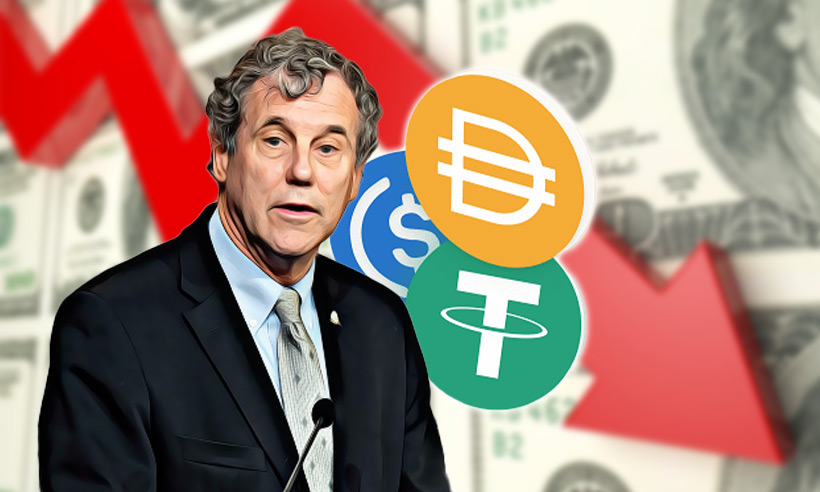
During a hearing on Tuesday, Senator Sherrod Brown discussed the drawbacks of stablecoin warning the investors that they may eventually suffer tremendous losses if they don’t practice caution.

“The only people to walk away unscathed are the big guys…If you put your money in Stablecoin, there’s no guarantee you’re going to get it back.”

Sherrod Brown Warns Stablecoin Investors

Brown wrote to stablecoin producers and cryptocurrency exchanges, expressing his reservations about the new asset class and requesting how stablecoins could be redeemed for fiat currency. Stablecoins, according to Brown, are neither decentralized nor transparent. According to the legislator, critical information concerning cryptocurrencies is not available to customers. Tether was hit with yet another class-action lawsuit earlier this week, accusing it of misrepresenting essential facts about its flagship USDT stablecoin.

Digital tokens are a “wild financial speculation,” according to him, and the blockchain technology that underpins stablecoins will never “democratize money” or “create a more inclusive economy.”

Stablecoins – Shadiest Parts of the Crypto World

Senator Elizabeth Warren (D-MA), a vocal anti-crypto critic, also raised concerns about the role of stablecoins in decentralized finance, stating that authorities should take stablecoin dangers seriously.

Warren (D-MA) echoed the Ohio senator’s concerns, saying that stablecoins are “propping up one of the shadiest sections of the crypto world, decentralized finance (DeFi), where consumers are least protected from being conned.” She encouraged the country’s regulators to crack down on digital tokens. Senator Patrick Toomey (R-PA) went on to say that new laws around stablecoins should be enacted to address consumer protection and financial sector threats. According to the senator, legislation should be tailored to support innovation in the global digital economy.

“Narrowly focused and coordinated regulation of stablecoins in the United States and across jurisdictions globally,” he said.

Senator Toomey reaffirmed some of the advantages of stablecoins, including faster payment speeds, cheaper transaction costs, more comprehensive access to the payment system, and programmability. 

Hedera and South Korean Shinhan Bank Partner to Launch KRW Stablecoin Pilot

Hedera Shinhan bank Stablecoin

A proof of concept has been finalized by South Korea’s Shinhan Bank and Hedera Hashgraph (HBAR). The primary motive behind this is to conduct international remittances using stablecoin on the Hedera Network.

A fresh concept is to be evaluated for sending fiat-backed stablecoin between banks. This initiative will bring down fees and transaction times on international payments.

South Korean Shinhan Bank & Hedera to Collaborate to Launch KRW Stablecoin Pilot

Shinhan Bank’s new concept will enable remittances to transmit money internationally. The process of sending money will be completed within seconds for a fraction of a cent on the Hedera Network.

Hedera declares, “The average fee per transaction on our network is $0.0001, with average transaction time being 3-5 seconds.”

On Nov. 29, Hedera announced, “We aim to calculate the possibility of publishing and allocating stablecoins for financial use cases with lower fees and shorter completion times as compared to the existing systems. Moreover, we’ll make the transactions traceable.”

While Shinhan Bank plans to produce Korean Won (KRW) backed stable coins, international partner banks plan to issue stablecoins in local currency. KRW stablecoin received by the bank clients can redeem the coins for local currency stablecoins.

Report on a Massive Downfall

Remittance Prices Worldwide’s Dec. 2020 report claims, “Globally, the mean delivery charges $200 across national borders via traditional banks in Q4 2020 was 6.51% ($13.02).” The report even claims a massive downfall of average to 3% ($6) by 2030.”

Mance Harmon – the CEO and Co-organizer of Hedera said, “A vast chance of eliminating the middleman awaits. Soon, this process will be dramatically efficient and cost-effective.”

A crypto news website reports, “Hedera’s native token HBAR had responded vigorously to the news posting a 10% gain over the past 12 hours.”

Shinhan Bank has been associated with the Hedera Governance Council since April 2021. Furthermore, it had been allied to Klaytn’s blockchain governance council since July 2021.

 US Payments Startup Circle to Expand Stablecoin Presence in Asia

Circle Stablecoin EuroCoin

Circle, a US payments startup, has said it would invest more in Asia to promote the usage of its stablecoin, a fast-growing cryptocurrency tethered to the US dollar. Circle recently made its first investment in Japan through a newly formed venture capital arm, participating in a 500 million yen ($4.4 million) funding round for JPYC, a startup developing a yen-tied stablecoin. Circle has announced intentions to open a hub in Singapore to test stablecoins with local businesses.

US Payments firm Circle Eyes Market of Asia to Expand its Stablecoin Presence

“From a trading viewpoint, Asia has been one of the fastest developing regions for crypto,” CEO Jeremy Allaire said in a video interview from Washington.

Circle is expanding into Asia as it prepares to go public in the United States by combining with a particular acquisition company for a $4.5 billion valuation. In 2019, Circle and Coinbase, a leading cryptocurrency exchange in the United States, formed a joint venture to create USDC. Stablecoin has grown to become the second most valuable market capitalization, with a circulation of more than $35 billion.

Circle has also announced the setting up of a center in Singapore. Allaire plans to “show the potential and value of stablecoins to large Singapore enterprises,” according to the company. The company is racing to expand internationally in the face of stiff competition from other stable coins.

Despite questions from US regulators over its reserves, Tether, the largest stablecoin issuer, has seen its circulation grow to $73 billion. The Commodity Futures Trading Commission fined Tether $41 million in October for making false or misleading statements regarding its stablecoin.

China Testing the Digital Renminbi to Run Trials in the Winter Olympics

Central banks all around the world are investigating the possibility of developing a digital version of their currency. China, which has outlawed cryptocurrencies, has been experimenting with the digital yuan and wants to hold trials during the Beijing Winter Olympics. In April, the Bank of Japan began testing its central bank digital money.

Republic of Palau and Ripple Announce Collaboration to Develop a Digital Currency

Republic Palau Ripple Digital

Ripple, the leading provider of crypto solutions for cross-border payments, has teamed up with the Republic of Palau for exploring the country’s first national digital currency. Despite several challenges, Ripple has become a significant player in the global payments industry. 

Digital dollars will be created in Palau using the XRP Ledger, Ripple said in a press release. The company has also stated that the goal is to create a USD-backed stablecoin around which additional services, such as business registrations can be built.

Ripple Partners with the Republic of Palau for Developing a Digital Currency

For the time being, Palau does not use fiat currency. The U.S. dollar is legal money in the United States, just as in El Salvador. Instead of using any cryptocurrency, the tiny island in Oceania wants the government to produce a digital equivalent of the U.S. dollar.

As such, Palau’s effort seems to be a stablecoin issue rather than a CBDC. With no central bank in Palau, this decision makes perfect sense. Surangel S. Whipps Jr., president of Palau, was sure that a financial product tailored to the island’s needs might be established in the future thanks to Ripple’s technology.

“The partnership with Ripple is a natural extension of our commitment to financial innovation and technology. Cross-border payments and a national digital currency will be the emphasis of the partnership’s first phase, which will help the inhabitants of Palau get more financial access.”

Ripple’s blockchain network is efficient, carbon-neutral, quick, and cost-effective. Ripple has also noted that the XRP Ledger would allow Palau to settle transactions in less than five seconds at the cost of less than a cent per transaction.

Problems with the Regulators

The native coin of Ripple’s XRP Ledger, XRP, doesn’t appear to react in response to this news. XRP corrected roughly 34% in three weeks after the July 2021 rally, going from $1.4 to $0.86. Since then, it has not breached the $1.2 resistance level or the $1 support level.

XRP surged from $1.03 to $1.06 on November 23, a 2.97 percent increase. However, with its price at $1.045, the token has dropped by roughly 2%, showing no trend. Ripple’s regulatory issues are most likely to be blamed for this reluctance.

The business is currently being sued by the SEC for allegedly marketing XRP as unregistered securities. Ripple and its XRP coin have taken a significant hit. The XRP Army, XRP’s once-dominant fan following on Crypto Twitter, where the token was previously ranked in the top three by market capitalization, has seen a drastic drop in popularity in recent times.

SEC to Lead the Efforts of the United States to Regulate the Stablecoin Sector

SEC Stablecoin United States

In accordance with a Bloomberg report shared on October 26, citing anonymous sources, the SEC has recently reached an agreement with the other agencies of the United States to regulate Stablecoins. The regulatory bodies of the United States have come to an agreement that the Securities and Exchange Commission of the US will be leading the efforts to regulate the sector dedicated to stablecoin.

United States Regulatory Agrees that SEC will Lead Efforts to Regulate Stablecoin 

According to the sources cited by Bloomberg, the recently found significant authority of the SEC over the sector will be formally announced in the forthcoming stablecoin report of the Treasury Department that is all set to be published this week.

It should be noted that the report will be clarifying the regulatory jurisdiction of the Commodity Futures Trading Commission (CFTC) and Treasury Department with regard to stable tokens.

As per the report, it was announced during a meeting of The President’s Working Group for Financial Markets (PWG) in the month of July, with the PWG stating its intention to explore the creation of a new type of banking charter for stablecoin issuers among the regulatory measures.

Gary Gensler Calls on Congress to Assist the CFTC

In addition to this, it should be noted that last month, Gary Gensler, the chairperson of the Securities and Exchange Commission of the United States called on Congress to assist the SEC and CFTC in regulating stablecoins. 

Well, there is no denying the fact that the stablecoin market has witnessed significant growth in the year 2021, and the market cap of Tether, the leader of the stablecoin market, has clearly exploded this year, with its market capitalization growing by around 229% since the beginning of this year to sit at the mark of $69.5 billion.

USDC, the second in line has also seen a notable surge in its capitalization as it soared to 706% to touch the $32.52 billion mark.

Senators Ask Facebook to “Immediately Shutdown” the Novi Wallet Trial Program

Novi wallet shutdown

Five senators have asked for the immediate shutdown of Facebook’s new cryptocurrency wallet, Novi, which was introduced in collaboration with Coinbase just hours ago. 

Senator Demand Facebook to Shutdown the Novi Wallet Trial Program

Senator Elizabeth Warren, a crypto critic was one of five who urged Facebook CEO Mark Zuckerberg to ‘immediately shutdown’ the initiative. 

The five Democratic Senators wrote to Zuckerberg in a letter dated October 19:

“Given the scope of the scandals surrounding your company, we write to voice our strongest opposition to Facebook’s revived effort to launch a cryptocurrency and digital wallet, now branded ‘Diem’ and ‘Novi,’ respectively.”

Novi Collaborates With Coinbase

Diem is Facebook’s ambitious stablecoin project, originally known as Libra, which has been the subject of intense scrutiny and regulatory hurdles for years leading to the withdrawal of some major collaborations.

Novi is the company’s crypto wallet, meant to store the Diem token as well as other stablecoins. 

On October 19, Novi started a trial in the United States and Guatemala in collaboration with Coinbase which will provide crypto custody services. 

Users will be able to acquire, transfer, and receive Paxos Dollar (USDP) using their Novi account during the trial. 

On Oct. 20, Coinbase CEO Brian Armstrong praised Diem co-creator and board member David Marcus, noting that “ignoring the naysayers and shipping requires a lot of persistence.”

Senator Brian Schatz’s office issued the warning, which was co-signed by Tina Smith, Richard Blumenthal, banking committee chairperson Sherrod Brown, and Elizabeth Warren.

They said that Facebook had made deliberate commercial decisions to continue with “activities that have damaged its users and the broader society,” adding:

“Facebook cannot be trusted to manage a payment system or digital currency when its existing ability to manage risks and keep consumers safe has proven wholly insufficient.”

Diem Aspires to Be the Most Powerful Currency in the World

Marcus wrote in a statement announcing the pilot, “We aim to transfer Novi to the Diem payment network once it obtains regulatory permission.”

The company’s goals are much higher than simply providing a crypto wallet and stablecoin in the digital realm. 

On October 17, Facebook announced ambitions to generate 10,000 high-skilled jobs in the European Union over the next five years to develop its metaverse.

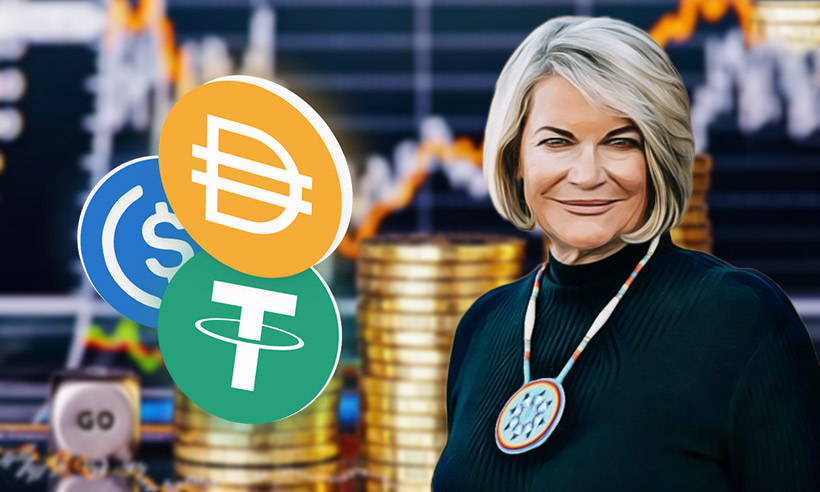
Stablecoins Must be Properly Cash-Backed and Regulated – Cynthia Lummis

Cynthia Lummis stablecoins

Wyoming Republican Sen. Cynthia Lummis, a prominent crypto advocate, advised on Wednesday about stablecoins must be backed by cash.

Cynthia Lummis Asserts Stablecoins Must Be Cash-Backed 

She stated on the Senate floor that any legal framework for stablecoins will need to include complete cash-backing, akin to a money market mutual fund, citing “novel risks” to the US economy.

“Stablecoins must be 100% backed by cash and cash equivalents, and this should be audited regularly,” she said. “It may be the case that stablecoins should only be issued by depository institutions or through money market funds or similar vehicles.”

Some stablecoins, such as Tether and USD coin, have sparked debate about whether their cash reserves are secure enough for a cryptocurrency ostensibly comparable to a dollar.

Lummis, a Bitcoin holder and one of the Senate’s most ardent crypto supporters, stressed that stablecoins should adhere to all applicable anti-money laundering and sanctions legislation.

 The Potential of Coins In The US Economy

But, as long as these regulatory problems are resolved, Lummis remains optimistic about the potential of stablecoins in the US economy.

“Properly supervised, stablecoins are not tantamount to the so-called wildcat banks of the 19th century,” she said. “Stablecoins have an important role to play moving forward.”

Lummis thrilled crypto enthusiasts last month when she helped offer a key change to an infrastructure bill that corrected what opponents termed an excessively wide description of cryptocurrency “brokers.” 

Although the amendment was eventually defeated, she received praise from cryptocurrency specialists.

“Without [Lummis’s] amendment, the US will spend hundreds of millions collecting information on transactions that could never generate actual tax revenue,” Marco Santori, Kraken’s chief legal officer, told Insider previously.

Cardano (ADA) to have its First Stablecoin Djed, Projecting Cheaper Transactions

Cardano ADA Stablecoin Djed

COTI, a software development company, has recently made an announcement regarding the issuance of the very first stablecoin developed to run on the Cardano (ADA) blockchain. The stablecoin is reportedly called Djed and the news was revealed by the leader of Cardano, Charles Hoskinson, and CEO of COTI Group, Shahaf Bar-Geffen at the Cardano Summit stage in Laramie, Wyoming.

Djed Stablecoin to be Launched on Cardano (ADA) Blockchain

It has been recently revealed that the Djed stablecoin is going to be launched on Cardano and will be promoting the growth of its nascent ecosystem, specifically now that the blockchain has started extending support to smart contracts. 

Due to this factor, the crypto market has strong expectations about the possible development of Defi platforms on the Cardano blockchain.

There are various methods to attain this relationship and the most popular method is the holding or blocking of an amount of the reference asset that extends support to the issuance of a proportional amount of the correspondent stablecoin. 

Talking about Djed, it has already been revealed that the value of Djed will be kept stable by an algorithmic design, which tends to leverage smart contract design on the Cardano blockchain to maintain a price as close as possible to attain the mark of $1. 

In accordance with the whitepaper, there are going to be versions of Djed, a minimal one, designed exclusively to serve as a medium of exchange, and an extended one whose smart contract makes use of a continuous price structure and fees to react faster to external events. 

Shahaf Bar-Geffen on the Recent Development

The Chief Executive of COTI Group, Shahaf Bar-Geffen, said at the conference that the use of stablecoin like Djed will be allowing users to maintain greater control over their transactions. As said:

“Blockchain participants are using stablecoins to engage in everyday transactions because they allow monetary value to be exchanged in a seamless manner, regardless of the sender and recipient’s location. I believe that adding the Djed stablecoin to the Cardano blockchain will significantly improve how transactions are settled on the platform.”

In addition to this, the official revelation said:

“The Djed stablecoin could be a game-changer in the crypto space, appealing to an entirely new audience at a time when the industry is already experiencing astronomical growth. COTI has been a long-time partner of the Cardano ecosystem. It’s great to have them on board with this new venture.”

SEC Chair Gensler Compares Stablecoins to Poker Chips at Casinos

Gensler Stablecoins

US Securities and Exchange Commission (SEC) chair Gary Gensler reiterated the risks associated with cryptocurrencies, especially stablecoins, in a recent interview with Washington Post.

SEC’s Gensler Likens Stablecoins to Poker Chips at Casinos

SEC chair Gary Gensler doubled down on his stance against stablecoins in an interview with the Washington Post on Tuesday.  He also suggested that his agency has “robust” authority to regulate cryptocurrencies. 

Right off the bat, Gensler took a shot at crypto’s volatility, citing the recent market crash which downsized most cryptocurrencies by double-digits. 

He also turned his attention to stablecoins, a growing area of concern for regulators. Gensler shared that the SEC is compiling a report on stablecoins under Treasury Secretary Janet Yellen’s guidance. He also revealed that the agency is working with banks and Congress to expand its authority on stablecoins.

The SEC chair has previously likened the crypto sphere to the Wild West, and on Tuesday he expanded on this analogy:

“We’ve got a lot of casinos here in the Wild West,” Gensler said. “And the poker chip is these stablecoins.”

Later in the conversation, Gensler discussed his views on crypto trading and lending programs. He has already stated that exchanges such as Coinbase should fall under SEC’s jurisdiction. 

Gensler said that crypto trading platforms offer  “thousands” of assets, many of which can be classified as securities. He added:

“Those platforms should come in, and they should figure out how to register. Not many have, and so I do really fear that we’ll keep bringing these enforcement cases but there’s gonna be a problem … and, frankly, when that happens I think a lot of people are going to get hurt.”

Crypto is Not a Viable Form of Long–Term Money: Gensler

Despite heaping praise on Satoshi Nakamoto’s innovation, Gensler maintained that he doesn’t see cryptocurrencies as a viable form of money in the long term. He compared crypto to the Wildcat banking era of the 19th century, during which banks in remote areas issued worthless currency backed by bonds. 

“History tells us that private forms of money don’t last long. I don’t think there’s long-term viability for 5,000 or 6,000 private forms of money,” he told the Washington Post.

How Can the Adoption of Stablecoins Lead to Better Financial Inclusion?

how the adoption of stablecoins lead to better financial inclusion

Stumbling, yet growing through multiple phases, from an adolescent market of FOMO and bubbles to a maturing financial epiphany of the century, the crypto market has finally hit a mark where the need for regulatory support is almost demanding. I wouldn’t go so far as calling cryptocurrencies perfect, however, it’s no secret that it does fill the many fault points in the currently centralized financial system. 

Despite the very visible and immeasurable growth across the crypto landscape (all the way to over $2 Trillion in global market cap), the extreme volatility and lack of regulatory support have somewhat signed crypto off from acquiring its much deserved legal recognition among major economies. However, as Defi expands and NFTs contribute to their multiple industry-wide potentials, the traction gained by cryptocurrencies requires governing trust and a more regulated oversight for financial inclusion. 

While leading assets like Bitcoin and Ethereum often fall to the effects of a fluctuating market, Stablecoins have en route the future of cryptocurrencies to a more reliable frame (a concept that cryptocurrencies are not famously associated with, thanks to the lack of education and awareness along with the fact that the market is still relatively nascent on several checkpoints). 

Stablecoins Victorious Walk Through the Bear

The recent sell-off plunged the market to a sharp decline as leading crypto assets like BTC, ETH, ADA, SOL, etc. were slashed by percentages in double digits. However, much similar to the last bear market, stablecoins came through the smoke in victory, keeping their worth intact with negligible fluctuations in the value. 

Stablecoins were channeled to mediate the notorious fluxes of the crypto market, offering more stability as the assets succumb to publicized fear and regulatory uncertainty. And both 2021 bear runs witnessed as stablecoins maintained their peg to the dollar, offering liquidity along with a safety net to traders as red candles flooded the crypto charts. This Tuesday, as the crypto market came crashing down, CryptoQuant, a blockchain analytics service, reported massive spikes in stablecoin transfers.   
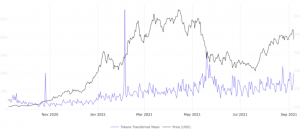
The mean of all stablecoins transfer. Source: CryptoQuant

The trading volume of leading stablecoins like Tether (USDT) jumped over double the amount, processing over $10 billion worth of transactions on Tuesday as compared to $4.02 billion on the day before. The overall supply of stablecoins in circulation remained optimal, representing sufficient liquidity against the brutal demand of a crashing market which reduced the global crypto market cap from $2.38 trillion to $2.103 trillion in a matter of hours. Thus leading stablecoins were successfully able to retain their one-to-one dollar peg apart from a few inevitable minor drifts in the price. 

Not Their First Time

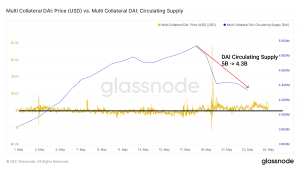
Similar insights were drawn by Glassnode Insights during the unfortunate crash that severely hindered crypto investors earlier this year. As crypto-assets grew closer to the peak stage of being overbought, the market came crashing down until the leading tokens were literally slashed down to half their trading values. However, stablecoins were phenomenally able to prove the fundamental worth of their very mechanism and offered enough liquidity while maintaining their peg. 

While the gravity-like drop showcased the worst side of volatility, Stablecoins like DAI adjusted their circulating supply in response to collateral requirements, all the way retaining their protocol stability.
How Stablecoins Can Contribute to Global Finance? 

Stablecoins, in their most layman form, can ideally be called modern money. In their true paradigm, stablecoins that are non-interest bearing with a firm value backed against a currency or asset can contribute to greater resilience of payments. Or so says the executive director for financial market infrastructure at the Bank of England, calling modern money to be an amalgamation of public and private funds, 

“If new forms of digital money can be made safe, they could potentially contribute to faster, cheaper, and more efficient payments with greater functionality. They could increase the resilience of payments. And they could even have long-term benefits for financial stability.”

Stablecoins can play an essential role in serving the humanitarian cause of bringing those unbanked to the financial system. Offering real-time payments that are low-cost and safer in their means can significantly lower the cost of remittances. Emerging economies in particular can definitely foster positive value out of stable coins. 

Stablecoins carry a lucid potential to ease safe and convenient transactions at a more conceivable cost compared to mobile money lying in non-bank wallets. And with remittances taking a historical decline of almost 20% in 2020 due to Covid-19, global remittances can definitely use a better financial flow. Here are a few ways stablecoins can bolster efficiency in the financial system- 

  • Reduce the cost of remittances
  • Help countries recover from the devastating after-effects of the pandemics like money distributions and stimulus packages
  • Promote credit access by generating secure digital transaction history
  • Promote opportunities for small businesses by offering low-cost cross-border trading

Conclusion – Challenges With Spirit 

With several countries including El Salvador, Ukraine, etc. now in complete support of cryptocurrencies, leading economies around the globe are under the spotlight on their next step towards the crypto space. Unlike China, countries including the US, India, etc. have not boycotted cryptocurrencies, however, any prediction in this particular subject is currently under muddy territory. 

A few steps behind the racing exploration of the digital yuan for cross-border payments by the Asian Dragon, countries like Japan, India, the US, etc. are under a more calculated and constructive impression in the development of CBDCs. As for creating a regulatory framework for stablecoins, terms for stability, consumer protection, crime prevention, etc. have to be critically addressed and defined. Along with a robust adaptive backing by governments, businesses, merchants, etc., stablecoins require a rather comprehensive framework to aid stability and efficiency in the embodiment of a new financial order. 

USDC Supply Increases to 2.5 Billion on Solana Network

USDC Solana

The USDC supply on the Solana network has increased to 2.5 billion tokens out of which 1 billion tokens were added within one week. 

USDC Circulation on Solana Grows to 2.5 Billion

Solana has registered impressive growth this year and it seems that along with NFTs, stablecoin USDC might have contributed to the network’s gains. According to Solana Explorer, the number of USD Coin tokens on Solana has reached nearly 2.5 billion.

Taking note of this development, Circle CEO and co-founder Jeremy Allaire recently shared a tweet thread explaining his vision for the asset. He also emphasized that Solana was one of the blockchains considered by Circle in its effort to introduce Multichain USDC.

“Over a year ago, we embarked on an effort to introduce Multichain USDC, forming partnerships with a number of important emerging chains.  One of the first was Solana, where we were excited about the scale, speed, and cost-efficiency the chain could bring to USDC,” he stated.

In the next few years, Circle wants to scale USDC’s utility beyond crypto-based finance. Allaire revealed that the stable currency is currently testing its payments and treasury infrastructure for “consumer scale payments and commerce.”

“With more and more native financial market primitives growing rapidly on this architecture, and the ability to connect it to seamless consumer and institutional UX suggests that we will see breakthroughs in on-chain payments, banking, and capital markets,” Allaire wrote on Twitter.

USDC Backs Regulatory Oversight of Stablecoins

In a recent interview with PYMNTS.com, Allaire discussed the ongoing scrutiny around stablecoins at length. Supporting regulatory oversight, he said:

“As something like this gets so big naturally — whether you’re the Federal Reserve or the U.S. Treasury Department or other federal-level agencies — the question naturally as well is whether this will ultimately be something that’s supervised just like other banking activities.”

The Circle CEO also touched upon the company’s push into FDIC-insured banking and the implications of digital currencies operating as payment instruments.

“Obviously money transmission law applies to these [payment] activities, whether it’s a PayPal balance or a Square balance or a USDC balance,” he said. “We’re very interested in the safety and soundness and fundamental liquidity of something that’s closer to ‘full’ reserve.”

Cryptocurrencies and Stablecoins are Not Currencies: Christine Lagarde

Christine Lagarde Cryptocurrencies

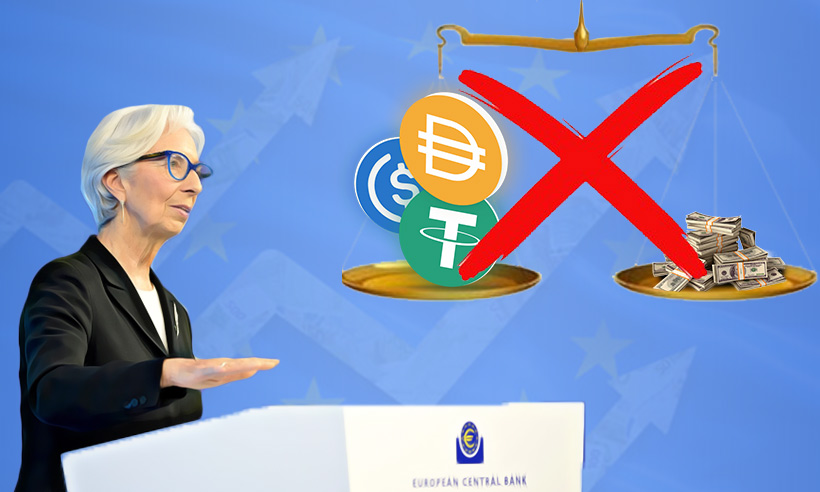
European Central Bank president Christine Lagarde recently said that all kinds of cryptocurrencies, including stablecoins, are “not currencies at all.” She asserted that most cryptos that “present themselves as currencies” should be considered as assets and regulated accordingly by asset regulators.

Christine Lagarde Says Stablecoins and Cryptocurrencies are Not Currencies

During an interview with World Economic Forum founder and executive chair Klaus Schwab, Lagarde highlighted that she considered all types of cryptocurrencies as assets that should be supervised by asset regulators. She underscored that this included dollar-pegged stablecoins that tout themselves as actual coins.

“Stablecoins are pretending to be a coin, but in fact it’s completely associated with an actual currency,” Lagarde noted. “For instance, some of them are saying that they can be used for transactions, but the value will be exactly aligned to the dollar.”

The ECB president also referred to USDT (Tether) while highlighting that stablecoin issuers needed to be regulated to safeguard their investors against misrepresentation.

“I think very recent history has shown that those reserve currencies were not always available and as liquid as they were intended to be.”

Earlier this year,  the Office of the New York Attorney General ordered Tether to pay $18.5 million and submit to regular reporting of its reserves till 2023. The New York authorities had alleged that the stablecoin issuer had misrepresented the extent to which the token was backed by fiat money.

Lagarde Open to Central Bank Digital Currencies

Despite her staunch opposition to cryptocurrencies, Lagarde is open to the prospect of adopting a CBDC. She said that if customers want to conduct transactions in digital currencies instead of banknotes and cash, then that option should be made available. 

“We should respond to that demand and have a solution that is European based, that is secure, that is available, and friendly terms that can be used as a means of payment,” she added.

Lagarde has previously stated that it’s unlikely that central banks will hold Bitcoin as a reserve currency in near future.

USDC Stablecoin Now Backed by Cash and Treasury Bonds Only

USD coin cash treasury bonds

Coinbase crypto exchange and Digital Currency Company Circle who collaborated to support the latter’s USD coin will now be pegged by cash and U.S. treasury bonds only.

USDC Now Backed by Cash and Treasury Bonds

In a blog post published on August 22, Circle has revealed that its USDC reserves are now backed entirely on cash and short duration US Treasuries only. The change will be reflected in future audit attestations to be carried out by its auditing partner, Grant Thornton, according to the company.

“Mindful of community sentiment, our commitment to trust and transparency, and an evolving regulatory landscape, Circle, with the support of Centre and Coinbase, has announced that it will now hold the USDC reserve entirely in cash and short duration US treasuries,” the company wrote in the blogpost.

In a recently released report by Grant Thornton, the stablecoin showed a 60% backing of cash and cash equivalents while the remaining 40% by various forms of debts and treasury bonds.

Centre issues the $28 billion USDC stablecoin backed by Coinbase and Circle. USDC is the second-largest stablecoin globally with roughly $28 billion in market capitalization. Each coin is backed by about $1 in reserves.

Coinbase Takes Ownership Over Failing to Clarify USDC Backings

The recent update comes just a month after Circle shared in their May report about USDC reserves in late July. A month later, Coinbase changed the description for USDC on its website and dropped the wording that previously said each USDC was backed by one US dollar “in a bank account.”

Responding to this, Coinbase President and COO Emilie Choi said in a tweet that Coinbase’s recent statement of every USDC being “backed by a dollar in a bank account” could have been more clear.

Choi wrote: “That was a mistake and Coinbase takes ownership for that.” She clarified that the changes in the investment portfolio for USDC reserves started in May 2021, it “will not extend past September.”

Utopia P2P Network Launches Anonymous USD Stablecoin

Utopia P2P Stablecoin

Decentralized peer-to-peer network, Utopia P2P has launched a new anonymous USD stablecoin backed by DAI called ‘UUSD’.

Utopia P2P Launches Anonymous USD Stablecoin

‘Utopia P2P’, a decentralized peer-to-peer ecosystem has launched its latest Utopia USD stablecoin, an anonymous U.S. dollar stablecoin backed by DAI. Built upon Utopia’s serverless, peer-to-peer blockсhain, the stablecoin features anonymous transactions by default.

No information is revealed on the blockchain network, rendering its history completely untraceable. With every transaction done, no metadata remains visible, making it fully anonymous.

As of yet, no cryptocurrency provides this level of future-proof untraceable transactions, a sure standout from its competitors. Currently, private cryptocurrencies rely on obfuscation techniques and are vulnerable to tracking tools from CipherTrace. In this sense, this is not true anonymization.

Utopia USD will maintain 1:1 parity with the U.S. Dollar with its value backed by DAI cryptocurrency collateral that is publicly verifiable by the cold wallet address. The initial supply is 1,000,000 USD backed by 1,000,000 DAI.

The official launch of Utopia USD will be supported by a massive airdrop campaign and several marketing initiatives this month.

Most Advanced Blockchain Network

Utopia P2P is based on Proof-of-Stake and Proof-of-Resources algorithms that offer the most advanced blockchain technology for the cryptocurrency market from secured instant messaging, encrypted email, voice communication, and private web browsing.

Other features provided by the network include instant transactions in less than 3 seconds, transactions fees 30 times cheaper than Ethereum, absence of network congestion, no KYC or transaction limits, crypto cards, voucher code generation and redemption to enable offline and paper money transfers, desktop GUI and console software for built-in API and tools for merchants

In addition to crypto payments, other Utopia ecosystem components include a decentralized domain registry, multiplayer games, Tor alternative secure network Idyll browser created to surf deep sites hosted inside the Utopia ecosystem.

Tether Discloses More Details on Reserves in New Attestation Report

Tether attestation report

Tether Holdings Limited, the company behind the largest stablecoin USDT released a detailed breakdown of its $62.8 billion reserves in a new attestation report. The much sought-after details included the composition of Tether’s reserves and the maturity and ratings of its certificates of deposits (CDs) and commercial paper (CP).

Latest Attestation Report Indicates Tether Increased Allocation to Treasury Bills 

As per the report issued on June 30, 85% of USDT’s reserves were allocated to cash and cash equivalents and other short-term deposits and commercial paper. The majority of funds in this category — 58% to be exact — were held in commercial paper and certificates of deposit. Almost $14.5 billion, or 47% of these holdings, were rated A-1.

Most notably, Tether ramped up its asset diversion to treasury bills since March and its current allocation here stands at 29%. 

Other holdings included cash and bank deposits, which accounted for 12% of the allocations, secured loans for 4%, and corporate bonds, funds, and precious metals for 7.7%.

The company’s other investments were constituted of digital tokens — which represented 3.3% of the reserves at $2.05 billion.

Tether Makes CP and CDs More Transparent In Second Report

The latest attestation report was remarkably more transparent than the one released in May and delved deeper into the ratings of commercial paper holdings and their maturity periods. The majority of CDs and CP were rated A-1, as assessed by the Standard and Poor rating agency. These were followed by 45% and 5.5% of A-2 and A-3 CP and CDs allocations.

Most of these commercial papers and certificates of deposit had a maturity period of 81-365 days. The remaining were due for maturation between 0–90 days and 91–180 days.

The June 30 report was Tether’s second public revelation of its asset composition since its establishment in 2014. In the absence of a formal audit, attestations are increasingly vital to stablecoin issuers, given the scrutiny around the asset class in Washington. The current report was issued by Cayman Islands-based accounting firm Moore Cayman.

Paolo Ardoino, the CTO of Tether, said the attestation proved that the currency was completely backed. He added, “A healthy and conservative portfolio with an emphasis on liquidity continues to fuel our growth and confidence in our innovative offerings.”


Fed Governor Waller Backs Stablecoins, is Doubtful of the Need for CBDC

Waller Stablecoins CBDC

Federal Reserve Governor Christopher Waller said Thursday he’s not convinced that a central bank digital currency (CBDC) would solve any existing issues that are not being addressed by other initiatives. Instead of a digital dollar, Waller backed private counterparts, specifically stablecoins, during a speech before the American Enterprise Institute.

Stablecoins Could Challenge Banks for Payments, CBDC May Cause Problems: Waller

“I remain skeptical that a Federal Reserve CBDC would solve any major problem confronting the U.S. payment system,” Waller remarked on Thursday. His comments come weeks ahead of a research paper where the central bank would look into the use cases of a CBDC.

Implementation of the digital dollar was also linked to higher chances of surveillance by Waller. The Fed governor cited China’s example to elaborate on his point and stated:

“The introduction of a CBDC in China, for example, likely will allow the Chinese government to more closely monitor the economic activity of its citizens. Should the Federal Reserve create a CBDC for the same reason? I, for one, do not think so.”

As for the current problems faced by payments systems, Waller pointed out that a group of commercial banking institutions had recently developed an instant payment service or RTP, and the Federal Reserve is in the process of developing a similar system, dubbed FedNow. He claimed that the facility would transfer payments immediately after they are initiated. Furthermore, he said that efforts to improve cross-border payments were also underway.

Although Waller remained cautious on stablecoins, he was sure that they could become attractive payment instruments. He added that if one of the circulating stable currencies develops a sizeable user base, then it could challenge banks for processing payments. Consequently, banks would be forced to reduce their charges for payment services in the face of competition.

Stablecoins to Act As a Conduit for US Monetary Policy

Unlike industry watchers who’ve sounded the alarm about private currencies, Waller believes that any asset which surrenders to the U.S. dollar acts as a conduit for the monetary policy of the United States. He borrows this logic from international economics.

“It is well established in international economics that any country that pegs its exchange rate to the U.S. dollar surrenders its domestic monetary policy to the United States and imports U.S. monetary policy,” he noted.

Waller used this reasoning to argue that private stablecoins pegged to the dollar’s value broaden American monetary policy’s reach rather than challenging it. 

Circle, Unstoppable Domains Debut Readable Usernames for USDC Payments

Circle Unstoppable Domains USDC

Circle, the global financial technology firm behind one of the most popular dollar-based stablecoin USDC has partnered with blockchain domain name provider Unstoppable Domains to offer easy and human-readable usernames instead of lengthy wallet addresses for USDC transfers.

Circle Forms Partnership With Unstoppable Domains

Unstoppable Domains, the blockchain domain name provider and the creator of the dollar-based stablecoin Circle on August 4 introduced simplified user experience and USDC transfers by introducing readable usernames for stablecoin payments.

By integrating with Unstoppable Domains, USD Coin holders will soon be able to transfer the stablecoin with simpler usernames instead of lengthy alphanumeric wallet addresses across supported apps, wallets, and crypto exchanges utilizing the stablecoin.

Under this partnership, USDC transfers will be similar to like sending an email while likely solving the problem of transferring coins to the wrong address.

Commenting on the integration, Josh Hawkins, Circle’s senior vice president of marketing, said:

“USDC has grown dramatically in the last year, fueling commerce and payments activity across the internet. With Unstoppable Domains’ .coin usernames, sending USDC becomes just as easy as sending an email. We believe this is a major step forward in making USDC payments accessible for all.”

Unstoppable Domains currently supports over 200 cryptocurrencies and over 50 wallets and exchanges. It has reportedly sold over 1 million blockchain domain names such as .crypto, .nft, and .coin, among others with more still in development.

Simplifying USDC Payments

Data from CoinMarketCap suggests USD Coin is a digital dollar-pegged stablecoin with a market capitalization of over $27.4 billion and has become one of the world’s most popular since its launch in 2018. With such widened reach, the partnership with Unstoppable Domains will leverage USDC to scale the adoption of cryptocurrencies while removing its complexities.

On simplifying cryptocurrency usage, the founder and CEO of Unstoppable Domains, Matthew Gould remarked

“Simple usernames combined with dollar-pegged stablecoins take the fear and risk out of spending crypto. We’re excited to work with Circle to make stablecoin transactions an everyday reality for millions, then billions of people.”

SEC Chair Gary Gensler Suggests Stablecoins Are Securities

Gary gensler Satoshi

For months now, regulators in the US have been calling for stricter monitoring of stablecoins. But this week saw the strongest hint of incoming restrictions against the much talked about assets. In particular, Securities and Exchange Commission (SEC) Chair Gary Gensler has suggested that stable currencies should be treated as securities. Gensler was addressing the American Bar Association when he raised the issue of stablecoin regulation.

Gary Gensler Wants Stablecoins to Report to the SEC 

Following Treasury Secretary Janet Yellen’s comments on the need for regulating stablecoins and their potential disruptive effects, SEC chair Gary Gensler hinted that cryptocurrencies backed by traditional assets should fall under securities laws. 

In a keynote address to the bar association, Gensler said that many crypto exchanges were offering tokens “that are priced off” the value of securities and behave like derivatives.

“Make no mistake: It doesn’t matter whether it’s a stock token, a stable value token backed by securities, or any other virtual product that provides synthetic exposure to underlying securities,” Gensler noted.

“These platforms – whether in the decentralized or centralized finance space – are implicated by the securities laws and must work within our securities regime.”

Although Gensler did not mention any specific tokens, it is obvious that his comments are aimed at Circle’s USD Coin (USDC) and Tether’s USDT token. The dollar-pegged stablecoins have found themselves on the radar of regulatory agencies lately, where they’ve been discussed at length as a threat to financial systems.

Gensler warned that the SEC may also look into enforcement actions while stating that the agency has already brought “some cases involving retail offering of securities-based swaps.” This could be a reference to SEC’s case against fintech platform Abra, which was asked to pay $300,000 in fines for selling security-based swaps to its users in 2020.

Gensler Issues Stern Warning Against Selling Synthetic Stocks

Besides stablecoins, Gensler also showed concern about synthetic stocks that have garnered significant attention in the DeFi sector. The SEC chair clarified that synthetic shares mirroring the performance of blue-chip stocks like Apple, Amazon, and Tesla should also be treated as securities. Furthermore, he asserted that his agency would use all the resources at its disposal to go after entities offering such assets without an SEC registration.

Synthetic stocks or fake stocks have exploded in popularity on DeFi platforms, with Synthetix and Mirror Protocol leading the trend. These facsimiles of big-name stocks track the performance of companies, but they have no actual value backing them. Traders seeking to invest in stock markets without regulations have hailed them for their accessibility feature. However, regulators have been largely disapproving of them and their stance has started to impact the crypto industry. Last week, Binance announced that it was dropping support for all assets linked to equities.

Even so, synthetic stocks have found favor among people who are unable to trade equities due to regulations or have a general disdain for the traditional financial system. Do Kwon, the co-founder and CEO of Mirror Protocol, believes:

“Decentralized finance is so powerful in unlocking financial services for disenfranchised people around the world,” and “waiting for fragmented regulatory frameworks to crystallize before innovating is counterintuitive.”

PayU Buys CELO Tokens To Launch A Stablecoin Payment Scheme

PayU CELO

PayU has announced a “large purchase” of CELO, the utility and governance token native to the Celo blockchain, to launch a stablecoin payment scheme. 

Infrastructure business,  First DAG has also collaborated with PayU which provides a network that links merchants with their preferred bank to reduce the technical complexity of taking stablecoin payments.

PayU Forms A Collaboration With CELO To Launch A Stablecoin Payment Scheme

PayU, the payments division of the investment firm Prosus, has partnered with Celo, the decentralized payments protocol.

Using cUSD, Celo’s dollar-pegged stablecoin, the partnership intends to introduce additional stablecoin payment alternatives for PayU’s 450,000 merchant clients.

Its clients serve millions of individuals across Latin America, Africa, and Southeast Asia together.

CEO of PayU’s Global Payments Organization, Mario Shiliashki, stated that the move is consistent with the company’s aim of “a world without financial boundaries.”

“As digital transactions become the standard, it is critical that we provide the most up-to-date payment options to merchants and customers. 

Working with First DAG and Celo to provide a new payment option expands prospects for e-commerce businesses and producers while also allowing consumers to trade freely,” he noted.

Becoming A Member Of The Celo Alliance

Celo runs a decentralized, proof-of-stake blockchain that serves as the foundation for mobile-first payment apps.

The Celo Alliance For Prosperity, which includes Andreesen Horowitz, Coinbase, and Deutsche Telekom, has over 150 members and encourages collaboration on the Celo platform.

As part of today’s agreement, PayU and First DAG will join the organization.

CEO of the Celo Alliance for Prosperity, Chuck Kimble, said “This ecosystem established by First DAG, PayU, and Celo is the ideal illustration of how digital assets can deliver on their promise of democratizing access to money everywhere in the world,” 

According to CoinMarketCap, CELO has a market value of about $609 million.

Morgan Beller, a former co-creator of the stablecoin project Diem, joined the group as an advisor in February this year.

Circle Reveals USDC is Mostly Backed By Cash and Cash Equivalents

Circle’s USDC Stablecoin Is “100%” Backed by USD and US Debt, Says Circle's CEO  

Digital currency company Circle revealed on Tuesday that 61% of the USDC stablecoin is backed by cash and cash equivalents. The revelation was made in a breakdown published for the first time in the company’s latest attestation report. The stablecoin has grown over 2,600% since the beginning of 2021, with nearly $22.2 billion worth of tokens issued to date

Majority of USDC Backed by Cash and Cash Equivalents

According to the report prepared by auditors at Grant Thornton, the stablecoin’s reserves include cash from “deposits at banks and Government Obligation Money Market Funds” and cash equivalents, which are defined as “securities with an original maturity less than or equal to 90 days in accordance with generally accepted accounting principles (US GAAP).”

In addition to cash, Yankee Certificates of Deposit also account for a significant share of USDC allocation. The report shows that 13% of the currency’s reserves are in the form of CDs issued by non-American banks in the US. A further 12% is accounted for by US Treasuries, whereas commercial paper and corporate bonds account for 9% and 5% of the remaining tokens respectively.

The attestation report is the first glimpse at what backs the second-largest stablecoin in the three years since its creation. 

“Since nearly three years ago when the first USDC entered circulation, Circle, together with Centre Consortium, have prioritized trust, transparency, and accountability,” Circle’s CEO and Founder Jeremy Allaire noted in a statement. He added that “These priorities have helped USDC grow widely within the global blockchain ecosystem.”

Circle is in talks with a special purpose acquisition company(SPAC) at the moment for a deal that will allow it to go public sometime later this year. Reports suggest that the company could be valued up to $4.5 billion in the deal.

Circle Follows Tether in Disclosing Its Stablecoin Backing

Presently, public disclosure of reserves is not a mandatory requirement enforced by regulations upon issuers of private digital currencies. But by publishing a breakdown of its asset reserves, Circle seems to be following the lead of Tether, which released a similar report earlier. 

However, both these currencies have only partially answered questions relating to their backing. For instance, Circle’s investment in backing USDC is still unclear. Nevertheless, the company aims to foster trust in dollar-denominated assets to address regulator concerns on the potentially disruptive effect of stablecoins.


Tether Hasn’t Minted USDT for Weeks But Its CTO Remains Unbothered

Tether USDT

The world’s largest stablecoin, Tether, has not printed a single new USDT on the Ethereum network for weeks, and its rivals are predictably capitalizing on this factor to increase their market cap. But this doesn’t seem to bother the stable currency’s CTO Paulo Ardoino, who believes the growth of other stablecoins will make the industry “much more solid in the long run.”

Tether Halts USDT Printing Due to Low Demand

Data from various sources reveals that the last time USDT was issued on Etherum was May 31. However, since then the asset has not been minted on the network, which translates into a 50-day lull for the currency. As of now, the total value of all the USDT tokens generated on Ethereum is estimated to be $28.9 billion.

The sudden pause in Tether printing could be attributed to lower demand for the asset, which could be blamed on the skyrocketing fees on Ethereum. But the stablecoin is also issued on other blockchains such as Omni, Binance Smart Chain(BSC), and TRON, which overtook Ethereum as the leading network for USDT in April. Currently, TRON holds 31.9 billion USDT tokens out of the 62.3 tokens in circulation.

USDC Could Overtake Tether to Become The Largest Stablecoin

With Tether losing its dominance in the Ethereum ecosystem, opportunities are opening for other stablecoins to claim the prime status. The USD coin(USDC), in particular, has emerged as one of the strongest stable currencies despite the high gas costs.

To date, the USDC has recorded a stunning 1,800% growth in 2021, as its circulating supply surged from 1.3 billion to 25.7 billion. This amount is just 3 billion less than the total USDT on Ethereum.

The currency has seen significant interest from DeFi users and has even entered the TRON network recently. According to a Messari report released in June, Tether’s supply on Ethereum could plunge by 50% in the near future, increasing USDC’s odds of becoming the stablecoin market leader.

CTO Paulo Ardoino Is Unbothered By Competition

While USDT is on the verge of losing its grip on the stablecoin market, its CTO Paulo Ardoino is the least bit worried about the development. In fact, Ardoino opines that growth is a good sign for stable currencies and is only concerned that the competition should be “fair and equal.”

In a series of tweets published on July 17, Ardoino stated that diversification is necessary for the market and a major factor behind any industry’s success. He also noted that his team at Tether is proud that their creation has turned into a new competitive market segment. Ardoino also said that a wider representation of stablecoins could help with fairer regulations for the industry.


Fed and Yale Researchers Take Note of Stablecoins in Paper on CBDCs

Seux U.S. Treasury

The Federal Reserve has repeatedly highlighted the risks involved in cryptocurrencies, especially stablecoins. Now, one of its economists has released a joint research paper on regulating stablecoins and the issues associated with “privately produced monies” of this nature. The paper also makes a case for central bank digital currencies(CBDCs) as a risk mitigator to “reduce the costs of payment systems, and maintain monetary sovereignty.”

Researchers Propose Regulations for Stablecoins and Highlight the Need for CBDCs

In a research paper published on July 17, economists Jeffrey Zhang(Federal Reserve Board of Governors) and Gary B. Gorton(Yale School of management) asserted that digital currencies like stablecoins are “not an effective medium of exchange because they are not always accepted at par and are subject to runs”.  They believe that these assets have the same problems as banks i.e. “what exactly is the backing for their money ?” The authors then present a set of solutions or “policy choices” that can help contain the systemic risks emerging from these private assets.

The paper details the history of private money, starting from the Free Banking Era in the United States, which began in 1837. Following this, the authors underscore the two options available for regulating stablecoins: convert stablecoins into public money or introduce a CBDC to tax stablecoins out of existence.

To transform stablecoins into public money, the paper proposes two approaches. The first involves getting FDIC-insured banks to issue stablecoins, whereas the second outlines a scenario where these assets are backed one-for-one by central bank reserves or treasuries.

Stablecoins Under Heightened Scrutiny of Federal Reserve

The latest research on stablecoins has gained attention on Twitter, with Avanti Financial Group founder Caitlin Long pointing out the connection between the timing of the publication and an upcoming meet on stablecoins headed by Treasury Secretary Janet Yellen.

On July 19, Yellen will convene the President’s Working Group on Financial Markets(PWG) to discuss stablecoins at length. The group includes several regulators who will  participate in discussions on the “potential benefits of stablecoins while mitigating risks they could pose to users, markets, or the financial system.”

Lately, stablecoins have come under heightened scrutiny of the Federal Reserve, with Fed Chair Jerome Powell demanding tougher regulations for assets like Tether. In a recent statement, Powell commented that the assets are “growing incredibly fast, but without appropriate regulation.”The Fed has also maintained that cryptocurrencies would not be integrated into mainstream payments anytime soon.

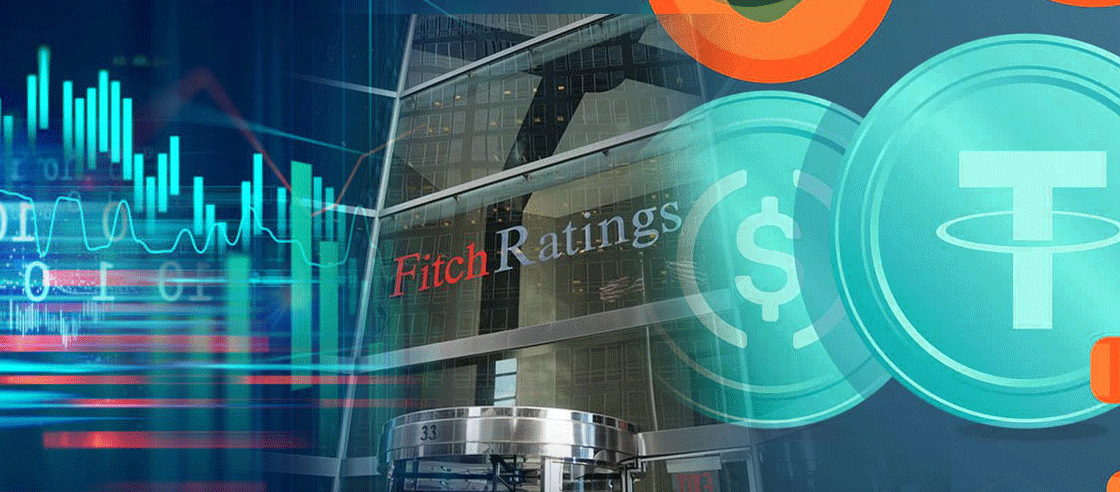
Fitch Rating Agency Warns the Growth of Stablecoins Could Lead to Weakening of the Credit Market

Rating Agency Fitch Warns The Growth of Stablecoins Could Lead to Weakening of The Credit Market

As mentioned in a commentary note by the rating agency Fitch Ratings, the growth of those stablecoins that lacks backing by safe assets could trigger a destabilization in the short-term credit market. In an explanation of the warning, the firm said that the coins that are backed by safe assets can pose a lesser risk for the financial markets. 

Fitch Releases Warning Regarding Stablecoins and Credit Market

Talking about the stablecoins that are fully backed, the company gave the name of USDC, as it is fully backed by the US Dollar on a 1:1 basis held in custody accounts.

However, the company released a warning about the footprint and said that:

The authorities may still be concerned if the footprint is potentially global or systemic.”

In addition to this, the rating company shed some light on the commercial paper holdings of Tether and said that:

“Nearly 50% of its reserve — may be larger than those of most prime money market funds (MMF) in the United States and EMEA. A sudden mass redemption of USDT could affect the stability of short-term credit markets if it occurred during a period of wider selling pressure in the CP market, particularly if associated with wider redemptions of other stablecoins that hold reserves in similar assets.”

United States Regulators Warns Entities Regarding Allocations to Tether

Apart from this, Fitch noted the warning that has been issued by the regulators in the United States that the bodies with alike asset allocations to Tether might not be considered stable in case the short-term credit spreads broaden notably and added:

“This contrasts with the way stablecoins are marketed to the public.”

Eric Rosengren, the President of the Boston Federal Reserve, expressed his concerns last month regarding the rapid growth witnessed in stablecoins and said:

“I do think we need to think more broadly about what could disrupt short-term credit markets over time, and certainly stablecoins are one element.” 

USDC Stablecoin Will Soon Expand to 10 More Blockchain Networks

USD Coin(USDC) could soon become available on 8 to 10 more blockchain networks, according to reports. This might be the largest expansion for the $25 billion stablecoin, which is already running on Ethereum, Stellar, Algorand, and Solana blockchains.

USDC Stablecoin Will Surpass Tether After Expanding to More Blockchains

As per a draft announcement from USDC administrator CENTRE, the stablecoin will be available on Avalanche, Celo, Flow, Hedera, Kava, Nervos, Polkadot, Stacks, Tezos, and Tron in the coming months.

If the expansion follows through, USDC will surpass Tether(USDT), the largest stablecoin by market capitalization of $63 billion. 

USDC is an Ethereum-based digital currency launched in 2018. It’s known as a stablecoin because its value is pegged to the US dollar. This means that a USDC buyer can always exchange one coin for $1.00 in fiat money. 

The news of USDC’s expansion has come amid heightening scrutiny of stablecoins, with the president of the Federal Reserve Bank of Boston specifically mentioning Tether and even the relatively unknown TITAN, in a discussion on systemic risks. Although Fed Vice Chair Randal Quarles has expressed support for stablecoins, it appears that authorities have taken note of the digital asset and are keeping a close eye.

CENTRE Sees Potential in USDC Expansion

CENTRE is optimistic about USDC’s broadening reach to other networks and said within its draft announcement that the expansion to other chains will “drive individual and enterprise adoption of open blockchain technologies.”

The consortium, which is operated by leading crypto exchange Coinbase and payments company Circle, stated, “We anticipate that USDC on these blockchain platforms and multichain protocols will further accelerate the use of the world’s fastest-growing digital dollar currency.” It further added that the timing of new blockchain integrations will be issued “over the balance of the year.”

Recently, USDC has been gaining a lot of attention from financial services and companies that see it as a viable option for interest generation. For instance, both Coinbase and Compound Labs have launched initiatives that will guarantee investors interest income through the USD Coin. 

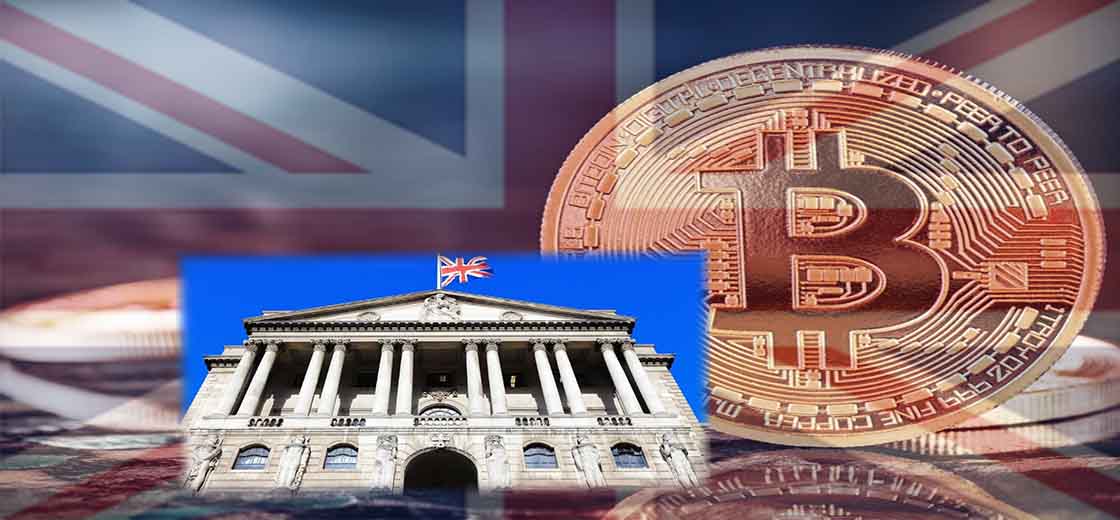
Bank of England says Stablecoins Need the Same Ordinance as Banks

Bank England Stablecoins

The Bank of England has recently stated that stablecoins need to be regulated the same way as the payments are regulated by the banks. BoE revealed today that the payments executed through stablecoin should fall under the same mandates that the transactions that are handled by financial institutions.

Bank of England Suggests Stablecoins Regulation

Discussing further on issuing its own Central Bank Digital Currency (CBDC), the Bank of England said that the body has not yet made a solid decision on whether they are going to issue a CBDC or not.

Andrew Bailey, the Governor or BoE recently released a statement regarding the anticipation  of stablecoins as a method of payment that read:

“The prospect of stablecoins as a means of payment and the emerging propositions of CBDCs have generated a host of issues.”

Continuing the statement and mentioning the future of digital money, Andrew said:

“It is essential that we ask the difficult and pertinent questions when it comes to the future of these new forms of digital money.” 

Bailey also referred to the equivalence standards that both the digital currency and bank money should meet and said:

“Stablecoins used as money should meet equivalent standards as those provided by commercial bank money, otherwise known as bank deposits.”

BoE Continues to Stride With Caution with the Latest Digital Money

The United Kingdom Head of Fintech at the law firm Linklaters, Richard Hay said:

“The Bank of England is taking pains to tread carefully. But the more energy the Bank spends on this question, the more likely it is that we will see some form of a digital pound made reality.”

In addition to this, an in-depth discussion paper was published by the Bank of England surrounding the topics ranging from the prospect of CBDC to stablecoins.