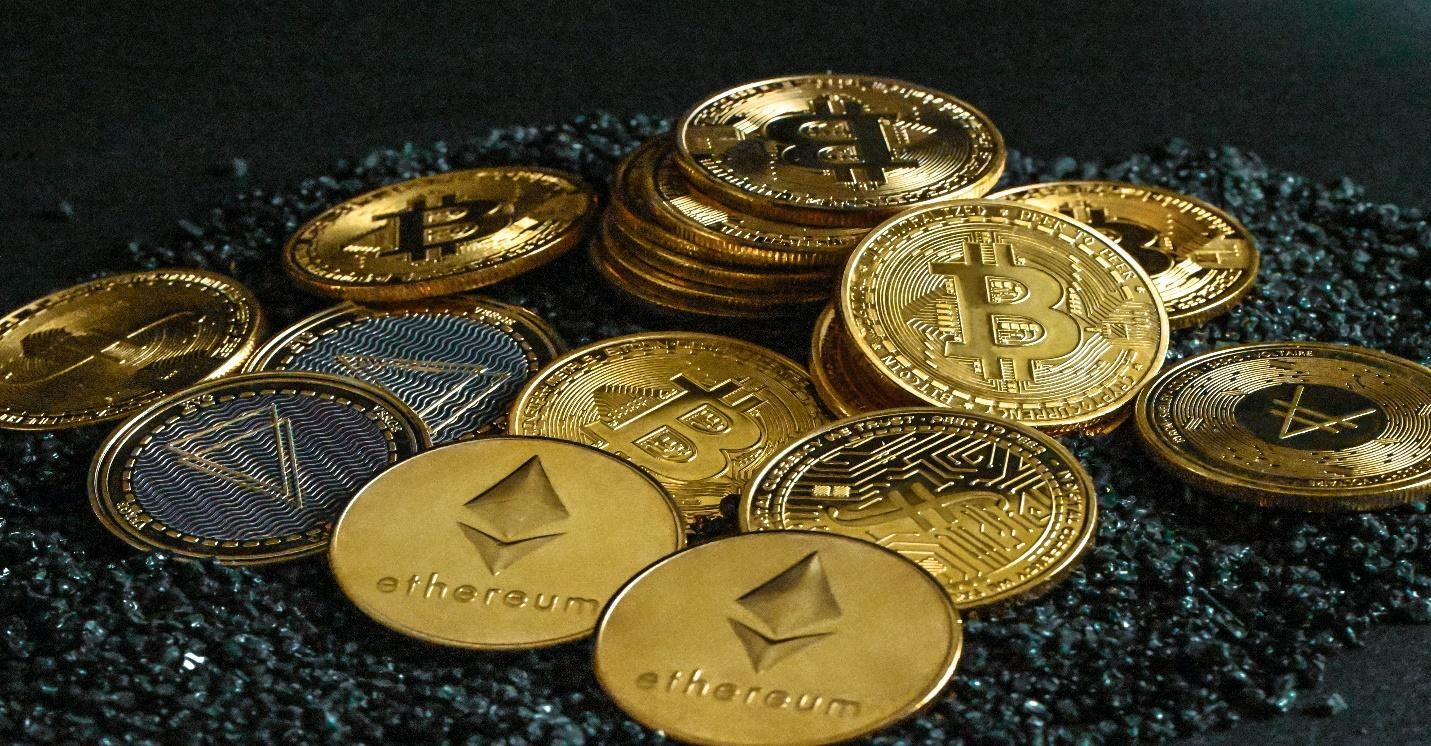
XRP Network is On Fire: Why Daily Transactions Just Tripled to a Massive 3 Million

XRP

If you’ve been waiting for “utility” to finally show up in the crypto charts, March 2026 just delivered. The XRP Ledger (XRPL) has officially hit a massive milestone, with daily transactions tripling to reach 3 million.

This isn’t just a small bump; it’s a full-blown explosion in network usage. For months, the ledger had been humming along at a steady average of around 1 million transactions per day. But as of mid-March, that number has skyrocketed, signaling that the “digital bridge” is being used more than ever before. While the broader market has been obsessing over corporate “underwater” portfolios, the XRPL has been quietly building a massive wall of real-world activity.

What is driving the 300% surge in XRP daily transactions?

The big question on every trader’s mind is: Where is all this volume coming from? In 2026, the answer isn’t just retail “memecoin” trading. We are seeing a “perfect storm” of three key drivers:

  • Institutional Payment Corridors: More financial institutions have officially integrated Ripple’s payments solution into their backend, leading to a surge in high-frequency, cross-border settlements.
  • Tokenized Real-World Assets (RWAs): The XRPL has become a preferred home for tokenized gold, real estate, and treasury bills. Each time these assets are traded or rebalanced, it counts as a transaction on the ledger.
  • Micropayments & Gaming: New Web3 gaming projects that launched in late 2025 are finally hitting their stride, generating thousands of small, fast transactions every hour.

Is the XRP Ledger becoming the most active blockchain in 2026?

While Bitcoin remains the king of “store of value” and Ethereum dominates DeFi total value locked, XRP is making a serious play for the “High-Frequency King” title.

Hitting 3 million daily transactions puts the XRPL in elite territory. For context, this volume surge represents a 200% increase in organic activity over the last quarter alone.

This level of activity is a strong signal to developers that the network is scalable and ready for mass-market applications. Unlike some other networks that clog up or see fees skyrocket during high usage, the XRPL has remained remarkably stable, with fees staying well below a fraction of a cent.

Does a transaction spike mean an XRP price breakout is coming?

Here is the part every “XRP Army” member wants to know: Does more transactions equal a higher price? Historically, transaction volume is a “leading indicator.” While it doesn’t always cause an immediate price pump, it shows that the network is being utilized. In 2026, we are seeing a “decoupling” effect where XRP’s price is starting to react more to its own network health than to Bitcoin’s daily wiggles.

However, investors should be cautious. A lot of this 3 million daily volume is “automated” or “institutional.” This means the coins aren’t necessarily being “HODLed” on exchanges; they are moving through the ledger and being settled instantly. This creates a high-velocity environment which is great for the ecosystem’s health, but doesn’t always create the “supply shock” needed for a moonshot.

What should investors watch for next?

If this 3 million level becomes the “new normal” for the XRPL, the next milestone to watch is the $2.00 price resistance. If utility continues to climb while the supply on exchanges stays low (thanks to those whales we discussed last week), the fundamental pressure might finally force the price to catch up with the network’s growth.


Are Corporate Bitcoin Portfolios Failing? Why 77% of Institutional Holders Are Now “Underwater”

bitcoin surges to record high

If you’ve been feeling the sting of the recent market volatility, you’re in elite (and very stressed) company. According to the latest on-chain data for March 2026, a staggering 77% of corporate Bitcoin holdings are now “underwater.” This means that the vast majority of companies that added BTC to their balance sheets are currently holding assets worth less than what they originally paid for them.

While the “institutional adoption” narrative was the hero of 2024 and 2025, the 2026 reality check is hitting hard. From tech giants to private firms, the “diamond hands” of the corporate world are being tested as paper losses pile up into the billions. This isn’t just a retail “panic” anymore; it’s a boardroom crisis that could dictate the next move for the entire crypto market.

Which companies are losing the most on their Bitcoin investment in 2026?

The “underwater” list is a who’s-who of the crypto-forward business world. While early adopters like MicroStrategy still sit on a massive cushion thanks to their sub-$30k entries, the companies that FOMO’ed in during the 2025 “Super Cycle” peaks are the ones feeling the most heat.

Data indicates that firms that purchased Bitcoin between $85,000 and $98,000 make up the bulk of this 77% statistic. For these entities, the current price dip isn’t just a chart wiggle—it’s a mark-to-market nightmare that shows up on quarterly earnings reports, often leading to awkward conversations with shareholders.

Why did so many institutions buy Bitcoin at the “wrong” time?

It turns out that even CEOs aren’t immune to the “Fear Of Missing Out.” Most of the corporate buying spree occurred during the late stages of the 2025 rally. The narrative at the time was that Bitcoin was a “permanent hedge against inflation” and a “global reserve asset” that would never see $60,000 again.

Many corporate treasuries followed a “momentum-based” strategy, buying as the price climbed. When the 2026 correction hit, triggered by shifting Fed policies and the “Lighter Protocol” liquidity drain we saw earlier this year, these high-entry positions were immediately submerged.

Will corporate “panic selling” crash the Bitcoin price further?

This is the billion-dollar question. So far, we haven’t seen a mass exodus. Most corporations treat Bitcoin as a long-term strategic asset, and selling at a 20% loss would be a PR disaster for many “tech-visionary” CEOs.

However, there is a technical risk: Margin Calls. Some companies didn’t just buy Bitcoin with cash; they took out loans against their existing holdings. If the price hits certain “trigger levels,” these firms may be forced to sell to satisfy their lenders, potentially creating a “cascading liquidation” effect. For now, the “Smart Money” seems to be holding the line, but the 77% figure is a loud reminder that the institutional floor might be thinner than we thought.

Is there a silver lining for BTC holders?

Historically, when a huge percentage of any asset’s supply is “underwater,” it signals a market bottom. Sellers who are going to panic have usually already done so. If 77% of the “big players” are willing to sit through these losses without dumping their bags, it proves that the conviction in Bitcoin’s long-term value remains higher than the fear of short-term volatility.

Top 20 Crypto Influencers in 2026

Top 20 Crypto Influencers

The cryptocurrency ecosystem continues to grow rapidly in 2026, and X (formerly Twitter) remains the main platform where crypto founders, analysts, investors, and traders share insights. Following the right voices can help you stay informed about Bitcoin trends, Ethereum upgrades, DeFi innovations, and Web3 developments.

Here are the Top 20 Crypto Influencers on X (Twitter) in 2026, including their X handles and why they matter in the crypto world.

1. Vitalik Buterin

X Handle: @VitalikButerin

Vitalik Buterin is the co-founder of Ethereum and one of the most respected developers in the blockchain industry. His posts on X often discuss Ethereum upgrades, scaling solutions, decentralized governance, and the broader future of Web3 technology. Vitalik’s technical threads and philosophical views on decentralization attract millions of followers including developers, investors, and researchers. His insights frequently influence major discussions around smart contracts, decentralized finance, and blockchain scalability.


2. Changpeng Zhao

X Handle: @cz_binance

Changpeng Zhao, widely known as CZ, founded Binance, the world’s largest cryptocurrency exchange by trading volume. On X, CZ shares insights about crypto adoption, exchange developments, and global blockchain regulations. His tweets often move markets because traders closely watch his views on industry developments. Even after stepping down as CEO, CZ remains a powerful voice in the crypto ecosystem, supporting innovation and advocating for broader adoption of digital assets worldwide.


3. Michael Saylor

X Handle: @saylor

Michael Saylor is one of the most influential Bitcoin advocates globally. As the executive chairman of MicroStrategy, he led the corporate strategy of adopting Bitcoin as a treasury reserve asset. On X, Saylor regularly shares macroeconomic insights, Bitcoin market perspectives, and long-term investment strategies. His posts often highlight why Bitcoin is considered “digital gold,” making him a key voice influencing institutional adoption.


4. Anthony Pompliano

X Handle: @APompliano

Anthony Pompliano, commonly known as “Pomp,” is a crypto entrepreneur, investor, and podcast host. He is widely recognized for breaking down complex financial and crypto topics into simple explanations. On X, Pompliano shares updates about Bitcoin adoption, financial markets, and macroeconomic trends. His educational content attracts both beginners and professional investors. Through his media platforms, he continues to influence how traditional investors view cryptocurrencies.


5. Raoul Pal

X Handle: @RaoulGMI

Raoul Pal is the CEO of Real Vision and a former hedge fund manager known for his macroeconomic analysis. His content on X often connects global economic trends with crypto markets. Pal frequently discusses the future of digital assets, tokenization, and institutional investment in blockchain technologies. His insights are popular among long-term investors who want to understand the broader financial implications of cryptocurrency.


6. PlanB

X Handle: @100trillionUSD

PlanB is a well-known Bitcoin analyst famous for creating the Stock-to-Flow model, which predicts Bitcoin price movements based on scarcity. His X account regularly features charts, on-chain data, and market analysis. Many traders follow PlanB for insights into Bitcoin cycles and long-term price projections. His analytical approach has made him one of the most followed pseudonymous influencers in the crypto industry.


7. Charles Hoskinson

X Handle: @IOHK_Charles

Charles Hoskinson is the founder of Cardano and a co-founder of Ethereum. Known for his academic and research-driven approach, he frequently discusses blockchain governance, decentralization, and crypto regulation on X. Hoskinson also shares updates about Cardano development and community initiatives. His perspective on the future of blockchain technology attracts both developers and investors interested in long-term innovation.


8. Gavin Wood

X Handle: @gavofyork

Gavin Wood is a co-founder of Ethereum and the founder of Polkadot. He is also credited with creating the Solidity programming language used for Ethereum smart contracts. On X, Wood often shares insights about Web3 infrastructure, blockchain interoperability, and decentralized internet technologies. His work has significantly shaped how different blockchains communicate and operate together.


9. Justin Sun

X Handle: @justinsuntron

Justin Sun is the founder of TRON and a highly active personality on X. Known for bold announcements and marketing campaigns, Sun frequently shares updates about the TRON ecosystem, decentralized finance projects, and partnerships. His energetic presence has helped TRON become one of the largest blockchain networks in terms of user activity and stablecoin transactions.


10. Brian Armstrong

X Handle: @brian_armstrong

Brian Armstrong is the CEO of Coinbase, one of the largest regulated crypto exchanges in the world. His posts on X often focus on regulatory developments, crypto policy, and institutional adoption. Armstrong frequently advocates for clear crypto regulations and financial innovation. His voice carries significant influence in policy discussions around digital assets.


11. Andreas M. Antonopoulos

X Handle: @aantonop

Andreas Antonopoulos is one of the earliest educators in the Bitcoin ecosystem. Known for his books and lectures, he focuses on explaining blockchain technology in simple terms. On X, he shares educational content about decentralization, privacy, and financial sovereignty.


12. Balaji Srinivasan

X Handle: @balajis

Former CTO of Coinbase, Balaji Srinivasan is known for his futuristic views on crypto, decentralized societies, and the digital economy. His X threads often explore how blockchain could reshape governments, finance, and technology.


13. Erik Voorhees

X Handle: @ErikVoorhees

Erik Voorhees is a long-time crypto entrepreneur and founder of ShapeShift. His X account frequently discusses financial freedom, decentralized exchanges, and the philosophy behind Bitcoin and crypto.


14. Cathie Wood

X Handle: @CathieDWood

Cathie Wood is the CEO of ARK Invest and a strong advocate for disruptive technologies including Bitcoin and blockchain. She regularly shares insights on crypto investments and long-term innovation trends.


15. Nic Carter

X Handle: @nic__carter

Nic Carter is a partner at Castle Island Ventures and one of the most respected analysts in the crypto industry. His X posts focus on Bitcoin mining, crypto regulation, and market structure.


16. Cobie

X Handle: @cobie

Cobie is a pseudonymous crypto trader known for his sharp commentary and market insights. His X posts often highlight emerging trends in DeFi, NFTs, and altcoins.


17. Lark Davis

X Handle: @TheCryptoLark

Lark Davis is a popular crypto analyst and YouTuber who shares daily market insights, altcoin research, and crypto investment strategies.


18. Scott Melker

X Handle: @scottmelker

Scott Melker is a trader and podcast host known for technical analysis and interviews with leading crypto experts.


19. Miles Deutscher

X Handle: @milesdeutscher

Miles Deutscher is known for detailed educational threads about altcoins, market psychology, and investment strategies.


20. Benjamin Cowen

X Handle: @intocryptoverse

Benjamin Cowen is a data-driven crypto analyst who shares market cycle insights and quantitative research about Bitcoin and altcoins.


Conclusion

Crypto influencers on X (Twitter) play a major role in shaping industry discussions, market sentiment, and blockchain innovation. By following these top 20 crypto influencers in 2026, investors and enthusiasts can stay informed about market movements, technological breakthroughs, and investment opportunities in the rapidly evolving digital asset ecosystem.

XRP Flashes Hourly “Death Cross” as $515M Liquidation Rocks Market

XRP

If you were hoping for a quiet end to February 2026, the charts have other plans. XRP has just flashed a “Death Cross” on its hourly chart, a technical signal that has short-term traders hitting the panic button. This happens when the 50-period Simple Moving Average (SMA) slips below the 200-period SMA, signaling that recent momentum has turned decidedly bearish.

This technical breakdown didn’t happen in a vacuum. It hit right as the broader crypto market was rocked by a massive $515 million liquidation event over the last 24 hours. While XRP has seen incredible institutional growth this year—with the XRP Ledger crossing $2.3 billion in tokenized assets—the price action is currently being dictated by “forced selling” and a massive flush of over-leveraged long positions.

Is the $515 million market liquidation to blame for the XRP dip?

In a word: Yes. When we see over half a billion dollars in liquidations across the board, it usually means the market became “top-heavy.” Traders were betting on a spring breakout, but when Bitcoin failed to hold its recent gains, it triggered a domino effect.

For XRP, this meant that nearly $150 million in bullish bets were forcibly closed by exchanges. This “long squeeze” creates a feedback loop: prices drop, triggering more liquidations, which forces more selling. This is likely what pushed XRP into that “Death Cross” formation on the hourly time frame as the short-term price average plummeted faster than the long-term trend could adjust.

Should XRP holders panic about an “Hourly” Death Cross?

Before you jump ship, it’s important to look at the “time frame” of this signal. While a Daily Death Cross is often a harbinger of a “crypto winter,” an Hourly Death Cross is much noisier and often acts as a lagging indicator of a quick “leverage flush.”

“Hourly signals are great for day traders, but they often provide ‘fakeouts’ for long-term holders,” says one senior market analyst. “We saw a similar cross in early February that was invalidated within 48 hours once the liquidations settled.”

Historically, these sharp technical breakdowns can actually act as a “buy signal” for whales. In fact, on-chain data shows that while retail traders are realizing losses, wallets holding over 1 billion XRP have actually increased their holdings this week, absorbing the sell pressure from these liquidations.

What are the key XRP support levels to watch after this flush?

With the hourly chart looking a bit bruised, all eyes are now on the immediate “floor.” If XRP can’t reclaim the $1.42 level (the recent pivot point), we might see a test of deeper psychological support.

  • The “Line in the Sand”: Analysts are watching the $1.15 to $1.20 zone. If XRP holds here, the Death Cross will likely be seen as a “bear trap.”
  • The Bullish Target: To invalidate this bearish setup, XRP needs a decisive close back above the 200-period SMA on the hourly, currently sitting around $1.60.

[Image suggestion: A technical chart showing the XRP 50 and 200 SMA crossing, highlighted with a “Death Cross” label and the corresponding $515M liquidation spike]

The 2026 Divergence: Real-World Usage vs. Price Action

The weirdest part of today’s news? Ripple’s fundamentals have never looked better. This month alone, major institutions like Deutsche Bank and Aviva have deepened their integration with the XRP Ledger. However, as we’re seeing today, even the best news can’t save a token from a $515 million market-wide “liquidation waterfall.”

For now, XRP is trading like a high-beta tech stock—reacting more to market-wide “risk-off” sentiment than its own internal progress.

Is the Crypto Rally Sustainable? On-Chain Data for Bitcoin and Ethereum Says Yes

utilization and btc and eth

If you’ve been nervous that the recent crypto pump was just another “bull trap,” you can breathe a little easier. According to the latest on-chain data for Bitcoin (BTC) and Ethereum (ETH), the market isn’t just growing—it’s growing healthily.

As of late February 2026, a comprehensive market report has validated that the current price levels are supported by strong network fundamentals rather than just speculative hype. Unlike the “bubble” phases of previous years, the data shows that coins are moving off exchanges and into long-term storage at a record pace. In short: investors aren’t just looking for a quick flip; they are settling in for the long haul.

What on-chain metrics are proving the crypto market is “healthy” right now?

The “health” of a blockchain is usually measured by how many people are using it and where the money is sitting. The latest report highlights three major “green flags” that suggest this rally has legs:

  1. Exchange Reserve Depletion: Bitcoin and Ethereum reserves on centralized exchanges have hit multi-year lows. When there is less “sellable” supply on exchanges, any increase in demand leads to much sharper price jumps.
  2. Stablecoin Inflows: We are seeing a massive surge in stablecoin “dry powder” moving onto exchanges. This suggests that traders are sitting on the sidelines with cash, ready to “buy the dip” the moment a correction occurs.
  3. Realized Cap Growth: The “Realized Cap” (which measures the price at which every coin last moved) is steadily climbing. This means the “floor price” of the market is rising as new investors enter at higher price points, reducing the likelihood of a massive crash.

Why are low exchange reserves a big deal for Bitcoin’s price floor?

Think of exchange reserves like the inventory at a car dealership. If everyone wants a truck but the dealer only has two on the lot, the price of those two trucks is going to skyrocket.

In 2026, we are seeing a “supply shock” in real-time. Large institutions and Spot ETFs are absorbing BTC faster than miners can produce it. Because this Bitcoin is being moved into “cold storage” (private wallets), it’s effectively taken out of circulation. This creates a “thin” sell side, meaning it takes much less buying pressure to move the needle toward $100,000.

Are active addresses and network fees signaling a sustainable Ethereum pump?

While Bitcoin handles the “digital gold” narrative, Ethereum is proving its health through pure utility. The report shows that active addresses on the Ethereum mainnet and its Layer 2 companions (like Arbitrum and Base) have surged by 22% since January.

More importantly, the Ethereum burn rate has remained consistent. Because of the fee-burning mechanism ($E = mc^2$ logic doesn’t apply here, but the math of $Supply = Issuance – Burn$ does), Ethereum is currently “ultrasound,” with its total supply slightly shrinking as network activity ramps up.

“We aren’t seeing the ‘retail euphoria’ levels of 2021 yet,” noted one analyst. “What we’re seeing is ‘institutional consolidation.’ The whales are buying, the supply is shrinking, and the network is actually being used. That is the definition of a healthy market.”

What is the NVT Ratio telling us about a potential crypto market top?

For the technical nerds out there, the NVT Ratio (Network Value to Transactions) is currently in the “Goldilocks zone.”

$$NVT = \frac{\text{Market Cap}}{\text{Daily Transaction Volume}}$$

If this number gets too high, it means the price (Market Cap) is way ahead of the actual usage (Transaction Volume), signaling a bubble. Right now, the NVT for both BTC and ETH is relatively low compared to previous peaks. This suggests that even though prices are high, they are actually undervalued relative to the amount of money moving across the networks every day.

XRP Holders Throw in the Towel: Why Did $1.93 Billion in Losses Just Hit the Chain?

xrp value

If you’ve been holding XRP and feeling the pressure lately, the latest on-chain data shows you have plenty of company. In a massive wave of “capitulation,” XRP holders have just realized a staggering $1.93 billion in losses. This is the highest level of realized losses the network has seen since 2024, signaling that many investors—likely exhausted by recent price volatility—have finally hit the “sell” button at a loss.

In the world of crypto journalism, we call this a “flush.” On February 22, 2026, as XRP struggled to maintain its footing above key support levels, thousands of wallets moved their tokens to exchanges to exit their positions. While a $1.93 billion loss sounds like a disaster, in the contrarian world of blockchain analytics, this is often the “blood in the streets” moment that precedes a major trend reversal.

What exactly does “$1.93 billion in realized losses” mean for XRP?

To keep it simple: Realized loss happens when someone sells their XRP for less than they originally paid for it. Unlike “unrealized” or “paper” losses (where you’re just down on your app but haven’t sold), this is cold, hard math.

The $1.93 billion surge tells us that the “weak hands” are officially out. When this metric spikes this high, it usually indicates that the market has reached a point of maximum pain. Historically, when everyone who wanted to sell has finally sold at a loss, there is no one left to drive the price lower, often creating a “floor” or a market bottom.

Is the XRP price bottom finally in after this massive sell-off?

Many analysts are looking at this $1.93 billion spike as a “capitulation event.” If you look at previous cycles, massive spikes in realized losses often align perfectly with price bottoms.

Currently, XRP is trading in a tight range. By flushing out nearly $2 billion in “loss-heavy” positions, the network has essentially hit a reset button. This clears the way for “Smart Money” and institutional whales to step in and accumulate without the heavy overhead of retail traders waiting to “sell at break-even” the moment the price ticks up.

How are XRP whales reacting to the $1.93B loss wave?

While retail traders were busy realizing losses, the whales seem to be doing the opposite. On-chain alerts have picked up several massive transfers—totaling over 450 million XRP—moving off exchanges and into private “cold” wallets over the last 48 hours.

This creates a classic market divergence:

  • Retail Sentiment: Fearful, exhausted, and selling at a loss.
  • Whale Sentiment: Opportunistic, quiet, and accumulating.

If history repeats itself, the whales are currently “absorbing” the $1.93 billion in liquidity that retail just dumped into the market.

What are the key XRP price levels to watch this week?

Now that the “flush” has occurred, the technicals become very important. Keep your eyes on these two zones:

  1. $0.48 (The Floor): This is the level that must hold to prevent a deeper slide. Most of the $1.93B in losses were realized just above this zone.
  2. $0.55 (The Breakout): If XRP can reclaim this level and turn it into support, it would confirm that the capitulation event is over and a new bullish trend is starting.

The Bottom Line: It’s painful to see $1.93 billion vanish from holder portfolios, but for the health of the XRP ecosystem, this might be the “cleansing” required to start the next leg up. In crypto, the majority is usually wrong at the extremes—and we just hit a massive extreme.

“Will Bitcoin Really Hit $1 Million?” Eric Trump Reaffirms Bullish Call Amid Crypto Turmoil

What Did Eric Trump Say About Bitcoin’s Future?

Even as the crypto market weathers a rough patch — with Bitcoin trading near $67,000 after steep declines — Eric Trump doubled down on a bold forecast: he still believes Bitcoin will hit $1 million per coin. In a recent CNBC interview at the World Liberty Forum, the Trump Organization executive described himself as “never more bullish on Bitcoin in my life.”

He didn’t sugarcoat it: volatility is part of the game, but the tremendous upside has him confident that Bitcoin’s long-run trajectory remains intact.


Bitcoin’s Current Turmoil: Is the Dip Just Noise?

Bitcoin’s price has pulled back sharply from its October 2025 peak above $126,000, dropping more than 45% over recent months and spending time below $70,000.

This broad market correction — often dubbed a crypto winter — hit prices across the board, shaking investor confidence and fueling bearish sentiment. Despite this, Trump framed the downturn as natural volatility, not a death knell for crypto’s future.

Why Trump Still Thinks $1 Million Is Possible

Eric Trump’s optimism isn’t random hype. He pointed to three key drivers:

  • Institutional involvement and growing Wall Street acceptance.
  • Bitcoin’s fixed supply and long-term store-of-value narrative.
  • Broader crypto adoption through stablecoins and digital infrastructure.

He also highlighted stablecoins as a bridge for global capital flows — a subtle hint that digital assets could underpin more than speculative plays.


What Critics and the Market Are Saying

Not everyone agrees.

Prominent skeptics argue that meme coins and celebrity-backed tokens have hurt confidence, contributing to the slower recovery. Others warn that traditional risks — from regulatory uncertainty to macro stress — still cloud the outlook.

Still, voices like Coinbase’s Brian Armstrong and crypto analyst Arthur Hayes have echoed that Bitcoin’s pullback could be **temporary” and even healthy for long-term resilience.


Final Take

Whether Bitcoin will truly reach $1 million is still up for debate — but Eric Trump’s reaffirmed call shows high-profile bullish sentiment remains alive even in tough markets.

One thing’s clear: Bitcoin’s journey is far from linear — it’s oscillating between fear, hope, and big predictions.

Bitcoin Price Alert: Could BTC Slide Below $60K Next?

bitcoin casinos

Bitcoin’s price action has been shaky, with traders and analysts increasingly debating whether the world’s largest cryptocurrency is gearing for a fresh downward leg. After plunging from above $90,000 to re-test $60,000 support in early February, BTC has been stuck inside a choppy range — signaling a potential big move on the horizon.

What’s Driving Bitcoin’s Near-Term Weakness?

Bitcoin has been trading sideways under $70,000 for days, showing lower volatility than investors expected. Analysts like Michaël van de Poppe point out that this low-volatility pattern usually precedes a sharp breakout — either up or down.

Adding to the cautious tone:

  • BTC recently flirted with support around the $67K zone, a key pivot for short-term traders.
  • According to on-chain data firms like Glassnode, a break below those levels could open the door to deeper selling pressure, potentially down to $55,000 or lower.
  • If BTC slumps below $60,000, automated liquidations and risk-off trading could accelerate volatility.

Are Analysts Bullish or Bearish?

Here’s how experts frame the current landscape:

Bearish Signals:

  • Defensive price structure suggests BTC could slide toward $60K or even $54K if major support breaks.
  • Large options bet clusters and liquidation thresholds sit close to critical levels, meaning a breach could trigger forced selling.

Bullish Counterpoints:

  • Some traders are eyeing the dips as buy zones, betting long-term holders and institutional players could absorb the weakness and spark a rebound.

Market Context: Broader Cryptos and Macro Forces

The BTC price struggle isn’t happening in isolation:

Fear & Greed Index has plunged into “Extreme Fear,” often seen before volatile swings.
Crypto marketcap volatility is rising amid broad risk-off sentiment in equities and macro markets.
Traditional assets like tech stocks and gold have shown mixed signals, pressuring risk assets like Bitcoin.

Key Levels Traders Are Watching

Key Levels Traders Are Watching

Price Level Significance
$60,000 Critical support / liquidation trigger
$67,000–$69,000 Pivot zone for trend direction
$73,000–$80,000 Breakout range — bullish signal
Below $55,000 Deep downside risk if support fails


Why is the Pi Network (PI) price surging 50% today?

Pi-Coin Price Prediction

If you’ve been keeping an eye on the charts this Valentine’s Day weekend, you likely noticed a familiar name climbing the ranks. Pi Network (PI) has pulled off a stunning 50% rally (depending on which exchange IOU or pair you’re tracking), breaking out of a months-long bearish slump.

As of February 15, 2026, the “Pioneer” community is buzzing, and for good reason. This isn’t just another speculative pump; it’s a perfect storm of a critical technical deadline, cooling U.S. inflation data, and a massive milestone in user migration that has caught the market’s attention.

What is the “mandatory” node upgrade driving the Pi price?

The biggest catalyst right now is the February 15 Node Upgrade deadline. The Pi Core Team recently announced that all Mainnet nodes must transition to the latest protocol version (aligning with Stellar’s Protocol 22) by today.

This is a “make or break” moment for the decentralization of the network. Nodes that fail to upgrade will be disconnected from the consensus, meaning the network is essentially undergoing a “spring cleaning.” Investors often see these technical forced-marches as a sign of progress toward a more stable, production-ready infrastructure, which has clearly injected some fresh confidence into the PI token.

Is the “Open Mainnet” finally fueling the PI rally?

While the Pi Network officially transitioned to its Open Network phase back in February 2025, the journey to full liquidity has been a marathon, not a sprint. In early 2026, the project hit a massive milestone: over 16 million users have now successfully migrated their balances to the Mainnet.

The recent price action is also being fueled by “DEX Hype.” Rumors are swirling that a native Pi Decentralized Exchange (DEX) is slated for a mid-March 2026 activation. If this happens, it would allow Pioneers to trade and provide liquidity without relying solely on centralized exchanges—a move that usually leads to a surge in on-chain activity and demand for the native coin.

How did U.S. inflation data help the Pi Network surge?

It’s not all internal news, though. The broader crypto market got a massive “shot in the arm” this week after the U.S. Consumer Price Index (CPI) report showed inflation dropping to 2.4%.

When inflation cools, the market starts betting on Federal Reserve rate cuts. This “risk-on” sentiment usually sends investors back into altcoins. For a high-community-engagement project like Pi, this macro tailwind acted like fuel on an already smoldering fire. While Bitcoin eyes the $70,000 mark again, PI is benefiting from a “rotation” of capital into assets that have been oversold for too long.

Is this a “Dead Cat Bounce” or a sustainable PI recovery?

Technical analysts are cautiously optimistic but remain wary. Before this 50% jump, PI was languishing near its all-time lows.

  • The Bull Case: A “double-bottom” pattern has formed on the daily charts, and the RSI (Relative Strength Index) has finally escaped the “oversold” basement.
  • The Bear Case: PI still needs to reclaim the $0.20 to $0.22 zone to prove this isn’t just a temporary spike before more “mined” supply hits the market.

For now, the Pioneers are winning. With the node deadline passing today and the DEX launch on the horizon, the next few weeks will determine if Pi can finally cement its place among the top-tier utility tokens of 2026.

Binance Hits 10,455 BTC Milestone: Why Your “Safety Net” Just Got a Major Bitcoin Upgrade

Binance Poland

If you use Binance, you can breathe a little easier tonight. The world’s largest crypto exchange just pulled a massive “flex” for its user insurance fund. As of today, February 9, 2026, Binance’s Secure Asset Fund for Users (SAFU) has officially crossed the 10,000 BTC mark, reaching a total of 10,455 Bitcoin.

This wasn’t just a slow accumulation. In a lightning-fast internal move, Binance added 4,225 BTC (worth roughly $300 million) to the fund this morning. This massive stack is part of a bold strategy to convert $1 billion worth of “boring” stablecoins into Bitcoin—proving that even in a volatile 2026 market, the house still believes Bitcoin is the ultimate “store of value.”

How much Bitcoin is in Binance’s SAFU fund right now?

The numbers are staggering. With the latest purchase, the total SAFU stash is now worth approximately $734 million.

Binance isn’t just buying for the sake of it; they are roughly 73% of the way through a massive rebalancing act. Back in late January, the exchange announced they would be ditching their stablecoin reserves in favor of Bitcoin to increase transparency and “resilience.” If the market continues to wiggle and the fund’s total value drops below $800 million, Binance has promised to top it back up—essentially creating a massive, billion-dollar buy wall for the market.

What is the Binance SAFU fund and why should you care?

Think of SAFU as the “break glass in case of emergency” fund. Established back in 2018, it’s a dedicated insurance reserve designed to protect users if the exchange ever faces a major security breach or technical failure.

For years, this fund was mostly held in stablecoins (USDT and USDC) to keep it, well, stable. But in 2026, Binance’s leadership shifted its philosophy. They are betting that Bitcoin is the cornerstone of the ecosystem. By holding the fund in BTC, they are aligning their own “survival fund” with the very asset their users are trading. It’s a high-stakes move that says: “If the industry thrives, your insurance thrives.”

Why is Binance switching from stablecoins to Bitcoin in 2026?

This is the question everyone on Crypto Twitter is asking today. Switching from stable “dollars” to “volatile” Bitcoin for an insurance fund might seem risky, but Binance sees it differently.

The exchange cited three main reasons for the move:

  1. Transparency: You can track Bitcoin on-chain much more easily than “black box” stablecoin reserves.
  2. Inflation Hedge: As global fiat currencies face 2026’s shifting economic winds, Binance wants an asset that isn’t tied to any single government’s printing press.
  3. Market Confidence: By “eating their own cooking,” Binance is signaling to the world that they aren’t just selling Bitcoin—they are hoarding it for their own protection.

[Image suggestion: A visual comparison showing the SAFU fund transition from 100% stablecoins to its current 10,455 BTC weight]

Is Binance’s Bitcoin buy a “Buy Signal” for the rest of us?

It’s hard not to notice the timing. Bitcoin has had a rough start to February 2026, slipping from its late-2025 highs and recently stabilizing around the $68,000 to $70,000 range.

When the biggest exchange in the world converts $300 million into BTC during a “teetering” price period, it usually means they think the bottom is close—or at the very least, they don’t care about the short-term noise. If you were feeling shaky about your own bags, just remember: Binance literally just bet its “emergency fund” on the fact that Bitcoin isn’t going anywhere.

Crypto Stress Test: How Bitcoin & Ether Collapse Hits Balance Sheets in 2026

utilization and btc and eth

The cryptocurrency market is once again under intense pressure as Bitcoin and Ether — the two largest digital assets — experience sharp declines. What started as a price correction has now escalated into a broader stress test across crypto balance sheets, impacting investment funds, lenders, and even traditional financial institutions with crypto exposure.

What Sparked the Crypto Stress Test?

In the past decade, Bitcoin and Ether often led market upswings. However, abrupt sell-offs in these flagship assets can rapidly transmit stress through the entire crypto ecosystem. Recent liquidity crunches, tightening monetary conditions, and macroeconomic concerns have triggered heightened volatility, pushing prices lower and unsettling previously resilient portfolios.

Balance Sheets Under Strain

Unlike traditional markets, many crypto firms operate with thin margins and high leverage. When Bitcoin and Ether fell, it set off a chain reaction:

  • Lenders faced loan defaults as collateral values dropped, forcing asset liquidations.

  • Hedge funds and trading desks experienced margin calls, shrinking capital reserves.

  • Venture portfolios tied to early-stage crypto startups saw valuations plummet, forcing write-downs.

This environment serves as a real-time audit of risk management practices — and for many, the results were sobering.

Impact on Institutional Investors

Institutional adoption has been a key growth driver for crypto. But even well-capitalized players aren’t immune:

  • Risk models underestimated correlation spikes between digital assets during market stress.

  • Capital reserves fell short of covering losses during sudden drawdowns.

  • Some institutions have paused or scaled back crypto exposure to protect overall asset health.

This response underscores that, as much as digital assets have matured, they still behave differently from traditional equities or bonds — especially during periods of extreme stress.

What This Means for Retail Investors

Retail traders often feel the impact of market stress first. With liquidity drying up:

  • Bid-ask spreads widen, increasing trading costs.

  • Stop-loss triggers can accelerate declines, creating downward price pressure.

  • Confidence erodes as headlines focus on losses.

While some long-term holders view these corrections as buying opportunities, others may reassess their risk tolerance amid heightened uncertainty.

Broader Market Implications

A collapse in Bitcoin and Ether doesn’t just affect crypto natives. Ripple effects may include:

  • Reduced venture capital flows into new blockchain projects

  • Slower adoption of crypto payment systems

  • Regulatory scrutiny intensifying as policymakers react to market stress

These dynamics could slow innovation, at least in the short term, before markets regain balance.

Is Recovery Possible?

Yes — but the path forward will likely require:

    • Stronger risk management frameworks

    • Higher capital buffers for crypto lenders and exchanges

  • Greater regulatory clarity to build investor confidence

History shows that crypto markets are cyclical. Corrections, while painful, often clear excess leverage and strengthen the ecosystem over time.

XRP Lagging Behind? Why Black Swan Capitalist Says You’re Using the “Wrong Lens” to Judge its Price

XRP Network

If you’ve been checking your portfolio this week and wondering why XRP seems stuck in second gear while other assets are flying, you aren’t alone. As of January 24, 2026, the frustration in the “XRP Army” is palpable. But according to Vandell Aljarrah, the founder of Black Swan Capitalist, the problem isn’t XRP’s price—it’s the way you’re looking at it.

In a series of bold statements that have set social media ablaze, Aljarrah argues that the majority of investors are watching XRP through a “speculative retail lens,” expecting it to behave like a meme coin or a tech stock. Instead, he claims that XRP is a “utility-first” asset designed to be the digital collateral for a massive, global financial overhaul. If you’re judging it by daily green candles, he says, you’ve already missed the point.

Why is XRP “underperforming” compared to other cryptocurrencies in 2026?

To the casual observer, the charts don’t look great. While Bitcoin and Solana have been enjoying a 2026 “Super Cycle” surge, XRP has remained relatively flat, trailing the broader market by a significant margin. This “lag” has led many to label XRP an underperformer.

However, Aljarrah suggests this price action is a distraction. He believes XRP’s current “coupling” with the rest of the crypto market is temporary noise. While retail traders are chasing 10x gains on trending tokens, the “real work” for XRP is happening “behind the curtain.” The asset is being integrated into cross-border payment rails and institutional liquidity pools—systems that prioritize stability and compliance over retail hype.

What is the “wrong lens” that investors are using for XRP?

According to the Black Swan Capitalist founder, most people treat XRP as a trade, but it was designed as a bridge.

  • The Retail Lens: Focuses on “moons,” “lambos,” and short-term price charts. It assumes XRP is just another coin competing for retail liquidity.
  • The Utility Lens (Aljarrah’s View): Focuses on global debt, derivatives, and settlement efficiency. From this perspective, XRP isn’t something you “trade”; it’s the technology that will eventually move the world’s value.

Aljarrah argues that XRP was never designed to be “cheap” or highly volatile once it reaches its final form. He points out that for XRP to settle billions in global debt without causing massive market friction, a higher unit price is actually a functional requirement, not just a “moon boy” dream.

Is the price of XRP “predetermined” by institutional agreements?

This is where Aljarrah’s theories get controversial. He has suggested that the long-term valuation of XRP isn’t being decided by retail buyers on exchanges, but rather has been “predetermined” by the needs of global financial institutions like the IMF, BIS, and major central banks.

The theory is that these entities need a bridge asset that can handle trillions in volume. For the system to scale, the price of the bridge must be high enough to allow for massive liquidity with minimal token movement. While this remains a point of intense debate in the crypto community, Aljarrah remains firm: the “smart money” isn’t looking at the $2.00 or $3.00 price targets—they are looking at XRP as the foundational collateral for the “new digital economy.”

What should XRP investors watch for the rest of 2026?

If you follow the Black Swan Capitalist logic, the “signal” isn’t in the price chart—it’s in the adoption metrics. Keep an eye on:

  1. Institutional Flows: The success of the newly launched XRP ETFs and the volume moving through Ripple-powered liquidity corridors.
  2. Regulatory Shifts: How the finalization of U.S. market structure bills affects XRP’s status as a “non-security.”
  3. Global Debt Tokenization: Reports of central banks using the XRP Ledger (XRPL) to manage or tokenize debt.

The Bottom Line: If you’re looking for a quick pump, Aljarrah suggests you’re in the wrong asset. But if you believe in the total digitization of global finance, he argues that XRP’s current “underperformance” is simply the quiet before an institutional storm.

Cardano Foundation Delegates 220M ADA to 11 Community Reps — A Big Step Toward True Decentralized Governance

Cardano National Wine Agency

What Happened? – Cardano Shifts Governance Power to Community

In a major governance update, the Cardano Foundation has delegated 220 million ADA to 11 community Delegated Representatives (DReps) — a move designed to shift meaningful voting power away from centralized control and into the hands of the broader Cardano ecosystem. This allocation adds to earlier delegations and brings the total community-held voting power to 360 million ADA.


Why It Matters – Building Resilience and Diversity

This isn’t just token redistribution. The strategy intends to deepen community participation in governance decisions, especially in the areas of ecosystem adoption and operational priorities rather than purely technical development. The selected delegates include notable figures from across Cardano communities and network builders, each entrusted with representing ADA holders in on-chain votes.


What Are DReps & Why Should You Care?

Delegated Representatives (DReps) are ADA holders who gather voting power from community members and cast votes on governance proposals on behalf of those delegations. They’re essentially Cardano’s version of “representative governance” — democratically driven but designed to scale with a decentralized community.

This delegation ensures that:


  • Decision-making reflects a broader cross-section of stakeholders,
  • No single entity (including the Foundation) dominates the vote,
  • Community voices have a direct impact on how the network evolves.

A Pattern, Not a One-Off

This delegation builds on a 2025 program where 140 million ADA was previously delegated to seven DReps focused on development leadership. The cumulative delegation now totals 360 million ADA, underlining a consistent push toward decentralization and community governance.

What the Foundation Says

According to official updates, the delegation isn’t about steering votes — it’s about trust and empowerment. The Foundation has emphasized that these representatives aren’t obligated to follow any agenda, making this a genuine shift toward distributed governance where divergent opinions are part of a healthy decentralized network.

Looking Ahead: What This Could Mean for ADA Holders

With community delegates now wielding more voting weight:

  • Governance actions — including treasury use, upgrades, and policy changes — may better reflect grassroots sentiment,
  • ADA holders who choose to delegate retain influence without needing to vote on every proposal,
  • Participation in future on-chain decisions could rise as governance tools continue to evolve.

Whether you’re a long-time ADA holder, Cardano community member, or a crypto observer, this change signals how blockchain governance is transitioning from centralized signals to truly democratized community influence.

At a Glance

  • 220M ADA delegated to 11 DReps focused on growth and operations.
  • Total delegated community voting power now 360M ADA.

Stakeholders empowered to impact governance decisions.

The “Digital Trap”? Why a Canadian Billionaire Claims Bitcoin is Easier to Seize Than Gold

bitcoin surges to record high

If you’ve been stacking Bitcoin because you think it’s “unseizable,” Canadian billionaire and mining mogul Frank Giustra has a sobering wake-up call for you. In his latest market assessment for January 2026, the Fiore Group CEO argued that the very thing we love about Bitcoin—its transparent, immutable ledger—is actually its greatest weakness when it comes to government overreach.

While the crypto community often touts “not your keys, not your coins,” Giustra points out that every transaction leaves a permanent digital breadcrumb. According to him, physical gold remains the ultimate king of privacy and sovereignty because it doesn’t require a network, a power grid, or a public ledger to exist. For Giustra, Bitcoin isn’t a “safe haven”—it’s a speculative experiment that might be leading investors right into a digital dragnet.

Why does Frank Giustra believe Bitcoin is easier to confiscate than physical gold?

The core of Giustra’s argument lies in the “digital trail.” In a world where chain-analysis tools have become incredibly sophisticated, the idea of “anonymous” Bitcoin is largely a myth. Giustra contends that if a government decides to crack down on wealth, a digital asset with a public history is much easier to track, flag, and freeze than a bar of gold buried in a basement or held in a private, non-bank vault.

“If you have a digital trail, you can be found,” Giustra warned. He suggests that while you can’t “turn off” the Bitcoin network, governments can easily target the “off-ramps” and the individuals associated with specific wallet addresses, making the assets effectively useless or easily surrendered under legal pressure.

Is the “Digital Gold” narrative finally falling apart in 2026?

Giustra has been a vocal critic of the “Digital Gold” label for years, famously debating MicroStrategy’s Michael Saylor on the topic. In 2026, he’s doubling down, calling the label a “perpetual identity crisis.” According to Giustra, Bitcoin’s narrative has shifted too many times to be reliable:

  • First, it was a peer-to-peer currency (failed due to high fees).
  • Then, it was an inflation hedge (failed during the 2022-2023 price crashes).
  • Now, it’s “Digital Gold.”

He argues that while “maximalists” use religious-like dogma to pump the price, central banks and major global powers (like the BRICS nations) aren’t buying the hype. Instead, they are quietly hoarding physical gold as they prepare for a global financial reset and a move away from the U.S. dollar.

How does Bitcoin’s volatility compare to Gold’s “Safe Haven” status?

Even in 2026, Bitcoin continues to trade more like a “high-beta” tech stock than a stable commodity. Giustra points out that during moments of extreme geopolitical tension, investors still run to gold and away from risk assets like Bitcoin.

“Bitcoin maxis are the carnival barkers of the information age,” Giustra quipped. “They’re selling tickets to a show that relies on the audience’s credulity, not the intrinsic value of the product.”

While Bitcoin has certainly seen astronomical gains over the last decade, Giustra views this as a result of speculative fervor rather than a true evolution of money. For him, the “Smart Money” is looking at what central banks are doing—accumulating gold—rather than what billionaires are saying on social media.

Shiba Inu Completes Hourly Death Cross in 2026 as Traders Watch Key Support

Binance Argentina

The Shiba Inu (SHIB) token has officially completed an hourly death cross in 2026, a technical signal often associated with short-term bearish momentum. While death crosses typically raise concerns among traders, analysts suggest that this development may not be as negative as it initially appears and could even set the stage for a potential rebound.

A death cross occurs when a short-term moving average—commonly the 50-period MA—crosses below a longer-term moving average such as the 200-period MA. In SHIB’s case, this crossover occurred on the hourly chart, indicating short-term weakness rather than a long-term trend reversal.

Why the Hourly Death Cross May Not Be Bearish

Market analysts note that hourly death crosses frequently occur during consolidation phases, especially when an asset trades within a narrow range following a volatile move. Unlike daily or weekly death crosses, hourly signals tend to reflect temporary momentum shifts and are often followed by stabilization or relief rallies.

In SHIB’s current setup, price action has already shown signs of selling pressure exhaustion. The completion of the hourly death cross suggests that much of the short-term downside risk may already be priced in, reducing the likelihood of an extended sell-off unless broader market sentiment turns sharply bearish.

Additionally, historical price behavior indicates that SHIB has previously rebounded shortly after similar short-term death crosses, particularly when trading near key support zones.

On-Chain and Market Structure Signals

Beyond technical indicators, market structure data paints a more balanced picture. SHIB continues to maintain strong community engagement, while on-chain metrics show no significant spike in panic-driven sell-offs. Exchange inflows remain relatively stable, suggesting that large holders are not aggressively offloading their positions.

Furthermore, SHIB’s ecosystem development—including Shibarium adoption and ongoing token utility expansion—continues to provide long-term narrative support. These fundamentals often help cushion downside volatility during short-term technical pullbacks.

Key Levels Traders Are Watching

Traders are now closely monitoring several critical price levels:

  • Immediate support: Holding above recent hourly support could confirm stabilization

  • Resistance zone: A reclaim of short-term moving averages would invalidate the death cross signal

  • Volume confirmation: A rise in buying volume could signal the start of a relief bounce

If SHIB manages to regain momentum and break back above its short-term moving averages, the hourly death cross could quickly turn into a bear trap, catching late short-sellers off guard.

Broader Market Context Matters

It is also important to consider the wider crypto market environment. If Bitcoin and major altcoins remain stable or trend higher, meme coins like SHIB often benefit from renewed speculative interest. In such scenarios, bearish short-term indicators tend to lose significance quickly.

Conversely, sustained weakness across the broader market could extend SHIB’s consolidation phase. However, analysts currently view the hourly death cross as a cooling signal rather than a breakdown confirmation.

Conclusion

While the completion of Shiba Inu’s hourly death cross in 2026 may look bearish at first glance, deeper analysis suggests the signal is not all that bad. Short-term death crosses often mark periods of consolidation and can precede stabilization or recovery, especially when selling pressure appears exhausted.

For now, traders are watching whether SHIB can hold key support levels and reclaim short-term momentum—moves that could quickly shift sentiment back to the upside.

Is 2026 Really “Ethereum’s Year”? Vitalik Buterin Bets Big on Reclaiming Decentralization

Turkish Earthquake Vitalik Buterin

Ethereum co-founder Vitalik Buterin declares 2026 the year the network reverses compromises and pushes core values back to the forefront.

In a powerful message on social platform X, Ethereum co-founder Vitalik Buterin pledged that 2026 will be the year Ethereum takes back lost ground in self-sovereignty and trustlessness — two of the blockchain’s foundational ideals.

Buterin’s call is more than a slogan. It’s a rallying cry to developers and users alike to refocus the world’s second-largest blockchain on decentralization, privacy, easier node operation and meaningful user autonomy.

Why Is Vitalik Calling 2026 a “Turning Point” for Ethereum?

Buterin argues that Ethereum has diluted its core values over the past decade in pursuit of mainstream adoption. He says:

  • Running a full node has become too complex for regular users 
  • Many decentralized apps now depend on centralized servers 
  • Wallets leak user data through intermediary services 
  • Block building has become centralized in the hands of a few builders 

“In 2026, no longer,” Buterin wrote — signaling an end to unnecessary compromises and a renewed emphasis on trustlessness and decentralization.

What Are the Key Technical Focus Areas in Buterin’s Vision?

Buterin outlined specific areas that need improvement — many already in motion or slated for upcoming releases:

  1. Easier Node Operation – Technologies like ZK-EVM and Helios aim to make it simpler to validate Ethereum data without centralized checkpoints. 
  2. Privacy Enhancements – Private payments from wallets, cryptographic primitives like Oblivious RAM (ORAM) and Private Information Retrieval (PIR) are in focus. 
  3. Social Recovery Wallets & Time Locks – To protect users who lose seed phrases or face wallet hacks. 
  4. Decentralized UI/UX – Dapps that don’t depend on centralized servers but instead use on-chain UI and IPFS. 

These improvements are part of broader efforts like the Kohaku wallet framework, ERC-4337 for account abstraction, and deeper privacy work by the Ethereum Foundation.

How Is the Ethereum Community Reacting?

The announcement sparked renewed debate across social platforms and crypto forums. Many in the Ethereum community applaud the renewed focus on decentralization and privacy, while others question whether real progress can materialize without breakthroughs in user experience and adoption. Eth price action and speculators are also watching closely as expectations build.

What’s Next on Ethereum’s Roadmap?

2026 won’t be a single “big upgrade leap,” Buterin himself has admitted — it will be incremental, cumulative and long-term. Key milestones expected throughout the year include:

  • Phased improvements to privacy UX and censorship resistance 
  • Broader availability of lightweight and fully trustless node clients 
  • Wider deployment of social recovery wallet standards 
  • Ongoing enhancements through hard forks like Glamsterdam and others 

This iterative approach underscores the understanding that “trustlessness is earned,” not delivered by a single hard fork.

What Does This Mean for Crypto Markets & Users?

Analysts see Buterin’s pledge as a philosophical reset more than a short-term price driver. By recommitting to decentralization and user empowerment, Ethereum strengthens its narrative against centralized blockchains and might attract long-term builders who value sovereign protocols over purely financial incentives. Market observers are watching how these upgrades will affect DeFi ecosystems, node participation rates and developer activity in 2026.

XRP Breakout Possible Before the Weekend, Expert Says — Technicals Show Price Poised for Move

XRP

XRP (Ripple) could be on the verge of a near-term breakout before the weekend, according to a prominent crypto analyst tracking short-term chart patterns and macro risk signals. With price action tightening and technical structures nearing key inflection points, traders are increasingly watching XRP’s price setup for a decisive move that may ignite renewed bullish momentum.

According to analyst Bird (@Bird_XRPL) — a developer and technical commentator on X — XRP’s hourly chart pattern is compressing into a tightening triangle, suggesting a breakout could occur “before the end of the week.” Bird highlighted a contracting triangle formation, where price consolidation typically precedes an explosive upward or downward move once it resolves. His analysis suggests that if XRP breaks upward from this technical formation, the measured move could propel the token toward nearby resistance around $2.69, potentially shifting sentiment into a more pronounced bullish phase.

Technical Setup Signals Possible Breakout

XRP’s price has been trading within a defined range, forming a contracting triangle pattern, a structure traders often associate with breakout setups. In this pattern, both lower highs and higher lows converge toward an apex — and price compression typically resolves in a significant directional move once trendlines are broken.

Extended consolidation often precedes breakouts, and in XRP’s case, this pattern has now tightened enough that technical momentum could accelerate if broader market sentiment supports it.

Moreover, Bird tied XRP’s breakout thesis to broader market behavior. He noted that the Russell 2000 index’s strength — traditionally a proxy for risk-on sentiment and mid-cap exposure — has historically correlated with altcoin performance, including XRP. With the Russell 2000 approaching all-time highs, Bird suggested that broader risk appetite returning to markets could act as a catalyst for XRP’s breakout.

Market Context and Macro Signals

Crypto markets have been closely monitoring risk assets and macro indicators as traders seek confirmation of renewed bullish cycles. XRP’s price action has mirrored broader trends, trading above key support zones and showing resilience even amid mixed sentiment in equities and macro data.

Recent short-term price forecasts also show increased bullish pressure. Another analysis highlighted a triangle pattern signaling a potential ~16% breakout move if XRP clears key resistance levels and holds above major support around $2.00–$2.20.

Moreover, inflows into spot XRP ETFs have continued, reducing exchange-supply and pushing technical supply-demand dynamics into more bullish territory. Analysts have emphasized that shrinking exchange inventories combined with ETF demand creates structural conditions conducive to upward price pressure.

What Traders Are Watching

For many traders, the focus remains on a few crucial technical levels:

Support zones: around $2.00–$2.20, where buyers have repeatedly defended downside risk.

Resistance levels: near $2.60–$2.70, which market participants view as the next hurdle for breakout confirmation.

Triangle apex resolution: where the tightening pattern meets — often a flashpoint for accelerated volatility.

Should XRP break above resistance, short-term targets could shift toward higher levels, with broader analysts eyeing next resistance clusters and potential continuation patterns. Conversely, failure to break above these levels could prolong consolidation or trigger deeper corrective moves.

Conclusion

With technical setups tightening and broader risk-on signals emerging, XRP appears positioned for a potential breakout before the weekend, according to expert analysis. Traders and investors are closely watching key chart structures, macro sentiment, and exchange supply dynamics as indicators of the next directional move.

Goldman Sachs CEO Says CLARITY Act “Has a Long Way to Go” as US Crypto Regulation Remains Uncertain

us china trade war

Goldman Sachs CEO David Solomon has cautioned that the Digital Asset Market CLARITY Act still faces major obstacles, signaling continued uncertainty for US crypto regulation and institutional participation in digital assets.

Speaking during Goldman Sachs’ latest earnings call, Solomon stated that the proposed legislation “has a long way to go,” reflecting ongoing disagreements between lawmakers, regulators, and the crypto industry. His comments come amid delays in Congress that have slowed momentum for establishing a clear regulatory framework for digital assets in the United States.

What Is the CLARITY Act?

The CLARITY Act is a proposed US market structure bill aimed at defining regulatory oversight for cryptocurrencies, stablecoins, digital asset exchanges, DeFi platforms, and tokenized securities. One of its primary goals is to clarify the regulatory roles of the Securities and Exchange Commission (SEC) and the Commodity Futures Trading Commission (CFTC) — a long-standing issue that has created legal uncertainty for crypto firms and investors.

Proponents argue that the bill could unlock innovation and accelerate institutional adoption by reducing regulatory ambiguity. Critics, however, warn that the current draft may impose restrictive compliance requirements, particularly for decentralized finance protocols.

Goldman Sachs Watching Crypto Regulation Closely

Solomon noted that Goldman Sachs remains deeply focused on developments surrounding the CLARITY Act, especially as blockchain technology and tokenization gain traction in global financial markets. Tokenization allows real-world assets such as equities, bonds, and funds to be represented on blockchain networks, potentially improving efficiency, transparency, and settlement times.

Despite these opportunities, Goldman Sachs has maintained a cautious approach to crypto. Solomon emphasized that large financial institutions require clear and consistent regulations before expanding significantly into digital asset markets.

Industry Pushback and Senate Delays

Progress on the CLARITY Act has recently stalled after a planned US Senate Banking Committee markup session was postponed. The delay followed renewed pushback from parts of the crypto industry, including major exchanges and DeFi advocates, who raised concerns over the bill’s treatment of decentralized platforms, stablecoin incentives, and securities classification.

At present, no new timeline has been announced for the bill’s review, adding to uncertainty across the market. The delay has also drawn attention from traders and investors who view regulatory clarity as a key catalyst for long-term crypto market growth.

Broader Impact on the US Crypto Market

The outcome of the CLARITY Act could have significant implications for the US digital asset ecosystem, influencing how crypto exchanges operate, how startups raise capital, and how institutional investors engage with blockchain-based assets. Continued delays risk putting the US at a competitive disadvantage as regions such as the European Union and parts of Asia move forward with more comprehensive crypto regulations.

Solomon’s remarks reflect a broader sentiment across Wall Street: while digital assets and blockchain innovation are inevitable, regulatory clarity is essential for widespread adoption by traditional financial institutions.

Until consensus is reached in Congress, the future of the CLARITY Act remains uncertain, leaving US crypto regulation in a state of transition.

Cardano Drops 2026 Hard Fork Proposal: Is This the “Make or Break” Moment for ADA?

Cardano

The “ghost chain” critics are officially running out of material. This week, the Cardano ecosystem hit a massive milestone as the proposal for the 2026 hard fork—officially dubbed Plomin—went public. If you’ve been following the latest news on Cardano, you know this isn’t just another routine software update; it’s the keys to the kingdom being handed over to the people.

As of mid-January 2026, the Plomin hard fork marks the final transition into the Voltaire Era. For the first time, a top-tier blockchain is attempting to run entirely as a decentralized “digital republic” without a central steering committee. With billions of dollars in the Cardano treasury now up for grabs by community vote, the stakes couldn’t be higher.

What is the Cardano 2026 hard fork and why is it called Plomin?

The 2026 hard fork, named Plomin in honor of the late community contributor Matthew Plomin, is the technical bridge to full decentralized governance. While previous updates like Chang laid the groundwork, Plomin is the “all-in” moment for CIP-1694 (Cardano Improvement Proposal 1694).

Technically, this upgrade activates the full suite of governance tools. It allows ADA holders to delegate their voting power to DReps (Delegated Representatives), who then vote on everything from technical protocol changes to how the massive community treasury is spent. In simple terms: the community is now the CEO, the board, and the shareholders all at once.

Why is the Plomin hard fork considered a turning point for ADA?

For years, the biggest knock on Cardano was that it moved too slowly because everything had to be peer-reviewed and approved by IOG (Input Output Global). The Plomin hard fork changes that logic entirely.

By removing the “bootstrapping” phase of governance, Cardano becomes the first major blockchain to operate autonomously. This is a massive “turning point” because it:

  • Unlocks the Treasury: Over 1 billion ADA in the treasury can now be deployed via community vote for marketing, development, and partnerships.
  • Increases Agility: The community can now propose and enact changes faster than a centralized company could.
  • Proves Decentralization: In an era of heavy regulation, a truly decentralized network is much harder for authorities to target as a “security.”

Will the 2026 upgrades fix Cardano’s scaling issues?

While Plomin handles the “brains” (governance), the 2026 roadmap also introduces the “brawn” through Ouroboros Leios. If you’ve seen the latest news on cryptocurrency regarding scaling wars, you know that throughput is king.

The Leios upgrade is designed to boost Cardano’s speeds from its current levels to a theoretical 1,000 to 10,000 transactions per second (TPS). Unlike other chains that sacrifice decentralization for speed, Leios uses “input endorsers” to process data in parallel. This means Cardano could finally handle the massive volume required for global DeFi and enterprise supply chain apps without breaking a sweat.

How do the Midnight network and Bitcoin DeFi fit into the 2026 plan?

Cardano isn’t just staying in its own lane anymore. Two of the biggest “alpha” moves in 2026 involve reaching outside the ecosystem:

  1. Midnight Network: This is Cardano’s privacy-focused sidechain that launched its mainnet in early 2026. It allows for “compliant privacy,” meaning companies can keep data private while still meeting government regulations.
  2. Bitcoin Bridging: The 2026 upgrades include trustless bridges to Bitcoin. This allows BTC holders to use their “orange gold” as collateral in Cardano’s DeFi apps. Imagine the security of Bitcoin combined with the smart contract flexibility of Cardano—that’s the 2026 goal.

What is the ADA price prediction following the 2026 hard fork?

Market sentiment for ADA has been a roller coaster. After a sluggish 2025, the latest news on Cardano has sparked a “catch-up trade.”

As of January 2026, ADA is trading around $0.42, having recently formed a “Golden Cross” on the daily charts. Analysts suggest that if the Plomin hard fork goes off without a hitch and the treasury begins funding massive ecosystem growth, a return to the $1.00 to $1.20 range is the base-case scenario for mid-2026. However, the real “moonshot” target remains the all-time high of $3.10, which bulls believe is achievable by 2027 if the Leios scaling becomes the new industry standard.

The Bottom Line: Is Cardano finally ready for the big leagues?

The 2026 hard fork isn’t just a technical tweak; it’s an identity shift. Cardano is moving from a “scientific project” to a “community-run powerhouse.” While the road has been long and the peer-review process slow, the result is a network that is structurally more robust than almost any other Layer 1.

If you’re an ADA holder, the Plomin upgrade is your invitation to the table. For everyone else, it’s a sign that the “ghost chain” is very much alive and preparing to scale.

Why did BlackRock just sell $361 million worth of Bitcoin and Ethereum?

BlackRock Blockchain ETF

The crypto market woke up to some heavy lifting this Monday as BlackRock, the world’s largest asset manager, decided to trim its sails. In a move that caught many traders off guard, BlackRock’s spot ETFs recorded a combined outflow of $361 million in Bitcoin (BTC) and Ethereum (ETH) to kick off the second week of January 2026.

While the headline looks like a massive “dump,” it’s important to look at the logic behind the numbers. After a record-breaking run at the end of 2025, institutional giants are likely doing some “New Year rebalancing.” Even for a giant like BlackRock, taking some chips off the table after a massive rally isn’t a sign of a crash—it’s just professional portfolio management.

How much Bitcoin and Ethereum did BlackRock actually sell?

The selling pressure was felt most heavily on the Bitcoin side. According to the latest ETF flow data, BlackRock’s iShares Bitcoin Trust (IBIT) saw a net outflow of approximately $325 million.

Ethereum wasn’t spared either, though the volume was significantly smaller. The iShares Ethereum Trust (ETHA) recorded a $36 million exit. This marks one of the largest single-day outflows for BlackRock since the ETFs launched, sparking a brief 3% dip in BTC price as the market reacted to the news.

[Image suggestion: A chart showing the contrast between last month’s inflows and this Monday’s $361M outflow]

Is this a crypto market crash or just institutional profit-taking?

Let’s be real: when BlackRock sells, people notice. However, calling this a “crash” is a bit of a stretch. You have to remember that BlackRock still manages billions in crypto assets. A $361 million sale is roughly equivalent to a human being losing a few coins between the sofa cushions—it’s a lot to us, but for them, it’s a minor adjustment.

Market analysts suggest that this “selling start” to the week is likely driven by:

  1. Redemptions: Large institutional clients may be cashing out gains to fund other ventures for the 2026 fiscal year.
  2. Risk Management: With Bitcoin hovering near all-time highs, many funds are mandated to sell a portion of their holdings to keep their “risk profile” in check.
  3. Liquidity Prep: Some traders believe BlackRock is clearing space for a “buy back” if the price hits a lower support level later this week.

What does this mean for the Bitcoin and Ethereum price forecast?

Despite the $361 million exit, the “Bitcoin Super Cycle” narrative remains surprisingly intact. While the latest news on bitcoin shows a temporary cooling-off period, the underlying demand from other spot ETFs—like those from Fidelity and Bitwise—is still absorbing much of this selling pressure.

For Ethereum, the $36 million outflow is actually seen as a “nothing-burger” by many ETH bulls. With the latest news on cryptocurrency highlighting a massive staking backlog (as we reported earlier), the liquid supply of ETH is so low tha

Is Wall Street Buying Your Bitcoin? CZ’s “Bombshell” on Bank Accumulation Sparks Market Frenzy

3Commas API Key Breach

If you felt a pit in your stomach watching Bitcoin’s price wobble around the $90,000 mark this week, you aren’t alone. Thousands of retail traders hit the “sell” button in a fit of panic. But according to Binance founder Changpeng Zhao (CZ), you might have just handed your bags directly to the world’s biggest banks.

In a tweet that sent shockwaves through the community on January 9, 2026, CZ dropped a massive truth bomb: “While you were panic selling, U.S. Banks were loading up on bitcoin.” This simple observation highlights a massive “wealth gap” in strategy: while everyday investors are running for the exits, institutional “smart money” is treating the dip like a Black Friday sale.

Who is actually buying the Bitcoin dip in 2026?

The “whales” are no longer just mysterious internet millionaires; they have names like Wells Fargo and JPMorgan. Recent filings and market data suggest that while retail sentiment has turned “extraordinarily negative,” major U.S. financial institutions are aggressively accumulating.

Wells Fargo, in particular, has been flagged for scooping up significant quantities of BTC during recent bouts of volatility. This isn’t a coincidence. As John D’Agostino from Coinbase recently noted, institutional investors haven’t stopped buying despite the market’s “mixed” price action. They aren’t looking at the 15-minute chart; they’re looking at the next five years.

Why are banks loading up while retail investors panic?

It’s a tale as old as time in the markets: Retail follows emotion, while institutions follow data. For the average trader, a 5% drop feels like a crash. For a bank, a 5% drop is a “liquidity event” that allows them to fill massive orders without spiking the price too quickly. This “leverage flush” helps clear out traders who are using too much borrowed money, allowing the big players to build a foundation for the next leg up.

CZ’s comment serves as a wake-up call. If the same banks that once called Bitcoin “rat poison” are now hoarding it at $90,000, it suggests they see a much higher ceiling in the near future.

Is the “Super Cycle” finally here for Bitcoin?

The buzzword for 2026 is officially the “Super Cycle.” CZ himself recently stirred the pot by suggesting that the traditional four-year halving cycle might be “dead,” replaced by a more sustained, institutional-driven rally.

Supporting this theory is a massive regulatory shift. The U.S. SEC reportedly removed crypto from its 2026 “priority risk list,” a move that many see as a green light for pension funds and insurance companies to finally go all-in. If Bitcoin is no longer treated as a “high-risk threat” by regulators, the wall of capital waiting to enter could dwarf anything we’ve seen in previous cycles.

What are the key Bitcoin levels to watch this month?

As we navigate the mid-January volatility, keep these numbers on your radar:

  • $87,000 (The Floor): This is the current support zone. As long as we stay above this, the bullish structure remains intact.
  • $90,500 (The Pivot): Bitcoin is currently hovering here. Breaking and holding this level is crucial for momentum.
  • $126,000 (The Target): This was the late 2025 peak. Analysts from Standard Chartered are already projecting a run toward $150,000 if bank accumulation continues at this pace.

The Bottom Line: Don’t get “shaken out” by the big players

The market is currently a battle of conviction. Banks are betting on the long-term scarcity of the 21-million-cap asset, while retail is getting spooked by short-term noise. As CZ indirectly urged: resilience is the real currency right now. If you’re selling because of fear, just remember who is on the other side of that trade.

Ethereum Staking Flips the Script: Entry Backlog Explodes as Nobody Wants to Leave

Ethereum Foundation Report

If you’ve been waiting for a sign that the “smart money” is doubling down on Ethereum, the start of 2026 just delivered it on a silver platter. For the first time in months, the line for people wanting to stop staking their ETH has completely vanished. Meanwhile, the line to get in is out the door and around the block.

As of January 11, 2026, the Ethereum validator exit queue has hit near-zero levels, while the entry backlog has surged to over 1.7 million ETH (roughly $5.5 billion). This massive imbalance suggests a significant shift in market sentiment: investors aren’t just holding; they are actively locking up their ETH to secure the network and earn yield.

What is the current status of the Ethereum staking queue in 2026?

The numbers are frankly staggering. According to the latest on-chain data from ValidatorQueue and Beaconcha.in, the exit queue currently sits at a measly 32 ETH. That’s a 99.9% drop from the chaotic peaks we saw in late 2025. If you wanted to stop staking today, your request would likely process in about one minute.

On the flip side, the activation queue is a different story. Prospective validators are currently facing an estimated wait time of 30 days and 13 hours. With nearly 1.8 million ETH waiting for activation, the network’s safety mechanism is working overtime to onboard new participants without destabilizing the consensus layer.

Why are validator exits fully cleared, and why does it matter for investors?

When the exit queue is empty, it means the “selling pressure” from stakers has effectively dried up. In the past, a long exit queue was often a red flag—a signal that large holders were preparing to dump their coins or move to other assets.

The fact that the queue is now cleared indicates a state of high confidence. Most validators are staying put because the rewards are consistent and the “counterparty risk” of keeping ETH on an exchange is at an all-time high. By clearing the backlog, Ethereum has proven it can handle massive liquidity shifts without breaking, which is a massive green flag for institutional players.

Who is driving the massive demand for ETH staking right now?

While retail interest is steady, the real “whales” in the room are institutional treasuries. BitMine, led by Tom Lee, has been the standout performer. Since late December 2025, BitMine has aggressively moved billions into staking as part of their “Alchemy of 5%” strategy—a goal to own 5% of all circulating ETH.

Other major drivers include:

  • Spot ETH ETFs: New institutional-grade staking products are funneling capital directly from traditional brokerage accounts into the staking contract.
  • Exchange Reserves at Decade Lows: With less ETH sitting on exchanges, users are moving their assets into self-custody and staking to put their “lazy capital” to work.

How does this staking backlog affect the ETH price forecast?

This is where the “logic” of supply and demand kicks in. We are witnessing a classic supply shock.

  1. Supply is being locked: Over 30% of all ETH is now locked in staking contracts.
  2. Liquid supply is shrinking: Exchange balances are at multi-year lows.
  3. Demand is rising: The entry backlog shows that billions of dollars are waiting to buy and lock more ETH.

Analysts are eyeing a major price reversal. If Ethereum can break through the current $3,300 resistance level, the combination of low liquid supply and high staking demand could clear a path toward $4,000 or higher. As one analyst put it, “The exit door is closed because nobody wants to leave, and the entrance is jammed because everyone wants to join. That’s a recipe for a price moonshot.”

XRP at a Crossroads: Why a 10% Pullback Might Actually Be Good News for Bulls

xrp

If you’ve been holding XRP through the first few days of 2026, you know the feeling of a “rollercoaster” all too well. After a massive surge that saw the token nearly touch $2.50 just a few days ago, the market is currently cooling off. Experts are now warning that XRP could be on the brink of a 10% price drop, potentially dragging it down to the $1.90–$2.00 range.

But before you hit the panic button, there’s a silver lining: most veteran analysts agree that the broader 2026 bull market is far from over. This move looks less like a “crash” and more like a necessary “breather” to shake out over-leveraged traders before the next leg up.

Is the XRP bull market over after the $2.40 rejection?

Not by a long shot. While the rejection at $2.41 on January 6 was sharp, it’s a classic case of “hitting a ceiling.” After gaining 25% in a single week, a correction was almost inevitable. In fact, many institutional investors view these dips as “entry zones.”

The underlying market structure for 2026 remains incredibly strong. Between the consistent inflows into spot XRP ETFs—which have already crossed the $1.4 billion mark—and the clearing of nearly $10 million in liquidations on Binance, the market is essentially “resetting” its gears for a more sustainable climb.

Why are analysts predicting a 10% drop for XRP right now?

The “10% drop” narrative comes from a specific technical setup on the daily charts. XRP is currently trading around $2.10, but it hasn’t yet touched its 50-day Exponential Moving Average (EMA), which is currently acting as a magnet for the price.

Technically, XRP has formed what some call a “local top.” If it fails to hold the $2.07 support level, the path of least resistance leads straight down to the $1.85–$1.90 zone. This gap represents roughly a 10% slide from current levels. Traders often call this “filling the wick,” where the price goes back to test the area where the big rally originally started.

What are the critical XRP price levels to watch this week?

To understand where we’re headed, you need to keep your eyes on three specific “battleground” numbers:

  • $2.07 (The Immediate Line): If XRP closes a daily candle below this, the 10% drop to $1.90 becomes much more likely.
  • $1.90 (The Major Support): This is where the 50-day EMA and previous consolidation zones meet. Expect massive “buy the dip” orders to be sitting here.
  • $2.34 (The Bullish Trigger): If XRP can flip this back into support, the “bearish retrace” is officially over, and we could see a run toward $2.60–$3.00 before the end of the month.

The Bottom Line: Don’t let a “healthy reset” ruin your 2026 plan

Corrections are the fuel of a healthy bull market. By dropping 10%, XRP clears out the “weak hands” and allows institutional buyers to accumulate at a discount. As long as the $1.80 floor holds firm, the narrative that XRP is the “hottest trade of 2026” remains perfectly intact.

XRP Shifts Gears: Why Binance Trading Data is Sparking Hope for a New Year Reversal

xrp development market and trends

XRP traders are starting 2026 on a wild ride. After a blistering rally that saw the token flirt with the $2.50 mark earlier this week, a sharp market-wide correction pushed the price back down toward the $2.08 support zone. However, the “XRP Army” isn’t backing down. New data from Binance—the world’s largest crypto exchange—suggests that the gears are shifting once again. Despite the recent dip, a surge in bullish positioning is signaling that a price reversal might be closer than the bears think.

Is an XRP price reversal finally happening in 2026?

The short answer? The data says “maybe.” After XRP hit a local peak of $2.41 on January 6, it faced a “liquidation storm” that wiped out over $4.4 million in long positions on Binance alone. This caused a temporary panic, but the “smart money” is already moving back in. On-chain trackers noticed a massive whale transfer of 300 million XRP (worth roughly $652 million) on January 5, signaling that large institutions are likely rebalancing their portfolios rather than exiting the market entirely.

How does the Binance Long/Short ratio signal a comeback for XRP?

The most telling sign of a reversal comes from the Binance Long/Short ratio. According to recent exchange insights, the ratio has flipped significantly in favor of the bulls. When the price dropped to $2.10, the ratio spiked, indicating that retail and professional traders are “buying the dip” in anticipation of a bounce.

This shift suggests that the market has successfully “flushed out” over-leveraged traders. With the excess leverage gone, XRP now has a cleaner path to resume its uptrend. Historical patterns on Binance show that when the Long/Short ratio rises during a price correction, it often acts as a precursor to a sustained recovery.

What are the “make-or-break” levels for XRP this month?

As we navigate the second week of January 2026, analysts are closely watching three critical price points:

  • $2.08 (The Floor): This is the current must-hold support. If XRP stays above this, the bullish structure remains intact.
  • $2.27 (The Reset): This level represents the 0.236 Fibonacci retracement. Reclaiming this would confirm that the pullback was just a healthy reset.
  • $2.41 (The Ceiling): This is the “boss level.” A daily close above $2.41 would likely trigger a FOMO rally toward the psychological $3.00 target.

Why did XRP ETFs see their first outflows?

Adding a layer of complexity to the story, U.S. spot XRP ETFs recorded their first-ever net outflow of $40.8 million on January 7. While this might sound scary, experts like Rachael Lucas from BTC Markets suggest this is simply “modest profit-taking” after a massive 25% gain in a single week. The underlying sentiment remains strong, with cumulative ETF inflows still sitting well above $1.2 billion.

Ethereum is the New Linux: Vitalik Buterin’s Bold Vision for “Core Infrastructure”

Vitalik Buterin

Ethereum isn’t just a platform for trading tokens or launching NFTs—it’s becoming the bedrock of the internet itself. That’s the message from co-founder Vitalik Buterin, who recently shared a deep philosophical take on where the network is headed in 2026. By comparing Ethereum to legendary open-source projects like Linux and BitTorrent, Buterin is shifting the conversation from “crypto hype” to “global utility,” framing Ethereum as the essential, invisible plumbing of a trustless world.

Why did Vitalik Buterin compare Ethereum to Linux and BitTorrent?

Vitalik’s comparison centers on the idea of “core infrastructure.” On January 8, 2026, he explained on social media that just as Linux serves as the open-source backbone for most of the world’s servers and BitTorrent allows for massive, decentralized data sharing, Ethereum aims to provide the same for consensus and value. The goal isn’t to be a “commercial product” owned by a single company, but a public good. According to Buterin, Ethereum combines the scale of BitTorrent with the openness and reliability of Linux. He believes that while many users may never interact with the “base layer” directly—just as most people don’t interact with the Linux kernel—it will nonetheless be the engine running the financial and social apps they use every day.

What makes Ethereum the “Linux” of the decentralized world?

The “Linux” metaphor highlights Ethereum’s commitment to open-source trust. Buterin noted that Linux is successful because it doesn’t compromise on its core principles to please corporations. Instead, corporations use Linux because it is neutral and reliable.

In the same way, Buterin argues that Ethereum Layer 1 (L1) should remain a stable, conservative core. It serves as a “financial home” for those seeking autonomy. By focusing on “trust minimization”—what enterprises call “counterparty risk reduction”—Ethereum becomes a neutral ground where banks, governments, and individuals can coexist without needing to trust a central middleman.

How does BitTorrent fit into Ethereum’s 2026 vision?

The BitTorrent comparison specifically addresses scalability and bandwidth. BitTorrent proved that a peer-to-peer (P2P) network could handle massive amounts of data without a central server. Buterin points out that with the 2025 rollout of PeerDAS (Peer Data Availability Sampling) and the maturation of ZK-EVMs, Ethereum has finally solved the “Blockchain Trilemma.”

Ethereum now functions like a BitTorrent for value. It can handle high bandwidth and massive scale, but with one critical addition that BitTorrent lacked: consensus. This allows the network to remain decentralized while ensuring that every transaction and piece of data is verified and secure across the entire planet.

What does this mean for the future of the Ethereum network?

As we head further into 2026, the focus for Ethereum is clearly on survivability and utility. Buterin’s manifesto marks a “rebellion” against the centralized, subscription-based internet. By building a network that passes the “walkaway test”—meaning it continues to run even if its original developers disappear—Ethereum is positioning itself as “civilizational infrastructure.”

For the average user, this means a shift away from worrying about gas fees on the mainnet (which are increasingly handled by L2 solutions) and toward a world where Ethereum-backed identity, finance, and governance tools are as common—and as reliable—as the Linux servers running the web today.

Solana Price Target: Will SOL Hit $167 After This Market Shift?

solana

Solana (SOL) is making waves again as the first week of 2026 kicks off. After a rocky end to last year, the “Ethereum killer” is flashing signs of a massive comeback. Following a recent rally that saw the token reclaim the critical $130 level, market analysts are now seeing a decisive shift in Solana’s market structure. This structural change has many traders setting their sights on a mid-term target of $167, as bullish momentum finally begins to outpace the sellers.

Why is Solana’s market structure turning bullish right now?

The recent surge in Solana’s price isn’t just a random pump; it’s a technical shift that has flipped previous “ceilings” into “floors.” After weeks of being pinned down by heavy resistance, SOL has successfully closed above its 20-day and 50-day exponential moving averages (EMAs).

This move signals that the short-term market sentiment has shifted from “sell the bounce” to “buy the dip.” On-chain data also supports this, showing a 35% increase in trading volume and a significant rise in open interest, suggesting that institutional money is beginning to flow back into the Solana ecosystem as we enter the new year.

Can SOL really hit the $167 resistance level?

Technical analysts are looking at the current setup as a classic “bullish breakout.” Having cleared the $130 hurdle, the path to $150 is relatively clear. However, the real prize is the $167 zone, which aligns with a major Fibonacci retracement level and a historic area of liquidity.

According to several chart-based signals, if SOL can sustain a daily close above the $147 mark, the momentum could accelerate rapidly. Experts believe that a successful push beyond $167 would not only confirm a macro reversal but could also set the stage for a much larger run toward the $200 psychological barrier by the end of Q1 2026.

What are the potential risks of a Solana “fake-out”?

Despite the optimism, some caution is warranted. The Relative Strength Index (RSI) is currently hovering near 63, which means SOL is gaining strength but is not yet “overbought.” However, if the broader market—specifically Bitcoin—faces a rejection at its own resistance levels, Solana could see a brief pullback.

Key support zones to watch are currently at $130 and $123. As long as Solana holds above these levels, the bullish structure remains intact. But a breakdown below $117 would likely invalidate this breakout and send the token back into a period of sideways consolidation.

XRP Eyes $2.50: Are We Witnessing a Historic Breakout or a Final Hurdle?

xrp

If you’ve been keeping an eye on your portfolio this week, you’ve likely noticed XRP making some serious noise. As of early 2026, the token is currently charging toward the $2.50 mark, a psychological and technical level that has the entire community holding its breath. We aren’t just looking at a simple price pump here; according to the latest charts, XRP has officially entered a “critical make-or-break zone” that could define its trajectory for the rest of the quarter.

Can XRP break the $2.50 barrier this week?

The momentum is definitely there. Over the last 48 hours, XRP has shown remarkable strength, outperforming many of its top-ten peers. This surge is backed by a significant spike in trading volume on the XRP Ledger, suggesting that “smart money” is positioning itself for a move. However, $2.50 isn’t just a random number; it represents a multi-year resistance level. If the bulls can flip this level into support, analysts suggest the path toward $3.00—and potentially a new all-time high—could clear up very quickly.

What is the “make-or-break” zone for XRP?

Technical analysts are currently focusing on the “Golden Pocket” and the 0.786 Fibonacci retracement level. This is the “critical make-or-break zone” where the price either finds enough fuel to rocket upward or gets rejected by exhausted buyers. Currently, the Relative Strength Index (RSI) is hovering near overbought territory, which means we might see a brief “cooling off” period before the next big push.

What happens if XRP fails to hold its current levels?

In the world of crypto, what goes up fast can sometimes come down just as quickly. If XRP fails to conquer the $2.50 resistance, we could see a retest of the $2.10 support zone. A rejection here wouldn’t necessarily mean the “bull run” is over, but it would signal that the market needs more time to consolidate. For now, the sentiment remains “cautiously bullish” as institutional interest in Ripple’s payment infrastructure continues to provide a solid fundamental floor.

Wall Street’s $646M New Year “Buy” Signal: Crypto ETFs Surge in 2026

crypto casinos

Wall Street didn’t waste any time in 2026. While many of us were still finishing off holiday leftovers, institutional investors were busy clicking the “buy” button. On the very first trading day of the year, U.S.-based spot Bitcoin and Ether ETFs recorded a massive combined net inflow of approximately $646 million.

This isn’t just a minor blip on the radar; it’s a significant shift in momentum after a somewhat sluggish December. It seems the “suits” are officially back from their winter break, and they’ve brought their checkbooks with them.

How much money is flowing into Bitcoin and Ethereum ETFs in 2026?

According to the latest data from Farside, the breakdown of this $646 million surge is quite telling. Spot Bitcoin (BTC) ETFs took the lion’s share with **$471.3 million** in net inflows—their strongest single-day performance in over a month. Not to be left behind, Ether (ETH) ETFs pulled in $174.5 million, marking their best day since early December.

This push has helped drive the total cumulative trading volume for U.S. crypto spot ETFs past a staggering $2 trillion. To put that in perspective, it took 16 months to hit the first trillion, but only 8 months to hit the second. The “ETF-ization” of crypto is moving at breakneck speed.

Why are institutional investors “loading up” on crypto now?

You might be wondering why everyone is suddenly so bullish when Bitcoin is trading around the $88,000–$89,000 range—still a bit of a climb from its October peak of $125,100. Analysts suggest two main reasons:

  1. Tax-Loss Harvesting is Over: Many institutions sold off positions in Q4 2025 to lock in tax benefits. Now that the new fiscal year has started, they are re-entering the market to build their core positions for 2026.
  2. Structural Conviction: Unlike the “degens” of previous cycles, ETF holders are proving to be remarkably “diamond-handed.” During the recent 35% market drawdown, only about 4% of ETF assets exited the market. The rest “hung tough,” treating Bitcoin more like a strategic macro asset (like gold) rather than a speculative trade.

What is the price outlook for BTC and ETH in 2026?

While the “Extreme Fear” index still lingers around a score of 25, the underlying market structure looks healthier than ever. With exchange reserves at multi-year lows and long-term holder supply turning positive again, the stage is set for a potential “supply shock.”

If Bitcoin can clear the $90,000 resistance level with this new wave of ETF liquidity, many analysts believe a run toward $100,000 or even $120,000 is the next logical step. For Ethereum, the goal is reclaiming the $3,000 psychological barrier, which could trigger a 15–20% “catch-up” rally in the coming weeks.

Dogecoin’s 12% Surge: Is the DOGE Army Heading for a Breakout or a Trap?

DOGE technica analysis

Dogecoin is officially barking again. As we kick off the first week of January 2026, the world’s favorite meme coin has stunned the market with a swift 12% price jump, climbing to a multi-week high near $0.14. This sudden burst of energy comes after a quiet end to 2025 and is backed by a massive surge in trading volume, which has cleared the $1.2 billion mark. However, the community is divided: is this the “launchpad” to $1, or is it a classic holiday “bull trap”?

Why is Dogecoin’s price surging right now?

The primary driver behind this rally appears to be a sudden influx of market liquidity. After months of sideways trading, DOGE’s turnover ratio has spiked, and its Total Value Locked (TVL) in the ecosystem recently crossed $15 million.

On-chain data shows that “whales”—wallets holding between 1 million and 10 million DOGE—have been in a buying frenzy, scooping up over 480 million tokens in just the last 48 hours. This institutional-grade accumulation has pushed Dogecoin past its immediate resistance at $0.13, flipping the sentiment from bearish to cautiously optimistic.

What technical signals are analysts watching?

From a technical standpoint, Dogecoin was screaming “oversold” just a few days ago. The Relative Strength Index (RSI) dipped below 25 on New Year’s Day, a level that historically precedes massive relief rallies.

Currently, DOGE is navigating a falling wedge pattern—a setup that often signals a bullish reversal. If the price can sustain a daily close above the $0.145 mark, the next targets for the “DOGE Army” sit at $0.165 and potentially $0.20 by the end of the month.

“Acceptance above $0.13 would shift the structure decisively bullish and open the door to higher levels,” noted one analyst, tracking the lower-timeframe compression.

Is this 2026 rally a “bull trap”?

Despite the excitement, the “bull trap” warning hasn’t gone away. Skeptics point out that while the 12% jump looks impressive, Bitcoin is still the ultimate decider. If BTC fails to hold its current levels, DOGE could see a “fake-out” where the price retraces all the way back to its rock-bottom support at $0.10.

Additionally, some analysts warn that without a major fundamental catalyst—like a new integration into “X” (formerly Twitter) or a massive celebrity endorsement—this move might just be a short-term liquidity grab by big players looking to exit their positions.

Trust Wallet Alert: $7 Million Drained in Major Chrome Extension Breach

TWT Technical Analysis

If you use the Trust Wallet extension on your browser, you need to check your version number immediately. Over the Christmas holiday, a sophisticated security breach targeted Trust Wallet’s Google Chrome extension, resulting in over $7 million being siphoned from hundreds of user accounts. While the mobile app remains safe, the browser-based version has been hit by what experts are calling a “supply chain attack.”

What happened with the Trust Wallet Chrome extension breach?

The trouble started with version 2.68 of the Trust Wallet browser extension. According to on-chain investigators like ZachXBT and security firm SlowMist, a malicious update was likely injected into the extension’s code. This vulnerability allowed attackers to capture users’ seed phrases—the “master keys” to their crypto—as soon as they unlocked their wallets. Once the hackers had these phrases, they quickly drained accounts of Bitcoin (BTC), Solana (SOL), and various Ethereum-compatible (EVM) tokens.

Is my Trust Wallet account at risk?

The good news is that this incident is highly specific. You are only at risk if you:

  • Use the Trust Wallet Chrome/Browser Extension.
  • We’re running version 2.68 between December 24 and December 26, 2025.

Who is safe?

  • Mobile App Users: If you only use Trust Wallet on your iPhone or Android, you are unaffected.
  • Other Extension Versions: Users on older versions or the newly released fix (v2.69) are not part of this specific breach.
  • Hardware Wallet Users: If your Trust Wallet was connected to a Ledger or Trezor, your private keys were never exposed to the extension’s code.

How do I secure my Trust Wallet after the hack?

Trust Wallet developers acted quickly once the alarm was raised, releasing a patched version. If you use the extension, follow these steps immediately:

  1. Check your version: Open your browser extensions and ensure you are on version 2.69.
  2. Update manually: If you are still on 2.68, do not open the wallet. Go to the Chrome Web Store and force an update to 2.69.
  3. Migrate your funds: If you opened v2.68 during the breach period, your seed phrase may be compromised. The safest move is to create an entirely new wallet (with a new seed phrase) and move your remaining assets there.

Will Trust Wallet refund the stolen $7 million?

In a move that has calmed much of the community’s panic, Binance founder Changpeng Zhao (CZ) confirmed that the “User funds are SAFU” policy is in effect. Trust Wallet has officially announced that they will ensure all affected users are reimbursed for their losses. The team is currently in the process of identifying impacted addresses and setting up a compensation claim portal.