Sell Stocks and Fiat Currencies, Buy Crypto and Gold: KimDotcom

Yuan

Though the crypto market continues to plunge alongside traditional markets, it remains the best hedge in a financial crisis according to KimDotcom. In a tweet, he has urged his over 700K followers to start buying crypto. The digital asset led by Bitcoin is arguably the best safe-haven asset. In recent weeks, this narrative has changed and now analysts say it is a risk asset.

Peter Schiff, long term Bitcoin critic/gold evangelist has been bashing Bitcoin for not rallying when the stock markets were falling.

Internet entrepreneur KimDotcom who has recently come out in support of cryptocurrencies being the future is urging investors to buy cryptocurrencies. The entrepreneur warns that the ongoing economic crash will be the worst since the Great Depression.

It is because of this that he thinks that fiat and stocks will flatten. The answer he thinks is crypto and gold, the two most prominent safe-haven assets.

KimDotcom Spot On

His thought on this financial crisis is backed by Peter Schiff and CNBC host Jim Cramer. Cramer in a tweet says ‘we are on unchartered waters.’

The Coronavirus epidemic has led to the financial crisis. Investors who are emotional, have been panicking and selling their holdings to improve their fiat positions.

Word Economies On Their Knees

With the epidemic, most investors want to hold cash to buy food supplies and masks in case of a further spread of the virus. Additionally, the slow down in businesses and industries means, the year will see valuations plummet.

World governments are trying to mitigate the effects on businesses. In the U.S, the FED a few weeks ago announced interest rate cuts and there are discussions of a fiscal stimulus package. The same fate is shared by Canada while Australia is said to be considering cash handouts much like Hong Kong. Italy, which has also been one of the worst affected countries is also going to use financial tools to boost the economy.

With the world’s largest economies taking a beating, the financial world is expected to fall on its knees. Cryptocurrencies are set to come out as safe havens as they prove they are the future with the old financial system failing.

You May Also Read

Kraken Cryptocurrency Exchange Assures “Recommitment’’ In India

Kraken

Kraken, cryptocurrency exchange has disclosed its assurance to enter in the Indian financial markets after the recent ruling of Supreme Court which declared the banking ban of Reserve Bank of India as unconstitutional on March 04, 2020.

Kraken Visioned Positive Indian Crypto Space

As per the latest blog post, Kraken announced that the exchange is looking forward to diverse its accessibility in the markets of India. The reputed exchange explained about its history in the Indian crypto space where it used to provide the complete suite of products. Still, the growth was hampered when the Central bank of India proposed to banks to not help the venture capitalists associated with crypto assets.

After the Supreme Court’s decision, Kraken reaffirmed that they are the believers of the potential of digital currencies which will provide the financial freedom to the common people. They are excited to offer services in India as they consider that tech-savvy youth can accelerate the crypto movement, and also respect the India markets, which are regarded as one of the largest gold and remittance markets. Kraken believes that their services can facilitate the unbanked Indian population along with the youth of the country to invest and gain the profits in future.

Will Indians Have Right To Access Crypto?

Sunny Ray, Head of Global Business Development, who founded the Unocoin, first regulated crypto exchange in India said that,

“This is an incredibly emotional moment for India. Satoshi created Bitcoin because he felt that central banks were inefficient. The fact that the crypto industry just battled and won, against the central bank located in the second-most populous country in the world is a massive achievement. We fought for 1.5 billion people to have the right to access crypto.”

After the controversial ban of the Reserve Bank was declared unconstitutional, Indian crypto market opened the gates for the investors and reputed exchanges all across the world. Last week, HashCash Consultants of the US decided to invest $10 million in the Indian crypto space, and at the staring of this week, another positive move was taken by Kraken Exchange.

But the positive hopes are still in vain till the Parliament of India passes the bill in favour of crypto markets in India.

You May Also Read.

IOTA Network Back Online After Trinity wallet Attack

IOTA

Finally, the IOTA network has been relaunched after almost a month of layoff following the Feb. 12 massive server hack that resulted in a  two million dollars loss, according to a blog post on March 10.

Following the attack on IOTA’s Trinity wallet, the network was shut down on the same day to avert further attacks on the platform. About 50 Trinity wallet suffered a total loss of approximately $2 million.

In particular, attackers gained access to users account’s keys through Trinity wallet’s desktop version. The attack was attributed to IOTA’s payments partner firm, Moonpay as the direct cause of the hack.

Moving forward, as per the press release, the IOTA foundation has moved its users to fresh accounts and recommenced the IOTA transaction confirmation system. Moreover, users were given a new tool to allow the transition to the fresh and secured accounts.

Additionally, the foundation offered a response to the February attack to its users. It laid down its plan on how it will prevent potential attacks and protect its clients’ accounts. The post reads:

“The IOTA Foundation is overhauling its internal processes, with upcoming changes to software security practices, improvements to our security capabilities and resources, and expansion of our efforts in education and best practices for any software that handles user accounts on the IOTA network.”

At the moment, the foundation is focused on executing the Coodicide protocol upgrade to get rid of the network’s Coordinator. This upgrade will enable the foundation to decentralize its network without altering its security protocol.

Trinity Wallet attackers yet to be identified

On the blog post, IOTA Foundation confirmed that the February 12 Trinity wallet attackers were yet to be identified. However, the foundation noted that it is working closely; with the relevant bodies and law enforcement to identify and track them.

On March 6, the founder of IOTA Foundation David Sønstebø announced that he will fully repay the loss that users suffered following the attack.

You May Also Read.

PlusToken Bitcoin on The Move Again, As BTC Price See a 10% Decline

PlusToken

According to the findings of blockchain analyst firm Ergo, the Bitcoin wallets related PlusToken, the cryptocurrency scam in China have received 13,000 BTC in deposit in the last 48 hours. Ergo tweeted,

A mixer in the world of cryptocurrency is a treacherous service that allows the exchange of coins for one another while trying to hide the origin of the transactions. Whenever a hack happens, the related coins are “marked” dirty by the community. The exchanges deny their trading, given that these coins could now be in the hand of criminals. However, the mixers push these coins right back in the mix of things, and they join the steam of “clean” unmarked coins.

The blend makes it easier for the hacker to cash out the clean coins from the cryptocurrency exchanges and make a profit. The analyst, Ergo, has tracked downtown the activity of these BTC wallets linked with Plustoken, which was labelled as a possible scam last year.

Ergo’s statement that “all previous mixer deposit change has entered mixing” implies that PlusToken’s is selling off its BTC supply, and could be aiming to do a complete sell-out.

PlusToken’s Diabolical Activities Have Been Going on For a While

Bitcoin Price

The analyst holds the view that the genesis of this sort of nefarious activity started more than six months ago, as PlusToken wallets have been selling off Bitcoin since 2019.

Plustoken’s BTC sales have no relation with the Bitcoin price surge.,but there could be some truth in the fact that given the increasing price of bitcoin lately, even going past 10,000 at the start of the year, could have tempted Bitcoin’s wallet holders on PlusToken to sell off to increase their profit.

Once the coins get mixed in the mainstream, it’s extremely difficult to track, so the exact number of the coins thrown into the mix is impossible to guess.

Ergo maintains that most of PlusToken’s coin makes their way to OKEx and Huobi. However, he notes that “Huobi hot and cold have flat-lined since November”.

You May Also Read.

People Bank Of China Moves Forward To Boost Its Blockchain Network

China

The blockchain trade finance platform which is headed by People’s Bank of China (PBC), has received significant funding around 32.35 million yuan (approximately $4.7 million) which will facilitate in research and development projects for next three years as per the latest media reports of Global Times.

People Bank Of China Accelerates To Launch CBDC

China which is planning to launch its “Central Backed Digital Currency” is enthusiastically involved in boosting the blockchain technology to assure the success of centralized digital currency while protecting their monetary sovereignty.

In September 2018, the People Bank of China launched the blockchain trade platform in South China Province of Guangdong. The platform facilitates in sharing information related to inputs of enterprises among the departments of various banks. The initiative of the central bank linked 44 banks and 1,898 companies until mid-January and involved in more than 90 billion yuan transfers.

The industrial specialists signified that the raised funds would accelerate the growth of the blockchain technology-based trade finance platform, which can be proved as the highest level blockchain project at the national level, across the world.

Blockchain In Banking Sector

blockchain in Banking sector

As per the independent analyst of Shenzhen, Wu-Hao, though the blockchain technology has the potential to crack down the isolated islands of information, a unified standard and revived technique are mandatory to break the barriers which can emerge in businesses. If the platform continued to show the positive results, People Bank of China may set the example for the world and enhance the process of interbank transactions as data will be shared through a distributed network.

The blockchain technology has the potential to transform the various sectors across the world, especially the banking sector as it can aid in asset management, faster cross border payments etc. The blockchain could be turned to a powerful tool for increasing the efficiency of businesses, ultimately resulting in democratizing the global economy.

You May Also Read.

Bitmain Co-Founder Files Second Lawsuit Against The Firm

Bitmain

Changle District court of Fujian province of China has published a notice which indicates that Micree Ketuan Zhan, ousted co-founder of Bitmain filed a lawsuit against Fuijn Zhanhua Intelligence Technologies, a wholly-owned subsidiary of Bitmain and Beijing Bitmain Technologies (associated third party).

Zhan Was Deceived, According To Petition Filed Against Bitmain 

Subsidiary Of Bitmain

The hearing was postponed due to coronavirus outbreak which was scheduled on Feb 11, 2020. According to notice, the exact allegations are not cleared, but the Court hinted that the case is related to “shareholder qualification confirmation dispute.

In December, Zhan filled the case in the Court of Caymans (where Bitmain’s parent holding entity is enrolled) pleading the Court to abandon the decision which assertedly passed in the meeting of shareholders that diminished his power of voting. As per the lawyer of Zhan, who was one of the major shareholders, was not informed about the meeting.

The Court Froze “36 per cent” Shares

Recently, the Court favoured Zhan and froze 36 percent of 10 million yuan of Fujian Zhanhua’s incorporated shares which were owned by Bitmain (almost $500,000), against the petition filed by Zhuan for the asset protection. Zhan indirectly owned 36 per cent.

Fujian Zhanhua is 100% acquired by Beijing Bitmain whose parent company is Bitmain Technologies Holding (registered in Cayman), of which Zhan owned 36 per cent shares, the largest shareholder.

Thus, the recent ruling in asset protection petition aimed to curtail the transfer of frozen assets as collateral, also it curbs the increment of total incorporated capital of subsidiary to dilute the share of the frozen ownership.

Fujian Zhanhua As The Major Subsidiary

The suit was filed against one of the crucial subsidiaries of the Bitmain’s holding firm. Bitmain gained revenue of around $2.5 billion from sales of its mining apparatus, of which significant share came from sales of Fujian Zhanhua in 2017. Since then the subsidiary played a substantial role in the growth of Bitmain, primarily when it acts as the guarantor, underscoring the financial withdrawal.

Thus, the recent case filed by Zhan added the problems in the outcomes of a power struggle at one of largest miner maker of the world and also created a roadblock in the pathway of planned initial public offering in the United States.

You May Also Read.

Cryptocurrency Market Loses Over 21 Billion as Oil Price Plunge

oil prices

The digital currency markets have plunged correspondingly to plummet in oil prices, as well as the sell-off in stocks, according to a report on Monday by CNBC. Many people likened the downtrend with these markets to the outbreak of Coronavirus.

As reported, the total value of cryptocurrencies or the market capitalization from a day earlier at 10 a.m. Singapore’s time was down to $21.58 billion. The market cap went down even further in the day; however, some of the losses were later recouped, according to the data from Coinmarketcap.com.

The most valuable digital currency, Bitcoin (BTC), declined by 8% in 24 hours at around the same time. Meanwhile, a few other top value cryptocurrencies such as Ether (ETH), Ripple (XRP), and Bitcoin Cash (BCH) saw a double-digit negative price change in percentage. Despite the losses, Bitcoin is still up by over 12% on the year-to-date chart.

To many crypto market players, the recent development in digital currency prices is not unusual, as they are quite known for their volatility. A few others in the industry believe the market condition could be another chance to buy some bitcoin.

An investor in blockchain startups, and the co-founder of Kenetic Capital, Jehan Chu, said In the report:

“For those who have long term investment horizons, bitcoin is absolutely a buy during these dips. […] We can expect more of this volatility sparked by macro health and financial shocks, but ultimately long term investments in the digital future and it’s key asset Bitcoin will be a winning strategy.”

Not Just Crypto, Oil Price Plummets Too

As per the report, the price stagger with the cryptocurrency market comes after international oil benchmark Brent crude futures decreased oil barrel price by 30%, to be worth $31.02, which is the lowest level over the last four years.

It was reportedly spurred as Saudi Arabia slashed its official selling prices when OPEC refused a deal on production cuts. Brent, however, has pared some of the losses, CNBC notes.

Additionally, the stock markets in Hong Kong and Japan fell sharply while the United States stock market is prepared for a steep drop, as trading resumes on Monday.

You May Also Read.

HashCash Plans To Pour USD 10Million In Indian Crypto Economy

Hashcash

HashCash Consultants of the United States are planning to invest in India’s Blockchain industry and cryptocurrency markets in 2020. The upcoming investments are in the wake of the latest decision of the Supreme Court which declares the banking ban of RBI unconstitutional.

HashCash Optimism For Indian Crypto Space

After the ruling of the Indian Supreme Court, the dormant crypto industry of India is all set to rebound. As per the latest reports, major India based exchanges like WazirX, CoinDCX, Unocoin and many more started adding INR deposits and withdrawal options right after the judgement came in. The ruling complements the bullish crypto markets. The US-based firm was planning to boost the crypto economy by broadening its operations in the country. Also, the company aims to offer technology and infrastructure for the startups working for the crypto industry.

The landmark verdict for Indian economy was boosted by the latest announcement of considerable investments by HashCash firm. HashCash, which is the parent company of leading cryptocurrency exchange PayBito, hinted about the meaningful collaborations with local crypto enterprises. Raj Chowdhury, CEO of HashCash said that the recent changes in the Indian crypto industry will refuel the activities related to crypto coins and will open the doors for new ventures and investments with global leaders of crypto exchanges.

Supreme Court Aims To Lift Crypto Economy

HashCash has an extended network of the partners all across the world, which includes Global banks, financial institutions and conglomerates with varying investments in different sectors of crypto space. The company is currently focussing on diversifying its network in Africa, the Middle East and India.

As per the analysts of the crypto space, before RBI’s banking ban for the virtual currency service provider in 2018, India was contemplating as one of the promising markets for cryptocurrencies. Two years of dormancy may be stopped the fresh investments, but the revival of markets in 2020 might be followed by significant crypto trading in the country, impacting the global markets as well.

You May Also Read.

Binance CEO Maintains Distance From Justin Sun Amidst Steemit Issue

Justin Sun

Binance CEO Changpend ’CZ’ Zhao is trying to play it safe when asked about Tron’s founder Justin Sun. Sun has been making headlines for the wrong reasons as he is accused of a hostile takeover, of the Steem blockchain. He has come out publicly, and described the reports as rubbish and misleading and said:

“ We wanted to protect the sanctity of private property & the interests of all from malicious hackers”.

Zhao Says Justin Sun Didn’t Inform Him

justin sun and steemit issue

The blame has been placed on Zhao too who is considered close in professional terms with Sun. The critics are out in full voice and are claiming that they both hid their ulterior motive, and didn’t care about their customers.

The Steemit platform in mid-February was acquired by Justin Sun’s Tron Foundation. To prevent centralization of the platform, a soft fork was conducted on February 24th, and then ext one came in quick succession on March 2nd. Several Exchanges took part in it, including binance. The controversy stems from the way the vote was conducted and the end result. These exchanges used user’s token and the so-called decentralized platform Steemit was not that anymore as allegedly the voters handed Justin Sun the authoritative control.

The voting parties like Huobi, Binance has since assured everyone that they would take their vote back. Still, in a way, the damage is already done, as a number of renowned Steemit employes, even Andrew Levine, Head of communications resigned.

CZ, in his defence, stated that Justin Sun didn’t inform him about it and as the network updates are so frequent, when his team asked him for it, he gave them the go-ahead without questioning the reason for it. He also added: “If it is not a unanimous network upgrade, then we don’t want to use our users’ funds to participate in a vote. So as soon as we got the feedback, on Twitter no less, we immediately withdrew the vote.”

In further strengthening his case, he said that his relationship with Justin Sun gets a lot of attention but its purely professional, just like with everyone else.

You May Also Read.

Incoming Bill Could Be a Sucker Punch For Indian Cryptocurrency

Indian Cryptocurrency

The Indian cryptocurrency community was delirious when the Supreme Court of India deemed the ban on cryptocurrencies imposed by the Reserve Bank of India as unconstitutional. The investors are rubbing their palms at the prospect that the Indian currency would make its way to crypto exchanges once again. However, their joy could be short-lived given the fact that there’s a pending bill which could drag cryptocurrencies in the mud again.

The banning of Cryptocurrency and Regulation of Offical Digital Currency Bill, 2019 is the last roll of the dice for the crypto cynics in the country, albeit a dangerous one. Siddharth Mahajan, a partner at Law firm Athena legal told business insider that it is still unclear whether there would be a thaw in the government’s approach given the judgement of the Supreme Court and they soften their stance on crypto regulations.

If the regulations ultimately make their way, they would differentiate between utility tokens, cryptocurrencies and digital currencies; each carries different characteristics.

According to Srinivas Katta, from Induslaw, RBI won’t concern itself with the equity token. As long as the utility token follow their dogmas and taxes are on time, RBI would not really give it much of a thought.

India Not Completely Crypto-Ready

Is india ready for cryptocurrency

Cryptocurrency in India even if they overcome this dilemma is still far from turning into the currency of the country. It’s still lagging and has got miles to go before it could even be included in the conversation, said Mahajan.

He also opines that firstly, for a while crypto should be allowed a free run, eluded from regulations of any sort. Then, their future could be mapped out in such a way that it leads to a more inclusive economy.

It will be getting ahead of ourselves if we perceive that just not being illegal would lead the government to take a possible preposterous call to run a total decentralized system in India. The crypto community can keep their fingers crossed that the bill doesn’t knock the wind out of the newly found wind out of the crypto sail. It would be welcoming to the Indian crypto community even if the government allows cryptocurrencies to run parallel to the current financial system prevalent in the country.

You May Also Read.

Bitcoin Is Gold 2.0, Better Version of Gold: Eric Demuth, CEO of Bitpanda

Bitfinex

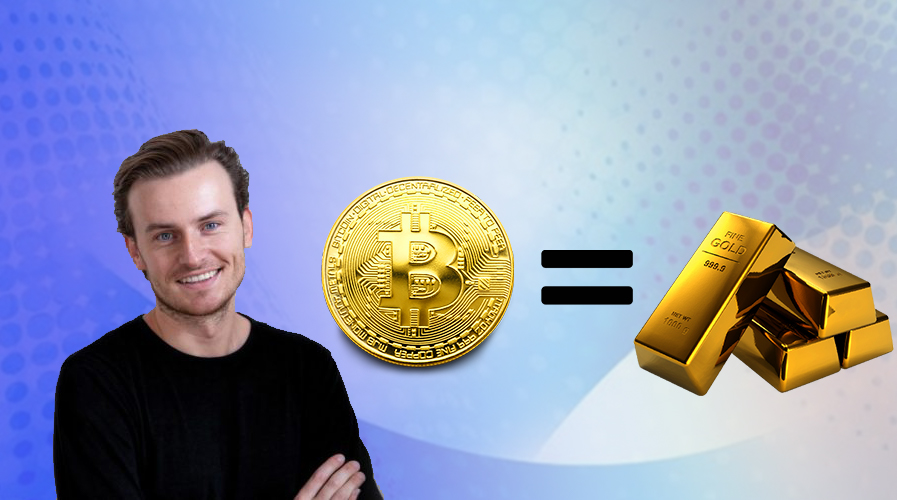
Demuth, CEO of Global Exchange Bitpanda announced during the Blockchain Economy 2020 Conference in Istanbul that BTC is “Glod 2.0” i.e. an upgraded version of gold, the most alluring asset of the present time.

Bitcoin Equated As Gold 2.0 by CEO of Bitpanda

During the conference which relates to cryptocurrency, Eric Demuth, who is CEO of the exchange (Bitpanda) which allows the trading of Bitcoin along with precious metals like that of platinum, gold and silver explained that the demand for digital tokens accelerates the need for precious metals also.

He cleared that Bitcoin can be proved as Gold 2.0 for the younger digital generation because of faster liquidity, negligible transaction fees and ease of storage of Bitcoins. He equated Bitcoin as the gold standard of crypto.

Demuth Supported Regulatory Crypto Space

Many of the service providers or exchanges are visualising the stricter regulatory environment as “the big bad wolf”. According to the CEO of Bitpanda, the regulatory crypto space is in a way will attract more investments as the many reputed companies will be strongly complying the rules.

Eric also hinted about his support for the government’s efforts to change the decentralised currency to a centralised one. He said that decentralised currency gives the opportunities to the hackers, scammers and false advertisers to hamper the crypto space.

Bitcoin Far Behind Gold

Bitcoin Far Behind Gold

Bitcoin was equated as Gold back in January when its price hit around $9000, but due to its volatility, the worth went down. Analysts after the statement of CEO of Bitpanda explained that bitcoin is in its infant stage which cannot be compared to the worth of gold as the alluring asset gained its value after the effort of the people to mine it.

Similarly, Bitcoin may be as valuable as the gold in the future as and when mining increases. Thus, it can be said that the crypto enthusiasts must continue their investments and miners must improve their performance to increase the value of the bitcoins.

You May Also Read.

With RBI Banking Ban Quashed, What’s Next For Indian Crypto Ecosystem?

RBI

Indian crypto community can finally breathe a sigh of relief after the prolonged supreme court case led to a judgement quashing RBI’s April 6th 2018 banking ban. The judgement dated 4th March was a big win for the Indian crypto community as it cleared the biggest misconception that crypto trading is illegal in India.

The judgement not only helped clear certain misconceptions surrounding crypto space but also breathed a lease of new life into crypto businesses which either had to cease their operations in absence of any banking help and fear of law enforcement agencies or decided to move their base out of India.

UnoCoin, one of the earliest crypto trading platforms in the country announced that they are resuming their business with added support for direct INR deposits. WazirX, one of the most recognized crypto exchanges recently acquired by Binance was also quick to add INR deposits and Withdrawals. CoinDCX which recently partnered with OKEx to offer derivative and futures market to Indian customers also added INR support right after the supreme court verdict came out.

Crypto Trading is Not Illegal in India, But…

Crypto trading is legal in India

While it is very clear now that crypto trading is not illegal, but that has been the case all along. The RBI circular that has been quashed now never deemed Bitcoin trading as an illegal activity in India, but only ordered banks regulated by them to stop offering their services to crypto service providers. It was the media houses which wrongly interpreted the banking ban as a blanket ban and caused unnecessary misconceptions and fear among Indians.

Having said that, it is also important to note that the crypto space is not regulated at the moment given the ecosystem itself is quite new and most of the countries around the globe are still observing, studying its impact to formulate laws.  Many developed countries including the USA, South Korea (recently made crypto legal), France (recognizes Bitcoin as a currency) have been working to formulate laws in a way that it does not challenge their financial sovereignty and also ensure security for investors.

While the draft bill formulated by the interministerial committee proposed a blanket ban, many are hopeful that the present supreme court judgement would have a positive impact on the final regulations.  So, at present, the crypto service operators must work in accordance with the law enforcing agencies and ensure that the ecosystem blossoms in the aftermath of a positive judgement in their favour.

Understanding the Roadmap Ahead

Cryptoknowmics also got in touch with prominent crypto lawyer Mr Mohammed Danish who is also involved with CryptoKannon, one of the primary sources of legal info around cryptocurrencies in India. Mr Danish touched upon various aspects of the recent judgement and answered a few critical queries surrounding it along with clearing various misconceptions that have arisen.

Q. The current judgement is about nullifying RBI’s circular in 2018, do you think the current judgement could also lead to better regulations different from the current draft bill asking for a blanket ban?.

Answer: This judgment discusses many important questions related to Cryptocurrency and its underlying technology. It also discussed how other nations are treatment this technology and what regulations they have prescribed to rein its inherent risks. The Court has observed this fact that Government is unable to take any call despite reports from several committees. So I think, while the Government is consistently keen on adopting appropriate measures to reduce risks associated with Cryptocurrency, this judgment is a great source which can be used as a guiding light for the Government while deciding on the regulations.

Q. Many exchanges which had to shut their operations might look to restart their venture, for example, Unicoin just tweeted about starting INR deposits on their platform. Do you think in the absence of any regulations the scams related to crypto might rise, which in turn might give the government a reason for strict regulations or even a ban?.

Answer: It is needless to say that Crypto Industry has no monopoly over scams which are in fact unpleasant reality to every monetary activity. However, it is also true that among the Indian masses, the popularity of Crypto is sourced from profitability rendered by Bitcoin during the market surge. So the inducement of “get rich overnight” poses a greater risk for poor, illiterate or less aware people when there is no regulator to look after the activities like launching a token or running an exchange.

Q. Supreme Court judgement for sure is a great achievement but how do you think will be its impact given the banking ban was poorly covered by media and many news outlets are portraying today’s judgement as a green signal for the crypto industry which is partially true considering no regulations. What do you think will be the path ahead for these businesses, would they follow existing security laws or AMLD laws?.

Answer: The judgment discusses the steps taken by exchanges to curb the possible risks. It is true that as on date there is no specific regulation or law to regulate the activities like trading in Crypto assets. But there are various laws which are already in place and are also applicable to such activities generally. Such laws can be enforced against any wrongdoer. In addition to it, the RBI can possibly come up with a less interfering measure till the time Government is not bringing a specific regulation.

You May Also Read.

Bitfinex Launches Tether Gold Facilitating Arbitrage Trading

Bitfinex

Bitfinex, Hong Kong-based cryptocurrency exchange launched “Perpetual Swap Trading” on Tether Gold (XAUT), a controversial stablecoin which is backed by physical gold will enable the arbitrage opportunities with incumbent crypto exchanges.

After $21 Million Market Cap, Bitfinex Launches Tether Gold

The latest move of the exchange is in the line of the expansion of Bitfinex providing sophisticated trading opportunities to attract the crypto hedge funds and reputed trading firms across the world. The exchange is gaining the confidence of the large crypto community, including crypto hedge funds as well as High-Frequency Trading firms.

BitFinex, which is owned and operated by iFinex Inc., will facilitate investors as following:

  • Allow the users to place bets on physical gold.
  • Will help the users to take advantage of the arbitrage between crypto space and the conventional financial system.

Trading of futures will start from March 07, 2020, on Tether Gold/Tether pair. The perpetual swap pair will permit up to leverage of 100x. As per the rules of verification, the verification of the account won’t be necessary for transaction among various cryptocurrencies on Bitfinex. The exchange provides two levels of the verification process to complete the process of deposits and withdrawals of stablecoins (like Tether).

Paolo Ardoino, CTO of the exchange explained the latest launch as the best example of an arbitrage opportunity, which will sure embark the gates for new investments in crypto space

One XAUT which was issued by TG Commodities Ltd. represents one troy fine ounce of the gold on a London Good Delivery gold bar.

Future Contracts As Attractive Financial Instrument

financial instrument of the crypto markets

Futures contracts are one of the financial instrument of the crypto markets which allow the traders to buy and sell coins at a pre-decided price and date in the future, provides means for hedging and negating the risks associated and also create the favourable conditions for book profits. The trading futures will be limited to a few jurisdictions and verified users only.

Thus, Bitfinex and Tether are continuously accelerating the crypto market even when they face class-action lawsuits for market manipulation.

You Might Also Read:.

Jack Dorsey Receives Support From Musk And Buterin

Jack Dorsey

Jack Dorsey’s position as a Twitter CEO is hanging in the balance and can get kicked out by the investors. However, A few top-notch crypto elite’s have come out in his support.

The main man of Tesla, CEO Elon Musk who’ has built his reputation as a crypto freak with his endorsement, has backed Jack Dorsey to continue being at the helm. He tweeted:

“Just want to say that I support @Jack as Twitter CEO. He has a good [heart]”.

Buterin co-founder of the significant cryptocurrency project Ethereum raised a few question marks over the competence of a new potential CEO that would replace Dorsey, saying:

These comments come in response to the 4% stake acquiring by the billion founders of Hedge fund Elliott, Pau singer. He is pushing for a major overhaul at twitter, including Jack Dorsey’s removal.

CNBC reports that Elliott is holding a $1 billion stake in Twitter and has named four new members. Elliott has had some controversial history with the CEOs of major global companies like eBay, AT&T and has been behind a lot of CEO’s departures. Twitter shares sky-rocketed by nearly 8% after the news broke out.

Jack Dorsey Removal Unjustified or Pau Singer Concerns  Genuine?

Jack Dorsey

Dorsey has come under fire from the investors for paying extra attention to his crypto business Square rather than the twitter platform. Also, Jack Dorsey has come under scrutiny for being CEO of two publicly listed companies. Jack Dorsey also announced his plans to work in Africa for six months, and reportedly, Singer doesn’t fancy the idea of it.

Dorsey for a while now has publicly stated that he is enamoured of Bitcoin (BTC), even going as far as claiming that it is the currency for the future. His company, Square, recently introduced a new program to enhance bitcoin development.

You May Also Read:

Uphold launches World’s First Multi-Asset Account to Convert Assets

Uphold

Uphold, a leading digital asset platform has made an exciting announcement that it is launching the world’s first multi-asset account on its platfrom, in a bid to allows its users to convert assets such as Bitcoin, XRP, Gold and BAT to fiat easily.

Not only this, Uphold is eyeing to issues a Mastercard debit card to its users to enable them the luxury to take out cash from ATMs that support this feature, across the world. The digital platform is supremely optimistic that it would enhance the day-to-day utility of cryptocurrencies and make it more mainstream.

The platform maintains that in that company’s account, all of the assets would be stored. This would make it viable to convert multiple currencies and this feature would be available all the time. 27 fiat, 24 digital and surprisingly even metal exchange, including the precious gold, is being made available for conversion.

Uphold Aiming High, US Audience The Main Aim

Uphold plans to issue out the Mastercards initially in the United States with the firm already accepting pre-orders for the debit card. Also, the firm plans to issue the debit cards in both physical and virtual forms to enable diverse options for holders.

Cardholders will also be able to access a slick app that would contain card details as well as features to change the pin and an inventory breaking down the amount spent by categories.

Uphold’s intention is to initially issue the Mastercards to its users in the United States, and they are already allowing pre-orders by their targeted audience. They have come well-prepared and are providing formidable variety in options. The debit cards would come both in virtual and physical form to provide even more smoothness and be more customer-friendly.

The CEO of Uphold, J.P. Theriot, suggested that the new cards would be revolutionary as they would convert the always unspendable locked assets into spendable ones. He added

“ Here, at last, is a debit card that transforms the utility of cryptocurrencies and other traditionally ‘unspendable’ assets by making them readily usable in everyday life.”

Articles That Might Interest You:.

Coinbase CEO Armstrong Compares Crypto to The Internet

Armstrong Compares Crypto to The Internet

Brian Armstrong, CEO and co-founder of one of the biggest cryptocurrency platforms in the world, Coinbase has shared his two cents on the parallels between the Internet and Cryptocurrency. He chose Twitter as his platform to express his thoughts in a series of tweets. It seemed that the chat with Andreessen Horowitz triggered the response.

Coinbase CEO stated that from the outer surface when you view the internet and cryptocurrencies, they don’t share many resemblances. However, when you dig in a little deeper, then you begin to see that there are some parallels present. Billions of people use the internet today, and can’t imagine a day without it. When it first came out, however, that wasn’t the case. No one guessed the internet to blow up like this in 1990.

What made the internet such a blow-out success was not just the launch but the constant improvements made to it over the years. Bearing that in mind, Coinbase CEO stated :

“They figured they’d try making a shopping cart (see if they could build a first-party app). There was no way to save the state or create a session (for instance, to make a shopping cart), so they created the concept of cookies.“

By taking into consideration what is lacking, experts paid extra heed to design a more sleek and safe version of the internet. He cited scalability as an issue since the early days of the internet. He says the SSL/HTTPs in the internet era was identical to the efforts of privacy coins in today’s world. He went on to add; the similarities are striking here.

Coinbase CEO Highlights The Areas That Need Improvement

Brian Armstrong added that there are multiple areas that need development, and he highlighted privacy, decentralization and scalability as the key areas that need special attention. He envisions that the hurdles can be obliterated by hard work and more innovation.

Articles That Might Interest You.

RFID Lab Blockchain Experiment Involves Nike and PVH Corp

RFID

Nike, the world’s leading sportswear brand and PVH Corp Tommy Hilfiger, Calvin Klein, HermanKay, and retailers Kohl’s and Macy’s took part in a blockchain proof of concept (POC) by using RFID tags for keeping an eye on products in the supply chain.

The companies mentioned above were involved in the first phase of the project, which was successful in its integration of serialized data streams right from the off, when the products got manufactured till it reached the retail party, eliminating any sort of ambiguity and providing crystal clarity. The PoC for the CHIP (CHain Integration Project) initiative was run by Auburn University’s RFID Lab, which also issued a whitepaper for it. Auburn noted that these companies provided data streams from the various chain, for the whole of 2019.

“We want to enable trade partners to share granular, item-level data with one another – a capability that systems today do not support,” said RFID Lab research fellow, Allan Gulley.”

RFID Tastes Decent Success in First Attempt

RFID Blockchain

Via the RFID systems, the PoC was able to capture almost 642,612 items, and approximately 1/3rd were written to the blockchain. The main project’s purpose was to serve as a platform for participants to keep an eye on the standard information and provide end-to-end transparency.

Clothing and apparel brands like Nike are always under the cosh from counterfeit or fake products or just outright stealing. Blockchain can help counter such grave issues by tracking the journey of the product and enhance the supply chain’s transparency. Management would increase massively too as it is usually the distribution part where chaos kicks in and leads to mismanagement as multiple people are involved.

Blockchain is getting embraced more and more by the supply chain in the financial system. Nike’s not alone in the blockchain race, as another global giant, Coca-Cola is using SAP’s blockchain developed by Anheuser-Busch InBev, to track products in the supply chain. DNA tagging was the tool used by Microsoft when it worked with ConsenSys to verify the product’s authenticity.

Articles That Might Interest You:.

Ripple Blockchain Indian Partner Yes Bank Sees Its Share Fall By 83%

Yes Bank

The beginning of March brought both good and bad news for Ripple, as TerraPay became Ripple’s new partner on the one hand, while Indian private bank called Yes Bank, which was a Ripple partner in India, is in deep trouble and may get merged with PSU’s to save it from going bankrupt.

Yes Bank on The Verge of Collapse

The Yes Bank, which is a heavyweight partner of Ripple in India is on the verge of selling its shares in pennies as the Reserve Bank of India announced an enquiry against the fourth largest private bank of India. This resulted in the crash of their stock price by 83 percent.

RBI restricted limit of withdrawal to Rs 50,000 on the customers of Yes BANK till April 3, 2020. The restrictions are imposed on every account, whether it is saving or any other type. The move is taken to recover the Bank from the financial crisis, which is dreadful at the moment. The Central Bank drafted the relief plan for the crunched situation. Shantikanta Das, the governor of RBI, assured the smooth resolution of the present condition. He explained that the decision is consensus-based and not according to the opinion of a single entity.

TerraPay Opens the Gate Of Growth

TerraPay, San Francisco based global investment firm which facilitates the smooth transaction of funds in developing countries, exclaimed that it was acquired by a consortium of investors which includes Prime Ventures, Partech Africa etc. for an undisclosed firm. Along with it, the firm announced the sum raised from the same investors, which were around $9.6 million, may aids in the growth of the company.

The global investment firm has around 25 licenses which provide the power to function in almost 60mcountries across the world.

Puzzling Scenario For Ripple Blockchain

Scenario For Ripple Blockchain

As Ripple network is partnered with both TerraPay and Yes Bank, it isn’t effortless for them to calculate the effects on the present position. On the one hand, $9.6 million funding to TerraPay can pace up the progress of both firms, while on the other hand, the troubled situation of Yes Bank may pace down the remittance volume of Ripple in India as it is one of the leading private banks of the country.

Recently, the Supreme court announced the blanket ban on cryptocurrency of RBI as unconstitutional, which have the prospects for the fresh investments but the original condition of the Bank might sway the trust of investors in India.

Articles That Might Interest You:.

SEC Proposes New Changes To Make Fundraising Easier

SEC

The Securities and Exchange Commission(SEC) of the USA proposed certain amendments to its existing framework for fundraising to make it easier for entrepreneurs and investors to raise capital while ensuring investor security. If these amendments are considered and put into practice it would make it possible for companies to raise more capital through exemptions.

The new amendments would also benefit crypto startups as the SEC has raised the limit of capital that can be raised by these startups without registering with the SEC or apply for exemptions. The SEC in its announcement noted that the proposed changes to fundraising framework have been made after taking in inputs from the “response to the Commission’s June 2019 concept release on the harmonization of securities offering exemptions”.

How SEC Amendments Impact Crypto Startups

Earlier during the ICO era, many startups and firms raised billions through crowdfunding and without registering with the SEC, claiming the token they were offering do not fall under the security category as they were utility tokens. This led to an era of scams and investors losing billions of dollars. The SEC also took many such companies to the court and either restricted their offering or charged them heavily for not registering with the regulatory watchdog. The prime examples of this are Kik and Telegram.

Under the current proposed amendments to Regulation D, the limit of funds that can be raised has been increased from $5 million to $10 million. Under Regulation A, now firms and startups can raise $75 million, increased from the initial $50 million. The amount of capital that can be raised regulated crowdfunding has also been increased from $1 million to $5 million.

Another prominent proposed change has been made to the definition of “accredited investors,” who were defined as an individual with a net worth of $1 million and yearly profit of $200,000 or entities with over $5 million under their management. However, under the newly proposed amendment, an accredited investor is someone with the knowledge and experience to make informed investments.

These amendments are open for public comment for the next 60 days, after which it will be put for the vote.

You May Also Read:.

Indian Supreme Court Overrules RBI’s Banking Ban; Clear Regulations Next

RBI

The much-awaited verdict in the prolonged crypto case has finally arrived and the Indian community along with the rest of the crypto world is quite rejoiceful of the supreme court judgement deeming Reserve Bank of India’s (RBI) April 6 circular unconstitutional.

Crypto vs RBI Case: A Brief History

The RBI circular dating April 6, 2018, asking banks to avoid offering any services to cryptocurrency service providers was challenged by the Internet and Mobile Association of India (IAMAI) in the supreme court calling the banking ban unconstitutional.

During the same time, the supreme court also directed the Finance Ministry to formulate guidelines around cryptocurrencies, so that the court can address and look into cases related to crypto fraud and criminal activities. The inter-ministerial committee tasked at formulating measures for the crypto space proposed a blanket ban on virtual currencies while encouraging the use of blockchain and DLT.

The draft bill proposing a blanket ban came as a shocker to many, and many stakeholders believe that the bill could kill an entire ecosystem capable of generating at least a $12.9 billion in direct revenue and thousands of jobs. The Crypto vs RBI case court proceedings moved slowly thereafter for almost a year, where the hearings were often postponed or adjourned for various reasons.

The most prominent argument in the case began at the start of this new year, where the judges asked both the counsels to start fresh arguments from the beginning and this particular phase in the case is considered as the most crucial one. Mr Ashim Sood appearing for the IAMAI counsel was even acknowledged by the judges in the case for his inputs and sharp arguments.

Cryptoknowmics got in touch with Mr Sood to get his viewpoint on the judgement and what he visions for Indian crypto community. He commented,

“The RBI decision makes clear that access to banking is the lifeline of online businesses. This will help VCs revive their business to the extent that they were unable to operate due to the RBI circular’s measures. But the question is whether there will now be pragmatic regulations devised in collaboration with stakeholders which will enable blockchain and VCs to develop freely.”

The Key Arguments in Crypto vs RBI Case

crypto vs RBI

The petitioner in the case IAMAI was represented by Mr Sood along with Mr Nakul Dewan who was representing various crypto exchanges and service providers across the country.  Petitioner counsel argued that RBI had no jurisdiction to ban banking services as it virtually handicapped the booming industry from getting any banking help. The key arguments from the council have been listed below.

RBI has no power to prohibit the activity of trading in virtual currencies through VC exchanges since.

  • Virtual currencies are not legal tender but tradable commodities/digital goods, not falling within the regulatory
    the framework of the RBI Act, 1934 or the Banking Regulation Act, 1949.
  • Virtual currencies do not even fall within the credit system of the country, so as to enable RBI to fall back upon the Preamble to the RBI Act 1934, which gives a mandate to RBI to operate the currency and credit system of the country to its advantage.
  • The power to issue directions “in the public interest” conferred under Section 35A(1)(a) of the Banking Regulation Act, 1949 and the power to caution or prohibit banking companies against entering into any particular transaction conferred under Section 36(1)(a) do not extend to the issue of blanket directions that would deny access by virtual currency exchanges, to the banking services of the country, as the expression “public interest” appearing in a particular provision in a statute should take its colour from the context of the statute.

The RBI counsel was represented by Mr Shyam Divan and responded to the arguments and allegations made by the petitioner. Some of the key arguments presented by Mr Divan were.

  • Virtual currencies do not satisfy the criteria such as a store of value, the medium of payment and unit of account, required for being acknowledged as currency.
  • Virtual currency exchanges do not have any formal or structured mechanism for handling consumer disputes/
    grievances.
  • Virtual currencies are capable of being used for illegal activities due to their anonymity/pseudo-anonymity. Increased use of virtual currencies would eventually erode the monetary stability of the Indian currency and the credit system.
  • The impugned decisions do not violate any of the rights guaranteed by Articles 14, 19 and 21 of the Constitution of India.
  • The impugned decisions were necessitated in public interest to protect the interest of consumers, the interest of the payment and settlement systems of the country and for protection of regulated entities against exposure to high volatility of the virtual currencies. RBI is empowered and duty-bound to take such pre-emptive measures in public interest and the power to regulate includes the power to prohibit.

The supreme court also directed RBI to unfreeze an account associated with Koinex exchange containing little more than 12 crore INR which was frozen after the banking ban was imposed.

Rehabilitation of Businesses and Positive Crypto Regulations is the Next Step

While there is no denying the fact that today’s judgement nullifying RBI’s banking ban would come as a big relief for crypto businesses who were eagerly waiting for the judgement to make a decision on whether they can resume their businesses. One such crypto service provider Unocoin has already plans of adding direct INR deposits to their platform.

Sathvik Vishwanath, the CEO of Unocoin commented on Supreme Court judgement and said,

“The 22-month long wait to get what the crypto industry was already eligible for is now over. This marks an important milestone both in India and Globally and helps in bringing a positive perspective towards the crypto trading activity which became unclear during the wait.

The regulation is a different ball game but this verdict from today definitely gonna play the main role in regulations that may come in future.”

Nischal Shetty, the CEO of WazirX who has been at the forefront of Indian crypto scene and has been running various social media campaigns to draw government’s attention to the nascent crypto ecosystem was elated with the supreme court judgement. He also noted that good regulations are the next best step to help Indian crypto community show its true potential.

He said,

“The verdict clears the misconception that there was a crypto ban in India. It was a banking ban and the verdict removes that as well. The fear that many people had about their bank accounts getting shut down is now gone from their minds.

As an industry, we want to work with our Government and all the relevant regulators so that we can formulate the right crypto framework in India.

While regulations are needed, we need to give it some time before the country can come up with the right regulatory framework. If we hurry then we may curb innovation. Most countries around the world are doing the wait and watch policy when it comes to Crypto and ideally, India should do the same. We should understand how the markets behave, all the opportunities crypto provides and only then formulate laws.”

WazirX was also quick to add INR support for their platform and the CEO confirmed the same via a tweet,

Conclusion

The current judgement comes in as a ray of new hope for the Indian crypto community who were impatiently waiting for the judgement to decide whether they can restart or venture into the crypto space. However, the present judgement is only half the battle won, as the draft bill proposed by the government has called for a blanket ban. The crypto community is hopeful that the government would finally involve the stakeholders of the space to make sure India is a reckoning force in the decentralized space.

Other Articles That Might Interest You.

Indian Supreme Court Deems RBI Banking Ban Unconstitutional

RBI

The Supreme Court of India has finally given out its judgement in the prolonged ‘Crypto Case’ filed against the Reserve Bank of India’s banking ban of 2018. The year-long court proceedings finally came to an end on 4th March and Supreme Court in its judgement has deemed the RBI’s Banking ban as unconstitutional.
The RBI in an April 2018 circular had prohibited any private or central bank from offering its service to crypto service providers and businesses. The banking ban virtually shut the booming Indian crypto industry, where many crypto service providers had to either leave the country or completely shut their operations.

The banking ban was challenged in the Supreme Court by the Internet and Mobile Association of India (IAMAI), citing Central Bank’s move as unconstitutional and not falling under RBI’s jurisdictions. The case proceedings went on for over a year where counsels from both sides presented their arguments.

RBI in its defence noted that they had not banned the trading of cryptocurrencies, but since most of the countries were still studying the impact of these digital currencies and its effect on their financial sovereignty, they only prohibited banks from offering any kind of services to the digital currencies business operators. RBI claimed that Banks fall under their jurisdiction and it was their duty to protect consumers from dealing with unregulated entities.

The IAMAI counsel argued that RBI took the decision in a haste and did not bother to research or study the utilities of these virtual assets. They also argued that any issues pertaining to security laws fall under the jurisdiction of Securities and Exchange Board of India (SEBI). The arguments against RBI seemed more valid and compelling which gave hope to the uncertain crypto community in India.

Cryptocurrency No More a Taboo In India?

Today’s Supreme Court judgement would not only come as a big relief for the Indian crypto community but also remove all the misconception and rising fear among entrepreneurs looking to venture into the digital currency space. The RBI banking ban was wrongly interpreted as a blanket ban and a majority of the Indian community believed that trading crypto was illegal.

India is the IT outsourcing capital of the world and many big crypto firms like Binance, OKex, Ripple and many other firms have been eyeing the India market given its sheer mammoth size. Thus, today’s judgement would be considered historic by many for the Indian crypto community.

Indian Supreme Court to Pass Verdict on RBI Banking Ban on Cryptocurrencies Tomorrow

RBI Banking Ban on Cryptocurrencies

The much-awaited Supreme Court judgement on RBI banking ban on cryptocurrencies is due tomorrow.

The case saw a long-drawn legal battle between the RBI and Internet and Mobile Authority of India (IAMAI) throughout the month of January with counsels for both parties presenting their arguments. 

RBI Banking Ban on Cryptocurrencies

The Reserve Bank of India had released a circular in 2018 forbidding banks to facilitate crypto-related transactions. The drastic move had a severe impact on the budding crypto industry in the country, which saw the closure of many crypto exchanges like Koinex, Zebpay, and Coindelta closing their operations in the country. The subpar reporting by the local media, which wrongly interpreted the decision as a complete blanket ban worsened the situation.

RBI’s Decision Challenged by IAMAI

The Internet and Mobile Association of India (IAMAI) later challenged the RBI’s decision, calling it unconstitutional and claiming that the matter was outside their jurisdiction. Incidentally, during the hearing, RBI also admitted in the Supreme Court that Bitcoin and other cryptocurrencies aren’t banned in the country. The prosecution had claimed that any authority to impose a ban on digital assets rested with the Security and Exchange Board of India (SEBI).

Appearing for the RBI, senior advocate Shyam Divan had reasoned that the sole purpose of barring banks from facilitating crypto-related transactions was to maintain the integrity of the Indian banking system. RBI had also said that they weren’t against any technological advancement, but they also need to ensure the safety and security of citizens against potential frauds.

It remains to be seen what call the Indian apex court takes on the RBI banking ban on cryptocurrencies. However, whatever the judgement be, it would most likely pave the way for the future of cryptocurrencies in India.

Tron Founder Finally Meets Billionaire Warren Buffett For Charity Lunch

Sun

Justin Sun, the CEO and founder of Tron, finally got to meet with famous billionaire Warren Buffett (the chairman of Hathaway) after several postponements in 2019.

According to the press release, Sun dined with Buffett at Happy Hollow Club, a private, not-for-profit country club in Omaha on January 23. Some other cryptocurrency executives including, founder of Litecoin, Charlie Lee, Huobi CFO, Chris Lee, Binance Charity Foundation head, Helen Hai and eToro CEO, Yoni Assia also joined Sun on the much-hyped dinner which he secured in a charity bid. 

Commenting on the meeting help with Buffett, Justin Sun said that he was grateful for Mr. Buffett’s dinner as well as wisdom and vision and that it was an honor for him. He added that he will take Mr. Buffett’s guidance to take Tron to Further heights and will always remember his support and kindness.

Justin Sun Had Bid $4.5M For the Lunch

In June 2019, the Tron founder won a charity sale on eBay to have lunch with billionaire Warren Buffett. He won a bid of around $4.5 million, which is the highest in the last 20-year history, but unfortunately due to medical reasons, Sun had to postpone the meet. Although, he announced in July to reschedule his meeting with Buffett very soon.

The meeting was postponed by Sun again for the event in San Francisco where he invited a raft of blockchain bosses to join him. He also invited Donald Trump, the president of the United States but never got a reply.

Then in September, when Sun started to talk about lunch, it got rescheduled again due to the non-profit charity organization. Meanwhile, all proceeds from the auction were transferred to GLIDE Foundation, the San Francisco based charity organization that helps the homeless.

Sun was in headlines since he won eBay’s auction whether it was about him delaying the lunch with Billionaire Hataway Chairman or him being mocked by John McAfee or the clashes with Disney regarding Tron trademark. He also invited Andrew Yang, the Democratic presidential candidate for helping him test a form of universal basic income.

WRX Token Listed on Binance, Sees an Uptick of Over 100% in Price

WRX

Binance one of the leading crypto exchanges in the decentralized ecosystem, recently listed WRX token on its platfrom on 4th February. WRX is the native utility token of Indian crypto exchange WazirX which was recently acquired by Binance. The listing of the token turned out to be a massive boon for the WRX token holders as the native token has seen a major uptick in its price ever since its listing on 4th February.

Binance has currently launched three trading pairs for the token which include,

  • WRX/BNB
  • WRX/USDT
  • WRX/BTC

WRX Token Registers Over 100% Rise Against USDT and BTC

Ever since its listing on the exchange, WRX has seen massive pump in its price as all its trading pair including Bitcoin and USDT pairs were trading at +120% on the 24-hour price chart. At press time the WazirX token was trading at $0.1152 having seen a 137% rise in its price in the past 24 hours against USDT. While it was up by 116% against Bitcoin.

The startling performance of the WRX token was expected since WazirX has been quite a popular exchange in India who defied all odds to remain relevant in the past couple of years. While many exchanges perished owing to Reserve Bank of India’s April 2018 circular which prohibited any bank from offering their services to crypto service providers in the country.

WazirX, unlike other exchanges, developed one of the most advanced P2P online market places to avoid using banking services, and their efforts bore fruit as the Indian exchange managed to run its business, facilitate trading services to Indian customers without violating any regulatory guidelines issued by the central bank. The acquisition by Binance turned out to be an icing on the cake for not just the exchange but also for the Indian community.

Israel Based B2B Startup Clear Raises $13M in Series A Funding

Clear B2B startup

Clear, a B2B blockchain startup based out of Israel has raised $13 million in its series A funding round lead by the Fintech Strategic Investments group at Fidelity-backed Eight Roads, reported a local daily. The Series A funding round saw participation from Telefonica Innovation Ventures, the Telekom Innovation Pool of Deutsche Telekom, Hong Kong-based HKT, and Singtel Innov8.  The head of Fintech Strategic Investments group Alokik Advani will join as one of the board members of the blockchain startup Clear. 

The B2B blockchain startup was started back in 2018 and since then the firm has managed to build and test its platform in the telecom sector and boasts of client list including BT Group, Colt, Deutsche Telekom, PCCW Global, Telefonica, Telstra, Tata, and Orange. Clear would use the capital raised during the funding rounds in scaling their operations and expanding their reach in many other sectors like healthcare, media advertising and telecom.

How Blockchain Can Enhance the Multi-Billion Dollar B2B Transaction Industry

B2B transactions account for over $150 trillion annually around the globe which help banks processing these transactions amass over $140 billion in transaction fees itself. Apart from that, the use of paperwork, data management, contract settlement costs billions in additional cost in this sector. Thus, with the use of blockchain tech, not only the B2B transactions would save cost on the transaction fee, but the use of automated smart contracts can eliminate a ton of cost that goes into the paperwork and data management.

Clear is building a blockchain remittance solution for the enterprises which can help them automate their trade settlements via the use of blockchain smart contracts, cut the long trail of paperwork and help them save costs in transaction fee. The use of blockchain would also help avoid any kind of feud and fraud cases as all contracts and data would be managed on the DLT.

Blockchain is growing in stature with each passing year and has become the go-to choice in many fields for data management, which is clear from the rise of many startups in the field.

A New Ethereum Alliance Made To Develop Trust In The Ecosystem

Gas

To increase the trust in the Ethereum ecosystem, an Ethereum Trust Alliance has been formed by the global coalition of professional security organisations. Ethereum Trust Alliance in its tweet confirmed the alliance this week. 

Today we are very proud to announce the formation of the Ethereum Trust Alliance (ETA)! Learn more about what we are building at https://t.co/UffkvjSpDz pic.twitter.com/fCvnHFvXNI

— Ethereum Trust Alliance (@ethtrustorg) February 3, 2020

The group is focussing on creating a security rating system for smart contracts that would make users more aware of smart contract security. This would also help rate smart contracts that have gone through security audits. The members of the alliance, primarily blockchain security firms are Quantstamp, MythX, Sooho, Runtime Verification, ConsenSys Diligence and SmartDec. In order to become a global settlement layer across all industries for all types of transactions, Ethereum needs a trust indicator for the smart contracts directing those transactions. 

The smart contracts are vulnerable, and even one small flaw in it can lock up your millions of dollars instantly. The website compared itself to that of Moody’s platform that advises users on risks related to various investment classes.

How Would ETA Benefit The Ethereum Ecosystem?

According to the website, ETA ratings are designed to signal to the Ethereum community which smart contracts have been through certain levels of rigorous testing to help ensure that vulnerabilities have been addressed. The higher the ETA level, the lower the associated risk.

It added that the group intends to generate a smart contracts registry where its security ratings can be questioned. The wallet users can quickly check the contract’s security rating before actually sending tokens.

The first specification of ratings would most probably be launched by the first quarter of the year.

Ethereum (ETH) Price Update

With a general downturn in crypto markets, Ethereum prices have improved a little today. As per Tradingview.com, the prices have successfully settled slightly below $190 after a dip below $182 a few hours ago.

Since the year start, Ethereum has gained up to 45%, exceeding its big brother, which has made 28% gain over the same period. As the altcoins recover, Ethreum could go above the $200 psychological barrier this month that would lead to substantial gains.

International Exchange Inc Approaches Ebay With A Staggering $30B Takeover Offer

ICE Announces Upcoming cash-settled Bitcoin Futures Contract on Bakkt

According to the Wall Street Journal, the Intercontinental Exchange Inc. (ICE) the parent company of Bakkt (the Bitcoin Futures Trading Platform) has approached eBay with a staggering $30 billion purchase offer. WSL announced through its post that ICE might connect its technological expertise to eBay’s e-commerce site. The opening will connect ICE’s buyers and sellers to e-commerce, including everything from electronics to collectables.

However, there are no guarantees regarding the deal as neither company has announced about the same formally. Even there is no report if the proposal would be considered by Pierre Omidyar, eBay’s owner and founder.

The E-commerce Might Switch Hands Soon

eBay has been approached by many company’s in the past, but this new proposal had left many wondering if the online market place would be soon switching hands.

The current valuation of eBay is somewhere around $28 billion as its stocks prices have risen by 10% in the last few months. According to the reports, ICE would need to offer a premium deal above its current valuation i.e. above $30 billion to garner some interest from one of the largest online market places.

Will eBay Accept The Offer?

ICE is interested in the taking over eBay’s core marketing and not its classified unit, which is estimated to be worth $10 billion roughly. eBay has considered selling its core marketing in the past but whether the e-commerce giant is going to respond to this staggering offer remains uncertain. The proposal comes at a time when the global economic future has never been more unpredictable, because of which many investors and exchanges like ICE are looking to diversify their holdings.

ICE’s new cryptocurrency enterprise, Bakkt was launched last year in 2019. The Institutionally focused  Bitcoin futures trading platform is on the continuous rise in terms of volumes that hints towards the big players that might be coming on board.

Craig Wright Says Bounded Courier’s Conversation Cannot Be Disclosed

Craig Wright

Craig Wright and controversies go hand-in-hand and the same has come true for the ongoing lawsuit filed against him by the brother of his former associate Dave Klieman. The lawsuit which has been going on for over a year might stretch a little longer as Wright has made another U-Turn on his claims about the infamous ‘bounded courier,’ who was supposed to submit all the details of the accounts containing Bitcoin and allegedly the keys to those wallets as well. Wright asked the judge to give him time till the end of January to submit all the details. However, now Wright is claiming that the bounded courier is an attorney and thus he cannot reveal the conversation he had with him.

The bounded courier was allegedly bringing 11,000 documents which were supposed to prove Wright was indeed the creator of Bitcoin, however, Wright now claims that those documents fall under attorney-client privilege and involves multiple other firms because of which he cannot reveal the details. The court has asked him to submit at least a few of the documents to prove his claims.

The Infamous Saga of Bounded Courier

During the last hearing of the lawsuit, Wright had claimed that a-bounded courier from the Tulip Trust will arrive with the private keys by the end of January. However, now he has gone back on his claims again saying that the infamous courier is also an attorney and thus he cannot reveal any information shared with him by the courier because of the attorney-client privilege.

The recent pump of BSV over 300% in a couple of days was also attributed to Wright’s claims but was later debunked to be a case of pump and dump. While those who have known Wright were pretty sure that he will never produce the keys since he is a well-known bluff master who has been making similar claims for years and not even once came close to proving that he is the real creator of Bitcoin.

The prolonged lawsuit might extend even further and Wright might find himself in more trouble because of his absurd claims which he cannot back. The court has already ordered him to compensate the legal fee for the Klieman estate and given his fraudulent nature the final judgement could be a lesson for him.