TL;DR – Blockchain Explained
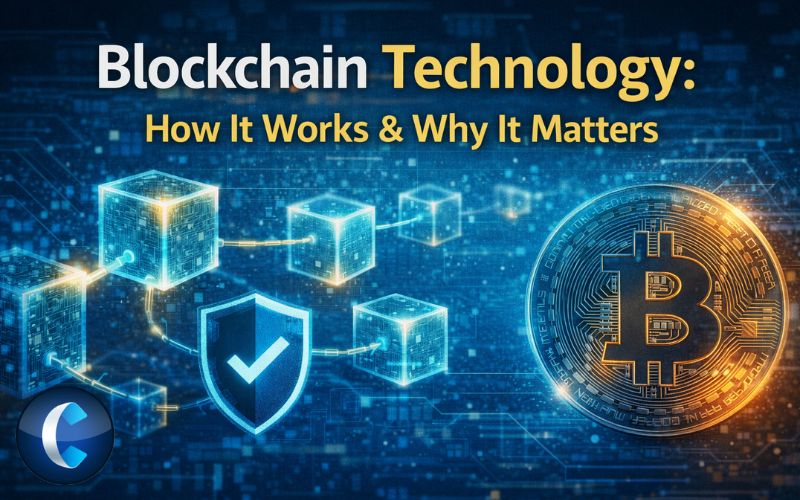
- Blockchain is a decentralized ledger that records transactions across multiple computers.
- Each block links to the previous one using cryptographic hashes, making records tamper-resistant.
- The network validates transactions using consensus mechanisms like Proof of Work or Proof of Stake.
- Blockchain improves transparency, security, and trust without relying on a central authority.
- Real-world use cases include finance, supply chains, digital identity, and smart contracts.
Introduction: Why Everyone Talks About Blockchain
Blockchain often appears in headlines next to Bitcoin, NFTs, and billion-dollar valuations. That makes it sound flashy. In reality, blockchain technology solves a simple problem: how do strangers agree on data without trusting each other?
That question matters more than hype.
Banks, supply chains, governments, and even gaming platforms struggle with trust, verification, and transparency. Blockchain offers a new structure for digital record-keeping. It does not rely on one central authority. Instead, it distributes control across a network.
In this guide, you’ll find blockchain explained in plain English. We’ll break down how blockchain works, why the decentralized ledger model matters, and where this technology actually adds value.
What Is Blockchain?
At its core, a blockchain is a distributed database.
It stores information in “blocks.” Each block connects to the previous one using cryptography. That chain of blocks forms a permanent, tamper-resistant record.
Unlike traditional databases, no single company controls the entire system. Multiple computers (called nodes) maintain identical copies of the ledger. If someone tries to change one copy, the network rejects the alteration.
Think of it like a shared Google Sheet, but:
- Nobody can secretly edit past entries
- Every participant sees the same data
- The system validates updates automatically
That shared structure is what people mean when they talk about a decentralized ledger.
Want to Master Crypto Fundamentals?
Deepen your crypto knowledge with expert guides from our Cryptocurrency Guide section. These resources help you understand the basics and advanced topics that influence weekly market movements like the ones we covered here.
- A Complete Guide to Cryptocurrency Trading Bots – Improve your trading efficiency.
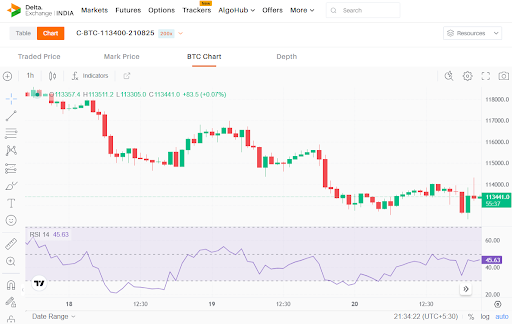
- Best Free Crypto Charts with Indicators – Tools to track Bitcoin & altcoin trends.
- Explore All Cryptocurrency Guides – From basics to advanced topic.
How Blockchain Works: Step-by-Step
Let’s break down how blockchain works without diving into unnecessary technical chaos.
1. A Transaction Occurs
Someone initiates an action. That action might include:
- Sending cryptocurrency
- Recording ownership of an asset
- Updating a supply chain record
The transaction enters the network.
2. The Network Verifies It
Nodes validate the transaction. They check whether:
- The sender has permission
- The digital signature matches
- The rules of the network are satisfied
Different blockchains use different consensus mechanisms to confirm transactions. The most well-known include:
- Proof of Work (PoW)
- Proof of Stake (PoS)
Proof of Work requires computational effort to validate blocks. Bitcoin uses this system, as described in its original whitepaper. Proof of Stake selects validators based on token ownership and staking participation.
Both systems aim to prevent fraud and double spending.
3. The Transaction Joins a Block
After validation, the transaction joins other verified transactions. Together, they form a block.
Each block contains:
- Transaction data
- A timestamp
- A cryptographic hash of the previous block
That hash creates a permanent link in the chain.
4. The Block Gets Added to the Chain
Once consensus is reached, the network adds the block to the existing chain. Every node updates its copy.
At that point, the record becomes extremely difficult to alter. Changing it would require controlling a majority of the network’s computational or staking power.
Why the Decentralized Ledger Matters
Traditional systems rely on central authorities.
Banks maintain financial records. Governments manage identity databases. Corporations control internal ledgers.
Central systems work well in many cases. However, they create single points of failure. Hacks, corruption, or technical outages can compromise the entire system.
A decentralized ledger distributes responsibility. No single entity owns the data. Every participant verifies it.
This structure offers three major advantages:
Transparency
Public blockchains allow anyone to view transactions. That visibility increases accountability.
Security
Cryptography protects records. Altering past data requires overwhelming network control, which becomes economically impractical in large networks.
Immutability
Once data enters the blockchain, it becomes extremely difficult to change. This feature reduces fraud risks.
According to research published by the World Economic Forum, distributed ledger technology has potential to improve transparency in financial systems and supply chains.
Public vs Private Blockchains
Not all blockchains operate the same way.
Public Blockchains
Public networks allow anyone to participate. Examples include Bitcoin and Ethereum.
These systems prioritize decentralization and transparency.
Private Blockchains
Private blockchains restrict access. Companies often use them internally for logistics, auditing, or document verification.
These systems prioritize efficiency and control.
Both models use similar technology but serve different purposes.
Real-World Use Cases of Blockchain
Blockchain technology extends far beyond cryptocurrency. Let’s examine practical applications supported by credible research.
1. Financial Services
Blockchain enables faster cross-border payments and settlement systems.
Traditional international transfers often require intermediaries. Blockchain can reduce friction by allowing direct peer-to-peer transactions.
Major financial institutions have tested distributed ledger systems to improve efficiency.
2. Supply Chain Management
Supply chains struggle with tracking authenticity and origin.
Blockchain allows companies to record every step of a product’s journey. That improves transparency and reduces fraud.
Large retailers and logistics firms have explored blockchain-based tracking systems to verify goods.
3. Digital Identity
Identity theft remains a global problem.
Blockchain-based identity systems allow users to control their own credentials. Instead of storing identity data in centralized databases, individuals hold cryptographic proof.
This concept is known as self-sovereign identity.
4. Smart Contracts
Smart contracts are self-executing agreements written in code.
When predefined conditions are met, the contract executes automatically. This reduces the need for intermediaries.
For example, insurance payouts can trigger automatically when verified data confirms an event.
Smart contracts gained popularity through Ethereum’s programmable blockchain.
Common Myths About Blockchain
Let’s clear up a few misunderstandings.
Myth 1: Blockchain Is Anonymous
Public blockchains are pseudonymous, not anonymous. Transactions remain visible. Addresses do not directly reveal identities, but analysis tools can trace activity.
Myth 2: Blockchain Is Completely Hack-Proof
No system offers absolute immunity. However, blockchain’s decentralized design makes large-scale tampering extremely difficult.
Myth 3: Blockchain Solves Every Problem
Blockchain works best when:
- Multiple parties need shared access
- Trust remains limited
- Data integrity matters
If a system does not require decentralization, a traditional database may work better.
Sometimes boring solutions win.
The Environmental Debate
Energy consumption became a major concern around Proof of Work systems.
Bitcoin mining consumes significant electricity. Researchers from the Cambridge Centre for Alternative Finance track Bitcoin’s energy usage and provide public data dashboards.
However, newer consensus models such as Proof of Stake drastically reduce energy requirements. Ethereum transitioned from Proof of Work to Proof of Stake in 2022, lowering energy consumption by over 99%, according to Ethereum Foundation reports.
This shift demonstrates that blockchain technology continues to evolve.
Challenges Blockchain Still Faces
Despite its promise, blockchain faces real hurdles.
Scalability
Public networks sometimes process transactions slower than centralized systems.
Developers address this through:
- Layer-2 scaling solutions
- Sharding
- Network upgrades
Regulation
Governments worldwide continue developing legal frameworks around digital assets and distributed systems.
Regulatory clarity will influence adoption speed.
User Experience
Wallet management, private keys, and transaction fees confuse beginners. Developers must simplify interfaces to reach mainstream audiences.
Technology alone does not guarantee adoption.
Why Blockchain Matters in the Long Run
Blockchain introduces a new model of trust.
Instead of trusting institutions, users trust mathematics and open-source code. That shift changes how people think about ownership, verification, and digital value.
Decentralized finance platforms, digital collectibles, and tokenized assets all stem from this core innovation.
The idea of programmable money and programmable contracts expands possibilities for global commerce.
Even if some projects fail, the architecture remains influential.
Blockchain Explained: The Bigger Picture
When people search for “blockchain explained,” they often expect complexity.
The reality feels simpler.
Blockchain combines:
- Cryptography
- Distributed networks
- Economic incentives
Together, they create a system where strangers can coordinate without centralized oversight.
That concept holds power in finance, governance, digital ownership, and beyond.
Will blockchain replace every database? No.
Will it reshape how certain industries manage trust? Very likely.
Continue Your Crypto Learning Journey
Before you go, check out these popular guides from our Cryptocurrency Guide hub to level up your understanding of key concepts and tools used by successful crypto enthusiasts:
- Guide to Cryptocurrency Trading Bots – Enhance trading strategies. :
- Best Free Crypto Charts with Indicators – Charting tools for deeper analysis. }
- Full Cryptocurrency Guide Hub – Your go-to place for beginner to advanced guides.
🔔 Tip: Bookmark our crypto guides to stay updated with tools and tips that power smart investing and market analysis.
Final Thoughts
Blockchain technology represents more than a trend.
It offers a new way to structure digital agreements. A decentralized ledger reduces reliance on single authorities and increases transparency.
Understanding how blockchain works helps separate innovation from hype. It also protects you from exaggerated claims.
Technology evolves. Markets fluctuate. Narratives change.
But the fundamental idea of distributed trust through cryptography continues to influence the digital economy.
Frequently Asked Questions (FAQs)
What is blockchain in simple words?
Blockchain is a decentralized digital ledger that records transactions across multiple computers. It stores data in blocks that link together using cryptography, making the records secure and difficult to alter.
How does blockchain work?
Blockchain works by validating transactions through a network of computers called nodes. Once verified, transactions are grouped into blocks and added to a chain in chronological order. Each block connects to the previous one using a cryptographic hash.
What is a decentralized ledger?
A decentralized ledger is a shared database distributed across many participants rather than controlled by one central authority. Every participant maintains a copy of the ledger, which improves transparency and reduces single points of failure.
Is blockchain the same as cryptocurrency?
No. Cryptocurrency is one use case of blockchain technology. Blockchain provides the underlying infrastructure, while cryptocurrencies use that infrastructure to enable peer-to-peer digital payments.
Why is blockchain considered secure?
Blockchain uses cryptographic hashing and consensus mechanisms to validate transactions. Changing past records would require controlling a majority of the network, which becomes extremely difficult and expensive in large networks.
What are real-world uses of blockchain?
Blockchain supports financial services, supply chain tracking, digital identity systems, smart contracts, healthcare records, and asset tokenization.
What are the limitations of blockchain?
Blockchain faces challenges such as scalability, regulatory uncertainty, and user experience complexity. Developers continue improving these areas through upgrades and innovation.