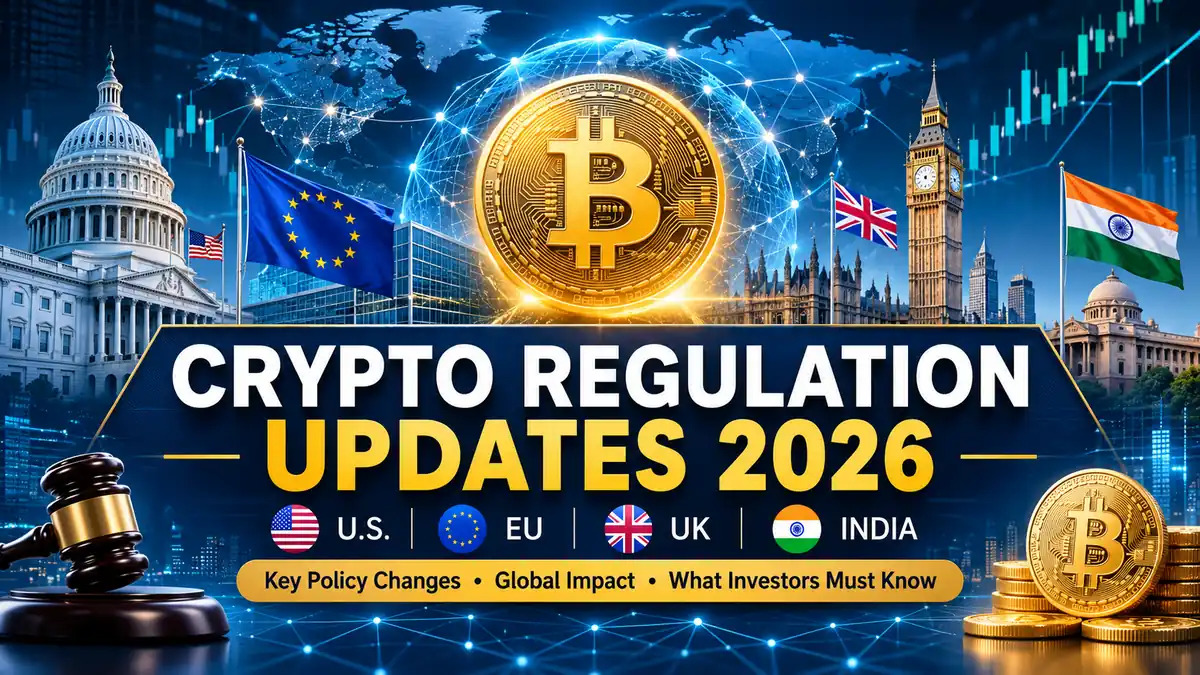
Crypto Regulation Updates: What Investors Must Know (November 2026)

crypto regulations updates

The cryptocurrency industry is evolving rapidly, and governments worldwide are paying closer attention to how digital assets are traded, stored, taxed, and regulated. As crypto adoption continues to expand, regulatory authorities are introducing new policies to improve investor protection, prevent financial crimes, and establish clearer rules for cryptocurrency businesses.

For investors, traders, and blockchain enthusiasts, keeping track of crypto regulation updates is becoming increasingly important. A regulatory announcement can influence cryptocurrency prices, exchange operations, institutional investments, stablecoin adoption, and the overall direction of the digital asset market.

November 2026 brings several important developments across major cryptocurrency markets, including the United States, European Union, United Kingdom, and India.

In this monthly roundup, we explore the latest cryptocurrency regulatory developments, explain what they mean for investors, and highlight the key regulatory trends worth monitoring.

Why Are Crypto Regulation Updates Important?

Cryptocurrency regulations determine how digital assets can be issued, traded, transferred, and held within different jurisdictions. They also establish the responsibilities of cryptocurrency exchanges, wallet providers, stablecoin issuers, and other digital asset service providers.

Understanding regulatory developments can help investors make more informed decisions and identify potential risks.

Here are some reasons why crypto regulations matter:

  • Investor protection: Regulatory frameworks can introduce safeguards against fraud, market manipulation, and misleading investment practices.
  • Market stability: Clear rules can improve transparency and encourage responsible participation from institutional investors.
  • Exchange compliance: Cryptocurrency exchanges may need to follow licensing, customer verification, and anti-money laundering requirements.
  • Tax obligations: Regulatory changes can affect how cryptocurrency transactions and profits are reported.
  • Institutional adoption: Clearer regulations can make it easier for financial institutions to participate in the digital asset ecosystem.

As cryptocurrency becomes more connected to traditional financial markets, regulatory compliance will play an increasingly important role in the industry’s development.

1. United States: SEC Continues Clarifying Cryptocurrency Regulations

The United States remains one of the most influential markets for cryptocurrency regulation. The Securities and Exchange Commission (SEC), Commodity Futures Trading Commission (CFTC), and other federal agencies continue to shape the regulatory environment for digital assets.

In November 2026, the SEC made further progress in clarifying how existing securities laws apply to certain cryptocurrency activities.

One important development came on November 3, when the SEC’s Division of Corporation Finance issued a no-action letter concerning the native token of a privacy-focused blockchain network. The staff indicated that, based on the specific facts and representations presented, it would not recommend enforcement action in relation to certain token issuance activities without registration.

The SEC also updated its cryptocurrency-related FAQs on November 2, adding guidance on concepts such as central parties, broad-based governance, and functional decentralization.

These developments are important because cryptocurrency projects have frequently faced uncertainty about whether their tokens should be treated as securities or other types of digital assets.

What Does This Mean for Crypto Investors?

The SEC’s continued guidance could help investors better understand the regulatory treatment of different cryptocurrency projects.

However, a no-action letter is not a blanket exemption for all tokens or blockchain networks. Its application is limited to the specific circumstances described in the relevant request.

Investors should consider:

  • Whether a cryptocurrency project has clearly explained its token structure.
  • Whether the project has disclosed relevant regulatory risks.
  • Whether the exchange listing the token operates in compliance with applicable requirements.
  • Whether new SEC guidance could affect the project’s business model.

The United States will remain an important jurisdiction to watch as regulators continue developing a clearer framework for digital assets.

2. European Union: MiCA Continues Shaping the Crypto Industry

The European Union has taken a major step toward establishing a unified cryptocurrency regulatory framework through its Markets in Crypto-Assets Regulation, commonly known as MiCA.

MiCA introduces rules for crypto-asset service providers, stablecoin issuers, and other businesses operating within the European digital asset market.

The framework focuses on transparency, consumer protection, market integrity, and regulatory supervision.

Important MiCA Developments in 2026

In October 2026, the European Securities and Markets Authority (ESMA) issued an opinion concerning crypto-asset service providers offering services involving stablecoins that do not comply with MiCA requirements.

According to ESMA’s guidance, authorised crypto-asset service providers should stop providing covered services involving non-compliant asset-referenced tokens and e-money tokens to EU clients.

The guidance also addresses how existing customer holdings should be handled, allowing limited and supervised activities where necessary for withdrawal, transfer, conversion, liquidation, or safekeeping.

Another important development occurred on September 30, 2026, when ESMA published recommendations for reviewing MiCA.

Its proposals include:

  • Stronger transparency requirements for crypto marketing.
  • Additional safeguards for staking, lending, and borrowing.
  • Better disclosure of fees, risks, and potential losses.
  • Clearer rules for decentralised finance (DeFi).
  • Improved supervision of unauthorised crypto service providers.
  • More consistent classification of cryptocurrency tokens.

It is important to understand that these recommendations are proposals for improving the existing framework, not automatically new laws.

What Should Investors Know?

MiCA is changing how cryptocurrency businesses operate in the European Union.

Investors should pay particular attention to whether their cryptocurrency exchanges and service providers are authorised, whether their stablecoins meet applicable requirements, and whether certain services may become restricted.

For investors using stablecoins, checking regulatory compliance and the availability of withdrawal services is particularly important.

3. India: FIU-IND Strengthens Crypto Compliance Enforcement

India continues to be an important cryptocurrency market, with increasing regulatory attention on digital asset service providers.

Although India has not established a comprehensive cryptocurrency-specific regulatory framework comparable to the EU’s MiCA, crypto-related activities are subject to existing legal and financial compliance requirements.

One of the most important regulatory authorities in this area is the Financial Intelligence Unit–India (FIU-IND).

FIU-IND Takes Action Against Non-Compliant Crypto Platforms

On September 9, 2026, the Ministry of Finance announced that FIU-IND had issued notices to 15 virtual digital asset service providers for non-compliance under the Prevention of Money Laundering Act (PMLA), 2002.

The action included notices concerning platforms and service providers such as WEEX, BloFin, Bitunix, DigiFinex, Toobit, XT.com, Pionex, and others.

The authorities also issued directions concerning the removal of applications and URLs associated with the identified entities from public access in India.

Under India’s existing framework, virtual digital asset service providers conducting specified activities involving Indian users must register with FIU-IND as reporting entities and comply with applicable anti-money laundering and counter-financing of terrorism requirements.

These obligations can apply to both domestic and offshore service providers, depending on their activities involving India.

How Does This Affect Indian Crypto Investors?

The latest enforcement actions highlight the importance of choosing compliant cryptocurrency platforms.

Indian investors should consider the following precautions:

  • Check whether a crypto service provider is registered with FIU-IND where registration is required.
  • Understand the platform’s KYC and identity verification requirements.
  • Maintain accurate records of cryptocurrency purchases, sales, and transfers.
  • Understand applicable tax and transaction reporting obligations.
  • Avoid platforms that have been identified by authorities for non-compliance.

India’s cryptocurrency taxation framework and its anti-money laundering requirements are separate regulatory considerations. Investors should not assume that FIU registration automatically means a platform or cryptocurrency investment is approved or guaranteed by the government.

4. United Kingdom: Preparing for a New Crypto Regulatory Framework

The United Kingdom is also moving toward a more comprehensive regulatory framework for cryptocurrency businesses.

The Financial Conduct Authority (FCA) is playing a central role in establishing rules for companies involved in cryptocurrency trading, custody, stablecoin issuance, and other digital asset activities.

In September 2026, the FCA published guidance explaining how the upcoming regulatory regime will apply to crypto businesses.

The authorisation application gateway opened on September 30, 2026, allowing eligible firms to begin preparing and applying for authorisation.

The new regime is scheduled to come into force on October 25, 2027.

It covers activities including:

  • Issuing qualifying stablecoins.
  • Operating cryptocurrency trading platforms.
  • Dealing in and arranging cryptocurrency transactions.
  • Safeguarding crypto assets.
  • Arranging cryptoasset staking services.

Additionally, the UK Treasury made further amendments to the relevant cryptoasset regulations on November 18, 2026, clarifying aspects of the upcoming framework.

What Does This Mean for Investors?

The UK’s regulatory developments indicate a shift toward stronger oversight of cryptocurrency businesses.

Investors should monitor how the FCA’s authorisation requirements affect exchanges, custodians, stablecoin providers, and other service providers.

For businesses planning to operate in the UK, understanding the upcoming authorisation requirements will be essential.

5. Stablecoin Regulation: An Increasing Priority for Governments

Stablecoins have become an important part of the cryptocurrency ecosystem. They are widely used for trading, cross-border payments, decentralized finance, and transferring value between blockchain networks.

However, their growing popularity has raised concerns about financial stability, reserve management, redemption rights, and consumer protection.

As a result, stablecoin regulation is becoming a major priority for financial authorities worldwide.

The European Union’s MiCA framework establishes specific requirements for asset-referenced tokens and e-money tokens.

In the United States, stablecoin oversight is also developing through the GENIUS Act and related regulatory implementation.

Regulators are increasingly focusing on areas such as:

  • The quality and transparency of stablecoin reserves.
  • Redemption rights for token holders.
  • Financial reporting and audits.
  • Anti-money laundering compliance.
  • Operational security and risk management.
  • The responsibilities of stablecoin issuers.

Why Should Crypto Investors Pay Attention?

Stablecoins are often used as an alternative to traditional fiat currency within cryptocurrency markets.

Changes in stablecoin regulations could influence exchange liquidity, trading pairs, DeFi platforms, and international cryptocurrency transactions.

Investors should understand which stablecoins they are using, how their reserves are managed, and whether the issuer complies with the relevant regulations in their jurisdiction.

6. Major Crypto Regulatory Trends to Watch in 2026

Beyond individual country-level developments, several broader regulatory trends are shaping the cryptocurrency industry.

A. Stronger KYC and AML Requirements

Know Your Customer (KYC) and Anti-Money Laundering (AML) requirements are becoming increasingly important for cryptocurrency exchanges and service providers.

Regulators want businesses to identify customers, monitor suspicious transactions, maintain records, and report relevant activities.

These measures are intended to reduce financial crime and improve transparency across the digital asset ecosystem.

B. Increased Focus on DeFi Regulation

Decentralized finance allows users to access financial services through blockchain-based protocols without relying on traditional intermediaries.

However, regulators are examining how existing financial laws should apply to DeFi platforms, protocol operators, governance structures, and businesses providing access to decentralized services.

Future regulatory developments could introduce clearer obligations for certain DeFi-related activities.

C. Greater Oversight of Crypto Exchanges

Cryptocurrency exchanges are facing increased scrutiny regarding licensing, custody, consumer protection, market manipulation, and financial reporting.

Regulators are particularly interested in ensuring that customer assets are appropriately protected and that trading platforms maintain transparent operational practices.

D. Crypto Tax Transparency

Tax authorities are paying greater attention to cryptocurrency transactions and reporting requirements.

Investors may need to maintain accurate records of their trading activities, transfers, staking rewards, and other taxable events.

Tax rules differ significantly between jurisdictions, making it important to understand local requirements.

E. Institutional Participation and Tokenization

The growing interest in tokenized financial assets is encouraging regulators to examine how traditional securities laws and financial market regulations apply to blockchain-based products.

This could create new opportunities for institutional participation while introducing additional compliance requirements.

7. How Can Investors Stay Compliant With Crypto Regulations?

Keeping up with cryptocurrency regulations can be challenging because laws and compliance requirements vary from one country to another.

However, investors can take several practical steps to reduce regulatory risks.

1. Use reputable cryptocurrency exchanges

Choose platforms that meet applicable registration, licensing, and compliance requirements in your jurisdiction.

2. Understand local cryptocurrency tax laws

Learn how cryptocurrency profits, trading transactions, staking rewards, and other digital asset activities are treated under local tax rules.

3. Maintain transaction records

Keep records of deposits, withdrawals, purchases, sales, wallet transfers, and other relevant transactions.

4. Follow official regulatory announcements

Monitor updates from financial regulators, government departments, and recognised authorities rather than relying exclusively on social media posts.

5. Understand stablecoin and wallet risks

Review the issuer, reserve information, redemption arrangements, and applicable regulatory status of stablecoins and digital asset services.

6. Be cautious about regulatory rumours

Not every proposed regulation becomes law. Always distinguish between a draft proposal, consultation, regulatory guidance, and an enacted legal requirement.

8. What Can We Expect From Crypto Regulations in the Coming Months?

The next phase of cryptocurrency regulation is likely to focus on implementation, enforcement, and greater clarity around emerging digital asset services.

Some important areas investors and businesses should monitor include:

  • Further clarification of cryptocurrency token classifications in the United States.
  • Additional MiCA developments concerning stablecoins and crypto service providers.
  • Implementation preparations for the UK’s 2027 crypto regulatory framework.
  • Further FIU-IND compliance and enforcement actions in India.
  • New regulatory approaches to DeFi, staking, and crypto lending.
  • Stronger disclosure and transparency requirements for stablecoin issuers.
  • Increasing international cooperation on cryptocurrency taxation and financial crime prevention.

These developments could influence how cryptocurrency exchanges, blockchain projects, institutional investors, and individual traders operate in different markets.

However, the timing and final form of proposed regulations will depend on the decisions of individual governments and regulatory authorities.

Conclusion

Cryptocurrency regulation is entering an increasingly important phase as governments work to balance innovation, financial stability, and investor protection.

The latest developments in November 2026 demonstrate that major markets are taking different approaches to regulating digital assets. The United States is continuing to clarify token classifications, the European Union is strengthening its MiCA framework, the United Kingdom is preparing its upcoming regulatory regime, and India is increasing enforcement of existing compliance requirements.

For investors, understanding these developments is no longer optional. Regulatory changes can influence cryptocurrency exchange operations, stablecoin availability, taxation, institutional adoption, and the overall digital asset market.

Staying informed, choosing compliant service providers, maintaining accurate transaction records, and following official announcements can help investors navigate the changing cryptocurrency landscape.

Follow CryptoKnowmics for the latest cryptocurrency regulation updates, Bitcoin news, blockchain developments, and global digital asset market insights.

FAQ What are the latest crypto regulation updates in 2026?

Major developments include further SEC guidance on cryptocurrency classification in the United States, additional MiCA-related guidance in Europe, preparations for the UK's upcoming crypto regulatory regime, and increased FIU-IND enforcement against non-compliant virtual digital asset service providers in India.

Is cryptocurrency legal in India in 2026?

India has not introduced a blanket prohibition on private cryptocurrency ownership. However, cryptocurrency activities are subject to applicable laws, including tax requirements and anti-money laundering obligations for covered service providers. Crypto assets are not legal tender and remain subject to significant risks.

What is MiCA in cryptocurrency regulation?

MiCA stands for Markets in Crypto-Assets Regulation. It is the European Union's regulatory framework for crypto assets and related service providers. It establishes requirements concerning authorisation, transparency, consumer protection, stablecoins, and market integrity.

How do SEC regulations affect cryptocurrency investors?

SEC regulations and guidance can influence how certain digital assets are classified, how cryptocurrency projects raise funds, and which activities require securities law compliance. These developments can also affect exchanges, token issuers, and investor protections.

Why are governments increasing cryptocurrency regulations?

Governments are strengthening cryptocurrency oversight to address financial crime, fraud, market manipulation, consumer protection, financial stability, and tax compliance while providing clearer rules for legitimate digital asset businesses.

Will cryptocurrency regulations affect Bitcoin prices?

Regulatory developments can influence Bitcoin prices by changing investor sentiment, institutional participation, market access, and exchange operations. However, Bitcoin prices are also affected by macroeconomic conditions, demand, liquidity, and market sentiment. Regulations do not automatically determine price movements.

How can I stay updated on global cryptocurrency regulations?

Follow official announcements from regulators such as the SEC, ESMA, FCA, FIU-IND, and other relevant government authorities. You can also follow trusted cryptocurrency news platforms like CryptoKnowmics for regular updates and industry analysis.


Crypto Prices Live Chart: How to Read Real-Time Quotes, Charts and Volume Without Refreshing

Crypto Prices Live Chart: How to Read Real-Time Quotes, Charts and Volume Without Refreshing

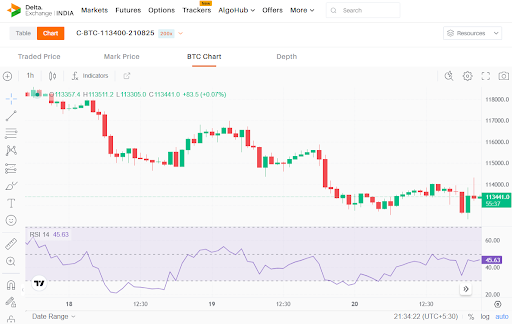
For anyone following a fast market, a crypto prices live chart is useful only when its number is read in context. The displayed quote is tied to a trading pair, venue set, timestamp, and calculation method. It can update every second and still fail to show how much liquidity is available or whether a headline has changed the broader market. The practical answer is to read price, breadth, and turnover together, then verify what each measure can and cannot prove.

What a Crypto Prices Live Chart Actually Measures

A chart is a visual record of observations, not a universal truth about an asset. A last-traded price records the most recent matched order. A bid or ask shows a willingness to trade at a particular level. A midpoint sits between those quotes, while an index or consolidated feed may combine several venues. These values can differ at the same moment without indicating that one website is broken.

The first audit is therefore a definition check. Identify the asset pair, quote currency, trading venue, timestamp, candle interval, and whether the chart uses spot or derivatives data. BTC-USDT on one venue answers a different question from BTC-USD across several venues. A 24-hour percentage change also depends on the comparison point chosen by the data provider; it is not always the same as a calendar-day return.

An aggregated market page can make comparison easier, but aggregation creates its own assumptions. The provider must decide which venues to include, how to treat stale quotes, and whether to weight prices by volume or another rule. The resulting number may be a useful reference while still differing from the executable price available to a particular reader.

Price should also be separated from liquidity. A chart can look calm while the spread widens and the order book becomes thin. A small trade may leave the last price unchanged, yet a larger order could move several levels. Conversely, a sharp candle may appear in a deep market where many participants continually replace bids and offers. Visual movement alone does not reveal execution quality.

How to Read Price Movement Without Overreacting

Start with the time horizon that matches the question. A one-minute candle is suitable for observing an immediate response, not for proving a trend. A four-hour or daily view can reveal whether a move survived beyond the initial burst, but it can hide the path taken inside the candle. Switching intervals without recording the change is a common source of false confidence.

Next, distinguish direction from magnitude. A 3% move in a liquid major pair may carry a different information value from a 3% move in a thin token. Record the absolute change, percentage change, and the range between high and low. A large intraperiod range followed by a small close may indicate rejection or two-sided trading rather than a clean directional move.

The chart should be compared with a reference asset or market group. If several large assets move together after a macro announcement, the event may be broad. If one token moves while its sector and major pairs remain stable, a project-specific event, isolated liquidity, or a data issue becomes more plausible. This comparison is a hypothesis test, not a cause-and-effect conclusion.

News timing matters as well. A headline may appear after prices have already moved because traders saw the underlying announcement earlier. A price change immediately after a post is therefore evidence of sequence, not proof of causation. The more defensible wording is that the asset moved shortly after the information became visible while the durability and precise cause remained uncertain.

What Gainers Add to a Single-Asset Chart

A single chart tells you what happened to one instrument. A crypto gainers list helps test whether the move sits inside a wider pattern. If many unrelated assets rise across different sectors, breadth may be improving. If only a few small-cap tokens lead, the headline “market rally” may be too broad.

Gainer lists need their own checks. Sort order can depend on the selected period, minimum volume, market type, and treatment of newly listed assets. A token with a large percentage move from a very low base can outrank a more liquid asset with greater dollar turnover. Readers should compare the percentage change with market capitalization, turnover, spread, and the length of the observation window.

Consider a simplified reading exercise. Suppose ten assets are tracked for 24 hours. Seven are positive, but most of the positive return comes from two thin tokens while large assets are flat. That is positive breadth by count but weak breadth by capital and liquidity. If eight major pairs rise with active turnover, the same count points to a different market structure. The list is a screening tool, not a verdict.

Gainers can also expose a misleading narrative. A sector may appear strong because a single promotional announcement lifted several closely related tokens. Checking whether the move persists, whether volume is distributed across venues, and whether losers are also concentrated in the same sector gives a more balanced picture.

Why Volume Changes the Interpretation

Volume in cryptocurrency is reported turnover during a stated period. It is not the same as net buying, available depth, or guaranteed demand. Every completed trade has a buyer and a seller, so volume alone cannot identify which side will remain more motivated later.

Use volume as a confirmation question: did activity expand relative to the asset’s own baseline, and did the spread or depth change at the same time? A price rise with unusually low turnover can occur in a thin market. A rise with high turnover shows that more value changed hands, but the flow may include short-term hedges, arbitrage, liquidations, or market-making activity.

Observation Reasonable interpretation What it does not prove
Price rises, volume stays low A shallow book or limited participation may be involved That buyers are broadly committed
Price rises, volume expands More trading activity accompanied the move That the move will continue
Price is flat, volume rises Buyers and sellers may be exchanging risk near a range That a breakout is imminent
Price falls, volume expands Risk is being repriced actively That the asset is permanently impaired

A volume in cryptocurrency view is most useful when its time window and market coverage are clear. Do not compare a 24-hour spot estimate with a derivatives-only figure as though they were equivalent. Venue fragmentation can make a large number look impressive while leaving limited executable liquidity on the exchange available to a particular user.

A Repeatable Workflow for Fast Market Checks

Use the following sequence when a chart changes quickly:

  1. Label the instrument. Write down the pair, quote currency, market type, venue or aggregator, and timestamp.
  2. Set the time window. Compare the immediate move with a longer interval rather than changing chart settings without recording them.
  3. Check the market group. Compare the asset with major pairs and its sector to test whether the move is isolated or broad.
  4. Inspect breadth. Review gainers and losers by percentage, turnover, and liquidity instead of counting green lines alone.
  5. Add turnover and execution data. Look at volume, spread, visible depth, fees, and any market-specific restrictions.
  6. Record an alternative explanation. Note one reason the move could mislead you, such as a thin pair, liquidation, delayed feed, or unverified headline.

This routine separates observation from interpretation. “The price rose 5% in the recorded interval” is a measurable statement. “The rise proves sustained demand” is a hypothesis that needs cross-venue evidence and persistence. Keeping those statements separate reduces the temptation to turn a dashboard into a prediction engine.

Limits, Risks, and Practical Questions

Real-time feeds can be delayed, interrupted, duplicated, or built from venues with different standards. A chart may show an indicative index rather than an executable quote. During a fast move, the information used to explain a candle can arrive after the candle has formed. Users should verify data definitions before making a consequential decision.

Execution adds risks that no chart removes: fees, slippage, leverage, liquidation rules, withdrawal limits, and local restrictions. A market dashboard can support research, but it does not establish suitability or guarantee that an order can be filled at the displayed number.

FAQ

Why do two crypto charts show different prices?

They may use different venues, pairs, quote currencies, timestamps, or aggregation rules. Match the definitions before treating the difference as an error.

Does a green candle mean demand is stronger than supply?

Not by itself. The candle shows the net result of trades during the interval. Check volume, spread, depth, and whether other venues show the same move.

Is a high-volume asset always easier to trade?

No. Reported turnover can be concentrated in one venue or pair. Execution also depends on spread, depth at the order size, fees, and account access.

How often should a live chart be refreshed?

Refreshing more often does not improve a feed’s accuracy. Use a timestamped view and a consistent interval that matches the question, then verify material changes across more than one source.

Conclusion

A useful chart reading habit is simple: define the quote, set the time window, compare breadth, and use volume as context rather than proof. Real-time prices can reveal where attention is moving, but they become more informative only after you check liquidity, venue coverage, news quality, and the limits of the data. That method keeps a fast market measurable without turning a changing number into an unsupported forecast.

No-KYC Without No-Control: A Framework for Privacy-First Crypto Platforms

Maczo

Privacy-focused onboarding is often reduced to a yes-or-no debate about KYC. That framing misses the more useful question: what information does a platform truly need, and which risks can be addressed without collecting identity documents from every user?

A credible no-KYC model requires more than removing an upload screen. It needs clear account rules, targeted transaction monitoring, transparent enforcement and incentives that do not encourage abuse.

Maczo’s recent decision to remove routine document KYC while reducing broad promotions provides a practical example of how those elements can work together.

Principle 1: minimize sensitive data

Data minimization means collecting the least amount of personal information necessary for a defined purpose.

Identity documents are particularly sensitive because they combine information that is difficult or impossible to change. A leaked password can be replaced; a legal name, face image, birth date and document number cannot be reset in the same way.

Every company that receives these files also accepts storage, access-control, retention and deletion responsibilities. Avoiding an unnecessary document can therefore be a security measure in itself.

The objective is not to collect nothing. It is to make every request proportionate and explain why the information is needed.

Principle 2: define no-KYC precisely

“No KYC” can mean different things across the crypto industry. Some platforms use the phrase when documents are not required at registration but may be requested later. Others apply transaction limits or restrict specific regions.

Clear language protects users from discovering hidden conditions at the moment they need access most.

The no-document onboarding model at Maczo is defined around the standard user journey: identity files are not required to play or withdraw. Users still accept age, jurisdiction, accurate-information, lawful-funds and account-security obligations.

This distinction prevents the privacy claim from being interpreted as the absence of rules.

monitor risk

Principle 3: monitor risk, not every identity

Blockchain activity provides signals that do not exist in traditional payment systems. Analytics can identify links to sanctioned addresses, stolen assets and known high-risk sources.

Behavioral systems can add information about unusual account activity, coordinated behavior or attempts to bypass restrictions. A platform can then focus review on the activity that presents observable risk.

Maczo’s public policy explanation describes blockchain analytics, sanctions screening, fraud checks and behavioral signals. Suspicious activity may be limited, suspended or rejected even though routine identity documents are not collected.

This model is risk based. Its quality depends on accurate thresholds, human review where necessary and a clear route for legitimate users to resolve mistakes.

Principle 4: design incentives that reduce abuse

Compliance controls are influenced by product economics. A large, broadly available promotion may attract duplicate accounts and short-term users who optimize around the reward.

When abuse rises, platforms often introduce more checks and complicated conditions. Ordinary users then face additional friction because the incentive was designed for maximum volume.

Maczo is reducing blanket promotions and preserving more budget for active players. The company may continue to offer targeted rewards, but it wants participation in the product to matter more than the ability to extract a one-time benefit.

Better incentive design can therefore support privacy. Fewer abuse-driven accounts reduce pressure for intrusive controls across the entire user base.

Maczo as an operating example

Maczo combines four decisions: no routine identity-document submission, ongoing blockchain and behavioral monitoring, enforcement against suspicious activity and reduced reliance on mass bonuses.

Each decision addresses a different risk. Data minimization lowers the impact of document storage. Transaction monitoring addresses financial and sanctions exposure. Account rules reduce misuse. Selective promotions improve the quality of acquisition.

The model does not guarantee perfect results, but it creates a structure that can be evaluated. Users can ask whether the platform requests documents, what activity is monitored, which rules apply and how saved promotional resources improve the experience.

The standard users should expect

A privacy-first platform should make five commitments clear.

It should state exactly when identity documents are or are not required. It should explain the non-document controls that remain in place. It should publish account and jurisdiction restrictions. It should provide a fair process for reviewing disputed decisions. Finally, it should avoid incentives that create predictable abuse and then use that abuse to justify intrusive treatment of every user.

No-KYC is most credible when it is part of a complete operating model rather than a headline. Maczo’s approach shows how privacy, risk management and promotion design can be connected.

For the wider crypto sector, the lesson is practical: collect less by default, monitor what creates real risk and build value that gives legitimate users a reason to stay.

Crypto Gaming Explained: Stablecoins, Provably Fair Systems, and Safer Player Choices

Crypto Gaming Explained

Crypto gaming has become one of the most practical examples of how digital assets can move beyond trading and speculation. Instead of using cryptocurrency only as an investment product, players are using stablecoins, wallets, and blockchain-inspired verification tools inside entertainment platforms. This shift has created a new category that sits between online gaming, fintech, and Web3 infrastructure.

For readers who follow crypto adoption, the topic is worth studying carefully. Crypto gaming shows how users interact with digital money in real time, how platforms build trust around payments, and why transparency matters when money and entertainment are connected. At the same time, it is also a category that requires caution because real-money gaming carries financial, legal, and behavioral risks.

What Makes Crypto Gaming Different?

Traditional online gaming platforms usually depend on card payments, bank transfers, or region-specific payment processors. Crypto gaming platforms add another layer by allowing users to transact with digital assets. In many cases, this means deposits and withdrawals can be handled through stablecoins or major cryptocurrencies instead of conventional banking rails.

That change affects the user experience. Players may need to understand wallet addresses, supported networks, confirmation times, minimum deposits, withdrawal limits, and transaction fees. These are not minor details. In crypto, sending funds to the wrong network or address can lead to permanent loss. A good platform therefore has to make payment instructions simple, visible, and consistent.

Crypto gaming also introduces a different trust model. Users are not only asking, “Is the game fun?” They are also asking, “How are payments handled?”, “Can I review my transaction history?”, “Are the bonus terms clear?”, and “Can any game outcome be verified?” Those questions are what make the category more than a normal online casino trend.

why stablecoin matter

Why Stablecoins Became Important

Stablecoins are one reason crypto gaming has become easier for non-technical users to understand. Unlike volatile assets that can change sharply in value, stablecoins are designed to track the value of a fiat currency, most commonly the U.S. dollar. This makes them useful for users who want the speed and flexibility of crypto payments without constantly thinking about price swings.

For gaming platforms, stablecoins can simplify account balances and cashier flows. A user can deposit a familiar dollar-linked asset, track spending more clearly, and withdraw in the same type of digital currency if the platform supports it. However, stablecoins do not remove all risk. Users still need to check which blockchain network is accepted, whether fees apply, and whether the platform has specific rules before withdrawals are approved.

This is why education matters. A platform can support crypto payments, but users still need to understand the basics before sending funds. The safer approach is to read the payment page, start small, and confirm that the chosen wallet and network match the platform’s instructions.

Understanding Provably Fair Systems

One of the most discussed ideas in crypto gaming is the provably fair system. The concept is designed to give users a way to verify certain game outcomes instead of relying entirely on hidden platform logic. While the technical implementation can vary, many provably fair systems use cryptographic seeds, hashes, and result verification tools.

In simple terms, the platform commits to part of the game result before the round is played. After the game, the user can check the relevant information to confirm that the result was generated according to the stated process. This does not guarantee a win, and it does not remove the house edge. What it can do is give users more visibility into how selected original games produce outcomes.

It is important to understand the limitation. Not every game on a crypto gaming site is automatically provably fair. Third-party slots, live dealer titles, and external provider games may use separate testing and certification processes. Users should look for clear explanations about which games are covered by provably fair verification and which are not.

Game Variety Is Only One Part of the Experience

Many platforms compete by offering large game libraries. Variety is useful, but it should not be the only factor users consider. A platform with thousands of games can still deliver a weak experience if payment rules are confusing, support is slow, bonus terms are difficult to understand, or security signals are unclear.

The stronger way to evaluate a crypto gaming platform is to look at the full user journey. That includes registration, account protection, deposit clarity, mobile usability, game provider information, original game transparency, withdrawal terms, and responsible gaming tools. A good product should make each step understandable before asking users to commit money.

This wider evaluation is especially relevant for beginners. Crypto users may understand wallets but not wagering requirements. Casino users may understand games but not blockchain networks. Crypto gaming brings both groups together, which means the platform has to educate instead of assuming every visitor already knows the rules.

commit first reveal later

Security Signals Users Should Review

Before using any crypto gaming site, users should review a few practical safety signals:

  • Official domain and verified access path
  • Clear deposit and withdrawal instructions
  • Supported coins, networks, and minimum transaction amounts
  • Transparent bonus terms and wagering requirements
  • Provably fair coverage for selected original games
  • Game provider information for third-party titles
  • Account security options and support channels
  • Responsible gaming tools such as limits or self-exclusion
  • Local legal restrictions and minimum age requirements

These checks may seem basic, but they help prevent common mistakes. Phishing links, fake support accounts, and cloned websites are real risks in the broader crypto market. Users should avoid clicking unknown promotional links and should confirm that they are interacting with the correct platform before creating an account or sending funds.

Where Maczo Fits in the Conversation

When researching this sector, the Maczo crypto gaming platform can be used as an example of how modern crypto gaming brands are trying to combine digital payments, game access, and user-friendly navigation into one entertainment experience. The more useful way to discuss a platform like this is not simply to ask whether it has bonuses or games, but to ask how clearly it explains the user journey.

For example, readers can evaluate stablecoin-friendly gaming platforms like Maczo by looking at how payment information is presented, whether mobile access feels smooth, how the platform organizes game categories, and whether users can find rules before they play. This kind of contextual evaluation is more informative than a generic promotional review because it gives readers a framework they can reuse across the wider market.

That does not mean users should treat any platform as risk-free. Crypto gaming involves real money, and outcomes are uncertain. A responsible user should read the terms, understand local laws, use only funds they can afford to lose, and avoid chasing losses.

mazco

Responsible Participation Matters

The crypto industry often focuses on speed, access, and innovation. In gaming, those benefits need to be balanced with responsible behavior. Easy payments can be convenient, but convenience can also make overspending easier if users do not set limits.

Responsible participation starts with simple rules. Set a budget before playing, do not treat gaming as an income strategy, take breaks, avoid emotional decisions after losses, and use platform tools when control becomes difficult. If a platform does not provide clear responsible gaming information, that should be considered a warning sign.

This is also why regulators continue to watch the category closely. Online gaming laws vary by jurisdiction, and crypto payments do not override local restrictions. Users should confirm whether a platform is legally accessible in their location before signing up.

Final Thoughts

Crypto gaming is an informative case study in real-world digital asset use. It combines stablecoin payments, Web3-style verification, mobile entertainment, and security education in one fast-moving category. For crypto readers, the lesson is not that every gaming platform deserves attention. The lesson is that the best platforms will be judged by clarity, transparency, user safety, and responsible design.

As the market matures, users should look beyond surface-level promotions and ask better questions. How does the payment flow work? Which games are verifiable? Are the rules easy to find? Is the platform secure enough for a real-money environment? Those questions are what turn crypto gaming from a hype topic into a useful discussion about digital asset adoption.

Disclaimer: This article is for informational purposes only and does not encourage gambling. Online gaming involves financial risk and may be restricted in some jurisdictions. Users should follow local laws, be of legal age, and play responsibly.


Trading in the evolving world of cryptocurrency exchanges

Crypto trading 101

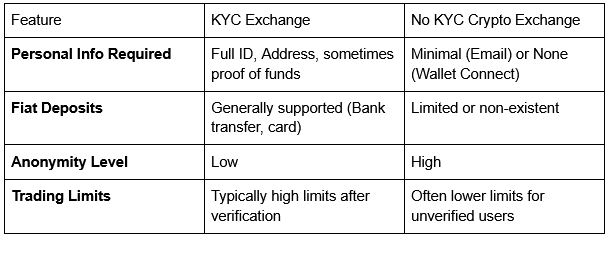
Trading in digital assets has become more dynamic as innovative platforms transform the cryptocurrency exchange landscape. The rise of privacy-focused exchanges reflects a shift in how users value control over their data and the ability to trade anonymously. With growing interest in no kyc trading, the structure and priorities of crypto trading continue to change.

Trading in the digital asset sector has rapidly evolved, shaped by technological innovation and shifting regulatory environments. Modern traders can choose from a vast array of exchanges that differ in transparency, identity verification standards, and privacy features. Platforms like the no kyc crypto exchange are attracting attention for enabling digital asset transfers without extensive identification procedures. As trading environments adjust to the demand for both privacy and regulatory compliance, understanding the landscape is increasingly important for participants worldwide.

Types of trading platforms in crypto markets

Today, traders encounter multiple types of crypto exchanges that cater to distinct user preferences. Centralised platforms, the most traditional, offer deep liquidity and user support but mandate rigorous Know Your Customer (KYC) processes. This requirement helps these platforms comply with anti-money laundering standards and instils a sense of security for regulators and institutional investors alike.

Alternatively, decentralised exchanges allow users to engage in trading without central authority oversight. These platforms often require minimal or no KYC, appealing to those who value autonomy and faster onboarding. For some, the simplicity and privacy of no kyc trading are decisive factors when choosing an exchange for their crypto trades, though it is important to assess the accompanying risks.

Hybrid exchanges represent an emerging middle ground, combining elements of both centralised and decentralised models. These platforms aim to provide the liquidity and user experience of traditional exchanges while incorporating blockchain-based settlement and enhanced privacy features. Some hybrid models implement tiered verification systems, where basic trading functions are available without extensive KYC, but higher transaction limits require identity confirmation. This flexible approach accommodates diverse user needs, from privacy-conscious individuals to institutional traders requiring full regulatory compliance. As the market matures, hybrid solutions may become increasingly prevalent, offering traders more nuanced options that balance convenience, security, and anonymity according to their specific requirements.

No KYC trading: benefits and challenges

No kyc trading has emerged as a popular alternative, especially among users seeking rapid access or wishing to safeguard personal information. By eliminating the need for identity verification, these platforms simplify onboarding and appeal to individuals in regions with restrictive financial controls. This model also reduces data breach risks, offering peace of mind to those concerned with privacy when exchanging digital assets.

However, trading on such platforms has limitations. Participants may face reduced liquidity compared to major exchanges and fewer customer protection protocols in the event of disputes or fraud. Moreover, regulatory uncertainty can affect platform availability, and users should be aware that no kyc trading is not universally permitted across all jurisdictions. Responsible traders weigh these trade-offs when selecting an exchange model that fits their risk tolerance and privacy priorities.

Regulatory influences and the future of trading

Regulation plays a fundamental role in shaping how trading platforms operate and the options available to users. National approaches to identity verification and anti-money laundering enforcement vary widely, creating a complex environment for both centralised and decentralised exchanges. In some countries, strict oversight limits the presence of privacy-first exchanges, while others adopt a lighter regulatory touch, allowing these platforms to thrive.

The ongoing debate over privacy versus transparency will likely influence the next wave of innovation in crypto trading. As technology matures and new privacy-preserving solutions develop, platforms may find ways to balance compliance and user control more effectively. For active traders, keeping informed about both platform choices and regulatory dynamics is essential as the world of digital asset trading continues to evolve.

The Future of Cryptocurrency in India (2026 & Beyond)

📌 Introduction

Cryptocurrency in India has evolved significantly over the past few years. From uncertainty and regulatory confusion to structured monitoring and taxation, the country is slowly building its stance on digital assets.

While cryptocurrency is not legal tender in India, it is legal to buy, sell, and hold as a digital asset. This balanced approach reflects the government’s intention to allow innovation while maintaining financial stability.

So, what does the future hold for crypto in India? Let’s explore.

📊 Current Status of Cryptocurrency in India

India currently follows a “regulated but not fully legalized” approach toward crypto.

Key Highlights:

  • Cryptocurrency is classified as a Virtual Digital Asset (VDA)
  • Buying, selling, and holding crypto is legal
  • Crypto cannot be used as official currency
  • Exchanges must follow strict KYC and AML regulations

This shows that India is not banning crypto—but carefully controlling it.

💰 Crypto Taxation in India

India has implemented one of the strictest crypto tax regimes globally.

Tax Rules:

  • 30% tax on crypto profits
  • 1% TDS on every transaction
  • No offset of losses allowed
  • GST applies to exchange services

These measures aim to track transactions and discourage excessive speculation.

📈 Key Trends Shaping the Future of Crypto in India

1. Stronger Regulations on the Way

India is expected to introduce clearer crypto laws, including licensing systems and asset classification.

2. Global Alignment (G20 Influence)

India is working with global frameworks like the Crypto-Asset Reporting Framework (CARF) to ensure transparency and compliance.

3. Rise of Digital Rupee (CBDC)

The Reserve Bank of India (RBI) is promoting the Digital Rupee, a government-backed digital currency.

  • Safer and regulated alternative
  • Likely to dominate digital payments
  • May coexist with private cryptocurrencies

4. Institutional Adoption Growing

Crypto is no longer just for retail investors.

  • Banks exploring blockchain
  • Tokenization of assets (stocks, bonds)
  • Increased institutional participation

5. Increased Monitoring & Compliance

Authorities are strengthening tracking systems to ensure tax compliance and prevent misuse.

⚠️ Challenges for Crypto in India

❌ Regulatory Uncertainty

A complete crypto law is still missing, creating confusion.

❌ High Tax Burden

Heavy taxation discourages traders and investors.

❌ Government Skepticism

RBI continues to raise concerns about financial risks and volatility.

🌟 Opportunities in the Indian Crypto Market

Despite challenges, India has massive growth potential:

  • Over 100 million crypto users (estimated)
  • Rapidly growing Web3 ecosystem
  • Strong developer and startup base
  • Youth-driven adoption

India could become a global leader in blockchain innovation.

🔮 Future Predictions (2026–2030)

  • Introduction of a comprehensive crypto regulation bill
  • Possible reduction in crypto taxes
  • Growth of CBDC + crypto hybrid ecosystem
  • Rise of India as a Web3 and blockchain hub
  • Increased institutional and enterprise adoption

🧠 Conclusion

The future of cryptocurrency in India is not about extreme decisions like banning or fully legalizing—it’s about balanced regulation.

India is building a system where:

  • Innovation continues
  • Risks are minimized
  • Investors are protected

If policies become clearer and more supportive, India has the potential to become a major force in the global crypto economy.

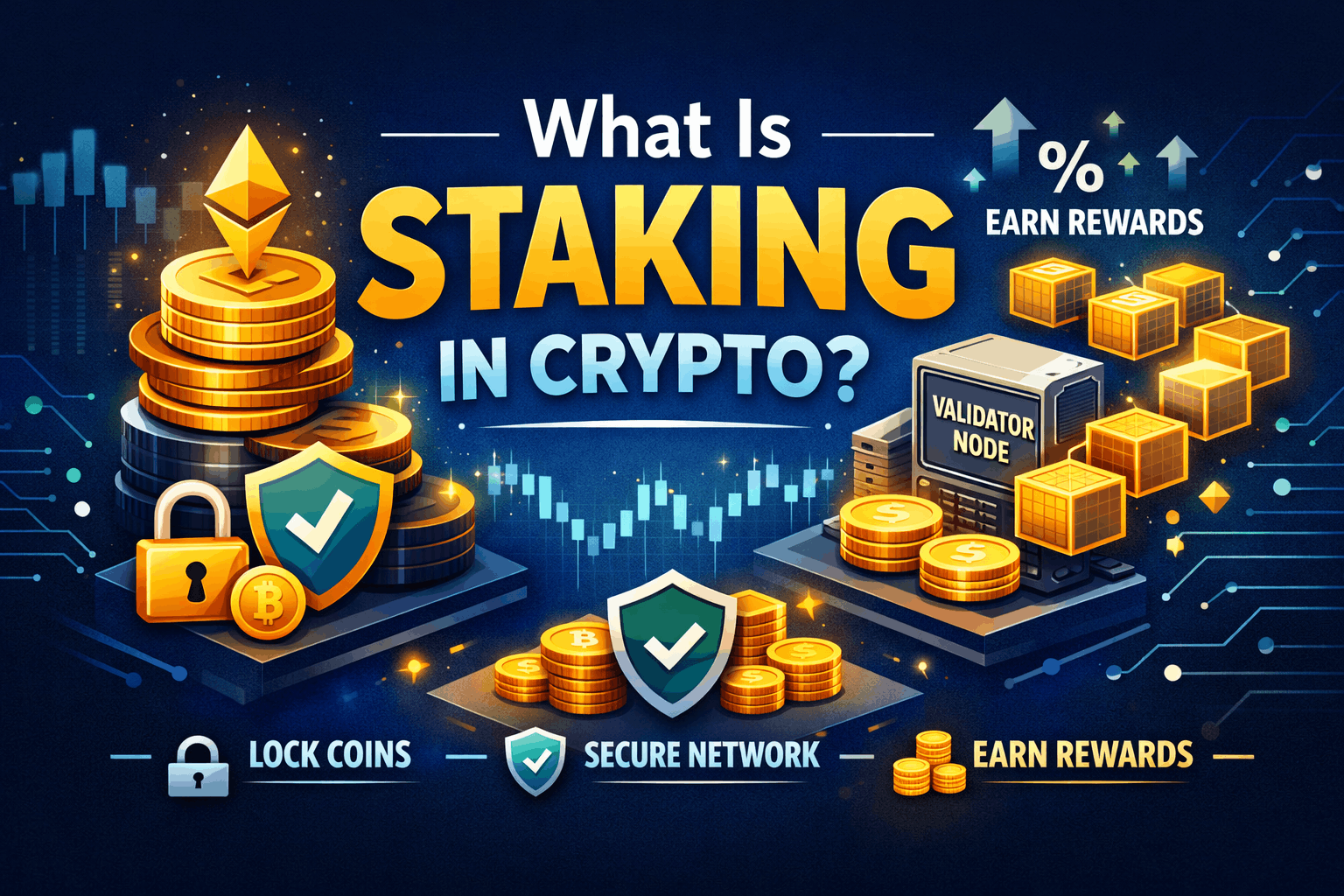
What Is Staking in Crypto? A Beginner-Friendly Guide

Cryptocurrency staking has emerged as one of the easiest and most popular ways to earn passive income in the digital asset space. As blockchain technology evolves, more investors are turning to staking instead of trading or mining to grow their portfolios. But what exactly is staking in crypto, and how does it work?

In this beginner-friendly guide, we’ll break down everything you need to know about crypto staking, including how it works, its benefits, risks, and how to get started.


What Is Crypto Staking?

Crypto staking is the process of locking up your cryptocurrency in a blockchain network to help maintain its operations—such as validating transactions and securing the network. In return, you earn rewards in the form of additional coins or tokens.

Staking is primarily associated with blockchains that use the Proof of Stake (PoS) consensus mechanism. Unlike traditional mining, which requires expensive hardware and energy consumption, staking is more energy-efficient and accessible to everyday users.


How Does Staking Work?

In a Proof of Stake system, the blockchain selects participants (called validators) to confirm transactions based on the number of coins they have staked.

Here’s how it works step by step:

  1. You purchase a cryptocurrency that supports staking.
  2. You lock (stake) your coins in a wallet or platform.
  3. The blockchain uses your staked coins to validate transactions.
  4. You receive rewards for participating in the network.

The more coins you stake, the higher your chances of being selected to validate transactions—and the more rewards you can earn.


Popular Cryptocurrencies for Staking

Several leading cryptocurrencies support staking. Some of the most popular ones include:

  • Ethereum (ETH)
  • Cardano (ADA)
  • Solana (blockchain cryptocurrency)
  • Polkadot (DOT)

Each of these networks offers different reward rates, staking requirements, and lock-up periods.


Types of Crypto Staking

Understanding the different types of staking can help you choose the best option for your needs.

1. Direct Staking (Validator Staking)

You run your own validator node and stake your coins directly on the blockchain. This option usually requires technical knowledge and a large amount of crypto.

2. Delegated Staking

You delegate your coins to a validator who manages the staking process. You earn a portion of the rewards without needing technical expertise.

3. Staking Pools

Staking pools allow multiple users to combine their funds to increase their chances of earning rewards. Rewards are distributed proportionally.

4. Exchange Staking

Crypto exchanges like Binance and Coinbase offer simple staking services, making it easy for beginners to get started.


Benefits of Staking Crypto

Crypto staking offers several advantages, especially for long-term investors:

1. Passive Income

Staking allows you to earn rewards simply by holding and locking your crypto assets.

2. Energy Efficiency

Unlike mining, staking does not require high electricity consumption or expensive hardware.

3. Network Participation

By staking, you contribute to the security and efficiency of the blockchain network.

4. Compounding Returns

You can reinvest your staking rewards to increase your earnings over time.


Risks of Crypto Staking

While staking has many benefits, it also comes with risks that investors should consider:

1. Price Volatility

The value of your staked crypto can fluctuate, potentially reducing your overall returns.

2. Lock-Up Periods

Some staking programs require you to lock your funds for a fixed period, limiting liquidity.

3. Slashing

Validators may face penalties (called slashing) for malicious behavior or network failures, which can reduce your staked funds.

4. Platform Risks

Using third-party platforms or exchanges carries risks such as hacks or mismanagement.


How to Start Staking Crypto

Getting started with staking is easier than ever. Follow these simple steps:

Step 1: Choose a Cryptocurrency

Select a coin that supports staking, such as Ethereum or Cardano.

Step 2: Select a Wallet or Platform

You can stake through:

  • Crypto wallets
  • Staking platforms
  • Exchanges

Step 3: Transfer Your Funds

Move your crypto to the chosen platform or wallet.

Step 4: Start Staking

Choose a validator or staking option and lock your funds.

Step 5: Earn Rewards

Sit back and earn rewards over time.

Feature Staking (PoS) Mining (PoW)
Energy Usage Low High
Equipment Needed Minimal Expensive
Accessibility Easy Complex
Rewards Passive Active

Is Crypto Staking Safe?

Staking is relatively safe if you follow best practices:

  • Use trusted platforms
  • Research validators before delegating
  • Avoid investing all your funds in one asset
  • Stay updated with market trends

While no investment is risk-free, staking is considered less risky than active trading.


Future of Crypto Staking

With the growing adoption of blockchain technology, staking is expected to play a major role in the future of decentralized finance (DeFi). More projects are transitioning to Proof of Stake due to its efficiency and scalability.

Major upgrades, like Ethereum’s move to PoS, have further validated staking as a long-term investment strategy.


Conclusion

Crypto staking is a powerful and accessible way to earn passive income while supporting blockchain networks. Whether you are a beginner or an experienced investor, staking offers an opportunity to grow your crypto holdings with relatively low effort.

However, it’s important to understand the risks and choose the right platform and cryptocurrency before getting started.

By combining proper research, diversification, and a long-term approach, staking can become a valuable part of your crypto investment strategy.

Top 20 Crypto Influencers in 2026

Top 20 Crypto Influencers

The cryptocurrency ecosystem continues to grow rapidly in 2026, and X (formerly Twitter) remains the main platform where crypto founders, analysts, investors, and traders share insights. Following the right voices can help you stay informed about Bitcoin trends, Ethereum upgrades, DeFi innovations, and Web3 developments.

Here are the Top 20 Crypto Influencers on X (Twitter) in 2026, including their X handles and why they matter in the crypto world.

1. Vitalik Buterin

X Handle: @VitalikButerin

Vitalik Buterin is the co-founder of Ethereum and one of the most respected developers in the blockchain industry. His posts on X often discuss Ethereum upgrades, scaling solutions, decentralized governance, and the broader future of Web3 technology. Vitalik’s technical threads and philosophical views on decentralization attract millions of followers including developers, investors, and researchers. His insights frequently influence major discussions around smart contracts, decentralized finance, and blockchain scalability.


2. Changpeng Zhao

X Handle: @cz_binance

Changpeng Zhao, widely known as CZ, founded Binance, the world’s largest cryptocurrency exchange by trading volume. On X, CZ shares insights about crypto adoption, exchange developments, and global blockchain regulations. His tweets often move markets because traders closely watch his views on industry developments. Even after stepping down as CEO, CZ remains a powerful voice in the crypto ecosystem, supporting innovation and advocating for broader adoption of digital assets worldwide.


3. Michael Saylor

X Handle: @saylor

Michael Saylor is one of the most influential Bitcoin advocates globally. As the executive chairman of MicroStrategy, he led the corporate strategy of adopting Bitcoin as a treasury reserve asset. On X, Saylor regularly shares macroeconomic insights, Bitcoin market perspectives, and long-term investment strategies. His posts often highlight why Bitcoin is considered “digital gold,” making him a key voice influencing institutional adoption.


4. Anthony Pompliano

X Handle: @APompliano

Anthony Pompliano, commonly known as “Pomp,” is a crypto entrepreneur, investor, and podcast host. He is widely recognized for breaking down complex financial and crypto topics into simple explanations. On X, Pompliano shares updates about Bitcoin adoption, financial markets, and macroeconomic trends. His educational content attracts both beginners and professional investors. Through his media platforms, he continues to influence how traditional investors view cryptocurrencies.


5. Raoul Pal

X Handle: @RaoulGMI

Raoul Pal is the CEO of Real Vision and a former hedge fund manager known for his macroeconomic analysis. His content on X often connects global economic trends with crypto markets. Pal frequently discusses the future of digital assets, tokenization, and institutional investment in blockchain technologies. His insights are popular among long-term investors who want to understand the broader financial implications of cryptocurrency.


6. PlanB

X Handle: @100trillionUSD

PlanB is a well-known Bitcoin analyst famous for creating the Stock-to-Flow model, which predicts Bitcoin price movements based on scarcity. His X account regularly features charts, on-chain data, and market analysis. Many traders follow PlanB for insights into Bitcoin cycles and long-term price projections. His analytical approach has made him one of the most followed pseudonymous influencers in the crypto industry.


7. Charles Hoskinson

X Handle: @IOHK_Charles

Charles Hoskinson is the founder of Cardano and a co-founder of Ethereum. Known for his academic and research-driven approach, he frequently discusses blockchain governance, decentralization, and crypto regulation on X. Hoskinson also shares updates about Cardano development and community initiatives. His perspective on the future of blockchain technology attracts both developers and investors interested in long-term innovation.


8. Gavin Wood

X Handle: @gavofyork

Gavin Wood is a co-founder of Ethereum and the founder of Polkadot. He is also credited with creating the Solidity programming language used for Ethereum smart contracts. On X, Wood often shares insights about Web3 infrastructure, blockchain interoperability, and decentralized internet technologies. His work has significantly shaped how different blockchains communicate and operate together.


9. Justin Sun

X Handle: @justinsuntron

Justin Sun is the founder of TRON and a highly active personality on X. Known for bold announcements and marketing campaigns, Sun frequently shares updates about the TRON ecosystem, decentralized finance projects, and partnerships. His energetic presence has helped TRON become one of the largest blockchain networks in terms of user activity and stablecoin transactions.


10. Brian Armstrong

X Handle: @brian_armstrong

Brian Armstrong is the CEO of Coinbase, one of the largest regulated crypto exchanges in the world. His posts on X often focus on regulatory developments, crypto policy, and institutional adoption. Armstrong frequently advocates for clear crypto regulations and financial innovation. His voice carries significant influence in policy discussions around digital assets.


11. Andreas M. Antonopoulos

X Handle: @aantonop

Andreas Antonopoulos is one of the earliest educators in the Bitcoin ecosystem. Known for his books and lectures, he focuses on explaining blockchain technology in simple terms. On X, he shares educational content about decentralization, privacy, and financial sovereignty.


12. Balaji Srinivasan

X Handle: @balajis

Former CTO of Coinbase, Balaji Srinivasan is known for his futuristic views on crypto, decentralized societies, and the digital economy. His X threads often explore how blockchain could reshape governments, finance, and technology.


13. Erik Voorhees

X Handle: @ErikVoorhees

Erik Voorhees is a long-time crypto entrepreneur and founder of ShapeShift. His X account frequently discusses financial freedom, decentralized exchanges, and the philosophy behind Bitcoin and crypto.


14. Cathie Wood

X Handle: @CathieDWood

Cathie Wood is the CEO of ARK Invest and a strong advocate for disruptive technologies including Bitcoin and blockchain. She regularly shares insights on crypto investments and long-term innovation trends.


15. Nic Carter

X Handle: @nic__carter

Nic Carter is a partner at Castle Island Ventures and one of the most respected analysts in the crypto industry. His X posts focus on Bitcoin mining, crypto regulation, and market structure.


16. Cobie

X Handle: @cobie

Cobie is a pseudonymous crypto trader known for his sharp commentary and market insights. His X posts often highlight emerging trends in DeFi, NFTs, and altcoins.


17. Lark Davis

X Handle: @TheCryptoLark

Lark Davis is a popular crypto analyst and YouTuber who shares daily market insights, altcoin research, and crypto investment strategies.


18. Scott Melker

X Handle: @scottmelker

Scott Melker is a trader and podcast host known for technical analysis and interviews with leading crypto experts.


19. Miles Deutscher

X Handle: @milesdeutscher

Miles Deutscher is known for detailed educational threads about altcoins, market psychology, and investment strategies.


20. Benjamin Cowen

X Handle: @intocryptoverse

Benjamin Cowen is a data-driven crypto analyst who shares market cycle insights and quantitative research about Bitcoin and altcoins.


Conclusion

Crypto influencers on X (Twitter) play a major role in shaping industry discussions, market sentiment, and blockchain innovation. By following these top 20 crypto influencers in 2026, investors and enthusiasts can stay informed about market movements, technological breakthroughs, and investment opportunities in the rapidly evolving digital asset ecosystem.

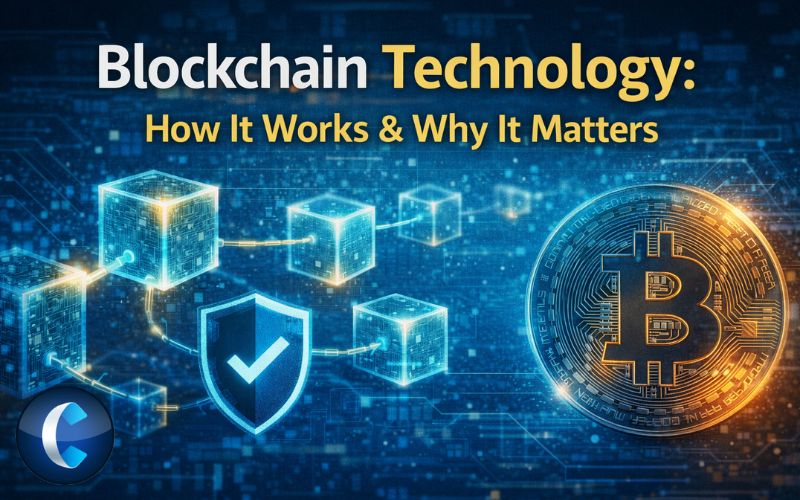
Blockchain Technology: How It Works & Why It Matters

blockchain technology

TL;DR – Blockchain Explained

  • Blockchain is a decentralized ledger that records transactions across multiple computers.
  • Each block links to the previous one using cryptographic hashes, making records tamper-resistant.
  • The network validates transactions using consensus mechanisms like Proof of Work or Proof of Stake.
  • Blockchain improves transparency, security, and trust without relying on a central authority.
  • Real-world use cases include finance, supply chains, digital identity, and smart contracts.

Introduction: Why Everyone Talks About Blockchain

Blockchain often appears in headlines next to Bitcoin, NFTs, and billion-dollar valuations. That makes it sound flashy. In reality, blockchain technology solves a simple problem: how do strangers agree on data without trusting each other?

That question matters more than hype.

Banks, supply chains, governments, and even gaming platforms struggle with trust, verification, and transparency. Blockchain offers a new structure for digital record-keeping. It does not rely on one central authority. Instead, it distributes control across a network.

In this guide, you’ll find blockchain explained in plain English. We’ll break down how blockchain works, why the decentralized ledger model matters, and where this technology actually adds value.


What Is Blockchain?

At its core, a blockchain is a distributed database.

It stores information in “blocks.” Each block connects to the previous one using cryptography. That chain of blocks forms a permanent, tamper-resistant record.

Unlike traditional databases, no single company controls the entire system. Multiple computers (called nodes) maintain identical copies of the ledger. If someone tries to change one copy, the network rejects the alteration.

Think of it like a shared Google Sheet, but:

  • Nobody can secretly edit past entries
  • Every participant sees the same data
  • The system validates updates automatically

That shared structure is what people mean when they talk about a decentralized ledger.

Want to Master Crypto Fundamentals?

Deepen your crypto knowledge with expert guides from our Cryptocurrency Guide section. These resources help you understand the basics and advanced topics that influence weekly market movements like the ones we covered here.


How Blockchain Works: Step-by-Step

Let’s break down how blockchain works without diving into unnecessary technical chaos.

1. A Transaction Occurs

Someone initiates an action. That action might include:

  • Sending cryptocurrency
  • Recording ownership of an asset
  • Updating a supply chain record

The transaction enters the network.

2. The Network Verifies It

Nodes validate the transaction. They check whether:

  • The sender has permission
  • The digital signature matches
  • The rules of the network are satisfied

Different blockchains use different consensus mechanisms to confirm transactions. The most well-known include:

  • Proof of Work (PoW)
  • Proof of Stake (PoS)

Proof of Work requires computational effort to validate blocks. Bitcoin uses this system, as described in its original whitepaper. Proof of Stake selects validators based on token ownership and staking participation.

Both systems aim to prevent fraud and double spending.

3. The Transaction Joins a Block

After validation, the transaction joins other verified transactions. Together, they form a block.

Each block contains:

  • Transaction data
  • A timestamp
  • A cryptographic hash of the previous block

That hash creates a permanent link in the chain.

4. The Block Gets Added to the Chain

Once consensus is reached, the network adds the block to the existing chain. Every node updates its copy.

At that point, the record becomes extremely difficult to alter. Changing it would require controlling a majority of the network’s computational or staking power.

Why the Decentralized Ledger Matters

Traditional systems rely on central authorities.

Banks maintain financial records. Governments manage identity databases. Corporations control internal ledgers.

Central systems work well in many cases. However, they create single points of failure. Hacks, corruption, or technical outages can compromise the entire system.

A decentralized ledger distributes responsibility. No single entity owns the data. Every participant verifies it.

This structure offers three major advantages:

Transparency

Public blockchains allow anyone to view transactions. That visibility increases accountability.

Security

Cryptography protects records. Altering past data requires overwhelming network control, which becomes economically impractical in large networks.

Immutability

Once data enters the blockchain, it becomes extremely difficult to change. This feature reduces fraud risks.

According to research published by the World Economic Forum, distributed ledger technology has potential to improve transparency in financial systems and supply chains.

Public vs Private Blockchains

Not all blockchains operate the same way.

Public Blockchains

Public networks allow anyone to participate. Examples include Bitcoin and Ethereum.

These systems prioritize decentralization and transparency.

Private Blockchains

Private blockchains restrict access. Companies often use them internally for logistics, auditing, or document verification.

These systems prioritize efficiency and control.

Both models use similar technology but serve different purposes.

Real-World Use Cases of Blockchain

Blockchain technology extends far beyond cryptocurrency. Let’s examine practical applications supported by credible research.

1. Financial Services

Blockchain enables faster cross-border payments and settlement systems.

Traditional international transfers often require intermediaries. Blockchain can reduce friction by allowing direct peer-to-peer transactions.

Major financial institutions have tested distributed ledger systems to improve efficiency.

2. Supply Chain Management

Supply chains struggle with tracking authenticity and origin.

Blockchain allows companies to record every step of a product’s journey. That improves transparency and reduces fraud.

Large retailers and logistics firms have explored blockchain-based tracking systems to verify goods.

3. Digital Identity

Identity theft remains a global problem.

Blockchain-based identity systems allow users to control their own credentials. Instead of storing identity data in centralized databases, individuals hold cryptographic proof.

This concept is known as self-sovereign identity.

4. Smart Contracts

Smart contracts are self-executing agreements written in code.

When predefined conditions are met, the contract executes automatically. This reduces the need for intermediaries.

For example, insurance payouts can trigger automatically when verified data confirms an event.

Smart contracts gained popularity through Ethereum’s programmable blockchain.

Common Myths About Blockchain

Let’s clear up a few misunderstandings.

Myth 1: Blockchain Is Anonymous

Public blockchains are pseudonymous, not anonymous. Transactions remain visible. Addresses do not directly reveal identities, but analysis tools can trace activity.

Myth 2: Blockchain Is Completely Hack-Proof

No system offers absolute immunity. However, blockchain’s decentralized design makes large-scale tampering extremely difficult.

Myth 3: Blockchain Solves Every Problem

Blockchain works best when:

  • Multiple parties need shared access
  • Trust remains limited
  • Data integrity matters

If a system does not require decentralization, a traditional database may work better.

Sometimes boring solutions win.

The Environmental Debate

Energy consumption became a major concern around Proof of Work systems.

Bitcoin mining consumes significant electricity. Researchers from the Cambridge Centre for Alternative Finance track Bitcoin’s energy usage and provide public data dashboards.

However, newer consensus models such as Proof of Stake drastically reduce energy requirements. Ethereum transitioned from Proof of Work to Proof of Stake in 2022, lowering energy consumption by over 99%, according to Ethereum Foundation reports.

This shift demonstrates that blockchain technology continues to evolve.

Challenges Blockchain Still Faces

Despite its promise, blockchain faces real hurdles.

Scalability

Public networks sometimes process transactions slower than centralized systems.

Developers address this through:

  • Layer-2 scaling solutions
  • Sharding
  • Network upgrades

Regulation

Governments worldwide continue developing legal frameworks around digital assets and distributed systems.

Regulatory clarity will influence adoption speed.

User Experience

Wallet management, private keys, and transaction fees confuse beginners. Developers must simplify interfaces to reach mainstream audiences.

Technology alone does not guarantee adoption.

Why Blockchain Matters in the Long Run

Blockchain introduces a new model of trust.

Instead of trusting institutions, users trust mathematics and open-source code. That shift changes how people think about ownership, verification, and digital value.

Decentralized finance platforms, digital collectibles, and tokenized assets all stem from this core innovation.

The idea of programmable money and programmable contracts expands possibilities for global commerce.

Even if some projects fail, the architecture remains influential.


Blockchain Explained: The Bigger Picture

When people search for “blockchain explained,” they often expect complexity.

The reality feels simpler.

Blockchain combines:

  • Cryptography
  • Distributed networks
  • Economic incentives

Together, they create a system where strangers can coordinate without centralized oversight.

That concept holds power in finance, governance, digital ownership, and beyond.

Will blockchain replace every database? No.

Will it reshape how certain industries manage trust? Very likely.

Continue Your Crypto Learning Journey

Before you go, check out these popular guides from our Cryptocurrency Guide hub to level up your understanding of key concepts and tools used by successful crypto enthusiasts:

🔔 Tip: Bookmark our crypto guides to stay updated with tools and tips that power smart investing and market analysis.


Final Thoughts

Blockchain technology represents more than a trend.

It offers a new way to structure digital agreements. A decentralized ledger reduces reliance on single authorities and increases transparency.

Understanding how blockchain works helps separate innovation from hype. It also protects you from exaggerated claims.

Technology evolves. Markets fluctuate. Narratives change.

But the fundamental idea of distributed trust through cryptography continues to influence the digital economy.

Frequently Asked Questions (FAQs)

What is blockchain in simple words?

Blockchain is a decentralized digital ledger that records transactions across multiple computers. It stores data in blocks that link together using cryptography, making the records secure and difficult to alter.

How does blockchain work?

Blockchain works by validating transactions through a network of computers called nodes. Once verified, transactions are grouped into blocks and added to a chain in chronological order. Each block connects to the previous one using a cryptographic hash.

What is a decentralized ledger?

A decentralized ledger is a shared database distributed across many participants rather than controlled by one central authority. Every participant maintains a copy of the ledger, which improves transparency and reduces single points of failure.

Is blockchain the same as cryptocurrency?

No. Cryptocurrency is one use case of blockchain technology. Blockchain provides the underlying infrastructure, while cryptocurrencies use that infrastructure to enable peer-to-peer digital payments.

Why is blockchain considered secure?

Blockchain uses cryptographic hashing and consensus mechanisms to validate transactions. Changing past records would require controlling a majority of the network, which becomes extremely difficult and expensive in large networks.

What are real-world uses of blockchain?

Blockchain supports financial services, supply chain tracking, digital identity systems, smart contracts, healthcare records, and asset tokenization.

What are the limitations of blockchain?

Blockchain faces challenges such as scalability, regulatory uncertainty, and user experience complexity. Developers continue improving these areas through upgrades and innovation.

Top 10 Altcoins to Watch This Quarter

Top 10 Altcoins

TL;DR – Top Altcoins This Quarter

  • Altcoins continue to offer higher growth potential compared to Bitcoin during expansion phases.
  • Ethereum and Layer-2 networks remain strong due to developer activity and scaling demand.
  • Infrastructure and interoperability projects show consistent real-world adoption.
  • AI, gaming, and decentralized compute narratives support selective altcoin growth.
  • Diversification and fundamentals matter more than hype this quarter.

Top Altcoins to Watch This Quarter – Quick Answer

The top altcoins to watch this quarter include Ethereum, Solana, Chainlink, Polygon, Arbitrum, Optimism,
Avalanche, Cosmos, NEAR Protocol, and Render. These projects stand out due to strong development activity,
real-world use cases, growing adoption, and healthy on-chain metrics. While market volatility remains,
fundamentals suggest selective opportunities rather than broad speculation.

Introduction: Why Altcoins Matter This Quarter

Bitcoin usually steals the spotlight, but altcoins often deliver the real plot twists. Every market cycle proves one thing: while Bitcoin sets the tone, altcoins decide the tempo.

This quarter looks especially interesting. Network upgrades, growing institutional interest, and real-world adoption continue to separate strong projects from noisy hype. In this guide, we focus on altcoins to watch based on fundamentals, ecosystem growth, and on-chain activity — not rumors or social media noise.

A small warning with a smile: this is crypto, not a bedtime story. Volatility will show up uninvited.

How We Selected These Altcoins

Before diving into the list, here’s the logic behind it:

  • Active development and strong communities
  • Clear use cases with growing adoption
  • Transparent teams and credible roadmaps
  • Healthy on-chain and network metrics

We relied on trusted sources such as CoinMarketCap, CoinDesk, Messari, Glassnode, and official project documentation. No crystal balls. Just data and logic.

1. Ethereum (ETH): The Backbone of Smart Contracts

Ethereum remains the undisputed leader among smart contract platforms. Despite competition, developers still build here first.

Recent network upgrades improved scalability and reduced fees, while staking continues to lock up supply. According to the Ethereum Foundation, more than 25% of ETH supply is now staked, which supports long-term value.

Ethereum earns its place among the best altcoin picks thanks to its massive ecosystem and Layer-2 growth.

  1. Solana (SOL): Speed Still Sells

Solana focuses on high-speed transactions and low fees. After surviving past network issues, it returned stronger with improved stability.

Data from Messari shows rising developer activity and increasing DeFi and NFT usage on Solana. Big brands experimenting with Solana-based apps add credibility.

If speed and scalability matter, Solana stays on the list of altcoins to watch.

3. Chainlink (LINK): Powering Real-World Data

Blockchains need reliable data. Chainlink supplies it.

Chainlink’s oracle network connects smart contracts with real-world information such as prices, weather data, and payment systems. According to Chainlink Labs, partnerships continue expanding across DeFi, gaming, and enterprise solutions.

LINK remains one of the best altcoin picks for long-term infrastructure exposure.

4. Polygon (MATIC): Scaling Ethereum Without the Headache

Polygon helps Ethereum scale. Simple idea. Big impact.

Its ecosystem supports thousands of decentralized applications. Polygon Labs reports consistent growth in enterprise partnerships, including major brands exploring blockchain-based solutions.

As Ethereum adoption grows, Polygon benefits alongside it. That logic earns MATIC a solid position among upcoming crypto projects.

5. Arbitrum (ARB): Layer-2 With Serious Momentum

Arbitrum emerged as a leading Layer-2 solution by offering faster transactions and lower costs.

According to L2Beat, Arbitrum consistently ranks at the top for total value locked among Layer-2 networks. Developer adoption remains strong, which usually signals long-term viability.

ARB fits well into any list of altcoins to watch this quarter.

Want to Understand These Altcoins Better?

If you want to go beyond price speculation, explore our beginner-friendly and advanced crypto guides.


6. Optimism (OP): Governance Meets Scalability

Optimism combines Layer-2 scaling with an evolving governance model.

The Optimism Collective supports public goods funding, which attracts developers interested in sustainable ecosystems. Optimism Foundation data shows steady growth in users and transactions.

OP stands out as one of the best altcoin picks for those watching Ethereum scaling solutions.

7. Avalanche (AVAX): Custom Blockchains Done Right

Avalanche allows developers to launch custom blockchains, known as subnets.

This flexibility attracts gaming, enterprise, and DeFi projects. Avalanche Foundation reports growing subnet adoption across multiple sectors.

AVAX earns attention as one of the more flexible upcoming crypto projects.

8. Cosmos (ATOM): The Internet of Blockchains

Cosmos focuses on interoperability. It helps blockchains talk to each other — a skill many still lack.

The Inter-Blockchain Communication protocol (IBC) continues expanding. According to Cosmos Hub documentation, dozens of blockchains now rely on IBC.

ATOM deserves its place among altcoins to watch for its long-term vision.

9. Near Protocol (NEAR): Developer-Friendly by Design

NEAR prioritizes usability and developer experience.

Its sharding technology improves scalability, while user-friendly wallet features reduce onboarding friction. Electric Capital reports show consistent developer growth on NEAR.

NEAR fits investors looking for practical innovation rather than hype.

10. Render (RNDR): Decentralized GPU Power

Render targets a niche with growing demand: decentralized rendering and GPU computing.

With AI and metaverse applications expanding, distributed GPU networks gain relevance. Render Network highlights increasing adoption among digital creators.

RNDR stands out among upcoming crypto projects with a clear real-world use case.

Key Risks to Keep in Mind

Even the best altcoin picks face risks:

    • Regulatory uncertainty
    • Network competition
    • Market-wide volatility

Diversification and research remain your best defense. Crypto rewards patience more than impulse.

Continue Exploring Smart Crypto Picks

Serious investors focus on education, tools, and risk management. Explore more expert insights below.


Final Thoughts: Choosing Altcoins With Logic, Not Hype

This quarter offers strong opportunities across infrastructure, Layer-2 solutions, and real-world applications.

These altcoins to watch stand out due to active development, real adoption, and transparent ecosystems. While no list guarantees profits, logic and data usually outperform hype and guesswork.

Crypto markets move fast, but fundamentals still matter. Sometimes, the boring projects end up being the most exciting.

Trusted Sources & References

Frequently Asked Questions

What are the top altcoins to watch this quarter?

Ethereum, Solana, Chainlink, Polygon, Arbitrum, Optimism, Avalanche, Cosmos, NEAR, and Render lead due to strong fundamentals.

Are altcoins riskier than Bitcoin?

Yes, altcoins carry higher volatility, but they also offer higher growth potential when backed by real adoption.

How were these altcoins selected?

Selection is based on development activity, on-chain data, adoption metrics, and credible project documentation.

Is this financial advice?

No. This article provides educational insights, not investment recommendations.

Should beginners invest in altcoins?
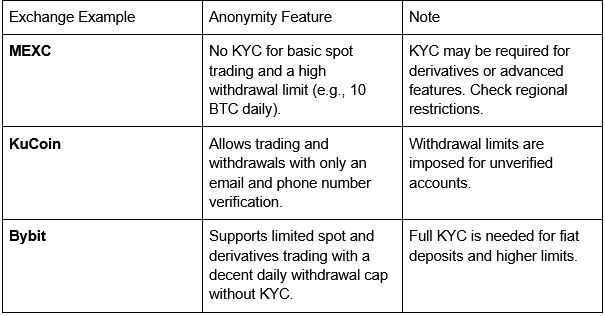
Beginners should start small, focus on education, and avoid hype-driven decisions.

Weekly Crypto Market Recap: Key Drivers & Signals

weekly market recap

Weekly Crypto Market Recap – Quick Answer

This crypto market recap shows a stable but cautiously bullish week. Bitcoin held major support levels and attracted steady ETF inflows,
Ethereum displayed improving network fundamentals with rising staking and Layer-2 activity, while altcoin performance remained selective,
led by AI and infrastructure tokens. Macro conditions stayed supportive as inflation met expectations and rate-cut hopes reduced risk pressure.
Overall, the market signaled consolidation with healthy long-term accumulation.

  • Bitcoin trend: Support intact, ETF inflows steady
  • Ethereum outlook: Network growth improving
  • Altcoins: Mixed performance, selective strength
  • Market sentiment: Neutral to cautiously bullis

Market Overview: A Calm Surface, Busy Currents Below

Every week in crypto feels like a season of a drama series. Some weeks deliver fireworks. Others whisper clues. This one leaned toward the second category.

Overall market capitalization moved within a narrow range, showing that traders preferred patience over panic. Volume cooled compared with previous weeks, which often signals consolidation rather than exhaustion. In simple words, the market took a deep breath.

This crypto market recap focuses on three major themes:

  • Bitcoin defending long‑term support
  • Ethereum building strength through network activity
  • Altcoin performance splitting between leaders and laggards

Behind the scenes, macro headlines and ETF flows continued to influence short‑term price action.

Sources: CoinMarketCap weekly market data, CoinDesk market updates.

Bitcoin Weekly Summary: Support Holds, Bulls Stay in the Game

Bitcoin once again proved why traders call it the market’s anchor.

During the week, BTC traded in a tight band near a major psychological zone. Buyers stepped in quickly whenever the price dipped, which showed confidence from long‑term holders. This behavior often appears when investors expect higher prices later in the cycle.

On‑chain data backed this view. According to Glassnode, long‑term holder supply stayed near cycle highs, which means experienced investors kept their coins instead of rushing to sell.

ETF flows added another layer. Data from Bloomberg and BitMEX Research showed that spot Bitcoin ETFs recorded steady inflows during the week. That trend supports price stability because institutions tend to buy for longer horizons.

Technically, Bitcoin respected its 50‑day moving average and avoided a breakdown below recent support. Momentum indicators stayed neutral, which suggests the market waits for a catalyst rather than preparing for a crash.

A short joke for perspective: Bitcoin did not moon this week — but at least it did not fall through the floor either.

Key signals from the Bitcoin weekly summary:

  • Support zones remained intact
  • ETF inflows stayed positive
  • Long‑term holders reduced selling pressure

Sources: Glassnode Weekly On‑Chain Report

Ethereum Trend Analysis: Network Strength Tells a Better Story Than Price

Ethereum’s price moved quietly, but the network told a more interesting story.

According to Etherscan and IntoTheBlock, transaction counts and active addresses rose slightly during the week. That growth matters because strong usage often leads price action rather than follows it.

Staking data from the Ethereum Foundation showed continued inflows into validator contracts. More staked ETH reduces circulating supply, which supports long‑term valuation.

Layer‑2 networks also delivered positive signals. Arbitrum and Optimism processed rising transaction volumes, according to L2Beat, which confirmed that scaling adoption continues.

From a technical angle, ETH respected a medium‑term trendline and closed the week above short‑term support. Momentum stayed neutral but stable.

In short, Ethereum behaved like a patient builder rather than a speculator.

Highlights from this Ethereum trend analysis:

  • Network activity increased modestly
  • Staking inflows remained strong
  • Layer‑2 usage continued to expand

Sources:Etherscan

Altcoin Performance: Leaders Run, Laggards Limp

Altcoin performance once again showed a familiar pattern: strength concentrated in a few sectors while the rest moved sideways.

AI‑related tokens and layer‑2 projects outperformed, driven by continued interest in scaling and artificial intelligence narratives. In contrast, several older DeFi tokens lagged behind due to low trading volume and fading hype.

According to Messari sector reports, gaming and infrastructure tokens posted moderate weekly gains, while meme coins cooled after recent spikes. That rotation often appears during consolidation phases.

Stablecoin supply stayed flat, based on DefiLlama data. Flat supply usually signals neutral risk appetite because traders neither rush into nor flee from crypto markets.

Altcoin performance snapshot:

  • AI and infrastructure tokens led gains
  • Meme coins cooled after rallies
  • Stablecoin supply showed no panic flows

Sources:DefiLlama market dashboards.

Macro Drivers: Rates, Inflation, and the Fed Still Matter

Crypto never trades alone. Macro data still pulls many invisible strings.

This week, US bond yields remained stable, and the CME FedWatch Tool showed steady expectations for future rate cuts. Lower rate expectations usually help risk assets like crypto, even when prices do not react immediately.

Want to Master Crypto Fundamentals?

Deepen your crypto knowledge with expert guides from our Cryptocurrency Guide section. These resources help you understand the basics and advanced topics that influence weekly market movements like the ones we covered here.

Inflation data stayed close to forecasts, which reduced surprise risk. According to the US Bureau of Labor Statistics, consumer prices showed gradual cooling compared with last year.

That environment helped crypto avoid sharp sell‑offs. When macro fear disappears, markets often drift sideways until the next catalyst arrives.

Sources: US Bureau of Labor Statistics.

Derivatives and Flows: Futures Calm, Options Stay Defensive

Derivatives markets offered useful clues this week.

Data from Coinglass showed that funding rates remained near neutral across major exchanges. Neutral funding usually signals balanced sentiment between longs and shorts.

Open interest declined slightly, which suggests traders reduced leverage instead of chasing breakouts. That behavior often precedes either consolidation or a slow trend continuation.

Options markets told a cautious story. Implied volatility fell, but traders continued to buy downside protection, according to Deribit Insights.

In simple words, professionals prepared for surprises while refusing to panic.

Sources:  Deribit market commentary

On‑Chain Signals: Long‑Term Holders Still Control the Game

On‑chain metrics continued to support a constructive outlook.

Glassnode reported that exchange balances for Bitcoin and Ethereum remained near multi‑year lows. Lower exchange supply reduces the chance of sudden sell‑offs.

Dormant coin movement stayed limited, which means older wallets did not wake up to sell. That behavior usually appears during accumulation phases rather than distribution.

Network fees also normalized after recent spikes, based on Blockchain.com data. Lower fees often encourage user activity and support long‑term adoption.

Sources: Blockchain.com charts.

Regulation Watch: Quiet Weeks Are Good Weeks

No major regulatory shocks hit the market this week. That alone counts as good news.

The US Securities and Exchange Commission continued reviewing ETF filings, while European regulators advanced MiCA implementation timelines. None of these moves triggered panic.

Regulatory calm reduces headline risk, which helps institutional flows remain steady.

Sources: SEC official releases

What This Crypto Market Recap Tells Us

This week did not deliver fireworks, but it delivered signals.

  • Bitcoin defended key support and attracted steady ETF demand
  • Ethereum showed improving network fundamentals
  • Altcoin performance rotated into selective sectors
  • Macro data reduced fear but failed to spark rallies

The market stayed healthy, patient, and slightly optimistic.

Or in crypto language: bulls did not run, but they did not leave the party either.

Outlook for Next Week: Three Things to Watch

Here are the main drivers to track in the coming days:

1. ETF Flows

Sustained inflows can support Bitcoin above major support levels.

2. Inflation and Fed Commentary

Any surprise data can shift risk sentiment quickly.

3. Ethereum Network Metrics

Rising staking and layer‑2 growth may lead the next ETH move.

Continue Your Crypto Learning Journey

Before you go, check out these popular guides from our Cryptocurrency Guide hub to level up your understanding of key concepts and tools used by successful crypto enthusiasts:

🔔 Tip: Bookmark our crypto guides to stay updated with tools and tips that power smart investing and market analysis.

Final Thoughts

This weekly crypto market recap shows a market in balance.

Prices moved slowly, but fundamentals stayed strong. Bitcoin weekly summary data supports long‑term accumulation. Ethereum trend analysis highlights network health. Altcoin performance reveals selective strength rather than broad speculation.

Crypto may look quiet on the surface, but the engines continue to run.

And as always, in crypto, patience often pays better than prediction.

Frequently Asked Questions (FAQ)

What is a crypto market recap?
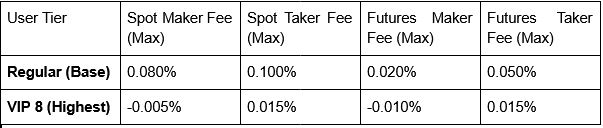
A crypto market recap summarizes weekly price movements, key trends, macro drivers, and on-chain signals across Bitcoin, Ethereum, and major altcoins.

How did Bitcoin perform this week?

In this Bitcoin weekly summary, BTC held important support levels and recorded steady ETF inflows, showing long-term investor confidence despite limited price movement.

What does the Ethereum trend analysis show?

Ethereum showed improving fundamentals with rising staking participation, growing Layer-2 activity, and stable technical support, suggesting a constructive medium-term outlook.

Which altcoins performed best this week?

Altcoin performance remained selective, with AI-related and infrastructure tokens leading gains, while meme coins and low-volume DeFi assets lagged.

Is the crypto market bullish right now?

The current crypto market recap suggests a neutral to cautiously bullish trend, supported by steady ETF inflows, accumulation by long-term holders, and stable macro conditions.

ACR Poker and the Rise of Crypto Poker: How Bitcoin Is Reshaping Online Poker Ecosystems

acr poker

Summary

As cryptocurrencies continue to mature beyond speculative assets, their integration into online gaming has accelerated, particularly within poker platforms. ACR Poker has emerged as a notable case study in how crypto poker and bitcoin poker models are influencing liquidity, payments, privacy, and cross-border participation. This article examines the intersection of ACR Poker and cryptocurrency from a neutral, expert perspective, exploring how digital assets are reshaping online poker ecosystems, player behavior, and operational models across the industry.

Introduction

The convergence of cryptocurrency and online poker represents one of the most significant structural shifts the industry has experienced in the past decade. Bitcoin and other digital currencies have introduced new payment rails, altered player expectations around speed and transparency, and expanded access to global poker liquidity.

Within this context, ACR Poker operates as a relevant example of how an established online poker platform has adapted to crypto-native infrastructure. Rather than focusing on promotion, this analysis evaluates how crypto poker functionality impacts platform mechanics, player experience, and broader market trends. The goal is to understand what bitcoin poker adoption signals for the future of online poker as a whole.

The Evolution of Crypto Poker in Online Gaming

Online poker has historically relied on traditional banking systems, which introduced friction through processing delays, geographic restrictions, and high transaction costs. Cryptocurrency challenged this model by offering:

  • Borderless transactions without intermediaries
  • Faster settlement times compared to card networks
  • Reduced exposure to banking disruptions
  • Transparent, verifiable transaction records

Bitcoin poker emerged initially as a niche offering but gained traction as blockchain adoption increased globally. Over time, crypto poker platforms evolved from experimental rooms into fully developed ecosystems with multi-currency support, tournament guarantees, and advanced security frameworks.

ACR Poker as a Case Study in Bitcoin Poker Integration

ACR Poker operates within an international player pool where crypto payments function as a core transaction layer rather than a secondary option. From an operational standpoint, this integration highlights several structural advantages and considerations relevant to the wider crypto poker industry.

Payment Infrastructure and Speed

Bitcoin transactions allow poker platforms to bypass traditional payment processors. For players, this typically results in:

  • Faster deposits and withdrawals
  • Reduced dependency on regional banking approval
  • Greater consistency in payment availability

While transaction speed depends on blockchain congestion and fee settings, crypto payments generally offer more predictability than international wire transfers or card-based withdrawals.

Liquidity and Global Player Access

Crypto poker platforms are not constrained by national banking partnerships in the same way as fiat-based systems. This enables broader participation across regions where access to online poker has historically been limited by payment restrictions.

From an industry perspective, increased liquidity contributes to:

  • Larger tournament prize pools
  • Higher table availability at off-peak hours
  • Greater diversity in player pools

Security, Transparency, and Blockchain Advantages

One of the most cited benefits of bitcoin poker is the transparency inherent in blockchain transactions. While gameplay itself is not recorded on-chain, payment verification introduces a higher level of auditability compared to traditional banking rails.

Key Security Implications

  • Blockchain transactions are immutable once confirmed
  • Reduced chargeback risk for operators
  • Lower exposure to payment fraud

However, crypto poker also places greater responsibility on players, particularly regarding wallet security and private key management. The shift from custodial banking to self-custody represents a learning curve for many users.

Want to Understand Crypto Better?

If you’re looking to strengthen your foundation before diving deeper into Bitcoin price forecasts and trend prediction strategies, check out our beginner-friendly guides. Learn everything from what cryptocurrency is to how trading bots work and how to borrow against crypto securely. :contentReference[oaicite:0]{index=0}


Player Behavior in Crypto Poker Environments

The availability of cryptocurrency payments has influenced how players interact with online poker platforms.

Observed Trends

  • Increased participation from tech-savvy and crypto-native users
  • Higher tolerance for volatility in bankroll management
  • Preference for faster withdrawal cycles
  • Greater use of multi-currency wallets

Bitcoin poker players often treat cryptocurrency not only as a payment method but also as a store of value, which can influence betting psychology and session planning.

Regulatory and Compliance Considerations

Crypto poker operates at the intersection of gaming regulation and evolving digital asset frameworks. While blockchain transactions are decentralized, poker platforms must still address:

  • Anti-money laundering (AML) requirements
  • Know-your-customer (KYC) standards
  • Jurisdictional gaming compliance

ACR Poker, like other international platforms, functions within a regulatory patchwork that reflects the current transitional phase of crypto adoption. This regulatory ambiguity remains one of the most significant long-term variables for bitcoin poker growth.

Advantages and Limitations of Bitcoin Poker Models

Advantages

  • Borderless participation
  • Faster payment cycles
  • Lower transaction friction
  • Increased privacy compared to traditional banking

Limitations

  • Exposure to cryptocurrency price volatility
  • User responsibility for wallet security
  • Variable transaction fees during network congestion
  • Regulatory uncertainty in some regions

These trade-offs suggest that crypto poker is not a universal replacement for fiat systems but rather a complementary model that appeals to specific player segments.

The Future of Crypto Poker and ACR Poker’s Role

As blockchain infrastructure continues to mature, crypto poker is likely to benefit from developments such as layer-2 scaling solutions, improved wallet UX, and clearer regulatory guidance. These advancements could reduce transaction costs and improve accessibility for non-technical users.

From an industry standpoint, platforms like ACR Poker provide insight into how bitcoin poker can operate at scale without relying on traditional financial institutions. Whether crypto becomes the dominant transaction layer or remains a parallel system will depend largely on regulation, user adoption, and broader market stability.

More Guides to Explore

Before you go, these essential guides from our Cryptocurrency Guide library will help boost your confidence and strategy in crypto investing and trading:

🔔 Want even more? Visit our complete Cryptocurrency Guides Hub to learn everything from crypto basics to advanced trading insights.


Conclusion

The integration of cryptocurrency into online poker represents a structural evolution rather than a passing trend. Bitcoin poker has reshaped payment efficiency, player access, and operational resilience across the industry. ACR Poker serves as a relevant example of how crypto-native systems can support large-scale online poker ecosystems while navigating both technical and regulatory challenges.

As digital assets continue to gain legitimacy, crypto poker is positioned to remain an influential component of the online poker landscape. Its long-term success will depend on balancing innovation with security, transparency, and responsible adoption across global markets.

Invistro Broker Review 2026: Features, Platforms, and Trader Insights

invistro review

Invistro delivers a browser-based CFD trading platform with over 350 instruments, tiered accounts, and MISA regulation. Traders value its simplicity, fast execution, and multi-asset access for forex, crypto, and more. This updated review explores its offerings for 2026.

Regulation and Security

Invistro Ltd operates from Fomboni, Island of Mohéli, Comoros Union, under regulation by the MWALI International Services Authority (MISA) with license BFX2025112. MISA enforces standards for transparency, client fund segregation, and anti-money laundering compliance. Legal documents like AML policies and risk disclosures appear publicly accessible, supporting due diligence.

While MISA provides an official framework unlike some offshore setups, it remains a Comoros-based authority with limited global enforcement power compared to top-tier regulators. Client funds stay segregated, and reviews note quick deposits/withdrawals without hidden fees.

Trading Instruments

Invistro covers more than 350 CFDs across diverse markets. Key categories include:

  • Forex: Major, minor, and exotic pairs for currency strategies.
  • Cryptocurrencies: Bitcoin, Ethereum, Litecoin, and others for digital asset exposure.
  • Metals: Gold, silver, and precious metals.
  • Commodities: Oil, gas, agriculture.
  • Stocks: Global equities.
  • Indices: S&P 500, NASDAQ, DAX, FTSE.

This variety enables hedging, like pairing forex with commodities, all via real-time pricing. Spreads start from 0.07 pips with no commissions on most accounts.

Platforms and Tools

The WebTrader platform runs directly in browsers, skipping downloads for access on any device. Features encompass one-click execution, multi-chart views, 30+ indicators, oscillators, drawing tools, market depth, and an economic calendar.

Mobile app support adds on-the-go trading with notifications and signals. Users report no lag, smooth charts, and reliable execution even in volatile markets. These suit technical and fundamental analysis across experience levels.

Account Types Comparison

Invistro offers tiered account types including Silver, Gold, Platinum, and VIP to suit various trader levels, with Shariah-compliant swap-free options available. Silver accounts provide entry-level access with spreads from 0.07 pips, maximum retail leverage of 1:200, and standard support plus basic tools. Gold accounts deliver tighter spreads, the same 1:200 leverage, and extras like swap rebates alongside advanced signals. Platinum accounts feature very low spreads, leverage up to 1:500, VPS hosting, and dedicated news feeds. VIP accounts offer the lowest spreads, leverage up to 1:1500 for professionals, plus a personal manager and custom trading terms. Traders upgrade tiers based on activity volume without strict minimum deposits.

No minimum deposit specified for most; higher tiers unlock better conditions via activity. Leverage reaches 1:200 for retail, up to 1:1500 for pros, amplifying risks.

Customer Support and Deposits

24/7 support via live chat, email, phone responds quickly, often in seconds with human agents. Higher tiers get personal managers for strategy guidance. Deposits and withdrawals process swiftly via cards and other methods, transparently.

Economic calendar and market updates aid decisions. Reviews praise reliability for real traders.

Final Verdict for Traders

Invistro suits mobile traders seeking simple, multi-asset CFD access in 2026’s landscape. Its tools and tiers appeal to beginners through pros, but verify MISA license and test demo first given regulatory notes. Approach leverage cautiously; ideal for diversified strategies over gimmicks.

Bitcoin Price Forecast 2026: Technical & Fundamental View

bitcoin surges to record high

TL;DR – Bitcoin Price Forecast 2026

  • Bitcoin’s 2026 outlook remains bullish, supported by post-halving supply reduction and growing institutional adoption.
  • Analysts expect BTC to trade between $85,000 and $120,000+ if macro conditions and ETF inflows stay favorable.
  • Key support zones lie near $72,000–$78,000, while resistance sits around $99,000 and $110,000.
  • Fundamental drivers include spot Bitcoin ETFs, halving cycle effects, regulatory clarity, and rising on-chain activity.
  • Short-term volatility is likely, but long-term trend prediction still favors upside if Bitcoin holds major support levels.

Bitcoin Price Forecast 2026 – Quick Answer

The Bitcoin forecast for 2026 suggests a potential trading range between $125,000–$150,000

Bitcoin remains the undisputed leader in the crypto market. As we move deeper into 2026, many traders, investors, and financial institutions are trying to answer one big question: Where is the Bitcoin price headed by the end of the year? In this article, we break down Bitcoin’s potential path, combining technical trend analysis, macro fundamentals, and key price levels that really matter.

We’ll explore all sides — bullish cases, downside risks, trend dynamics, and how major support and resistance zones influence BTC price action.

Why 2026 Matters for Bitcoin Forecasts

Bitcoin’s price expectations for 2026 are more than simple guessing. They’re linked to real market forces:

  • Institutional interest
  • ETF behavior
  • Macro economy trends
  • Technical structures
  • Investor psychology

These pillars help explain why analysts are still optimistic, even if short-term volatility persists.

At the 2026 World Economic Forum in Davos, SkyBridge Capital’s founder expressed continued long-term confidence in Bitcoin despite market swings, describing recent weakness as timing issues rather than structural failure. He highlighted that Bitcoin could revisit the $125,000–$150,000 range if conditions improve.

However, not all voices are entirely bullish. Some analysts recently expressed caution over future technological threats like quantum computing’s potential impact on cryptography itself — demonstrating the varied views on Bitcoin’s long-term safety and value.

This mix of bullish, cautious, and contrasting perspectives shows the market is maturing. But technical analysis and fundamental forces still play a dominant role in shaping Bitcoin’s 2026 forecast.

Understanding Bitcoin’s Technical Landscape (BTC Trend Prediction)

Technical analysis helps traders see price psychology and trend structure through the lens of charts and indicators. In 2026, Bitcoin’s price behavior shows a struggle between support and resistance.

Current Trend Environment

Many short-term indicators point to consolidation rather than a runaway rally. For example, everyday volatility without definitive breakouts keeps traders cautious. Technical studies show:

  • Neutral RSI and MACD signals: Neither strongly bullish nor bearish, suggesting that BTC may trade sideways before choosing a major direction.
  • Moving averages acting as dynamic zones: Bitcoin often respects moving averages like the 20- and 50-day lines before jumping.

Key Resistance Levels to Watch

Resistance is where prices often struggle — and analysts identify multiple zones BTC needs to clear in 2026:

bitcoin resistance

Clearing these levels with strong volume could unlock bigger moves upward. Conversely, rejection here might lead to sideways or downward price action.

Critical Bitcoin Support Zones

Support acts like a safety net — when broken, bearish traders often gain control. Key support levels include:

  • $83,500–$89,600 range: Core defensive zone for bulls.
  • $73,000–$75,000: Major structural support if sellers accelerate.
  • $55,000–$70,000: A broader accumulation zone for long-term investors.

These support areas matter because Bitcoin’s trend often loses momentum before returning to strong demand zones.

Want to Understand Crypto Better?

If you’re looking to strengthen your foundation before diving deeper into Bitcoin price forecasts and trend prediction strategies, check out our beginner-friendly guides. Learn everything from what cryptocurrency is to how trading bots work and how to borrow against crypto securely. :contentReference[oaicite:0]{index=0}


Bullish Scenarios for Bitcoin Forecast 2026

Despite recent consolidations and pullbacks, many analysts expect Bitcoin to climb higher in 2026. Here are the bullish scenarios most widely discussed:

1. Institutional Adoption Drives Higher Prices

Institutional demand has been one of Bitcoin’s strongest growth drivers in the last few years. ETF inflows, corporate holdings, and institutional custody solutions continue to enhance Bitcoin’s legitimacy. Some forecasts expect BTC to break its old cycle and trade above previously tested all-time highs.

2. Growth Above Major Resistance Could Unlock $150K+

Several respected financial institutions have weighed in with their forecasts:

  • Standard Chartered and Bernstein forecast Bitcoin climbing near the $150,000 mark in 2026.
  • Grayscale believes a new all-time high is possible in the first half of the year.

These cases hinge on Bitcoin showing sustained strength above resistance levels around $95,000 and eventually moving above $100,000.

3. Scenario Breakdown: Realistic BTC Forecast Paths

Here’s a snapshot of technically grounded forecast scenarios from multiple valid sources:

Bullish:

  • BTC breaks above near-term resistance
  • Institutional capital flows strengthen
  • Regulatory clarity improves
  • Price objective: $120K–$160K+

Moderate:

  • Flat to slightly positive trend
  • BTC trades within a range but resumes recovery by year-end
  • Price objective: $100K–$130K

bitcoin price forcast

Bearish & Risk Scenarios

No forecast is complete without risk analysis. Market downturns, macro pressure, and regulatory uncertainty could restrain Bitcoin’s upside.

1. Break Below Key Support Could Trigger Deeper Drops

If Bitcoin drops below important long-term support zones — particularly below $80,000 — risk-averse traders may trigger more selling, especially if macroeconomic growth slows or rates stay high. This could push the price toward $70,000 or even lower in extreme bearish conditions.

2. Macro & Regulatory Risks

Global economic uncertainty and tightening monetary policy often push risk assets lower. Slow regulatory clarity, especially in major markets like the U.S. and Europe, can delay institutional flows and cap bullish momentum.

3. Psychological & Technical Barriers

Bitcoin’s price is influenced by psychological round numbers — such as $100,000 and $120,000. Failing to surpass these can feed short-term weakness and reinforce bearish sentiment.

Key Support & Resistance Zones — For Traders & Investors

Here’s a clean snapshot of the most talked-about price zones that are likely to shape BTC’s trend in 2026:

Support Zones

  • $55,000–$70,000: Strong historical technical area for long-term buying.
  • $83,000–$89,000: Near-term structural support for this cycle.

Resistance Zones

  • $95,000–$100,000: Near-term breakout threshold.
  • $107,000–$110,000: Major breakout barrier.
  • $120,000+: Psychological and historical upper zone for major trend shift.

Understanding these zones helps you gauge where large buyers and sellers could influence price.

Fundamental Factors Behind the Forecast

Technical analysis shows price behavior. But fundamentals explain why price moves:

1. Institutional Adoption Is Real

With Bitcoin ETFs, corporate treasuries, and huge financial firms involved, BTC is no longer just a retail asset. This trend adds real demand — not hype.

2. Scarcity Through Halving Cycles

Bitcoin’s halving mechanism — where miner rewards are cut roughly every four years — inherently reduces supply growth. Though next halving may not occur until later years, this scarcity factor still impacts investor psychology and long-term value.

3. Store of Value Narrative Strengthens

While Bitcoin remains volatile, many investors view it as a hedge against inflation and currency devaluation — similar to gold. This narrative is supported in multi-market views and remains a fundamental pillar for price support.

Conclusion: Bitcoin Forecast 2026

Predicting Bitcoin’s price in 2026 is challenging — but not random. When grounded in real data and reliable technical levels, the picture becomes clearer:

Bullish scenarios place Bitcoin between $120,000 and $160,000+ if resistance breaks with strong confirmation.
Moderate views see BTC stabilizing around $100,000–$130,000.
Bearish cases warn about deeper drawdowns if major supports fail, potentially revisiting $70,000 or below.

Above all, Bitcoin remains a volatile but structurally supported asset class. Whether for traders watching short-term trend signals or investors holding for the long haul, Bitcoin’s 2026 landscape demands risk management, awareness of key price zones, and a balanced view of both technical and fundamental forces.

More Guides to Explore

Before you go, these essential guides from our Cryptocurrency Guide library will help boost your confidence and strategy in crypto investing and trading:

🔔 Want even more? Visit our complete Cryptocurrency Guides Hub to learn everything from crypto basics to advanced trading insights.


Frequently Asked Questions (FAQ)

What is the Bitcoin forecast for 2026?

The Bitcoin forecast for 2026 suggests BTC could trade between $85,000 and $150,000+.
Bullish scenarios point toward $120,000–$160,000 if institutional demand and ETF inflows remain strong,
while bearish cases may pull prices back toward the $70,000 support zone.

Is Bitcoin expected to rise in 2026?

Many analysts expect Bitcoin to rise in 2026 if it breaks above key resistance levels near
$99,000 and $110,000. Long-term fundamentals such as scarcity, adoption, and institutional participation
support a bullish outlook, although short-term volatility may continue.

What are the main Bitcoin support and resistance zones in 2026?

Major support zones for Bitcoin in 2026 are located near $55,000–$70,000 and
$83,000–$89,000. Key resistance zones include $94,900, the psychological
barrier around $100,000, and the institutional breakout zone between
$107,000 and $110,000.

Can Bitcoin reach $150,000 in 2026?

Bitcoin can reach $150,000 in 2026 if strong ETF inflows, favorable macro conditions, and sustained buying pressure
push the price above long-term resistance near $120,000. Several institutional forecasts consider this target possible
in a strong bull cycle.

Is Bitcoin a good long-term investment after 2026?

Many investors consider Bitcoin a strong long-term asset due to its fixed supply, growing adoption, and role as a store of value.
However, Bitcoin remains volatile, and long-term investors should manage risk and monitor regulatory and macroeconomic trends

Is Bitcoin Actually a Good Investment? The 2026 Reality Check

facts about bitcoin

It’s January 2026, and if you’ve spent more than five minutes on the internet lately, you’ve probably seen the “laser eyes” returning to social media profiles. Bitcoin has had a wild ride over the last two years. From the euphoric highs of $126,000 in late 2025 to the current “healthy correction” stabilizing around $90,000, the question remains the same: Is this actually a good investment, or are we all just part of a digital fever dream?

To answer that, we have to move past the hype and look at the cold, hard logic of the bitcoin investment landscape. Whether you’re a “HODLer” from the early days or someone who just realized that “Satoshi” isn’t a brand of hibachi grill, understanding the mechanics of this asset is crucial for your portfolio.

The Current State of Play: Latest News on Bitcoin

As of early 2026, the latest news on bitcoin is dominated by one word: Institutionalization. Gone are the days when Bitcoin was just for cypherpunks and tech geeks. Today, it’s a staple in sovereign wealth funds and corporate treasuries. Norway’s sovereign wealth fund recently boosted its holdings, and Wall Street giants like BlackRock are treating BTC ETFs as a standard “alternative asset” category.

But let’s be real—investing in Bitcoin isn’t like buying a Coca-Cola stock. It’s more like strapping yourself to a rocket ship that occasionally forgets which way is up.

What if I bought $1,000 Bitcoin in 2010?

This is the ultimate “shoulda, woulda, coulda” of the financial world. If you had the foresight (or the sheer luck) to drop $1,000 into Bitcoin in July 2010, when the price was roughly $0.08, you would have acquired about 12,500 BTC.

At today’s 2026 price of $90,000, that $1,000 would be worth a staggering $1.125 Billion.

Yes, billion with a “B.” You wouldn’t just be “well-off”; you’d be buying your own island and naming it The Satoshi Archipelago. However, the logic check here is simple: almost nobody held that long. Most people sold when their $1,000 became $10,000, or they lost their private keys in a landfill. The lesson? Bitcoin rewards patience, but it tests your sanity along the way.

Why is Warren Buffett against Bitcoin?

Buffet

You can’t talk about a bitcoin investment without mentioning the “Oracle of Omaha.” Warren Buffett famously called Bitcoin “rat poison squared.” Why such a harsh take from the greatest value investor in history?

Buffett’s logic is rooted in productivity. He likes assets that do something—farms grow corn, apartments collect rent, and companies like Apple sell iPhones. To him, Bitcoin is a “non-productive asset.” It doesn’t produce dividends or cash flow. Its value is entirely dependent on the next person being willing to pay more for it than you did.

+2

However, even the old school is shifting. While Buffett himself remains a skeptic, his firm, Berkshire Hathaway, has indirectly profited from the latest news on cryptocurrency through investments in NuBank, a crypto-friendly digital bank in Brazil. It seems even the “Oracle” knows that you can’t ignore the plumbing of the new financial world.

How much will $1,000 in Bitcoin be worth in 2025/2026?

If you invested $1,000 at the start of 2025 (when BTC was around $95,000), you’ve seen a bit of a wash. Bitcoin hit $126,000 in October 2025, meaning your grand would have grown to roughly $1,326.

As we sit in January 2026 with the price at $90,000, that same $1,000 investment from a year ago is now worth about $947.

This highlights the most important rule of crypto: Timing and Volatility. If you can’t stomach a 20% dip while the S&P 500 is steadily climbing, Bitcoin might not be for you. But for those looking at the long-term “Digital Gold” narrative, these dips are often seen as “accumulation zones.”

How much will $500 get you in Bitcoin?

You don’t need to be a millionaire to start a bitcoin investment. At the current price of $90,000 per coin, $500 will get you approximately 0.0055 BTC.

Think of it as owning a small “apartment” in the world’s most secure digital skyscraper. As the supply of Bitcoin is capped at 21 million, even owning a fraction of a coin puts you ahead of 99% of the global population in terms of digital scarcity.

How much is $100 of Bitcoin worth in 2025/2026?

If you bought $100 of Bitcoin at the 2025 peak, it’s worth about $71 today. If you bought it during the 2023 lows ($16,000), that $100 would be worth over $560 today.

The latest news on cryptocurrency suggests that small, regular investments—known as Dollar Cost Averaging (DCA)—are the most successful way for retail investors to handle the stress of the market. It turns the “gambling” aspect into a disciplined savings plan.

Is Bitcoin 100% safe?

bitcoin family cryptocurrencies

Let’s be intellectually honest: Nothing is 100% safe. Not the dollar, not gold, and certainly not a digital string of code. However, we need to separate the Network from the Custody.

  • The Network: The Bitcoin blockchain has never been “hacked.” It is secured by the most powerful computer network on the planet. To “hack” Bitcoin, you’d need more electricity and hardware than most small countries possess.
    +1
  • The Custody: This is where the danger lies. If you leave your Bitcoin on a shady exchange or lose your “Seed Phrase” (your 12-word password), your money is gone.

In 2026, the mantra “Not your keys, not your coins” is more relevant than ever. Using cold storage (hardware wallets) is the only way to ensure your investment is as close to “100% safe” as possible.

How much is $100 cash to a Bitcoin?

When you trade $100 cash for Bitcoin, you are essentially swapping “Fiat” (government-issued money that can be printed infinitely) for a “Hard Asset” (math-based money that cannot be inflated).

In 2026, $100 buys you less Bitcoin than it did in 2024, because the purchasing power of the dollar continues to erode while Bitcoin gains “monetary premium.” Think of it as an insurance policy against the printing press.

The Future: How much will $1 Bitcoin be worth in 2030?

Looking ahead is where things get interesting. While nobody has a crystal ball, the institutional consensus for 2030 is increasingly bullish.

Standard Chartered and other major banks have released forecasts suggesting Bitcoin could reach between $500,000 and $1,000,000 per coin by 2030. This is based on the “Halving” cycles (where new supply is cut in half every four years) and the continued adoption by spot ETFs.

If Bitcoin hits $500,000 by 2030:

  • A $1,000 investment today would be worth $5,555.
  • A $1.00 investment (if that were possible) would be worth $5.55.

It’s not the 1,000,000% gains of the 2010 era, but it outperforms almost every traditional asset class on the planet.

Final Verdict: Should You Invest?

Is Bitcoin a good investment?

  • Yes, if you believe in the future of decentralized finance, digital scarcity, and have a 5-to-10-year time horizon.
  • No, if you are using “rent money” or can’t handle the emotional stress of seeing your account balance drop 30% in a week.

The latest news on bitcoin shows that the “Wild West” days are ending, and the “Digital Gold” era is here. It’s no longer a question of if Bitcoin will survive, but how high it will go as the global financial system integrates it into the fold.

Top Cryptocurrency Trends of 2025: The Ultimate Investment Guide

Best Crypto Trends

Keeping pace with the cryptocurrency market requires staying abreast of changes within its ecosystem and understanding its structural and technological changes, not simply following Bitcoin prices alone. Investors and enthusiasts must maintain an awareness of new opportunities as soon as they arise to stay ahead of this fast-evolving sector.

As we progress into 2025, several key cryptocurrency trends are converging to change financial infrastructure and digital ownership. This comprehensive guide covers hot sectors, market signals, and security practices to help navigate through 2025 successfully.

Trend 1: Layer-2 Scaling Wars (Ethereum and Beyond).

Decentralized finance (DeFi) has long been constrained by issues of scalability – high transaction fees and slow speeds on primary networks like Ethereum. A solution has emerged with Layer-2 solutions; indeed their continued maturity may well be one of the key trends of cryptocurrency today.

L2 networks (like Arbitrum, Optimism and Polygon ) operate on top of main blockchains by processing transactions off-chain before settling them securely on the main chain – significantly decreasing costs and increasing throughput for mass adoption.

Proto-Danksharding (first introduced with Ethereum’s Dencun upgrade) makes L2 data cheaper to store, which in turn makes L2 transactions cheaper for the user.

Impact: Anticipate an upsurge in real-world applications–from decentralized social media to high-volume payment systems–that were previously inaccessible due to prohibitive fees. This scaling revolution will fuel future expansion.

Trend 2: Institutional Capital Investment Indication from Crypto Charts

2025 will see institutional adoption become the main driver of market sentiment, thanks to Bitcoin and Ethereum ETF approval in major global markets. This approval has transformed crypto assets from niche assets into an essential part of portfolios worldwide.

Examining crypto charts reveals an increasing correlation between digital assets and traditional finance (TradFi) indices. While volatility remains, market has displayed new signs of resilience as long-term holders have instead chosen to accumulate during pullbacks rather than sell panic.

Key Market Insight: Institutional entry has created a more stable capital base. Analysis of crypto charts now requires tracking global macroeconomic factors and ETF flows as much as technical analysis; an emerging trend is financial integration making Bitcoin part of multi-asset portfolios.

Trend 3: Secure Crypto Wallets of Tomorrow

As more people join the ecosystem, digital security and user friendliness have never been more essential. Crypto wallets have rapidly transformed from simple storage devices into comprehensive platforms for Web3 engagement that prioritize security while offering easy recovery processes.

Features Determining the Future of Crypto Wallets:

Seedless Recovery: Traditional 12- or 24-word seed phrases represent a single point of failure for cryptocurrency wallets, making asset recovery safer and simpler. New wallets utilizing Multi-Party Computation (MPC) cryptography to distribute private keys more safely are eliminating the need for single seed phrases, making asset recovery safer and intuitive.

Enhance Security: For maximum cold storage protection, mandatory features include biometric authentication (Face ID/Fingerprint), multi-signature support and integration with hardware wallets for maximum protection.

Trend 4: Real-World Asset (RWA) Tokenization

Tokenization–the practice of creating digital tokens that represent ownership of tangible assets on a blockchain — is quickly moving beyond early trials and becoming a powerful cryptocurrency trend, providing direct access to Trillions locked away in traditional markets that lack liquidity.

Assets Under Management: By 2025, tokenization has made significant strides forward into real estate, private equity, commodities (such as tokenized gold ) and intellectual property assets.

Liquidity & Access: Tokenizing assets provides fractional ownership, making smaller investors more accessible, and opening new liquidity channels that bypass traditional banking intermediaries. Integrating tokenized assets into DeFi lending protocols opens up unprecedented financial opportunities.

Trend 5: Artificial Intelligence and Crypto Convergence

AI and blockchain combine to form powerful new use cases. Not only is artificial intelligence being leveraged to trade crypto, but decentralized AI networks offer transparency and auditable data as well.

Blockchain provides decentralized data that ensures AI model outputs are reliable and not subject to manipulation by one entity.

AI-Enhanced Wallets: The next generation of Crypto wallets will incorporate AI capabilities for risk analysis, personalized trading signals and to detect malicious smart contract interactions, providing users with additional protection.

Conclusion: Navigating Crypto Trends of This Month and Beyond

The cryptocurrency trends of 2025 reveal an environment of maturity, institutional acceptance and technological integration. From scaling solutions that make decentralized applications usable to tokenization of real assets which generates vast new capital – the cryptocurrency ecosystem is expanding its global financial influence.

Vanguard Reconsiders Accepting Crypto ETFs on Its Platform

vanguard crypto shift

Finance was divided for months into two camps: those who recognized cryptocurrency’s revolutionary potential by offering regulated products like spot Crypto ETFs; and those, like Vanguard Group, who staunchly opposed them. When spot Crypto ETFs gained massive traction in the market, Vanguard, one of the second-largest asset managers globally and currently the second-largest ETF issuer, refused to offer these products to its millions of clients.

That era has officially come to an end

On December 2, 2025, Vanguard Group made history when it announced it will reverse its controversial policy by permitting trading of certain Crypto ETFs and mutual funds–such as those holding major assets like Bitcoin, Ethereum, XRP and Solana–on its brokerage platform.

This significant policy decision represents not just an administrative change; it marks an essential moment in the normalization of digital assets within traditional finance. This comprehensive guide explores its effects and shows why Crypto ETFs have become essential assets for modern investors.

Vanguard Group and Its Policy Shift: From Caution to Competition For years, the Vanguard group was opposed to cryptocurrency exposure for both retail and institutional clients due to John Bogle’s philosophy which favors low-cost indexing as opposed to short-term speculation assets as being detrimental to financial stability. Now though, they appear more open than ever in supporting cryptocurrency investments with clients.

Vanguard made clear its reasons for banning initial spot Crypto ETFs:

Lack of Intrinsic Value: Critics noted that crypto assets, unlike stocks or bonds, lacked intrinsic economic value.

Regulatory Uncertainty: Vanguard highlighted high volatility and an uncertain regulatory environment as primary risks that were unsuitable for its primary investor base.

Vanguard’s rigid stance quickly created financial strain. While competitors like Fidelity and Schwab saw billions pour into newly approved Crypto ETFs, Vanguard saw exodus from cryptocurrency-curious investors. Following an internal review and considering proven liquidity and regulatory structures of ETF products available today, however, these new ETFs were eventually revised in response to client demand, thus forcing Vanguard into reverse action to meet client expectations.

What Does Vanguard’s Approval Imply for the Financial Mainstream?

Vanguard Group’s decision to finally allow cryptocurrency ETFs is an impressive sign of maturity in the digital asset space.

  • Mainstream Validation

Vanguard’s reputation is for conservative investment management and reliable returns, and by including Bitcoin ETFs among their products on their platform they demonstrate to long-term investors that they now consider Crypto ETFs an acceptable means of investing.


  • Potential Capital Influx

Vanguard boasts over 50 million brokerage customers, many of whom had been prevented from purchasing Crypto ETFs within their existing accounts. Making these funds accessible on Vanguard opens up new capital flows from conservative investors who prefer keeping their assets under its secure umbrella.

  • Increased Competition

Vanguard’s presence should stimulate increased competition among ETF issuers. Although Vanguard does not yet issue its own ETF, its authorization of third-party funds could eventually drive down expense ratios, making crypto exposure cheaper for all investors–known as the “Vanguard effect.”

4. Frequently Asked Questions (FAQ)

Q1. What changed with Vanguard’s policy on Crypto ETFs?

The Vanguard group previously blocked clients from buying third-party spot Bitcoin ETFs. The new policy, effective December 2, 2025, allows major Crypto ETFs holding cryptocurrencies like Bitcoin, Ethereum, XRP, and Solana to be traded on Vanguard’s brokerage platform.

Q2. Does Vanguard now offer its own Crypto ETF?

The announcement focuses on allowing existing third-party Crypto ETFs to be traded on its platform. The Vanguard group has stated it has no immediate plans to launch its own branded Crypto ETF.

Q3. What does Vanguard’s approval mean for my existing portfolio?

The main benefit is convenience. If you are a Vanguard client, you can now seamlessly integrate digital assets into your portfolio and trade Crypto ETFs directly within your existing account, eliminating the need to transfer funds to a competitor.

Q4. Are Crypto ETFs safe investments?

Crypto ETFs are regulated financial products, offering a secure wrapper for investment. However, what does Vanguard constantly reiterate is that the underlying asset (cryptocurrency) remains highly volatile. Investors should treat them as high-risk, high-reward instruments suitable for only a small portion of a long-term, diversified portfolio.

Top Telegram Games 2025: The Ultimate Telegram Games List to Earn Crypto

Top Telegram Games

The growing popularity of in-app mini-games has changed the gaming world like few trends did in the past. Gaining coin mid streaming out. The Popular Telegram Games have changed the instant messaging apps to be Play-to-Earn(P2E) ecosystems. Tapping hundreds of millions of active players to skills to add simple addictive coin earning games out. This guide focuses on the Games and mechinal viral top hits games Playing to Out of the Maxims to U assessments Crypto Earn the games.

What Are Telegram Games Bots and Why Are They All the Rage?

These bots are short games that you access via a Telegram Games Bot. These bots are lightweight games that integrate mini apps that run directly as games in the Telegram messenger. They utilize Telegram’s Mini App platform which requires no additional downloads outside the base app.

The integration of cryptocurrency rewards firmly explains the rising popularity of top games in Telegram. They employ blockchain technology, particularly, The Open Network (TON) blockchain, to enable players to gain in-game money or “shares” that can be converted to cryptocurrency (HMSTR, NOT or TAPS) that can be earned via airdrops or Token Generation Events (TGE).

The main advantages of this model include:

The players engagement: A user can start playing instantly from any device, anytime that they can access Telegram.

Ease of use: Game mechanics are often “tap-to-earn” which entails simple repetitive clicks, making them easy for anyone to pick up.

Rewards: Unlike the traditional in-game awards, the future potential of airdrops gives a higher positive incentive.

Massive user engagement: The community-focused design of Telegram with built-in group chats and channels facilitates engagement and growth of the games.

The Best Play-to-Earn Apps on TON & Ultimate Telegram Game List

The Best Telegram Games are currently TON Blockchain projects. They are fast, easy, and enjoy community support and engagement. Below are the Telegram games list and recommended games.

The Strategy Tapper: Hamster Kombat

Competitors are not as advanced as Hamster Kombat, who has since Telegram Games Bots set the standard.

Your role as Mechanic: CEO of a digital crypto exchange spawned your hamster. Tap the digital hamster on screen to earn Hamster Coins. To win the game, money management on hamster exchanges is essential.

Earning Strategy: To succeed, purchase and upgrade cards of the business operational “mechanics” to pursue passive earning profit branches. This hourly profit becomes critical more so than total coins tapped.

Notable Features: massive planned airdrop of the HMSTR token to gamers, Daily Combo Challenges, Daily Cipher Missions, airdrop of millions of coins.

The First Tap-to-Earn Game: Notcoin

Notcoin is the first game to set the tap-to-earn standard and spawned a genre. As an achievement, Notcoin managed to exchange its in-game currency to NOT token, currently on exchanges like Binance.

Mechanics: Users earn by tapping a coin until their energy is depleted.

Earning Strategy: Focus on unlocking both the Energy Limit and the Multitap features first. Once you secure the Silver League tier, you will be able to unlock the Auto-Tap Bot, which will continue to earn currency for you while you are not playing.

Evolution: Notcoin was the first to integrate tapping for earning, and now it has transformed into an explore-to-earn model, giving users additional earning opportunities by interacting in the ecosystem and participating in the newly launched Web3 projects.

Top Telegram Tapping Games: TapSwap & YesCoins

Following Notcoin’s model, TapSwap and YesCoins now also feature large player bases and have excelled their offerings in simple, rewarding tap and swipe actions.

TapSwap: Features an extensive upgrade system and a city-building component called Tappy Town, where users construct and upgrade buildings to passively earn and gain higher ranks. Users earn a currency called Shares which will later be exchanged for TAPS tokens.

YesCoins: Offers a distinct, retro, pixel art design with swipe-to-earn gameplay alongside a mechanic that allows idle earning through a character to assist.

Catizen, X Empire, & Other Emerging Telegram Crypto Games

The ecosystem is constantly expanding with new concepts that go beyond simple tapping:

telegram games

Maximizing Earning Potential: Earning Without Investment in Telegram Games

The Most Notable Feature of Top Telegram Games Is Earning Cryptocurrency While Not Having to Pay Nothing to Get Started to Play Telegram Games at No Cost.

Methods to Use to Succeed with No Cost to Play

Most Useful to Earn

Passive Income Investments (Not Tapping): Tapping in the beginning is crucial, but for the longevity of your earnings in hamster Kombat and TapSwap, your passive Profit per Hour is What Determines Your Success.

The Largest Time Limited Rewards: Most Games Feature Large Time Limited Rewards, Like in Hamster Kombat the Daily Combo, That Gives Millions of Coins for Completing a Certain Set of Actions.

Boosters Should Be Used: Timed in Advance When You Have the Time to Play the Game Because Most Games Feature 3 Free Booster’s like Turbo Mode, and Full Energy, Daily.

Referrals Should Be Used: Share Your Referral Link to Earn Bonus Coins for You and the Person You Your Game Without Paying Searching You Earn Progress to Don’t Cost Significant.

Getting Started: How to Play Telegram Mini Games Safely

Graduating to your first P2E experience with Top Telegram Games is quick, but you should start with the right security measures in place.

Step-by-step:

Install Telegram: If you do not already use Telegram, sign up and install the most up to date version.

Find the Official Bot: Verify the bot’s username and search for the official Telegram Games Bot. Once you find the channel you should check for verification by tie notating that there are multiple announcements as well as millions of channel followers.

Start the Game: Once you find the correct channel, click the start button and make sure to press the joystick icon to enter the mini-game.

Connect a TON Wallet: After a while the game will instruct you to acquire a cryptocurrency wallet that works with TON, such as Tonkeeper. This is important to do early to make sure you receive your airdrop.

Focus on Upgrades: Tap a bunch, but make sure to invest your coins on upgrades that improve your passive hourly profit first.

Crucial Safety Tips: Never Share Your Seed Phrase: Don’t ever give out, keep, enter, or should I say the use, of your wallet’s 12/24-word recovery phrase. All game bots require nothing other than your wallet’s public address.

Impersonators Attempting to Scam Individuals, Ultimately Attempting to Produce Scam Channels Within Gaming Scenarios, Hence Reassure Yourself Gone Reputation Source Within Channel and Stayed Within Game.

Involvement Within This Game Along This Grind: Always Reminder Without Any Value On Investment, But Rewarded On Activity, So Till Participate Within Game Do Not Send Actual Cryptocurrency As P2E Games Are Always Free.

Conclusion: The Future of Top Telegram Games and the Web3 Ecosystem

There Are These Top Telegram Games, Which Are Top Games Within Telegram Along Side Their P2E Economy, They Are Breaking The New The Top Games Within Finance. P2E.

In Additional Factors That Are Very Simple, Within A Tap They Provide Mini Apps, They Provide Access To Millions. With The First To Participate, Notcoin, With The Future High Airdrop Expectations In The Future Games With Hamster Kombat Pair, TapSwap The Ecosystem In P2E. Within The Games, They Are Very Complex. So To Expect In P2E Within Telegram, With Games They Will Become DeFi More Integrated Within Games To Expect A Lot

3. Frequently Asked Questions (FAQ)

Q1. Which Telegram games offer the best crypto earning potential?

The best potential often lies with the largest, most established games that have confirmed airdrops, such as Hamster Kombat and TapSwap. Their immense user bases and strong ties to the TON ecosystem suggest significant future token utility and value.

Q2. Do I have to pay money to play Telegram games?

No. All the Top Telegram Games and the main crypto-earning titles operate on a free-to-play, tap-to-earn model. While some offer premium features or ways to speed up progress, you can enjoy and earn from these Telegram games free of charge.

Q3. What is a “Telegram Games Bot”?

A Telegram Games Bot is an automated account within Telegram that serves as the access point for the mini-game. When you interact with the bot (e.g., @hamster_kombat_bot), it launches the game’s interface directly within the messenger app.

Q4. How do I get my crypto from these games?

The crypto earnings are distributed via a Token Generation Event (TGE), also known as an airdrop. You must connect a compatible crypto wallet (like Tonkeeper) to the game. When the TGE happens, the project will calculate your accumulated in-game shares/coins and airdrop the equivalent tradable token directly to your connected wallet.

Q5. Are Telegram crypto games safe to play?

Yes, the major games on the Telegram games list are generally safe, but you must be vigilant. Only interact with official game bots, and never share your crypto wallet’s private keys or seed phrase with anyone or any bot. The security risk lies in connecting with scam/impersonator bots, not the official, well-known platforms.

How to Read Crypto Charts: The Complete Beginner’s Guide

Cryptocurrency technical analysis charts

The cryptocurrency market is very unstable. There are ways to handle this market that can be really beneficial. There are ways to learn how to handle and read the market’s data. Learning how to read the market’s data gives you great information you should know before making trades and gives great insight to the fundamentals to price movements.

Here, I hope to show you how to read the different elements of a data chart.

The First Step: Dedicate Yourself to Using Free Crypto Candlestick Charts Online

The most basic necessity for you to be able to read a trend line is for you to know what a candlestick is.

A candlestick is a segment of the chart that shows how the price of an asset has changed over a certain period of time. A candlestick has four main elements that define what has happened over that time period, and they are as follows:

Open: The asset price at the beginning of the time interval.

Close: The asset price at the end of the time interval.

High: The price for that asset during that time period.

Low: The asset price that is the least during that time period.

Looking at a specific candle gives us a little more detail besides just one single color. It gives us a primary meat color, called a Candle Body, plus some little extra tiny colors, called Wicks or Shadows. A candle gives us more information than just a single color.

So, some green and some red:  

– A green candle (or a white one) shows **a close above the open:** that means they close the candle at a price higher than when they opened the candle, and the price went up over time.

– A red candle (or a black one) shows **a close above the open:** that means they close the candle at a price lower than when they opened the candle, and the price went down over time.

These wicks, or tiny price movements, show all the prices that were reached. If there is a long wick, that means there were a lot of prices nearby that people decided not to accept, and they strongly rejected (or rejected very strongly) that price.

Deciding What Timeframe To Use:

For all the different styles of trading, different timeframes should be used, timeframes like 1D, 4H, 1H, 15m, and 5m, depending on what trading strategy to use.

**Swing Trading (mid term 4H, 1H)**: Focused on trending price movements over the course of a number of days or weeks, designed to carry over some shorter to mid term momentum to capitalize on.

**Long Term Investing (1D, 1W)**: Used to observe big, overarching long term price movements, to spot the general market movements, and to find the fundamental shifts in price movements.

**Day trading/Scalping (5m, 15m, 1m)**: Critical for traders spending the day capturing quick price movements in the range of a single day if they’re focused on getting quick profits.

***One of the most important things to do while trading is practice multi-timeframe analysis. An uptrend might show on a 15-minute chart, but a 4-hour chart will show the uptrend is just a momentary upward bounce during a larger downtrend.

How to Read Crypto Charts for Day Trading: Focus on Momentum

Day trading needs hyperfocus and a quick response, which is why the 5-minute and 15-minute timeframes are the bread and butter of the trade. Once you understand how to read crypto charts for day trading, you have to shift your focus from long-term value to short-term price movement and market sentiment.

Look for Volume Spikes: Volume is most important when validating a price change. If Bitcoin moves up 5% and there’s little to no volume, the price change is probably meaningless. If there’s a large move of 5% and a large spike in volume, the move is probably important.

Spot Candle Clarity: For day trading, candles are important. Traders usually look for one large-bodied candle, whether it’s green or red. If the green candle is stronger, the market is in a stronger uptrend. If there’s more red viscous selling, the market is in a downtrend. A lot of small candles usually means the market is consolidating, or just hesitating.

Identify Support/Resistance on Shorter Frames: For short-term trading, support and resistance levels can be determined by the high/low price within the most recent trading day or the most previous few hours’ candles. These levels strongly pull the price in one direction and are called magnet zones.

Pinpointing Important Levels: Support And Resistance

Support and Resistance (S/R) levels may very well be the most important concept in technical analysis. Support and Resistance (S/R) levels may very well be the most important concept in technical analysis. Understanding price levels in which buying or selling pressure will outlast the opposing pressure and cause the price to halt or reverse trend.

Support: represents a price level where there is enough buying pressure to keep the price level from going down any further. This is a price level where the demand is strong enough to act as a floor.

Resistance: represents a price level where there is enough selling pressure to keep the price from going up any further, acting as a ceiling

Support and Resistance (S/R) is not a precise price level, and is better visualized as a zone. When a resistance price level is broken with a significant increase in trading activity, it often becomes the new support price level (and the opposite).

Interpreting the Actions of the Market: Chart Patterns

Prices do not only move in the patterns of individual candlestick, but also in these predictable patterns which can signal the trend will either continue or reverse. Learning these patterns is key to advanced reading of a chart.

Pattern Name Type Signal Description
Head and Shoulders Reversal (Bearish) Strong downward move expected. Three peaks, with the middle one (the Head) being the highest, flanked by two lower peaks (the Shoulders). A break below the ‘Neckline’ (connecting the two troughs) confirms the pattern.
Double Top Reversal (Bearish) Failed attempt to break resistance. Two consecutive peaks at roughly the same resistance level, separated by a minor trough. Indicates selling pressure is dominant.
Double Bottom Reversal (Bullish) Failed attempt to break support. Two consecutive troughs at roughly the same support level, separated by a minor peak. Indicates buying pressure is dominant.
Ascending Triangle Continuation (Bullish) Buyers are pushing price higher. Flat resistance line but a rising support line, showing price consolidation before an expected breakout to the upside.

How to Validate Price Movement

Even though price action is the most important, technical indicators can give us verification of trends and momentum in the market in a quantifiable manner. They help us assess whether price action is moving in the same direction. Are the moves sustainable?

Relative Strength Index

  • An oscillator which measures the speed and change of price movements on a scale of 0 to 100.
  • Above 70 is considered overbought and may indicate the price is too high and a correction is imminent.
  • Below 30 is considered oversold and may indicate the price is too low and a reversal is due.

Moving Average Convergence Divergence (MACD)

The MACD is a momentum, trend-following indicator which shows the relationships in price over a chosen range.

A signal line crossing the MACD line is considered to be a change in momentum and can change the trend. Over the signal line is considered bullish, under the signal line is considered bearish. In addition, the bars on the histogram will grow in volume to indicate increases in momentum and will decrease in size to show losses in momentum. Lastly, Bollinger Bands consist of a middle line which is a simple moving average and two outer lines which are two standard deviations from the middle line. The space in which the lines are in shows how volatile the market is.


How to Read Crypto Charts: Predicting Price Movements

Squeeze: This describes scenario where the bands become narrow indicating low volatility and often signals a major price breakout and shift.

Profit Increase How to Read Crypto Charts: If an asset is in a visible uptrend, it’s common to see the price touch the upper band frequently. This is another confirmation of strong asset movement.

Conclusion: Practice is the Key to Mastering Crypto Charts

Learning how to read crypto charts is about developing a skill set. The crypto market is fast and while technical analysis gives some clues, it doesn’t predict the future.

Begin by focusing on one chart with two indicators (candlesticks, RSI, and MACD) and practicing in a demo account. Incorporate strong risk management by always placing stop-loss orders to save your money. With disciplined practice, the chaotic crypto chart will transform into an invaluable asset for your financial future.

Frequently Asked Questions (FAQ)

What is the best timeframe to read crypto charts?

There is no “best” timeframe; the appropriate timeframe depends entirely on your strategy. Day traders should focus on 5m, 15m, and 1H charts for quick entries and exits. Swing traders should use 4H and 1D charts to identify mid-term trends. Always check a higher timeframe (e.g., the 1D chart) before making a trade on a lower one to understand the overall market direction.

What is a “Doji” candle and what does it mean?

A Doji is a candlestick where the opening and closing prices are virtually equal, resulting in a tiny or non-existent body. It looks like a cross or a plus sign. A Doji signals indecision in the market. It often appears at potential turning points, suggesting that the existing trend (either up or down) might be running out of momentum.

How do I use the primary keyword “how to read crypto charts” for SEO?

You should use your primary keyword naturally in the title, the first paragraph, and at least 2-3 times in the body of the article. Crucially, use variations (like “reading crypto charts” or “guide to crypto charts”) to maintain readability while signaling semantic relevance to search engines.

How is a logarithmic scale different from a linear scale on crypto charts?

A linear scale displays the price change with an equal distance for every dollar move (e.g., the space between $10 and $20 is the same as the space between $100 and $110). A logarithmic scale (or “log”) displays the price change based on percentage movement. Because crypto assets like Bitcoin can increase exponentially (e.g., from $10 to $1,000, and then $10,000), a log scale is preferred by long-term analysts as it accurately reflects the proportional significance of price moves.

What is trading volume and why is it important when reading charts?

Trading volume is the total amount of a cryptocurrency that has been traded (bought and sold) during a specific timeframe. It’s important because it confirms the strength and conviction of a price move. High volume confirms the legitimacy of a trend or a breakout from a chart pattern. Low volume on a breakout, conversely, suggests it might be a false breakout or a trap.

This Comprehensive Guide on How to Trade Memecoins

how to trade memeecoins

Memecoins–cryptocurrencies created from internet jokes, viral trends and pop culture–are among the highest risk/reward crypto assets on the market. While lacking some of the practical applications found on platforms like Ethereum or Solana, tokens like Dogecoin, Shiba Inu and even some of Solana’s newer tokens have proven they possess enormous potential to experience explosive gains.

Learning how to trade memecoins successfully involves more than simply applying fundamental analysis; it requires mastery of technical timing, social sentiment analysis and effective risk management strategies. This guide presents essential steps and memecoin trading strategies tailored to 2025’s volatile markets.

Phase I: Prep Work–Setting Up Decentralized Exchange Trading

Memecoins tend to debut first on Decentralized Exchanges (DEXs), before spreading their wings onto major Centralized Exchanges (CEXs). Therefore, being prepared to trade on-chain is key to being successful with memecoins.

1. Selecting the Appropriate Blockchain and Wallet

The memecoin market can be divided up according to blockchain:

Ethereum (ETH): Home to more established tokens such as SHIB and PEPE with higher transaction fees (gas). You will require an EVM-compatible wallet such as MetaMask in order to access this cryptocurrency platform.

Solana (SOL): Solana is currently the recommended chain for viral memecoins (e.g. BONK and WIF). With fast transaction speeds and minimal fees required to trade rapidly at low costs. You will require a dedicated wallet like Phantom or Solflare when trading Solana memecoins.

2. Fund Your Trading Wallet

Once your trading wallet has been selected, fund it with either Ethereum (ETH) or SOL as gas/transaction fees cover, along with either USDC/USDT stablecoins or the base currency (ETH/SOL) used for trades.

3. Master Decentralized Exchanges (DEXs)

You should understand how to navigate DEXs such as Unswap for Ethereum or Raydium/Jupiter for Solana.

Slippage: Your slippage threshold should represent the maximum percentage change in price that you are willing to tolerate when trading new and volatile coins, so set this figure higher (5-10% or more) to ensure your trade goes through successfully.

Contract Address: As a safety step, always confirm the token’s contract address from a reliable source (such as Twitter of the project or crypto data sites ) before trading it. Scammers often create fake tokens with similar names.

Phase 2: Execution – Spotting and Trading the Hottest Tokens

Memecoin gains are driven by community enthusiasm and viral momentum. Successful trading requires diligence in monitoring trends early. Specialized tools may help.

1. Sentiment and Social Media Analysis

A memecoin’s lifecycle starts on social media platforms such as X (Twitter) and Telegram.

Follow KOLs: Keep tabs on key opinion leaders and influential wallets known to identify new product launches.

Monitor Community Activity: Look out for high levels of social engagement, organic enthusiasm, and rapidly expanding communities – but be wary of bots or coordinated shilling.

Meme Potential: The ideal coins have a clear, easily understood meme or narrative which resonates globally.

2. On-Chain Data Tracking Experienced traders use analytics tools (like Dexscreener or Birdeye ) to back up social hype with concrete information:

Liquidity Pool (LP): Always make sure the liquidity pool is locked; otherwise developers could quickly withdraw all funds in one “rug pull”.

Holder Distribution: When considering coins that involve one wallet (known as “whale wallet” or “dev wallet”) holding over 5–10% of supply, such as those offered by Whalecoins and Devcoins, be wary. Such concentration can pose a high risk of price manipulation via price management memecoins and management memecoins threats.

Volume: An indicator of genuine enthusiasm and momentum is rapidly rising trading volume.

3. Memecoin Trading Strategies for Entry

To avoid being bamboozled into buying tokens after they experience an enormous surge, consider these time and price techniques instead.

Launch Snipe: Acquiring fractions of seconds after coin launches (requiring bots and being extremely risky for beginners).

Accumulation Zone: Acquiring assets after their initial crash and subsequent dump, when their prices have stabilized and new holders can start quietly amassing assets ahead of another pump-and-dump cycle.

Support/Resistance Flip: Purchasing when an old resistance level retest is successfully flipped into support level.

Phase 3: Risk Managing Memecoins and Exit Strategy

One of the key aspects of how to trade memecoins is knowing when and how to sell. Without an exit strategy in place, profits quickly turn into losses.

1) Allocate Small, Speculative Capital

When allocating small speculative capital, always remember the primary rule: only invest capital you are prepared to lose completely. Treat memecoin trading as pure speculation and allocate a small proportion (1%-5%) of your overall crypto portfolio towards memecoin trading.

2. Set Up Stop Losses on CEXs (Centralized Exchanges) or Mental Stop-Losses on DEXs

Centralized Exchanges (CEXs): Make sure that if the price of an asset drops below a predetermined point, an automatic stop loss order should be placed to sell your position immediately thereby limiting losses and protecting against possible overexposure to losses.

3. Grayscale Exit Strategy (Taking Profits) Instead of waiting until an all-time high (ATH), implement a phased selling plan:


1x or 2x: Withdraw your initial capital immediately. As soon as your principal is protected, the rest of the trade becomes risk-free. 3x to 5x: Close out a portion (e.g. 25%) of your remaining position.

10x or higher: Sell another chunk and allow a small “moonbag” to ride the pump, protecting your overall profits. With this strategy you are more likely to capture gains while avoiding FOMO or greed, both emotional traps that often plague memecoin investors.

The Risks: Why Most Memecoins Fail

Trading hot tokens carries high rewards but comes with significant risks:

Extreme Volatility: Prices can suddenly decline by as much as 80% within minutes, sending shockwaves through markets worldwide.

Rug Pulls: Developers have been draining away liquidity pools, rendering tokens worthless.

Honey Pots: Smart contracts that permit purchasing but prohibit selling.

Memecoin Value Is Unreal: Memecoin value often derives solely from social sentiment analysis; there is no technology or real-world use case to support its existence.

By employing dedicated memecoin trading strategies and adhering to effective risk management protocols, your chances of successfully navigating this high-stakes environment increase considerably.

Conclusion: Navigating the Memecoin Market of 2025

2025 memecoin trading has never been more complex, particularly with the rise of Solana memecoin trading and automated tools. Success at memecoin trading depends on meticulous preparation, quick decision-making based on on-chain and social data analysis, disciplined profit-taking practices, and most of all treating tokens like lottery tickets — fun but risky investments with an eye towards protecting capital reserves.

Frequently Asked Questions (FAQ)

Q1: What is the most common mistake when trading memecoins? A: The most common mistake is failing to take profits and falling victim to the Fear of Missing Out (FOMO), leading traders to buy at the peak and sell during the inevitable crash. Setting a clear exit strategy is crucial.

Q2: Should I use a Centralized Exchange (CEX) or a Decentralized Exchange (DEX)? A:

  • DEX (e.g., Raydium, Uniswap): Necessary for getting into a coin immediately after launch (trading hottest tokens), as they list first here. Higher risk/reward.
  • CEX (e.g., Kraken, Binance): Better for established memecoins (like DOGE, SHIB) due to higher liquidity, lower fixed fees, and easier risk management via automated stop-loss orders.

Q3: How do I spot a potential “rug pull?” A: Check for two major red flags: 1) The liquidity pool (LP) is unlocked or not publicly verifiable; 2) A small number of private wallets (the developers/insiders) hold an overly large, centralized percentage of the total token supply.

Q4: What is slippage and why is it high for memecoins? A: Slippage is the difference between the expected price and the actual execution price. It is set high for memecoins because they have low liquidity and extreme volatility, meaning your trade could drastically move the price, requiring a higher tolerance for execution.

Q5: Which is the best Solana wallet for memecoin trading? A: Phantom Wallet is generally considered the best Solana wallet due to its intuitive interface, seamless integration with major Solana DEXs (Jupiter, Raydium), and built-in swapping functionality, making Solana memecoin trading fast and efficient.

The Ultimate Guide to the Best Solana Wallets (2025)

Best Solana Wallets of 2022

The Solana blockchain is reputed for its very low fees and extremely fast transaction speeds making it an ideal platform for the Web3 activities. In order to participate fully in this ecosystem, you will need a non-custodial wallet which allows you to keep your private keys to sign the transactions yourself. This is an in-depth review of the Best Solana wallets, which analyzes the top contenders in different categories.

Best Picks Software Wallets for Solana Ecosystem Integration

Software wallets are also deemed hot wallets, as the most convenient to use are those which are connected to the internet and take the form of apps as software or extensions in browsers.

1. Phantom Wallet Ecosystem Favorite

Highly regarded as the Solana wallet, it is also the most popular among newer users.

Features: Phantom displays a sleek, minimal design and has a commendable NFT gallery. Its simplicity is in the interface that is made use of to execute complex tasks like staking and swapping as well as the management of the various NFTs. Offers seamless dApp marketplace integration such as in Magic Eden and Raydium, a DEX.

Security and Accessibility: Phantom is a non-custodial wallet and hence available as both a mobile app and a browser extension. It has secure private key storage and also allows users to integrate a hardware wallet, such as a Ledger, which is an added security measure.

2. Solflare Wallet: The Advanced Staking Powerhouse

Solflare was one of the first wallets made for the Solana Network and is still one of the best wallets for people wanting to earn passive income.


Key Features: Among the wallets on the Solana Network, Solflare is one of the best for staking as it provides the most advanced features to control for and track which validators, and for how long, users track and manage reward.

Versatility: Supports all SPL tokens and NFTs and is also availably across more platforms than most of its competitors (browser extension, web app, mobile app).

3. Backpack: The Next-Gen xNFT and NFT Hub

Backpack is a newer, cutting-edge wallet made by the team behind the ‘Mad Lads’ NFT collection.

Key Features: xNFTs (executables NFTs) are essentially tokenized dapps (decentralized applications) and are its most popular feature among advanced Solana users and NFT collectors.

Maximum Security: Hardware Wallet Integration for HODLers

For long-term holders and users with a lot of value to store, hardware wallets are the best. HODLers need to keep your private keys physically offline and are the best protection against online malware and hacks.

Ledger (Nano S Plus, Nano X, Stax)

For the best security on Solana, Ledger wallet devices are most recommended.

Key Features: They store private keys on a Secure Element (SE) chip. Although Ledger saves the keys, the software wallet such as Phantom or Solflare facilitates the management and viewing of your assets. This combination gives the flexibility of both security and convenience.

Tangem Wallet

Tangem provides an innovative card-based solution for cold storage.

Key Features: It has no seed phrase and is a hardware wallet that employs NFC smart cards with highly secure chip (EAL6+ certified). This is a good choice for users that would be beginners. It can be overwhelming to manage a 12 or 24-word seed phrase. You simply tap the card to your phone to perform the transaction.

SafePal

SafePal is reasonably priced. They have the backing of Binance and with that comes decent, air-gapped security.

Key Features: It is a multi-chain wallet and buffer. The SafePal S1 air-gapped technology (no Bluetooth, Wi-Fi, or USB) allows for an isolated signing of transactions. You can only sign transactions with a QR code and it isn’t connected to the internet. It is secured with the Solana wallet and it is a fully functional device.

Notable Features: Passive Income Generation – Staking.

An exceptional feature of the Solana network is the Proof-of-Stake consensus mechanism. It allows users to earn rewards through token delegation to a validator. The optimal Solana wallets ensure that this process is safe and convenient.

How to Stake Solana Using a Non-Custodial Wallet:

Wallet Funding: Before starting, make sure your non-custodial wallet (i.e. Phantom or Solflare) has enough SOL to stake (and a small amount to cover transaction costs).

Staking Interface: Go to the wallet app to access the staking option.

Validator Selection: Select a trustworthy validator for your SOL delegation. Top validators have high uptime and good commission rates.

Delegation: Specify the amount of SOL to stake to finalize the transaction. After a warm-up period (usually one epoch, or 2-3 days) rewards will start to accrue.

Non-Custodial Wallets: Wallets like Phantom, or Solflare maintain that your SOL is in your custody, while staking it, you only override the ability to control it. You only give them the rights to stake the SOL assigned for your control.

Final Wallet Comparison Summary

wallet comparison

Conclusion: Choosing your most suitable Solana Wallets

Selecting the most suitable wallets from the list of best Solana wallets boils down to your primary use case. For a DeFi user and NFT collector, Phantom is the most user friendly and compatible option. For additional security, pairing a piece of hardware such as Ledger or Tangem with a software wallet like Phantom is the best option. For focused stakers, Solflare provides the autonomy necessary to maximize Solana staking reward. Be sure to keep your 12 or 24 word seed phrase stored offline and confidential.

Frequently Asked Questions (FAQ)

Q1: What is the most secure way to store SOL?

A: The most secure way to store SOL is by using a hardware wallet (cold storage) like Ledger or Tangem. This ensures your private keys are never connected to the internet, making them immune to online hacking and malware.

Q2: Can I use MetaMask for Solana?

A: No, MetaMask does not natively support the Solana blockchain or the SPL token standard. You need a wallet specifically built for the Solana network, such as Phantom or Solflare.

Q3: What is an SPL token?

A: SPL stands for Solana Program Library. SPL tokens are the native token standard on the Solana blockchain, similar to how ERC-20 tokens are used on Ethereum. All major Solana wallets fully support the SPL standard.

Q4: Do I lose my SOL when I stake it?

A: No. When you stake SOL using a non-custodial wallet, your tokens are only delegated to a validator; they are not sent to them. You retain full control and ownership of your staked SOL at all times.

Q5: What is a seed phrase and why is it important?

A: The seed phrase (or recovery phrase) is a list of 12 or 24 words that serves as the master key to your entire wallet. If you lose your device or wallet app, this phrase is the only way to recover your funds. Never share it with anyone.

Delta Exchange: Lowest Fee Crypto Options Trading Platform

Delta Exchange

Over the last few years, after the 2019 pandemic, India has seen a sharp rise in interest in crypto derivatives. Traders are now exploring new ways to maximise returns through structured products like crypto options trading.

For many, the ability to trade BTC options and other altcoins and hedge positions has opened fresh opportunities that go beyond simple spot trading. But for traders, one factor continues to play a big role in how profitable those opportunities turn out – fees.

Top crypto exchange offering lower fees for crypto options trading

If you’re a regular trader, high fees can impact your gains. So, how do you find the best crypto exchange that charges lower fees? This is where Delta Exchange stands out and is built for accessibility, efficiency, and affordability.

In this post, we’ll explore how Delta makes crypto options trading cost-effective for everyone.

Why Trading Fees Matter For Traders

Every percentage point counts when you’re trading crypto derivatives. If you’re active in crypto options trading, even a small difference in fees can eat into your profits over time.

For example, say you trade BTC options daily – a fee difference of just 0.05% might look minor, but across dozens of trades in a month, it could mean hundreds of dollars slipping away. Many traders face this problem on a typical crypto exchange, where hidden charges and wide spreads often cut into gains without you realising it.

That’s why low, transparent fees matter so much in crypto options trading. With platforms like the Delta Exchange app, you can trade smarter and keep more of what you earn, rather than losing it to the trading costs.

What are Crypto Options Trading Fees on Delta Exchange

Delta keeps its fee structure simple and transparent, making crypto options trading affordable for both new and experienced users.

Crypto options trading on Delta Exchange 

Here’s how it works:

    • Trading fee: 0.015% for both maker and taker orders.
  • Lot sizes:
    • BTC options: 1 lot = 0.001 BTC
    • ETH options: 1 lot = 0.01 ETH
  • Minimum liquidation fees:
    • BTC: 20% of premium or 0.05% of notional size
    • ETH: 20% of premium or 0.10% of notional size
  • Other charges:
    • 18% GST on trading fees
    • Settlement fee applies to open contracts at settlement
    • Liquidation fee based on notional size
    • 0% deposit and withdrawal fees

With the Delta Exchange app, you can trade BTC options and other crypto derivatives without worrying about hidden costs that might be common on many crypto exchanges.

How Lower Fees Benefit Crypto Options Traders

Lower fees in crypto options trading can benefit you in many ways:

Options Trading

  • Higher returns: With smaller cuts going to fees, both retail and professional traders keep more profits from every trade on Delta Exchange.
  • Room to experiment: You can test advanced crypto options trading strategies without worrying that high costs will wipe out small wins.
  • Better for high-volume trades: Active traders and institutions trading BTC or ETH options save significantly when fees stay low.
  • User-first approach: The Delta Exchange app keeps things simple with transparent pricing, making it easier to trade on a crypto exchange where you know exactly what you’re paying.

final thoughts delta

Why Delta Exchange is the Right Platform for Crypto Options

If you’re into crypto options trading, Delta Exchange offers a safe, regulated platform for all levels of traders. It also stands out due to its features, like:

  • INR-supported trading: You can trade directly in INR without worrying about constant currency conversions.
  • Demo trading account for practice: Try out crypto options trading strategies in a safe demo mode before trading with real money on the line.
  • Payoff charts for clarity: You get a clear view of potential profit and loss before you finalise a trade.
  • Small lot sizes with low fees: Trade BTC or ETH options in smaller lots for easier risk management. On Delta, BTC contracts start at ₹5000, and ETH contracts are available at ₹2500 – easier to get started.
  • Multiple products under one roof: Delta Exchange allows you to trade crypto options, futures, and trackers – all in one place at affordable prices.

Final Thoughts

Every one of you – as a trader – knows that fees can make a quiet dent in profits, especially if you’re trading crypto options. Choosing a crypto exchange that keeps costs low gives you more room to focus on strategies that matter.

Delta Exchange is unique in this matter. With its transparent pricing, small lot sizes, and a simple way to trade BTC and ETH options through the Delta Exchange app. For anyone curious about building consistency in their trading journey, lower fees are a huge perk that shapes long-term outcomes.

Download the Delta Exchange app to start crypto derivatives trading 

For more details, connect with the Delta Exchange community on X.

Disclaimer: Crypto trading involves high market volatility and carries risk. Please do your own research and consult professionals before making crypto investment-related decisions.

Inside the Next Generation of Green Blockchains

green blockchains

Combining Bitcoin’s security and decentralization with environmentally friendly mining practices. 

The blockchain-energy consumption discourse is one of the most pertinent issues facing the innovative technology. Bitcoin, in particular, uses the proof-of-work (PoW) consensus mechanism to validate transactions and add blocks to the chain. This process requires miners to consume substantial amounts of energy to solve complex algorithmic problems. Once solved, a block is added to the blockchain, the transaction is validated, and the winning miner collects a reward of its native coin.

With Bitcoin’s price exponentially rising in value over the last decade, the competition for this reward has also increased. Hence, more energy is required to solve the problem. The issue, however, is not Bitcoin’s energy consumption but the fact that most mining facilities turn to fossil fuels to power their machines.

Here are the shocking numbers behind Bitcoin’s energy consumption and digital carbon footprint.

  • The average annualized Bitcoin greenhouse gas emissions from mining stand at 95.56 million tonnes of CO₂ equivalent (MtCO₂e). If Bitcoin were a country, it would have been the 61st most polluting country, compared to industrialized countries such as Israel, Belgium, Romania, and Kenya.
  • Bitcoin mining uses 203.27 TWh per year in electricity, beating gold mining (131TWh per year), and total TV and fridges electricity consumption in the US (164 TWh per year).

This conundrum will always be a persistent challenge for Bitcoin and PoW chains, as environmentalists argue that the increasing energy consumption and greenhouse gas pollution is detrimental to the planet’s health in comparison to the benefits that the cryptocurrency offers.

In response, new-age blockchains have been developed with more eco-friendly consensus mechanisms, greatly reducing energy consumption and pollution by over 99% compared to PoW chains. The best example is Ethereum, which migrated from the PoW mechanism to the Proof-of-Stake (PoS), which uses a fraction of the energy needed by PoW chains.

However, there are issues with the proof-of-stake mechanisms too.

Limitations of Proof of Stake

Unlike PoW blockchains, PoS blockchains, such as Ethereum, require little energy to secure the blockchain. Simply, “stakers” or validators on PoS blockchains deposit tokens as collateral to a smart contract for the opportunity to successfully approve transactions. To environmental conservationists and climate experts, the low energy consumption and minimal pollution make PoS blockchains more sustainable and better for the environment than PoW blockchains.

Nonetheless, PoS blockchains have several problems. First, they drift away from the ethos of blockchain itself, as staking makes chains more centralized despite them being faster. Additionally, PoS blockchains are less secure than PoW blockchains.

The biggest criticism of PoS lies in the compounding effect, whereby the more coins you have, the better the probability of gaining rewards from staking your coins. Therefore, the system favours the rich, locking out the smaller players and making them richer.

Blockchain is meant for everyone. Not only the rich.

The question that arises is whether there are better mechanisms that can combine the advantages and benefits of PoW and PoS chains, while remaining eco-friendly and secure.

One protocol has been built for this by combining the security properties of Bitcoin while remaining environmentally sustainable. The motto driving the creation of Fedrok is that the tension between energy consumption and decentralization, and how “green” mining should be, doesn’t have to mean “centralized.”

Inside the Next Generation of Green Blockchains

Layer 1 blockchains are increasingly trying to become eco-friendly without sacrificing decentralization through sustainability, introducing hybrid models like Proof of Green, hybrid mining, and real-world carbon linkage. Fedrok proposes a hybrid mining mechanism, whereby its blockchain mining and consensus processes are anchored to the Bitcoin network.

Its Proof of Green consensus mechanism leverages Bitcoin’s hash power, enhancing security while significantly improving environmental sustainability. To ensure it remains eco-friendly, Fedrok focuses on two key mechanisms:

  1. The blockchain rewards blockchain activities (mining) that are powered by renewable energy sources.
  2. Maps the carbon credit footprint to transform ‘high-emission’ blockchains into environmentally friendly entities.

How Proof of Green works

At the core of Fedrok is the Proof of Green consensus mechanism, which uses “combined mining” to make Bitcoin mining greener. This allows users to mine Bitcoin using renewable sources of energy and, in turn, are rewarded using the FDK token. The mechanism decouples mining from block generation, rewarding environmentally friendly mining over traditional mining.

Node validators are selected based on verifiable environmental behaviour. This ensures that the validators do not solely compete for the rewards but also find greener ways to compute and produce blocks. Each Fedrok node maintains its native blockchain data and hash-linked validation data from the Bitcoin chain, enabling transparent verification.

The platform combines decentralized consensus, third-party carbon auditing, and smart contract infrastructure to build a sustainable mining model that is eco-friendly and carbon-neutral.

Stabilizing the Global Carbon Credit Market

Apart from making Bitcoin mining greener, the Fedrok tokenomics model also addresses inefficiencies in the global carbon-credit ecosystem. Today, the global carbon credit market is highly fractionalized, lacks transparency, and is inefficient. The carbon credits are priced and valued differently across different jurisdictions and, at times, are not transferable or interoperable from one country to the next. This creates friction and limits global scalability and liquidity, making it difficult to implement a standardized global carbon credit market.

Fedrok proposes a way to standardize real-world carbon markets, governed by a decentralized governance structure. The decentralized autonomous organization (DAO) is designed to include major stakeholders in the carbon credits markets, such as regulators, governments, and accredited auditors. This structure allows Fedrok to integrate with existing carbon credit systems while solving persistent challenges around valuation, standardization, interoperability, and traceability.

By leveraging its FDK token, Fedrok creates a standardized, interoperable framework for the global carbon credits market. Each FDK is directly linked to verified reductions in carbon emissions, ensuring environmental integrity and aligning economic incentives with real-world impact.

Its goal is to entice players to join the carbon credits market through incentivization, building a global standard, utility, and liquidity step by step.

Future of Green Mining

There is no question that crypto mining has to become greener and the architecture of it reimagined for the future of the planet. This future is green mining. Blockchain’s core practices have to balance rewards with sustainability, decentralization, and economic inclusivity. Hybrid models like Fedrok’s Proof of Green may offer a way to balance Bitcoin-level security with greater sustainability.

By transforming mining from a purely competitive race for BTC rewards into an eco-friendly, conscious ecosystem, participants will be able to operate their mining facilities more sustainably.

In addition, tying token rewards to renewable energy verification and carbon credits, and by creating decentralized systems for tracking and standardizing these credits globally, green mining could redefine blockchain’s relationship with the planet, improving blockchain’s environmental impact through transparent verification and renewable integration.

The Ultimate Guide to the Best Anonymous Crypto Exchanges

Crypto Exchanges Client Data

In the world of cryptocurrency, privacy is paramount. As regulatory scrutiny increases globally, many traders are actively seeking platforms that allow them to trade without the obligatory submission of personal data. This guide dives deep into the landscape of the best anonymous crypto exchanges, highlighting the features, risks, and different types of platforms that prioritize your privacy.

Understanding the Need for a No KYC Crypto Exchange

KYC (Know Your Customer) and AML (Anti-Money Laundering) regulations are standard practice in traditional finance and on most major centralized cryptocurrency exchanges. These checks require users to submit government-issued IDs, proof of address, and sometimes even facial recognition data.

While KYC aims to prevent illicit activities, it contradicts the core, decentralized ethos of many crypto enthusiasts who value financial privacy. A no KYC crypto exchange offers an alternative, allowing users to trade with minimal or no personal information, often requiring just an email or simply a connected crypto wallet.

no kyc crypto exchange

Centralized vs. Decentralized: Anonymous Trading Platforms Explained

When searching for the best anonymous crypto exchanges, you’ll primarily encounter two distinct models: centralized exchanges (CEXs) with a no-KYC tier, and truly decentralized exchanges (DEXs).

Anonymous Centralized Exchanges (CEXs)

These platforms operate under a central company but offer an unverified tier with basic functionality. They often allow users to deposit, trade, and withdraw crypto up to a certain daily limit without completing KYC.

  • Pros: Usually have high liquidity, a familiar user interface, and sometimes better support for a wider range of tokens.
  • Cons: Users often have limited withdrawal caps, and the exchange still holds the ultimate control (custody) over your funds. Furthermore, the platform could be forced to impose full KYC at any time due to regulatory changes.

Decentralized Exchanges (DEXs)

DEXs are the purest form of anonymous trading platforms. They facilitate peer-to-peer (P2P) trading directly on the blockchain using smart contracts, eliminating the need for a central intermediary or a sign-up process.

  • Pros: Complete anonymity, non-custodial (you control your private keys), and censorship-resistant.
  • Cons: Can be less user-friendly, may have lower liquidity for niche pairs, and require users to manage their own wallet and gas fees.

Top Tier 1: Truly Non-Custodial Crypto Exchange Options

The ultimate in privacy and security is a non-custodial crypto exchange—a DEX—where you never give up control of your private keys.

Uniswap, PancakeSwap, and Other AMM DEXs

These are Automated Market Maker (AMM) platforms where trading is executed against a pool of assets provided by other users (liquidity providers) rather than through a traditional order book.

  • How it works: You simply connect your personal crypto wallet (e.g., MetaMask, Trust Wallet) and swap tokens. No sign-up, no email, and definitely no ID is required.
  • Best For: Swapping tokens on the Ethereum (Uniswap), Binance Smart Chain (PancakeSwap), or other DeFi-focused networks.

Bisq and Hodl Hodl (P2P Exchanges)

These platforms focus on Peer-to-Peer (P2P) trading, connecting buyers and sellers directly.

  • How it works: Trades are secured by an escrow system, and users settle the payment method (like bank transfer, cash, or other means) privately and directly.
  • Best For: Direct P2P buying and selling of Bitcoin and other major cryptocurrencies without any central authority involvement.

Top Tier 2: Centralized Anonymous Crypto Trading with Limited KYC

Some large CEXs offer a tiered service that allows for anonymous trading up to a specific threshold. These can be a good middle ground, offering better liquidity and more advanced trading tools than a pure DEX.

Anonymous Crypto Trading

Security and Risk Management for Privacy-Focused Crypto Trading

While the pursuit of privacy is valid, anonymous trading comes with specific responsibilities and risks:

1. Self-Custody is Crucial

If you choose a DEX (non-custodial), you are fully responsible for your private keys. Loss of keys means permanent loss of funds. Use a hardware wallet to secure your assets.

2. Regulatory Risk

Governments are increasingly scrutinizing no-KYC platforms. A centralized exchange that currently offers an anonymous tier may be forced to implement mandatory KYC, potentially freezing the funds of unverified users.

3. Smart Contract Risk

DEXs operate using smart contracts. If the underlying code has a bug or vulnerability, a hack could result in the loss of funds, with no customer support to recover them.

4. Tax Obligations

Anonymity on an exchange does not exempt you from tax laws. You are still legally obligated to report your crypto gains and losses according to the laws of your jurisdiction.

Conclusion: Choosing Your Best Anonymous Crypto Exchange

The best anonymous crypto exchange for you depends entirely on your priorities.

  • If absolute privacy and decentralization are your primary goals, a non-custodial crypto exchange like Uniswap or a P2P platform like Bisq is the superior choice.
  • If you value higher liquidity and a more traditional trading interface while still seeking limited anonymity, a CEX with a high-limit no KYC crypto exchange option, such as MEXC or KuCoin, might be your preferred route.

Always conduct your own thorough research (DYOR), prioritize security, and ensure you understand the legal and tax implications in your region before engaging in any form of anonymous crypto trading.

FAQ

Q1: Is it legal to use a no KYC crypto exchange?

A: The legality depends heavily on your location. While using a no-KYC exchange is generally legal in many jurisdictions, it can be a regulatory gray area. It is your responsibility to comply with local laws, including tax reporting.

Q2: What is a non-custodial crypto exchange?

A: A non-custodial exchange (like a DEX) is one where you, and only you, hold the private keys to your crypto assets. The exchange only facilitates the trade and never controls your funds. This is the gold standard for security and anonymity.

Q3: Do I still have to pay taxes if I use an anonymous crypto exchange?

A: Yes. Anonymity on a trading platform does not remove your obligation to report capital gains or losses to your tax authority. You must keep your own detailed records of all trades.

Q4: Which is safer: a DEX or an anonymous CEX?

A: A DEX is safer in terms of custody, as you control your keys, but it carries a higher risk of smart contract exploits or user error. An anonymous CEX has better security infrastructure but carries custodial risk (funds can be hacked or frozen by the company).

OKX Review 2025: Fees, Security & Trading Features Explored

OKX Manchester City

The cryptocurrency landscape continues its rapid evolution, making the choice of a trading platform more critical than ever. As we navigate the complexities of decentralized finance and global regulation, an in-depth OKX review 2025 is essential for both seasoned traders and new investors. OKX, a heavyweight in the crypto exchange arena, has positioned itself not just as a trading platform but as a comprehensive gateway to the Web3 ecosystem. This article provides a detailed analysis of the platform’s performance, features, security, and standing in the competitive 2025 market.

OKX Trading Fees and Structure 2025

One of the most competitive aspects of the OKX review 2025 is the exchange’s fee structure. OKX employs a tiered maker-taker model which heavily favors high-volume and VIP traders but still offers attractive rates for regular users compared to many competitors.

kucoin trading


  • Maker Fees: By providing liquidity (placing limit orders), high-volume VIP users can even earn a negative maker fee, meaning they are paid to trade.
  • Taker Fees: These are the fees charged when an order is executed immediately against an existing order on the book. OKX’s taker fees remain among the lowest for perpetual and futures trading.
  • Deposits & Withdrawals: Cryptocurrency deposits are typically free. Withdrawal fees are dynamic and based on the prevailing blockchain network congestion. Fiat withdrawals, depending on the method (e.g., bank transfer), may incur external processing fees.

In short, for active traders, the fee structure highlighted in the OKX review 2025 offers a substantial cost advantage, making it a compelling choice for frequent market participation.

OKX Security Features and Regulation

Security and regulatory compliance have become paramount in 2025, especially following high-profile industry events. OKX has responded by doubling down on transparency and protective measures.

Proof of Reserves (PoR) and Cold Storage

OKX is a leader in user fund transparency, consistently publishing its Proof of Reserves (PoR). This cryptographic audit allows users to verify that the exchange holds 100% of the funds backing their deposits. Furthermore, a substantial majority of user assets (often over 95%) are held in cold storage, multi-signature wallets that are offline and thus immune to typical cyberattacks.

Regulatory Landscape

Historically, OKX has navigated a complex global regulatory environment. However, in 2025, the exchange has made significant strides in compliance, acquiring licenses and official registrations in several key jurisdictions. This move towards formal regulation across Europe and parts of Asia underscores a commitment to operating within a legitimate global framework, which is a major positive factor in the overall OKX review 2025. Users should, however, always confirm local jurisdictional restrictions, as the platform is often unavailable to residents of certain countries like the United States.

User-Side Security

Standard security protocols are robust, including mandatory Two-Factor Authentication (2FA), anti-phishing codes, and withdrawal address whitelisting.

OKX Features for Beginners and Pro Traders

OKX’s platform is designed to serve a vast spectrum of users, from first-time Bitcoin buyers to high-frequency derivatives traders.

Tools for Advanced Trading

Pro traders will find a comprehensive suite of advanced products, including:

  • Futures and Perpetual Swaps: Highly liquid markets with leverage up to 100x.
  • Options Trading: Catering to sophisticated risk management and hedging strategies.
  • Margin Trading: Allowing users to trade with borrowed funds to amplify positions.
  • API Trading: For institutional and algorithmic trading strategies.

Tools for Beginners

Beginners are supported with an intuitive “Lite” interface and a dedicated “Learn” section offering tutorials and market analysis. Crucially, the platform offers a demo trading account where new users can practice with virtual funds before committing real capital.

How to Use OKX Trading Bots and Copy Trading

The automation features of OKX are a major draw in the OKX review 2025, bridging the gap between passive investing and active trading.

Trading Bots

OKX offers over 10 types of automated trading bots, allowing users to execute strategies 24/7 without constant manual oversight. Popular bots include:

  • Spot Grid: Buys low and sells high within a predetermined price range.
  • Futures Grid: Extends the grid strategy to leveraged contracts.
  • Recurring Buy: A dollar-cost averaging (DCA) strategy on autopilot.

Copy Trading

For novices, Copy Trading is a powerful feature that allows them to automatically mirror the trades of high-performing, verified professional traders on the platform. This provides a way to participate in active trading strategies while leveraging the expertise of top performers, all for a small performance fee.

OKX Web3 Wallet and Ecosystem

OKX is strategically positioning itself as a Web3 hub, integrating decentralized functionality directly into the exchange environment.

The non-custodial OKX Web3 Wallet is a multi-chain wallet that exists within the OKX application but gives users full control over their private keys. This integration provides seamless access to the wider decentralized web:

  • DeFi: Interacting with decentralized protocols for lending, borrowing, and yield farming.
  • NFT Marketplace: Discovering, buying, and selling Non-Fungible Tokens (NFTs) across various blockchains.
  • DApp Exploration: Connecting to a wide array of decentralized applications.

This focus on blending centralized exchange services with decentralized utility is a clear differentiator for OKX in 2025.

OKX vs Binance vs Bybit 2025: Competitor Comparison

No OKX review 2025 is complete without a look at the competition. The global crypto exchange market remains highly concentrated, with Binance and Bybit as OKX’s primary rivals.

  • Binance: Remains the market leader in sheer trading volume and number of altcoins. However, it often faces more intense regulatory scrutiny in various global regions.
  • Bybit: Known for its strong focus on derivatives and advanced trading tools, Bybit offers a very similar, trader-centric experience to OKX, often with a slightly more intuitive user interface for futures trading.

OKX’s competitive edge in 2025 lies in its lower fee structure for high-volume traders, its industry-leading Proof-of-Reserves transparency, and its tightly integrated Web3 ecosystem, which positions it well for the next phase of crypto adoption.

Conclusion: Final Verdict on OKX in 2025

The OKX review 2025 reveals a powerhouse exchange that has effectively balanced institutional-grade security with an accessible, feature-rich user experience. Its ultra-competitive fees, robust commitment to Proof-of-Reserves, and comprehensive suite of trading tools—including advanced bots and copy trading—make it a top-tier choice. The platform’s seamless integration of a Web3 wallet for DeFi and NFTs ensures it’s future-proofed for the decentralized evolution.

While regulatory restrictions in certain jurisdictions remain a drawback, for the international crypto user looking for low-cost, high-utility, and transparent trading, OKX is undoubtedly one of the best exchanges available in 2025.

Frequently Asked Questions (FAQ)

Q1: Is OKX safe to use in 2025?

A: Yes, OKX is considered a safe, top-tier exchange in 2025. It prioritizes security with over 95% of user assets in cold storage and regularly publishes audited Proof-of-Reserves (PoR), allowing users to verify fund backing.

Q2: Are OKX fees lower than Binance or Bybit in 2025?

A: For most regular users, OKX’s spot and futures fees are highly competitive, often slightly lower than major rivals. For very high-volume traders (VIP tiers), OKX offers some of the lowest, even negative maker fees, in the industry.

Q3: Can US residents trade on OKX?

A: No, due to regulatory restrictions, the main OKX platform is generally not available to residents of the United States. Users should always confirm if the exchange is regulated in their specific jurisdiction.

Q4: What is the OKX Web3 Wallet?

A: The OKX Web3 Wallet is a non-custodial wallet integrated within the exchange platform, giving users full control over their private keys. It allows seamless interaction with the broader decentralized ecosystem, including DeFi, NFTs, and DApps, without transferring assets off the OKX application.

Q5: Does OKX offer copy trading?

A: Yes, OKX offers a popular copy trading feature, allowing less experienced users to automatically mirror the real-time trades of verified, successful professional traders on the platform.

KuCoin Review 2025: Is It Still the Best Exchange for Altcoins and Advanced Traders?

New York Lawsuit KuCoin

Introduction: The Evolution of KuCoin in 2025

KuCoin has long held a reputation as the “People’s Exchange,” a platform celebrated for its vast selection of cryptocurrencies and advanced trading tools. As the crypto landscape evolves in 2025, stricter regulatory environments and heightened security expectations mean that even industry veterans must adapt. This comprehensive KuCoin review 2025 dives deep into the platform’s current offerings, from its competitive fee structure and innovative features to its updated security and global compliance standing, to determine if it remains a top-tier choice for both new and experienced crypto enthusiasts.

KuCoin Trading Fees and Cost Analysis in 2025

A significant draw for high-volume traders is KuCoin’s transparent and highly competitive fee structure. In 2025, KuCoin trading fees continue to be among the lowest in the industry, starting at 0.1% for spot trading.

  • Maker/Taker Model: Fees are based on a tiered system that rewards higher trading volumes and greater holdings of the exchange’s native token, KCS (KuCoin Shares).
  • KCS Discounts: A core benefit remains the ability to pay trading fees using KCS for an automatic 20% discount, lowering the effective base fee to just 0.08%.
  • Futures and Margin Fees: Derivatives trading fees are also highly competitive, making the platform a favorite for futures traders.

The exchange also offers multiple channels for fiat on-ramps. While crypto deposits are free, users must be mindful of fiat deposit options and any third-party fees associated with credit/debit card purchases or bank transfers.

KuCoin Security Features and KYC Requirements

Security is paramount in 2025, and KuCoin has continuously invested in protecting user assets. The platform utilizes standard best practices:

  • Cold Storage: The vast majority of user funds are held offline in cold storage to mitigate risks from online threats.
  • Multi-Factor Authentication (2FA): Mandatory 2FA, anti-phishing codes, and trading passwords provide strong user-level account protection.
  • Proof of Reserves (PoR): KuCoin actively publishes Proof of Reserves reports to ensure transparent, verifiable backing of user funds.

A major shift in recent years has been the introduction of mandatory KYC requirements. While KuCoin historically permitted some services without verification, stricter global anti-money laundering (AML) regulations now mandate identity verification (KYC) for full access to all trading services, higher withdrawal limits, and fiat-related features.

Regulatory Status and Global Compliance in 2025

In 2025, the regulatory spotlight is brighter than ever. KuCoin operates with a strong focus on compliance, demonstrated by achieving international security standards like SOC 2 Type II and ISO 27001.

However, its commitment to global compliance is balanced with a history of facing regulatory challenges in specific jurisdictions, most notably the United States, which has led to service restrictions for US users. Traders should always verify the local regulatory status of KuCoin in their specific region before creating an account.

Advanced Trading and Passive Income Features

KuCoin’s advanced toolkit is a key differentiator. The platform is often the first to list emerging altcoins, offering traders access to a diverse ecosystem of over 700 coins.

KuCoin Trading Bots and Futures Trading

KuCoin is renowned for its free, integrated automation tools.

  • KuCoin Trading Bots: The platform offers several easy-to-use bots, including Spot Grid, Futures Grid, DCA (Dollar-Cost Averaging), and Smart Rebalance. These allow traders to automate strategies 24/7 without constantly monitoring the market.
  • Futures Trading: With perpetual contracts and high leverage options, the futures trading section is robust, featuring a separate fee structure and advanced order types.

Passive Income with KuCoin Earn and KCS Utility

Beyond active trading, KuCoin provides numerous avenues to earn passive income.

  • KuCoin Earn: This hub offers staking, flexible savings, and lending products, allowing users to generate yield on idle assets.
  • KCS Loyalty Program: Holders of KCS can benefit from the KCS Loyalty Program, which offers tiered rewards like increased staking yields, trading fee discounts, and KuCard cashback. Furthermore, KCS holders are eligible for a daily bonus distributed from 50% of the exchange’s daily trading fee revenue—a unique benefit that solidifies its utility.

User Experience, Mobile App, and Customer Support

The KuCoin mobile app for iOS and Android offers full functionality, allowing users to trade, manage bots, and access staking products on the go. While the platform’s interface is feature-rich, its density can be overwhelming for absolute beginners compared to simpler, beginner-focused exchanges.

Customer support is available 24/7. However, like many large global exchanges, response times can vary, particularly during periods of high market volatility.

Conclusion: Is KuCoin the Right Choice in 2025?

The KuCoin review 2025 finds the exchange to be an exceptional platform, particularly for advanced traders and altcoin enthusiasts. Its expansive list of supported cryptocurrencies, rock-bottom KuCoin trading fees, and robust suite of automation tools like the KuCoin trading bots are compelling reasons to choose it.

While new KYC requirements and ongoing regulatory compliance efforts signal a more mature, secure platform, potential users should be aware of regional restrictions. For traders seeking maximum crypto diversity, low costs, and innovative trading options, KuCoin stands as a powerful and indispensable exchange in the competitive 2025 market.

Binance Review 2025: Is It the Best Crypto Exchange for Fees, Features, and Security?

Binance Poland

The choice of a cryptocurrency exchange is one of the most critical decisions a crypto investor makes. Since its inception, Binance has dominated the global crypto landscape. However, the market in 2025 is vastly different from a few years ago, characterized by increased regulatory scrutiny, evolving security standards, and fierce competition from decentralized platforms.

This comprehensive Binance review 2025 analyzes the platform’s core services, regulatory standing, security protocols, and overall value proposition, helping you determine if it remains the best cryptocurrency exchange for your needs.

Binance vs. Binance.US: A Necessary Distinction

A crucial starting point for any Binance review 2025 is the distinction between the global platform (Binance) and its separate, regulated entity for U.S. residents (Binance.US).

  • Binance (Global): Offers an unparalleled range of services, including futures, options, a vast number of trading pairs (400+), and a comprehensive ecosystem (Launchpad, DeFi products). It is registered and compliant in numerous global jurisdictions.
  • Binance.US: Operates strictly under U.S. financial regulations. As a result, it offers a more limited selection of cryptocurrencies (around 160+), no margin or futures trading, and a different fee structure in some cases. U.S. traders must use this entity.

This review primarily focuses on the overall services and security standards shared across the brand, but users should confirm product availability for their specific region.

Competitive Trading Fees and BNB Discounts

One of Binance’s enduring advantages is its highly competitive Binance trading fees.

The exchange operates on a tiered, maker-taker fee model that starts at a low base rate, typically around 0.1% for spot trades. This rate is already among the lowest in the industry. The fee structure is designed to reward high-volume traders, with rates dropping significantly as monthly trading volume increases.

The key to minimizing your trading cost on the platform is leveraging the native Binance Coin (BNB). By opting to pay trading fees with BNB, users receive an additional discount, making Binance a profoundly cost-effective solution for active traders and institutions.

Unrivaled Security Features and Regulatory Compliance

In a post-2022 world, security and compliance are non-negotiable. The Binance security features have continuously been upgraded to meet evolving industry and regulatory demands.

  • Secure Asset Fund for Users (SAFU): Binance maintains a $1 billion insurance fund to protect users in case of a major security breach or platform failure. This acts as a substantial safety net, assuring users that their funds are protected.
  • Cold Storage: The vast majority of user funds are held in geographically distributed cold storage wallets (offline), minimizing the risk from online attacks.
  • Two-Factor Authentication (2FA) and Biometric Login: Mandatory and standard security protocols are in place, including support for modern security measures like passkeys and biometric access.
  • Regulatory Focus: Since 2023, Binance has made a substantial shift toward global regulatory compliance. In 2025, the exchange holds over 21 global regulatory licenses and registrations, with an emphasis on adhering to strict Know Your Customer (KYC) and Anti-Money Laundering (AML) standards across all jurisdictions.

Passive Income via Binance Earn and Staking

Binance has evolved beyond a pure trading platform into a comprehensive financial services hub, largely due to its Binance Earn services and staking products.

  • Simple Earn: This feature allows users to earn passive income on their crypto holdings through flexible and locked savings products. It is ideal for beginners, offering competitive stablecoin lending rates and daily payouts on major assets like Bitcoin, Ethereum, and stablecoins.
  • ETH Staking: Binance simplifies the complex process of staking Ethereum by handling the technical requirements, allowing users to stake any amount of ETH and earn rewards.
  • Launchpad & Launchpool: These platforms give users exclusive early access to stake BNB or other crypto to farm new tokens before they are listed on the main exchange, offering a high-yield opportunity.
  • Liquidity Farming: Allows users to provide liquidity to token pairs and earn a yield from trading fees, offering a centralized bridge to complex DeFi strategies.

Conclusion: Is Binance Still the Best Crypto Exchange in 2025?

In 2025, the answer is a resounding yes for most global users. Binance retains its title as the world’s most comprehensive and dominant crypto exchange. Its unparalleled liquidity, massive selection of trading pairs, low Binance trading fees, and robust passive income options make it the ideal choice for active traders and serious investors.

While U.S. users must navigate the more restricted Binance.US platform, the core brand commitment to top-tier security and a growing focus on global regulatory compliance reassures users worldwide. For anyone seeking an all-in-one platform for trading, investing, and earning, the extensive features and scale of Binance are simply unmatched.

FAQs

Q1: How do I get the lowest Binance trading fees?

A1: The lowest fees are achieved by combining two factors: reaching a higher trading volume tier (VIP level) and, most importantly, choosing to pay your trading fees with the native Binance Coin (BNB). Paying with BNB immediately grants a significant discount, typically 25% on the base spot trading rate.

Q2: Is my money safe with Binance’s SAFU fund?

A2: Yes. The Secure Asset Fund for Users (SAFU) is a $1 billion insurance fund maintained by Binance to protect a portion of user assets in the event of a catastrophic security breach. While no exchange can guarantee 100% security, the SAFU fund is a substantial commitment that demonstrates the exchange’s dedication to protecting its users’ funds.

Q3: What is the main difference between Binance and Binance.US for a trader?

A3: The main difference is product range and liquidity. The global Binance platform offers a much wider selection of crypto assets and advanced trading products like futures and leveraged tokens, resulting in far deeper liquidity. Binance.US adheres strictly to U.S. regulatory requirements, leading to fewer tradable assets and the exclusion of high-risk products like margin and futures trading.

Q4: Can I earn passive income on my crypto without trading?

A4: Absolutely. The Binance Earn services are designed exactly for this. Products like Simple Earn (Flexible and Locked) and ETH Staking allow you to deposit your holdings and earn interest or rewards without actively trading. This is one of the biggest draws of the platform for long-term holders.

From Code to Crypto Wins: A Developer’s Journey with Fairspin

fairspin

In crypto, proof is currency and promises mean little. That’s why Stan, a 32-year-old software developer and long-time blockchain enthusiast, approached online gaming with caution. Casinos, in his mind, were built on chance, not code. Yet when he discovered Fairspin casino, curiosity took over. What began as an experiment to test transparency and tokenization turned into a year-long journey where missions, rewards, and blockchain mechanics reshaped how Stan played and valued the game itself.

Fairspin Casino – Where Crypto Meets Gaming

Q: Stan, let’s start from the basics. Who are you outside of gaming?
A:
I work as a software developer. My days revolve around code and solving technical puzzles. Crypto has been part of my life for years, mostly as an investment and research area. I’m not someone who jumps into things lightly, so when it comes to gambling, I look at it more as structured entertainment than mindless spins.

Q: How did you first hear about Fairspin and what made you sign up?
A:
A colleague mentioned Fairspin about a year ago. What intrigued me wasn’t the “casino” part but the blockchain integration. I’d seen many platforms claim fairness, but Fairspin had actual on-chain proof. That was different. I decided to give it a try because transparency was something I could verify myself.

Q: What was your very first impression when you landed on the platform?
A:
What stood out right away was that the casino didn’t feel like a black box. I’m used to platforms where you just have to trust the numbers you see on the screen. At Fairspin, every bet and game result is recorded on an immutable digital ledger that can be easily checked. My first try was just a $20 bet that doubled to $40, and the way it was confirmed on the spot wasn’t about the cash – it gave me the proof I needed and made me trust the platform.

Wins, Losses, and Staying Grounded

Q: Do you remember your very first win at Fairspin?
A:
Yes, it was modest – maybe not the jackpot story people expect. Just $20. But that small win mattered more than any big payout, because it proved the system worked exactly as promised. I saw the transaction, confirmed it on the blockchain, and that trust gave me more confidence to keep playing.

Q: Losses happen too. How did you handle your first losing session?
A:
Honestly, that was the point where I knew discipline mattered. I don’t chase losses. I track my bankroll carefully and stick to a budget. Losing sessions are part of the game. At one point, I lost around $100. However, I saw 10% pop back as rakeback, plus there were tokens from missions waiting.

That kind of flipped my mindset. Even when you don’t hit a win, you are still moving forward. And that’s the whole idea of the 10-level loyalty system: every bet counts, unlocking bigger cashback, higher staking limits, and perks that keep the experience rewarding beyond the outcome of a single game.

Token Trail: Missions and Rewards

Q: Which missions stood out to you the most?
 A: I’m more interested in missions where the outcome depends on what I do, not on pure chance. For example, reaching a required total in bets or completing a set number of deposits over time – those are goals I can plan for. Once, the goal was 1,000 USDT in a week. I managed it in four days and unlocked my reward tokens, which felt less like gambling and more like achieving a milestone. That sense of progress is what keeps me coming back.

Q: How do you personally use Fairspin’s TFS tokens?
A:
As someone familiar with crypto, I quickly realized the real value of TFS tokens. They may look like a “soft currency,” but in practice they work as a versatile asset I can use across the platform. That flexibility made the whole system click for me.

Part of my tokens goes into staking. Fairspin offers three plans: for 8 hours, 1 day, and 3 days – so it is not like the tokens are locked forever. I can check results fast.

Sometimes I’ve staked around 5,000 TFS for just a couple of days, and it felt like passive income running in the background. What makes it even better is that it’s risk-free – the deposit always comes back – and I like knowing I’m literally sharing the casino’s profits.

The rest of my tokens I spend in the Fairspin Store. That’s the fun part: I’ve mostly used them for free spins and bonus funds, but once swapped for something tangible – a smartwatch. Putting it on my wrist was surreal – it felt like the tokens had crossed a line into real life.

Trust, Finance, and Advice for Others

Q: Transparency is a big buzzword. How important is it for you personally?
A:
Very. I don’t trust marketing slogans, just verifiable data. The fact that I can check everything via Trueplay Explorer myself means I don’t need to rely on someone’s word. It’s rare in this industry.

Q: Do you follow bankroll management rules?
A:
I set limits before I start and stick to them. For me, it’s about keeping play under control – once the budget is set, I don’t go past it. That way, Fairspin casino stays enjoyable without becoming stressful.

Q: What advice would you give to newcomers at Fairspin?
A:
Don’t think of it as a “get rich quick” place. See it as a platform where transparency and tokenization give you more control than anywhere else. Use missions to stay engaged, manage your bankroll wisely, and explore how Fairspin’s TFS tokens work. If you do that, you’ll see there’s a lot more fun here than just chasing wins.

Final Thoughts

Q: If someone asked you, “Why Fairspin?”, what would your answer be?
A:
Because the platform combines gaming with tech in a way that makes sense. The blockchain side means I can see what’s happening. And then there’s the token ecosystem on top of it: staking, missions, the Fairspin Store, even loyalty levels. It’s not just one-off wins – the platform keeps rewarding you in different ways. That’s why I say: your first $20 bet could become more than just a win – it could be the start of your crypto story.

Use Cases of Stablecoins in Payments and Transfers

Waller Stablecoins CBDC

The primary driver of stablecoin adoption is their effectiveness in payments and money transfers, where they offer significant advantages over traditional systems.

Cross-Border Payments and Remittances

One of the most compelling use cases of stablecoins is in international transactions. Traditional cross-border payments often involve multiple intermediaries, high fees, and slow settlement times that can take days. Stablecoins bypass this legacy infrastructure. They enable individuals and businesses to send value globally in a matter of minutes or even seconds, with significantly lower fees. For migrant workers sending money home, these digital remittances offer a cheaper and faster alternative to services like Western Union or MoneyGram.

E-commerce and Retail Payments

For merchants and consumers, stablecoins offer a reliable medium of exchange for online shopping and retail. They provide a frictionless payment experience, eliminating the high fees and chargeback risks associated with credit cards. As more businesses, from tech startups to e-commerce giants like Shopify, integrate crypto payment gateways, paying with a stablecoin becomes as simple as scanning a QR code. This is particularly beneficial for global merchants who can accept a stable currency from customers worldwide without worrying about volatile exchange rates.

Business-to-Business (B2B) Payments

The efficiency of stablecoins is also revolutionizing B2B payments. Companies can use stablecoins to pay international suppliers or manage payroll for a global remote workforce. The near-instant settlement and low transaction costs help businesses streamline their operations and improve cash flow. This allows for a new level of efficiency in corporate treasury management and international trade.

Use Cases of Stablecoins in Finance

Beyond payments, stablecoins are the backbone of the rapidly expanding decentralized finance (DeFi) ecosystem and are gaining traction in institutional finance.

DeFi and Crypto Lending Platforms

Stablecoins are the lifeblood of DeFi. They provide a stable medium for crypto lending platforms, allowing users to earn a yield on their assets without exposure to volatility. They also facilitate collateralized crypto loans and are a key component of decentralized exchanges (DEXs) and liquidity pools. By providing a stable anchor, they enable complex financial protocols to function reliably on the blockchain.

Institutional and Treasury Management

In 2025, major financial institutions and corporations are increasingly using stablecoins for their treasury operations. They serve as a form of tokenized cash management, allowing companies to hold and move value on-chain 24/7 without being subject to the limitations of traditional banking hours. This provides a high degree of operational efficiency and opens up opportunities for new financial products and services.

The Future and Regulatory Landscape

The future of stablecoins in payments and transfers looks promising, but it’s intertwined with regulatory developments. The increasing adoption has caught the attention of governments and central banks worldwide. As a result, many jurisdictions are developing specific frameworks for stablecoin regulation. This includes defining reserve requirements, ensuring consumer protection, and implementing measures to combat illicit activities. While regulation may introduce some friction, it is seen by many in the industry as a necessary step for gaining institutional trust and driving mainstream adoption.

FAQs

Q1: How are stablecoins more stable than Bitcoin?

A1: Unlike Bitcoin, which has a floating market price determined solely by supply and demand, stablecoins are designed to maintain a constant value. The most popular ones are fiat-backed, meaning each stablecoin in circulation is supported by an equivalent amount of fiat currency (like the US dollar) held in a reserve. This backing gives them their price stability.

Q2: Are stablecoins legal for payments everywhere?

A2: The legality and acceptance of stablecoins vary by country. In some regions, they are fully embraced and regulated, while in others, their use is restricted or in a legal gray area. As of 2025, regulatory frameworks are rapidly evolving, so it’s essential to check the local regulations of your jurisdiction.

Q3: Can anyone use a stablecoin for international payments?

A3: Yes. One of the main benefits is their accessibility. All you need is a crypto wallet and an internet connection. This makes them particularly useful for the unbanked or underbanked, who may not have access to traditional banking services but can still participate in the global financial system.

Understanding the Rise of Decentralized Finance Adoption

Web3 and DeFi

Decentralized Finance adoption has accelerated dramatically, driven by its core promise of a more open, transparent, and efficient financial system. In 2025, this growth is fueled by several key trends, moving DeFi from a speculative playground to a utility-focused ecosystem.

  • Growing User Base: The number of unique wallets interacting with DeFi protocols has surged, indicating a broader acceptance among both crypto-native individuals and a new wave of users from traditional finance.
  • Real-World Asset Tokenization: One of the most significant trends is the tokenization of real-world assets (RWAs). This bridges the gap between traditional finance and DeFi, allowing for assets like real estate, art, and commodities to be represented as tokens on a blockchain. This provides new liquidity streams and expands the reach of DeFi.
  • Institutional Interest: Major financial institutions, including banks and hedge funds, are increasingly exploring DeFi, driven by the efficiency of on-chain operations. They are attracted to its transparency and the potential for a new source of yield and collateral.

The Evolution of Crypto Lending Platforms and DApps

The core of Decentralized Finance adoption is built on its innovative applications. Crypto lending platforms like Aave and Compound continue to be the backbone of the ecosystem. These protocols enable users to earn a yield on their crypto holdings or take out collateralized crypto loans without needing a centralized intermediary. The rise of crypto finance protocols and new DeFi applications for insurance, derivatives, and prediction markets is diversifying the ecosystem and providing more comprehensive financial services. The integration of AI-powered tools is also making these platforms more user-friendly and efficient, which is a key factor in increasing adoption.

Regulatory Challenges and Compliance in 2025

While Decentralized Finance adoption is on the rise, it faces significant regulatory challenges. Regulators worldwide are grappling with how to oversee a permissionless and borderless system without stifling innovation.

  • Lack of Clear Jurisdiction: The decentralized nature of DeFi makes it difficult to pinpoint a single jurisdiction for enforcement. A protocol’s smart contracts may be deployed globally, raising questions about which country’s laws apply.
  • Know Your Customer (KYC) and Anti-Money Laundering (AML): A major hurdle for DeFi is the lack of KYC and AML protocols on many platforms. Regulators are concerned that the anonymity of DeFi can facilitate illicit activities. In response, some front-end applications are now implementing optional KYC and identity systems to provide a path for compliance.
  • Smart Contract Audits and Liability: With smart contracts lending as the foundation of DeFi, the risk of technical bugs and hacks is a constant concern. Regulators are now considering frameworks that could hold developers or DAOs accountable for security flaws, a move that critics say could hinder open-source development.
  • Taxation: The complex nature of DeFi activities, from staking and farming to borrowing and lending, creates significant challenges for tax authorities. Clear guidance on how to report and calculate gains and losses from these activities is still a work in progress in many countries.

The Future of DeFi: Navigating Growth and Regulation

Despite the regulatory headwinds, the future of Decentralized Finance adoption remains promising. The industry is working on solutions to these challenges, including the development of decentralized identity (DID) systems that can enable KYC without compromising privacy. The push for greater transparency and security through robust smart contract audits is also a priority. As regulatory compliance for crypto loans and other services becomes clearer, it’s expected to attract more institutional capital and drive further mainstream adoption, ultimately shaping the future of global finance.

FAQs

Q1: Is DeFi adoption limited to a specific region?

A1: No, Decentralized Finance adoption is a global phenomenon. While regions like North America and Europe have a strong presence, emerging markets in Asia and Africa are seeing significant growth, driven by the need for accessible financial services and the high cost of traditional banking.

Q2: How does a decentralized loan differ from a traditional loan?

A2: A decentralized loan is facilitated by a smart contract on a blockchain, eliminating the need for an intermediary like a bank. These loans are typically over-collateralized by a borrower’s crypto, meaning no credit check is needed. This contrasts with traditional loans, which rely on credit scores, collateral, and banks as middlemen.

Q3: What role do stablecoins play in DeFi?

A3: Stablecoins are a cornerstone of the DeFi ecosystem. They provide a stable unit of account for transactions, lending, and borrowing, as they are pegged to the value of a fiat currency like the US dollar. This helps to mitigate the high volatility of cryptocurrencies, making the financial services more predictable and reliable.