
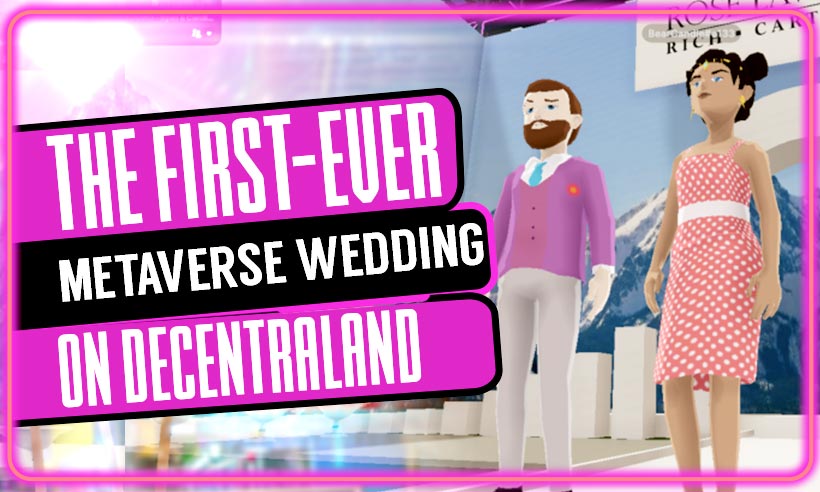
Ethereum-based 3D virtual reality platform Decentraland hosted the world’s first-ever metaverse wedding with a virtual crowd of 2,000 guests on February 5. The event was held on Rose Law Group’s estate on Decentraland.
Phoenix couple Ryan and Candice Hurley had their ‘Meta-Marriage License’ taken in the form of a non-fungible token (NFT) with Arizona Supreme Court Justice Clint Bolick officiating it.
Rose Law Group legally formalized the marriage by drafting the first US prenuptial agreement recorded on the blockchain and their associated development company to design, develop, and curate the event. The law group even developed a ‘meta-marriage framework,’ by incorporating a ‘Virtual Premarital Agreement,’ which identified the couple’s virtual identities and digital assets as recorded on the blockchain.
Founder and President Jordan Rose claimed it was the first-ever wedding to be hosted on any blockchain-based Metaverse:
“Today, we feel honored to have this wonderful couple..We’ve always been innovative,” “The bride and groom are not used to walking down the aisle on decentraland.”
“We see the future of the metaverse as being truly decentralized and existing almost completely on the blockchain, so the future of marriage in the metaverse will not need to have a record of their marriage in the real world.”
That much anticipated wedding @decentraland @decentraspots @DCL_Events @peopleofdcl @Decentralovers @DCLDating @WearablesDCL @roselawgroup
Congrats Ryan and Candice!!! 💙 pic.twitter.com/RA7oG9Qmcq— Kanard Azul (@KanardAzul) February 5, 2022
Getting Married in the Metaverse
This is not the first time a couple have wanted to immortalize their marriage on the blockchain.
An Indian couple Dinesh Kshatriya and Janaganandhini Ramaswamy will host the first wedding reception in Metaverse as the couple hosted their Hogwarts-themed virtual wedding on February 6, 2022.
In April 2021, a Californian couple working at Coinbase crypto exchange wrote an Ethereum smart contract to issue tokenized rings as NFTs during their wedding.
In 2014, the Disney World Bitcoin Conference hosted the first blockchain wedding, recording the following message on-chain ‘for better or worse, ’til death do us part because the blockchain is forever.’