“Will Bitcoin Really Hit $1 Million?” Eric Trump Reaffirms Bullish Call Amid Crypto Turmoil

What Did Eric Trump Say About Bitcoin’s Future?

Even as the crypto market weathers a rough patch — with Bitcoin trading near $67,000 after steep declines — Eric Trump doubled down on a bold forecast: he still believes Bitcoin will hit $1 million per coin. In a recent CNBC interview at the World Liberty Forum, the Trump Organization executive described himself as “never more bullish on Bitcoin in my life.”

He didn’t sugarcoat it: volatility is part of the game, but the tremendous upside has him confident that Bitcoin’s long-run trajectory remains intact.


Bitcoin’s Current Turmoil: Is the Dip Just Noise?

Bitcoin’s price has pulled back sharply from its October 2025 peak above $126,000, dropping more than 45% over recent months and spending time below $70,000.

This broad market correction — often dubbed a crypto winter — hit prices across the board, shaking investor confidence and fueling bearish sentiment. Despite this, Trump framed the downturn as natural volatility, not a death knell for crypto’s future.

Why Trump Still Thinks $1 Million Is Possible

Eric Trump’s optimism isn’t random hype. He pointed to three key drivers:

  • Institutional involvement and growing Wall Street acceptance.
  • Bitcoin’s fixed supply and long-term store-of-value narrative.
  • Broader crypto adoption through stablecoins and digital infrastructure.

He also highlighted stablecoins as a bridge for global capital flows — a subtle hint that digital assets could underpin more than speculative plays.


What Critics and the Market Are Saying

Not everyone agrees.

Prominent skeptics argue that meme coins and celebrity-backed tokens have hurt confidence, contributing to the slower recovery. Others warn that traditional risks — from regulatory uncertainty to macro stress — still cloud the outlook.

Still, voices like Coinbase’s Brian Armstrong and crypto analyst Arthur Hayes have echoed that Bitcoin’s pullback could be **temporary” and even healthy for long-term resilience.


Final Take

Whether Bitcoin will truly reach $1 million is still up for debate — but Eric Trump’s reaffirmed call shows high-profile bullish sentiment remains alive even in tough markets.

One thing’s clear: Bitcoin’s journey is far from linear — it’s oscillating between fear, hope, and big predictions.
Tokenized Assets Break $21B — But Are New Chains Finally Gaining Ground?

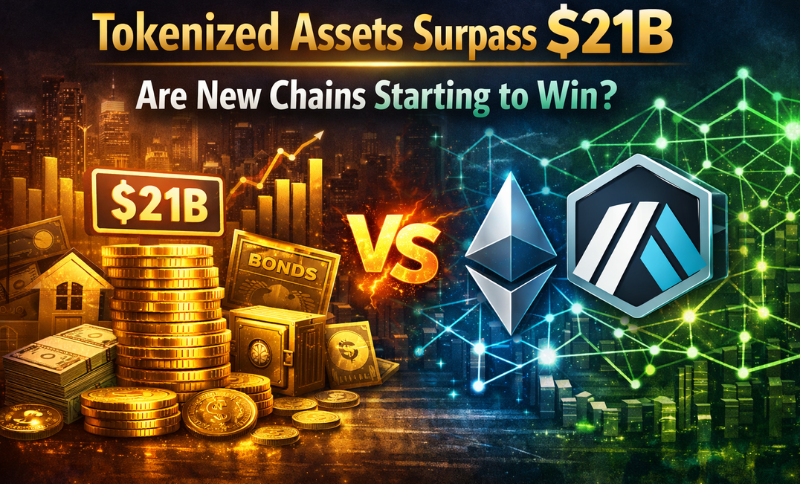
Tokenized real-world assets (RWAs) just hit a major milestone — topping $21 billion — but the rise of newer chains could be the real story this year.

In the fast-evolving world of crypto, real-world assets — digital tokens backed by actual assets like US Treasuries, commodities, and private credit — are gaining serious traction. Ethereum still leads by a wide margin, but challenger networks are beginning to attract attention from institutional investors and builders alike.


What’s Driving the $21B Tokenized Asset Boom?

Tokenized RWAs have crossed the $21 billion mark in total value locked (TVL) — a milestone that reflects growing demand for on-chain versions of traditional financial assets.

Here’s how the landscape looks:

  • U.S. Treasury debt dominates with over ~$9B total value locked. 
  • Commodities and private credit follow as secondary drivers. 
  • Corporate bonds and institutional funds are gaining share, while real estate and private equity remain smaller but emerging categories. 

Experts have projected massive long-term growth for tokenized assets — from $2-4 trillion by 2030 (McKinsey) to as much as $10-16 trillion in some industry forecasts.

Bottom line: Tokenization is no longer a niche experiment — it’s becoming an institutional trend.


Ethereum Still Dominates — For Now

Ethereum continues to be the primary home for tokenized assets, hosting the lion’s share thanks to its deep liquidity, mature tooling, and broad developer ecosystem.

Stablecoins still represent the largest category by value on Ethereum, which helps explain why it remains the go-to network for issuers and institutional players.

But a key question on the minds of experts now is: How long will Ethereum’s dominance last?

Are New Chains Starting to Matter?

Here’s where the narrative gets interesting: some alternative blockchains are beginning to capture real RWA demand.

For example, Arbitrum-based tokenized products have amassed substantial TVL, driven by predictable fees, strong liquidity, and flexible architecture — factors that matter greatly to institutional users.

Lower-cost networks like Arbitrum and others could see increasing adoption, especially as institutional players explore options beyond Ethereum’s fee structure and scalability.


Why This Matters to Crypto Investors Now

Tokenization is rapidly bridging TradFi and crypto:

  • Institutional demand for on-chain exposure is rising. 
  • Traditional financial firms (including NYSE and investment platforms) are building 24/7 token trading infrastructure. 
  • Regulatory discussions continue to shape frameworks for tokenized securities. 

This combination is transforming tokenized assets from “cool tech” into legitimate financial infrastructure.


KEY TAKEAWAYS

  • Tokenized RWAs have surpassed $21 B in TVL. 
  • Ethereum remains the dominant network for tokenization. 
  • Alternative chains like Arbitrum are gaining traction. 

Analysts forecast exponential growth through 2030.

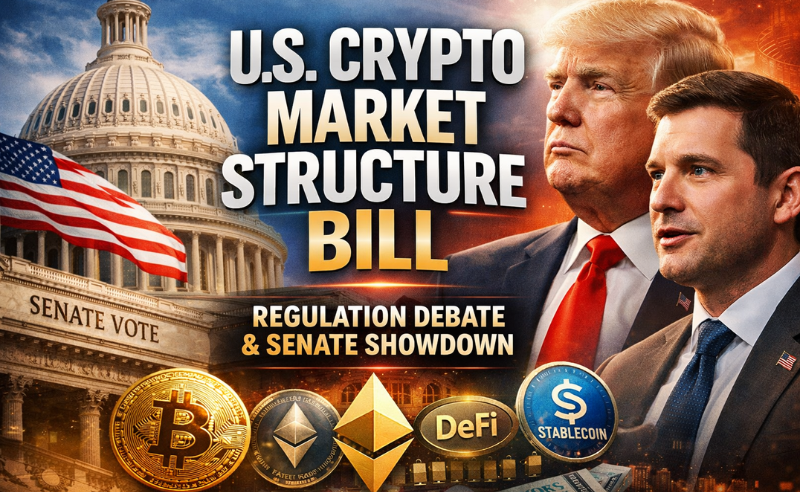
Will the U.S. Senate Pass the Crypto Market Structure Bill? Here’s What’s Happening

A top crypto advisor to former President Trump says the long-awaited U.S. crypto market structure bill will clear the Senate, but experts warn compromises are essential if lawmakers want it signed into law this year.

Patrick Witt, Executive Director of the President’s Council of Advisors for Digital Assets, told the crypto community that the crypto market structure legislation is not a matter of if, but when it will pass the Senate — provided stakeholders can agree on key issues.


Why There’s Momentum Behind the Bill (and Why It’s Stalled)

The push to pass the market structure bill has been building for months as lawmakers aim to provide regulatory clarity for digital assets — especially after the stablecoin-focused GENIUS Act passed last year.

However, the current version of the bill hit a snag when Coinbase CEO Brian Armstrong publicly withdrew support, citing concerns about language that could:

  • Limit tokenized equities
  • Restrict DeFi innovation
  • Slash stablecoin rewards
  • Weaken the role of the CFTC in favor of the SEC

This opposition led the Senate Banking Committee to postpone its markup hearing — delaying a planned vote and sparking fresh debate within both Congress and the crypto sector.

What Trump’s Crypto Advisor Thinks Should Happen Next

Despite the delays, Witt argues that the industry and lawmakers should accept compromises to get the bill through the Senate’s 60-vote threshold. According to him:

“You might not love every part of the bill, but it’s better than letting a future Congress craft a harsher version.”

He also echoed a common theme in Washington — regulatory clarity is key if the U.S. wants to remain a global leader in digital assets.

What’s Next for Crypto Regulation in the U.S.?

Even with setbacks, most Capitol Hill insiders say the crypto market structure bill is still alive. Industry figures like Galaxy CEO Mike Novogratz also recently suggested the bill could pass soon if a compromise is reached.

Some analysts believe that if the bill clears the Senate, it may even reach Trump’s desk before the end of the year — providing long-awaited regulatory guardrails for exchanges, traders, and institutional investors alike.

India Sees Crypto Crime Surge: Nearly 12,000 Suspicious Blockchain Transactions in Recent Months

Why are crypto crime alerts spiking in India — and who’s behind these transactions?

New Delhi, Jan 19, 2026 — India’s crypto ecosystem, one of the fastest-growing in the world, is showing alarming signs of illicit activity as authorities report a dramatic rise in suspicious cryptocurrency transactions. Data released by official bodies indicate a jump from around 1,000 flagged cases last year to nearly 12,000 in the first eight months of the current reporting period — a roughly 773% surge that’s raising red flags among regulators, law enforcement, and industry stakeholders alike.

How Big is the Problem? What the Numbers Say

According to the latest government feedback:

  • 11,720 suspicious crypto transactions were reported in the current period, up from just 1,343 in the previous year.
  • Tether (USDT) appears in nearly three-quarters of flagged cases, far outpacing Bitcoin or Ethereum in illicit activity mentions.
  • Young adults aged 20–40 account for over 80% of the accounts involved in these alerts.
  • States like Rajasthan, Uttar Pradesh, Maharashtra, and West Bengal show the highest concentration of reports.

Regulators emphasize that these figures reflect suspicious transaction reports (STRs) — not confirmed crimes — but the upward trend underscores growing misuse risks.

What’s Driving the Spike? Regulatory, AML & Market Factors

Several factors explain why suspicious crypto activity is climbing in India:

  1. Broader Reporting Requirements

Crypto exchanges and service providers (onshore and offshore) must now report anomalies to the Financial Intelligence Unit (FIU). The expanded reporting regime means more granular monitoring of digital asset flows.

  1. Anti-Money Laundering (AML) Pressure

India’s AML watchdog has tightened surveillance under the Prevention of Money Laundering Act (PMLA). Providers now classify, vet, and flag complex or hard-to-trace transfers — driving a rise in flagged cases.

  1. Global Illicit Trends

The misuse of stablecoins in criminal schemes — from fraud rings to darknet commerce — mirrors global patterns, where stablecoins often dominate illicit transaction volumes due to easy cross-border movement with low volatility.

What Authorities Are Doing to Fight Back

Government and enforcement agencies are responding with multiple measures:

  • FIU has penalized non-compliant crypto exchanges, demanding stricter Know-Your-Customer (KYC) and AML controls.
  • Regulators are pushing for continuous monitoring and real-time reporting to detect unusual flows.
  • Law enforcement is linking flagged transactions to investigations involving money laundering, fraud rings and digital hawala networks that may pose broader security threats.

However, authorities also warn that identifying suspicious transactions does not automatically mean conviction; it’s a starting point to investigate potential malfeasance.

Crypto Investors: Be Aware, Not Alarmed

India’s growing crypto community — currently tens of millions strong — is largely comprised of honest traders. But the rising number of flagged transactions highlights:

  • the need for better compliance by exchanges,
  • stronger consumer protections, and
  • greater digital literacy among investors.

Regulators say they’re committed to striking the right balance between fostering innovation and preventing illicit financial activity.

PayPal Halts Work on Stablecoin Amid Heightened Regulatory Concerns

PayPal Explores Launch of Its Very Own Stablecoin

PayPal has halted work on its stablecoin amid increased scrutiny of cryptocurrencies by regulators and probe faced by a key partner in the project by the New York State Department of Financial Services.

PayPal Stablecoin Project Paused Due to Paxos Probe

PayPal had hoped to debut the stablecoin, which will be backed one-for-one by the US dollar, in the coming weeks, but will delay that work as it seeks to understand the changing regulatory landscape for such digital assets. New York regulators have been investigating Paxos Trust Co., a cryptocurrency firm PayPal was working with on its stablecoin effort.

New York-based Paxos, the issuer of a Binance-branded token that ranks as the third-largest stablecoin, is regulated by the state’s Department of Financial Services. On its website, Paxos stresses its commitment to consumer protection and says that reserves for both of the stablecoins it issues are held wholly in cash and US Treasuries. The company also issues its own stablecoin called Pax Dollar.

Paypal’s Stablecoin Project

PayPal announced last year that the Department of Financial Services had granted the firm a “BitLicense,” which governs businesses working with virtual currencies. PayPal said at that time that it was the first company to convert a conditional BitLicense into a full one.

Iran and Russia Discuss the Launch of a Possible Gold-Backed Stablecoin

Iran Russia Stablecoin Japan’s FSA

According to a report quoting the head of the crypto industry organization in the Russian Federation, the central bank of Iran and Russia is considering the possibility of creating a stablecoin to facilitate trade in the Persian region.

The coin could be accepted as a means of payment in international settlements, the Executive Director of the Russian Association of Cryptoeconomics, Artificial Intelligence and Blockchain (Racib), Alexander Brazhnikov, told the business daily Vedomosti that there is a possibility that the token will be backed by gold.

Why Are Iran and Russia Planning to Launch Their Stablecoin?

Russia and Iran, both under Western economic and financial sanctions, have been looking to crypto assets as a means to circumvent restrictions. In August, Iran placed its first official import order using cryptocurrency while Russia considers legalizing cross-border crypto payments. The two nations are also developing central bank digital currencies (CBDCs), the digital ruble, and the crypto rial.

Cryptocurrencies Should Be Regulated First, Member of Russian Parliament Says

The largest digital coin backed by physical gold according to the issuer, PAX Gold, currently ranks 74th in terms of capitalization, with a market cap of over $511,000,000. It is an ERC20 token based on the Ethereum blockchain.

The news of the negotiations has been confirmed by Anton Tkachev, a member of the Committee on Information Policy, Information Technology and Communications of the State Duma, the lower house of Russian parliament. However, he remarked that the matter would be actively discussed at the state level only after cryptocurrencies are fully regulated.


Midas Crypto Investments Closing Down Network Owing Losses

Midas Investments

According to a blog article from CEO and owner Iakov “Trevor” Levin, Midas Investments, an investment company that concentrated on DeFi yields, is closing its platform as a result of large losses sustained in 2022.

The Drop in the DeFi Portfolio of Midas Investments

Levin stated that the Midas DeFi portfolio dropped $50 million, or 20% of its $250 million in assets under management (AUM), this past spring. Furthermore, its network had over 60% of AUM removed after the failure of Celsius and FTX.

Levin stated that the investment firm made the tough choice to terminate the platform based on this circumstance and the existing CeFi economic factors. According to Levin, the business will now concentrate on a new initiative that lines up with the goal of centralized decentralized finance (CeDeFi).

Suspension of Deposits, Withdrawals, and Swaps

In order to implement precautions and account modifications, Midas disabled deposits, swaps, and disbursements commencing on Tuesday. It intends to take 55% off of user holdings in bitcoin, Ethereum, and stablecoins, with the adjustment being made up in MIDAS tokens that may be exchanged for tokens of its new project.

According to Levin, the new effort aims to establish a decisive victory by supplying rival protocols with liquidity and providing a straightforward payout to a variety of DeFi and CeFi consumers.

Hackers Steal $8 Million from Bitkeep Wallets in Latest DeFi Hack

Bitkeep hack

While many people are still taking advantage of the festive season, hackers are busy working, stealing almost $8 million using a BitKeep wallet hack that is still active.

Bitkeep Wallets in DeFi Hack

On December 26, several BitKeep customers who utilize the multichain cryptocurrency wallet claimed that their cash had been taken out and moved when they were not using their wallets. The BitKeep team acknowledged that some APK package downloads had been compromised by some attackers and had malicious malware injected during installation in their official Telegram channel.

The BitKeep team advised its customers to move their money to a wallet that originated from a trusted source, such as Google Play or the Apple App Store, while the breach went on. In addition, the team urged members of the community to utilize newly generated wallet addresses because their old ones may have already been publicly revealed to hackers. The BitKeep team requested that the impacted users provide the pertinent information via a Google form to aid in the inquiry.

Digital Assets At One Wallet Address

There are currently more than $5 million in digital assets at one wallet address that is thought to belong to a hacker. PeckShield, a blockchain security and analytics company, stated that more than $8 million in Tether, DAI, BNB, and Ether had been taken so far, despite the fact that the amount compromised is not yet final and the attackers are constantly moving money to different wallet addresses.

Japan’s FSA is Considering Lifting the Ban on Foreign Issued Stablecoins

Iran Russia Stablecoin Japan’s FSA

Japanese officials are reevaluating some important cryptocurrency regulations pertaining to the usage of stablecoins like Tether (USDT) or USD Coin. According to the local news outlet Nikkei, Japan’s FSA will end its restriction on the domestic circulation of foreign-issued stablecoins in 2023.

Japan’s FSA to Remove Ban on Stablecoins

Under the new stablecoin guidelines in Japan, local exchanges will be permitted to conduct stablecoin trade as long as deposits are made to protect assets and there is a maximum remittance amount. The paper states that International remittances could become more efficient and affordable if payment with stablecoins expands.

The FSA stated that further rules about anti-money laundering measures would be necessary in order to permit stablecoin distribution in Japan. The authorities began gathering comments on ideas for easing the stablecoin restriction in Japan on Monday. In June 2022, the Japanese parliament approved a law that would have prohibited the issue of stablecoins by non-banking organizations.

Influence of Stablecoin Trading

The most recent regulation will have a big influence on cryptocurrency trading services provided in Japan because there are presently no local exchanges that enable trading in stablecoins like USDT or USDC.

As of November 30, 2022, none of the 31 Japanese exchanges authorized with the FSA, including companies like BitFlyer and Coincheck, were facilitating stablecoin trading.

Crypto Companies to Pay Taxes

Recently, the Japanese government has been working hard to develop legislation relating to cryptocurrencies. The proposal to remove the need that cryptocurrency companies pay taxes on paper gains issued tokens was accepted by the tax committee of Japan’s governing Liberal Democratic Party on December 15. In the past, regional authorities have also issued warnings against the use of algorithmic stablecoins like Terra USD (UST).

Twitter Business Updates Search Results with Crypto and Stock Prices

Twitter Business Crypto

A plug-in from the charting service TradingView was used by the Twitter Business to include crypto values in search results. The functionality allows users to enter cryptocurrency or stock tickers into the search box to obtain the most recent price and a price graph. The outcome also has a link to the trading application Robinhood.

Twitter Business Introduces New Features

On December 21, the Twitter Business account introduced a new feature that is an enhancement to “$Cashtags.”

The account stated that consumers would see a clickable link that brings them to search outcomes that now contain the pricing graphs for those symbols anytime one tweets the symbol of a significant stock, exchange-traded fund, or cryptocurrency with $ that precedes it. Additionally, it mentioned that accessing the price graph by merely typing in the ticker symbol, whether for stock or cryptocurrency, is possible.

Elon Musk’s Reaction to the Update

Elon Musk, CEO of Twitter, reposted the news of the new function shortly after, on December 22, and noted that it is one of several product upgrades heading to financial Twitter. At the time of writing, it seems that BTC and ETH represent the only two cryptocurrencies having price charts. The list does not include some of the most popular cryptocurrencies, such as Musk’s favorite, Dogecoin.

Twitter Business, however, stated that it plans to increase the number of crypto symbols it supports and enhance the user experience in the upcoming weeks.

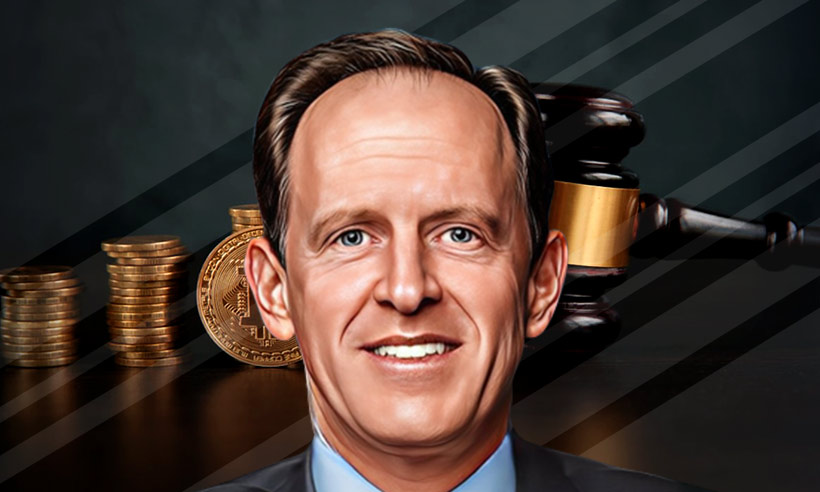
US Senator Pat Toomey Presents Stablecoin Bill For Crypto Regulation

US Stablecoin Bill

Pat Toomey, a Republican senator who will leave the U.S. Congress at the conclusion of the current session, spent one of his final few weeks in office to present a new stablecoin bill that would provide a legislative structure for payment of stablecoins.

US Senator Introduces Stablecoin Bill

The Stablecoin TRUST Act of 2022 will serve as the foundation for stablecoin regulation for his colleague’s senators, who are intending to enact stablecoin legislation in 2023, according to Toomey, who is also a senior member of the U.S. Banking Committee.

The senator described stablecoins as an exciting technological advance that might alter finance and transactions in a statement on December 21. Stablecoins might be extensively employed throughout the real economy in a number of ways by digitizing the U.S. dollar and making it instantly, globally, and almost cost-freely available.

The Objective of the Stablecoin Bill

The measure would allow non-state and non-bank entities to issue stablecoins if Congress approved it, provided that they secure a federal license authorized and granted by the U.S. Office of the Comptroller of the Currency (OCC). The stablecoins are supported by high-quality financial cash.

Additionally, the stablecoin issuers are required to adhere to a new public disclosure requirement, spell out their redeeming rules in detail, and submit regular assurances from certified accounting firms.

Offering Interest-Bearing Goods or Services

According to the proposed legislation, stablecoin issuers would not be subject to U.S. securities laws if they do not provide interest-bearing goods or services or behave like investing or consulting firms.

Toomey expressed his hope that the most recent measure would establish the framework for his fellow senators to adopt legislation the next year that would protect customer dollars “without impeding innovation.” However, it is yet unclear how Toomey’s most recent stablecoin would compare to the Stablecoin Transparency Act, submitted to Congress on March 31 by fellow Republican Senator Bill Hagerty.

California Authorities Urge MyConstant to Stop Offering Crypto Loans

MyConstant Crypto Loans

Due to potential breaches of state securities law, the California Department of Financial Protection and Innovation (DFPI) has directed the cryptocurrency lending platform MyConstant to stop marketing many of its cryptocurrency-related products like crypto loans.

MyConstant Ordered to Cease Services Like Crypto Loans

According to a news statement from the DFPI published on December 21, MyConstant has been told to immediately cease and stop providing its peer-to-peer loan facilitating service and interest-bearing cryptocurrency asset accounts, both of which it claims violate the California Securities Law and California Consumer Financial Protection Law.

The DPFI claimed that MyConstant’s providing and selling its peer-to-peer loan business, known as Loan Matching Service, breaches one of the state’s financial regulations.

Participation in Unlicensed Loan Brokering

Additionally, it claimed that MyConstant participated in “unlicensed loan brokering” by encouraging lenders to make loans without the necessary authorizations.

The regulators also objected to the cryptocurrency lender’s predetermined interest-beating crypto-asset offerings, which required customers to deposit crypto assets such as stablecoins and fiat in exchange for a guaranteed fixed yearly percentage return on their investment.

Breach Regulations Under DFPI

It stated that in these instances, MyConstant issued and traded non-exempt, unqualified securities. The regulating body declared in July that it was looking into several providers of cryptocurrency interest accounts to see if they were breaching regulations under the Department’s authority.

In a press statement on December 5, DFPI first revealed that it was looking into MyConstant. It further claimed that MyConstant was not licensed by DFPI to conduct business in California.

Uniswap and MoonPay Collaborate to Enable Users to Buy Crypto with Fiat

Uniswap MoonPay Collaboration

Uniswap, a decentralized exchange, has entered into a collaboration with Moonpay, a fintech business, to enable users to purchase cryptocurrency on its website application using banking transactions, debit cards, and credit cards. The bank transfer option is being made available to customers in the majority of US states, Brazil, the UK, and the Single Euro Payments Area, or SEPA.

Uniswap and MoonPay Collaboration

According to the December 20 statement from Uniswap, customers will soon be able to quickly exchange cash for cryptocurrencies on the Ethereum mainnet, Polygon, Optimism, and Artibrum.

Decentralized exchanges (DEX) include built-in user security, self-custodial wallets, permissionless, irreversible protocols, and accountability in public ledgers, according to Uniswap, making them a considerably safer alternative than centralized exchanges (CEX).

Orientation Program for DeFi

According to the user’s location, at first, Uniswap will offer Dai, Ether, USD Coin, Tether, Wrapped Bitcoin (wBTC), and Wrapped Ether (wETH).

The business acknowledged that despite the dangers involved, customers still prefer CEXs and that the orientation program for decentralized finance (DeFi) has been a significant barrier to adoption. With its most recent deployment, Uniswap intends to streamline the onboarding procedure due to its zero spread costs on USDC, lowest transaction fees in the industry, and fast access.

Reaction of Uniswap on FTX Failure

The statement from Uniswap comes after the recent failure of FTX, one of the numerous centralized cryptocurrency systems.

According to the resources, the community reacted negatively to Uniswap’s decision to update its privacy statement to include the gathering and retention of user data on November 22 because this goes against many of the fundamental principles of cryptocurrency.

Waves Blockchain Founder Offers USDN Recovery Plan, New Stablecoin

Waves Blockchain USDN

In order to regulate USDN, the algorithmic, dollar-pegged cryptocurrency of the Waves network, Sasha Ivanov, the inventor of the decentralized, open-source blockchain Waves, stated that he will introduce another stablecoin.

Waves Blockchain Founder Unveiled 2 Things

Ivanov tweeted on Tuesday that first, he will create a new stable currency, and secondly, there will be a $USDN recovery and resolution plan set in motion prior. Ivanov stated that the new stablecoin would be undepeggable, but he offered no specifics or a timetable for its launch.

Stablecoins are cryptocurrencies whose values are tied to an outside standard, such as the dollar. Fiat-backed, cryptocurrency-backed, commodity-backed, and algorithmic are the four categories into which they may be divided based on the collateral that supports their value.

Production of Stablecoin by Neutrino

WAVES, the native currency of Waves blockchain, serves as the foundation for USDN, an algorithmic stablecoin. In the Neutrino system, users must lock in WAVES in order to mint USDN, but repayments have the reverse effect by removing the stablecoin from circulation and releasing WAVES. The production of stablecoins is made possible by Neutrino, an algorithmic, multi-asset, price-stable Waves protocol.

Following the designation of WAVES as an “Investment Warning” asset by South Korea’s Digital Asset Exchange Association, USDN, intended to exchange in sync with the dollar, dropped its peg last week. According to statistics from CoinGecko, the stablecoin dropped to $0.53 early today.

Ethereum Co-Founder Suggests 3 Massive Prospects for Crypto in 2023

Ethereum prospects

Vitalik Buterin, the co-founder of Ethereum, listed three massive prospects in the cryptocurrency space that have not yet been fully realized. These are widespread wallet adoption, inflation-resistant stablecoins, and website logins that use Ethereum.

Ethereum Co-Founder Suggests Prospects for Crypto

Buterin addressed Hoffman’s fear that the adoption wave for decentralized applications is now gone and that there is less possibility for developers to step in and create new decentralized applications during a conversation with Bankless co-owner David Hoffman.

Instead, Buterin dismissed the limbo phase Hoffman alluded to, first arguing that additional advancements in wallet infrastructure are necessary to make cryptocurrency simpler for average consumers to employ and to ensure it can support billions of users.

Development of Stablecoins and Technology

Additionally, Buterin asserted that the development of a stablecoin capable of withstanding all circumstances, both on-chain and in the larger macroeconomy, would be transformative for the sector. This stablecoin would need to be globally accessible and immune to hyperinflation.

Last but not least, Buterin asserted that any technological advancements that help Ethereum take the login authority currently held by Facebook, Google, and Twitter. Additionally, other centralized monopolies would eventually help Ethereum gain more market share on web-based apps.

Education About Cryptocurrency Sector

However, Buterin acknowledged that as the business matured and competition increased, it was getting harder to fill holes in the market. The co-founder of Ethereum seems to have spent the past few weeks educating others about the cryptocurrency sector and offering guidance, along with his upbeat outlook on the years to come.

BCBS Approves Adoption of Global Crypto Banking Regulations by 2025

BCBS Crypto Banking

According to a statement sent through email on Friday, the Basel Committee on Banking Supervision (BCBS) has approved the guidelines for the global adoption of crypto banking to take effect on January 1, 2025.

BCBS Approves Adoption of Crypto Banking Rules

The committee, which is the main body responsible for setting worldwide standards for the prudential regulation of banks, said in an accompanying paper that a bank’s exposure to specific crypto assets should not surpass 2% and should typically be lower than 1%. These specific assets are conventional assets that have been tokenized, such as non-fungible tokens, stablecoins, and unsupportable crypto assets that don’t fit into any one category.

According to the present Basel Framework, the assets from the list above that fit the prerequisites are required to meet capital considerations based on the risk weights of fundamental exposures.

Support by GHOS

An earlier group of eight conventional banking lobby organizations had written to the committee arguing that a 1% restriction on banks may be too onerous and prevent distributed ledger technology advancements. There is more freedom to operate now.

Tiff Macklem, head of the GHOS, the committee’s supervisory body, stated that today’s support by the GHOS (Group of Central Bank Governors and Heads of Supervision) represents a key milestone in building a worldwide regulatory framework for minimizing risks to banks from crypto assets.

Redemption Risk Test and Basis Risk Test

The committee’s categorization standards include ensuring that crypto fulfills a redemption risk assessment and a basis risk test.

The purpose of the redemption risk assessment, according to the paper, is to make sure that the reserve assets are enough to allow for the perpetual redemption of the crypto assets. The basis risk test, on the other hand, aims to verify that the holder of a crypto asset may trade it in the market for an amount that roughly reflects the peg value.

Australia Prepares to Regulate Cryptocurrency Service Providers in 2023

Australia Cryptocurrency Service Providers

In 2023, Australia intends to set up an infrastructure for licensing and policing cryptocurrency service providers. The Australian government wants to specify which digital assets should fall under financial services legislation and what regulations are necessary to protect customers.

Australia Plans to Regulate Crypto Service Providers

According to a joint press release, the government’s continuing token mapping work will continue with the rollout of a consultation document in initial 2023. The release is to determine which digital assets should be covered by financial services legislation and the creation of suitable custody and licensing frameworks to protect consumers.

Despite the fact that the Australian government is acting to regulate cryptocurrency service providers in Australia, formal legislation won’t be passed until after consultations on the proposed licensing and custody system.

Buy Now Pay Later Sector

The government established reform legislation on financial market infrastructure, notably with respect to the transfer service, payments networks, and the Buy Now Pay Later sector, as part of a campaign to modernize Australia’s financial system, which also includes a focus on cryptocurrencies.

Australia’s government has generally supported crypto. However, it has emphasized the value of promoting innovation while safeguarding the public.

Stablecoins to Enhance Financial Services

The Reserve Bank of Australia (RBA) reported on stablecoins on December 8 and said that authorities are undergoing extensive efforts to determine how to integrate them securely into the ecosystem.

The paper said that Stablecoins have the opportunity to enhance the functioning and effectiveness of a variety of payment and other financial services.

Tether Pledges to Erase Secured Loans As it Rushes to Prove Solvency

Tether Secured Loans

The biggest stablecoin issuer in the world, Tether, has promised to ultimately stop lending money from its reserves because its mission is to rebuild trust in the cryptocurrency industry. Furthermore, Tether intends to stop supporting any secured loans in 2023.

Tether Addresses FUD Around Secured Loans

The stablecoin issuer acknowledged recent mainstream FUD fear, ambiguity, and doubt over its secured loans in a post on December 13, and additional FUD circulated on the scandal.

In addition to reiterating that its secured loans are excessively collateralized and backed by highly liquid assets, Tether said that the company will be removing these loans during 2023. The exchange stated that it would reduce the number of secured loans in its reserves to zero starting today and continuing until 2023.

Loans Comparable to Private Banks

The business noted that Tether’s secured loans work is comparable to how private banks lend to clients when utilizing secured collateral. Tether asserted that its loans are completely guaranteed by more than 100%, in contrast to banks that run on fractional reserve banking.

The action is probably in response to a WSJ investigation from earlier this month that said these loans were hazardous. According to the statement, the firm might not have sufficient liquid assets to satisfy repayments in a crisis.

Tether Reserves in Highly Liquid Assets

The Wall Street Journal has already attacked Tether. The publication said Tether might become technically bankrupt in August if its assets dropped merely 0.3%. At the time, the stablecoin issuer denied the allegations, claiming that working with a top-5 accounting company has improved the reliability and openness of its certifications.

In accordance with such attestations, 82% of Tether’s reserves are stored in “highly liquid” assets. In response to additional media FUD, Tether significantly reduced the amount of commercial paper in its reserves in October and replaced those holdings with U.S. Treasury Notes.

Bermuda Digital Bank Jewel Issues ‘Fully-Backed’ Stablecoin

Bank Jewel

Jewel USD (JUSD), a fully backed stablecoin accessible over the Polygon network, is being released by Bermuda-based Jewel Bank on Monday.

Digital Bank Jewel to Issue Fully-Backed Stablecoin

According to a news release from Jewel, JUSD will constantly have enough money in its reserves to sustain each JUSD in operation by maintaining a reserve ratio with the U.S. dollar at least 1:1. In addition, the bank stated it would regularly check its stablecoin reserves and update them on a monthly and quarterly basis.

Due to the recent upheaval surrounding the collapse of cryptocurrency exchange FTX, bank-issued stablecoins, often tethered to a fiat currency, might provide some market liquidity for individuals concerned about the fluctuation of cryptocurrencies. To give some assurance that clients’ holdings are completely backed one by one, audits of significant exchanges, such as the most recent proof of reserves report for Crypto.com, have been made public.

Jewel’s Collaboration With Polygon

As a result of Jewel’s collaboration with Polygon, JUSD operations will happen on the blockchain, and the financial institution will use the Polygon ecosystem to formulate new commercial and residential stablecoin-based payment processing.

Chance Barnett, the founder and chairman of Jewel Bank, was quoted in the press release as stating the relationship with Polygon Companies helps drive a significant portion of their long-term stablecoin network, which offers financial institution safety, efficiency, and privacy to stablecoins.

Crypto Exchange Coinbase Urges Users to Change USDT to USDC

Coinbase USDT to USDC

In an effort to demonstrate the strength of the reserves behind Circle-owned USD Coin (USDC), Coinbase is eliminating the processing costs for anyone who intends to move to a trusted stablecoin (USDT to USDC).

Conversion of USDT to USDC

In a blog post posted today, Coinbase claimed that the recent events had put certain stablecoins to the test and caused a flight to safety. The exchange further stated that USD Coin (USDC) is a reliable and trustworthy stablecoin. Starting today, Coinbase would no longer charge fees for worldwide retail clients to transfer USDT to USDC.

USDC was co-founded by Coinbase. According to on-chain statistics, USDT is presently trading for 99 cents on Coinbase and is the third most actively traded digital currency there, accounting for 5% of the trading volume.

Trading of Tether

Tether (USDT) lost its peg a few days after the FTX crash and fell as low as 93 cents. Although CoinGecko data indicates that it still trades at 99 cents on select pairings at Binance, the majority of trading pairs on platforms have reverted to $1.

A U.S. judge in New York issued a request to Tether in late September for financial data pertaining to the support of USDT. This is not related to the litigation now pending before the New York Supreme Court, which requests the release of records obtained during the investigation of Tether’s reserves by the New York Attorney General.

KuCoin Employs Auditor Mazars to Deliver Report With Facts

KuCoin Mazars

KuCoin, a cryptocurrency exchange, has hired auditor Mazars to confirm its proof of reserves in a third-party factual findings report. According to a statement on KuCoin’s company blog, the company will provide information on whether KuCoin’s in-scope holdings are collateralized. Mazars wants to reveal the reserves and consumer liabilities for KuCoin. In addition to focusing on bitcoin, ether, and the stablecoins USDT and USDC, this will also feature margin and other accounts.

KuCoin Employs Mazars to Reveal Reserves

In a release, KuCoin CEO Johnny Lyu stated that this move is the next step in the attempts to give openness to the customers’ funds, showcasing the dedication to transparency and improving industry confidence. He further stated on Twitter that he constantly emphasizes KuCoin is a People’s Exchange that prioritizes the safety and protection of customers’ assets. The report on the factual findings is anticipated to release in a few weeks.

FTX, Alameda, and Bitfinex Information

KuCoin has been working to increase openness in its operations for some time now. After the elevated failures of the top cryptocurrency exchange, FTX, and its related trading company Alameda Research, centralized exchanges throughout the industry have been hurrying to validate their proofs of reserves.

In the first part of November, Bitcoin exchange Bitfinex released information on its reserves, while competitor Binance released its proof-of-reserves method, starting with bitcoin, at the end of November. Most recently, the entire liability balance sheet on the cryptocurrency derivatives market Bitmex started allowing customers to self-verify their obligations.

MakerDAO is Voting to Raise Stablecoin Dai’s Dividend

MakerDAO

The governance forum for MakerDAO is now debating whether to raise the dai (DAI) savings rate (DSR) or the interest rate that the protocol pays to dai stakeholders. According to a statement presented by the MakerDAO Open Market Committee, the DAO members will vote on whether to raise the existing yield rate of 0.01% to one of four rates: 1%, 0.75%, 0.5%, or 0.25%. Additionally, voters have the option to reject the plan outright or maintain the present return of 0.01%. The outcome might vary as more votes are counted, but at the time of writing, 99.7% of votes were in support of increasing the rate to 1%. On December 1, the voting is anticipated to be over.

DAI Staking Yields

The proposal, according to the committee, would bring dai staking yields into line with stablecoin returns provided by other decentralized finance (DeFi) systems, such as lending protocols Aave and Compound. According to the plan, a greater savings rate would aid in ensuring that there is sufficient liquidity to uphold the dai stablecoin’s sustainability.

According to information from Block Analitica, average stock supply rates on DeFi lenders have marginally increased over the previous month. The committee ascribed this increase in supply rates on lending processes to a decline in asset liquidity brought on by investors moving their money to US Treasury bonds because those returns were more alluring and secure.

Israeli Ministry of Finance Offers New Regulations for Digital Assets

Israeli Ministry of Finance

Taking forward advanced the nation’s entry into the cryptocurrency sector, the Israeli Ministry of Finance published a list of proposals for the governance of digital assets in the country on Monday. The suggestions urge the development of new regulatory frameworks, licensing authorities, and oversight over the issue of supported digital assets, notably stablecoins, and the delivery of financial services via them.

Israel Govt. Proposes New Crypto Regulations

The recommendations also contain a suggestion to let taxation of cryptocurrency kept outside of Israel be paid through the Bank of Israel. The plan would also establish an inter-ministerial commission to supervise the regulation of decentralized autonomous organizations (DAO). Additionally, the guidelines urge the Bank of Israel to be given control over digital assets that have substantial stability or economic influence.

Crypto Taxation – Primary Focus of Israel

The proposal’s main component is the taxation of cryptocurrency. Israel’s tax office estimates that uncollected cryptocurrency taxes from 2019 to 2022 might total several billion shekels.

In recent months, Israeli government representatives have started dipping their fingers into the digital asset market. The Tel Aviv Stock Exchange (TASE) disclosed in October that it was investigating the creation of a digital asset trading system based on blockchain technology. The first permanent license to operate in cryptocurrency operations was given to a private business a month earlier by Israel’s markets regulator.

Aragon Project Puts $20M in Ether to Treasury for Safety As FTX Falls

Aragon Ether

The Aragon Project boosted its holdings of ether (ETH) in its treasury by more than $20 million in an effort to enhance its exposure to censorship-resistant digital assets.

Aragon Project Exchanges BTC For ETH

According to its weekly report, Aragon exchanged bitcoin for ETH and $20.4 million worth of USDC. At the moment, the Aragon treasury, now valued at $153 million, is made up of around 42% ether tokens. Aragon exchanged more wrapped bitcoin for BTC valued at another $5.2 million. Additionally, $20 million USDC was transferred to the DAI stablecoin as part of the project’s treasury equalization.

The Aragon Association, a non-profit, and the Aragon Network DAO are both components of Aragon, an Ethereum-based project that provides users with the tools for building and operating DAOs.

Centralized Cryptocurrency Infrastructure

The FTX crash, which exposed the shortcomings of centralized cryptocurrency infrastructure, required the treasury dynamic allocation to protect the project.

According to Aragon, by decreasing the exposure to assets that may be mismanaged or interfered with by centralized forces, moving more of the treasury to ETH, DAI, and BTC improves the company’s security and censorship resistance.

Hong Kong Concerns Stablecoin Volatility Impact on Traditional Finance

Hong Kong Stablecoin

This year the demise of crypto titans revived concerns about cryptocurrency security and the implications on fiat ecosystems. According to a situational analysis by the Hong Kong Monetary Authority (HKMA), the instability of crypto assets, especially asset-backed stablecoin, may have an impact on the traditional finance system.

Impact on Traditional Finance

According to the HKMA evaluation of asset-backed stablecoins, there is a possibility that their stability will be significantly impacted by liquidity mismatches during fire-sale occurrences.

The central bank of Hong Kong claims that because cryptocurrency assets are interconnected, the ecosystem is now more susceptible to large-scale disruptions. Additionally, the expansion of financial firms’ exposure to cryptocurrencies may be prone to spillover effects from sudden price changes.

Tether Redemption

The report also brought up Terra USD (UST), a Terraform Labs algorithmic stablecoin that had crashed and resulted in a large-scale Tether redemption. In this context, the HKMA suggested standardized periodic reports that might aid regulators in examining the risks and circumstances related to liquidity.

The second piece of advice for authorities is to improve the liquidity management of asset-backed stablecoins by placing constraints on the make-up of reserve assets.

Cardano to Introduce New Algorithmic Stablecoin “Djed” in 2023

Cardano Djed

Cardano, a proof-of-stake blockchain platform, and COTI, a Layer 1 protocol based on DAG, have joined forces to introduce a new algorithmic stablecoin “Djed”. The stablecoin would be supported by extra security in the related vein held in a reserve, according to a statement from the project.

https://twitter.com/DjedStablecoin/status/1594804397615509506?

Djed – New Algorithmic Stablecoin in 2023

Djed is slated to launch on the mainnet in January 2023, according to the press statement, subject to the completion of a successful inspection and other severe stress tests. The creators claim that Djed will be supported by Cardano ($ADA), tied to the US Dollar, and employ the $SHEN cryptocurrency as its reserve token.

With the help of a few specially selected collaborators and Decentralized Exchanges (DEXs), the algorithmic stablecoin will be incorporated. DEXs will pay users for utilizing Djed to provide liquidity. The developers intend to take a cautious and conservative approach to supply $ADA liquidity to the Djed smart contract to expand at a pace that is healthy and sustainable.

New Stablecoin Act As Safest Place

The COTI CEO, Shahaf Bar-Geffen, revealed during the Cardano Summit’s formal announcement that recent market occurrences have demonstrated again that the company requires a safe harbor from instability, and Djed will act as this safe place on the Cardano network. In addition to having a stablecoin, they also need one with on-chain proof of reserves and decentralization.

Zulu From Colombia Raises $5 Million in Seed Round

Zulu

Zulu, a cryptocurrency wallet software located in Bogota, Colombia, has received $5 million in a seed round to grow its customer base in Latin America. Cadenza Ventures, a startup venture capital firm, led the investment. A number of businesses and individual investors, such as Nexo Ventures, a fund that focuses on the web3, also actively participated.

Zulu Focuses On Using Stablecoins

In light of currency depreciation, Zulu focuses on utilizing stablecoins to make it simpler for those living in Latin America to save funds and send cross-border transactions to relatives and friends who are still there. The USD Coin app accepts the stablecoin that is tied to the dollar.

According to Zulu CEO and co-founder Esteban Villegas, Zulu is a 100% decentralized wallet that runs on the Polygon Blockchain and lets users buy, hold, and sell USDC. In the previous four months, the cryptocurrency wallet software handled more than $1.5 million. In March, the platform became live.

Future Plans

Colombia, Venezuela, Peru, and Mexico are countries where the cryptocurrency wallet software has users. Next year, the business plans to launch its application in the US and other nations.

Villegas added that the wallet business addresses a significant and crucial vacuum by offering simple, safe, and affordable choices to the millions of Latin Americans who do not have existing banking links.

Cardano-Based Regulated Stablecoin USDA Will Hit Market in 2023

ada

Emurgo, a founding member of the Cardano blockchain and its official commercial arm, said it will introduce USDA, a regulated stablecoin linked to the United States, in the first quarter of 2023. USDA will be the first stablecoin in the Cardano ecosystem with complete regulatory compliance and fiat backing.

Launch of Regulated Stablecoin

In an interview, Emurgo Fintech Managing Director Vineeth Bhuvanagiri said the launch of a completely fiat-backed, regulated stablecoin is the next step towards achieving the potential for the community.

Stablecoins are digital currencies supported by one or more assets and linked to fiat money like the dollar. They provide traditional market players with a gateway into the cryptocurrency market and are widely utilized throughout the ecosystem as trading, borrowing, and lending tools.

USDA – Component of Emurgo’s Anzens Offering

USDA is a component of Emurgo’s Anzens offering, a larger scheme that would provide consumers with several financial services and goods operating on Cardano-based resources. These proposals include decentralized apps (dApps), card payments using cryptocurrency, lending and borrowing services, and connections between conventional marketplaces.

According to Emurgo, the USDA intends to become live on the Anzens network in the first quarter of 2023, allowing users to tokenize their USD into USDA using credit/debit cards, wire transfers, or exchange of ADA.

Binance, OKX, and Bybit Halt USDT and USDC Deposits on Solana

Binance Fines US Regulators

After FTX’s failure, many cryptocurrency exchanges have continued to take action, most recently by stopping deposits in Solana-based Tether (USDT) and USD Coin (USDC). On November 17, Binance declared that USDT and USDC deposits have been temporarily halted on the Solana network until further notification. Due to the USDT and USDC stablecoins‘ continued availability for deposit through other blockchains, the exchange alluded to the tokens as “USDT (SOL)” and “USDC (SOL)”.

OKX and ByBit Removed Deposits

Binance did not disclose any other details on the move, just that it retains the right in its absolute discretion to revise or modify or revoke this statement at any moment and for any circumstances without advance notification. Later, the company began accepting deposits for Solana-USDT.

Solana-based stablecoins for deposits have also been removed from other exchanges, including OKX and ByBit. On November 17, UTC, OKX ceased their USDT and USDC deposits, while ByBit blocked similar deposits on its Solana Network as of the same day.

Bans on USDT and USDC

The bans of Solana-based USDT and USDC have caused more unfortunate news for SOL, with the coin falling 7% in response to the most recent information. According to CoinGecko, SOL is now trading at $13.1, down almost 60% over the previous 30 days. This information was released after Binance announced plans to stop allowing USDC to be traded on its platform.

TrueLayer to Support Coinbase Payments and Focus on Stablecoins

TrueLayer Coinbase

TrueLayer, a fintech startup, has partnered with Coinbase to make it possible for UK customers to top off their accounts through their mobile banking application. The open-banking business plans to add a stablecoin product to its cryptocurrency-focused service as a component of a major push into digital assets.

TrueLayer and Coinbase Collaboration

By enabling account-to-account transactions, open banking is considered a threat to current card-based payment solutions. Cryptocurrency’s primary use case has been to make it simple to send money from fiat to digital currencies. Users in the UK will have access to Coinbase’s direct bank account links, banking application authentication, and payment confirmation owing to this cooperation. In the upcoming months, this will be gradually implemented throughout Europe.

Use of Apple Pay and Credit Cards

According to the company’s creator Francesco Simoneschi, every business that deals with processing cryptocurrency assets must pay a significant surcharge to card networks. He further stated that it’s affordable for retailers. In addition, according to Simoneschi, based on the quantity, transaction fees for customers are about one-fifth of what they would be for using Apple Pay or credit cards.

However, considering FTX’s continuing issues following its file for Chapter 11 bankruptcy protection on Friday, this alliance occurs when centralized exchanges are under examination. He acknowledged that at one point, TrueLayer had negotiations with FTX but stated that FTX is no longer an active client.