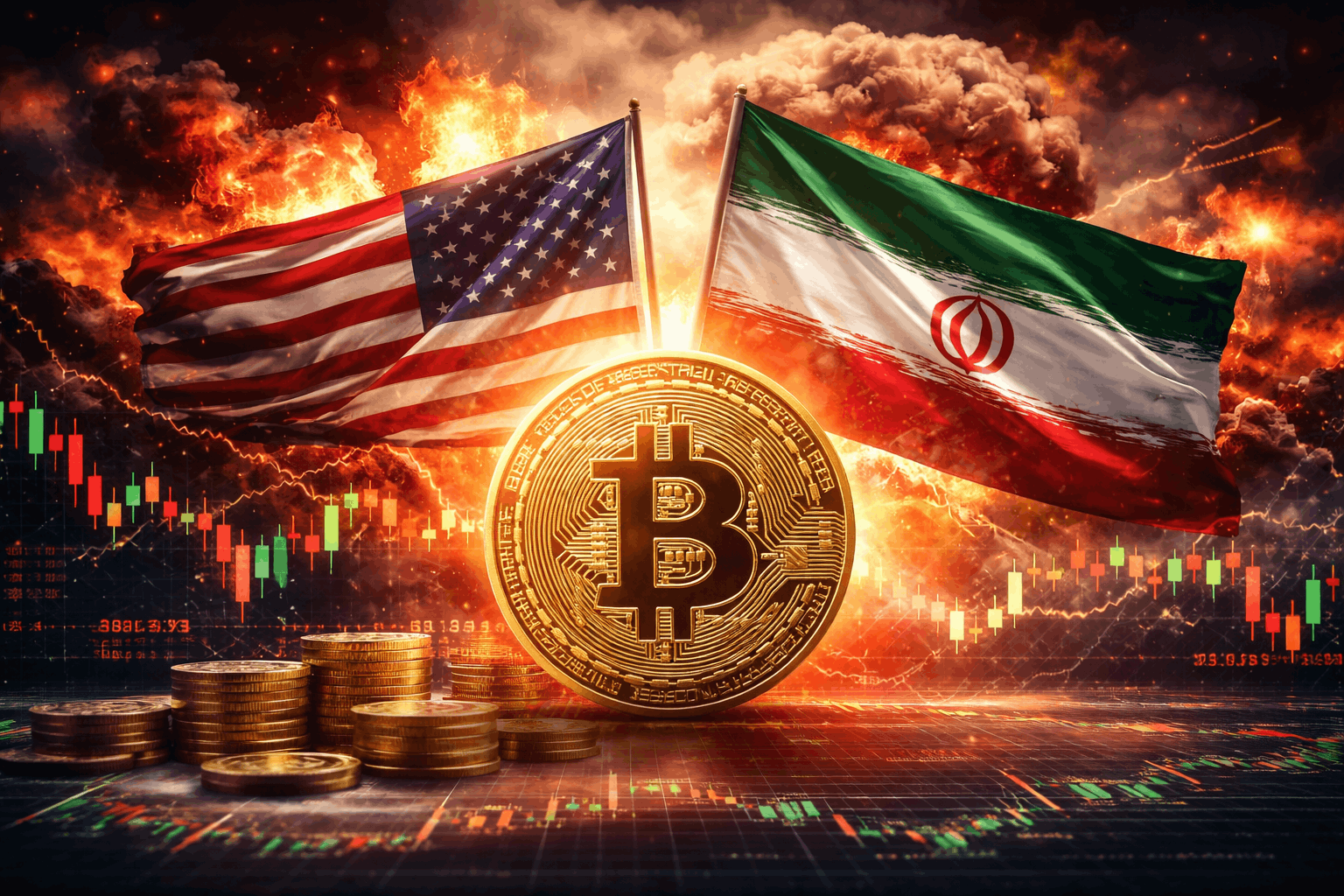
The cryptocurrency industry is evolving rapidly, and governments worldwide are paying closer attention to how digital assets are traded, stored, taxed, and regulated. As crypto adoption continues to expand, regulatory authorities are introducing new policies to improve investor protection, prevent financial crimes, and establish clearer rules for cryptocurrency businesses.
For investors, traders, and blockchain enthusiasts, keeping track of crypto regulation updates is becoming increasingly important. A regulatory announcement can influence cryptocurrency prices, exchange operations, institutional investments, stablecoin adoption, and the overall direction of the digital asset market.
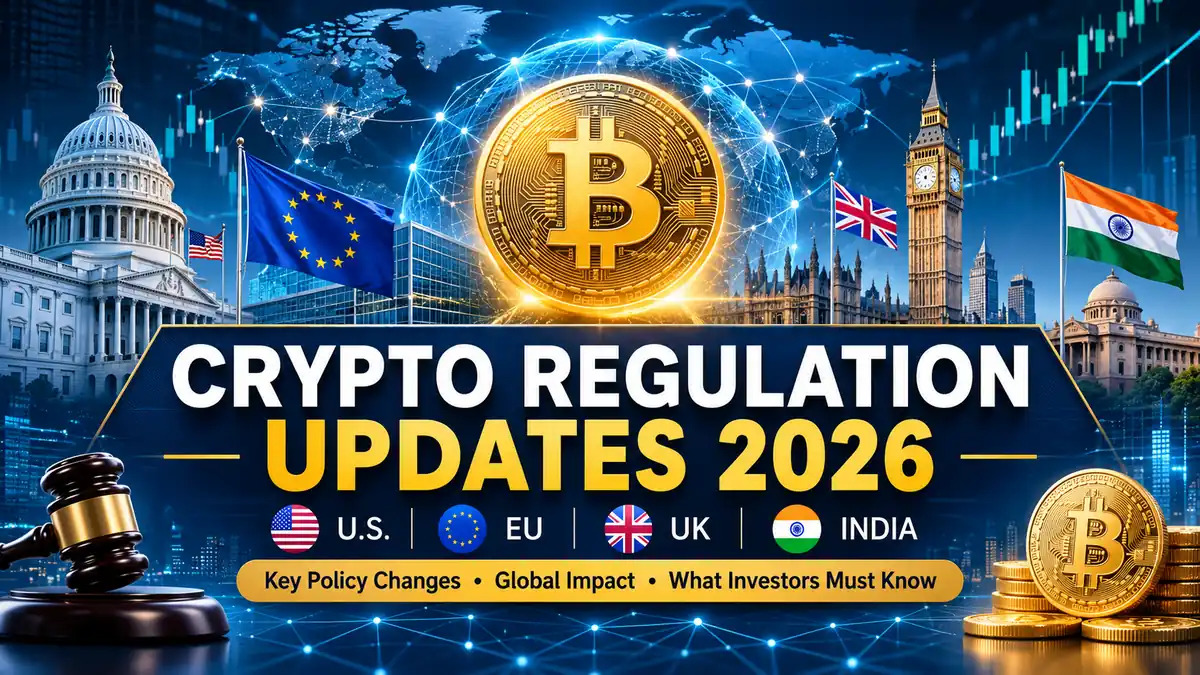
November 2026 brings several important developments across major cryptocurrency markets, including the United States, European Union, United Kingdom, and India.
In this monthly roundup, we explore the latest cryptocurrency regulatory developments, explain what they mean for investors, and highlight the key regulatory trends worth monitoring.
Why Are Crypto Regulation Updates Important?
Cryptocurrency regulations determine how digital assets can be issued, traded, transferred, and held within different jurisdictions. They also establish the responsibilities of cryptocurrency exchanges, wallet providers, stablecoin issuers, and other digital asset service providers.
Understanding regulatory developments can help investors make more informed decisions and identify potential risks.
Here are some reasons why crypto regulations matter:
- Investor protection: Regulatory frameworks can introduce safeguards against fraud, market manipulation, and misleading investment practices.
- Market stability: Clear rules can improve transparency and encourage responsible participation from institutional investors.
- Exchange compliance: Cryptocurrency exchanges may need to follow licensing, customer verification, and anti-money laundering requirements.
- Tax obligations: Regulatory changes can affect how cryptocurrency transactions and profits are reported.
- Institutional adoption: Clearer regulations can make it easier for financial institutions to participate in the digital asset ecosystem.
As cryptocurrency becomes more connected to traditional financial markets, regulatory compliance will play an increasingly important role in the industry’s development.
1. United States: SEC Continues Clarifying Cryptocurrency Regulations
The United States remains one of the most influential markets for cryptocurrency regulation. The Securities and Exchange Commission (SEC), Commodity Futures Trading Commission (CFTC), and other federal agencies continue to shape the regulatory environment for digital assets.
In November 2026, the SEC made further progress in clarifying how existing securities laws apply to certain cryptocurrency activities.
One important development came on November 3, when the SEC’s Division of Corporation Finance issued a no-action letter concerning the native token of a privacy-focused blockchain network. The staff indicated that, based on the specific facts and representations presented, it would not recommend enforcement action in relation to certain token issuance activities without registration.
The SEC also updated its cryptocurrency-related FAQs on November 2, adding guidance on concepts such as central parties, broad-based governance, and functional decentralization.
These developments are important because cryptocurrency projects have frequently faced uncertainty about whether their tokens should be treated as securities or other types of digital assets.
What Does This Mean for Crypto Investors?
The SEC’s continued guidance could help investors better understand the regulatory treatment of different cryptocurrency projects.
However, a no-action letter is not a blanket exemption for all tokens or blockchain networks. Its application is limited to the specific circumstances described in the relevant request.
Investors should consider:
- Whether a cryptocurrency project has clearly explained its token structure.
- Whether the project has disclosed relevant regulatory risks.
- Whether the exchange listing the token operates in compliance with applicable requirements.
- Whether new SEC guidance could affect the project’s business model.
The United States will remain an important jurisdiction to watch as regulators continue developing a clearer framework for digital assets.
2. European Union: MiCA Continues Shaping the Crypto Industry
The European Union has taken a major step toward establishing a unified cryptocurrency regulatory framework through its Markets in Crypto-Assets Regulation, commonly known as MiCA.
MiCA introduces rules for crypto-asset service providers, stablecoin issuers, and other businesses operating within the European digital asset market.
The framework focuses on transparency, consumer protection, market integrity, and regulatory supervision.
Important MiCA Developments in 2026
In October 2026, the European Securities and Markets Authority (ESMA) issued an opinion concerning crypto-asset service providers offering services involving stablecoins that do not comply with MiCA requirements.
According to ESMA’s guidance, authorised crypto-asset service providers should stop providing covered services involving non-compliant asset-referenced tokens and e-money tokens to EU clients.
The guidance also addresses how existing customer holdings should be handled, allowing limited and supervised activities where necessary for withdrawal, transfer, conversion, liquidation, or safekeeping.
Another important development occurred on September 30, 2026, when ESMA published recommendations for reviewing MiCA.
Its proposals include:
- Stronger transparency requirements for crypto marketing.
- Additional safeguards for staking, lending, and borrowing.
- Better disclosure of fees, risks, and potential losses.
- Clearer rules for decentralised finance (DeFi).
- Improved supervision of unauthorised crypto service providers.
- More consistent classification of cryptocurrency tokens.
It is important to understand that these recommendations are proposals for improving the existing framework, not automatically new laws.
What Should Investors Know?
MiCA is changing how cryptocurrency businesses operate in the European Union.
Investors should pay particular attention to whether their cryptocurrency exchanges and service providers are authorised, whether their stablecoins meet applicable requirements, and whether certain services may become restricted.
For investors using stablecoins, checking regulatory compliance and the availability of withdrawal services is particularly important.
3. India: FIU-IND Strengthens Crypto Compliance Enforcement
India continues to be an important cryptocurrency market, with increasing regulatory attention on digital asset service providers.
Although India has not established a comprehensive cryptocurrency-specific regulatory framework comparable to the EU’s MiCA, crypto-related activities are subject to existing legal and financial compliance requirements.
One of the most important regulatory authorities in this area is the Financial Intelligence Unit–India (FIU-IND).
FIU-IND Takes Action Against Non-Compliant Crypto Platforms
On September 9, 2026, the Ministry of Finance announced that FIU-IND had issued notices to 15 virtual digital asset service providers for non-compliance under the Prevention of Money Laundering Act (PMLA), 2002.
The action included notices concerning platforms and service providers such as WEEX, BloFin, Bitunix, DigiFinex, Toobit, XT.com, Pionex, and others.
The authorities also issued directions concerning the removal of applications and URLs associated with the identified entities from public access in India.
Under India’s existing framework, virtual digital asset service providers conducting specified activities involving Indian users must register with FIU-IND as reporting entities and comply with applicable anti-money laundering and counter-financing of terrorism requirements.
These obligations can apply to both domestic and offshore service providers, depending on their activities involving India.
How Does This Affect Indian Crypto Investors?
The latest enforcement actions highlight the importance of choosing compliant cryptocurrency platforms.
Indian investors should consider the following precautions:
- Check whether a crypto service provider is registered with FIU-IND where registration is required.
- Understand the platform’s KYC and identity verification requirements.
- Maintain accurate records of cryptocurrency purchases, sales, and transfers.
- Understand applicable tax and transaction reporting obligations.
- Avoid platforms that have been identified by authorities for non-compliance.
India’s cryptocurrency taxation framework and its anti-money laundering requirements are separate regulatory considerations. Investors should not assume that FIU registration automatically means a platform or cryptocurrency investment is approved or guaranteed by the government.
4. United Kingdom: Preparing for a New Crypto Regulatory Framework
The United Kingdom is also moving toward a more comprehensive regulatory framework for cryptocurrency businesses.
The Financial Conduct Authority (FCA) is playing a central role in establishing rules for companies involved in cryptocurrency trading, custody, stablecoin issuance, and other digital asset activities.
In September 2026, the FCA published guidance explaining how the upcoming regulatory regime will apply to crypto businesses.
The authorisation application gateway opened on September 30, 2026, allowing eligible firms to begin preparing and applying for authorisation.
The new regime is scheduled to come into force on October 25, 2027.
It covers activities including:
- Issuing qualifying stablecoins.
- Operating cryptocurrency trading platforms.
- Dealing in and arranging cryptocurrency transactions.
- Safeguarding crypto assets.
- Arranging cryptoasset staking services.
Additionally, the UK Treasury made further amendments to the relevant cryptoasset regulations on November 18, 2026, clarifying aspects of the upcoming framework.
What Does This Mean for Investors?
The UK’s regulatory developments indicate a shift toward stronger oversight of cryptocurrency businesses.
Investors should monitor how the FCA’s authorisation requirements affect exchanges, custodians, stablecoin providers, and other service providers.
For businesses planning to operate in the UK, understanding the upcoming authorisation requirements will be essential.
5. Stablecoin Regulation: An Increasing Priority for Governments
Stablecoins have become an important part of the cryptocurrency ecosystem. They are widely used for trading, cross-border payments, decentralized finance, and transferring value between blockchain networks.
However, their growing popularity has raised concerns about financial stability, reserve management, redemption rights, and consumer protection.
As a result, stablecoin regulation is becoming a major priority for financial authorities worldwide.
The European Union’s MiCA framework establishes specific requirements for asset-referenced tokens and e-money tokens.
In the United States, stablecoin oversight is also developing through the GENIUS Act and related regulatory implementation.
Regulators are increasingly focusing on areas such as:
- The quality and transparency of stablecoin reserves.
- Redemption rights for token holders.
- Financial reporting and audits.
- Anti-money laundering compliance.
- Operational security and risk management.
- The responsibilities of stablecoin issuers.
Why Should Crypto Investors Pay Attention?
Stablecoins are often used as an alternative to traditional fiat currency within cryptocurrency markets.
Changes in stablecoin regulations could influence exchange liquidity, trading pairs, DeFi platforms, and international cryptocurrency transactions.
Investors should understand which stablecoins they are using, how their reserves are managed, and whether the issuer complies with the relevant regulations in their jurisdiction.
6. Major Crypto Regulatory Trends to Watch in 2026
Beyond individual country-level developments, several broader regulatory trends are shaping the cryptocurrency industry.
A. Stronger KYC and AML Requirements
Know Your Customer (KYC) and Anti-Money Laundering (AML) requirements are becoming increasingly important for cryptocurrency exchanges and service providers.
Regulators want businesses to identify customers, monitor suspicious transactions, maintain records, and report relevant activities.
These measures are intended to reduce financial crime and improve transparency across the digital asset ecosystem.
B. Increased Focus on DeFi Regulation
Decentralized finance allows users to access financial services through blockchain-based protocols without relying on traditional intermediaries.
However, regulators are examining how existing financial laws should apply to DeFi platforms, protocol operators, governance structures, and businesses providing access to decentralized services.
Future regulatory developments could introduce clearer obligations for certain DeFi-related activities.
C. Greater Oversight of Crypto Exchanges
Cryptocurrency exchanges are facing increased scrutiny regarding licensing, custody, consumer protection, market manipulation, and financial reporting.
Regulators are particularly interested in ensuring that customer assets are appropriately protected and that trading platforms maintain transparent operational practices.
D. Crypto Tax Transparency
Tax authorities are paying greater attention to cryptocurrency transactions and reporting requirements.
Investors may need to maintain accurate records of their trading activities, transfers, staking rewards, and other taxable events.
Tax rules differ significantly between jurisdictions, making it important to understand local requirements.
E. Institutional Participation and Tokenization
The growing interest in tokenized financial assets is encouraging regulators to examine how traditional securities laws and financial market regulations apply to blockchain-based products.
This could create new opportunities for institutional participation while introducing additional compliance requirements.
7. How Can Investors Stay Compliant With Crypto Regulations?
Keeping up with cryptocurrency regulations can be challenging because laws and compliance requirements vary from one country to another.
However, investors can take several practical steps to reduce regulatory risks.
1. Use reputable cryptocurrency exchanges
Choose platforms that meet applicable registration, licensing, and compliance requirements in your jurisdiction.
2. Understand local cryptocurrency tax laws
Learn how cryptocurrency profits, trading transactions, staking rewards, and other digital asset activities are treated under local tax rules.
3. Maintain transaction records
Keep records of deposits, withdrawals, purchases, sales, wallet transfers, and other relevant transactions.
4. Follow official regulatory announcements
Monitor updates from financial regulators, government departments, and recognised authorities rather than relying exclusively on social media posts.
5. Understand stablecoin and wallet risks
Review the issuer, reserve information, redemption arrangements, and applicable regulatory status of stablecoins and digital asset services.
6. Be cautious about regulatory rumours
Not every proposed regulation becomes law. Always distinguish between a draft proposal, consultation, regulatory guidance, and an enacted legal requirement.
8. What Can We Expect From Crypto Regulations in the Coming Months?
The next phase of cryptocurrency regulation is likely to focus on implementation, enforcement, and greater clarity around emerging digital asset services.
Some important areas investors and businesses should monitor include:
- Further clarification of cryptocurrency token classifications in the United States.
- Additional MiCA developments concerning stablecoins and crypto service providers.
- Implementation preparations for the UK’s 2027 crypto regulatory framework.
- Further FIU-IND compliance and enforcement actions in India.
- New regulatory approaches to DeFi, staking, and crypto lending.
- Stronger disclosure and transparency requirements for stablecoin issuers.
- Increasing international cooperation on cryptocurrency taxation and financial crime prevention.
These developments could influence how cryptocurrency exchanges, blockchain projects, institutional investors, and individual traders operate in different markets.
However, the timing and final form of proposed regulations will depend on the decisions of individual governments and regulatory authorities.
Conclusion
Cryptocurrency regulation is entering an increasingly important phase as governments work to balance innovation, financial stability, and investor protection.
The latest developments in November 2026 demonstrate that major markets are taking different approaches to regulating digital assets. The United States is continuing to clarify token classifications, the European Union is strengthening its MiCA framework, the United Kingdom is preparing its upcoming regulatory regime, and India is increasing enforcement of existing compliance requirements.
For investors, understanding these developments is no longer optional. Regulatory changes can influence cryptocurrency exchange operations, stablecoin availability, taxation, institutional adoption, and the overall digital asset market.
Staying informed, choosing compliant service providers, maintaining accurate transaction records, and following official announcements can help investors navigate the changing cryptocurrency landscape.
Follow CryptoKnowmics for the latest cryptocurrency regulation updates, Bitcoin news, blockchain developments, and global digital asset market insights.
FAQ What are the latest crypto regulation updates in 2026?
Is cryptocurrency legal in India in 2026?
What is MiCA in cryptocurrency regulation?
How do SEC regulations affect cryptocurrency investors?
Why are governments increasing cryptocurrency regulations?
Will cryptocurrency regulations affect Bitcoin prices?
How can I stay updated on global cryptocurrency regulations?