
The situation is quite intense right now in the cryptocurrency market. Bitcoin has lost 50% of its value since November. This isn’t unusual for a cryptocurrency; it went through a similar slump from April to July 2021, and then immediately recovered. From a statistical standpoint, Bitcoin appears to be a high-volatility asset with no clear medium- or long-term trending or reverting patterns. It’s not a completely random walk in which the future path is unaffected by previous price fluctuations, but it’s closer than most major assets.
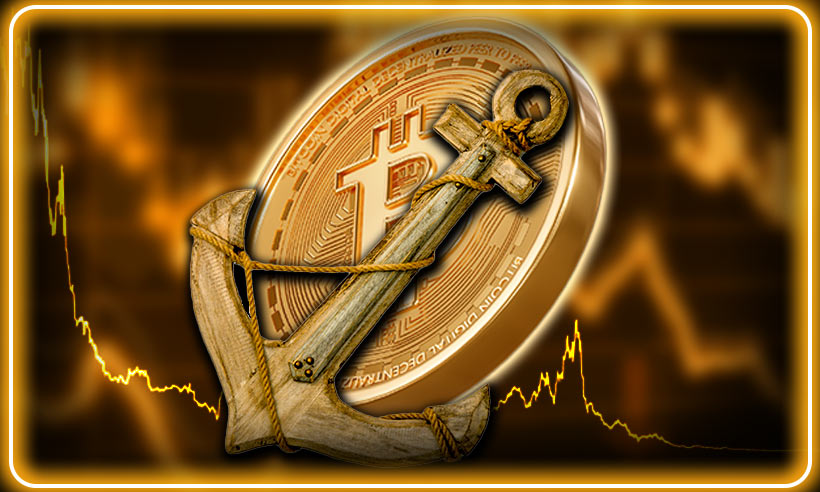
Bitcoin Lacks ‘Economic Anchor’
Due to its volatile nature and the market-wide correction in crypto, there has been a lot of criticism going around regarding digital assets (especially Bitcoin), all over the internet. The recent one came from Nassim Nicholas Taleb, author of “Black Swan”, who sent out a tweet that went viral. He said:
“For a contagion-driven asset with no economic anchor such as #BTC, a falling price does not make it ‘cheaper’ and more attractive. A falling price makes it less desirable [and], paradoxically, more [expensive]. Why? Because the price is its only information.”
For normal securities, the price depends on information. For #BTC, price is information. https://t.co/01XLbHESXt
— Nassim Nicholas Taleb (@nntaleb) January 22, 2022
This is not the case experimentally over the brief history of Bitcoin. Buying Bitcoin when the price was falling was just as appealing as buying it when the price was climbing in the past. Taleb, on the other hand, presented an economic claim rather than a statistical one. So it doesn’t matter if BTC holds the title of “Economic Anchor,” the largest cryptocurrency is here to stay.
Bitcoin is Not the Only One in this Team
A point to keep in mind is that numerous other “contagion-driven” assets lack an “economic foundation.” Art, diamonds, money, and a variety of other items have value only because other people value them, not because they may be used economically. The US dollar is a particularly valuable contagion-driven asset that lacks an economic base. It has a significant tendency to trend, unlike Bitcoin. If the value of the dollar is declining owing to inflation, it will most likely continue to fall. No one buys or sells the dollar because it is cheap during inflation or expensive during depressions. The exact reverse occurs.
The US Dollar too is not an anchor. The dollar has something that Bitcoin does not: a government and banking system that helps to keep its value stable at all times. However, it is not a mooring, and the US Federal Reserve does not attempt to restore the dollar to pre-inflationary levels. It’s an engine that prevents the ship from drifting too fast. If the dollar is fast losing value, the Fed will create pressures that will halt the slide but not reverse it, allowing it to return to its prior level.
This is the world in which Bitcoin arose and gained acceptance among technophiles, the financially disadvantaged, and those who distrust the government and banks. Bitcoin served as a lifeboat for those thrown overboard by the government ship, as well as for everyone else if the traditional financial system floundered due to a lack of an anchor. Anchors aren’t required for lifeboats.
With the Pandemic and Inflation Becoming the Norm, Bitcoin & Crypto Can Only Grow
The world economy came down during the COVID-19 pandemic. The world seemed like it came to a stand-still. And this was the time when Bitcoin and other cryptocurrencies showed their full potential. The fact that cryptocurrencies may be traded from anywhere in the world helps to relieve some of the liquidity issues that can develop if local governments impose trading restrictions as part of a lockdown. As a result, when compared to alternatives, cryptocurrencies become more appealing. Furthermore, investors who are concerned that a crisis may prompt central banks or political players to intervene in the market may prefer to participate in the decentralized crypto market. Bitcoin can help investors mitigate political risk and so become more appealing.
Inflation encourages spending so the fiat money you hold in your hand or your bank account is losing value unless it is invested to make returns. Rising prices of items may be seen almost everywhere else as well. According to economists, a big part of this is because money’s ‘purchasing power’ — such as the Indian rupee — depreciates over time and is tolerated as a necessary evil to keep the economy running. Bitcoin prices, on the other hand, are said to be able to buck this tendency, allowing the money to preserve its worth. In a message to clients, JP Morgan Chase noted that “institutional investors appear to be returning to Bitcoin, potentially considering it as a superior inflation hedge than gold.”
Faith is the Economic Anchor for Bitcoin
As Bitcoin’s value and acceptability developed, it gained an initial economic foundation in the belief that some official currencies and financial institutions would be unappealing to many people, resulting in huge demand for Bitcoin transactions and deposits. The anchor for Bitcoin is the faith that it would be a key store of value for the crypto-economy and a main exchange currency with the traditional financial system when crypto projects supply real services to willing clients.