Crypto space has proven itself to be unstoppable and is expanding at an unprecedented rate. Countless cryptocurrencies have emerged in the market over the years and hold the potential to replace traditional currency. However, unlike your traditional currency, cryptocurrencies are digital assets and require crypto wallets to store the crypto tokens safely. Keeping a steady eye on the evolving crypto space, Cryptoknowmics provides reliable information on crypto market news, trends, projects, wallets, etc. With several latest wallet news available online, it can be difficult to choose. Our platform helps you filter and find the latest news on crypto wallets in the market according to your need and preference. Cryptoknowmics is a decentralized platform that aims to fluently help and guide crypto enthusiasts into the crypto space. Our platform offers in-depth research and insights into numerous variable that encompasses the crypto market including crypto wallets.
Rakuten Wallet, the cryptocurrency exchange platform and wallet from Japan, has decided to offer cryptocurrency margin trading to its customer base.
Asdeclared on Monday, the platform is aiming to introduce new services during the coming spring. However, Raketen Wallet has already begun the process of registration for the forthcoming services.
Benefits Of Crypto Margin Trading
Assuming services in August, Rakuten joined the cryptocurrency trading market with Rakuten Wallet. Initially, Rakuten promoted service of spot trading with only three significant cryptocurrencies which were Bitcoin, Bitcoin Cash andEthereum.
Still, with this new margin services, the exchange would feature two new digital currencies–Ripple andLitecoin– suggesting traders could take long or short positions for five pairs – BTC/JPY, BCH/JPY, ETH/JPY, XRP/JPY and LTC/JPY.
The declaration also mentioned that the exchange platform would provide leverage of about 2x to the traders that were using margin calls. This was as per the recent choice of FSA(Financial Services Agency), a financial market regulator from Japan, to restrict the leverage of cryptocurrency margin trading from 4x to 2x.
Japan Is A Growing Market For Digital Currencies
Despite several significant cryptocurrency exchange hacks, including Coincheck and Mt. Gox, Japan is still the biggest crypto market when it comes to trade volumes. To keep a hold on the market, the regulator also mandated the licensing of crypto exchanges providing services in Japan.
It was previously identified as Everybody’s Bitcoin which Rakuten rebranded after it purchased the platform for 265 million yen in 2018. Rakuten Wallet allows one to convert Rakuten Loyalty Points to cryptocurrency in order to attract more customer from the market to its platform.
The announcement added that as the cryptocurrency exchange business of Rakuten Group, Rakuten Wallet would proceed to offer transaction services that users could use securely and safely, and further develop its services by taking advantage from Group synergy.
Ripple has freshly released another 1,000,000,000 XRP worth of $230 million through its escrow wallet, as a part of its monthly escrow release. Traders were hoping for a likely sell-off as Ripple opened another 1 billionXRP through its escrow wallet.
Although usually opened at the beginning of the month, the practice had been subjected to persistent criticism each time it has occurred. The question prevailed why Ripple needed more than $200 million in supplies every month?
A Part Of Ripple’s Standard Procedure
According to some reports, Ripple as a standard procedure’s part always released one billion XRP every month. These constant sell-offs and unlocks, by the company, have prompted some individuals to compare Ripple with thePlusToken scheme and how they dumped money on the market.
Earlier today, Ripple added 1 billion XRP token to its market supply via two different unlocks of 500 million XRP each. The responses to the news were very much negative. Several expected that the unlock would encourage a significant sell-off in the market.
However, Ripple was not able to reveal why it required all those funds every month, which usually totals over $200 million per month. The team has stated that it was the protocol and something that has been established for some time. However, there was no clarity on how these funds were spent was not always completely clear.
XRP Experiences A Collision In BitMEX
A couple of weeks ago XRP experienced a flash collision to $0.15 onBitMEX, which agitated many traders on the crypto exchange platform. The shockingly red wick made mass liquidations on BitMEX, but the exchange was not willing to repay funds to those who were harmed.
The monthly release of almost a billion token has had a lasting impact on XRP price which has been already struggling ever since 2017 high. Even when other altcoins have managed to see both highs and lows in the time frame, XRP hasn’t managed to break the psychological barrier of $0.30.
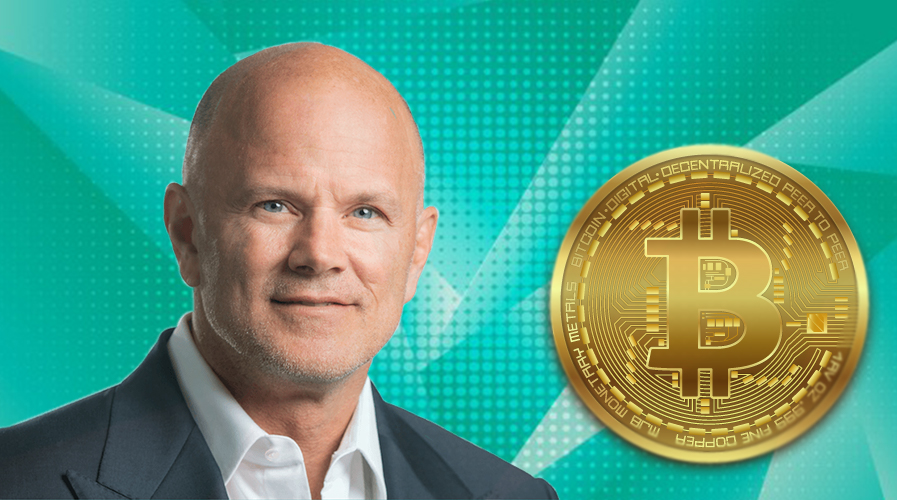
Mike Novogratz, CEO of Galaxy Digital, has tried to clarify what exactly happened to the safe-haven status ofBitcoin. As per his recent tweet, he cited that investors chose to bring down leverage during such unpredictable events and that could have potentially led to the decline in prices of Bitcoin.
How did $btc go from being a hedge against bad stuff to getting washed out and trading like a risk asset? When things go from bad, to very very bad like they did last week, investors take leverage down as fast as they can. They book profits to make up for other losses. Ouch.
Bitcoin Fails To Be Considered As A Store Of Value
This week would definitely go down in history as the U.S. stock market suffered from its most significant correction due to the great depression which also led to the downfall in oil prices of about 16 percent.
When a ruthless sell-off gripped the global markets, Bitcoin failed to be considered as a store of value, which several believed should be its underlying use case. In reality, Bitcoin showed the worstperformance than any other traditional asset, dropping 15 per cent of its price within a week. At the press time, Bitcoin was trading just beneath its significant support level of $8,500.
Bonds Became A Safe Haven After The 2008 Crisis
While gold bugs rapidly dismissed Bitcoin as a hedge against uncertainty in the economy, the claim of Novogtatz about investors maintaining gain seemed to be valid.
A great surprise which came during this turbulent week was that the price of goldrecorded a drop of 5 percent as well which really started the debate it was supposed to be the most reliable store of value.
Much similar to the crisis which occurred during 2008, investors began liquidating both gold and stocks for satisfying their calls of margin. Cash and bonds proved themselves to be the true safe-haven during those troubled times.
On 1 March, Mashreq bank, a digital bank from Dubai and Dubai International Financial Centre (DIFC)declared that they had started a new data-sharing platform based on blockchain technology.
This system would provide a facility to quickly open digital bank accounts for licensed corporations and businesses by confirming their identities through an internalblockchain.
Firms Will Get Several Benefits From The Launch
Mashreq achieved this by eliminating the current KYC procedure which relied on paper and replaced it via a blockchain-focused digital one. DIFC prepared each differentKYC record as a portion of a firm’s corporate license application. With the user’s permission, this information was then shared electronically with the Mashreq bank with the help of the blockchain. This made the process of opening a new bank account simpler for the firms. The process would make it faster and easier for new firms to do business in the UAE.
As per their statement, Norbloc, DIFC-incubated fintech company offered Fides, a blockchain platform. Its legal agreements were drafted by Gowling WLG, and Deloitte backed Mashreq with program management and governance.
The Change In Framework Makes Fintech Business More Appealing
The recent launch of Mashreq Bank was possible due to this new change in DIFC framework. The DIFC was one of the independent free-zones in Dubai, providing firms 100% possession of their businesses without requiring any local ally.
Its legal framework emphasized protection of data while keeping practices which were compatible with all OECD guidelines andregulations from the EU. Their system was created to aid organizations to process their personal agreement information, while concurrently upholding the right to privacy of every individual.
It was reported earlier that UAE had lately taken a positive attitude on the blockchain and crypto industry. Also, several initiatives based on blockchain are under development besides Mashreq’s platform. The initiatives included Digital Silk Road, a digitized trade project and Bank Trust Network, a platform to exchange documents.
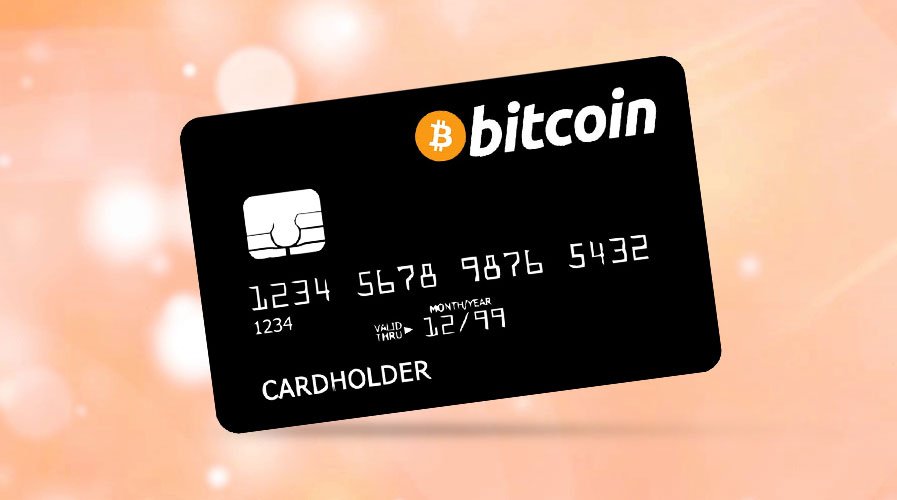
Today, Patricia, a firm from Nigeria,started a bitcoin-enabled ATM card termed as ‘PATRICIA BITCOIN ATM CARD’. Some people also noted that it was Africa’s first Bitcoin card. It formed a global leadership that simplified the way that its new and present customers communicated withBitcoin, providing them complete financial transactions with the swipe of a card.
The company is providing a simple, unique entry-point with the help of its specialized card. Its system gave both new and old customers an instantaneous facility to take out money immediately from their Naira or BTC wallets, make online transactions, perform POS and withdraw cash.
A More Comprehensive Economy
The Patricia Card would allow the customers to perform immediatetransactions without any delay or network problems. The customers could receive funds through their Patricia wallet, which would enable them to save their bitcoins and cash. Also, it enables users to transfer funds to any wallet that are beyond the eco-system.
The firm intended to grasp its insights, user-centric services, engaged new users, reached new segments and markets. This was in addition to the dedication of Patricia towards centred based product growth, financial inclusion, and assisting in offeringsolutions that enabled an economy which was more comprehensive.
Fejiro Hanu Agbodje, founder of Patricia Technologies Limited cited:
“The thing about the idea is that it should be futuristic and ambitious, but achievable. We know that payments would not (and cannot) change overnight and that there will be a long transitional phase before the world begins to transact in cryptocurrencies completely. That’s why we merge digital infrastructure with current banking infrastructure card and processing.”
He added:
“This is an important step to encourage the mass adoption of cryptocurrencies. With Patricia card, our customers across the globe have access to money, buy data, pay bills, make subscriptions and make inshore transactions or over-the-counter. We will enable you to spend your bitcoin everywhere, anytime, and anywhere”.
Greek authorities have finally extradited Alexander Vinnik to France after remaining in custody for 30 months. He is accused of money laundering through Bitcoin (BTC). Prosecutors in France had charged Vinnik with several cases of conspiracy, money laundering and extortion. Also, both the U.S.A. and Russia requested his extradition, which is still pending, earlier he was extradited to Paris. He also expressed his desire to be extradited to Russia, which the Greek officials had rejected.
Alexander Subjected To Offensive Human Rights Abuses
Vinnik will be returning to Greece after the completion of his trial in France. Here, Vinnik would face another extradition to the U.S.A. TheU.S. State Department would question him about subsequent theft of 300,000 BTC and his connection with the Mt. Gox hack. Reportedly, state agents from Russia transferred money through BTC-e to interfere in presidential elections of 2016 in the U.S.A.
Among the three-way diplomatic struggle, the allegedBitcoin money launderer’s legal team stated that he had been subjected to offensive human rights abuses. Also, his lawyers have claimed that prosecutors had kept him in custody without a trial or charges while barring him from contacting with any of the family members.
Alleged Human Rights Abuses Among Vinnik’s Two-Year Detention
According to one of Vinnik’s lawyer, Zoe Konstantopoulou, in a phone call, levelled accusations against the Greek authorities for human rights abuses.
Konstantopoulou revealed that he had been subjected to unreasonable detention for 30 months, which the Greek constitution has prohibited, and throughout this time, Vinnik has been suffering inhuman and cruel treatment from the officials.
Konstantopoulou cited Vinnik was held without charges, trial, or any order from the court. Also, he has claimed that Vinnik’s case could be politically driven by France, Greece, and the U.S.A.
Besides this, Konstantopoulou unveiled that Greek law enforcement has prevented Vinnik to contact his family. He stated Greek law enforcement had prevented him to look after his wife, who has been identified to have brain cancer.
With the Coronavirus outbreak killing about 638 people, mostly from China, the epidemic ramifications continued to affect businesses and lives in the region. The crypto industry has also been affected by the Coronavirus outbreak.
According to a declaration on Thursday, the TOKEN2049 crypto conference, which was planned to be organized in Hong Kong either on March 17 or March 18, had now been postponed to October.
A post from organizers read over past weeks they have been closely observing the global developments around the Coronavirus. Also, uncertainty prevailed, although Hong Kong was controlling the situation properly and had taken strict precautions to include any potential impact.
The post added that the event would remain similar in most aspects, such as schedule and venue, although it was postponed. And the agenda might be changed as new speakers were added.
Binance Also Postponed Its Event
The news came after some days when Binance forcefully had topostpone its Binance Blockchain Week in Vietnam, which was scheduled for 29th February to 4th March in the Ho Chi Minh City of Vietnam. On 3rd February Binance wrote they kept everyone’s health in safety and priority during their events, and among this Coronavirus outbreak, they have postponed the event to protect the attendees from health risks that could occur during public gatherings. As yet, Vietnam event new dates haven’t been declared. The latest report from CNN stated that Coronavirus, also referred to as “2019-nCoV” – had infected under 31,000 people in over 25 territories and countries. Twelve cases were confirmed for the U.S., while three came from the U.K.
Hong Kong Ordered Chinese Visitors To Isolate Themselves
In Hong Kong, authorities have been ordering people who came from mainland China to isolate themselves for 14 days, the virus incubation period. Center for Systems Science and Engineering of Johns Hopkins University provided a live map that showed that the island now had about 24 cases of viral pneumonia, and recently observed first death from the disease beyond China.
On Thursday, a doctor from China died from an illness from the Coronavirus. He was the one who warned people about the potential severity of the Coronavirus and has now been adorned on theethereum blockchain. Earlier on Friday, a smart contract on ethereum blockchain was developed which had source codes signifying a monument to Dr. Li Wenliang. The local police reprimanded him because he sent false information.
AltsBit, the cryptocurrency exchange announced about the attack of an anonymous hacker which resulted in the loss of nearly all funds on its platform. The Exchange notified that the stolen holdings include Bitcoin, Ethereum, Pirate coin, and Verus Coin. The small number of funds that were stored in thecold wallet (offline wallet) was secured.
Dear users,
Unfortunately we have to notify you with the fact that our exchange was hacked during the night and almost all funds from BTC, ETH, ARRR and VRSC were stolen.
A small part of the funds are safe on cold wallets.
The Exchange announced that the technical glitches in the network led to the loss of funds. After the calculation of stolen funds, AltsBit is liable to return 46949 KMD tokens as well as 436000 VRS tokens to users. These calculations were revealed after the primary research only, still, the complete report of lost funds is not present. The AltsBit Exchange claimed itself as the reliable crypto partner in its bio but the news of second hacking in the year made the investors skeptical about the Exchange.
Possible Speculated Reasons Behind Hacking
After the announcement of stolen funds, traders, as well as crypto enthusiasts, questioned about the maintenance of regulations related to Exchange. The need for the proper documentation before granting the license to Exchange was prophesied. Many of the expertise employed about the importance of a cold wallet over the hot wallet to store the coins. The Exchange was also accused of keeping the tokens on the Exchange rather than using the offline wallets.
With the series of sophisticatedhacking attacks in recent years, there is a need for a secured crypto network. The network must be protected from cyberattacks to gain the confidence of fresh investors. Also, the stricter regulations which relate to granting a license to Exchange must be employed. It must be noted that if technology can popularise the cryptocurrency, it can also sideline the same if the funds are stolen daily.
A digital B2B payment platform, PayStand has successfully raised $20 million in its Series B funding round. Fresh investment from firms such as Battery Ventures, DNX Ventures, Commerce Ventures, Epic Ventures, and Wildcat Ventures was included in the financing round. Existing investors who participated were BlueRun Ventures, Leap Global Partners . DNX Ventures’ Managing Director stated they had seen an important disruption in consumer payments from several firms such as PayPal, Venmo, and Venmo.
The Managing Director added
“However, U.S. B2B payments represent an even larger opportunity — currently over half of the $25 trillion in B2B invoices are still paid in paper check — yet no one stepped in to disrupt the market until PayStand. We are thrilled to be part of the team to help them realize the transformation in B2B finance.”
PayStand CEO cited they were inspired to gather some iconic group of investors who shared their passion for a system that is more financially open. The firm planned to utilize the funds to expand its services products further, as well as growing success, sales, engineering and marketing teams in its Scotts Valley, Guadalajara, and California Mexico offices. The technology of PayStand digitized the cash cycle for firms in several types of industries, such as manufacturing, insurance, pharmaceuticals, and transportation.
The Firms Has Seen A 240% Average Growth
The PayStand platform aims to ease complex commercial payments and transactions. It also accelerated the transactions for enterprises as Venmo had done for its basic consumer-to-consumer transactions. In the last two years, the firm included 80 new customers from large enterprises and posted a 2.5 times Year-over-Year growth in revenue, as well as over 240% growth in the average monthly subscription. The firm has included about 160,000 businesses transacting on the PayStand platform, and its payment ecosystem has grown 60% over the past year.
South Korea’s POSTECH (Pohang University of Science and Technology) has set itself to provide diplomas stored on blockchain technology to its new graduates.
A local media reported as coronavirus has been threatening the world, POSTECH believed it was no longer safe for graduates to gather at the graduation ceremony. The administration determined to provide graduates with an option to receive their diplomas online, instead of delaying the event. Several researchers have been found looking for blockchain as a solution to contain the Corona Virus. Earlier, an expert from the University of Hong Kong suggested thatblockchain technology could help tackle the Corona Virus.
POSTECH Worried Due To Corona Virus Outbreak
On 7th February, POSTECH would provide an email letter consisting of a QR code connected with the blockchain-stored diploma to its 828 new graduates. A blockchain-based certification service ‘broof’ has created these blockchain-stored diplomas. ICONLOOP, a firm from South Korea, started broof in May 2019. The ‘broof’ service has been allowing users to view, issue and manage online certificates through public blockchain network provided by ICONLOOP.
One official from the university stated due to Corona Virus breakdown, and it was not possible to organize the graduation ceremony at that time. He added that from now onwards, a student would be able to receive the diploma without visiting the school.
Earlier Initiatives From The University
A report stated that earlier in June 2019, POSTECH utilized broof’s technology while issuing blockchain certificates of blockchain CEO course to its graduates. Blockchain-based certificates were not subject to any modification or fraud when compared to traditional online diplomas. Recipients would be able to get information via an encrypted path.
Besides this, other institutions that provide higher education were investigating digital academic credentials. For instance, MIT Media Lab was creating a set of tools to manage and store certificates that would be cryptographically approved on the Bitcoin blockchain.
The JLR’s (Jaguar Land Rover) software team in Shannon, at present, is working ondeveloping a smart wallet. The drivers who would be using the smart wallets, have to share all the information about the road for making it more safer and environment-friendly. This information sharing would be helpful for the drivers also, as it would allow them to earn cryptocurrency credits.
Smart Wallet Uses
While explaining the use of thewallet, Aaron Hetherington, a software developer on the distributed ledger technology team, stated that the wallet would help the JLR’s team to track vehicles. He mentioned that if the vehicle gets hit anywhere then their team would send repair details to the local councils in the UK and Ireland. Hetherington added, “Using cryptocurrency likeIota, we’re able to pass this reward directly onto our customers.”
According to the reports, the transfer credits in driver’s account would aid to automatically pay tolls, parking and electric charging.
Aaron Hetherington’s JLR Experience
Hetherington, while talking about his daily work stated that his team divides the work cycle into two-week sprints. He further said that he created some documentation and even designed documents to code reviews to encoding.
Hetherington also mentioned that if a person wanted to work in JLR Shannon then that person must know a bit of cryptography and should have an ability to break down larger problems into smaller problems. Hetherington added that in JLR Shannon, he has worked with many people from different backgrounds, he has learned a lot from them.
Recently, many established automobile brands have been looking to leverage blockchain technology to ensure driver safety and sustainability. Mercedes and Volvo, both the car manufacturers are using blockchain to track the quality of the Cobalt used in their car batteries. The use of DLT would ensure that the supply of raw products can be tracked right from its origin to ensure quality and public safety.
A smart contract platform, Quras, which provides anonymous, and private-protected transactions, has recently tied-up withBlockchain Nigeria User Group (BNUG), a non-profit association. On 5th February, Quras issued a press release, stating the fresh partnership would allow Quras to grow its developer base and community beyond Asia and to Africa ahead of its mainnet launch in early April.
BNUG, headquartered in Lagos(Nigeria), started operating in 2016, is a non-profit organization which has been aiming to improveblockchain development, adoption and education in Nigeria and across Africa. BNUG has also been a member of Organization of Blockchain Technology Users. Organization of Blockchain Technology Users is an incorporated and dually-registered trust with the Corporate Affairs Commission of Nigeria.
A spokesperson from BNUG reported that its initiatives and programs are aimed to encourage African citizen to develop infrastructure skills and blockchain coding. The multi-platform exposures and primary knowledge of blockchain application development would enable participants to understand how smart contracts could be created.
BNUG’s leader, Chimezie Chuta, stated:
“The partnership will provide Quras with massive brand exposure in Africa. Secondly, our local developers will be exposed to the Quras privacy-focused blockchain platform, and they will be able to learn how to build solutions on the platform.”
Quras Extends In The African Market
Through this partnership, Quras intends to reach the Nigerian market and examine the more significant rising market economies of sub-Saharan Africa.
In a press release, Shigeki Kakutani, Quras CEO, commented that building an active developer based community with BUNG was essential for their firm.
“Currently, there are more than 500 blockchain engineers in BNUG, and we envision the association to reach their target of 1,000 engineers. A strong and growing developer community is very important for Quras as these engineers will lead the future development of applications on our platform.”
Africa Has Been Spending In Blockchain
As blockchain technology has gained adoption across multiple industries in Africa, the community has been taking steps to expand its talent pool on the continent. A report that came a few months ago stated Africa Blockchain Institute would start first blockchain school in Rwanda in 2020. The courses included would be blockchain essentials certification; blockchain enterprise, blockchain coding and blockchain for lawyers would be offered to the local professionals, developers and leaders.
The Financial Supervisory Authority (BaFin) of Germany has eased the licensing process for crypto custodians that work from outside the country. On January 1st, the regulators issued its latest guidance, according to which crypto custodians operating in Germany without a license would not be penalized. Instead, such firms would come within similar protection which other German-based crypto custody companies possessed according to the new law, which came into effect on 31st January.
This signified the firms should state their purpose to apply for a license by 31st March, after which, they could successfully apply for it by 30th November. A partner at Eversheds Sutherland Germany, Carola Rathke, stated they were having such grandfathering mechanism because no firm was capable enough to apply for the license immediately.
Setting the record straight
Earlier this year, Bafin provided an application form to crypto service providers which these firms should submit by 20th November. Rathke added that crypto custody firms should plan before applying for the license by November’s end.
The new law came in response to EU’s AMLD5, which were made to ensure thatcryptocurrency companies comply with the AML and KYC procedures. The industry was compliant towards all the guidances Bafin released over the past several months.
Hildebrandt Comments On Regulatory Authority
Distributed Ledger Consulting Group’s head, Sven Hildebrandt, commented the regulatory authority first makes law and then discovers it wasn’t a wise decision. He added when a law gets passed; regulators start providing administrative policies. His firm was now trying to receive BaFin’s approval so that it could act as a compliance arm of firms that were not able to apply for the license by themselves.
ConsenSys, an Ethereum-basedblockchain solution provider has cut 14 per cent staff amid a significant restructuring in its core business model. The company announced the decision in an all-staff meeting held on Tuesday.
This recent job cut would add itself to the 13 per cent downsizing of the company’s staff done in December 2018. However, ConsenSys has not disclosed the exact figures to be slashed from the workforce.
A Move To Divide The Business
The decision was made because ConsenSys wanted a major restructuring. The move was to divide itself into two parts – one to dedicate in startup investment and another to focus on software development. According to a statement made by ConsenSys, over the past year, it initiated a critical in-depth review and articulated two different strategies to expand and strengthen the ecosystem as a separate investment firm and a software company.
A publication report stated the business roles were divided because the company was facing issue while raising finance. Now, ConsenSys would be looking forward to raising another $200 million, which might make the company one of the few blockchain firms possessing a billion-dollar valuation.
The firm noted it would soon run a software business, in which the majority of its products would be enhanced for a modular stack, including Infura, MetaMask, PegaSys and Codefi, amid many others.
The business centred itself with two objectives: providing infrastructure and tools for the developer, startup communities and decentralized finance; and supporting businesses in trade finance, financial services and commerce sectors deploy and enabling operations for blockchain solutions.
Another Company Closed Its Offices
In May 2019, a company headquartered in New York also restructured its several operations. In December, it shut down offices in the Philippines and India, consequently laying off all the employees.
Joseph Lubin, who has been one of the Ethereum’s co-founders, started ConsenSys. He started it with his own supplies, which he obtained from Ethereum. Still, the company’s business based in Brooklyn was considerably beaten by the bear in the crypto market, especially when Ether’s value went down.
Ripple has taken another major step while aiming to promote low-cost remittances around the world. Lately, the blockchain firm made anannouncement that several financial services companies have started partnering with International Money Express, Inc. referred to as Intermex. Intermex is a significant remittance services firm which has focused on payments across Caribbean global corridors and Latin America.
How ODL Will Benefit Cross-Border Payments
The alliance would allow Intermex to employ On-Demand Liquidity (ODL) via RippleNet so that it could accelerate payments between Mexico and the United States of America. At the moment, ODL has been usingXRP to connect the transactions between the sender and receiver, while moderating the requirement for a pre-funding account in cross-border payments.
A report declared that RippleNet, along with Intermex, would directly involve itself in processing more than 30 million payments throughout the year. The system would consist of a network having more than 100,000 payer locations. Mexico is the country that has gained the third position in terms of remittance recipients. The country has gathered more than 36 billion dollars through remittance in 2019. The report added that with this partnership, Intermex would enable itself to settle major currencies and match the funding time with its settlement demands decreasing costs and offering transparency to their clients.
Paypal Invested Huge Amounts To Support Remittance
Earlier, some reports stated the competition to promote cross-border payments in Latin America has ignited over the past year as PayPal invested $750 million in MercadoLibre in March 2019.
Towards the last year’s end, PayPal made an announcement that it had signed a commercial partnership with MercadoLibre to provide innovative financial solutions that would help underserved people through the traditional financial system. The declaration triggered the stock value of PayPal and pushed it to grow over by 2.5% over 24 hours.
Even after the ODL’s commercialization, Ripple has been making its own moves. The company has been doing notable partnerships with significant companies such as goLance, MoneyGram and FlashFX. All these companies have been utilizing ODL for payments.
Digital Asset, a blockchain company, has unveiled that Samsung Venture Investment Corporation and Salesforce Ventures have invested in its recent Series C financing round. The firm raised a whopping $35 million from the financing round. The firm was concentrated on DAML, its smart contract modelling language, and its integration among other frameworks.
How DAML Adoption Of Digital Asset Will Benefit Industries
Digital Asset stated that it would use the funds to quicken the DAML adoption across various industries, expand the variety and number of DAML-enabled partner products, and finance new developer-focused products development.
Yuval Rooz, co-founder and CEO of Digital Asset, stated that the interest of Samsung and Salesforce Ventures and their investment during the financing round illustrated their confidence in DAML smart contracts.
DAML was used to generate smart contracts and digitally enforce and verify agreements among two or more entities. It has provided DAML commercial integrations while partnering with the Australian Securities Exchange (ASX), which has been creating a new post-trade solution that would useblockchain.
The solution was introduced to replace CHESS, the firm’s legacy Clearing House Electronic Sub register System platform, which has been operating for 25 years. The ASX was using DAML to enable direct connections to CHESS. The exchange believed it would also empower clients to create shared workflows and innovate on top of the platform, with DAML SDK allowing customers to develop applications. Last year, Digital Asset declared its partnership with VMware for DAML and VMware Blockchain integration.
After that, the company announced further integrations with Hyperledger Fabric, Hyperledger Sawtooth, Amazon’s QLDB and Corda. In addition to Salesforce and Samsung backing the blockchain company’s tech, Digital Asset has gained a new board member in Susan Hauser.
Hauser Sees DAML Adoption Fruitful
Susan Hauser, a 28-year Microsoft expert, who worked as corporate vice president in Worldwide Enterprise & Partner Group of Microsoft stated that they would see languages like DAML and smart contracts adoption taking-off in the future. Hauser added that she would be looking forward to lending her expertise and supporting [Digital Asset] transform entire industries with DAML and expand its go-to-market activities, delivering innovation without including trust.
Hackers have compromised five law firms of the USA and asked for two ransoms of 100 Bitcoin (BTC) from each company. First ransom for restoring access to the data, and another one for deleting their copy rather than selling the data.
Hackers Published A Portion Of Data
Emsisoft, a cybersecurity firm, shared data in which a group of hackers called ‘Maze’ already started publishing portion of the stolen data from the firms mentioned above. Within 24 hours leading to 1 February, two of the five law companies were hacked.
The stolen data was published by hackers on two websites, but it would not be released to protect the companies involved. Maze group first mentioned the hacked companies on its website, and if the firms did not pay ransoms, it would display some of the data’s portion. If the firms paid the ransoms, the company’s name would be removed from the site.
Brett Callow, the threat analyst in Emsisoft, stated the hacker’s group had published data in Russian hacker forums, where they announced the use of information in any malicious ways as one wants. Due to this reason, Callow believed that more data would be published until ransoms would be paid by the hacked firms. He also told it appeared very doubtful that a criminal enterprise would delete from which money could be made.
Billions in Ransom Gathered
Callow added that by the 2019’s end, ransomware groups began stealing data rather than encrypting it. Now, to extort payment, cybercriminals were also threatening victims with the data’s release. He stated that the hacker groups have published and stolen data from medical testing labs (including patient information), medical practices, accounting firms (including client information), law firms (including client information) and insurance firms.
Callow further provided the ransomware economy overview. He told that Emsisoft had more than 200,000 ransomware submissions last year, and he expected the submissions to be a quarter of the whole, which came down to about 800,000 cases in 2019. The average demand was now greater than $80000, so, according to his estimations, total ransom asked last year reached $64 billion.
He then said:
“Legal actions like these, as well as the fact that the incidents resulted in highly sensitive data being exposed, is likely to raise the profile of ransomware cases. In turn, that could result in the public thinkingcryptocurrency is ‘just for criminals’ making it difficult for crypto to become more mainstream.”
Ransomware attacks from hackers that were high-profile were more frequent. According to Law Enforcement Cooperation report of European Union Agency’s October 2019 report, ransomware became a leading cybersecurity threat. At the end of 2019, CyrusOne, a data centre provider in Texas, was reported to become a victim of a ransomware attack.
The blockchain gaming industry is growing in many different ways according toDappRadar Statistics. Unlike what most individuals believe, games have a very high retention rate. The games running on Ethereum were able to maintain their retention rates which depend on the way they interacted with the blockchain. However, the games working onEOS blockchain had lesser retention rate and had to depend on the systemic EIDOS airdrop and were less mature in terms of features.
Blockchain Gaming Needs A Strong Uptick In Retention During 2020
Most of the popular gaming offerings retained over 75% on their user base on the market today. Even the less popular ones have successfully managed to retain over 60% of their users.
However, this doesn’t mean that the decline in user base is balanced as it still can be fatal for manyblockchain gaming ventures. There’s one thing that can be said after seeing the stats that good games would always be successful irrespective of underpinning blockchain technology.
The successful non-blockchain games have taught a lesson to blockchain games by building powerful retention features including VIP subscription models and daily, weekly and monthly rewards. Among all the blockchain-based gaming applications, presently Ethereum seems to be on the lead, followed by EOS in second place and Tron andOntology afterwards.
Blockchain gaming continues to be a niche market given the popularity of the blockchain technology and many features including converting one’s game rewards for real-world tokens. The lacking point currently is in attracting user from outside the crypto space. As most of the gaming applications require wallet address in order to leverage blockchain, those not engaged with cryptocurrency are finding it difficult to crack. That can be seen as one of the significant hurdles in the worldwide and widerspread adoption of the crypto industry. Blockchain gamers represent a fraction of crypto user worldwide, which is why regardless of the actual stats.
As the U.K. has left the E.U. this week, Bitpanda, the Vienna-based exchange and Ledger, a Paris-based hardware wallet provider expressed their thoughts on the recent and one of the most controversial political event Brexit. On Friday, there was Ledger’s 7-by-4-meter digital billboard in Canary Wharf, which is London’s financial district which read “take back control.”
What Pascal Gauthier Stated
CEO of Ledger,Pascal Gauthier, stated he used the phrase “to make a point about bitcoin.” He added that similar values were shared between the crypto community and Brexit movement. The billboard read that onlycryptocurrency allows people to take back control. The advertisement was put for 24 hours on Friday.
The advertisement’s goal was to challenge the nativism behind the success of Brexit. Gauthier said Brexit implies to take back control over currency and borders. According to him, Brexit centred in the U.K. while Bitcoin was opposite as it was a borderless and global technology.
On the U.K.’s departure, Bitpanda took a hard decision. The Vienna-based founder and co-CEO, Eric Demuth, believed Brexit was a huge mistake. He added politician tricked several people by short-term goals and people were unable to see the significant impact of Brexit. According to Demuth, no self-advertising politician has the right to strip anyone of their freedom.
Bitpanda’s Goal To Inform About The Alleged Political Grift
Bitpanda paid very much for a multi-day advertising campaign to inform people about this alleged political grift. They told viewers that millions of people could not go wrong unless they are Britishers.
The admonishment would hang at “The Screen” in Canary Wharf together with 38 installations throughout among Scotland, Glasglow and Brussels. Demuth stated they wanted to provoke people and think about how their vote would impact their life.
England’s leading crypto commenter, Peter McCormack, called the sign “hypocritical” and stated real bitcoiners would back Brexit. The crypto commenter, for his part, announced that theoretically, he supported the divorce, though he realized the 1973’s alliance helped in maintaining peace in Europe.
On a call, McCormack cited he didn’t desire to commemorate leaving as it was a total anticlimax and he felt nothing. A Bitpanda representative, Ivis Buric, told the firm received a fake refusal from London’s media owners who refused the advertisement was politically influenced. Buric added there exist some advertising rules and freedom of speech, so they were live on location.
On Thursday night, Bitpanda’s media campaign started, and Buric stated the firm was delighted with the community’s response. She claimed a 12.68 per cent boost in European users. An American crypto luminary and entrepreneur, Charlie Shrem, cited that guerrilla marketing was marvellous.
A crypto arbitrage trading platform, CRYPEXC, has recently begun its global service. The proprietary trading bot created by CRYPEXC predicted the directionality of significant global cryptocurrency exchanges via automated algorithm strategy. It is a solution that automatically trades digital currencies around the clock during the year by calculating the differences in the least trading unit, trading speed, and process of expressing prices at each crypto exchange while reducing errors.
CRYPEXC Will Use Arbitrage Trading
Particularly, it helped users earn more revenue by adopting the concept of arbitrage trading and using market layers and several algorithm programs, including quants and strategic trading. Through the application programming interface (API), the solution was connected with leading global cryptocurrency exchanges, like Binance,Poloniex, P2PB2B, HitBTC and Bittrex. Besides, it would be connected with DigiFinex and Bitz in January and then other exchanges, which would include CoinEX, Coinbene, Kraken and Coinsuper.
CRYPEXC has introduced Excommander 1.1 version, which would allow users to set up template connection options directly, such as high-risk revenue strategy, secure operation strategy, big shot strategy, high-dividend strategy and pump-and-dump scheme; the primary option that could arrange diverse coins and over 20 leading cryptocurrency exchanges; and transition options that could set up ordering rules, trading coins and transition types.
Users could trade digital currencies without risk of custody of cryptocurrencies by merely connecting their exchange accounts with the API based on Robo-advising. With this, users could grasp the globalcryptocurrency trading market in real-time, and explore stabilized and sustainable revenues leveraging numerous strategies provided by CRYPEXC.
The Platform Will Add More Foreign Languages
Currently, CRYPEXC has provided its user manual and website in five languages, including Chinese, English, Korean, Japanese and Vietnamese languages. CRYPEXC would grow its business to the global market by consistently adding other foreign language packs.
For systematic management and operation, the U.S.-based Welcome Rain Corporation was accountable for asset operation, core development, and organizational investment. While the Force Lab was supporting technology, and Inc., International Digital Asset Management, was responsible for operational management and program sale.
Breaching attacks in the crypto industry has made headlines over the years. Even platforms that have established a name for their formidable safety measures had their security threatened by malicious attackers. The most notable case was that to Trezor hardware crypto wallet which was considered as one of the safest ways to store and secure digital assets. A recent report from Kraken Security Labs discovered some flaws that could allow hackers to exploit Trezor Wallets in just 15 minutes.
Recent Revelation From Kranken About Trezor
The recent disclosure of Kraken about Trezor hardware wallet’s vulnerability has posed some serious questions. In short, the Kraken Security Labs observed that both the Tezor Model T and Trezor One hardware wallets could be breached easily. The attack was backed by voltage glitching that could elicit an encrypted seed.
Monero’s former lead maintainer, Riccardo Spagni cited ‘passphrase’ could be the answer. During Magical Crypto Friends’ most recentlive stream, Spagni cited
“Trezor, in particular, in its current form, is very prone to glitching attacks and so use a passphrase. It does make it more cumbersome, but at least the passphrase is not stored on the device, so it is almost like a second factor of authentication.”
Lee’s Suggestions For ‘Giveaway Wallets’
In a similar episode, Managing Director of Litecoin Foundation, Charlie Lee, made another point. Charlie Lee featured on the suggestions of using ‘giveaway wallets’ and cited
“I have seen a lot of people giving away sealed Ledger. I think that is kind of a bad idea. Because you, kind of, want to make sure to buy your Ledgers and Trezors directly from the manufacturer. You never know if it is been tampered with and you do not want to take risks.”
It is not easy to manage one’s cryptocurrency, and among all the options available, hardware wallets were considered to be the best option as it is mostly offline. However, the recent discovery would surely make the manufacturers rethink their safety and security strategy for these wallets as well.
Elon Musk has raised issues about the severe problem of crypto scams on Twitter. In recent years, Tesla CEO, Elon Musk, has become the target of scammers, who utilise fake accounts to portray him and trick people into sending them digital currencies such as bitcoin and ethereum.
Typically, scams involved fake accounts including “giveaways”, which asked people to transfer digital currency to a digital address to get a more significant amount in return. Earlier in 2018, ‘The Independent’ analysed that over 400 people gavecryptocurrency worth thousands of dollars to scammers. However, Musk claimed the problem had got even worse than ever.
Musk States Twitter Should Learn From Google
According to his tweet to 31 million followers, crypto scams on Twitter has reached new heights, and it was not cool. The tweet further read Twitter’s Troll/ bot networks were a dire problem that adversely influenced public discussion and ripped them off.
The CEO requested followers to notice any unusual activity as soon as they observe it. This could allow them to prevent such scams. Musk suggested Twitter could learn from Google by decreasing the influence of malicious accounts.
He tweeted that Trolls/ bots required to be deemphasized relative to apparently real people who were not being paid to push a scam or an agenda. The CEO further wrote Google has still displayed bs/ scam pages; they were just many clicks away.
The problem was stated at Twitter’s recent employee conference. In the conference, Elon Musk appeared through a video link to reply to Jack Dorsey’s question on how the platform could be improved.
Musk announced it would be necessary to distinguish between genuine and fake users to preserve the integrity of Twitter and rebuild trust in its users. He stated how one figure out whether the feedback was genuine or someone was attempting to manipulate the system.
Musk wasn’t the only prominent Twitter user who became the target of such scams with several figures within the crypto community also portrayed.
Vitalik Buterin, Ethereum’s founder, has consistently asked Twitter to provide a solution, as well as John McAfee, a cryptocurrency advocate. Twitter possessed rules to prevent its users from being represented and claimed to have taken critical steps to avoid scams by implementing several tools.
If you delve into the panoply of easy to use, privacy protecting and payment focused cryptocurrencies, you realize that only a handful can meet the minimum requirements to be considered as a reliable digital payment product, with the potential of gaining mass adoption in the future.
Despite ZCash (ZEC) and Monero (XMR) being interesting projects for the same set of purposes that Dash Cryptocurrency was originally designed for, Dash, a combined name for “Digital Cash”, clearly beats all of its competitors in terms of merchants, customers, and users adoption, and in terms of ease of use and implementation.
Besides, the decentralized governance, the voting model, the treasury fund, along with a broad range of coin-related and network-enabled functionalities make Dash one of the most promising blockchain-powered digital currencies in the ever-expanding cryptosphere.
What Is Dash?
To put it in a nutshell, Dash is an open source project that aims to create a user-friendly, scalable and straightforward solution for the payment industry. Since its launch in 2014 from a hard fork of the Bitcoin protocol, the project went through several evolutions and rebranding processes, going from “Xcoin”, to “Darkcoin” before being rebranding to “Dash” in a reference to “Digital Cash”.
Dash’s secure and peer-to-peer network is built in a unique and self-funding model, and is governed and maintained in a decentralized autonomous organization (DAO) form, run by the “masternodes.” Dash permits fast transactions through the unique “InstantSend” functionality and untraceable ones through “PrivateSend”.
Dash – Source: ShutterStock.com
The Dash ecosystem hinges on three pillars: the network users, the miners, and the masternodes.
Network users are the ones that send and receive Dash coins as a means of value exchange using their wallets’ private and public keys.
Miners validate transactions through a Proof-of-Work (PoW) algorithm known as X11, by allocating their computing power to the process, and by adding new blocks to the blockchain.
Masternodes provide additional functionality to the network and decide how funds in the treasury are spent. The block reward in Dash Crypto Price is split into three different parts: 45% of newly created coins go to miners, 45% goes to the Masternodes, and 10% goes into the treasury fund.
The Benefits of Dash
Dash is credited with introducing some interesting features to its ecosystem, with the aim of making improvements over the design of Bitcoin. This eventually resulted in an added layer of privacy protection, and better overall network throughput, faster settlements, and quicker message propagation across the network. In fact, Dash reaped the benefits of its incentivized two-tier network design, a model adopted by the project, rather than the common single-tier found in most cryptocurrency projects.
This network design alternative made it possible to add a broad range of extra services, such as the decentralized mixing function, known as PrivateSend, and the instant transaction settlements known as InstantSend. Dash has proved to be fit for the payments industry, where long waiting times for network confirmations at Point of Sale terminals would be unacceptable.
Benefits – Source: ShutterStock.com
Furthermore, Dash’s governance system makes it one of the most decentralized cryptocurrency projects to date, and allows members that are invested among its community, to vote in a democratic fashion on the strategic decisions of the organization, and on which projects – deemed beneficial to its ecosystem – would get funding from the Dash treasury.
What is InstantSend?
InstantSend is a unique feature offered by Dash that was made possible thanks to its two-tiered network setting. In fact, with most digital currencies, if a transaction is broadcasted to the network, the sender and receiver should wait for a certain number of confirmations to avoid double-spending and ensure the transaction is irreversible.
However, the process of waiting for blocks to accumulate in order to ensure that a submitted transaction is valid is time-consuming and usually takes anything from several minutes to over an hour. This makes most cryptocurrencies unfit for the payment industry and hinders merchants from adopting digital currencies as a means of payment for products and services, since having a customer wait for minutes to confirm a purchase is hardly conducive to business interests.
What is InstantSend? – Source: ShutterStock.com
Thanks to its network of masternodes, a smaller quorum of special nodes can provide an irreversible confirmation on a given transaction in about 1.3 seconds. An InstantSend transaction is handled by having masternodes lock the inputs for it before broadcasting the information to the network, including it to the subsequent mined blocks, and preventing the spending of the locked inputs during the confirmation period.
What Is PrivateSend?
PrivateSend is a Dash Network feature that is used upon request and for a small fee in order to obscure the source of funds and make a transaction untraceable. Just like InstantSend, this functionality is masternode-enabled. PrivateSend is made possible thanks to the fungibility of all Dash coins in the network and works by mixing a user’s funds up with others’, hence breaking their traceable history on the blockchain.
What is PrivateSend?
PrivateSend Process is performed by first breaking a transaction input into standard denominations of 0.01, 0.1, 1 and 10 Dash. Masternodes are then informed that a user is interested in mixing a certain denomination and eventually starts looking for two other users wishing to swap those same denominations.
Once found, a mixing session begins. Inputs are mixed up and users are instructed to pay the transformed inputs back to themselves. This process is repeated a certain number of time, called “rounds” with each denomination, making it increasingly more difficult to establish the origin of the funds.
How Does Dash Work?
Once a Dash transaction is broadcasted to the network, miners attempt to be the first to process and verify it by solving a mathematical problem with their specialized computers. Once a miner succeeds in doing so, all other network miners must come to consensus around the fact that the problem was correctly solved, so that the block would be added to the blockchain, and the miner would get a subsequent reward.
How it Works – Source: ShutterStock.com
With Dash, 45% of the block reward goes to the miner, while 45% goes to the masternodes, and 10% goes to the Dash treasury.
What Is the Dash Network?
As with any other digital cash system, Dash has a blockchain and a process of adding new blocks to it. This process ensures that all entries on the distributed ledger, which all come from transactions taking place across the blockchain, are verified, authentic, and irreversible. Dash has a network of miners that attempt to solve difficult cryptographic problems, through a Proof of Work (PoW) consensus mechanism, and when they do, they would receive the right to add a new block to the blockchain and get rewarded for their efforts.
What is the Dash Network?
In addition to the network of miners, Dash has a second tier network made of masternodes. The latter provides a number of functionalities to the network, such as making transactions faster and more private along with handling the decision-making process in the decentralized autonomous governance system. In essence, miners power the first tier for basic value exchange operations and the prevention of double spending, while masternodes power the second tier providing more features, safety, and security to the blockchain.
What are Masternodes?
The decision-making process in the Dash Network is assigned to aparticular subset of participants called masternodes. Masternodes should put up at least 1000 Dash (DASH) coins in collateral to be proven incentivized enough, to make the best network-wide decisions, ones that would positively impact the whole Dash ecosystem.
Masternodes should also have a static IP address, and meet some preset requirements of CPU capabilities, RAM size, disk space, and network bandwidth. Dash masternodes cast votes on strategic decisions, improvement proposals, and decide which projects to be funded from the treasury fund. They perform standard node functions like relaying messages, hosting an updated copy of the Blockchain at all times and validate transactions on the network.
Masternodes
Before the release of Dash 0.13 and the introduction of the Long Living Masternode Quorums (LLMQ), masternodes used to provide the network with InstantSend for a small fee (confirmed within 1.3 seconds) and PrivateSend (Untraceable transactions that obscure the source of funds) functionalities that set the Dash network apart from its competitors. In exchange for the above functions, masternodes receive 45% of the total block reward.
The current version of the Dash codebase deployed on January 2019, enabled InstantSend by default for the majority of transactions. PrivateSend functionality, however, does not come by default and costs extra fees.
What is Proof-of-Service?
Proof-of-service, PoSe in Dash is a scoring system implemented to check the work of masternodes and the quality of the extra services they are providing to the Network. By utilizing this network functionality Dash is able to ensure that each masternode is online and at the correct block height at all times.
The Dash whitepaper details how it is impossible to game the system and how bad actors, even if they run masternodes, wouldn’t be able to provide any of the quality services that are required by the rest of the network.
Proof of Service – Source: ShutterStock.com
If a given masternode fails to provide an assigned service, a PoSe ban could be enacted at some point and the masternode must be repaired to ensure it provides reliable service. In fact, two quorums of masternodes are randomly selected every block. Quorum 1 (formed by the closest nodes to the current bock hash) is required to check the services of Quorum 2 (formed by the furthest nodes from that hash).
By doing so, Dash makes sure that all work performed to check nodes’ activity is done by the masternode network itself, and that the entire network would be checked about 6 times daily. Dash requires a minimum of six violations prior to deactivating a node.
The current scoring rules in Dash 0.14 version are:
Failure to participate in a distributed key generation protocol DKG: 66% punishment.
Each subsequent block reduces PoSe score by 1
Governance of Dash (DAO)
While governance in centralized companies is performed by a management team or executive board, the governance of Dash is established in a decentralized fashion, commonly referred to as a DAO, which is short for Decentralized Autonomous Organization. The decentralized governance and budgeting system for Dash is carried out by the Masternodes, who are bestowed with the authority of making corporate decisions, and voting on which projects would get a financial backup from the company’s treasury.
If a proposal is to be made on the network for a specific project that would benefit the Dash ecosystem, the proposers should go around and lobby the network, by reaching to the community and seeking their support.
Decentralized Governance and budgeting in Dash
In due course, they should reach out to the masternodes network and submit the proposal. Masternodes can either support or reject a proposal and cast their votes for a limited period of time. The proposals with more support would eventually make it to the funding phase. As described by Evan Duffield, the founder of Dash, Masternodes act kind of like senators in the Dash system. They represent the community and represent the network.
How Does Dash Reach Consensus?
As it is the case with most cryptocurrencies, Dash is based on a decentralized ledger, or a blockchain, that records all the transactions in a growing list, or blocks, which are all linked using cryptography. Dash’s blockchain is secured through a Proof of Work (PoW) consensus mechanism, where a network of miners would compete to solve cryptographic puzzles using their computers in order to add new blocks to the blockchain.
Proof of Work consensus
Once all the users adhering to the protocol and running the “mining” software agree that the cryptographic problem was correctly solved by a miner, a consensus is achieved, the block is added, and the miner is rewarded. The second tier network of masternodes oversee the mining process and have the power to reject improperly added blocks.
Is Dash a Bitcoin Fork or a Litecoin Fork?
On January 18, 2014, Dash was originally launched by Evan Duffield as a fork of Litecoin -which is in return a fork of the Bitcoin protocol – under the name of Xcoin, before rebranding 10 days later to Darkcoin due to a name conflict, and also to bring an emphasis to the project’s focus on privacy.
Is Dash a fork of Bitcoin or Litecoin – Source: ShutterStock.com
The main feature at launch was the X11 hashing algorithm, which came in replacement to Bitcoin’s SHA256 and which aimed at ensuring fairer participation in mining and delaying ASIC mining to the later days of the coin. In January 2015, the 0.11 version release of Darkcoin rebased the project from Litecoin to Bitcoin.
What is the X11 Chained Hashing Algorithm?
X11 is the hashing algorithm created by Evan Duffield, Dash founder, and used as the hash function to mine Dash coins. It takes a different approach to other Proof of work (PoW) algorithms, known as algorithm chaining.X11 utilizes eleven consecutive rounds of hashing, consisting of eleven SHA-3 (A Secure Hash Algorithm standard released by the NIST in 2015) different hashes. Those are blake, bmw, cubehash, eco, groestl, jh, keccak, luffa, shavite, simd, and skein.
The increased level of sophistication and complexity of X11 is believed to make it one of the safest hashing algorithms in use and gives the network an extra layer of security as compared to other PoW algorithms that are single-hash based. In the event of a computing breakthrough to break the hash, a digital currency that is implementing X11 PoW, won’t see its network put in jeopardy unless all 11 hashes were broken simultaneously.
Furthermore, Dash implemented algorithm chaining in order to delay the use of specialized ASIC mining hardware thus limiting the mining centralization threat. Currently, CPU/GPU mining is no longer cost-effective for mining Dash, and the official website lists five ASIC miners available on the market with different hash rate capabilities, Power, Weight, and Dimensions.
Does Dash Solve the Bitcoin Scaling Problem?
Dash features bigger sized blocks than Bitcoin with 2 MB blocks, 2.6 minutes block generation time and a settlement capability of around 56 transactions per second.
As explained in a medium post by Dash creator Evan Duffield, while most cryptocurrency projects have no concrete plans to scale up their projects and get past the massive barrier to mainstream adoption, Dash will be able to rival the likes of PayPal and Visa by using its existing infrastructure rather than just relying on eventual technological advances in hardware and networking that might never come.
Blockchain Scaling Problem
The answer to the scaling question resides in Dash’s second-tier incentivized, high-quality network of masternodes, which are using high-quality VPS hardware to host their nodes, allowing for on-chain scaling.
How is Dash Different to Bitcoin?
While Bitcoin’s inception in 2009 as the first peer-to-peer form of electronic cash that allowed payments to be sent from one party to another without going through a centralized financial authority has attracted a substantial number of users, some design issues arose as soon as the network faced a high level of usage, and proved to be the main stumbling blocks in the way of mainstream adoption.
In fact, the main issue with Bitcoin, is its unsuitability in Point of Sale situations, since the time required to wait for the network to confirm the validity of a transaction could take anything from minutes to hours and even days in certain situations.
Is Dash Different to Bitcoin?
Dash, however, was founded with the idea of making improvements on top of the Bitcoin protocol, bringing built-in privacy functions, a more decentralized network with its DAO governance model, and extremely secure, fast, and tamper-proof transactions thanks to its second-tier incentivized masternodes network. Another key difference between the two cryptocurrencies is transaction fees, which are often much lower in the case of Dash than in that of Bitcoin.
Besides, while the mining rewards are exclusively given to miners in the case of Bitcoin, they are split among miners, masternodes, and the treasury with Dash, which is essential for its self-funding and self-reliant model.
What are Dash’s Competitors
In the following, we will take a closer look at Monero and ZCash, two projects that are getting much attention as the most prominent privacy coins, and are the main competitors of Dash in this regard. In fact, Monero was launched with the idea of introducing a private cryptocurrency that aims to be a digital medium of exchange featuring intractable payments, unlinkable transactions, and blockchain-analysis resistance.
Monero relies on an open source PoW algorithm named cryptoNight, and uses ring signatures and stealth addresses, making it impossible to identify its users. The project core team describes Monero as offering the highest degree of privacy among all cryptocurrencies.
Dash’s Competitors
In terms of scalability, it features a dynamic block size, which could be increased in response to network usage. The latter makes it possible to Monero to process around 1000 transactions per second.
Note: If you want to learn more you can also read our full Monero guide.
ZCash, on the other hand, grew out of the Zerocoin project in 2016 and was designed with the main purpose of providing a high level of privacy and absolute security. It was built using Bitcoin’s codebase like Dash, and works by eliminating all traces of transaction data on its blockchain. ZCash features 2 MB blocks with 2.5 minutes block interval bringing its transaction per second ability to 56 tps. Other Dash competitors include NEM, PIVX, ZEN, and XVC to name a few.
Use Cases for Dash
Since the rebranding from Darkcoin to Dash in 2015, the Dash core team and its community drove the project’s main focus from privacy to cash-like electronic currency. As an electronic payment network, Dash was intended for the general public to use and is focused on fast transaction settlements and micro fee structures.
In Latin America, especially in Venezuela as a concrete example, Dash outperformed most cryptocurrencies during the last couple of years in terms of merchant adoption, despite a downtrend that has been going on since early 2018, and that saw price depreciation of 80%+ for most digital currencies.
The main focus of Dash is to become a cash-like electronic currency
In fact, by late 2018, hyperinflation was hitting with full force, shaking Venezuela’s economy to its core. Besides, most of the initiatives and economic reforms adopted by the Venezuelan government seemed to have failed in stabilizing the economy. The over 95% devaluation of its national currency – the Bolivar – plunged millions of citizens into poverty and despair and induced an unprecedented wave of refugees to neighboring countries.
This has created a fertile ground for alternatives to its national currency to thrive, and locals seem to be turning to cryptocurrencies, especially Dash, as a more stable and reliable means to transact and store value.
Dash Debit/Credit Cards
Dash debit cards work by topping up the accounts linked to the cards with Dash (DASH). The funds can be spent online or anywhere the Debit/Credit card is supported and can also be used for ATM withdrawals. The Dash (DASH) balance is either exchanged prior to the purchase or at the time of it.
With that being said, it is worth point out that a regulatory barrier delayed the appearance of such cards and saw many initiatives such as the much discussed and advertised TenX Dash Debit card canceled over fears of a regulatory crackdown, on the basis of non-compliance with the applicable KYC/AML procedures.
Dash Debit/Credit Cards
Currently, a handful of Dash supporting debit/credit cards exist and are being shipped over to customers wanting to transact using DASH. However, their availability cannot be guaranteed in all jurisdictions and could be halted without prior notice.
Among the most used Dash debit cards, we can name PolisPay, a MasterCard and ATM compatible debit card that turns Dash into fiat currency, FuzeX, which is known to offer real-time exchange rates of many cryptocurrencies including DASH, Paycent wallet and its MasterCard/UnionPay cards, along with the upcoming SpectroCoin and Bitwala cards.
Dash’s Popularity in Venezuela
The economic turmoil that has been turning Venezuela’s economy upside down since late 2014, was a brutal blow to society. By the end of 2018, inflation reached 1.5 million percent. Eventually, locals started to look for a more stable means to store value and to exchange it among each other since the Bolivar became virtually useless. In the midst of this, cryptocurrencies seemed more than any time before, a suitable option.
Venezuelan President Nicolás Maduro – Source: ShutterStock.com
Dash started leading the way and managed to gain the support of over 2500 merchants in the country according to DiscoverDash, with a constant increase in the number of new wallet downloads and merchant sign-ups on a weekly basis.
Many brand names and big fast-food chains signed up to accept Dash payments in Venezuela including Subway, Church’s Chicken, and Calvin Klein.
In fact, Dash proved to be a viable option as the closet form of digital cash, thanks to its low fee structure, and its seconds-long confirmation periods. Besides, the Dash treasury helped finance local initiatives and projects aimed at diversifying the Dash ecosystem in Venezuela, and at inducing a social impact that would positively impact the local communities.
Features of Dash
The current version of the Dash Blockchain features 2MB block size with new blocks created every 2.6 minutes and a settlement capability of around 56 transactions per second. The block reward for mining new coins decreases by a constant rate of 7.14% annually. Dark Gravity Wave is the open source difficulty-adjusting algorithm created and implemented by Dash which has the particularity of adjusting the mining difficulty every block, based on statistical data from the last blocks found.
Features of Dash
Dash has also a two-tiered network with the second tier of masternodes allowing for unique features such as instant transaction settlements, enhanced financial privacy, decentralized governance, and voting on the use of funds in the Dash Treasury for initiatives that benefit the network.
Transaction Fees for Dash
The transaction fees in the Dash Network are evaluated on the basis of the size of a transaction, not its value. In fact, there is no evident correlation between the value of transactions and the number of bytes required to process them. What affects the size of a given transaction is rather the number of input and output addresses involved in it, since more data is written into the block to store all the information related to it.
Transaction Fees for Dash
Since miners are not obliged to include any transaction in the block they generate, a voluntary transaction fee can be included as an incentive for miners to process the transaction. The recommended fee schedule as of December 2018, is 0.00001 DASH per kB of transaction data for standard transactions, 0.0001 for InstantSend, and 0.001 for PrivateSend.
Transaction Speed
As of April 2019 and with the implementation of “Dash Evolution”, InstantSend functionality has been a by default feature for most transactions. Consequently, the average transaction speed for one Dash coin went down to around 1 second, according to Dash’s official website. As of the 4th Quarter of 2018, the Dash network has over 42,500 active addresses and is processing a median of 9,300 transactions per day.
Transaction Speed
Dash’s Market Cap and Coin Supply
Dash’s total coin supply is not fixed but hinges on a geometric series that applies a 7% reduction to the rate of new coins created per year as an inflation-restricting measure. The total coin emission is unsure but could be estimated. This comes from the fact that it couldn’t be known with certainty how much of the 10% block reward that currently goes into the treasury would remain in the future since such decisions would depend on future voting.
Dash’s market cap and coin supply
However, this number can be anything between 17.7 million and around 18.9 million. Moreover, in around 192 years from now, a full year of mining will start to create less than one new Dash. The last Dash to mine will take 231 years and the emission of new coins is set to end in around the year 2477.
Is Dash Secure?
Dash was designed with a special emphasis on the speed of settlements, the security of transactions, coin fungibility and enhanced privacy. DASH can be used to buy goods or services or to send value abroad with ease, as long as the destination the coins are being sent to is the right one. The official documentation published by Dash has placed a special focus on the safety guidelines that are not inherent to the Dash ecosystem but rather to cryptocurrency usage and utilization in general.
Is Dash Secure?
Some of those guidelines include not trusting an online merchant or service provider based solely on the fact that they look reputable or sound reasonable. Moreover, Dash encourages users to use a hardware wallet, an official Dash core wallet or the Dash Electrum wallet for the storage of Dash coins.
It is also highly recommended by all cryptocurrency best practice guides to avoid leaving large amounts of funds on exchanges or mobile wallets for long periods of time and to never giving away one’s wallet private key to anyone under any kind of circumstance.
Mining Dash
Cryptocurrency mining is the process of solving complex computer calculations by dedicating a certain amount of computing power to the task, in order to create a new bundle of combined transactions or blocks, into a growing chain of blocks, or a blockchain starting all the way from the genesis block.
Mining Dash
Mining in Dash is performed by miners, that would compete to verify the legitimacy of a transaction broadcasted to the network by solving a mathematical puzzle (X11 PoW algorithm) before other miners do. This creates new digital currency units. A portion of each new digital currency unit goes to miners as a reward for their efforts (45%); another portion goes to the Masternodes (45%), and a third one (10%) goes to the treasury fund.
How to Mine Dash
Mining Dash could be carried out by either CPUs, GPUs, or specialized ASIC miners. In fact, CPUs that come with every computer are the simplest piece of hardware capable for mining Dash but offer less efficiency than GPUs. GPUs on the other hand, are designed to perform millions of vector calculations in parallel, offering a significant advantage in performing predictably repetitive calculations, specific to mining cryptocurrencies.
Besides CPUs and GPUs, less flexible specialized computers that are designed to process distinct functions and known as ASICs, are available in the market to solve Dash’s PoW X11 algorithm, which are substantially more efficient than the first two forms of hardware.
How to mine Dash
The advent of ASIC miners for Dash, made CPU/GPU mining no longer economically viable due to the increased network difficulty stemming from the rapidly increasing total hash rate available in the network. The process of mining Dash is simple and starts with downloading the appropriate mining software for either CPU or GPU mining, then configuring the software by selecting a mining pool, generating a Dash address, creating a notepad file with basic lines of command and saving it in the mining software folder.
Once those steps are properly carried out, a .exe file starts the mining process with a simple double click.
Mining Vs. Masternodes
In Dash’s two-tier network system, miners power the first tier while masternodes power the second one. In fact, as detailed above, miners carry out the function of verifying transactions across the network by competing to be the first to inverse a hash on them, hence solving the X11 proof of work algorithm. If other miners agree that the cryptographic problem was correctly solved, a consensus is reached and the miner is rewarded for adding a new block.
Mining of Dash coins
Masternodes come into play to provide additional functionalities to the network, namely the InstantSend and PivateSend features which enable instant transactions and enhanced financial privacy. They also form the DAO setting allowing for decentralized governance on the Dash Network and take the decision on budget allocation from the treasury fund. Masternodes are also awarded each time new blocks are added to the Dash blockchain.
Masternodes do not perform mining operations, and mining computers cannot serve as masternodes; they only oversee the network and have the power to reject improperly added blocks.
Dash Mining Pools
As with any Proof of Work mining operation, miners tend to organize into mining pools, adding up their individual hashing power to a collective hash rate, hence increasing their chances of mining new blocks and sharing the reward. Several Dash mining pools are available for miners to join from P2Pool, Coinfoundry, Nicehash, Coinotron, Antpool, and Genesis Mining to name a few.
Dash mining pools – Source: ShutterStock.com
They all are characterized by different ping times, mining efficiencies, total hashrate, and the fees they charge for miners that want to join.
How to Buy Dash
Dash can be bought and sold in a wide variety of ways, which all come with a different set of advantages, disadvantages and complexity levels. The easiest and most straightforward way to buy DASH is through direct purchase through FIAT currencies (like USD, Euros,…) from instant exchanges. This means of acquiring Dash has some limitations related to the less favorable exchange rate offered by these service providers, as compared to some of the best cryptocurrency exchanges.
Buying Dash
A few examples of instant exchanges are Changelly, Shapeshift, Simpleswap and Airtm. They all offer the possibility for users to buy Dash by simply entering a wallet address, and using a credit/debit card for payment, without having to log in. The most popular way of buying Dash is through crypto exchanges, which offer real-time exchange rates and charge some fees for the service. Dash official website has a list of all the cryptocurrency exchanges that offer support for Dash.
Other means of buying Dash include specialized ATMs, and over-the-counter exchanges which facilitate the direct purchase of Dash coins from either a company or peer-to-peer at an agreed upon price.
Exchanges
Cryptocurrency exchanges often subject users to a KYC procedure in order to deposit or withdraw funds. They offer their users a multipurpose wallet (that shouldn’t be used for savings) and access to a certain number of listed digital assets. Users wanting to buy Dash coins from an exchange should first register with the exchange platform, and then verify their identities before being able to access an address book of bids and offers.
Wall street sign in New York with New York Stock Exchange background – Source: ShutterStock.com
They can then place a bid to buy the desired amount of DASH at the desired price and wait for the order to be fulfilled. Dash is listed at over 100 exchanges under the ticker DASH, including Binance (Check out our Binance Review), Poloniex, Bittrex, Bitfinex, Kraken, Bithumb, Huobi, and CEX.IO (Here’s our CEX.IO Review).
What Is the Price of Dash?
As of mid-May 2019, Dash has a circulating supply of 8.8 million coins and is being traded around $145 per coin. Dash coin reached an all-time high of $1642.22 (US Dollars) in December 2017 but was severely affected by the long bear market that hit cryptocurrencies starting January 2018.
Wallets that Support Dash
A Dash wallet is a software that runs on a device, such as a computer, smartphone or tablet, and enables users to store, manage, send, and receive Dash coins. Storing Dash coins on one’s own device is the best practice against theft, since leaving personal balances on exchanges or online wallets is not recommended for safety purposes.
Wallets that support Dash
The cryptographic private keys to access the balance stored on a wallet is the object of value in this system and could be compared to an email’s password. This section will be dedicated to reviewing the most known wallets that have support for Dash.
Dash Wallets for Desktop
Dash has an official wallet that supports all Dash features as soon as they are released, and it’s called the Dash Core Wallet. It supports IntantSend and PrivateSend; and has governance features and RPC console. The Dash Core wallet also referred to as QT wallet, downloads the full blockchain and is able to operate as either a masternode or a full node on the network. Dash Core wallet is Desktop based and is available for Windows, macOS, Linux, and Raspberry Pi.
Dash Electrum Software Wallet
Dash Electrum Wallet is the second most preferred option among Dash users and is a light desktop wallet that has the particularity of verifying transactions on the Dash blockchain by using the Secure Payment Verification (SPV) technique which only requires the block header in contrast with the full block. The wallet startup is almost instant but doesn’t yet support advanced InstantSend and PrivateSend as of April 2019.
Windows, Mac, Linux?
In addition to the QT wallet and the Dash Electrum wallet, Dash gained support from many of the prominent cryptocurrency wallet developers. The recognition of the project started ever since its inception in 2014 and accelerated in recent years. Among the most known external wallets that already offer support for Dash coins, we can name Jaxx, BitKan, Edge, Exodus, and MyDashWallet.
Exodus Software Wallet
Dash Wallets for Mobile
Dash has dedicated a portion of the treasury fund to develop a standalone mobile wallet, The Dash Android wallet. It supports advanced Dash features and gives users the ability to scan and display QR codes for quick transfers. It also offers the possibility of backups and restores, keeping an address book, sweep paper wallets, NC payments and more.
Dash Android Wallet
An iOS version is also available and known as the Dash iOS Wallet and could be downloaded from Apple’s App Store.
Dash Hardware Wallets
In contrast with online and software wallets, a hardware wallet is an independent device that stores private keys for a blockchain in secure hardware, rather than a database file. This translates into a major security boost over software wallets. To this day, there is no evidence of hardware wallets being infected by viruses or compromised by any type of ransomware.
Hardware wallets with Dash support
Hardware wallets are also immune to Keylogger attacks capable in some cases of stealing passwords and unlocking private keys used with software wallets. The most common hardware wallets supporting Dash are Introduction, Trezor, KeepKey, and Ledger.
Where Can You Spend Dash
Under the section “Where to spend” on the Dash official website it touts a constantly growing list of merchants, retailers, online shopping portals, coffee shops and fast food chains, all accepting Dash as a viable method of payment for the products and services they are offering to customers.
Transfer of money from hand to hand – Source: ShutterStock.com
The website invites visitors to browse the global list of Dash accepting merchants on a map, using DiscoverDash.com. Moreover, Dash.org maintains a merchant directory on its website where any merchants that want to start accepting Dash, can list themselves. Another option is to browse the list on WeloveDash.com.
The above-mentioned list of Dash accepting merchants counts a little less than 5000 as of April 2019. Around 50% of those merchants are located in Venezuela. The top 10 merchant categories include food & drinks, Dash ATMs, business services, electronic & IT products, and arts & entertainment services.
Is Dash a Good Investment?
Dash is currently considered to be one of the most convenient and scalable digital currencies, which is suited for online payments and which has access to traditional financial markets. Furthermore, the project has established a clear development plan with the prospect of increasing the block size to up to 400 MB at some point in the future, in order to reach the network capabilities level of the biggest payment processors like PayPal and Visa.
Is Dash a good investment?
This roadmap-listed priority gives the project a considerable advantage from an investor perspective and confirms Dash’s potential as a tool for long-term investment.
Dash Founders and Team
Dash was created by Evan Duffield, on January 2014 and has evolved ever since and risen among the top-tier of cryptocurrencies today. Duffield is a well-respected figure among the crypto community and remains a key player in the industry. He often appears in interviews, seminars, conferences, and webinars, and hosts social media discussions where he goes over the Dash Core protocols or explains his vision for the project.
The second key person behind Dash is Ryan Taylor, the current CEO of Dash Core and its former Director of Finance. He has been a key contributor to Dash since mid-2014. Taylor was appointed to his role as a CEO ever since Duffield stepped back to an advisory role in 2017 and started focusing on other annexed projects that would expand the Dash ecosystem and profit the whole cryptocurrency space.
Taylor’s responsibilities include, but are not limitedto, leading the organizational growth, maintaining the vision, and overseeing communication with Dash partners.
Teamwork
Other key figures in Dash include Fernando Gutierrez, CMO of Dash Core, Bradley Zastrow, the Chief of Business Development at Dash Core, Bob Carroll, CTO of Dash Core, and Robert Wiecko, COO of Dash Core to name a few. Dash developers are publicly known by name for the most part and are in close contact with the community.
Dash Foundation
Three pillars or business entities operate under the Dash decentralized autonomous organization: Dash Core, Dash Force, and Dash Labs. Dash Core being the largest of these groups, it is assigned with creating, updating, maintaining and disseminating the main Dash code. Dash Force, however, deals with the community level engagement including social media and global outreach.
DashFoundation.io Homepage
On the other hand, Dash Labs the newest of the three, currently working on the future technology of Dash, is to make sure the project remains competitive beyond the current market. According to a blog post by Evan Huffield, Dash Labs is working on the implementation of a “GPU based hardware accelerator to improve the block-throughput of the network”.
This would translate into the ability to process one block at a time and “hundreds of transactions allowing the blocks to be processed in a fraction of the time by the masternode network” according to the same post.
Dash’s Partnerships
Dash has successfully entered into numerous partnerships with business entities and academic research partners in order to deliver on its promise to offer the most efficient and user-friendly payments-focused cryptocurrency. Dash partnered with numerous payment processors for online and point of sale platforms, among them are Alt Thirty Six, Anypay, BTCPay server, CoinGate, CoinPayments, CopPay, EletroPay, ePaymints, GoCoin and Sprak.
The latter being a proposal for creating an open source Point of Sale compatible software for accepting Dash payments, successfully voted for by the masternodes and funded by the treasury fund.
Dash’s Partnerships
Dash has also partnered with Custody solutions and API Providers to enable direct access to the blockchain and eliminate the requirement of running your own server to support blockchain interactions. From the academic end, Dash has partnered since 2017 with the Arizona State University’s engineering school to create a “Blockchain Research Lab”, in order to work on blockchain technology, scalability, network architecture, mining, latency, and network throughput.
The Lab is regarded as the first official research entity devoted to actively researching applications for blockchain technology in the US.
Organizations Funded by Dash
Funding ventures and initiatives for Dash are carried out by cyclically holding a masternode vote on the proposals advertised by proposers to the community. Using DashNexus, (a decentralized governance platform designed to support projects built around the Dash ecosystem) and Dash Ninja portals, visitors can monitor progress and budgeting statuses, and get detailed statistics on all the projects being voted on or funded by Dash.
Among the notable initiatives, business ventures, and organizations that successfully received financial backup from the Dash treasury, we can name Dash Text a Venezuela-based company providing SMS transactions for Dash.
Organizations funded by Dash
The startup was successfully launched and made access to Dash much easier in Venezuela, contributing to accelerating the adoption of Dash by both merchants and users. In addition to Dash Text, Dash Nigeria, an educational non-profit and promotional organization whose goal is to promote the idea, understanding, and usability of Dash in Nigeria, has been gaining ground by the day and is actively promoting Dash’s vision.
The History of Dash
Dash has just celebrated its 5th birthday last January a period during which the coin underwent a series of rebrandings, protocol updates/releases, and technical upgrades. Dash was first launched on the 18th of January 2014, as Xcoin, a fork of Litecoin. Xcoin had a distinctive feature, which is its unique hashing algorithm (X11). Shortly after, the coin rebranded to Darkcoin highlighting a driving focus on privacy.
Two months later the release of Darkcoin 0.9.X focused on coin mixing and the development of masternodes. First launched on May 2014, masternodes, provided a set of powerful and incentivized nodes, forming a network backbone and ensuring coin mixing and instant transactions while sharing half of the block reward with miners. The first version of Dash android wallet went live during the following month.
The release of Darkcoin 0.11.X on January 2015 rebased the project from Litecoin to the Bitcoin protocol following an allegedly stagnant Litecoin development. The following releases implemented instant transaction confirmation and improved the internal handling of masternodes data. On March 2015, Darkcoin rebranded to Dash, or “Digital Cash” marking a change in focus from privacy to a cash-like currency for the general public.
The History of Dash
Later in 2015 Dash separated its development from the influence of corporations, giving network participants full control over how funding is allocated. What was referred to as the first superblock included a recurrent payment to the development team of up to 10% of the block reward. On January 2016, the Dash masternodes voted to increase the block size from 1 to 2 MB.
The release of Dash 0.12.X in 2017 saw key Dash features related to speedy and untraceable transactions rebranding to InstantSend and PrivateSend, and a lower fee structure. During the following months, a set of Dash improvement proposals were periodically published, voted on and/or implemented, all resulting in lower fees and better overall user experience.
The latest release on January 2019 of Dash 0.13, enabled InstantSend by default for no extra fees for the majority of transactions paving the way for “Dash Evolution”, the future vision of Dash.
Dash’s Roadmap
The Dash roadmap details the milestones for future releases of main code updates and features’ development and includes specific details on the way the development teams intend to realize the mentioned challenges.
The next milestone on the roadmap indicates the release of Dash Core 0.14, and the implementation of the Long Living Masternode Quorums LLMQ, aimed at increasing network scalability and improving consensus by reducing the number of messages required to validate transactions, thus avoiding to have each individual node storing consensus data in-memory until subsequent mining occurs.
Dash’s Roadmap
Moreover, the release will implement ChainLocks with the goal of drastically lowering the risk of 51% attacks. The next milestones on the roadmap are axed around implementing Dash Evolution, which would in the near future allow users to transact through username based payments, unlock their Dash wallets using fingerprints access and access their Dash wallet from any device. At that point, transacting with Dash would basically be made as easy as with PayPal, yet in a fully decentralized way.
Dash Resource
Dash has a directory of online resources oriented towards helping users to understand the basic concepts and features driving the Dash ecosystem. The online “learning resources” available on the Dash official website include an educational video series and external links that could be very helpful to beginners, advanced users, merchants, and developers.
Websites and White Paper
The Dash website has distinct sections for individual users, business developers, as well as “courses and learning material” in the community section. The whitepaper, on the other hand, describes in depth the unique value proposition behind the project, and the key features and innovative approaches the founder Evan Duffield undertook when researching, conceptualizing and launching the project.
Dash.org Homepage
The document is periodically updated and is maintained as a GitHub wiki, where it is constantly receiving community translations each time new features are implemented. The original Xcoin paper is also made available for download by Dash.
Social Media
Dash is present on the most popular and visited social media platforms, and has the backup of an engaged audience and a large global community. Dash portals on various platform could be found below:
Reddit
Twitter
Steemit
LinkedIn
YouTube
Instagram
Dailymotion
Youku
Soundcloud
Google+
Minds
Pinterest
Dash – Digital Cash, YouTube Channel
Dash News & Community
Dashwatch.org Homepage Screenshot
Dashnews.org, formerly known as Dash Force News, is a Dash specialized website owned by Dash Force and whose work is dedicated to providing support to the ecosystem surrounding Dash and building a large community. The website reports critical news and covers meetups, seminars, and events where Dash is present.
The project was funded by the Dash DAO and has ever since been dedicated to covering all the code releases, exclusive interviews with key figures working on the project, and insights from within the community.
Conclusion
Dash could be objectively described as being among the most achieving, well-structured and promising projects in the blockchain space.
In a little over five years, what originally started off as a Bitcoin fork has evolved and matured to the point of being acclaimed as one of the only few projects that came out of the blockchain boom, with a real-life tangible use case, rather than just promises on marketing-oriented essays that never came to life.
Its network features, particularly the instant and untraceable transactions, along with its sophisticated hashing algorithm, self-governing and self-funding model through the incentivized second-tier network, has inspired tens of projects and proved to be beneficial to both Dash, and the whole ecosystem built around it and transacting over it.
Conclusion – Source: Shutterstock.com
Furthermore, its future vision codenamed “Dash Evolution” which is targeting the mainstream market and aimed at enabling a frictionless, resilient, powerful and decentralized network to conduct P2P transactions in absolute security could lead to the eminence of the whole blockchain world. Meanwhile, Dash has yet a few challenges ahead in order to scale up and facilitate its adoption for the average person since the promise of ease of use, is yet to be achieved.
Ethereum is the blockchain protocol with the most active developers and the most projects built on top of its platform. That’s why we have put together this comprehensive guide to help you choose the best Ethereum wallet for you.
In this extensive guide, we look at 16 of the best Ethereum wallets
Its native cryptocurrency, Ether, has the second highest market valuation behind the original cryptocurrency Bitcoin, so it is no surprise that loads of people have become interested in investing and trading Ether and Ethereum tokens.
However, before we can start trading and investing, we need to understand the basic principles of how an Ethereum or general crypto wallets work.
Private Keys and Addresses
Blockchain-based assets and currencies are normally called cryptocurrencies, crypto assets, or simply cryptos because they all depend on cryptography.
On a very simplistic level, cryptography is the use of mathematics to send, receive, conceal, or reveal information.
Private keys are essentially the secret code that controls your information, which in this case, would be your crypto assets.
Knowing an account’s private key means users have complete control of that account’s assets without having to go through any intermediaries.
Using cryptography and with access to the private key, we are able to generate — through many complicated steps — an address, which represents your account.
It can be thought of like a mailbox or an email address that people can send things to, but you can only send things from it if you have the private key.
The address is the public face of your account and can be shared with anyone but no one can figure out your private key from only knowing your address thanks to the genius of cryptography. An Ethereum address always begins with 0x.
0xc2d7cf95645d33006175b78989035c7c9061d3f9
(Ethereum address example)
What is a Wallet?
The term “wallet” is kind of a misnomer in that crypto wallets don’t actually hold any assets. Wallets can only contain access to private keys, which in turn control crypto assets.
Functionally, wallets allow users to create new accounts and send assets, although different wallets have different features and functionality.
It would be more accurate to call a wallet, a keyring or keychain because it controls and has access to different types of keys but we’ll go with ‘wallet’ seeing as everyone else does.
The differences between different types of wallets revolve around how each wallet deals with private keys.
Paper Wallets
The most basic type of wallet is known as a “paper wallet,” which is a piece of paper with your private keys written or printed on it.
The information on this piece of paper is all that is needed to control all the assets on an Ethereum account.
A paper wallet is secure in that it is possible to keep it from every other person or system on the planet and only you can know about its existence, its location, or how to access it.
Paper wallets are insecure though because if you lose it or it gets damaged beyond recognition, there is no possible way to recover your funds. You have lost those assets forever.
To counteract this vulnerability, some people make multiple copies of their paper wallet and put them in different locations or keep the paper wallet in a secure spot such as a safety deposit box at a bank.
Paper Wallet generated using MyCrypto
Hot vs Cold Wallets
Paper wallets fall under the category of ‘cold wallets,’ which means that they are completely disconnected from the internet. This makes cold wallets more secure and less vulnerable to software-based attacks.
Hot wallets, on the other hand, are connected to the internet so they are more accessible and useful for frequent transactions, but are also more vulnerable to hackers.
In general, cold wallets are better for securing large amounts of funds and hot wallets are better for everyday transactions and usage.
Software Wallets
Exchanges
Ethereum-Specific
Ethereum Interfaces
Coinbase
Binance
MyEtherWallet
MyCrypto
Mist
MetaMask
Private Keys
Platform Controlled
Platform Controlled
User Controlled
User Controlled
User Controlled
User Controlled
Backup/ Recovery Options
Yes
Yes
No
No
No
No
Cold or Hot Wallet
Hot
Hot
Hot
Hot
Hot
Hot
Interact with Dapps
No
No
No
No
Yes
Yes
The table above will help you choose a software wallet to store your Ether.
Cryptocurrency Exchanges
The most common way for people to buy their first crypto asset is through an exchange which allows people to trade between fiat currencies and cryptocurrencies.
Exchanges also act as wallets because the platform controls the private keys on behalf of the user.
The benefit of having a platform control your private keys is that your funds or assets are recoverable if you lose your password.
Coinbase
Coinbase is one of the oldest and most trusted exchanges. It was founded in 2012 and has over 20+ million users as well as backing from some of the most respected investors in the world.
Coinbase is also one of the most legally compliant cryptocurrency exchanges globally.
Go to Coinbase
It is connected to the traditional banking system in Europe and the United States, so it is fairly easy to convert fiat currencies such as the US Dollar and the Euro to Ether.
Coinbase platform and app
Binance
Binance is the largest cryptocurrency exchange in the world in terms of trading volume.
While Coinbase is mainly available in the U.S. and Europe, Binance is accessible across continents and has even made progress expanding to Africa.
Furthermore, Binance has many more crypto assets available for trading when compared to Coinbase, which has a much stricter process for listing new crypto assets.
Go to Binance
Both Binance and Coinbase control private keys on behalf of their users, so funds are controlled by the username and password used to access the platform.
About Binance platform and app
Ethereum-Specific Wallets
MyEtherWallet and MyCrypto are wallets that are used specifically for Ether and Ethereum tokens so they do not interact with cryptocurrencies from other blockchains such as Bitcoin or XRP.
Ethereum tokens are assets or currencies, which have been created on top of the Ethereum platform.
Tokens can have a wide variety of purposes and are different from Ether itself, which is the fuel that runs the Ethereum network.
The most popular type of Ethereum token is called an ERC20, which is a token created using a common standard that allows any ERC20 token to be easily traded with another ERC20 token.
The second most common token is called an ERC721 or a non-fungible token, which is unique and cannot be broken up into smaller parts.
For simplicity’s sake, I will refer to both ERC20 and ERC721 tokens as just Ethereum tokens.
MyEtherWallet (MEW)
One of the oldest and most popular web-based, Ethereum-specific wallets is MyEtherWallet (MEW).
MEW does not control private keys on behalf of the user and instead allows users to create new accounts and access existing accounts to send transactions.
Myetherwallet
MEW also has a smartphone app called MEWconnect that allows users to access the functions of MEW from their mobile devices.
MEWconnect
MyCrypto
Taylor Monahan, the co-founder of MyEtherWallet, started MyCrypto in February 2018 as a fork of the MyEtherWallet codebase.
A fork means that both products have the same software or code up to the point in which they split. Once separate, two distinct products are born from the different coding decisions made by the teams.
MyCrypto claims to have started in 2015 but it is difficult to say which product or team is the original. It has very similar core features such as the ability to create new accounts and send transactions on existing accounts.
MyCrypto platform
MyCrypto has also developed a desktop application, which is more secure because it doesn’t have to be connected to the internet to function and is capable of doing things like accessing an account via a private key, which the web version does not allow any more.
MyCrypto platform and app
Ethereum Interfaces
The primary purpose of Ethereum is to be a platform that runs smart contracts or decentralized applications (dapps), which means that Ethereum is meant to be more than simply a way to send and receive assets or currency.
Its true potential is in enabling the creation of computer programs that can control value that executes automatically when certain pre-defined conditions are met.
In order to access these dapps, an interface is required that can send data to the dapp and a wallet with Ether is required in order to pay for transactions on the dapp.
Mist
The original Ethereum wallet was Mist, which functions as both a simple wallet and as an Ethereum browser.
Like traditional web browsers such as Chrome or Safari that allow users to interact with normal websites, Mist allows users to interact with dapps on Ethereum.
Mist is a desktop application in which private keys are controlled by the user. It also allows the user to run a node, which is a critical component of Ethereum’s infrastructure and keeps a record of all the transactions that have happened on the network.
When Ethereum was first released and Mist was the only wallet available, users had to wait for their nodes to sync before being able to make any transactions, which sometimes took hours or even days!
Though popular when Ethereum was first released, Mist has declined in popularity in recent years due to the explosion of competing Ethereum interfaces, wallet programs, and applications.
Mist node syncing in 2016
MetaMask
MetaMask is the most popular Ethereum interface with over 1 million downloads.
It works as a browser extension instead of a standalone desktop program and allows users to interact with dapps.
The private keys are controlled by the user and it functions as a wallet because it also allows users to control their funds and crypto assets.
MetaMask has become the preferred option for interacting with Ethereum dapps.
MetaMask Extension Log In Screen
Hardware Wallets
Hardware Wallets
Mobile Phones
Ledger
Trezor
KeepKey
Sirin Finney
HTC Exodus
Samsung Galaxy S10
Private Keys
User Controlled
User Controlled
User Controlled
User Controlled
User Controlled
User Controlled
Backup/ Recovery Options
Yes
Yes
Yes
Yes
Yes
Yes
Cold or Hot Wallet
Both
Both
Both
Both
Both
Both
Interact with Dapps
No
No
No
Yes
Yes
Yes
Hardware wallets are self-contained devices with specially designed hardware that is optimized for security. Unlike software wallets, hardware wallets can function as either cold or hot wallets.
There are a few leading hardware wallets which support Ethereum
Hardware wallets allow users access to their private keys without having to be connected to the internet. However, they also have the option of connecting to the internet when assets transfer or crypto related functions need to happen.
Hardware wallets are essentially a portable hard drive that stores your private keys and helps manage or secure crypto assets. There is commonly a digital display and some kind of interface on the device.
Hardware wallets normally come with the ability to have a passcode, which adds a second layer of security, before being allowed to access it.
These companies also offer the option of holding a backup copy of a user’s private keys which allows you to recover your private keys in case the device is lost or stolen.
As opposed to all the wallets mentioned above, hardware wallets cost money.
Ledger Wallets
The Ledger line of hardware wallets is one of the oldest and most popular hardware wallets on the market with over 1 million products sold.
They support over 1000 different crypto assets including Ethereum and Ethereum tokens. They have even created a software application that is compatible with all their hardware devices called Ledger Live.
Ledger’s three main products are the:
Ledger Nano S
Cheapest and most popular product
A USB device with a simple display and two buttons
Funds are protected via a secret PIN
Ledger Nano S
Get a Ledger Nano S
Ledger Nano X
All the features and simplicity of the Ledger Nano S
Can be connected securely via Bluetooth
Compatible with their Ledger Live mobile app
Ledger Nano X
Get a Ledger Nano X
Ledger Blue
Ledger’s most advanced wallet, which includes a large touchscreen interface
Compatible with the Ledger Live app
Capable of installing additional apps on the device
Ledger Nano Blue
Get a Ledger Blue
Trezor
Trezor, like Ledger, is also a well-established and trusted hardware wallet company having supported Bitcoin before Ethereum and other blockchains became popular.
Now, it also supports Ethereum, Ethereum tokens, and hundreds of other crypto assets. They offer simple interfaces, security-focused technology and extra layers of protection using passwords and PIN numbers, as well as backup and recovery options.
The Trezor wallets have a unique and distinctive design. Their wallets include the:
Trezor One
A USB device with a simple display and two buttons
Emphasizes quick and easy use
Integrates with MyEtherWallet
Get a Trezor One
Trezor Model T
Similar to the Trezor One with an interactive touchscreen display and interface
Get a Trezor Model T
KeepKey
KeepKey was developed by online crypto exchange, ShapeShift, and is fully integrated with ShapeShift so that users can exchange different crypto assets from the device.
There is only one KeepKey product on the market so far, but like Trezor and Ledger, it offers an isolated and secure device with a simple display and button interface that is capable of functioning as a cold wallet.
KeepKey also features PIN or password protection as well as backup and recovery options.
KeepKey Wallet
Get a KeepKey
Mobile Apps
Many wallets are also available as applications on mobile devices such as Coinbase, Binance, MyEtherWallet, and Ledger.
Lumi Wallet
Lumi Wallet is available as an app for IOS and Android, as well as on the web. All the configurations are client-side, meaning that private keys are stored only on the users’ devices.
Lumi Wallet has a nice. simple interface
Initially developed as a Bitcoin wallet, Lumi shortly integrated BCH, Ethereum, and more than 1200 Ethereum tokens. Lumi Technologies, the company behind the wallet, recently announced adding an in-app browser to Lumi to interact with Ethereum dapps. At the moment, it is introducing full EOS support, which will grant users the opportunity to create new EOS accounts for free. Lumi wallet is soon-to-be open source.
Lumi is recognized for its simple and eye-catching interface. Users can buy and sell a wide range of available digital assets via an in-wallet exchange. It is completely anonymous and doesn’t require users to provide any personal information.
Lumi Technologies has additionally released the Lumi Collect app for ERC721. This wallet is equipped with a browser for Ethereum dapp interaction and sidechain support.
Others
MetaMask is currently developing its own mobile app.
The @metamask_io mobile app was just announced at #Devcon4! Everyone’s favorite #Ethereum browser extension is coming to your phone. The team is focusing on not being ‘just a wallet’, but a portal to the world of all things #blockchain. https://t.co/3bvQXuF8gV pic.twitter.com/vcaIkkzcVS
— Joseph Lubin (@ethereumJoseph) October 31, 2018
The functionality of these apps are generally the same as the web versions and there are hundreds of other mobile apps available that function as crypto asset exchanges, Ethereum wallets, and Ethereum interfaces so we won’t go over all that in too much detail right now.
Blockchain Native Phones
The next and most exciting phase of Ethereum wallets will be wallets that are native to smartphones or smartphones built with blockchain functionality specifically in mind.
These phones will combine the security features of a hardware wallet, with the familiar interface of a mobile app on a device that we are all so dependant on already.
The difference between these phones and other smartphones is not only specialized hardware but also that they have blockchain applications such as wallets already built in so users will not have to download any extra applications in order to send or receive crypto assets.
Sirin Finney
The Finney by Sirin Labs is the most blockchain focused smartphone on the market.
The Sirin Labs team originally created the Solarin, which they branded as the “world’s most secure mobile phone” costing over $14,000 so the team is no stranger to security.
It has created everything on the Finney from the ground up including its own operating system and cryptocurrency called the Sirin Token.
It was even launched through a crowdsale or Initial Coin Offering, which raised $157 million USD making it a truly blockchain-native phone.
The Finney is able to interact with decentralized applications and has cold wallet capabilities.
The wallet, which pops up at the top of the phone is its most distinctive feature in both looks and functionality.
For security, the wallet has its own hardware, which is separate from the general hardware of the phone.
Tech Radar Hands-On Review of the Finney
Reviews have been somewhat mixed, with the general consensus being that this is a niche phone for the crypto enthusiasts with decent features.
A ZDNet review states:
“No-one, least of all Sirin Labs, is claiming that the Finney will occupy anything other than a niche in the smartphone firmament — although the company is forecasting sales in the hundreds of thousands. If you’re not a cryptocurrency enthusiast, you can certainly get a better phone for $899. Not that there’s anything wrong with the Finney, which is a well-built handset.”
Digital Trends Sirin Finney Review
HTC Exodus
The HTC Exodus is the first blockchain native phone built by a major well-established corporation, HTC.
Like the Finney, it emphasizes security to protect your crypto assets and allows users to easily interact with decentralized applications as well as exchange different crypto assets.
The HTC Exodus uses a specially designed secure hardware or “vault” called Zion, which protects the private keys of users.
Its marketing is centered not only on protecting the user’s crypto assets, but also the user’s private data.
The HTC Exodus includes an interesting concept for backup and recovery called “social key recover” in which you split your recovery keys among 3 to 5 of your most trusted contacts.
Wired HTC Exodus 1 Review
Samsung Galaxy S10
The newest smartphone with native blockchain support will be the Samsung Galaxy S10.
This will be the most mainstream or popular product line to have a pre-installed crypto wallet and blockchain-specific features.
Furthermore, the Galaxy S10 will support both Ether and Ethereum tokens, but not Bitcoin, the original cryptocurrency.
The release of the Galaxy S10 is a huge leap in terms of mainstream adoption of Ethereum.
The most explicit blockchain feature of the Galaxy S10 is their “Blockchain Keystore” app, which allows for features such as crypto payments and transfers, secure crypto storage, and digital signatures.
This Blockchain Keystore is where the phone securely stores the user’s private keys and generates new private keys and addresses.
Samsung also keeps a backup of users private keys in case they lose the phone or accidentally delete their password.
“Security: Galaxy S10 is built with defense-grade Samsung Knox, as well as a secure storage backed by hardware, which houses your private keys for blockchain-enabled mobile services.”
There are a wide variety of Ethereum wallets with more being developed every day. Moreover, the ones that are used have overlapping functionality and features, which are constantly changing.
This has been an attempt to cover a wide variety of Ethereum wallets in limited depth. The best wallet really depends on what you value and how you plan to manage your crypto assets.
Paper wallets have maximum security from hackers but are also one of the most vulnerable to human error or physical damage.
Centralized exchanges such as Coinbase and Binance offer customer service and allow users to recover their funds in case of lost passwords, but you have to trust that they are and will continue to be reliable.
Ethereum-specific wallets and interfaces such as MyEtherWallet, MyCrypto, and MetaMask offer more functionality and keep private keys in your control, but will be unable to help if you ever lose those private keys.
Hardware wallets and blockchain native phones seem to offer the best of both worlds, allowing user control of private keys along with backup and recovery options, but they cost money.
I hope this guide helps, but as always, do your own research and choose wisely.
Purchasing Bitcoin is an introduction into cryptocurrency for the majority of people, however, not everyone is comfortable investing fiat currency in Bitcoin or other altcoins before getting familiar with the market. Depending on your geo location you might not have access to an exchange at all. Believe me, I know – I live in Serbia. If you have some funds on online payment systems (Paypal, Skrill, Payoneer…) you could exchange it on Reddit, but be careful there’s always a possibility of scam.
I would recommend getting a taste of what it’s like to manage a wallet and transact with altcoins by using crypto faucets. At least gather 10 $ worth of cryptocurrency in your wallet, before investing your own money, so you can get a feel of value fluctuations and when is the best time to buy.
Disclaimer: Faucets are not a way to get rich fast – you will get minuscule amounts of cryptocurrencies, but they are in my opinion the best way to get into the financial world of the future. Also, I am a firm believer in Bitcoin price growth, considering incoming halving next year. But, it could crash.
What is a faucet?
Faucets are websites which generate rewards for users who complete various micro-tasks in exchange for loading a page full of ads. Most faucet sites host numerous advertisements, so they are able to offset their expenditures that way. Upon completion of a simple task or CAPTCHA, users are rewarded with a set amount of Satoshis (1 Bitcoin = 100.000.000 Satoshi).
**Unit**
**Value in BTC**
BTC (Ƀ)
1
Cent-Bitcoin (cBTC or bitcent)
0.01
Milli-Bitcoin (mBTC or millibit)
0.001
Micro-Bitcoin (μBTC or bit)
0.000001
finney
0.0000001
satoshi
0.00000001
CAPTCHA is trying to stop bots from exploiting faucets. I think you should log into Google on the browser you are solving them since it is in the algorithms for determining whether you’re human. If they get too annoying and difficult to solve you should log out from your Google account which will reset them.
Faucets are using exchange APIs to buy Satoshis on the fly so that their costs are constant in dollars. This is why you’ll see payouts rise and fall throughout the day. They pay fewer Satoshis when Bitcoin goes up. If you want to accumulate more Bitcoin, redouble your efforts when Bitcoin falls, and stay with it when it rises.
Faucets I use
Many faucets are scams, abandoned or not maintained, so I will share faucets that, I personally, had confirmed are paying. They also have a referral system in place, where users can earn up to 25% of a friend’s earnings for life. This is the way to really increase your income and to help me by signing in using my links.
Coinpot faucets:
Coinpot is online microwallet which has multiple faucets linked to it. For each faucet claim, you will get 3 tokens which you can later exchange for cryptocurrency and increase the amount you received from collecting faucets. Minimum withdrawal is 20.000 Satoshi/50 Dogecoin… There’s also a lottery, challenges, and multiplier.
Bonus Bitcoin can be claimed every 15 minutes. I would recommend changing your claim settings to always receive an average amount. It is the oldest faucet on the list, the current average is 12 Satoshi. http://bonusbitcoin.co/?ref=44785F432B4D
Moon sister faucets are adding 1 Satoshi to their payout every few seconds. The longer you wait between collections, the bigger the payout. But it slows down after a while, in my experience, the best payout is if you claim every 30 minutes, although you can claim every 5 minutes gaining more tokens. It’s your choice. There’s also a loyalty bonus for daily visits, and a mystery bonus, both of which can significantly increase your payouts.
Bit Fun can be claimed every 3 minutes and have interesting games to keep you occupied while waiting. http://bitfun.co/?ref=0CA095176FFE
Other faucets:
Cointiply has a faucet, multiplier, pay-to-click ads, videos, browser games… It pays in coins (10.000 coins= 1$.) Minimum withdrawal is 35.000 coins if you withdraw to Faucethub (another microwallet), or 100.000 if you withdraw directly to your wallet. The average claim is 19 coins, but it can go up to 100.000 if extremely lucky. You can claim every hour. http://cointiply.com/r/VNnZy
co.in minimum withdrawal is 50 Doge, current average claim 0.21 dodge, you can claim every hour. http://freedoge.co.in/?r=3972420
Bits-Pays has faucet you can claim every hour, elaborate PTC system, mining game, referral rent, revenue packs… Minimum withdrawal is 20.000 Satoshi but you need to pay 10% to instantly withdraw. If you don’t pay, you’ll have to wait eleven days for transfer. https://www.bits-pays.com/mem/index.php?r=constant
Wallet
When you get seriously into cryptocurrency trading, you will need hardware wallet, but for my experimenting, I used Electrum for Bitcoins ( https://electrum.org/#home ) and Exodus for other cryptocurrencies ( https://www.exodus.io/ ) – which also lets you exchange cryptocurrencies and is ERC20 compatible.
Why is being ERC20 compatible important? So you could cash out on airdrops, another great way to make free money. My current favorite airdrop is https://bither.one/?ref=zuJy-GhR. They have faucet you can claim every two hours, tasks and daily quizzes on their platform which are the great way to get more familiar with cryptocurrency
Author : Constantine de Boudox
Born in Meissen, Germany in the winter of 1984, Constantine is currently living in Belgrade, Serbia. He lived in many different places all over the world and worked many different jobs which includes: Java development, short stories writing and history teaching. He has keen interest in cryptocurrency since 2012.